Raheela

Meet Raheela, your friendly neighborhood content wizard, armed with over four years of experience in the realm of writing. An enthusiast of all things tech, lifestyle, chemistry, dyes, paints, spray paints, interior design, and exterior design, Raheela crafts articles that are both informative and engaging. Dive into the world of knowledge and creativity with Raheela's articles, where every piece is thoughtfully curated to bring you insights and a dash of inspiration.

pexels viktorya sergeeva 💙💛🫂 11925964 10 Best Exterior Color Ideas for Stucco Houses: Review

10 Best Exterior Color Ideas for Stucco Houses: Review

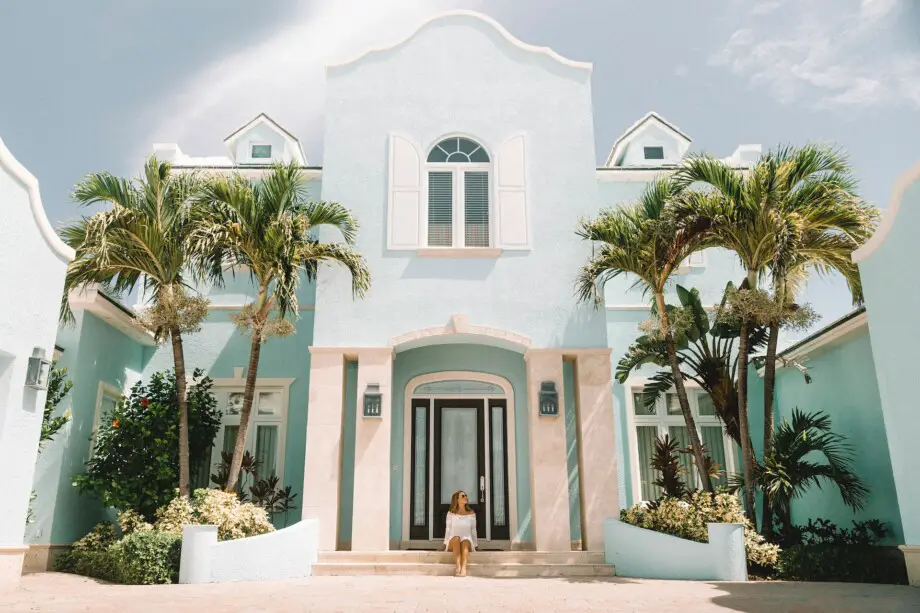
Made from a mixture of lime, cement, sand, and water, stucco exteriors not only add great charm to your home’s curb appeal but also increase its durability. It withstands the harshest weather conditions while ensuring no stone is left unturned in attracting eyeballs. 

The Spanish-style homes are all about giving you the exotic vibes of having a relaxing time at a majestic beach. 

Wondering about the exterior color ideas for stucco houses? Here comes your answer.

To refresh your house’s exterior, the colors that best complement the stucco lie more on the neutral palette, but bold colors don’t hurt, too, unless they have a high LRV (light reflective value) to preserve pigment from fading. Our top three picks are White, Gray, and Beige. 

We have compiled a list of 10 exterior color ideas for stucco houses that can be your source of inspiration. 

At the end of the blog, I’ve also revealed my favorite color for stucco exterior that enhances the curb appeal and gives you a whopping 51% to 55% increase in the ROI of the investment

Have a wholesome ride with me!

Best Exterior Stucco Paints, 2022

1. The Unbiased Neutral

Neutrals are a perfect way to give your home a nonjudgmental look. They blend perfectly with the surroundings and can help you accessorize your homes. The pretty big palette of neutrals offers you a plethora of shades to pick from the line, including brown, gray, white, and even blue and green. 

Our Top Pick: 

Montage Signature Interior/Exterior Eco-Friendly Paint, Riverstone, Low Sheen, 1 Gallon

Features to Love:

  • A wide array of neutral palette
  • Easy to clean
  • Great price for durability
  • Defends against mold and mildew
  • Can be used on both interior and exterior surfaces 
  • Backed by 10 years warranty

2. The Pearl Sophistication

Looking for something to brighten up the home and lighten the mood? Go for an off-white hue. The off-white color gives a pearly vibe while fetching more eyes. Having your doors and windows painted in a dark color completely transforms the game, and your house becomes magnetic just like that!

Our Top Pick: 

Romabio Masonry Textured, Italian Mineral Paint For Brick, Stone, Stucco & Cement, Richmond White, 15L/4GAL

Features to Love:

  • Beautiful off white with gray undertones
  • High UV resistant for color fade 
  • High performing
  • Allows bricks to breathe
  • Suitable to be used both inside and outside the house
  • Backed by 20 years of warranty

3. The Timeless Earthy 

From red sun to cloudy gray, rustic green, and soil-brown, earthy colors add more passion and a vintage vibe to stucco exteriors. With earthy colors, imagine the lighter accents for doors and windows. With this contrast, your house is surely a showstopper in the neighborhood.

Our Top Pick:

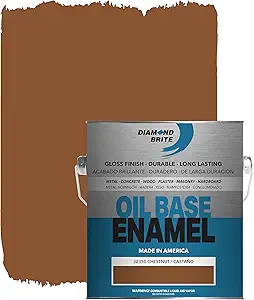
Diamond Brite Paint 1 Gallon Oil Based Enamel Paint in Chestnut 32350-1
Features to Love:

  • Chestnut color feeling close to nature
  • Excellent to use on multiple surfaces
  • Easy to clean
  • Finishes with a durable surface
  • Resists fading, peeling, cracking, and scuffing
  • Good value for money

4. The Chessboard Pop

White walls and black wood works… most eyes won’t stop drooling over the combination. The right contrast pays, and that’s just the case with the combination of classy yet timeless white and black. Both of these are modern stucco house colors that make your home pop.

Our Top Pick:

Rust-Oleum Zinsser 31.5 fl oz. PermaWhite Exterior Semi-Gloss

Features to Love:

  • Easy to clean with soap and water 
  • Great price for durability
  • Mold and mildew proof
  • Self-priming formula
  • Resists dirt and moisture
  • Odorless paint
  • Backed by 5 years of mild-proof warranty

5. The Low-Maintenance Hues

The list of high-maintenance things is already too long to add another. Darker shades may give a vintage vibe but tend to show more dirt and fade away easily. On the other hand, medium shades like tan, beige, taupe, light blue, and light green last longer and hide dirt rather than making it visible. 

Our Top Pick:

Montage Signature Interior/Exterior Eco-Friendly Paint, Riverstone, Low Sheen, 1 Gallon

Features to Love:

  • A wide array of neutral palette
  • Easy to clean
  • Great price for durability
  • Defends against mold and mildew
  • Can be used on both interior and exterior surfaces 
  • Backed by 10 years warranty

6. The Shy Pink

Light pink is a great way to add brightness and delicacy to the curb appeal without going too bold. It’s one of the best stucco paint colors that add depth to your home while keeping it on the neutral side. It makes you refreshed and updated. 

Our Top Pick:

Prestige Paints Exterior Paint and Primer In One, 1-Gallon, Satin, Comparable Match of Valspar* Western Pink

Features to Love:

  • A shade of terra cotta complimenting your plants
  • Paint and primer in one
  • Little to no smell
  • Low UOV
  • Excellent coverage (just one coat needed)
  • Easy to clean with soap and water

7. The Modest Blue

Did you know that people who live in blue houses are the most successful ones? They say blue keeps the spirit away, and blue doors represent prosperity. But my thinking about blue stucco house colors is that they give a charming vibe and are an attractive way to use monochromes with lighter walls and darker doors and windows. 

Our Top Pick:

Diamond Brite Paint 1 Gallon Oil Based Enamel Paint in Ocean Blue 32550-1

Features to Love:

  • Deep ocean blue color
  • Excellent to use on multiple surfaces
  • Easy to clean
  • Finishes with a durable surface
  • Resists fading, peeling, cracking, and scuffing
  • Good value for money

8. The G for Genuine 

Or gray? When they say less is more, this is what I envision. The epitome of class and timelessness, gray translates to genuine cohesiveness and enhances the features of your home’s exterior, especially when combined with bricks and stones. It gives you the feeling of a warm and bright poetic day. 

Our Top Pick:

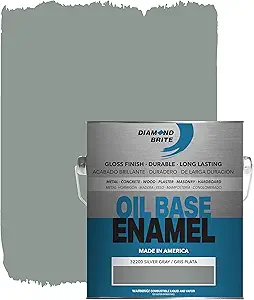
1 Gallon Oil Based Enamel Paint in Silver Gray 32200-1
Features to Love:

  • Silver-gray color with high-gloss finish
  • Excellent to use on multiple surfaces
  • Easy to clean
  • Finishes with a durable surface
  • Resists fading, peeling, cracking, and scuffing
  • Good value for money

9. The Evergreen Green

When it comes to green, the options are just endless. In fact, the list of best exterior paint colors for stucco houses is incomplete without green. From black forest green to olive green, gray-green, deep-bluish green, or lime green, the color represents the sweetest earthy contrast with the light blue sky at the horizon when seen from afar. 

Our Top Pick:

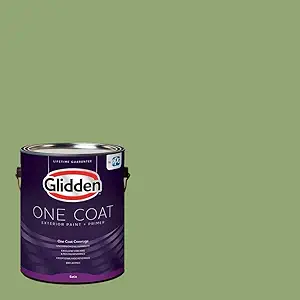
Glidden Exterior Paint + Primer: Green/Luscious Lime, One Coat, Satin, 1-Gallon
Features to Love:

  • Hand-picked beautiful green color to especially compliment exteriors
  • Excellent resistance to peeling and cracking
  • Uncompromising durability to withstand harsh weather
  • Just one coat needed
  • Self-priming paint
  • Available in different finish types 

10. The Pacific Oyster

Have you ever seen a Pacific oyster? Irresistible brown with hints of white, making a mixture of awe. Now imagine your house’s exterior with this combination of oyster-brown sidings with white trims and shutters. This is one of the most used stucco and trim color combinations that highlight your home in the neighborhood. Moreover, don’t forget to add a touch of gold with metallic work like door knobs for more luster (ensure not to overdo it).

Our Top Pick:

Glidden Exterior Paint + Primer: Brown/Peppered Pecan, One Coat, Flat, 1-Gallon

Features to Love:

  • Pecan brown resembling oyster
  • Excellent resistance to peeling and cracking
  • Uncompromising durability to withstand harsh weather
  • Just one coat needed
  • Self-priming paint
  • Available in different finish types

A Little Heads Up Before Starting

Your homes take all the wrath nature has to offer. So before you start painting your stucco houses, make sure you use the right paint and follow the right steps for lasting durability. 

Here are certain things you should consider before you tread on the journey.

  • Use paints with a high LRV (light reflective value). LRV is a factor that maximizes paint’s fade-resistant property by reflecting more UV radiation. The better the LRV, the longer the pigments will be preserved.
  • Do not use interior colors on the exterior stucco surfaces, as their LRV is low, and they will fade away faster than you can think. 
  • For even better results, use a primer before painting the stucco exterior for a flawless and durable finish. 
  • Stucco repair is a crucial preparation that goes without saying. All holes and cracks need to be filled prior to refurbishing your exterior to get a smooth finish and let the paint dry well.
  • Wash your homes to remove dust, dirt, and contamination to avoid it from getting into your paint.  

Best Exterior House Color for Stucco – My Secret to Added 51% to 55% ROI

There is no debate when it comes to choosing just ONE color from the stucco designs gallery. It enhances your curb appeal, makes it appear neat, and stands the test of time. The most popular exterior color that lets you cash out the maximum is White walls with black doors and window sills. Read The Chessboard Pop from our list of best exterior stucco paints in 2022. 

FAQs

What colors look good on stucco homes?

Stucco exteriors give a plethora of color options to choose from. Make sure you use a paint that has a high light reflective value (LRV) to minimize fading. Most colors that favor stucco surfaces are white, off-white, gray, and beige. But bold and bright colors always add that much-needed pop and are a favorite for many.  

How do you modernize a stucco exterior?

Repainting your stucco exterior is the perfect way to modernize your homes and make them appear trendy. Make sure to pressure wash your exterior and fill in all the cracks and holes for a smooth finish. 

How do you pick stucco colors? 

When selecting colors for the exterior of your house, consider how they will relate to the roof, landscaping, and permanent fixtures on or around your house. If you have a black or gray roof, consider using gray, blue, or white. For a brown or dark tan roof, consider tan, brown, red, green, or cream colors for stucco. 

What exterior color homes sell for the most money?

The neutral shade card is likely to sell for the most money. Most buyers are looking for homes where it is easy to give a touch of personalization without getting into too much hassle. So if your purpose is to make it to the listings, be sure to go neutral or, best of all – white. 

How often should stucco be repainted? 

Stuccos are ideally known for their durability, but they are not indestructible. It is best advised to repaint your stucco houses every 5 to 10 years to avoid your hairline cracks becoming larger and keep your home in a neat shape. Keeping your house’s exterior well-maintained by washing it and repairing the damages annually can increase the paint’s durability. 

Exterior Color Ideas for Stucco Houses – Summing it Up!

A well-painted stucco house gives a welcoming and warm vibe – or, as they say, HOME! For the best stucco paint colors, you can choose anything from earthy colors to lighter hues and even bold and bright. You can go for various options taking into consideration your mood, surroundings, and other factors mentioned in the blog.

Let us know in the comments below about the color you chose for your stucco. May be upload a picture too 🙂

pexels caleb oquendo 3042629 Can Masonry Paint Be Used On Wood - See The Magic It Does

Can Masonry Paint Be Used On Wood – See The Magic It Does

Masonry paint is used on exterior walls because it’s durable and long-lasting, but can it deliver the same results on other surfaces like wood? Apart from its resilience, masonry paints are available in a wide array of colors which can be tempting for DIYers looking for exciting hues for their woodwork.

So, this brings us to the main question, Can masonry paint be used on wood in the first place?

The answer is yes! Masonry paint is highly versatile, so you can use it on different surfaces, including wood, plastic, metal, etc. However, wood is porous, which means it can trap moisture under its surface, resulting in masonry paint peeling and chipping off. Therefore, it’s crucial to prepare the wood thoroughly and prime it before applying paint for a lasting finish.

You can paint almost any object with masonry paint, but that doesn’t mean it will give the results it delivers on exterior walls. But I will tell you how you can make it work despite the permeable surface of the wood.

Can you use masonry paint on wood?

Yes, you can apply masonry paint on wooden objects.

Masonry paint is designed for exterior walls. Therefore, it resists water, rain, wind, and other environmental stressors. Its finish is weatherproof and long-lasting, making it an ideal choice for outdoors.

If you decide to use masonry paint on wood, you must ensure the surface is thoroughly prepped and primed because it is a porous surface. Failing to do so will result in the color getting absorbed into the wood and a patchy finish.

Can you use masonry paint on wooden fence?

If you decide to paint your wooden fences with masonry paint, you can expect it to last for a long time. However, you should remember that wall paint is formulated to sit on top of the surface, creating a protective film. If you use it on a wooden fence, don’t expect to see the wood grain the same way you’d see with fence paint.

Moreover, wooden fence panels made from rough-sawn timber will absorb more paint than planed timber. So, you must know how to paint a wooden fence to get a lasting finish.

When you first apply masonry paint to a fence, you will find that it is similar to fence paint in terms of thickness but still easier to apply. Because of this, you need fewer coats of masonry paint than you would with fence paint.

Can you use masonry paint on a wooden shed?

Masonry paint is excellent for your wooden shed because it is weatherproof. It works better for planed timber such as tongue, shiplap, and groove compared to rough-sawn wood, as it’s challenging to cover the latter evenly.

The perk of using masonry paints for your wooden surfaces is the variety of colors and finishes you can choose from. Take Krylon COLORmaxx Acrylic Latex Brush On Paint for Indoor/Outdoor Use, which has unique colors like Sun Yellow, Regal Blue, Pumpkin Orange, Hunter Green, and others. The hues are available in three finishes: Gloss, Flat, and Satin, so you have plenty to choose from.

71ZtlwKqprL. AC SX300 SY300 QL70 FMwebp Can Masonry Paint Be Used On Wood - See The Magic It Does

Can you use masonry paint On wood decking?

Absolutely! Masonry paint works great for wood decking since it is formulated for the outdoors, but you must choose a type with acrylic inside.

Acrylic paint is great for your deck because it is easier to maintain and remove if needed. The paint also creates a UV-resistant film on the surface which helps your wooden deck maintain its color.

It’s better not to use oil-based paints on the deck since they can seep into the wood and are very difficult to remove. Moreover, they don’t deliver the same results as acrylic paint.

Another good option for wooden decks is textured masonry paint because it gives more grip to the surface, especially when wet.

The RTG Deck, Porch, & Patio Anti-Slip Paint is an excellent option for painting your deck. It has a textured light sheen finish that offers secure footing on exterior surfaces that turn slippery when wet.

71PHF0i1JCL. AC SX300 SY300 QL70 FMwebp Can Masonry Paint Be Used On Wood - See The Magic It Does
Pro Tip: When applying masonry paint on a wooden deck, water down the first coat, so it penetrates the wood. This gives the top layer a better chance of sticking to the surface for longer.

Can masonry paint be used on indoor wood surfaces?

Using leftover masonry paint from your exterior walls inside the house can be tempting. And while you can apply it on indoor surfaces, masonry paint isn’t designed for it.

Exterior paint emits harmful fumes, which disappear when used outdoors but applying it inside the house exposes you and your family to several health hazards. When used in closed spaces, masonry paint can irritate your eyes, nose, and throat and cause nausea, headaches, and fatigue. You can read our blog to learn more about the difference between interior and exterior paints.

Also, if you plan to apply wall paint on furniture, read this blog to find out the best way to do it.

Best Masonry paints that you can use on wood

If you’re going to paint your wood surfaces with masonry paint, why not choose one that can be used on both surfaces?

Here are the best paints for masonry that are versatile enough for various application mediums.

Rust-Oleum Protective Enamel Paint

71EP6VwJrcL. AC SX300 SY300 QL70 FMwebp Can Masonry Paint Be Used On Wood - See The Magic It Does

The Rust-Oleum Enamel paint offers a flat finish in three basic colors: white, black, and brown. It is an oil-based formula that works well on exterior and interior surfaces like masonry, wood, concrete, and metal. If you’re searching for a durable protective coating that withstands moisture, rust, abrasion, fading, and chipping, this is an excellent option to consider.

Rust-Oleum Painter’s Touch Latex Paint

61 +fZbM9VL. AC SL1000 Can Masonry Paint Be Used On Wood - See The Magic It Does

The Rust-Oleum Painter’s Touch is a water-based acrylic paint ideal for indoor and outdoor surfaces like masonry, wood, metal, plaster, and unglazed ceramic. It offers a flat finish that reduces surface imperfections and resists chipping for lasting results.

Krylon COLORmaxx Acrylic Latex Brush-On Paint

71ZtlwKqprL. AC SX300 SY300 QL70 FMwebp Can Masonry Paint Be Used On Wood - See The Magic It Does

The Krylon is an acrylic latex paint that provides a satin finish on various interior and exterior surfaces such as wood, masonry, drywall, wrought iron, wicker, metal, and plastic. It delivers high-quality coverage and color with excellent adhesion and durability. Since the paint dries to the touch within an hour, you can quickly complete a project using the Krylon COLORmaxx.

How to use masonry paint on wood

If you decide to use masonry paint on wood, follow the complete process because painting wood is more complex than other non-porous surfaces.

Here is a quick guide to help you get lasting results on wood:

  1. Remove any old paint from the wood because you want to start with a clean surface. Take a putty knife and scrape off as much paint as you can. Don’t worry about removing all of it in one go since you will also be sanding the wood.
  2. With quality wood putty, fill in all the deep gouges and dings to create a smooth base.
  3. Sand the surface with a coarse sandpaper first and then move on to a finer 150-grit sandpaper to get the surface ready for priming.
  4. Clean away any sanding dust from the wood with a vacuum or tack cloth.
  5. Apply one coat of primer on the wooden surface and sand again with a fine-grit sandpaper. After cleaning the sanding residue, apply another layer of primer.
  6. Finally, layer on your masonry paint using a good-quality brush. Remember to avoid drenching your brush in paint; you want just the right amount for good coverage.
  7. Apply two to three layers of paint while waiting for 2 to 3 hours between coats.
  8. Finish the job with a clear topcoat or sealer to preserve the final paint finish.

Potential problems of painting wood

While it’s exciting to paint wood with different colors, you should be aware of a few downsides to the process.

  • The paint traps moisture

Wood is absorbent, which is why moisture gets trapped in it, causing the timber to expand and contract over time. Therefore, it’s only a matter of time before the paint finish starts deteriorating. This is especially true for decks since water can soak into the wood from underneath.

  • It masks wood’s natural beauty

Wood is a substance with grains and natural imperfections. So, when you paint over its surface with permanent color, it can be extremely challenging to remove the paint and restore its natural beauty. In addition, if you choose a dark color for painting wood, it will be more susceptible to fading. Therefore, you will have to recoat the surface repeatedly.

  • The paint cannot reverse recurring problems

If you have had trouble with painted wood around the house, such as bubbling and peeling, the chances of potential problems recurring are much higher when you paint in the same area.

Insulating benefits of masonry paint

There are two primary reasons why homeowners opt for masonry paint for wood surfaces. The first one is purely decorative and aimed at improving the aesthetic appeal of their homes. The other reason is that masonry paint offers surfaces protection and insulation.

Homeowners prefer to insulate their homes to

  • Reduce the cost of energy bills
  • Protect against draughts and cold spots
  • Prevent damage caused by dirt and wetness

Using masonry paint on wood ensures that your entire property is insulated. Since wooden surfaces are porous, they allow water and moisture to get absorbed and eventually trapped inside the walls. This results in the home becoming damp, cold, and expensive to run.

Masonry paint helps create a protective insulation layer on wood surfaces while still allowing it to contract and expand as per its nature. But preparing your wooden surfaces thoroughly is crucial to reap the full benefits of masonry paint insulation.

FAQs

Do you need an undercoat with masonry paint?

Using a primer is a must if you’re planning to paint a wooden surface with masonry paint. Remember to select an undercoat that’s compatible with your color coat. For example, you should apply an oil-based primer if you’re going to use an oil-based top coat.

What happens if you don’t prime exterior wood before painting?

When you don’t prime exterior wood, the paint is soaked up into the surface, resulting in a blotchy finish. Eventually, the painted wood starts to peel in two to three years.

What is the difference between masonry paint and regular paint?

Masonry paint is specially designed for exterior surfaces, which is why it’s formulated to withstand extreme temperatures, rain, hail, wind, and other environmental elements. Regular paint is created for interior spaces and, therefore, is not weather-resistant.

Do you need special paint for exterior wood?

The best paint for exterior wood is latex-based paint. The reason is that it’s flexible enough to allow the wood surface underneath it to expand and contract as per its nature. If you want the paint to last through excessive heat and moisture, it’s recommended to buy exterior latex paint for the best results.

Is masonry paint waterproof?

Masonry paint can withstand water, but it’s not designed to repel it completely. Therefore, you will notice that water gets soaked into walls after heavy rainfall. So, masonry paint is weather-resistant but not waterproof.

What can masonry paint be used for?

Masonry paint offers a durable and lasting finish to several surfaces, including brick walls, building blocks, concrete walls, wood, plastic, and metal surfaces.

Conclusion

Masonry paint is very versatile, which means you can use the leftover paint from your exterior walls on many surfaces other than masonry. You can even apply it to your wooden fence, deck, rims, windows, and more. Just remember to remove the old paint and prime the wood before applying masonry paint.

If you’re curious to find out what other surfaces wall paint can be used on, read ‘everything you need to know about using wall paint on canvas.’

What paint is best for exterior walls

What Paint Is Best For Exterior Walls – Comparing Formulas

Painting the exterior of your home is a sure way to improve its aesthetic appeal and add value to your property. But with different paint formulas and finishes available in the market, it can be confusing to decide on what paint is best for exterior walls.

There are mainly two paint formulas to choose from: water-based and oil-based, and while both are hard-wearing, there are some downsides to each.

When searching for the best paint for exterior walls, the first point of consideration is durability. Both oil-based and water-based paints are resilient, so you can use either of them. However, water-based paints have the added advantage of low VOC levels, which makes them an environmental-friendly choice.

Stick around to explore in detail which paints formula and finish you should use for exterior walls. We will also look at factors you need to consider before selecting one.

Types of Paint Formulas for Exterior Walls

Painting your exterior walls requires considerable time, effort, and money. For this reason, selecting a paint formula that withstands environmental pressures and doesn’t give in to chipping and peeling is crucial.

Here are three types of paint formulas that you can easily find in home stores.

  • Acrylic
  • Latex
  • Oil-based

Each has its own properties, advantages, and disadvantages. Which paint formula is the best for your home will ultimately depend on a variety of factors, including local climate and personal preference.

Acrylic paints

Acrylic paints are very popular among homeowners because they are easy to apply and maintain. The paint consists of pigments suspended in an acrylic polymer solution and resin. The formula is chemical-based which means it becomes water-resistant once it dries out.

The chemicals in acrylic paints make them more elastic, allowing them to expand and contract with temperature fluctuations. Since exterior colors must be able to withstand extreme weather, the elasticity of acrylic paint makes it an excellent candidate for exterior walls.

Moreover, the paint formula is durable, long-lasting, and water-resistant- everything you need for exterior walls. And adding a sealer on top of acrylic paint can make it waterproof, which is even better for outdoor surfaces.

Paint recommendation: The Rust-Oleum Painter’s Touch Latex Paint is a non-toxic, water-based acrylic formula that can be used on outdoor surfaces, including plaster and masonry. The paint offers a flat finish that resists chipping and hides surface imperfections.

61SloGLw0RL. AC SX300 SY300 QL70 FMwebp What Paint Is Best For Exterior Walls - Comparing Formulas

Latex paints

Latex paints work similarly to acrylic, but they are water-based. There was a time when latex paints were frowned upon for exterior surfaces, even by professional painters. Fortunately, the paint formula has come a long way from there.

Today, latex paints are formulated to be more resilient, even against the effects of rain, wind, snow, and other environmental stressors. Even their adhesive capabilities have been improved and now you can use them on masonry walls like bricks, concrete, or stone blocks.

Selecting durable paint is important for homeowners as it helps prevent the expense of repainting exterior walls repeatedly. If you opt for latex paint, you can expect it to last for as long as 15 years, depending on the type of surface it’s been applied to and the application process.

Paint recommendation: The Montage Signature Interior/ Exterior Eco-Friendly Paint is a low-sheen, water-based paint that offers superior hide and coverage to your exterior walls. It has a latex formula that protects against mold and mildew and can be cleaned easily with a single wipe.

81bFa7YNoQL. AC SX300 SY300 QL70 FMwebp What Paint Is Best For Exterior Walls - Comparing Formulas

Oil-based paints

If we compare all three formulas, oil-based paints will emerge as a clear winner in terms of durability. This is because oil-based paints dry to a hard finish and shrink less than acrylic and latex paints. They hold up really well in high-traffic areas and are easier to apply as the formula glides on walls effortlessly.

Oil-based paints are hard-wearing, and you can achieve a different level of smoothness and gloss by using them- something latex and acrylic paints cannot deliver. It is also dirt-resistant, which means your exterior walls will look good as new for longer.

However, there’s a major downside to oil-based paints: a higher level of VOCs (Volatile Organic Compounds). VOCs are responsible for an array of short-term and long-term health issues which is why oil-based paints are not widely used anymore.

Oil-based paints give off hazardous fumes, which can harm the person painting the walls. If you decide to use oil-based paints for a DIY job, you must wear a protective mask to keep yourself safe from fumes.

Paint recommendation: The Diamond Brite Paint Oil Base Enamel Paint delivers a high-gloss finish that can be used on interior and exterior surfaces, including concrete, plaster, and masonry. It is an excellent choice for exterior walls because it resists scuffs, cracking, peeling, and fading.

71mWKHbzM7L. AC SX300 SY300 QL70 FMwebp What Paint Is Best For Exterior Walls - Comparing Formulas

Which type of exterior paint finish is best?

Once you have decided on the right paint formula for your house, you need to determine the paint sheen or finish you require. The finish affects the wall’s appearance and the paint’s performance, so you should pick one that’s lasting and easy to clean.

Most homeowners recognize paint finish as shiny or matte, but there are variations between the two extremes. There are five primary paint finishes:

  • High-gloss
  • Semi-gloss
  • Satin
  • Eggshell
  • Matte

Interestingly, the paint finish does not only decide how your walls look at the end but also how well the paint will hold up over the years. You can learn more about ‘what kind of paints are washable’ to figure out which paint sheen is best suited for your walls.

Glossy or Matte- Which way should you go?

Glossy paint delivers rich color, making it a perfect choice for homeowners who want to make a loud design statement. Shinier paints are also more durable than flat, making them a logical choice for exterior walls exposed to fluctuating temperatures, rain, snow, and wind.

However, using glossy paint means highlighting every bump and imperfection on your walls which is never a good idea for large surfaces. Another downside of a glossy finish is that not everybody appreciates shiny walls. Most people gravitate towards a modern semi-matte/ semi-gloss finish for their exterior walls.

A flat finish is completely non-reflective and velvety in appearance. It effectively hides gouges and bumps, giving your exterior walls a clean and smooth look. But the problem is that matte surfaces can become chalky due to weather changes, requiring more frequent repainting.

So, although flat paints have a modern and contemporary look, they may flake off and chip more easily than their glossier counterparts.

Exterior paint finish recommendation

Glossy paints are durable but not as aesthetically appealing; matte colors look fantastic but need to be more durable. So, where does that leave us? Right in the middle!

There are other finishes between high-gloss and flat that look attractive while staying on your exterior walls for many years. I am talking about satin and eggshell finish.

Both these paints have a slight sheen without being overly shiny, making them perfect if you prefer a more contemporary look for your exterior walls. They are also easy to clean and maintain, so your house looks clean and fresh for many years.

However, there are other factors that may sway your final decision.

Are you painting your walls yourself or hiring a professional? If it’s the first case, you’d better stick with a flat finish as it’s more forgiving in terms of application. But if you’re paying a pro to do the job, you can choose any finish you prefer.

Do you have pets, children, and a lot of outdoor activities? You may need to go for a satin finish or even semi-gloss if your home’s exterior is heavily used (Hint: Snow and mud balls crashing on the sides of the house).

FAQs

Which is better for exterior paint, semi-gloss or satin?

In terms of durability, semi-gloss paint performs better than satin. It also offers better protection against moisture by protecting exterior walls against water damage. However, dents, dings, and marks will be more noticeable on glossy walls than on a satin finish.

Which exterior paint lasts the longest?

Acrylic paint is the best option for painting exterior walls because it’s water-resistant, durable, and easy to clean. It also performs better than oil-based paints, which can fade or lose their luster over time.

What exterior paint fades the least?

Acrylic paints are chemical-based, so they dry to a water-resistant finish. The paint’s formula resists fading due to sun exposure and damage from environmental stressors, making it an excellent choice for exterior wall painting.

What is the best all weather exterior paint?

Oil-based paints are considered the best exterior paint as they can withstand water, wind, and snow without chipping or peeling. However, modern acrylic paint formulas provide similar results without the risk of VOCs.

What exterior paint do professionals use?

Professionals preferred oil-based paints initially, but that has changed with the latest formulations of acrylic paints. Now, pro painters use acrylic paint on exterior walls because it’s durable, long-lasting, and also compatible with a variety of materials.

Conclusion

Painting the exterior of your home means you will have to live with the paint color and finish for over 10 years, so it only makes sense to do your research before jumping in. By now, you have a clearer idea of which paint type and finish best suits your exterior walls. Just remember to pick one that looks good, lasts long, and is easy to maintain.

If you need help selecting a color palette, check out some exterior color ideas for stucco houses.

pexels mike b 9735323 How To Paint Car Rims Like A Pro In 10 Easy Steps

How To Paint Car Rims Like A Pro In 10 Easy Steps

Any car, regardless of its age or condition, looks better with a great set of rims. If you take a basic economy car and fix the look of its wheels, you can quickly transform it into a respectable ride.

Old and rusty rims can ruin the appearance of your tires and, ultimately, your car. Fortunately, there are ways to reverse this situation. All you need is a primer, a spray paint of your choice, sandpaper, and soapy water. Sounds simple enough, doesn’t it?

Start by cleaning the rims with soapy water to remove dirt and grease from the surface. Using sandpaper, clear away rust stains and create a smooth base for the primer. Spray on the primer in even layers, followed by a colored coat, and you’re done!

In this article, I will explain in detail how you can achieve a professional-like finish with a DIY paint job. So, let’s jump right in.

Can You Paint Your Rims Yourself?

Yes, absolutely!

Although auto shop owners make painting your rims at home sound like an impossible task, with the right tools and equipment, you can paint your rims yourself at home.

Rims are either made of steel, chrome, or aluminum. So, you must select the primer and color spray according to the material of your wheels. Before buying spray paint, remember to do thorough research and determine what your rims are made of.

I have also included a few suggestions for primers and paints to help you get started.

If you’re struggling with a previous paint job gone wrong, you can remove spray paint from your rims before coloring them again using the step in our blog.

A step-by-step guide for painting your car rims

Now, let’s get down to the real business.

Painting your car rims should take about two hours in total if you have all the equipment and tools ready. Here is a list of things you will need for the project.

Things you will need:

  • Soap and water
  • Wax and grease remover
  • Metal wire brush with angle grinder or sandpaper
  • Protective gear
  • Painter’s tape
  • Primer
  • Color coat

Let’s start the painting process now.

 Step 1: Remove tires from the car

The first step is to remove the tires from your car. You will need a lug wrench to loosen the lugs. Next, jack up the car and use the jack stands to stabilize it. Remove all the lug nuts and pull the wheel away from the vehicle.

Remove all four wheels.

Step 2: Remove the rims from the tires (Optional)

This step is optional because you can paint the rims even if they’re attached to the tires. However, removing them helps reduce your prepping time and the chance of overspraying. Also, this way, you can paint all the way to the edge of the rim without any interference.

So, if you have the specialized equipment necessary for detaching the rims, go ahead and do it. But if you don’t have the right tools, it’s better not to attempt the feat at home as you can damage the wheels.

Step 3: Detach the valve stem (Optional)

Just like the tyres, removing the valve stem gives you a free hand when painting. However, it is up to you to take it out or let it be.

We will discuss how you can cover it up if you keep the valve stem on.

Step 4: Clean the wheels with soap and water

Now the rims are ready to be prepped, so start cleaning the surface thoroughly.

Spray soapy water on the wheels and scrub the surface with a brush. You can also use a washcloth, but a brush does a better job at cleaning. Make sure to remove any dirt on the rims and wipe it dry once you’re done.

Step 5: Use a wax and grease remover

Water washes away dirt and debris but doesn’t work as well on oil and grease. That’s why you need to bring in a solvent to dissolve things that water can’t.

Apply the wax and grease remover to the trims to clear away any oil or grease residue on the wheels.

Try me: You can use rubbing alcohol to wipe the surface of the rims because it works the same way as a grease remover.

Step 6: Sand the surface

We want to make the surface of the rims as smooth as possible, so the primer adheres to it perfectly. The best way to create a solid foundation is by sanding the wheels thoroughly. This will also help remove any rust from the rims and make you achieve a professional finish.

You can start by using 300-grit sandpaper to sand the wheels. Slowly move onto 500 and then 800 grit sandpaper to get a smooth surface. Make sure to get into every crevice and remove any rust on the surface entirely.

A quicker way to achieve better results is using a fine metal wire brush on an angle grinder. If you’re dealing with a lot of rust, you may need to switch to a thicker metal wire brush.

If you’re working on aluminum wheels, sanding them will take less time than steel wheels. So if your car has steel wheels, be prepared to sand for at least 10 minutes.

Pro Tip: Wear protective eyeglasses and a mask if you plan to use an angle grinder for the heavy lifting. The metal wires on the brush tend to shoot, so you need to be careful.

Step 7: Clean the sanding residue

The next step is to clean all the sanding debris to help the primer go on smoothly. You can get the desired effect with an air compressor or a leaf blower. The idea is to blow away all the dust you’ve created from sanding off the wheel.

For good measure, wipe the rims clean with a paper towel soaked in rubbing alcohol. The solvent is perfect for removing any residue and is also highly volatile, which means it dries quickly.

Step 8: Cover the tires

If you haven’t removed the rims from the tires, you must cover the areas you don’t want to paint accidentally.

You can use paper and painter’s tape to mask off the tires. Remember to tape closely around the rim’s edge to get a clean finish.

There’s another trick that you can use for this step, though. Take a bottle of tire shine gel and apply it to the outside of the tires, being careful not to touch the rim at all. If you get some gel on the wheel by chance, wipe it away with rubbing alcohol immediately because the gel will prevent the paint from sticking onto the surface.

And that’s precisely how the layer of tire shine gel will protect your tires. If you get any paint on it, you can simply wipe it off without any hassle.

The second trick is to use good old index cards. Place the cards one by one between the rim’s edge and the tire, creating a circle of index cards around the wheel. Now you don’t have to worry about messing the tire’s surface with overspraying.

If you haven’t removed the valve stem, you can cut the finger of an old glove and place it over the valve to protect it from paint.

Step 9: Apply primer

The primer is crucial to getting a good paint finish. That’s because it helps cover minor surface imperfections and gives the paint a good surface to bond to.

Remember to select a primer that works on the metal surface and is ideal for automotive use. Here are a few options you can consider:

Dupli-Color Scratch Filler & Primer

It has a fast-drying formula that’s good for filling deep scratches while providing a rust-resistant finish.

61j pbOUgAL. AC SX300 SY300 QL70 FMwebp How To Paint Car Rims Like A Pro In 10 Easy Steps

Rust-Oleum Painter’s Touch 2X Ultra Cover

This is an oil-based primer with a comfort spray tip to reduce fatigue from continuous spraying. It delivers a matte finish that’s chip-resistant and durable.

61CJaoPw0lL. AC SX300 SY300 QL70 FMwebp How To Paint Car Rims Like A Pro In 10 Easy Steps

Rust-Oleum Stops Rust Automotive Primer

This special primer has an oil-based formula specially designed for automotive surfaces. It provides a flat finish that is rust-resistant and long-lasting.

71CQkT3kzGL. AC SX300 SY300 QL70 FMwebp How To Paint Car Rims Like A Pro In 10 Easy Steps

Rust-Oleum Automotive Sandable Primer Spray Paint

It is an excellent option if you’re looking for a sandable primer. Formulated for automotive surfaces, the primer has a special Stop-Rust formula that’s ideal for prepping cars.

712bUF2WYKL. AC SL1500 How To Paint Car Rims Like A Pro In 10 Easy Steps

Now let’s move on to spraying the primer. Remember to keep your hand moving steadily and never start or stop spraying when the nozzle is pointed directly at the wheel. Instead, start from the outside, bring the can toward the rim, and keep spraying until you have reached the other end of the tire.

Apply the first coat of primer, ensuring it’s light and even. Don’t worry about coverage at this point because you will need multiple layers of primer to build a solid base.

Allow the first layer to dry for 2-5 minutes before applying the second coat. It would be best if you sprayed from different angles and sides for this coat to get complete coverage. You should not be able to see any bare metal at the end of the second coat. Again, let the wheel dry for 2-5 minutes.

For the final layer of primer, you can slow down the movement of your arm. This means you will get a slightly thicker coat, but we don’t want it too thick.

Pro Tip: If the air temperature is less than 80 degrees Fahrenheit, place the primer in a bucket of hot water before using it. This trick will help improve the spray pattern and reduce the chances of the orange peel effect.

Step 10: Spray the color coat

Allow the final layer of primer to dry for at least 10 minutes before going in with the color coat. If you’re not sure about the best paint for rims, you can check out the following options:

Dupli-Color High Performance Wheel Paint

A paint specially designed for wheels, making them ideal for your rims. Another perk of using this brand is that its colors are tested and approved by vehicle manufacturers so that you can find a perfect match to the original factory finish.

51qpB3mvrEL. AC SL1000 How To Paint Car Rims Like A Pro In 10 Easy Steps

Rust-Oleum High Performance Wheel Spray Paint

It is another option specifically designed for rims. The oil-based formula dries to the touch in under 10 minutes and provides a glossy, high-shine finish. 

71KKJC0NOdL. AC SX300 SY300 QL70 FMwebp How To Paint Car Rims Like A Pro In 10 Easy Steps

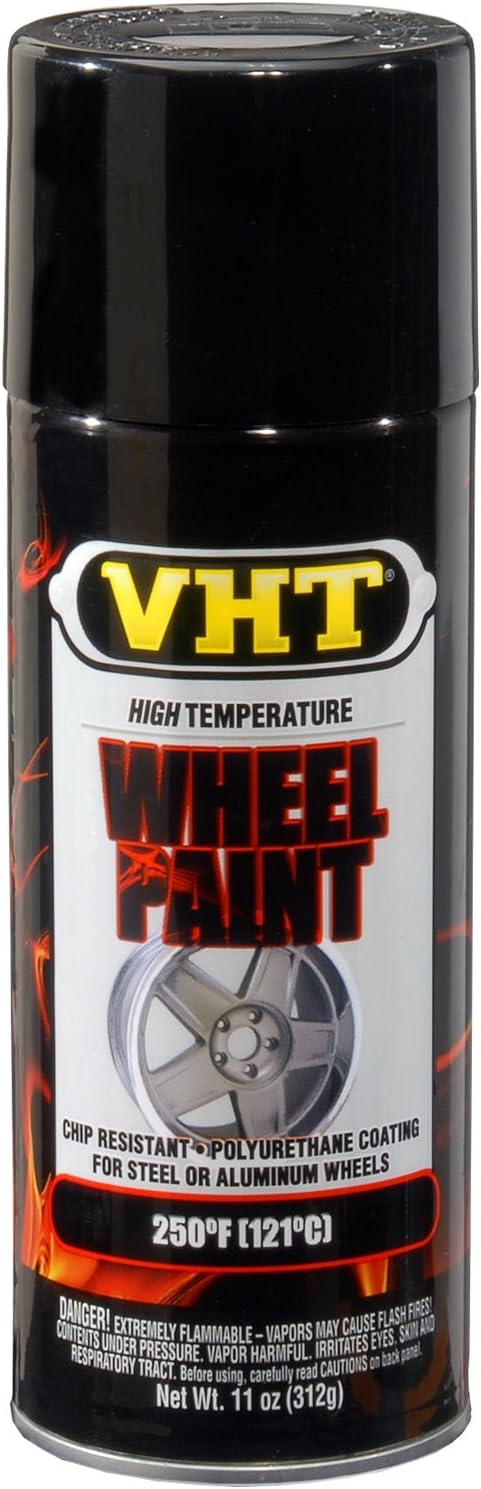
VHT Gloss Black Wheel Paint Can

This one is perfect for aluminum and steel wheels. The paint offers heat and chemical resistance while protecting the rims from the effects of brake dust, salt, sand, and rocks.

61GE0trasUL. AC SL1500 How To Paint Car Rims Like A Pro In 10 Easy Steps

You need to apply the rim spray paint the same way as the primer- in multiple coats. You will need at least 3 coats of color to achieve full coverage. Remember to paint from different angles and sides, so you don’t miss a spot on the rims. Wait 5 minutes between each coat, so the first one dries completely before you paint on the second layer.

When you’re done painting the final layer, remove the index cards you’ve placed around the rims. Allow the wheels to dry for two hours before attaching them to your car.

FAQs

Is spray painting your rims a good idea?

Spray painting your car rims is a great idea if you want to improve their appearance without spending a hefty amount at the auto shop. Remember to buy paint specially designed for automotive surfaces for a lasting finish.

Can you paint alloy wheels?

Yes, you can paint alloy wheels, but there is a high chance of peeling, so you need to buy special paint formulated for alloy automotive surfaces.

How much does rim repaint cost?

While the actual cost may depend on the shop you go to and the size and condition of your wheel, the average price of a professional rim paint job is between $100 and $200 per wheel. So, you’re looking at a total cost of $400 to $800 approximately.

Can you paint over already painted rims?

Yes, it is possible to paint over rims that have been painted previously. Since we sand the surface of the wheels before painting, it helps remove any imperfections in the previous layer and helps create an even base for the new paint.

Can you use Rust Oleum peel coat on rims?

The Rust-Oleum Peel Coat is a rubber coating perfect for customizing different car parts, like rims, hoods, and more. It protects your wheels against rust and road debris and allows you the freedom to peel the paint off once you get bored of the color.

Conclusion

You can easily upgrade your ride’s look with spray paint, whether you want to color the rims or spray paint your leather car seats. As long as you have the right equipment and technique, you can nail any paint project like a pro!

pexels megapixelstock 18296 How Much Does It Cost To Paint Car Rims - Is DIY Cheaper?

How Much Does It Cost To Paint Car Rims – Is DIY Cheaper?

People say that your ride reflects your personality, so if your car is in top shape, it makes you look good. However, worn-out exterior parts, such as car rims, can ruin the appearance of your vehicle. 

Fortunately, you can upgrade your car by painting the rims, which leads you to the question: “Should you go for a DIY or a professional paint job?”

Ultimately, the cost of each option becomes the deciding factor. So, how much does it cost to paint your car rims?

For each wheel, a professional rim painting costs around $100 to $200. This means you must shell out $400 to $800 to have your rims painted professionally. On the other hand, a DIY rim painting costs $30 to $100 per wheel, depending on the products you use.

If you are on a budget but still want your wheels to look as good as new, a DIY paint job will cost you way less than a professional one and also offer good results.

Stay with me to find out how to calculate the actual cost of a DIY rim painting job and the factors that affect your ultimate paint budget.

HOW MUCH DOES IT COST TO GET THE RIMS PAINTED?

Brake dust is the number one enemy when it comes to your car’s rims.

Regular driving can form a coat of dust on your rims, making them look dirty and dull. In addition, off-road drives only make matters worse.

When you repaint your rims, it adds to your ride’s aesthetic appeal and also increases its value.

We have already established that a DIY paint job will cost much less than a professional one. However, it will not deliver perfect results, so how do you select which one is right for you? By comparing its cost with your budget, of course.

What is The Cost of a Professional Rim Paint Job

Whether you opt for painting your wheels or a complete alloy wheel powder coating, the average cost of a professional paint job is about $100 to $200 for each rim. But before you choose one, getting painting estimates from more than one painter is recommended to get high-quality results at fair prices.

Another option is to get your rims painted by the same dealership from where you bought the car. Wheel repair and repaint are usually included in the warranty or through insurance, but you may have to bear the additional cost if your rims are extremely damaged.

What is The Cost of a DIY Rim Paint Job

Painting your rims at home is easier if you know how to paint car rims. With the right tools and techniques, you should be able to achieve lasting results even without professional help.

If you decide to paint your car rims yourself, be prepared to spend around $30 to $100 per wheel. The cost of DIY rim painting will vary depending on the type of paint you use, its quality, and the area coverage you require. Other factors contribute to the difference in price range, but we will discuss them in detail later.

Getting your rims painted professionally means you will be paying for the paint as well as labor cost. However, if you paint the rims yourself, you can straightaway save the labor cost and make it zero.

If you want to paint your car’s rims, pick a day when you can spare around 3 to 4 hours because that’s how long it will take you with all the equipment required for painting.

HOW O DECIDE THE AVERAGE COST TO PAINT 4 RIMS

When calculating the average cost for painting 4 rims, it’s important to understand the breakdown of the costs. This will help you reduce the overall cost if your budget is low.

The following factors will affect the total cost of painting car rims:

  • Cost of paints
  • Cost of labor
  • Variable costs

Cost of Paints

You first need to determine the type of paint you want to use. Different paints have varying costs, so your choice of color will ultimately decide how much you will have to spend on the DIY.

Another thing to remember is that every paint has different variants in terms of quality. So, if you select a high-quality color over a low-quality one, the total cost of paints will be higher too.

Here are a few standard paint options for your rims.

Plasti Dip Paint

Plasti-dip is a form of sprayable rubber that was initially designed for coating tool handles. Over time, it has become a favorite among vehicle owners for rim coating.

This paint is very easy to apply, making it an excellent choice for painting your car rims. If you buy a 22oz bottle of Plasti-Dip, you will need 4 cans to paint all 4 wheels. Since the cost of 1 can is around $15 to $20, 4 cans will amount to up to $60 to $80.

The cost will be even less if you buy it in a pack of 4. For example, 4-pack Plasti-Dip Rubber Coating Spray costs a reasonable amount, which is definitely a smarter investment.

Spray Paint for Rims

Several spray paints are designed especially for rims, such as the Rust-Oleum High Performance Wheel Spray Paint and Dupli-Color High Performance Wheel Paint.

Spray paints cost lesser than Plasti-Dip paints, so if you want to reduce the cost of your project, this is a paint option you can try.                                      

You will need approximately 4 to 5 cans of spray paint to color all 4 rims. So, if one paint can costs about $15, the total should be around $60 to $75.

You can see more details on best spray paints for car exterior including wheels and rims here, discussed in depth.

Truck Bed Liner

This is another paint option for your rims that is cheaper than Plasti-Dip. A truck bed liner paint offers long-lasting results with a textured finish.

You need 2 cans of 32oz paint to coat 4 rims. Since a truck bed liner costs around $20 to $30, the total cost of using this paint will be $40 to $60. If you buy the Rust-Oleum Automotive Truck Bed Coating, it will cost you about $44 to paint all 4 rims.

Powder Coating

The final option, but an excellent one, is powder coating your rims. This delivers the best finish out of all the paint types but applying a powder coat is more complex than spraying regular paint.

When you apply a powder coat, it’s important to do so with industrial tools. The paint has to be sprayed electrostatically and cured under heat. Therefore, if you are an amateur with no experience in powder coating, you may not be able to achieve the desired results.

Powder coating costs $20 per gallon, but you also need a paint gun which can be brought for over $100. Therefore, the total cost of DIY powder coating can amount to $150 to $250.

More details on best automotive spray painting guns can be read here.

Powder coating is a pricier and trickier option, so if you don’t get the job done well, you may end up wasting considerable money.

Cost of labor

When you hire a professional to paint your rims, you have to pay them at an hourly rate. Most of the time, the cost of skilled labor is the same as that of paints. On average, professional labor costs around $500 to $1000 in total for all 4 rims.

You should keep in mind that the cost of professional labor varies in different countries and cities, and it’s pretty normal to pay a high price for the same service in a highly urbanized city.

On the other hand, for a DIY job, you are the laborer and probably working for free. So, all you need to invest is 3 to 4 hours of your time to paint the rims yourself.

Varying costs

Finally, you must decide what you want to achieve by painting the rims. Do you only need to recoat the wheels with a fresh layer of paint, or are your rims completely bare? This will help you determine how much paint you need to complete the project.

If you want to recoat your rims, the cost of paint will be lower compared to a new coat of color on bare wheels.

If you want to remove paint from your rims then you can read a detailed article here and for our review over paint strippers here, for an easy paint removal process. 

WHAT IS THE AVERAGE COST TO PAINT RIMS PER SQUARE FOOT?

If you’re still unsure whether to go for a professional paint job or paint the rims yourself, here is a breakdown of the average cost per square foot of both options.

Average Cost Per Square Foot of DIY

Here is a simple way to calculate the cost per square foot:

  • If you’re working on 16” tires, the area of rims is equal to 1.3963 square feet
  • If you multiply that area with 4 rims, you get a total area of 5.5853 square feet
  • If you use 5 cans of spray paint costing $15 each, you are spending $75 on paint altogether
  • $75 / 5.5853 square feet = $13.43 per square foot

Average Cost Per Square Foot of a Professional Paint Job

Now, let’s look at the average cost per square foot of hiring a pro.

  • If the cost of getting 1 rim painted equals $150, you’d be paying a total of $600 for 4 rims.
  • $600 / 5.5852 = $107.43 per square foot

Hence, there is a considerable difference between painting your rims at home and getting them painted professionally.

FAQS

Is it better to powder coat or paint wheels?

Powder coating creates a stronger bond with the rims and provides better coverage than liquid paints. So, powder coating your car rims is a better option if you are looking for lasting results.

Is rim paint durable?

The key to making your rim paint durable is to use colors specially formulated for automobile rims. In addition, you should also ensure the surface is thoroughly prepped and primed for maximum paint adhesion.

Is it cheaper to paint or powder coat rims?

It is definitely cheaper to paint your rims than powder coat them. While powder coating provides a more durable finish, the process of applying it is too complex for a DIY paint project.

Can alloy wheels be repainted?

Repainting your alloy wheels is an effective way to revamp their appearance and increase your car’s value. With so many colors and finishes available, you can customize your rims effortlessly.

How much does it cost to paint rims matte black?

Getting your rims painted matte black will professionally cost around $100 to $200. However, if you paint the wheels at home using specialized paint like the Rust-Oleum High Performance Wheel Spray Paint Matte Black, the paint will cost around $44 to $55. 

CONCLUSION

As we reach the end of our article, it’s evident that the cost of painting your car rims at home is much lesser than a professional job. However, you should prep and prime your rims correctly to make the paint finish last, or else it will end up costing you more with each repainting session.

Keeping your car in top shape is a great way to maximize its value and enhance its aesthetic appeal. From painting the car’s rims to painting your car’s hood or giving your bumper a facelift– there are many ways to upgrade your car’s outer appearance.   

pexels bennie lukas bester 1217205 How To Remove Paint From Hair - 10 Solutions That Work

How To Remove Paint From Hair – 10 Solutions That Work

There’s a lot of excitement when you start a painting project. You get your paint supplies out, throw on your painter’s attire and begin creating your masterpiece.

Unfortunately, the realization that your hair is vulnerable to paint splatters settles in too slowly, and you’re left with paint splotches on your head and colored strands once the project is over.

This is when the excitement turns into panic, and you wonder, ‘how can I remove paint from my hair without damaging it?’

The first thing you can try is to comb the paint out. If that doesn’t work, wash your hair with a clarifying shampoo. Baby oil, vegetable oil, or dish soap also works wonders for cleaning oil-based paints from the hair. Interestingly, peanut butter and toothpaste can also be used to remove paint from hair.

Luckily, there are several DIY solutions to this common problem. So, let’s go over each of them, and you can decide which one you want to try out first.

Does paint come out of hair?

Yes, it does! Even if it doesn’t come off right away, it’s not an impossible task.

If you get stuck with paint in your hair, you first need to establish the type of paint you’re dealing with. So, check the label on the spray paint to find out if it’s water-based or oil-based.

Water-based paints are easier to remove compared to oil-based paints, and the method for paint removal is different for each.

The second factor that will affect which paint remover works best for you is the amount of paint you have accidentally splashed on your head. If it’s just a speck or two, the colour should clean up easily, but if it’s a considerable amount, you may need more than one trick to remove it completely.

Tricks to clean paint from hair

Here are a few tried and tested solutions that might work for you too.

1. Comb through your hair

Sounds too good to be true? Sometimes the simplest tricks are the most effective.

If you have splashed a little paint in your hair, the comb might be the easiest way to remove it. However, you can’t expect it to clean a giant splotch of colour, so be reasonable with your expectations.

pexels artem podrez 7504719 1 How To Remove Paint From Hair - 10 Solutions That Work

Hold the strand of your hair with paint on it, and make sure to pull it slightly, so the strand is stiff. Now comb slowly through it with a fine-toothed comb focusing more on the paint-stained area. Use a back-and-forth motion to loosen the paint.

Work in small sections and keep going until you start seeing some progress. Remember to be patient and not dish out your frustration on the strand of hair you’re holding.

Try me: Put your fingernails to good use and scrape the paint off your hair by pinching them together and pulling your nails down the strand.

2. Wash with a clarifying shampoo

Depending on the type of paint you’ve used, you might be able to shampoo it out from your hair. Water-based paints are user-friendly because they can be cleaned easily, so give a strong, clarifying shampoo a shot.

pexels nataliya vaitkevich 8467970 How To Remove Paint From Hair - 10 Solutions That Work

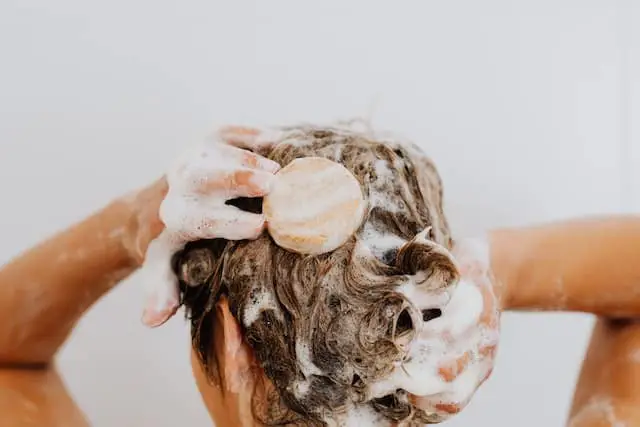
First of all, loosen the dry paint by combing through your hair. Follow it up by making them wet and applying a liberal amount of shampoo. Scrub the stained strands for a few seconds with your fingertips.

Rinse out the clarifying shampoo and check whether all the paint is gone. If you’ve missed a few spots, repeat the same process again, but leave the shampoo in your hair for longer.

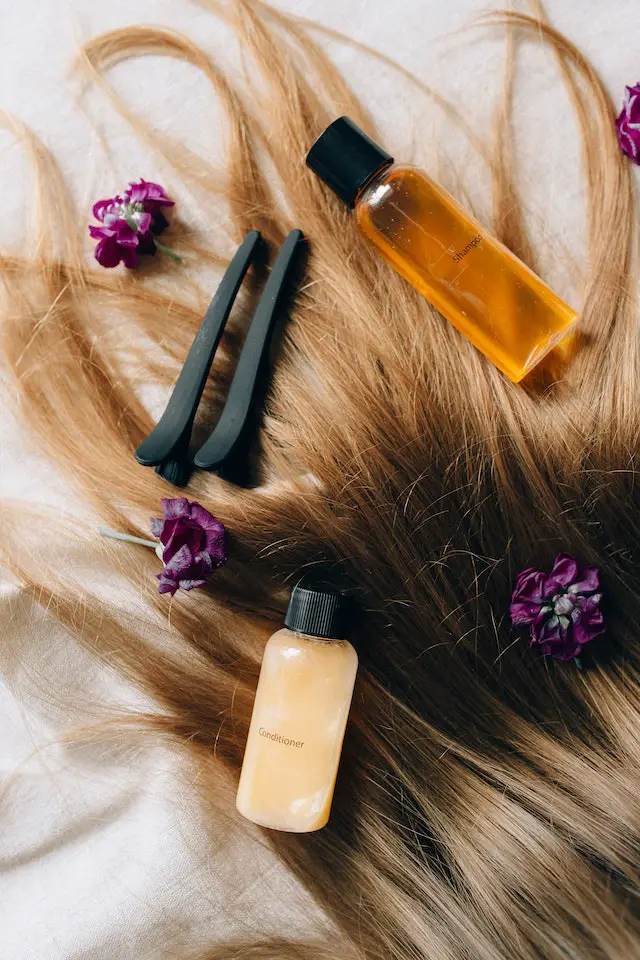
Pro Tip: Too much shampoo can dry your hair, so remember to apply a conditioning treatment after rinsing it.

3. Clean with dish soap

If shampooing doesn’t work, it’s time to go a notch up. Dish soap contains more potent chemicals that can cut tough grease and stains.

pexels karolina grabowska 5241044 How To Remove Paint From Hair - 10 Solutions That Work

This time I won’t ask you to apply dish soap to your hair liberally but recommend a spot treatment instead. Take some dish soap on your fingers and gently work it on the hair strands with paint. You can also use a washcloth or a comb to give the dried stain a nudge.

Scrub the paint for a minute or two and thoroughly rinse your hair out with water. If this trick works in the first round, perfect! If not, you can always repeat the process two to three times.

You can also use dish soap to wash off paint from clothes, but we have you covered if you want to find out more ways to remove paint from clothes.

Pro Tip: Let the dish soap sit in your hair for fifteen to twenty minutes before washing it out. Just remember to apply a conditioning treatment at the end.

4. Try vinegar

Vinegar is a great choice for removing paint from hair, especially apple cider vinegar. However, it has a pungent odour that might turn you off.

pexels maksim goncharenok 4663133 How To Remove Paint From Hair - 10 Solutions That Work
Spraying vinegar into hair

If you’re not bothered by the smell, go ahead with this tip.

Massage a good amount of vinegar into your hair, making sure the painted strands are completely soaked. Allow it to sit for a few minutes before detangling the strands with a fine-toothed comb. The natural acid in the vinegar helps break down the paint particles, making it easier to comb the dried paint out.

Finally, wash your hair with a regular shampoo to clean the vinegar and any paint residue.

5. Use toothpaste

When you try to remove paint from your skin, you turn to a loofah or a pomace stone to shake things up. But the same cannot be used on your hair, so you have to find the next best thing that is gritty and abrasive enough to clean paint from your hair.

Toothpaste has the perfect texture to remove paint from hair strands. So, start by squirting some onto the colour in your hair and massage it in thoroughly. You should stretch the strand you’re working to reach tough spots.

Rinse the toothpaste out to check if all the paint has come off. If your hair is back to its original state, give yourself a pat on the back. If not, repeat the process until you remove every speck of paint.

6. Try baby oil

Oil-based paints can be tricky to remove, and your best bet is to use an oil-based cleaner. Oil helps soften the dried paint and makes cleaning it easier.

You can take some baby oil on a cotton ball and dab it on the painted strands. Make sure to cover the stain completely by rubbing it in as much as possible. Leave it in your hair for around 30 minutes, then try to run a detangling comb through it. 

BABY How To Remove Paint From Hair - 10 Solutions That Work

You should be able to comb out the paint completely, but if some residue remains, you can repeat the same process again.

Finally, wash your hair and condition it as usual.

7. Apply olive oil

If you find baby oil to be too mild for the job, try olive oil instead to break down the paint. Apply a liberal layer of the oil to your hair, making sure to massage it into the strands with dried paint.

Let olive oil sit in your hair for fifteen to thirty minutes before combing the strands with first a wide-toothed comb and then a fine-toothed comb. In the end, simply wash your hair with shampoo.

A perk of using olive oil is that it makes your hair soft and shiny. So, even if it doesn’t clear all the paint away, you will be left with lustrous locks in the end.

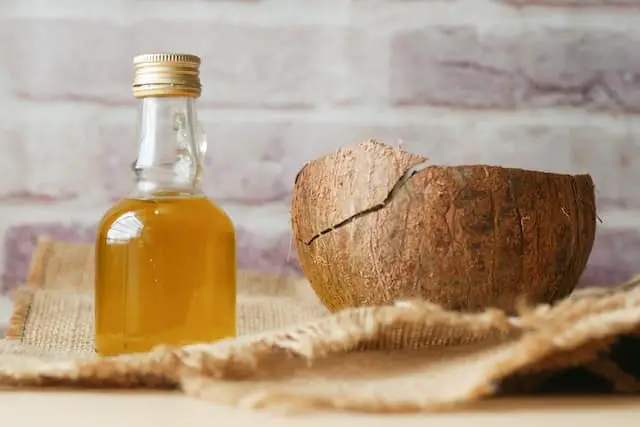
Try me: Coconut and vegetable oil work the same way as olive oil. So, feel free to use whichever one you have in your pantry.
pexels towfiqu barbhuiya 11809347 How To Remove Paint From Hair - 10 Solutions That Work

8. Clean with peanut butter

Did you think peanut butter was only good for making a sandwich? You’d be amazed at how this delicious snack can remove oil-based paints.

Before you start racking your brain trying to figure out why peanut butter is a good paint remover, let me give it to you straight. Peanut butter is made primarily of oil, making it perfect for breaking down oily substances.

The grit in peanut butter works the same way as sandpaper so massage some into your hair from where you want to remove the paint.

pexels roman odintsov 5149348 How To Remove Paint From Hair - 10 Solutions That Work

Allow it to sit for some time before checking its progress. If the paint starts to move around, it’s time to wash it out. But if the stain doesn’t budge, apply more peanut butter and wait a few extra minutes before washing your hair.

9. Use a chemical like turpentine or paint thinner

If you have exhausted all natural paint removers but still need to get rid of the paint in your hair, it’s time to bring in the big guns. Just be aware that strong chemicals like paint thinner, turpentine, or mineral spirit can damage your hair. For this reason, I am mentioning them near the end of the list.

These harsh chemicals can eat away the paint and remove it effectively from your hair. All you need to do is soak a rag with the chemical paint remover of your choice and wipe down the hair with dried paint on it.

In a few wipes, you will begin to see the paint coming off bit by bit. Reapply the chemical as needed and keep wiping until all the paint is removed.

Wash your hair thoroughly to ensure all the chemicals are removed. You can shampoo your hair twice just to be safe, as the harsh compounds can burn through your strands and leave permanent damage.

Pro Tip: Get more details about the two products: turpentine and paint thinner you can check out our blog. 

10. Try WD-40

If you are stuck with latex paint in your hair, you will need a heavy lifter to remove it. Although using on your hair sounds bizarre, it might be the solution you need.

51baYPQEjXL. AC SL1250 How To Remove Paint From Hair - 10 Solutions That Work

Spray it directly on the paint and rub the liquid, so it covers the area entirely. Let it sit for a few minutes so it can work its magic.

Once you start to see the paint move on your hair, rinse it out with warm water.

Pro Tip: Use this trick as a last resort because WD-40 can be very harsh on your hair.

FAQs

How to remove latex paint from hair?

Removing latex paint from hair can be challenging but rubbing alcohol, and other solvents can get the job done quickly. Soak a rag cloth in the solvent and rub the paint stain gently. In a few wipes, the paint will ultimately come off.

How to get enamel paint out of hair?

If you have a few specks of enamel paint in your hair, you can apply a few drops of cooking oil to the affected area. Massage the oil for a few minutes and wash your hair with regular shampoo.

How to remove acrylic paint from hair?

Acrylic paint is easy to clean from the hair. Work up a lather using warm water and shampoo and apply it to wet hair. Allow the product to sit for 10 to 20 minutes before washing it off.

Will nail polish remover get paint out of hair?

Nail polish removers are made of acetone which is a paint thinner. For this reason, it can break up the paint particles in your hair. However, it can cause damage to your hair and should only be used when you have exhausted all other paint-removing options.

Does hair spray remove paint?

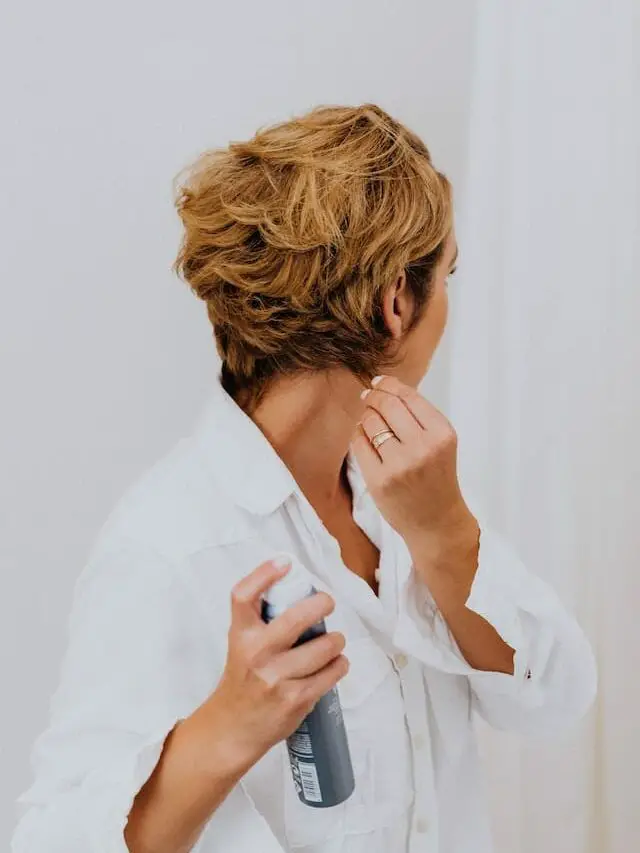
Hairspray contains isopropyl alcohol which helps break down paint stains on clothes and hair. Simply spray a generous amount on the paint stuck in your hair and allow it to work its magic for a few minutes. Next, comb through your hair to remove paint residue.

pexels karolina grabowska 5240259 edited How To Remove Paint From Hair - 10 Solutions That Work

Conclusion

The best way to prevent the paint from getting into your hair is by covering it. (Hint: shower cap) But if you do end up getting a few flecks here and there, my tips will help you get rid of them in no time.

So, keep calm and continue painting!

pexels elijah odonnell 3894557 How To Remove Paint From Skin - Face, Hand, And Nails

How To Remove Paint From Skin – Face, Hand, And Nails

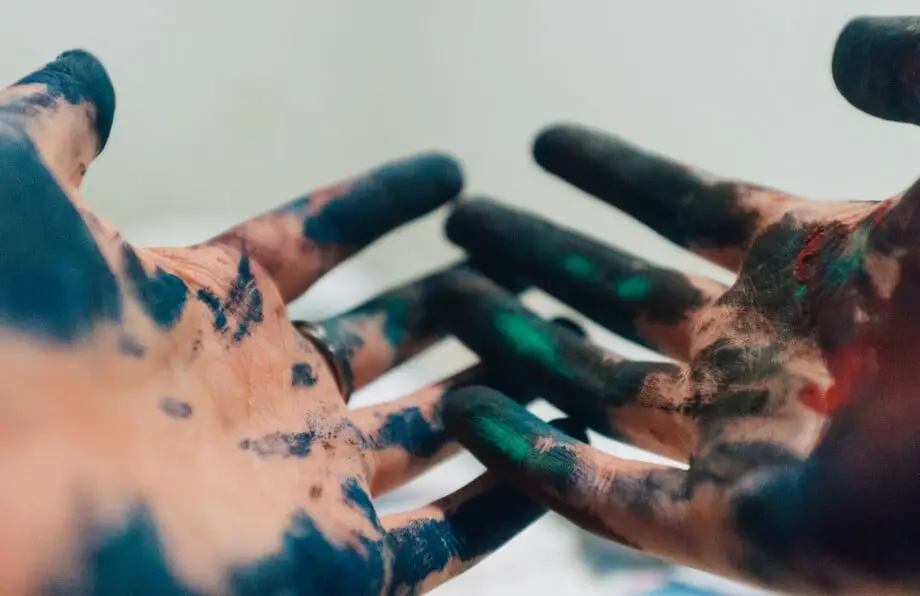
Painting is fun- whether you do it on a canvas or your walls. But once the project is complete and you’ve admired your creation, you look down only to find your hands and nails covered in paint.

Understandably, your first instinct is to simply hit the shower and wash everything off, but I have been in the same position too many times to believe that would work.

As a rule of thumb, water-based paints are easier to remove than oil-based paints because they dissolve in water. Fortunately, I have quite a few tricks up my sleeve to help you get rid of oil and enamel paints as well.

You can remove oil-based paints with oil-based cleaners. Sounds simple enough?

You can start with a light layer of mineral or baby oil to rub off the paint from your skin. If that doesn’t work, you can try rubbing alcohol or nail polish remover. For tougher stains, I recommend using vegetable or cooking oils.

But these are just a few cleaners to help you get rid of paint from your face, hand, and nails. In the article, we will discuss several other options that work just as well.

So, stick around to find the fastest way to get paint off hands and nails.

Can you remove paint from the skin?

Yes, absolutely!

The best way to clean paint from your skin depends on the type of paint you’re dealing with. This is important because both types of paints require different cleaning methods. 

Water-based paints require less effort as they dissolve in water, but oil-based paints are trickier and more time-consuming to clean.

Pro tip: The skin on your face is more sensitive compared to your hands and nails, so be gentle with it.

Let’s start with water-based paints.

How to get rid of water-based paint from skin and nails

Usually, paints are easier to remove while wet but water-based paints can be quickly cleaned even after they have dried. If you’re unsure whether your paint is water-based, here are a few examples to help you decide.

  • Water-based paints include:
  • Watercolors
  • Latex interior and exterior paint (spray and liquid)
  • Acrylic craft paint
  • Finger paint
  • Fabric paint
amauri mejia IhXrWDckZOQ unsplash How To Remove Paint From Skin - Face, Hand, And Nails

Now, let’s move on to paint removal methods.

Wash with water and soap

You should always begin with the gentlest cleaning method to avoid exposing your skin to unnecessarily harsh ingredients. Wet the skin with warm water and generously apply soap to the area. Work it into a lather and gently scrub away the paint using your hands or a washcloth.

You can repeat this method two to three times to completely remove any splatters of paint.

Use a pomace stone or salt

If you feel the water and soap aren’t working as well as you’d like, add some salt to the mix to add an element of abrasion. You can also use granulated sugar instead of salt- the idea is to give the paint a push with something harder.

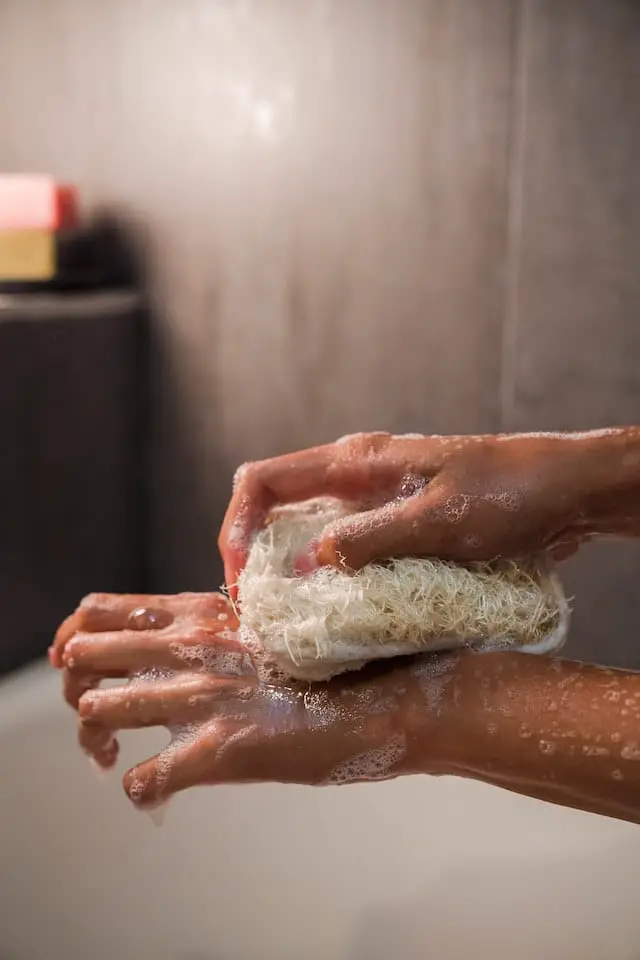
If these natural ingredients aren’t effective, use a pomace stone or a soap bar containing ground pomace. Scrub the skin using gentle motions and rinse well.

Apply isopropyl alcohol

If the water-based paint has dried on the skin, you can dampen a cotton ball with isopropyl or rubbing alcohol and apply it lightly to the paint. Keep scrubbing the stain with the cotton ball for a few minutes until the color starts to dissolve.

Once the paint is wet with alcohol, try the above two steps to remove it altogether from your skin.

pexels greta hoffman 9475421 How To Remove Paint From Skin - Face, Hand, And Nails

How to remove oil-based paint from skin

Oil-based paints can be challenging to remove, especially if they have dried on the skin. They can irritate your skin’s natural barrier because of the petroleum distillates it contains. Therefore, it’s best to act quickly and remove the paint before it damages your skin.

Turpentine and thinner and other mineral spirits are best for removing oil-based paints but aren’t the most skin-friendly. For this reason, you should exhaust other safer options first before jumping to these strong cleaners.

PS: Have a look at a greater understanding of the difference between turpentine and thinner before using them on your skin. 

Use baby oil

Since oil-based paints can be cleaned using oil cleansers, this is the gentlest option of the lot. Apply some baby oil liberally on your skin using circular motions. Keep cleaning the dried paint with the oil until it starts to move around. It may take a few minutes to see visible results but stay patient.

Rinse and repeat a couple of times to get rid of paint splatters completely.

Try cooking spray

Removing oil-based paint with baby oil might test your patience so try cooking spray instead. Spray a thick layer of cooking spray on the paint-covered area. Rub the skin gently to move the paint, and keep spraying more as you scrub the previous layers off.

If you have managed to get a considerable amount of paint on your skin, you may need multiple sessions of cooking spray to get it off entirely.

Wash with dish soap

Dish soap is used to clean up oil spills in the kitchen, then why shouldn’t it work on oil-based paint?

After you’ve used a cooking spray or baby oil, you will be left with oil build-up on your skin. That’s when you can turn to your dish soap and clean the grease and oil off.

Dish soap contains mild cleaning agents that don’t harm the skin, so rest assured that even if the paint doesn’t come off, your skin will be just fine.

Clean with mayonnaise

Who would have thought your favorite sandwich spread could remove tough paint stains?

While this choice may sound surprising at first but just hear me out. Mayonnaise is made with oil, so it works similarly to other oil-based cleaning options. But the highlight of using mayo is that it can be cleaned up easily once you’re done because it’s not entirely oil-based.

It is a safe paint remover that should probably be your first or second choice. Since it’s so mild, it may not get the job done as well as other potent ingredients, but it’s a good place to start.

Petroleum jelly

Petroleum jelly can do much more than just hydrate your skin. It can be used to lift oil-based paints from your skin as well.

Since petroleum jelly has a mild formula, it’s perfect for sensitive skin. While it can be used on your hands, it’s ideal for cleaning paint off the face.

That being said, the mild formula may not be as effective at removing paint as the other options mentioned, but it’s a good start. Just make sure the jelly doesn’t spread paint onto other parts of the skin as you rub it in.

pexels dana tentis 725998 How To Remove Paint From Skin - Face, Hand, And Nails
Petroleum in a Jar

Use acetone

Acetone is the main ingredient in nail polish removers; therefore, it does a pretty decent job of removing paint from the skin. However, it is not a gentle cleaning agent and can cause adverse reactions on the skin.

Although it’s highly effective at getting rid of paint, I recommend using this method only after you’ve exhausted all the others.

Just make sure to use it sparingly to avoid getting your skin worked up. Wash it with warm water and soap immediately to minimize its harmful effects.

Make a paste of coconut oil and baking soda

You can mix 1 cup of coconut or any vegetable oil with ½ a cup of baking soda. Create a thick paste and apply it to the dried paint. Next, use toothpaste to gently scrub away the stain and continue until all the color has come off.

You can wash your skin with dish soap and warm water to remove paint residue and the grease from coconut oil.

pexels polina tankilevitch 3738365 How To Remove Paint From Skin - Face, Hand, And Nails
Coconut Oil and Baking Soda

Try Vick’s Vapor Rub

Did you know that Vick’s Vapor Rub contains turpentine oil? Well, it does, and that too in safer quantities. Therefore, you can use it to remove oil-based paint without aggravating your skin.

Cover the area you want to clean with a layer of Vick’s vapor rub and let it sit for a few minutes. Then gently wipe away the paint with a clean washcloth, some soap, and water.

How to remove paint from under fingernails

The worst side-effect of being an avid paint lover is paint-stained fingernails.

The problem with cleaning fingernails is that the skin underneath is very hard to reach; therefore, removing paint becomes tricky. Your best bet for cleaning your nails is to soften the dried paint first and then attempt to remove it.

If you’re working with water-based paints, any paint on your nails should wash right off with water and soap. In case it has dried down, you can use a sugar scrub or butter to soften the paint before washing it off.

However, if you need to clean oil-based paint, get ready for a long ride.

  1. Scratch as much paint as you safely can from your nails and the skin underneath them.
  2. Wash your hands thoroughly with soap and warm water.
  3. After drying your nails, apply a few drops of mineral oil to the dried paint and massage it in.
  4. Continue rubbing the paint for a minute to soften it.
  5. Use a soft-bristled brush (an old toothbrush can work too) to scrub the paint on top and underneath your nails. Remember to be gentle, as the skin under your nails is delicate.
  6. Wash your hands again with warm water and soap to remove all residue.
  7. Repeat the above process until your remove all the paint from your skin.

Mineral oil is just one option; you can also try the above methods to clean paint from your fingernails. Always start with the mild options first and use a chemical remover only when everything else fails.

Pro Tip: Citrus fruits like grapefruit, lemon, and oranges contain natural acids that help remove paint. They’re also safe to use and won’t irritate your skin.

 Tips to keep paint off your skin

Removing paint from your face, hands, and nails is a time-consuming task that gets even more difficult when you’re tired from completing a paint job. So, instead of focusing on ‘how to remove paint from the skin,’ think about ‘how to prevent paint from getting on your skin.’

Here are a few handy tips you can use the next time you paint.

  • Wear thin rubber or plastic gloves.
  • Wear an old long-sleeved shirt with overalls or long pants.
  • Use a paint roller guard to avoid paint splatters when painting.
  • Add a pistol-grip handle to your spray can to minimize the staining of your trigger finger.
  • Keep a wet cloth handy while you paint to remove any paint splatters immediately.
  • Wear safety gear to protect your hair, face, hands, and clothes from accidental paint splashes.

FAQs

How long does it take for paint to come off the skin?

Water-based paints can come off in a single wash, but oil-based paints may need repeated washing and scrubbing. You can expect it to take two to three days to come off completely.

Does WD 40 remove paint from skin?

Yes, WD 40 can remove paint from the skin, but it has harmful chemicals that can cause an adverse reaction. That’s why you should stick to mild paint removers only.

What happens if you have paint on your skin?

Paint can block the pores on your skin, leading to acne, blemishes, and rashes. Any type of paint pigment prevents your skin from breathing, so you should wash it off entirely while it’s still wet.

Is wall paint toxic to skin?

Wall paints are usually safe, but prolonged exposure to them can sometimes cause skin irritation, a sore throat, and watery eyes.

Final verdict

If you’re someone who enjoys DIY paint jobs, you should make sure to cover your clothes and skin adequately to avoid any paint splatters. However, if you miss a spot, you can try any of the methods above to remove paint from your skin.

We have you covered even if you need help removing paint from your clothes, so check that out as well.

pexels blue bird 7218568 How Much Interior Paint Do I Need - Do The Math Yourself

How Much Interior Paint Do I Need – Do The Math Yourself

Looking for activities to engage with your friends and family? Paint your interiors! It is an answer to dull and faded walls, transforms your space, and, more importantly, gives you cherishable moments.   

As for me, nothing gets me more excited than talking about coloring a home’s interior because indoor painting is what makes a house the HOME.

Being someone with a passion for painting, I often encounter the question: how much interior paint do I need? 

Let’s answer you right away;

To paint a room of 400 sq ft, you need one gallon can of paint. To paint a room of 800 sq ft, you need two-gallon cans of paint and so forth. If we talk about an average room size, 1 gallon can of paint easily covers the entire room with a single coat. 

Now only if things were this effortless…

I know, I know, if you’re up for a DIY job, you have so many questions racked up in your brain, and my job is to get them all answered. 

Keep scrolling to learn about all the ins and outs of the paint quantity you need to make your walls shine.

PS: Other than learning how to calculate the quantity of interior paint needed, some more nuggets of gold await you to ensure nothing goes wrong while you’re on the job. Grab them 🙂
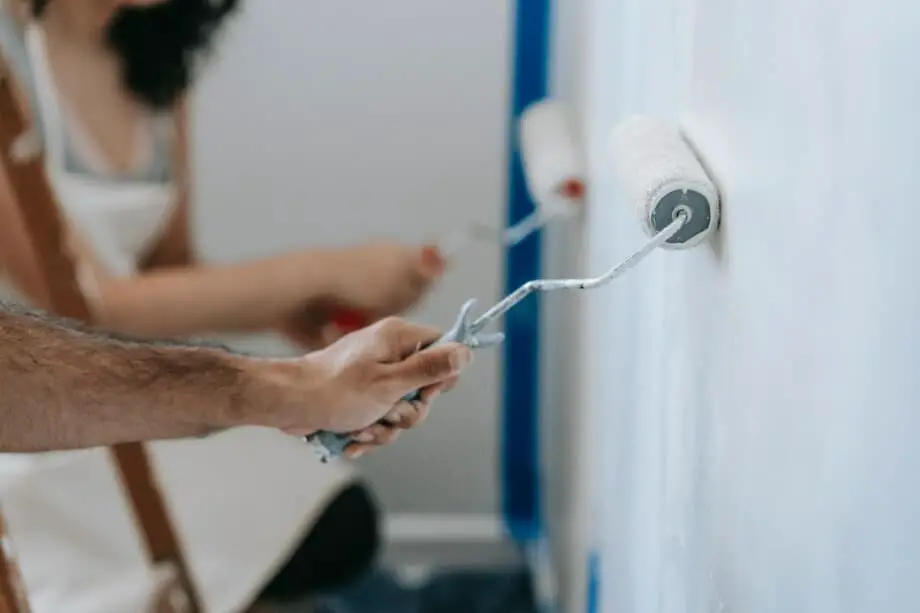
How Much interior Paint Do I Need?

When it comes to painting indoors, there’s some measurement that goes into it. To avoid multiple trips to the store or overspending a lot of money just to see cans leftover in your garage, you need to be sure how many gallons of paint you need. 

A Rule of Thumb to Remember…
One gallon can of paint is needed for a room of 350 sq ft to 400 sq ft depending on the nature of your walls. Textured and porous walls like stucco absorb more paint.

If you can learn how to take your wall’s dimensions and follow the steps coming ahead, calculating the paint quantity will become as easy as ABC.

To make things easier to understand, we will consider the example of a medium-sized room whose length, width, and ceiling height are 12 ft, 10 ft, and 9 ft, respectively.

1. Calculate the Area of Your Room

  • Measure the perimeter of your room which is (length + width) x 2. In our case, it becomes (12 ft + 10 ft) x 2 = 44 ft.
  • To get the room’s total wall area, multiply the perimeter by the ceiling height. (44 ft x 9 ft) = 396 sq ft.

2. Calculate the Area of Windows and Doors

  • It’s obvious not to paint your windows and doors. Which means we will not include their area in our measurements.
  • An average door is 20 sq ft, and an average window is 15 sq ft. The total sq ft of the two is 35. You can measure the area of your doors and windows if you think they’re not a standard size.

3. Measure the Total Room Area Minus the Area of Doors and Windows

  • In our case, we are considering one standard door and one standard window in the room. Now our total wall area of the room becomes 396 sq ft – 35 sq ft = 361 sq ft.

4. Divide the Answer by 400

  • Since we already know that one gallon can is needed to cover 400 sq ft, we will divide the total wall area by 400, and that will be an adequate measurement of how much paint you’ll need. For our considered example, 361/400 = 0.9025. This means 1 gallon can will be enough to cover an average-sized room of 12 ft x 10 ft. 

The above measurements are for a single coat. For two coats, you can simply multiply the number of gallon cans by 2. 

Although the above steps can help you calculate the paint quantity for any dimensions, the below table will help give an estimate of some standard room sizes (the standard area of one door and one window are taken into consideration).

Room SizeRoom DimensionGallon Cans Needed
Small8 X 100.81 ≅ 1
Average9 X 120.945 ≅ 1
Large12 X 161.26 ≅ one and a half gallon 

Pop Out Your Room With Different Trim Colors

Finishing your crown moldings, baseboards, windows, doors, and ceilings in a different color than walls attracts more eyes. 

To calculate the paint needed for trims, multiply the length and width of each trim separately and add all the area measurements to get the total area of the trim. 

This may sound tiresome, but usually, trims are all the same size, so it won’t take you much time to recalculate.

Now to calculate how much paint is needed, simply divide the area by 400, and you’ll get your answer.

PS: Trims do not need much paint, so consider buying paint in quarts rather than spending on an entire gallon. Do check out the details about how to paint trims on our website. 

Time to Paint the Ceiling

To calculate the paint needed for the ceiling, just multiply the length and width of your space. Now divide this area by 400 to get your desired answer. You will likely need paint in quarts for ceilings as well. 

Let’s Calculate the Primer Needed

Did you just think of finishing your walls without a primer? That’s definitely a BIG NO, as your walls may start to crack shortly. Moreover, you will also need multiple coats of paint to finish indoors. You can read more about why primer is necessary and what happens if you skip it. 

Rule of Thumb for Primer…
You may need more primer than you need paint as one gallon can of primer covers 200 sq ft.

To calculate how much primer is required, you just need to divide your total area by 200 and the answer will give you an estimated value of the gallons. 

Go for Paint Calculators

Another way to determine the quantity of indoor paint you need to cover your spaces is to use online paint calculators. The calculator has columns that let you insert the value of your walls’ width and height and mention the doors and windows you have in the room. Moreover, you can also add measurements of the baseboards, crown moldings, and trims in the custom calculator option. After inserting all the values, press the calculate button, and there, you have it – your answer to how much indoor paint you need to coat your spaces. 

PS: Do not forget to paint the doors. You can see the best paint for interior doors and pick the right one for yours.

Some Nuggets of Gold Before You Pick Up the Brush

  • Be properly prepared with the right tools and equipment. Using the right tools can lead to less paint consumption, offer a better and smooth finish without marks, and save you time and cost. 
  • Recoloring your walls with the same old color? Just one coat of paint would do the work. Moreover, the good news is, you won’t need a primer for recoating. Hence, you will be refurbishing your home at a lower cost. 
  • Getting custom paint? Make sure to calculate exactly and get all the batches at the same time for evenly matched hues. You may also need to have a quart or two extra for future touch-ups.
  • If your walls are porous like stucco or you have unpainted dry walls, you may need more paint than calculated. While not mandatory, it is strongly recommended to apply primer to stucco walls to protect color and have consistent shade. You can learn more about priming your stucco walls. 
  • To prevent your walls from having roller lines, ensure your final stroke goes down the wall and not upwards.

FAQs

How much paint do I need for a 12 X 12 room?

For a 12 X 12 room with a 9 ft height, 1.25 gallons of paint would suffice for a single coat. For multiple coats, you can multiply 1.25 by the number of coats needed. 

How much interior paint do I need for a 2000 sq ft. house?

To color a house of 2000 sq ft, you will likely need 5 gallons of interior paint. You are likely to go for a different shade for each room, so it is best to calculate separately for each room. 

How much interior paint do I need for a 1500 sq ft house?

Since 1 gallon covers 400 sq ft, to paint the indoors of a 1500 sq ft house, you will need around 4 gallons of interior paint. However, it also depends on the number of rooms and size of each room, this article covers how you can calculate it precisely to get the accurate answer.

How much interior paint do I need for a 1000 sq ft house?

A 1000 sq ft house can be easily painted with 2.5 gallons of paint. Again, it depends on the size of your rooms, bathrooms and kitchen and what exactly you want to paint. We recommend you to calculate your rooms separately to get exact answer to your question.

Is a 5-gallon can of paint cheaper than 1-gallon? 

Yes, buying a big bucket of paint will cost you less than buying single buckets individually. If you have a big job and a single color is needed, go for a bigger gallon instead of buying smaller gallons. 

Can a quart of paint cover one wall?

A quarter of paint generally covers 100 sq ft area. If the area of your wall is 100 sq ft, it can be easily covered by a quart. For estimated coverage, check out the paint container.

I have a sloping ceiling. How will I calculate the area?

A sloping ceiling makes a triangle, and to calculate its area, you need to multiply the height of the triangle by its base and divide that number by 2. Visit the link to learn more complexities on how to measure rooms with sloped ceilings. 

In a Nutshell

Painting indoors is a fun way to make the most of time with your family and friends or by yourself too. There is no exact quantity to how much paint you will need to color the interior, but a good estimate is 1 gallon for 400 sq ft. You can further calculate the area of the walls and divide that by 400 to evaluate an approx quantity of the containers needed. 

Moreover, if you are thinking of refurbishing your indoors, make sure to check out the best season to paint the interior,  and the best humidity and temperature to paint indoors so everything happens smoothly. 

Got more questions? Drop them in the comments below, and we will get back to you. 

pexels max vakhtbovych 6238608 What Paint Finish Is Best For Interior Doors and Why 

What Paint Finish Is Best For Interior Doors and Why 

Interior doors face the most wear and tear, so it’s important to repaint them once they start looking ugly. However, it’s easier said than done. But by selecting a paint finish that is durable and washable, you can extend the life of your door paint by a few years.

Semi-gloss is the best paint finish for interior doors because it can be cleaned easily. The finish is durable and has a glossy appearance that isn’t too bright but also highlights the surface it’s applied to against flat walls.

Picking a color for doors and trims is relatively easy, but when it comes to selecting the finish, many people need help deciding which way to go. I will reveal how to choose the right paint, finish, and color for your interior doors so you can paint confidently.

Should interior doors be matte or glossy?

There are five paint finishes: high-gloss, semi-gloss, satin, eggshell, and flat. The first two are obviously glossy, while satin sits right between glossy and matte ends. Eggshell has a very subtle sheen to it; therefore, it can’t be called glossy.

As a rule of thumb, glossy surfaces are more durable and easier to clean than their flat counterparts. Since interior doors get their fair share of traffic, it’s just smarter to select a finish that doesn’t ruin easily.

Apart from washability, glossy surfaces have the ability to draw attention to themselves. So, when you paint your doors and trims a high-gloss or semi-gloss finish, it stands out against flat walls, especially if everything is painted the same color.

Hence, a glossy finish is better suited to interior doors surrounded by matte walls.

pexels martin de arriba 9895227 What Paint Finish Is Best For Interior Doors and Why 

Is satin or semi-gloss better for doors?

The satin finish feels velvety to the touch and has a low sheen. Even though it is slightly shiny, it’s still not as glossy as a semi-gloss finish. Satin paints can be cleaned easily compared to flat colors, but the semi-gloss finish is more durable and hard-wearing, making it a better choice for doors and trims.

You can learn more about how washable each paint finish is to ensure you select the correct one for your home.

Semi-gloss or High-gloss: Which one is better for doors?

High-gloss paint is hands-down the most resilient of the lot, and it’s perfect for areas prone to nicks, stains, and high traffic. Naturally, you’d feel it is the better choice for interior doors. But the finish also has a downside: it brings out every surface imperfection.

Moreover, high-gloss can be ‘too bright’ for some people as it gives an enamel/plastic-like finish. Semi-gloss, in comparison, offers all the benefits of a glossy surface without extreme shine.

Why you should choose semi-gloss for your doors

Semi-gloss finish is widely used for doors, door jambs, and interior trims. Homeowners prefer this finish as it can easily withstand continual dusting and rigorous cleaning with a damp cloth. Since doors accumulate dust just like other furniture in your home, you need a finish that can handle regular cleaning. Hence, a semi-gloss finish is perfect for interior doors.

You can use a semi-gloss finish on the following interior doors:

  • Slab doors
  • Solid wood doors
  • Raised paneled doors
  • Hollow-care interior doors

Doors are a focal point on plain walls, and a semi-gloss finish brings attention to just that. In addition, the semi-gloss sheen is available in a wide variety of colors, so you have plenty of options to choose from.

Is oil-based paint more lasting on doors?

Door paints are either water-based or oil-based, and both have different properties.

Latex or water-based finishes are perfect for indoor use because they are quick-drying and have low VOCs. On the other hand, oil-based paints contain harmful fumes you’d rather not expose your family to.

However, oil-based paints are much more long-lasting and durable. They are also ideal for use on wood surfaces.

Generally, water-based paints are recommended for walls, ceilings, etc. but not on furniture or doors. Oil-based paints are best for doors and trims because they dry to a hard finish and can be cleaned easily. So, you can always search for oil-based paints specially formulated for indoor use to counter their high VOC content.

Rust-Oleum Protective Enamel Paint Stop Rusts is an excellent option as it’s an oil-based, semi-gloss paint formulated for indoor and outdoor use. The color delivers a solid finish that withstands abrasion, fading, and chipping, making it an ideal choice for interior doors.

71Hda9pOlqL. AC SX679 What Paint Finish Is Best For Interior Doors and Why 

Also, make sure to paint your doors when the temperature is ideal, so it dries quickly.

How to select a paint color for your doors

Now that we have discussed paint finishes let’s look at how to pick the right color for your interior doors.

You first need to decide how much attention you want to draw to the doors. Do you want them to stand out against the walls? Or do you want them to blend right in?

Painting your doors white against white walls creates the illusion of open space. It brings light into the room and makes it appear brighter. On the other hand, if you paint your doors a statement color such as aqua blue, grey, etc., they stand out because of the high contrast.

Therefore, the color you choose for your doors ultimately depends on the theme you have going in your home and your personal preference.

Can you paint your door and frame a different color?

pexels yelena odintsova 9953504 What Paint Finish Is Best For Interior Doors and Why 

Yes, you can color the door and its frame a different color. For example, if the walls are blue but you want the doors to be white, it is up to you to paint the frame either blue or white.

If you pick blue for the frame, it will blend seamlessly with the wall around it and make the door color pop. Similarly, painting the frame white will make it appear cohesive with the door.

Remember to maintain some kind of balance with the colors. If you paint the doors, walls, trims, and frames all a different hue, the result might look haphazard and all over the place.

It’s better to paint the door frames and trims the same shade, so there is a uniform flow of color around the room.

Helpful tips for selecting door color

  1. If you prefer a classic look, paint the door, trims, and walls the same color.
  2. Whether you have light or dark walls, neutral-colored doors go well with both hues. You can color your doors beige, white, black, taupe, tan, or grey.
  3. If your door has architectural details that you want to highlight, paint it two shades darker or lighter than the walls.
  4. For wallpapered rooms, you can pick a deeper color from the design for the door and the lightest color for the trims. 

Some people prefer a wood finish over other paints. You can check Giani Wood Look Paint Kit For Front & Interior Doors if you have a similar preference. It delivers a faux wood finish and is available in Black/ Walnut, English Oak, Honey Oak, Red Oak, and Royal Mahogany.

71MRnYPp92L. AC SX300 SY300 QL70 FMwebp What Paint Finish Is Best For Interior Doors and Why 

If you plan to renovate your doors, don’t forget to spray paint your trims and breathe new life into your home.

Traditionally, doors are painted the same color as the surrounding walls, but now homeowners opt for stunning accent colors to add some personality to the room. Statement colors work best for doors that have unique molding and paneling. So, if you want to spruce up a dull room, paint your door a bright hue for a pop of color.

FAQs

Is it better to paint a door standing up or laying down?

The best way to paint a door is by laying it down, as it ensures that there are no drips or runs. While painting the door standing up sounds convenient, it will not always give the smoothest finish.

Do doors need two coats of paint?

If you want to achieve good paint coverage, you will need at least two coats of paint on the door. When buying paint, measure the door’s surface and keep two layers in mind.

Should I paint the door frame the same color as the door?

It depends on your preference. If you want the door frame to look prominent, choose a color that is darker than the walls and different from the door.

What is the most popular color for interior doors?

You will find white interior doors in 99% of homes. This is because white creates the illusion of open space and lets the furnishing and décor in the room take center stage.

Conclusion

Selecting the right finish for your doors is easy if you know what you’re looking for. Just remember that doors are constantly handled by people living in your home, which is why you need a durable and wipeable finish. High-gloss, semi-gloss, and satin finishes are all washable, so the final decision is up to you! Make a wise decision today and enjoy a lasting finish for years to come.

pexels kindel media 8325716 Thinner Vs. Turpentine - Knowledge of the Basic Differences

Thinner Vs. Turpentine – Knowledge of the Basic Differences

Have you believed that thinner and turpentine are the same for all these years of your life? Well, the same was the case with me until I started painting. I felt like a kindergarten kid finding out that thinner and turpentine are similar but not the same. 

The main difference between thinner and turpentine is that thinner, as the name suggests, is a thinning agent for oil-based liquids. Moreover, it can also be used as a cleaning agent over paint. At the same time, turpentine is an essential oil extracted from pine wood that acts as a solvent for paints and a thinning agent for dyes.

Before you begin painting, you must know your liquids and solvents. Sometimes, deciding what to mix with paint becomes the hardest decision of your life. Therefore, to avoid confusion when you’re all set to begin painting, find the differences between thinner and turpentine and their advantages and disadvantages with me.

Difference between Thinner and Turpentine

ThinnerTurpentine
Used as a thinning agent for liquidsUsed as a solvent for oil-based paints
Made from petroleumMade from pine trees
Synthetic productNatural Product
No significant effect on paint drying timeHelps paints dry quicker
Bearable odorVery strong smell
Has higher toxic compoundsEco-friendly additives
Comparatively cheaperHeavy on the pocket

Thinner and turpentine are widely used for mixing with paints before application on the walls. However, each of them has its advantages and disadvantages. Let’s dig deeper into how suitable thinner and turpentine are and what are the limitations of their usage.

THINNER – advantages and disadvantages

Advantages
Readily available, anyone can purchase
It is a highly volatile and potent compound  
A fair evaporation rate
It works great on wooden, metallic, and concrete surfaces
Mainly, it is used as a cleaning agent
It dissolves well in oil-based paints and eases its application
It also helps remove paint stains
Disadvantages
Synthetic additive
More expensive than other artificial thinning solutions like mineral spirits
Be careful when using it, as thinner is a highly addictive and toxic compound
People misuse it as many feel relaxed when they inhale the vapor of thinner
Inhaling can cause severe damage to the central nervous system
It doesn’t work on rubber and plastic surfaces and can make it rough and lose its shine

Turpentine – Advantages and disadvantages

Advantages
A natural pine resin derivative and a safe compound to use
An excellent solvent for paints
Exceptional cleaner of all types of paints
Often used in the cosmetics industry
It improves paint consistency to make it more spreadable
Its high evaporation rate allows the paint to dry faster, speeding up the painting process
Cleans fresh paint stains and also the old and hardened stains
It can be effectively used as furniture polish
An eco-friendly compound that is less toxic and is free from petroleum distillates which cause pollution
Disadvantages
It has a very strong smell that causes headaches, dizziness, nausea, and vomiting
Avoid getting eye-contact with turpentine as it can causes severe irritation, medical assistance maybe required
If swallowed, immediately get medical help as it can lead to kidney infections and adversely affect the bladder
It is a poisonous compound and can higher concentrations can lead to death
One should handle it with proper safety measures and SOPs and avoid inhaling, ingesting or injecting it

Thinner or Turpentine – Which one is better? 

Turpentine is derived from a natural source that is the pine trees. This makes turpentine less toxic than thinner. In addition, it improves the spreading ability of paint. Thus, paint mixed with turpentine gives a classic finish. Moreover, turpentine has proven to be more effective in cleaning and removing tough stains. Finally, turpentine is cheaper than thinner, making it easy for your pocket. 

However, turpentine has a powerful smell that few people can bear. If that sits well with your nose, using turpentine as a paint-thinning agent is a great decision.

Alternatives to Thinner and Turpentine

Both turpentine and thinner are available at any departmental store. However, for various reasons, some people may prefer using something other than these agents to mix with their paints. For example, some may not be comfortable with the prices or would strictly want to avoid these chemicals’ toxicity. In that case, some alternatives for turpentine are linseed oil, gamsol oil, samsodor, lavender spike oil, safflower oil, stand oil, poppy seed oil, and walnut oil.

Frequently Asked Questions 

What is turpentine commonly known as in America? 

In America, Turpentine is commonly known as turps. Other names for turpentine are oil of turps, gum thus, gum spirits, gum turpentine, wood turpentine, rectified turpentine oil, sulfate wood turpentine, and sulfate turpentine.

Can you use Kerosene instead of turpentine? 

Kerosene can be an alternative to Turpentine as Kerosene and Turpentine have similar properties, and both can thin out oil-based paints. However, since turpentine originated from pine tree oil and Kerosene is petroleum that comes from crude oil, there will be a difference in their smells. 

Can I use Acetone instead of Turpentine? 

Yes! Acetone can be used instead of turpentine as a solvent for oil-based paints and as a thinner and a cleaning and stain removal agent too.

Can I use turpentine for latex-based paints? 

Latex paints are water-based paints. This is because oil doesn’t mix with water. Since turpentine is oil from pine trees, it can only work as a solvent or thinner for oil-based paints. Thus turpentine cannot be used for latex-based paints. For latex-based paints, you should only use water.

How much thinner should you use with paint?

You can mix thinner with the paint, keeping the paint to a thinner ratio of 4:1 or 3:1. You can always add a smaller quantity of thinner, check the consistency, and then decide whether you need more. However, while mixing thinner with paint, ensure that the paint quantity is always higher. 

Final Thoughts

Turpentine and thinner are both used to regulate the consistency of paint. Neither of them should be used with latex-based or water-based paints. Since turpentine is a more natural compound and low in toxicity, it is mainly preferred over a thinner one. However, turpentine is costly. If you can afford the price and bear the power smell it gives off, turpentine should be your mixing agent. However, thinner does its job effectively too.

If you are interested in which one to use for getting rid of paint from your hands, nails and face, you can read a detailed blog on our website.