
How to Ventilate a Room When Painting: Step-by-Step
This post contains affiliate links. As an Amazon Associate, we earn from qualifying purchases.
To ventilate a room when painting, put a box fan in one window blowing out and crack a window on the opposite wall for make-up air. Keep both open 2 to 3 days after painting (CPSC), or 48 to 72 hours after the paint looks dry (Montgomery County DEP).
That clock is where most home painting goes sideways. The window gets opened, the smell fades by lunch, the room gets closed, and everyone sleeps in it that night. Knowing how to ventilate a room when painting means keeping air moving well past the point the smell disappears. The compounds are still off-gassing below the level your nose can detect.
What follows is the box-fan setup, the source-by-source disagreement on how long to keep it running, and the cases where the standard advice falls apart entirely.
Key Takeaways
- Fan blows out, fresh air comes in elsewhere. Pointing the fan inward just recirculates the same fumes through the house.
- 48 to 72 hours after the paint looks dry is Montgomery County DEP’s standard. CPSC’s 2 to 3 days is measured from application, which is a shorter clock.
- Central air does not count as ventilation. Most HVAC systems recirculate air and do not remove VOCs, per Montgomery County DEP.
- Shared walls leak. Vapors move through outlets, pipe gaps, and floor seams in apartments, so adjacent units need exhaust too.
- Secure the fan inside the frame. EPA says a box fan that can fall out or tip over is a hazard, not a tool.
The Single-Window Mistake That Keeps the Smell Around
One cracked window moves almost no air compared to a fan pulling a cross-breeze through. When you compare ways to ventilate a room when painting, a single open window lets vapors drift out slowly and does nothing to keep them from seeping into the next room.
Box-fan exhaust works by creating a pressure barrier. A fan blowing from the work area out of the house removes pollutants at the source and prevents air from moving from the work zone to the rest of the home. Cross-ventilation alone, without an exhaust fan, removes a smaller share of the vapors and leaves the rest to drift.
The pressure barrier is the whole point. EPA describes this in its EPA indoor air quality remodeling guide: the fan pushes air out, and the rest of the house becomes higher-pressure than the work zone, so vapors stay put.
I once owned three fans and used the one that fit in the window. That’s the whole selection process. (My spouse still brings it up.)
Here’s what actually goes wrong when the setup is half-right:
| Symptom | Likely cause | Fix |
|---|---|---|
| Smell lingers past day 3 | Fan blowing inward | Flip the fan so it exhausts |
| Odor gone, headaches persist | Compounds below odor threshold | Keep ventilating per schedule |
| Neighbor’s unit smells of paint | Shared air through gaps | Vent adjacent units too |
| Fan keeps tipping | Not secured in frame | Clamp or wedge it in the window |
The second row is the one that catches people. Montgomery County DEP notes that some of the more powerful organic compounds released through off-gassing sit below human odor thresholds. If you’re trusting your nose as the safety gauge, you’re guessing. If you want the full breakdown of which compounds matter and why, the site’s paint fumes guide walks through it.
How Do You Set Up a Box Fan for Paint Fumes?
How do you set up a box fan for paint fumes? Short version: fan in the window, blowing out, secured so it can’t fall.
Before you start: A box fan can fall out of an open window or tip onto a child; EPA says secure it inside the frame so neither happens. If it rains or snows, shut the fan off and pull it inside to avoid electrical shock. And if your home was built before 1978, treat the paint as lead until a lead-based paint inspection says otherwise; EPA’s standard ventilation practices are not approved for disturbing lead-based paint.
Painting a small bedroom, I put a box fan in one window facing out and cracked the window on the opposite wall. The latex smell cleared quickly, versus a stale all-day headache when I just opened one window and hoped. I used to point the fan inward and wondered why the whole house smelled like primer. Learned that one the hard way.
The setup that works:
- Open the window you’ll exhaust from. Pick the one closest to the work area, ideally on the downwind side of the house.
- Seat the box fan in the frame, blowing out. Push it until the frame grips it. If it wobbles, wedge it with a folded towel.
- Crack a window on the opposite wall. This is the make-up air path. Without it, the fan starves and the pressure barrier collapses.
- Run the fan the entire time you’re painting and for the full post-paint window. Not just while the roller is wet.
- Check the fan every few hours. Vibration walks it loose in the frame, especially on older single-hung windows.
If it goes wrong, the fix is usually the make-up air. A fan that’s running but not moving air is almost always fighting a sealed room. Open another window across the space and the pull comes back.
For a bigger job or a room with only one window, a dedicated paint fume extractor beats a box fan because it can run ducted to a window while the door stays shut.
The 48-to-72-Hour Clock Nobody Follows
The sources do not agree on the exact window: CPSC says keep windows wide-open for about 2 to 3 days after painting, while Montgomery County DEP says at least 48 to 72 hours after painting, with its how to ventilate a room when painting clock starting after the paint looks dry.
The sources do not agree on the exact number, and pretending they do is how people end up sleeping in a half-cured room.
| Source | How long to ventilate | Clock starts |
|---|---|---|
| CPSC | About 2 to 3 days | After painting |
| EPA | At least 72 hours | After installation |
| Montgomery County DEP | 48 to 72 hours (72 preferred) | After paint looks dry |
Read the third column carefully. CPSC’s 2 to 3 days and Montgomery County’s 48 to 72 hours are not the same clock. Montgomery County starts counting when the paint looks dry, which is hours after you stop rolling. That makes their standard materially longer end to end.
Why the Clocks Disagree
CPSC’s guidance in its painting document addresses ventilation after painting. EPA’s 72-hour figure is the current federal renovation position. Montgomery County DEP is a county regulator writing for renters and property managers, so it builds in the lag between “looks dry” and “actually stopped off-gassing.”
If the paint smells fine and you still feel foggy, the smell is not your safety gauge. Some of the strongest compounds sit below human odor thresholds, per Montgomery County DEP.
I’ve watched paint skin over on a palette in a warm room. The surface looks dry and the film underneath is still moving solvent. Wall paint behaves the same way, just slower.
The practical move: pick the longest clock you can live with. If you can keep windows open for 72 hours after the paint looks dry, do that. If you can’t, at least hit CPSC’s 2 to 3 days from application. The site’s breakdown of VOCs in paint explains why the tail end of off-gassing is the part most people cut short.
Does Central Air Count as Ventilation?
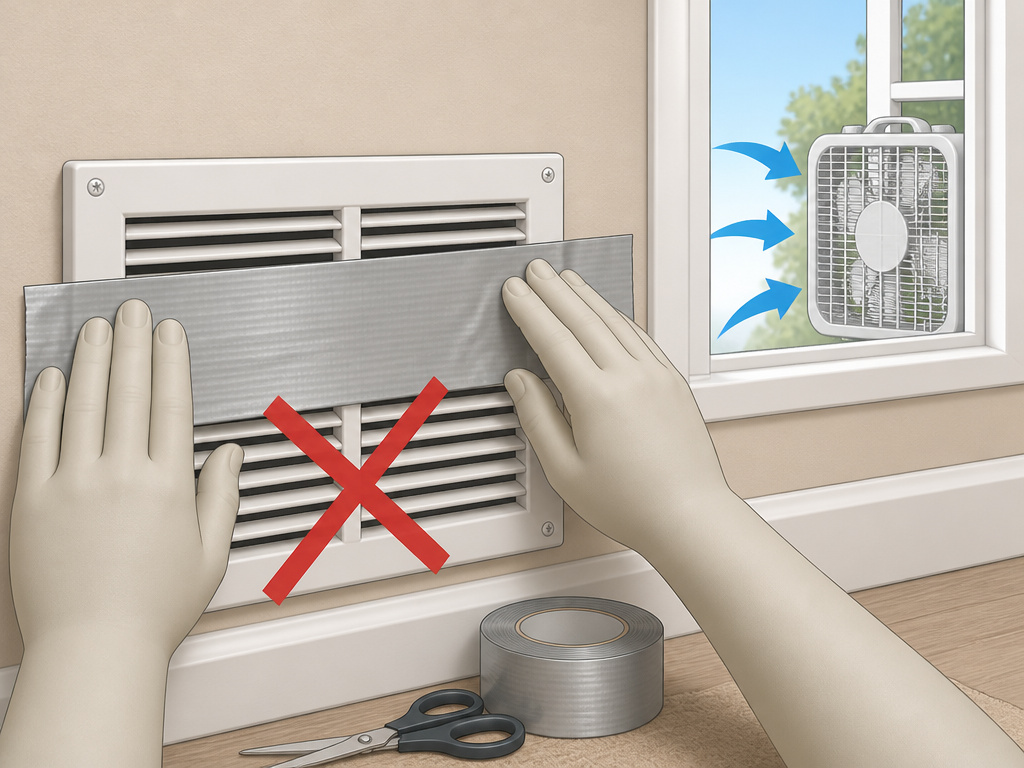
Central air moves the same air around the house. It filters dust and leaves VOCs in circulation.
Montgomery County DEP is blunt about this: most air conditioners and heating systems do not provide ventilation because they recirculate air and do not remove contaminants. Running the AC during a paint job feels like you’re doing something. You’re not.
Common mistake: Sealing the room and cranking the AC. The system pulls the same fumes through the ducts in the house, and the smell shows up in bedrooms that never saw a brush.
EPA goes a step further. On its remodeling page, EPA says to tape 6 mil poly sheeting over supply and return registers in the work room to avoid spreading pollutants or contaminating ducts, then provide separate ventilation for the area. In other words: block the HVAC path, then ventilate around it.
If you want to know what to do when the smell reaches the rest of the house, the site’s guide to preventing paint poisoning covers the symptoms and the response.
What Changes in Apartments and Shared Walls
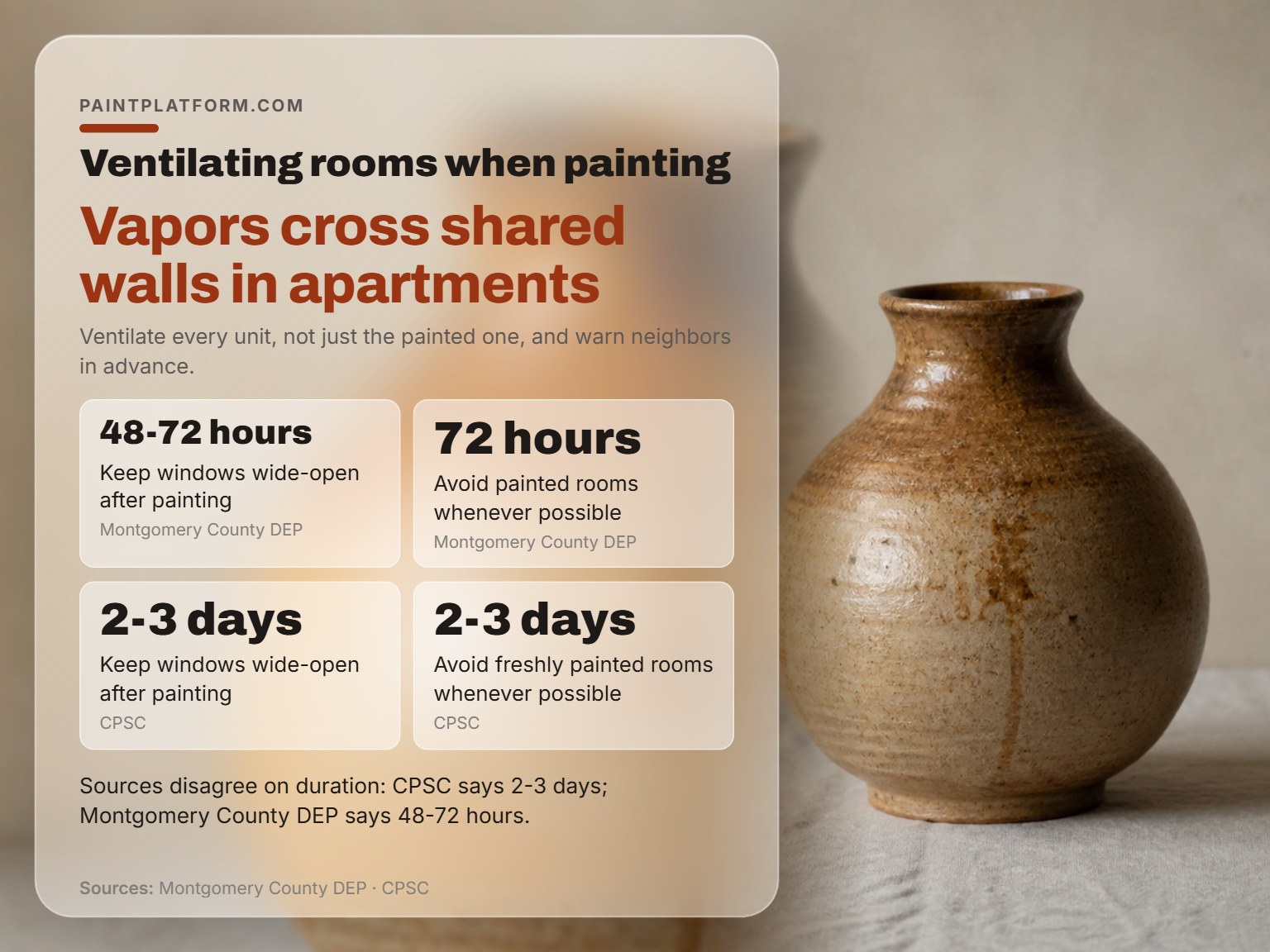
Picture a two-bedroom apartment. The painter is in unit 4B, the windows are open, and the smell is in 4A by lunchtime.
That’s not a ventilation failure. That’s shared air. Montgomery County DEP notes that harmful vapors migrate across common walls, ceilings, and floors through gaps around pipes, between floors and walls, and through electric outlets. CPSC says the same thing in its CPSC healthy indoor painting practices: harmful gases can move through common walls in apartment buildings.
Where this goes sideways: Ventilating only the painted unit. The unit next door still pulls vapors through the outlet gaps. Montgomery County DEP says all apartments being painted or remodeled should be ventilated with exhaust fans, even if no one is living in the painted unit.
The Neighbor Notice
Both CPSC and Montgomery County DEP recommend advance notice to neighbors in adjacent units so they can increase their own exhaust ventilation. This is not a courtesy. It’s part of the protocol.
If you’re the neighbor, the move is to run your own exhaust fan and crack a window on the far side of your unit during the project. If you’re the painter, tape a note to the door with the dates and the hours.
For households with young kids or pets in the building, the site’s paint safety for children and pets covers what to move and when.
When the Weather Locks You In
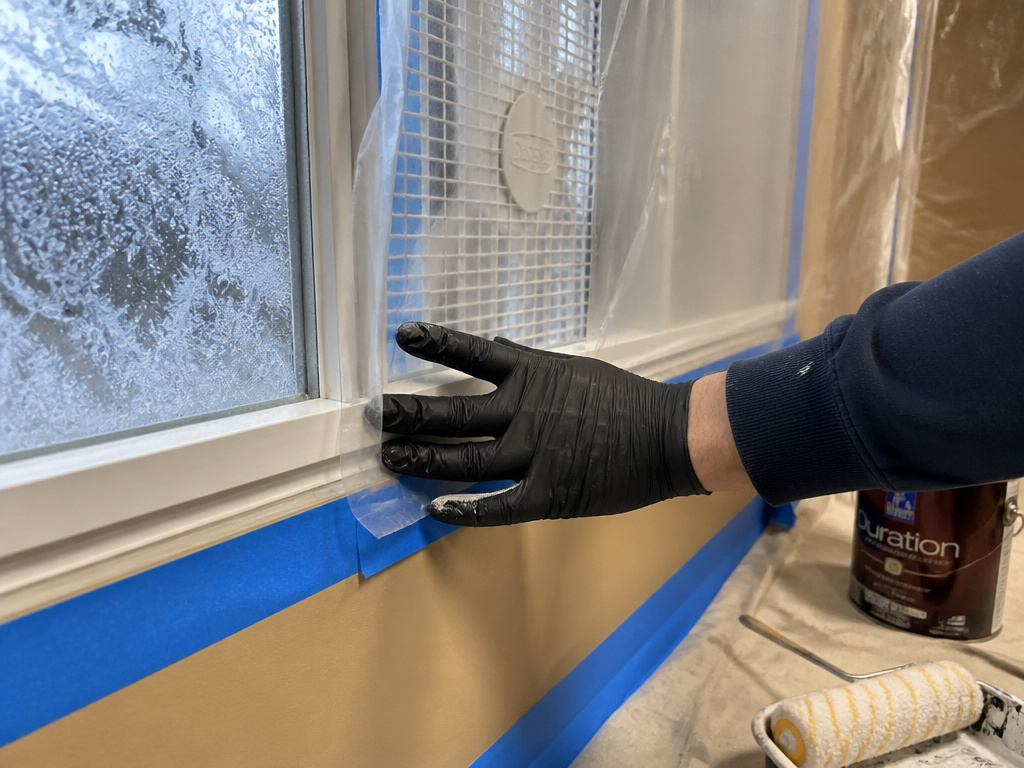
Winter is the season the standard advice gets hard. The windows that are supposed to stay open are the ones you sealed in November.
Montgomery County DEP points out that hot or cold weather encourages residents to close windows and rely on air conditioning or heating, which can accumulate VOCs in an unventilated space during indoor painting. CPSC suggests scheduling paint for dry periods in the fall or spring, when windows are more easily left open.
Worth knowing before you start: A box fan in a window is the first thing to fail when the weather turns. EPA says to shut it off and pull it inside if rain or snow starts, which means the primary exhaust method quits precisely when the job needs it most.
I’ve had a window fan tip out in a sleet storm. The fan survived. The floor did not.
If you’re painting in cold weather, the site’s guide to painting indoors in winter covers the workarounds. The short version: pick a milder week if you can, and if you can’t, seal the room with 6 mil poly sheeting and run the exhaust fan longer than the standard window.
The Gear That Actually Helps
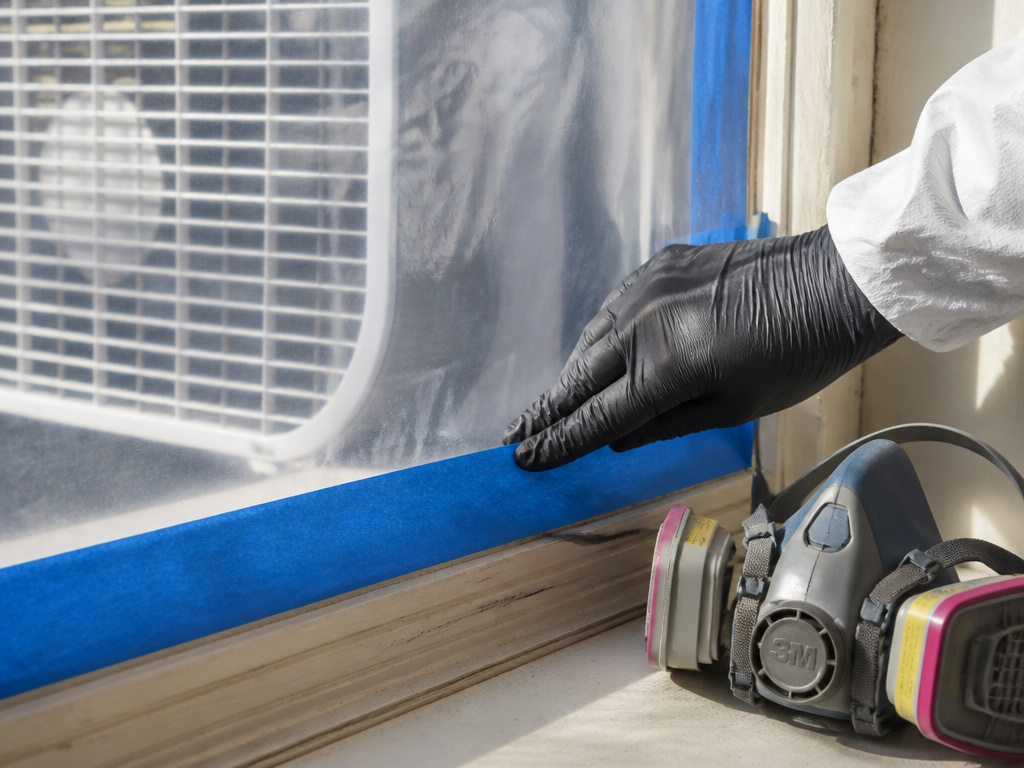
A box fan, a roll of 6 mil poly sheeting, and a respirator cover most of what the sources actually ask for.
You don’t need a wall of equipment. A cook with salt, oil, garlic, and lemon learns more about flavor than one drowning in 70 half-used spice jars. Same logic here.
- Box fan. The one most people reach for because it fits a standard window frame and moves enough air to hold the pressure barrier.
- 6 mil poly sheeting. EPA’s spec for taping over doors, openings, and HVAC registers. Thinner sheeting tears at the tape line.
- Respirator with organic vapor cartridges. The standard for solvent-based paints. Cartridges have a shelf life, so check the date on the bag before you trust them.
- Half-face respirator. The other option most painters keep on the shelf. Fit matters more than brand; a loose seal is a leak.
- Green Seal certified paint. Green Seal’s VOC limits are 50 g/L for flat paint, 100 g/L for non-flat, 150 g/L for non-flat high-gloss, and 100 g/L for floor paint. Lower VOC content in the can means less to ventilate out.
If you’re choosing between a respirator and a dust mask, the site’s paint respirator guide covers the difference. Short version: a dust mask does nothing for solvent vapors.
For a shop or a room with heavy solvent use, the EPA paint mixing room ventilation report is the document that explains why general exhaust alone isn’t enough when vapors are concentrated. And the EPA single-family renovation IAQ protocols spell out the source-adjacent ventilation approach for home projects.
Frequently Asked Questions
How long should I run the fan after painting?
Run it as long as the windows stay open. That’s 2 to 3 days from application per CPSC, or 48 to 72 hours after the paint looks dry per Montgomery County DEP. The fan and the windows work as a pair. Running the fan with the windows shut just recirculates the same air.
Can I use a regular window fan instead of a box fan?
Window fan that exhausts outward can work if it stays secured in the frame. The key is direction: the fan blows out, and the make-up air comes in through another opening on the opposite side of the room. A fan that blows inward is worse than no fan at all.
Is it safe to sleep in a freshly painted room?
Not on the first night. CPSC says avoid freshly painted rooms for 2 to 3 days whenever possible. Montgomery County DEP says at least 72 hours. If you have no other room, ventilate hard and sleep elsewhere if you can.
What if I live in an apartment and my neighbor is painting?
Vapors move through shared walls, ceilings, floors, and outlets, per Montgomery County DEP. Ask the building manager to ventilate the painted unit and, ideally, adjacent units too. Run your own exhaust fan during their project and crack a window on the far side of your unit.
Can I just open two windows and skip the fan?
CPSC says cross-ventilation is acceptable if fans can’t be used. EPA treats exhaust as the primary mechanism and cross-ventilation as a backup. If you have a fan and a window, use both. The pressure barrier is what keeps vapors out of the rest of the house.
The Bottom Line
If you only take one thing from this, take the clock. The 48-to-72-hour window after the paint looks dry is the one Montgomery County DEP recommends, and it’s the one that matches what off-gassing does. CPSC’s 2 to 3 days is one standard, while Montgomery County DEP recommends at least 48 to 72 hours after painting.
Start with the fan test this week: put a box fan in a window, blow it out, crack a window on the opposite wall, and hold a tissue near the make-up window. If the tissue pulls inward, you’ve got a cross-breeze. If it hangs limp, you’re recirculating.
One more thing worth saying plainly: the scary-warning reflex that makes people avoid paint altogether is the wrong instinct. Ventilation is a skill you build once, like cleaning brushes. Learn the fan direction, learn the clock, learn where the make-up air comes from, and the rest is routine.
Try it on a scrap wall first. One coat, one fan, one afternoon. You’ll know more about your room’s airflow in an afternoon than any article can tell you.
