
How to Paint a Pool: Step-by-Step (Without Peeling)
This post contains affiliate links. As an Amazon Associate, we earn from qualifying purchases.
To paint a pool, clean and etch the surface, let it dry at least 7 days, apply two thin coats, then wait another 7 days before refilling outdoors (14 indoors with forced ventilation). Those dry times come from Insl-X’s own guides, and they decide whether the coating holds or blisters.
The gap between “dry to the touch” and “cured enough to fill” is where most pool paint jobs fail. A film that feels hard can still be releasing solvent, and the water you add will trap that solvent against the concrete.
What follows walks the how to paint a pool prep sequence, the dry-time debate between manufacturers, and the two tests that tell you whether your pool is actually ready to fill.
Key Takeaways
- Two thin coats beat one heavy coat on Insl-X’s sheets, though Resene calls for 2 coats for maintenance and 3 for bare concrete, and Olympic’s ZERON requires only one coat. A thick pass traps fast-evaporating solvent under a skin that sets before it can escape.
- Dry time is not a suggestion. Insl-X says 7 days outdoors, 14 indoors with forced ventilation. Resene says 7 minimum, 14 preferred. Olympic says 5 for OPTILON.
- Etch bare concrete with 1 part Insl-X Concrete Etch to 3 parts water, and neutralize with a 5% ammonia solution after 10-15 minutes.
- Never thin Insl-X paint. Insl-X’s guides say thinning pushes the product over local VOC limits, while Resene allows thinning with its own thinners (No.11 for brush and roller, No.6 for spray).
- Test dryness with a 2×2 foot plastic sheet, not your hand. A 24-hour condensation check tells you what touch cannot.
How to Paint a Pool: The Prep Sequence That Decides the Job
Prep takes longer than the painting. The paint is the easy part.
Before you open a can, you need to know what’s already on the pool, because Insl-X’s rubber-based paint will not bond to epoxy or water-based coatings. Skip that check and the new coat fails.
Properly etched concrete has a texture like 180-grit sandpaper. A smooth, glassy surface rejects the first coat and the paint pulls back from the edge as it dries. Etching gives the coating a mechanical grip that no primer can substitute for.
If you don’t know what’s on the pool, Insl-X’s guide gives you a test. Saturate a cotton ball with denatured alcohol and wipe it across a clean spot. If the paint softens, it’s water-based. If it doesn’t, try xylene. If the xylene softens it, it’s rubber-based. If neither does, it’s epoxy.
That test matters. Insl-X’s rubber-based paint is not for metal, fiberglass, vinyl-lined pools, hot tubs, or spas. Neither is the chlorinated rubber version. If your pool is fiberglass, stop here and look at an epoxy system instead.
I’ve watched people skip the etch and wonder why the paint pulled back from the edges. Clean and etched are different things.
Here’s the sequence, with the consequence of skipping each step:
- Drain and clean. Scrub the waterline (top 2 feet) and steps with a citrus degreaser. Those areas collect the most oils and suntan lotion. Skip this and the first coat beads up on the waterline.
- Repair cracks and gouges with pool-rated patching material. If you see loose, flaking, or chipping marcite, gunite, or concrete, call a licensed pool contractor before you paint. Painting over a failing surface guarantees premature failure.
- Acid etch bare concrete with 1 part Insl-X Concrete Etch to 3 parts water, always adding the etch to the water. Apply at 100 square feet per mixed gallon in a zigzag pattern.
- Let the etch sit no more than 10-15 minutes, then neutralize with a 5% ammonia solution (1 pint per 5 gallons of water). Let it sit 3-5 minutes and rinse thoroughly. Skip the neutralizer and the surface stays acidic, which attacks the new paint.
- Check the texture. Properly etched concrete feels like 180-grit sandpaper. If it’s still glassy, you didn’t etch long enough.
- Test dryness with plastic. Tape a 2×2 foot sheet of clear plastic to the pool floor. Check after 24 hours. Condensation under the sheet means the pool is not ready.
New concrete needs 60 days after construction before you paint, per Insl-X. That’s the manufacturer’s number, and it’s the one that protects the warranty.
Three Manufacturers, Three Different Dry Times
The disagreement is real, and it’s measured in days. Here’s what each sheet actually says:
| Product | Outdoor Fill | Indoor Fill | Coverage |
|---|---|---|---|
| Insl-X RP-2700 (rubber-based) | 7 days | 14 days, forced ventilation | 400-500 sq ft/gal |
| Insl-X CR-2600 (chlorinated rubber) | 7 days | 14 days, forced ventilation | 250-300 sq ft/gal |
| Resene D69 | 7 days minimum, 14 preferred | Not specified | 9 sq m/L |
| Olympic OPTILON | 5 days average | Not specified | 250 sq ft/gal |
Resene’s data sheet is blunt about why the minimum exists: “if the pool is refilled and there is still residual solvent in the coating the solvent will become partially dissolved in the pool water.” That’s the failure mode the 7-day number protects against.
Olympic’s 5-day average for OPTILON is the shortest in the group. It’s also the least conservative.
Where this goes sideways: Filling too soon because the surface feels dry. The solvent is still evaporating, and the water traps it against the concrete. You’ll see blistering.
The how to paint a pool gap between the two Insl-X products matters less than the coverage rate. RP-2700 spreads at 400-500 square feet per gallon. CR-2600 covers 250-300. If you’re recoating over existing rubber-based paint, RP-2700 goes further. If the pool is already chlorinated rubber, CR-2600 is the compatible match.
For a fuller comparison of pool paint types by surface and chemistry, that guide covers the trade-offs.
Which Paint Actually Sticks to Your Surface?
The answer depends on what’s already there, and the solvent test in the previous section tells you which family you’re in.
| Coating | Best For | Fill Time | Watch Out |
|---|---|---|---|
| Insl-X RP-2700 | Bare concrete, marcite, gunite, existing rubber paint | 7 days outdoor / 14 indoor | No metal, fiberglass, vinyl, spas |
| Insl-X CR-2600 | Existing chlorinated rubber, bare masonry | 7 days outdoor / 14 indoor | Same exclusions as RP-2700 |
| Resene D69 | Concrete pools, maintenance over compatible coatings | 7 days min, 14 preferred | Not for pools heated above 28°C |
| Olympic OPTILON | Rubber-base recoats | 5 days average | 250 sq ft/gal coverage |
The best pool paint for bare concrete differs from the best for plaster. Choosing paint for swimming pools comes down to the surface test and the existing coating, not the color card.
Rubber-Based vs Chlorinated Rubber: What’s the Difference?
RP-2700 is synthetic rubber. CR-2600 is chlorinated rubber. Both are one-part, both cure by solvent evaporation, and both carry the same exclusions (no metal, fiberglass, vinyl, spas, or water above 95°F).
The practical difference is compatibility and coverage. CR-2600 bonds to existing chlorinated rubber. RP-2700 bonds to existing rubber-based paint and goes further per gallon.
When Epoxy Is the Right Call
Epoxy handles plaster and fiberglass where rubber-based paint can’t go. The epoxy pool paint guide covers the two-part mixing and recoat windows that rubber paint doesn’t have.
For bare concrete, the concrete pool paint guide covers the etch-and-fill sequence. For a plaster surface, the plaster pool paint guide covers the products that bond without a primer.
The Plastic Sheet Test Takes 24 Hours. Skip It and You’ll Repaint Next Spring.
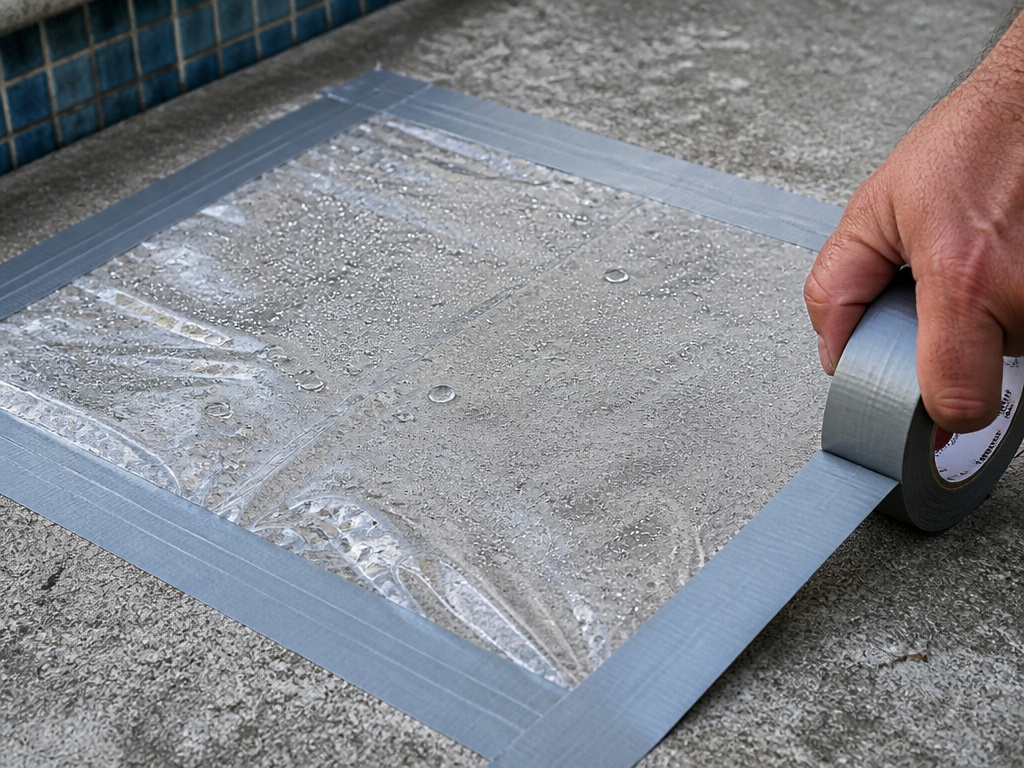
Two tests, both simple, and both skipped by most people who end up repainting the following season.
Insl-X’s method: tape a 2×2 foot sheet of clear plastic to the pool floor. Check after 24 hours. Condensation on the underside means the concrete is still releasing moisture, and paint applied now will blister from the inside out.
The size and dwell time differ from Insl-X’s, but the principle holds. If moisture collects under plastic, it will collect under paint.
If you can’t leave the plastic sheet down for the full test period, don’t paint. Half a test is worse than no test, because it gives you false confidence while the pool is still wet.
The dryness test isn’t optional. Insl-X’s guide says the pool must dry at least 7 days after cleaning before paint can be applied. That’s a floor. Most pools need longer.
I’ve trusted “dry to the touch” before. It cost me a redo, and the lesson stuck.
Roller, Brush, or Spray: The Settings That Matter
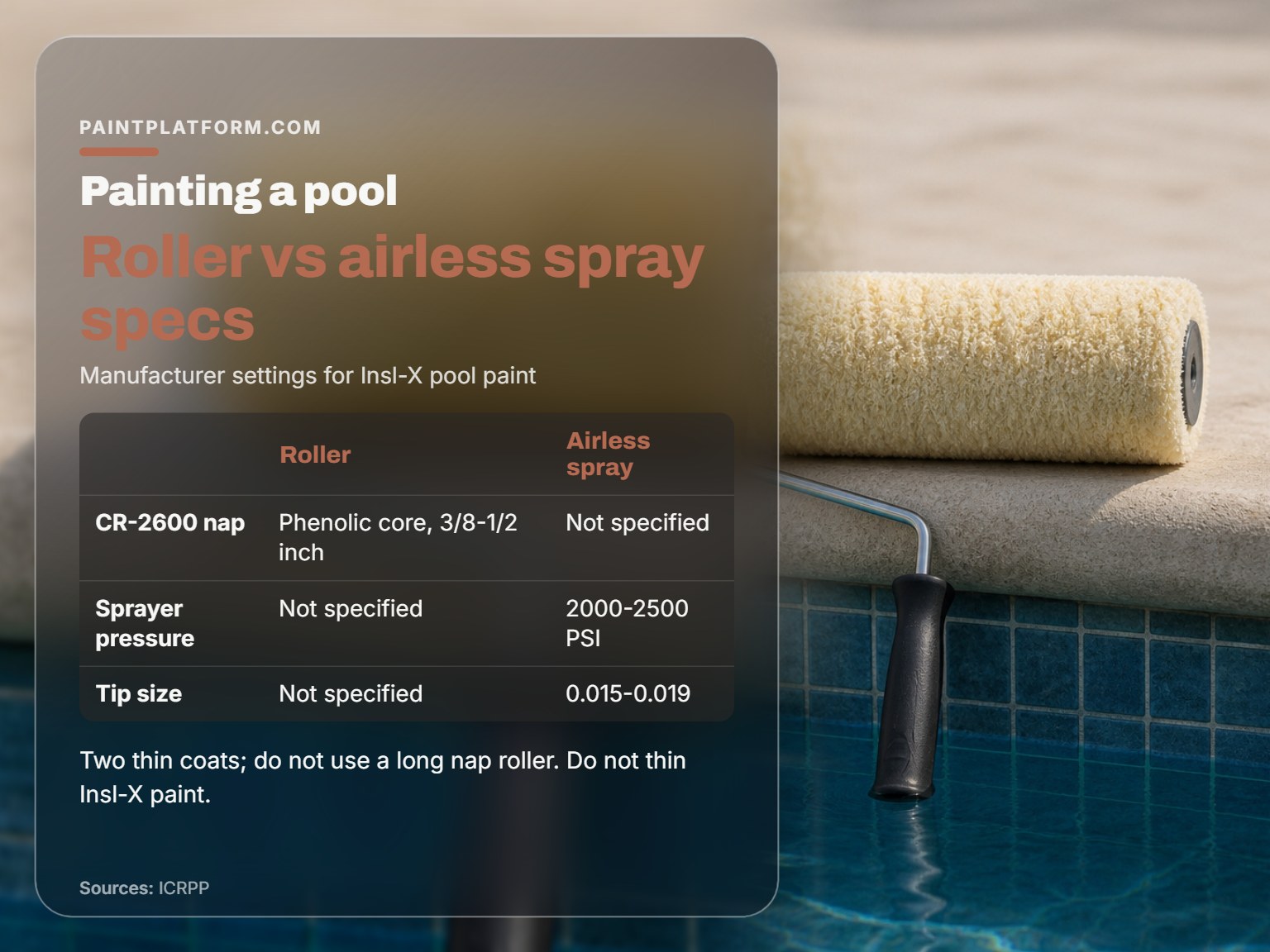
Airless spray gives the best finish, but most pool owners are rolling. Here’s what the manufacturer sheets actually specify.
Roller specs:
- Insl-X RP-2700: phenolic core, 1/4 to 1/2 inch nap. A long nap roller puts too much paint on the surface.
- Insl-X CR-2600: phenolic core, 3/8 to 1/2 inch nap. Same warning about long nap.
Airless spray specs:
- Insl-X (both products): 2000-2500 PSI, 0.015-0.019 tip size. Apply full strength from the can.
- Resene D69: 3 L/min, LTX 523 tip, 3/8 hose.
Two thin coats, applied evenly. Over-rolling is a common mistake. Pool paint contains solvents, and once the film starts to set, every extra pass drags it.
Why Thinning Is Not an Option
Both Insl-X guides say the same thing: do not thin. Thinning pushes the product over local VOC limits, and the coverage rate you calculated from the can is now wrong. Resene allows thinning with its own thinners (No.11 for brush and roller, No.6 for spray), but that’s a different product with different rules.
The part nobody mentions: Acid etch is for bare masonry only. On a painted surface it eats the existing coating and leaves you with a bigger prep job than you started with.
The Mistakes That Cause Peeling Within a Season
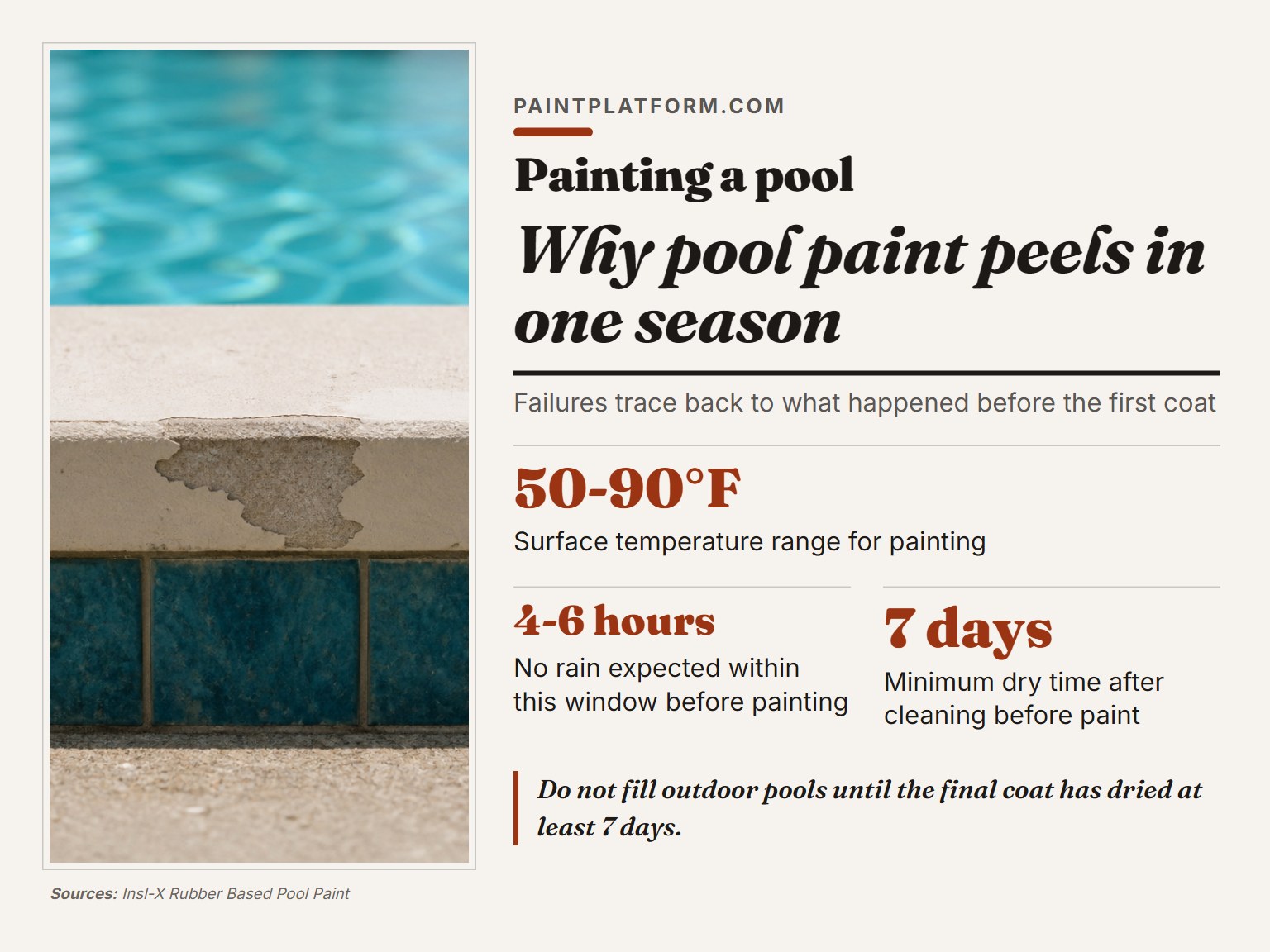
Peeling almost always traces back to something that happened before the first coat went on.
- Painting a damp surface. Insl-X requires the pool to be dry. Resene says do not apply to damp concrete. Moisture under the film turns to vapor and blisters the coat from below.
- Painting in direct sun. Surface temperature must be 50-90°F. Direct sun causes blistering and pinholes because the solvents evaporate too fast.
- Painting when rain is expected within 4-6 hours. Both Insl-X guides say this.
- Using acid etch on a painted surface. Etch is for bare masonry. On paint it eats the coating.
- Filling too soon. The most common cause of failure. Err to the long side.
The waterline is where the job shows. The top 2 feet of the pool collect the most oils, suntan lotions, and dirt. A failing coat shows up there first.
If you’re touching up the deck edge at the same time, the pool coping paint guide covers the products that hold up to foot traffic.
Frequently Asked Questions
How long after painting a pool can you swim in it?
Seven days minimum for outdoor pools, per Insl-X. Fourteen days for indoor pools with forced ventilation. Resene prefers 14 days even outdoors. Filling sooner traps residual solvent in the water, and you’ll smell it before you see the damage.
Can you paint a pool without draining it?
No. The surface must be clean, dry, and free of moisture. Insl-X requires the pool to dry at least 7 days after cleaning before paint can be applied. Painting over a damp surface causes blistering as moisture tries to escape through the film.
What’s the best temperature to paint a pool?
Surface temperature between 50°F and 90°F, per both Insl-X guides. Avoid direct sun. Start early in the day and follow the shade around the pool. A hot surface in direct sun causes blistering and pinholes.
Can you paint over epoxy pool paint?
Not with rubber-based paint. Insl-X’s guides say do not apply over epoxy or water-based coatings. If the existing coating is epoxy, you need an epoxy topcoat. The solvent test tells you which family you’re dealing with.
How much paint does a pool need?
It depends on the product. Insl-X RP-2700 spreads at 400-500 square feet per gallon. CR-2600 covers 250-300. Resene D69 covers 9 square meters per liter. Buy extra paint. Running out mid-coat leaves a visible patch.
Do you have to acid etch a pool before painting?
Bare concrete, yes. Insl-X specifies 1 part Concrete Etch to 3 parts water, applied at 100 square feet per mixed gallon. Never use etch or muriatic acid on a painted surface. It’s for bare masonry only.
The Bottom Line
The single decision that determines whether your pool paint lasts is the fill date. The brand matters less. So does the color and the roller nap.
If you fill too soon because the surface feels dry, you’ve skipped the only step that can’t be fixed later. Wait the full 7 days outdoors. Wait 14 indoors with a fan blowing down into the pool, not just across it, because the solvents are heavier than air and collect at the bottom.
One rule I’d add to every manufacturer’s sheet: buy extra paint before you start. I learned that on a bathroom wall years ago, when I ran out mid-coat and the color match left a visible patch. Pool paint is the same. The extra paint sits in the garage until the next touch-up.
Wait the extra week. The pool will still be there.
