
5 Best Pool Paint For Plaster in 2026
This post contains affiliate links. As an Amazon Associate, we earn from qualifying purchases.
For plaster pool surfaces, the Dyco Waterborne Acrylic Pool Paint is our best overall pick for its easy waterborne application and resistance to UV, salt, and pool chemicals. If you want the longest time between repaints, the WOOLSEY Premium Epoxy Pool Paint offers up to eight years of service life. For a budget-friendly refresh, consider the In The Swim Synthetic Rubber-Base Pool Paint.
Choosing the right paint for a plaster pool means balancing how often you want to repaint with how much prep work you can handle. Epoxy paints last years longer but require careful two-part mixing, while acrylic and rubber-base paints are simpler to apply but need more frequent recoating.
This guide is based on manufacturer specifications, patterns in owner feedback, and expert round-ups. We focused on the criteria that matter most for plaster pool surfaces: durability, adhesion, coverage, and ease of application.
Top 5 Pool Paints For Plaster in the Market
Certain content that appears on this site comes from Amazon. This content is provided "as is" and is subject to change or removal at any time.
The Best Pool Paints For Plaster, Reviewed
Dyco Waterborne Acrylic Pool Paint

What We Like
- Resists UV, salt, and chemicals
- Seals hairline cracks
- Easy waterborne application
Trade-offs
- Single color option (Ocean Blue) limits choices
- Requires concrete, plaster, or masonry surfaces only
Dyco Waterborne Acrylic Pool Paint resists UV rays, salt, chemicals, and even seals hairline cracks, giving you a durable finish that works on concrete, plaster, or masonry surfaces without needing extra primer or complicated mixing. The waterborne acrylic formula is low-odor and easy to apply, so DIYers can get a clean, tile-like look without the hassle of two-part epoxies.
A single-component, waterborne formula simplifies the painting process considerably. Unlike two-part epoxies that require precise mixing before application, this paint can be stirred and used directly from the gallon. The acrylic chemistry provides resistance to UV rays, fading, cracking, staining, water, salt, and chemicals, which means a single coat tackles multiple threats at once. Owners note that this all-around protection is especially handy for sealing hairline cracks in concrete or plaster surfaces. For someone who wants straightforward application without sacrificing solid defense against everyday pool wear, this paint delivers reliable results.
Product photos
WOOLSEY Premium Epoxy Pool Paint

What We Like
- Up to 8 years service life
- Builds 8 mils thick per coat
- Hard, tough, durable finish
- Works on plaster, concrete, fiberglass
Trade-offs
- Two coats needed for full service life
- Requires two coats for full durability
Two coats deliver up to eight years of service life, which means you can resurface your plaster pool and then not think about it again for nearly a decade. That kind of longevity comes from a high-solids epoxy that cures into a hard, tough shell, providing excellent protection against stains, chemicals, and abrasions. For anyone who wants a finish that holds up season after season without frequent touch-ups, this paint is a strong option in the plaster-paint category.
Two coats of this epoxy paint can deliver up to eight years of service life, which means you can go nearly a decade between repaints if you apply it correctly. That kind of durability comes from the high-solids formula that builds up to 8 mils thick per coat, smoothing over rough plaster or concrete so the surface feels uniform. Owners who prioritize longevity over quick turnaround will find the application effort worthwhile.
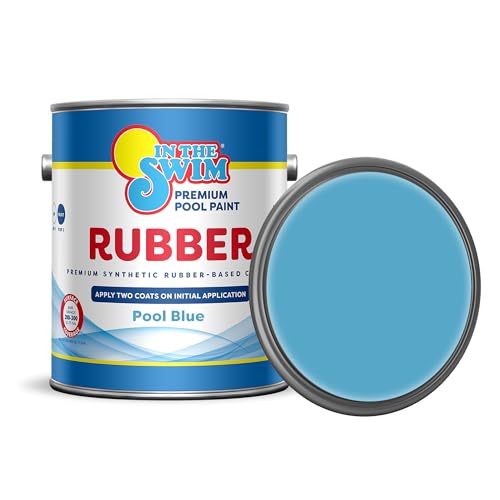
In The Swim Synthetic Rubber-Base Pool Paint
What We Like
- Works on gunite, plaster, concrete
- Lasts up to 3 years with two coats
- Good chemical resistance and color retention
- Covers 200-300 sq ft per gallon
Trade-offs
- Requires surface temp above 50°F for application
- Avoid direct sunlight during painting
- Needs 3-step cleaning process before use
A two-coat finish that holds up for three years is the core promise here, and that kind of durability makes this a smart choice for anyone refreshing a plaster pool on a tighter budget. The synthetic rubber-base formula works directly on gunite, plaster, and concrete surfaces, and it can be applied over existing chlorinated rubber paint. It covers 200 to 300 square feet per gallon, so you can plan your project accordingly.
The trade-off is that application demands careful timing. You need surface temperatures above 50°F and you have to avoid direct sunlight, which narrows your painting window compared to a product like RAMUC Hi-Build Epoxy Pool Paint. That epoxy option comes as a two-part kit that costs more and requires mixing. If you want a paint that holds up well for up to three years, this rubber-base paint delivers that.
Product photos
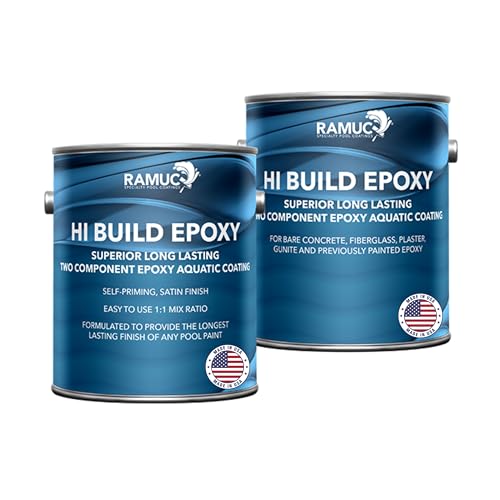
RAMUC Hi-Build Epoxy Pool Paint
What We Like
- High-build formula fills minor surface imperfections
- Satin finish for smooth, long-lasting results
- Covers 125-150 sq ft per gallon
Trade-offs
- Two-part mixing requires careful preparation
- Coverage lower than some waterborne paints
A thick, self-leveling epoxy that fills minor surface imperfections on aging plaster means you get a smooth satin finish without having to sand every flaw. Coverage of 125 to 150 square feet per gallon cuts down the number of coats needed, so you spend less time painting and more time enjoying the pool. Owners report it brings tired pool interiors back to life with a clean, refreshed look.
Product photos
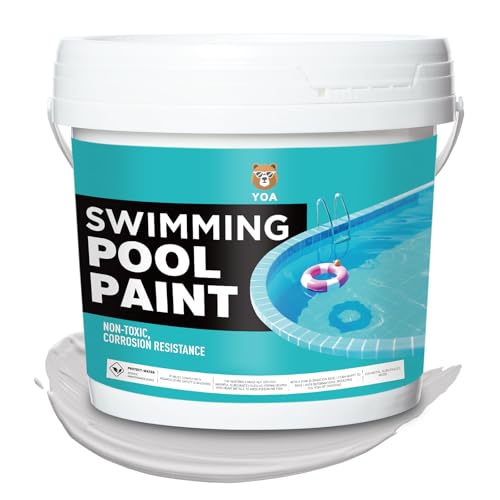
YOA Premium Swimming Pool Paint Light Gray
What We Like
- Anti-slip textured finish for wet safety
- UV-resistant and fade-proof formula
- Works on concrete, plaster, and fiberglass
- Fast-drying for quicker pool use
Trade-offs
- Not a high-build coating for deep cracks
- Textured finish feels rougher than smooth satin or gloss paints
The anti-slip textured surface is the standout feature here, designed to give you extra traction on wet pool steps, floors, and decks. That makes it a strong pick if safety is your top concern, especially for families with kids or older swimmers. It also bonds well to plaster, concrete, and fiberglass, and its UV-resistant formula fights fading from sun and pool chemicals, so the light gray color stays consistent season after season.
For a slick, smooth surface or a heavy-duty coating that seals hairline cracks, the WOOLSEY Premium Epoxy Pool Paint provides a higher-build satin finish. That product is formulated for plaster, fiberglass, and concrete swimming pools. This YOA paint, on the other hand, is a light gray, 1-gallon coating designed for concrete, plaster, and fiberglass pools. It creates a textured, anti-slip finish that adds traction when wet, which reduces accident risk on pool decks, steps, and the pool floor. The formula resists fading, chalking, and peeling from sun exposure and pool chemicals like chlorine and saltwater.
Product photos
How We Evaluated Pool Paints For Plaster
Our evaluation draws from manufacturer documentation, expert recommendations from pool maintenance professionals, and common themes reported by pool owners. We prioritized paints specifically formulated for plaster, gunite, and concrete surfaces, as these substrates require different adhesion properties than fiberglass or metal.
The four criteria that mattered most were durability, application complexity, coverage rate per gallon, and the paint’s ability to resist UV fading, pool chemicals, and salt. Durability refers to how long a coating lasts before needing repaint. Application complexity covers single-part versus two-part mixing and surface temperature requirements. We also considered whether the formula could fill hairline cracks or minor surface imperfections common in aging plaster.
A research-led evaluation has limits: we cannot replicate long-term exposure to pool chemistry or seasonal weather cycles. Our recommendations reflect what the specifications and collective owner experience suggest are the most reliable choices for plaster pools.
What To Look For In Pool Paints For Plaster
The right pool paint for your plaster surface depends on your repainting timeline, your comfort with application steps, and the condition of your current plaster.
Choose a paint that matches your plaster’s condition, your willingness to do two coats, and how many years you want between repaints.
Paint Type: Acrylic, Epoxy, or Rubber-Base
Acrylic paints like the Dyco Waterborne are water-based, easy to clean up, and resist UV and chemicals well. They are a good middle ground for homeowners who want a straightforward application. Epoxy paints, such as WOOLSEY and RAMUC, form a hard, thick coating that can last five to eight years, but they require two-part mixing and two coats. Rubber-base paints offer a budget option with reasonable durability of up to three years when applied correctly.
Coverage and Build Thickness
Coverage rates vary significantly. Epoxy paints like RAMUC cover 125 to 150 square feet per gallon, while rubber-base paints cover 200 to 300 square feet per gallon. A higher-build formula is beneficial for plaster with hairline cracks or minor surface flaws, as it fills imperfections and reduces the number of coats needed. Standard paints may require more coats to achieve a smooth finish on uneven plaster.
Surface Preparation and Application Conditions
All pool paints require a clean, etched surface for proper adhesion. A three-step cleaning process is typical. Temperature matters: rubber-base paints need surface temperatures above 50°F and should avoid direct sunlight during application. Epoxy paints require careful mixing ratios and must be applied within a specific working time. Acrylic paints are generally more forgiving with temperature and humidity.
- Check if your plaster has deep cracks, high-build paints fill minor flaws, but structural cracks need repair first.
- Confirm the paint is labeled for plaster, gunite, or concrete surfaces.
- Review the number of coats required for full service life (most need two).
- Ensure you can maintain the recommended surface temperature during application.
If you want the longest-lasting finish, epoxy paints require more prep but deliver years of extra service.
Pool Paints For Plaster Compared
The table below compares the five pool paints for plaster across key specs, including paint type, coverage, and durability, to help you choose the right formula for your pool.
| Product | Type | Surface | Finish |
|---|---|---|---|
| Dyco Waterborne Acrylic Pool Paint | Waterborne Acrylic | Concrete, plaster, masonry | N/A |
| WOOLSEY Premium Epoxy Pool Paint | High solids epoxy | Plaster, concrete, fiberglass | Satin |
| In The Swim Synthetic Rubber-Base Pool Paint | Synthetic rubber-base | Gunite, plaster, concrete | N/A |
| RAMUC Hi-Build Epoxy Pool Paint | Two-part epoxy | Concrete & plaster pools | Satin |
| YOA Premium Swimming Pool Paint Light Gray | N/A | Concrete, Plaster, Fiberglass | Anti-Slip Textured Finish |
Frequently Asked Questions
Can I paint over old pool paint on plaster?
Yes, but the old paint must be sound and well-adhered. Loose or peeling paint should be removed by pressure washing or scraping. The surface must be clean and etched before applying new paint. If the old paint is incompatible with the new paint type, you may need to strip it completely.
How long does pool paint last on plaster?
Service life varies by paint type. Epoxy paints can last five to eight years with proper application and two coats. Acrylic paints typically last three to five years. Rubber-base paints last up to three years. Factors like pool chemistry, UV exposure, and surface preparation also affect longevity.
What is the best pool paint for a plaster pool with hairline cracks?
A high-build epoxy paint is the best choice for plaster with minor surface imperfections. The RAMUC Hi-Build Epoxy Pool Paint is formulated to fill small cracks and flaws, reducing the number of coats needed. For deeper or structural cracks, repair the plaster before painting.
Is waterborne acrylic pool paint as durable as epoxy?
No, waterborne acrylic paints are generally less durable than epoxy paints. Acrylic offers good UV and chemical resistance and is easier to apply, but epoxy paints form a harder, thicker coating that lasts longer, up to eight years versus three to five for acrylic. Choose acrylic for easier application and epoxy for maximum longevity.
Can I apply pool paint myself, or do I need a professional?
Many pool paints are designed for DIY application with careful surface preparation. Waterborne acrylic paints are the most user-friendly. Two-part epoxy paints require precise mixing and a limited working time, making them more challenging for first-time DIYers. If you are unsure about surface prep or mixing, hiring a professional is advisable.
The Bottom Line
For most homeowners with a plaster pool, the Dyco Waterborne Acrylic Pool Paint is the best overall choice. It offers a straightforward waterborne application, good UV and chemical resistance, and the ability to seal hairline cracks. This paint works well if you are comfortable repainting every few years and want a user-friendly product.
If you want the longest possible interval between repaints, the WOOLSEY Premium Epoxy Pool Paint is worth the extra effort. Its two-coat application builds a thick, durable finish that can last up to eight years. For a budget refresh that still delivers solid performance, the In The Swim Synthetic Rubber-Base Pool Paint is a reliable option.
The single most important factor when choosing pool paint for plaster is matching the paint type to your tolerance for application work and your desired repaint cycle. Epoxy lasts longest but requires careful mixing; acrylic is easier but needs more frequent recoating. Choose based on your timeline and comfort with the process.
