
8 Best Pool Paint For Concrete in 2026
This post contains affiliate links. As an Amazon Associate, we earn from qualifying purchases.
The best pool paint for concrete is the Dyco Waterborne Acrylic Pool Paint, which resists UV, salt, and chemicals while sealing hairline cracks for a tile-like finish. For those wanting maximum gloss and durability, the RAMUC EP Epoxy Pool Paint is a top choice, and the WOOLSEY Premium Epoxy Pool Paint offers the longest service life.
Choosing the right paint for a concrete pool comes down to balancing durability, application ease, and your existing surface. A poor choice can lead to peeling, fading, or a finish that fails within a season.
This guide is based on manufacturer specifications, expert round-ups, and patterns in owner feedback. We break down the key factors for concrete surfaces and highlight the best paint for each common need.
Top 8 Pool Paints For Concrete in the Market
Certain content that appears on this site comes from Amazon. This content is provided "as is" and is subject to change or removal at any time.
The Best Pool Paints For Concrete, Reviewed
Dyco Waterborne Acrylic Pool Paint

What We Like
- Resists UV, salt, and chemicals
- Seals hairline cracks
- Easy waterborne application
- Tile-like finish on concrete
Trade-offs
- Only available in Ocean Blue
- Requires careful surface preparation before application
This waterborne acrylic paint resists UV, water, salt, chemicals, fading, and cracking, and it seals hairline cracks. That means it can handle the conditions around a concrete pool without the need for mixing two components. The easy waterborne application and simple cleanup make it a practical option for anyone looking to finish a concrete, plaster, or masonry pool surface.
Product photos
RAMUC EP Epoxy Pool Paint
What We Like
- Trusted American brand since 1933
- Hard non-porous epoxy coating
- Smooth high-gloss finish
- Long-lasting multi-year durability
Trade-offs
- Two-part system requires mixing before use
- Only suitable for properly prepared surfaces
- Limited to 7 color options
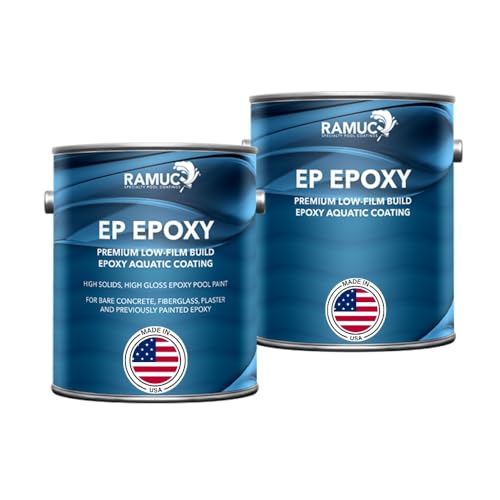
RAMUC EP Epoxy Pool Paint uses a two-part epoxy system that forms a hard, non-porous coating built to withstand heavy use and constant water exposure. That means a glossy, smooth surface that keeps its color and shine year after year. It bonds well to properly prepared concrete, gunite, and fiberglass pools, making it a strong fit for homeowners who want a durable, high-gloss finish that looks clean and professional. The kit includes both parts and can be applied with a roller, brush, or airless sprayer, so you can match your preferred method.
This is a two-part epoxy, so you have to mix it yourself before application, and the surface prep needs to be thorough for the coating to last. If you prefer a simpler, waterborne option that doesn’t require mixing, the Dyco Waterborne Acrylic Pool Paint is an alternative, though it is a different type of coating. The RAMUC EP is designed for multi-year durability and gives a high-gloss finish when applied over a properly prepared surface.
Product photos
WOOLSEY Premium Epoxy Pool Paint

What We Like
- Up to 8 years service life
- High solids, satin finish
- Builds up to 8 mils per coat
- Smooths rough concrete surfaces
Trade-offs
- Two coats required for full durability
- Not suitable for vinyl-lined pools
A two-coat system that promises up to eight years of service life means this epoxy coating is built for pool owners who want to repaint as rarely as possible. Each coat lays down up to 8 mils thick, so it can smooth over rough concrete surfaces without needing multiple passes. The high-solids satin finish cures hard and resists stains, chemicals, and abrasions, making it a strong choice for anyone tired of annual touch-ups.
Two coats of WOOLSEY Premium Epoxy Pool Paint can offer up to 8 years of service life, so you can spend more time swimming and less time repainting. That durability comes from a high-solids epoxy that cures to a hard, tough finish resistant to stains, chemicals, and abrasions. For anyone willing to invest the effort during application, the payoff is a low-maintenance surface that stays good-looking season after season.
In The Swim Synthetic Rubber-Base Pool Paint
What We Like
- Compatible with existing chlorinated rubber paint
- Two coats last up to 3 years
- Covers 200-300 sq ft per gallon
- Good chemical resistance and color retention
Trade-offs
- Requires surface temperature above 50°F during application
- Avoid direct sunlight during application for best results
- Needs 3-step cleaning process before painting
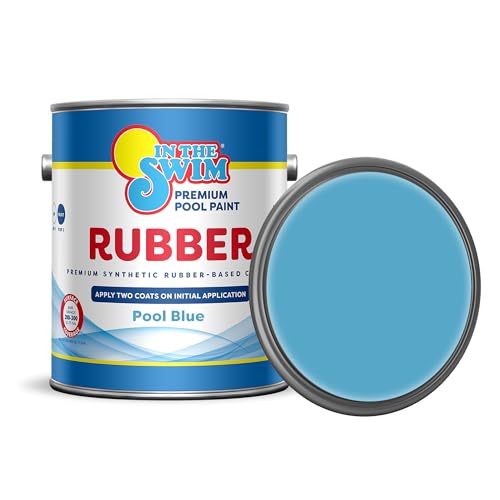
A two-coat finish that holds up for three years is the standout promise here. That kind of durability, paired with a synthetic rubber formula designed to go directly over existing chlorinated rubber paint, makes this a natural choice if you’re refreshing a pool that already has that type of coating. The 200-300 square feet per gallon keeps the project economical. The chemical resistance means the color should stay true through a couple of swimming seasons.
The trade-off is that application demands care: the surface must be above 50°F, you need to avoid direct sunlight while painting, and a three-step cleaning process is required beforehand. Compared to the Dyco Waterborne Acrylic, which offers UV and crack resistance in a more forgiving water-based formula, this rubber-base paint is less flexible about weather and prep. But if you already have rubber paint on your concrete pool, this is the one that sticks without stripping everything down first.
Product photos
RAMUC Hi-Build Epoxy Pool Paint
What We Like
- High-build formula fills minor imperfections
- Self-leveling for smooth finish
- Covers 125-150 sq ft per gallon
Trade-offs
- Two-part epoxy requires mixing before use
- Requires thorough surface preparation before application.
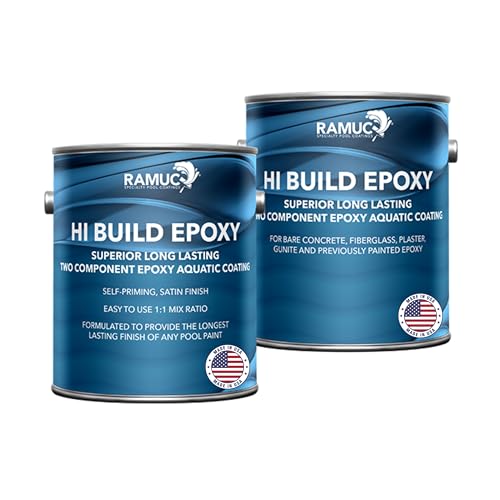
A coverage rate of 125 to 150 square feet per gallon means this two-part epoxy lays down a thick, self-leveling coat that can fill minor surface cracks and imperfections in aging concrete or plaster pools. That high-build character is exactly what makes it the right choice for anyone who wants to restore a tired pool interior without applying multiple coats. The satin finish provides a soft sheen that gives the pool a clean, refreshed look.
This is a two-part epoxy system, which means you have to mix the resin and hardener before application and work within a limited pot life. That extra step demands more preparation than a single-component paint. If you are comfortable with a little more effort in exchange for a thicker, more durable film that really resurfaces worn concrete, the RAMUC Hi-Build delivers exactly that.
Product photos
In The Swim Non-Slip Acrylic Swimming Pool Paint
What We Like
- Pool ready in just 2 days
- Works on bare cement, acrylic, or rubber base
- Covers 250-300 sq ft per gallon
- Can be brushed, rolled, or sprayed
Trade-offs
- Requires 2 coats for long-lasting finish
- Designed for smooth surfaces only
- Needs 4 hours curing between coats
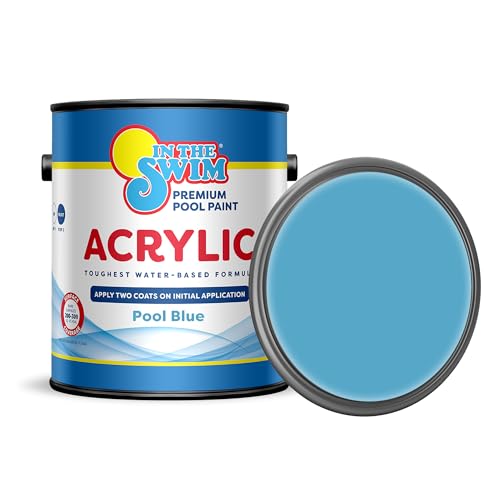
This acrylic paint allows you to fill the pool 2 days after the final coat, so a weekend project can be done quickly. It covers 250 to 300 square feet per gallon, meaning a single gallon can handle a small to mid-sized pool with two coats. The paint is suitable for smooth bare cement, previous acrylic coatings, or rubber base paint, which gives flexibility if you’re repainting over an older finish. For pool owners who want their pool back in action quickly, this paint offers a short downtime.
The biggest thing to know is that this paint requires a smooth surface and two coats with four hours of drying in between, so rough concrete will need prep work first. Compared to a two-part epoxy like the RAMUC EP Epoxy Pool Paint, which is a different type of coating, the In The Swim acrylic offers a simpler application process without mixing. It’s a convenient choice when you want to avoid the complexity of epoxy.
Product photos
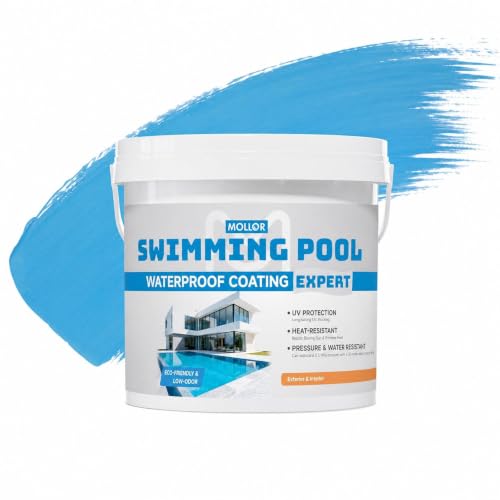
Mollor Water-Based Acrylic Blue Pool Paint
What We Like
- Withstands 30m deep submersion
- UV and chemical resistant finish
- Covers 320 sq ft per coat smooth
- Flexible coating resists minor cracks
Trade-offs
- Requires 72 hours continuous dry time
- Lower coverage on rough surfaces (200 sq ft)
A 30-meter waterproof rating means this acrylic paint can handle deep swimming pools and fully submerged pond walls without peeling or discoloration, making it a serious option for anyone wanting a long-lasting barrier on concrete. Its UV-resistant formula keeps the vibrant blue from fading under harsh sun, and the flexible coating handles minor base settlement and tiny surface cracks that often appear on older pool decks. For a water-based paint, it offers unusual durability against salt water and pool chemicals, which suits year-round outdoor use on concrete, plaster, or fiberglass.
Planning your painting project around stable, dry weather with temperatures between 5°C and 35°C is key, and you’ll need to allow a continuous dry time of over 72 hours. Avoid humid or cloudy days entirely. When those conditions are met, this single-component acrylic paint rolls or brushes on easily, creating a smooth waterproof protective layer on concrete, plaster, masonry, fiberglass, and metal pool surfaces. Its coating holds stable performance under 30 meters of deep water for long-term continuous soaking, with no discoloration, wrinkling, or cracking after persistent immersion. That makes it a reliable waterproof barrier for deep swimming pools and outdoor ponds, delivering a neat, uniform surface finish that lowers leakage risks.
Product photos
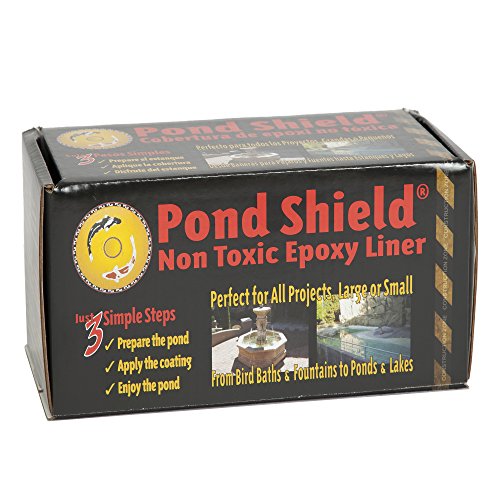
Pond Armor Clear Epoxy Pool Paint
What We Like
- Clear finish preserves surface appearance
- Self-priming formula simplifies application
- Suitable for submerged pool use
- Works on concrete, wood, metal, stone
Trade-offs
- 1.5-quart kit covers only small projects
- Clear coating shows surface imperfections easily
- Requires thorough surface preparation before application
The clear finish leaves the underlying surface visible, so you can seal a decorative stone fountain or a stained-concrete pond without covering up the look you want. This 1.5-quart epoxy coating forms a waterproof barrier on concrete, wood, metal, and stone, and it’s designed for submerged use in ponds, aquariums, and water features. Because the kit is small, it fits projects like bird baths or reptile habitats rather than a full-sized swimming pool. You can brush, roll, squeegee, or spray it on, which gives you options for curved or uneven surfaces. Owners who need a transparent protective layer for a small water feature will find this size convenient.
A clear finish shows surface imperfections, so thorough surface preparation is required before application. If you want a uniform color or need to cover blemishes, a pigmented epoxy like RAMUC EP Epoxy Pool Paint, available in 7 colors, would hide those flaws better. But if your concrete is in good shape and you want a clear waterproof barrier that maintains the surface’s final finish, this clear epoxy delivers exactly that. It is designed for small pond and water feature projects, not for full-size pool refinishing.
How We Evaluated Pool Paints For Concrete
Our evaluation focuses on the specific challenges of painting concrete pools: adhesion to a porous, often aging surface, resistance to water chemistry and UV exposure, and the practical realities of application. We drew on manufacturer technical data sheets, patterns in long-term owner reviews, and guidance from professional pool refinishers.
The most critical criteria were durability against pool chemicals and sunlight, the type of coating (epoxy, acrylic, or rubber-base) and its bond to concrete, and the ease of application including surface prep and drying time. Coverage rates and the ability to fill minor cracks or imperfections also factored heavily.
This is a research-led guide, not a hands-on test. Our recommendations are based on analyzing what a paint promises on paper and what real-world owners consistently report, helping you narrow the field before you buy.
What To Look For In Pool Paints For Concrete
Choosing pool paint starts with understanding your pool’s current coating and your tolerance for prep work. Here are the key factors to consider.
The best concrete pool paint bonds tightly, resists blistering from trapped moisture, and stands up to chlorine and UV for multiple seasons. Your choice hinges on the coating type and surface condition.
Coating Type: Epoxy vs. Acrylic vs. Rubber-Base
Epoxy paints like the RAMUC EP and WOOLSEY Premium offer the hardest, most durable finish, often lasting five to eight years. They are two-part systems that require mixing and careful application. Acrylic paints, such as the Dyco Waterborne, are easier to apply and clean up with water, but typically need recoating every two to three years. Rubber-base paints are best for recoating existing rubber paint but require specific temperature and sunlight conditions.
Surface Preparation and Compatibility
Concrete is porous and often has previous coatings. Some paints, like the In The Swim Synthetic Rubber-Base, are designed to bond with existing chlorinated rubber. Others require bare concrete or a specific primer. A high-build formula, like the RAMUC Hi-Build Epoxy, can fill minor cracks and imperfections, reducing the need for extensive patching. Always check if your paint is compatible with your pool’s current surface.
Application and Drying Time
Your timeline matters. Acrylic paints like the In The Swim Non-Slip can be ready for water in just two days, while epoxies often require a longer cure. The Mollor Water-Based Acrylic needs 72 hours of continuous dry weather. The WOOLSEY Premium requires two coats for full durability, adding to the project time. Consider your local climate and how long you can keep the pool empty.
- Check if your pool has a previous coating and if the new paint is compatible with it.
- Verify the recommended temperature range for application (many require 50°F or above).
- Measure your pool’s surface area to ensure you buy enough paint for two coats.
- Determine if a primer is needed, or if the paint is self-priming like the Pond Armor Clear Epoxy.
A successful paint job starts with a clean, properly prepared surface, this is the single most important step.
Pool Paints For Concrete Compared
The table below summarizes the key differences between our top picks, helping you compare coverage, finish, and best use at a glance.
| Product | Base Type | Surface Compatibility | Coverage |
|---|---|---|---|
| Dyco Waterborne Acrylic Pool Paint | Waterborne Acrylic | Concrete, plaster, masonry | N/A |
| RAMUC EP Epoxy Pool Paint | Two-part epoxy | Concrete, gunite, fiberglass | N/A |
| WOOLSEY Premium Epoxy Pool Paint | N/A | Concrete, plaster, fiberglass | N/A |
| In The Swim Synthetic Rubber-Base Pool Paint | Synthetic rubber-base | Gunite, plaster, concrete, existing chlorinated rubber paint | 200-300 sq ft |
| RAMUC Hi-Build Epoxy Pool Paint | Two-part epoxy | Concrete & plaster | 125-150 sq ft/gal |
| In The Swim Non-Slip Acrylic Swimming Pool Paint | Acrylic | Smooth, bare cement surfaces, previously acrylic coating, or rubber base paint | 250-300 sq ft per gallon |
| Mollor Water-Based Acrylic Blue Pool Paint | Water-based acrylic | Concrete, plaster, fiberglass, metal | 320 sq ft per coat (smooth) |
| Pond Armor Clear Epoxy Pool Paint | Epoxy | Concrete, Wood, Metal, Stone | N/A |
Frequently Asked Questions
How long does pool paint on concrete usually last?
Durability depends on the paint type. Epoxy paints like the WOOLSEEY Premium can last up to 8 years, while high-quality acrylics like the Dyco Waterborne typically last 3 to 5 years. Rubber-base paints generally need recoating every 2 to 3 years. Proper surface preparation is the biggest factor in maximizing any paint’s lifespan.
Can I paint over old pool paint on concrete?
Yes, but you must use a compatible paint. If your pool has existing chlorinated rubber paint, a rubber-base paint like the In The Swim Synthetic Rubber-Base is designed to bond with it. For epoxy or acrylic paints, you may need to strip or sand the old coating to ensure proper adhesion. Always test a small area first.
What is the difference between epoxy and acrylic pool paint?
Epoxy paints are two-part systems that cure into a hard, non-porous, high-gloss finish that is very durable and chemical resistant. Acrylic paints are waterborne, easier to apply and clean up, and cure faster, but they are less hard and typically need recoating sooner. Epoxy is best for long-term durability; acrylic is best for easier application.
How do I prepare a concrete pool for painting?
Proper preparation involves draining the pool, cleaning the surface with a pool cleaner or pressure washer, and etching the concrete with a mild acid wash to ensure adhesion. You must remove all loose or peeling paint, efflorescence, and oils. Allow the surface to dry completely before applying any primer or paint. This process is critical for a lasting finish.
What is the best pool paint for a textured or rough concrete surface?
A high-build epoxy paint like the RAMUC Hi-Build Epoxy is ideal for rough concrete. Its thick, self-leveling formula fills minor imperfections and creates a smoother finish. For very rough surfaces, you may need a bonding primer first. Acrylic paints are generally designed for smooth surfaces only.
The Bottom Line
For most homeowners with a concrete pool, the Dyco Waterborne Acrylic Pool Paint hits the sweet spot of durability, easy application, and a beautiful tile-like finish. It resists the chemicals and UV that concrete pools face, and its waterborne formula makes the project manageable for a capable DIYer.
If you want the hardest, longest-lasting finish and don’t mind mixing a two-part system, the RAMUC EP Epoxy Pool Paint delivers a high-gloss coating that stands up for years. For those restoring a rough or aging pool, the RAMUC Hi-Build Epoxy is the best choice for filling flaws.
No paint will perform well on a poorly prepared surface. Invest your time in cleaning, etching, and drying the concrete. That single step determines whether your paint job lasts one season or several.
