
10 Best Paint For Swimming Pool in 2026
This post contains affiliate links. As an Amazon Associate, we earn from qualifying purchases.
The best paint for swimming pools is the Dyco Waterborne Acrylic Pool Paint for its easy waterborne application and a durable, tile-like finish that resists UV, salt, and chemicals. For maximum longevity, the In The Swim White Epoxy Pool Paint offers the longest interval between repaints. Those restoring aging concrete pools should consider the RAMUC Hi-Build Epoxy Pool Paint for its self-leveling, gap-filling formula.
Choosing the right pool paint means balancing durability, application ease, and surface preparation. Epoxy paints last years but require careful mixing, while water-based acrylics are simpler to apply but may need more frequent recoating. Rubber-based paints offer a middle ground for specific surface types.
This guide is based on manufacturer specifications, expert round-ups, and patterns in owner feedback. We evaluated each paint on durability, surface compatibility, application requirements, and overall value to help you find the right match for your pool’s material and your DIY comfort level.
Top 10 Paints For Swimming Pools in the Market
Certain content that appears on this site comes from Amazon. This content is provided "as is" and is subject to change or removal at any time.
The Best Paints For Swimming Pools, Reviewed
Dyco Waterborne Acrylic Pool Paint

What We Like
- Seals hairline cracks
- Resists UV, salt, and chemicals
- Easy waterborne application
- Tile-like finish on concrete or plaster
Trade-offs
- Lacks the high-build barrier of two-part epoxies
- Requires multiple coats for best results
A waterborne acrylic that resists UV, salt, chemicals, fading, and cracking means you get a finish that holds up against sun and pool chemistry without needing the heavy solvents of an epoxy. Dyco’s paint also seals hairline cracks, which can help extend the life of concrete surfaces. It applies easily when you follow the label directions and delivers a tile-like look on plaster, concrete, or masonry surfaces. For a paint that balances protection and straightforward application, this product suits anyone looking to refresh a pool without the complexity of a two-part system.
Dyco Waterborne Acrylic Pool Paint gives a tile-like finish on concrete, plaster, or masonry surfaces, so you get a clean, polished look without the labor of actual tiling. It resists UV rays, fading, peeling, cracking, staining, water, salt, and chemicals, and it even seals hairline cracks, ideal for a residential pool that sees sun, splashes, and occasional scrubbing. Unlike two-part epoxies that require mixing and careful timing, this waterborne acrylic goes on straight from the can, cutting prep and cleanup time.
Product photos
In The Swim White Epoxy Pool Paint
What We Like
- Works on plaster, gunite, fiberglass
- Optional sand can be added for slip resistance
Trade-offs
- Requires mixing epoxy base with catalyst
- Heavier than some alternatives at 14 pounds per gallon
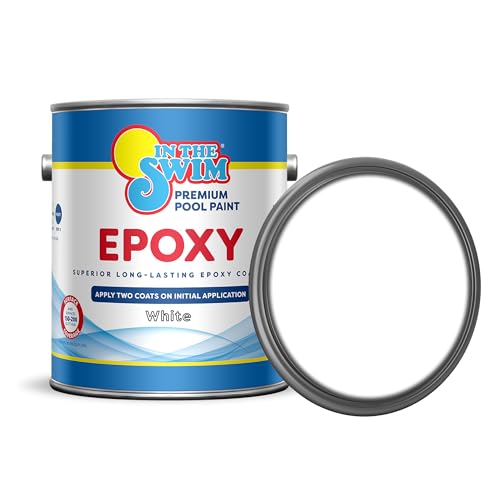
Coverage runs about 150 to 200 square feet per gallon, which means a single gallon can handle a typical small pool or a large spa. The coating bonds directly to plaster, gunite, and fiberglass surfaces, so most in-ground pools won’t require a separate primer. That saves both time and money during prep. Owners who have used it on older plaster report the paint adheres well, filling minor surface imperfections. Just remember to mix the epoxy base with the included catalyst before starting, the two parts combine to form a full gallon of ready-to-apply paint.
The extra prep is the main drawback: you have to mix the epoxy base with the included catalyst before starting, and the instructions say to paint walls first then move to the floor. That adds a step compared to single-part paints. At 14 pounds per gallon, it is heavier than some other pool paints, though weight may not be a deciding factor for most users. If you prefer a simpler, one-part application and do not mind more frequent recoats, that route saves labor. But if maximum durability and the longest interval between repaints matter most, this epoxy kit earns its place as the long-lasting choice.
Product photos
RAMUC EP Epoxy Pool Paint
What We Like
- Trusted American brand since 1933
- Hard, non-porous epoxy coating
- Excellent adhesion to pool surfaces
- Long-lasting multi-year performance
Trade-offs
- Two-part system requires careful mixing
- Needs properly prepared surface for adhesion
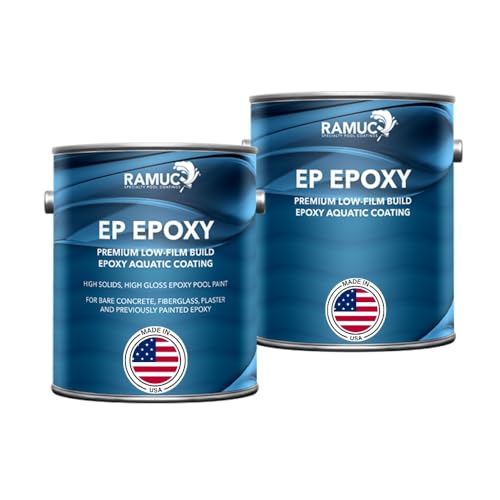
RAMUC EP is a two-part epoxy system that forms a hard, non-porous coating built to withstand heavy use and prolonged water exposure. That hard, glossy shell resists the constant chemical assault and physical wear a pool endures, making it a fit for homeowners who want a finish that lasts multiple seasons. It bonds well to concrete, gunite, and fiberglass, and the kit includes both parts for easy mixing with a roller, brush, or sprayer.
This is a two-part system that requires careful mixing and a properly prepared surface. If you are looking for something simpler, a waterborne acrylic like the Dyco Waterborne Acrylic Pool Paint might be more forgiving. But if you want the durability of a true epoxy and are willing to put in the prep work, RAMUC EP delivers the kind of long-term protection that keeps a pool looking fresh year after year.
Product photos
WOOLSEY Premium Epoxy Pool Paint

What We Like
- High-build coating up to 8 mils per coat
- Smooths rough surfaces for a satin finish
- Resists stains, chemicals, and abrasions
- Two coats deliver up to 8 years of service
Trade-offs
- Epoxy formula requires careful mixing and longer cure time
- Not suitable for rubber or metal pool surfaces
Up to 8 mils per coat means this epoxy paint can level rough plaster or concrete in a single application, saving you from multiple passes. The high-solids satin finish cures to a hard, stain-resistant surface that stands up to pool chemicals and abrasion. Two coats promise up to eight years of service, which reduces how often you need to repaint.
That epoxy durability comes with a trade-off: the two-part system demands thorough mixing and a longer cure time before the pool can be filled. If you prefer a quicker, water-based application, Dyco Waterborne Acrylic Pool Paint is an alternative, but it does not offer the same high-build thickness or the eight-year lifespan claimed for this product. The satin finish is less glossy than some epoxy paints, so it suits those who prioritize surface smoothing and longevity over a high-shine look.
RAMUC Hi-Build Epoxy Pool Paint
What We Like
- High-build formula fills minor surface imperfections
- Self-leveling for smooth application
- Restores and renews aging pool interiors
- Durable for residential and commercial pools
Trade-offs
- Two-part epoxy requires mixing before use
- Limited to concrete and plaster surfaces
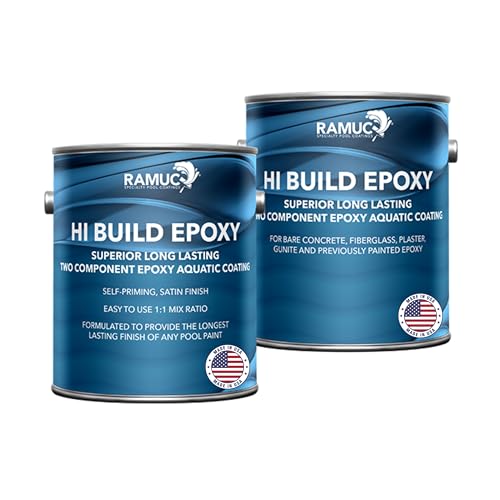
A thick, self-leveling two-part epoxy that covers 125-150 square feet per gallon, this paint is designed to fill minor surface imperfections on concrete or plaster pool interiors. The high-build formula helps restore and renew aging pool surfaces, delivering a smooth, satin finish that stands up to heavy use in both residential and commercial pools. It is best for owners who want durable protection and a refreshed look without needing to repaint frequently.
The extra effort is the main consideration: mixing two parts correctly takes care and time, and the paint is formulated for concrete and plaster surfaces. Compared to other options like Dyco’s waterborne acrylic, which may offer easier cleanup, this RAMUC demands more prep but provides a high-build, long-lasting film. If your pool’s surface has minor imperfections, the extra work pays off in a durable, satin finish that holds up well.
Product photos
Mollor Water-Based Acrylic Pool Paint
What We Like
- Covers 320 sq ft per coat smooth
- Withstands 30 meters deep submersion
- Resists UV, salt, chemicals, cracking
- Works on concrete, fiberglass, metal
Trade-offs
- Needs 72 hours of dry weather
- Rough surfaces cut coverage to 200 sq ft
- Avoid humid or cloudy days for application
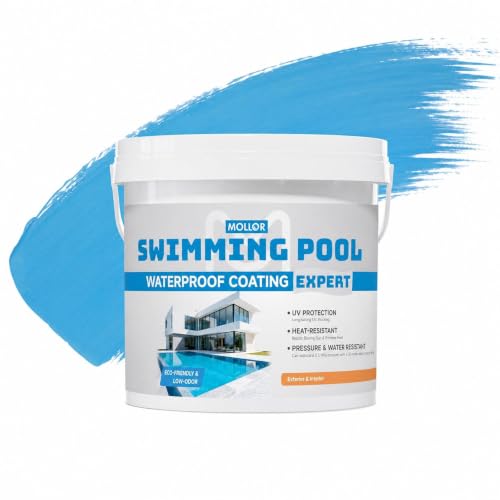
A single coat of this paint covers up to 320 square feet on a smooth pool surface, so a typical in-ground pool can be done without buying extra gallons. It bonds directly to concrete, plaster, fiberglass, or metal with no primer needed, saving both time and money. The flexible coating handles minor base settlement and tiny surface cracks. It holds stable performance under 30 meters of continuous submersion, meaning deep pools and ponds stay free of discoloration, wrinkling, or cracking after long-term soaking.
The main practical consideration is the curing time: you need three full days of stable, dry weather with temperatures between 5°C and 35°C for the coating to set properly. On smooth pool surfaces, a single gallon covers roughly 320 square feet, but on rough or uneven substrates that coverage drops to about 200 square feet per coat. That means planning your application around a clear forecast is essential, and you may need extra paint if your pool base is textured or porous.
Product photos
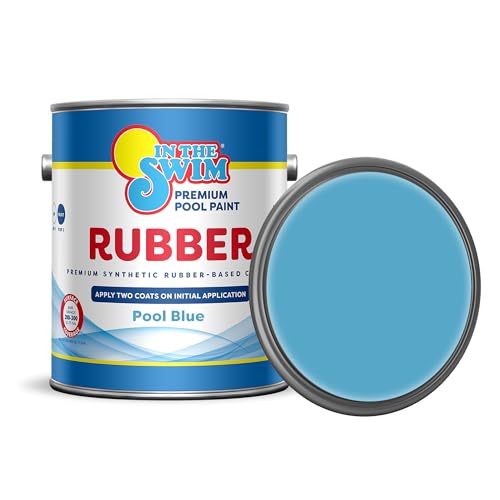
In The Swim Synthetic Rubber Pool Paint
What We Like
- Lasts up to 3 years
- Works on gunite, plaster, concrete
- Excellent chemical resistance
- Covers 200-300 sq ft per gallon
Trade-offs
- Requires surface temperature above 50°F
- Must avoid direct sunlight during application
Two coats deliver a finish that holds up for up to three years, which puts this rubber-based paint in a practical middle ground between quick acrylic touch-ups and the multi-year commitment of epoxy. It is designed for gunite, plaster, and concrete surfaces, and it can be applied over existing chlorinated rubber paint. For pool owners who want a durable refresh without the complexity of a two-part epoxy, this synthetic rubber formula offers a simpler path to a long-lasting result.
The main trade-off is that you need surface temperatures above 50°F and must avoid direct sunlight during curing, so you have to pick the right day for the job. But the payoff is a finish that lasts up to 3 years with excellent chemical resistance and color retention. This paint works best for anyone who prefers a rubber-based finish and is willing to schedule carefully.
Product photos
WOOLSEY Synthetic Rubber Pool Paint

What We Like
- Formulated for previously painted rubber
- High-gloss finish resists dirt buildup
- VOC compliant in all 50 states
- Self-priming two-coat system
Trade-offs
- Only for previously painted rubber surfaces
- Limited to Dawn Blue color option
- Requires two coats for full coverage
A 5-gallon bucket of this synthetic rubber paint is designed specifically to renew and protect previously painted chlorinated rubber and synthetic rubber pool surfaces. That means it skips the guesswork if your pool already has that type of coating. Its high-gloss finish resists dirt buildup, making routine maintenance simpler, and the self-priming two-coat system saves you an extra step during application. This makes it a natural fit for anyone refreshing an older rubber-coated pool who wants a reliable, contractor-friendly option that meets VOC standards nationwide.
This paint is not formulated for bare concrete, plaster, or fiberglass pools, so if your pool surface has never been painted or uses a different base, you will need to look elsewhere. Compared to the Dyco Waterborne Acrylic Pool Paint, which works on a wider range of surfaces and resists UV and chemicals, the WOOLSEY Synthetic Rubber Paint is more specialized but offers a glossy, easy-clean finish that acrylics may not match. For pools already wearing a rubber coating, this is a straightforward, high-coverage choice. For other surfaces, one of the epoxy options in this guide will serve you better.
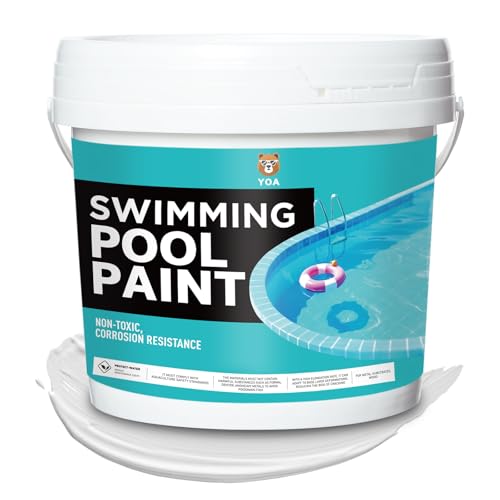
YOA Premium Swimming Pool Paint
What We Like
- Anti-slip textured finish for wet areas
- UV-resistant and fade-proof formula
- Waterproof barrier prevents seepage
- Works on concrete, plaster, fiberglass
Trade-offs
- Only available in white
- Requires a roller or sprayer for smooth application, no brush-friendly option
An anti-slip textured finish built into the paint itself means you get extra traction on steps, the pool floor, and deck surfaces the moment the coating cures. That subtle grip reduces slipping when wet, which matters most for families with kids or anyone who wants a safer swim area. It also forms a waterproof barrier that keeps moisture from seeping into concrete or plaster, and the UV-resistant formula resists fading and chalking even under direct sun and pool chemicals. For a homeowner prioritizing safety without sacrificing durability, this paint delivers a practical, long-lasting surface.
The biggest reason to pick this paint is its anti-slip surface, which adds traction on wet pool floors and steps to reduce accident risk. That textured finish means you sacrifice the slick feel of a high-gloss epoxy like In The Swim White Epoxy Pool Paint, but for families with kids or elderly swimmers, the safety gain is worth it. The paint only comes in white, so if you want a colored pool interior, you’ll need to look elsewhere.
Product photos
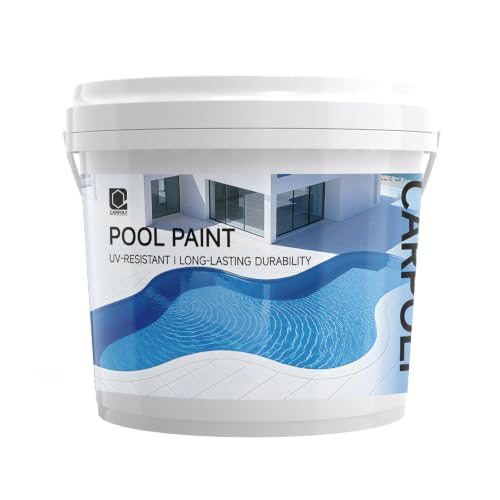
CARPOLY Pool Paint
What We Like
- Formulated for continuous water immersion
- Covers concrete, fiberglass, and decks
- UV and weather resistant finish
- Easy single-component application
Trade-offs
- Not suitable for pools needing the hardest epoxy-level finish
- Only one color option available
A single container covering up to 320 square feet makes this a practical choice for resurfacing concrete pools, fiberglass shells, and surrounding deck areas. The water-based formula is built for long-term water immersion, so you can trust it to hold up season after season without peeling or blistering. It also shrugs off UV rays and weather changes, which matters if your pool gets full sun or faces rain and humidity. This paint suits DIYers who want a straightforward restoration project: no mixing, just open the can and roll it on.
This is a water-based coating, not a two-part epoxy like the In The Swim White Epoxy Pool Paint. Epoxies generally offer a harder, more chemical-resistant finish, so if your pool sees heavy chlorine loads or you want maximum longevity, the extra step of mixing epoxy might be worth it. But for concrete and fiberglass decks where easy application and decent durability are the priority, CARPOLY delivers a clean, protective finish without the fuss.
Product photos
How We Evaluated Paints For Swimming Pools
Our research began with a close look at manufacturer data sheets for each paint’s chemical composition, coverage rates, cure times, and surface preparation requirements. We cross-referenced these specs against expert round-ups from pool maintenance professionals and patterns in long-term owner feedback to understand how each formula performs in real-world conditions.
We focused on four criteria that matter most for a successful pool paint job. Durability determines how many seasons a coating will last before fading or peeling. Surface compatibility ensures the paint bonds properly to concrete, plaster, gunite, fiberglass, or previously painted rubber. Application ease considers whether the paint is a single-part formula or a two-part mix, and what tools and weather conditions are needed. Finally, we weighed coverage rates and build thickness, since thicker coats better hide surface imperfections and extend service life.
Owner reports consistently highlight proper surface preparation as the single most important factor for any pool paint’s longevity. We prioritized paints with strong documentation and consistent positive feedback across multiple sources.
What To Look For In Paints For Swimming Pools
The right pool paint depends on your pool’s material, its current coating, and how much effort you want to put into application. Here are the key factors to consider before buying.
Choose a paint that matches your pool surface, your tolerance for mixing and cure time, and the number of years you want between repaints.
Surface Compatibility
Not all pool paints bond to every surface. Epoxy and acrylic paints work well on bare concrete, plaster, and gunite. Rubber-based paints are designed for pools previously painted with chlorinated rubber and should not be applied over epoxy or acrylic. Fiberglass pools require a paint formulated specifically for that material, such as a water-based acrylic or a compatible epoxy. Check the manufacturer’s surface recommendations before buying.
Application and Cure Time
Single-part acrylic and rubber paints are ready to use straight from the can, making them ideal for DIYers. Two-part epoxy paints require mixing a base with a catalyst and must be used within a limited working time. Cure times vary widely: water-based acrylics may need 72 hours of dry weather, while epoxies can take longer but create a harder, more durable finish. Plan for temperature and humidity conditions during application.
Durability and Build
The number of years between repaints is directly tied to the paint’s chemical resistance and build thickness. High-build epoxy paints can deliver up to 8 mils per coat and last up to 8 years. Standard acrylic paints offer good UV and chemical resistance but may need recoating sooner. Rubber-based paints typically last up to 3 years. Consider how often you want to repaint and whether you need a thick coating to smooth rough surfaces.
- Match the paint type to your pool’s current coating and material.
- Confirm the required surface temperature and dry weather window.
- Decide between single-part convenience and two-part epoxy durability.
- Check coverage rates to estimate how many gallons you need.
- Verify that the paint is formulated for continuous water immersion.
The paint that lasts longest is the one applied to a properly prepared surface.
Paints For Swimming Pools Compared
The table below compares each paint’s key specs, including surface compatibility, application type, and coverage rates, to help you narrow your options.
| Product | Type | Surface | Finish |
|---|---|---|---|
| Dyco Waterborne Acrylic Pool Paint | Waterborne acrylic | Concrete, plaster, masonry | N/A |
| In The Swim White Epoxy Pool Paint | Epoxy-Base | Plaster, gunite, fiberglass | High-gloss, ceramic-like |
| RAMUC EP Epoxy Pool Paint | Two-part epoxy | Concrete, gunite, fiberglass | High-gloss |
| WOOLSEY Premium Epoxy Pool Paint | High-solids epoxy | Concrete, plaster, fiberglass | Satin |
| RAMUC Hi-Build Epoxy Pool Paint | Two-part epoxy | Concrete & plaster | Satin |
| Mollor Water-Based Acrylic Pool Paint | Water-based acrylic | Concrete, plaster, fiberglass, metal | N/A |
| In The Swim Synthetic Rubber Pool Paint | Synthetic rubber-base | Gunite, plaster, concrete | N/A |
| WOOLSEY Synthetic Rubber Pool Paint | Rubber-based | N/A | High-Gloss |
| YOA Premium Swimming Pool Paint | N/A | Concrete, Plaster, Fiberglass | Anti-Slip Textured |
| CARPOLY Pool Paint | Water-based | Concrete, fiberglass, pool decks | N/A |
Frequently Asked Questions
What type of paint is best for a concrete swimming pool?
Epoxy paints are the most durable option for concrete pools, offering excellent adhesion and multi-year performance. The RAMUC EP Epoxy Pool Paint and WOOLSEY Premium Epoxy Pool Paint are both strong choices. Water-based acrylics like the Dyco Waterborne Acrylic Pool Paint also work well on concrete and are easier to apply.
How long does pool paint last before needing to be repainted?
Epoxy paints typically last 3 to 8 years depending on the product and surface preparation. The WOOLSEY Premium Epoxy Pool Paint claims up to 8 years with two coats. Rubber-based paints last up to 3 years. Acrylic paints generally fall in between, with durability improving when multiple coats are applied.
Can I paint a fiberglass pool with epoxy paint?
Some epoxy paints are formulated for fiberglass, but not all. The In The Swim White Epoxy Pool Paint lists fiberglass as a compatible surface. Water-based acrylics like the Mollor Water-Based Acrylic Pool Paint are also a safe option for fiberglass. Always check the manufacturer’s surface compatibility list before applying.
Do I need to drain my pool to paint it?
Yes, the pool must be completely drained and the surface cleaned, dried, and prepared before painting. Any existing loose or peeling paint needs to be removed. Proper surface preparation is essential for adhesion and longevity, regardless of the paint type chosen.
What is the difference between epoxy and acrylic pool paint?
Epoxy paint is a two-part system that cures into a hard, durable, chemical-resistant coating that lasts several years. Acrylic pool paint is water-based, easier to apply, and cleans up with soap and water, but it does not build as thick and may require more frequent recoating. The choice depends on your priority between durability and application ease.
The Bottom Line
For most pool owners, the Dyco Waterborne Acrylic Pool Paint hits the sweet spot of easy application and lasting durability. Its waterborne formula means no harsh solvents, and the tile-like finish resists UV, salt, and hairline cracks on concrete, plaster, or masonry pools. It is the best overall choice for anyone who wants a reliable paint without the complexity of a two-part epoxy.
If you are willing to mix a two-part system for the longest time between repaints, the In The Swim White Epoxy Pool Paint is the best long-lasting option. For rough concrete surfaces that need smoothing, the WOOLSEY Premium Epoxy Pool Paint delivers a high-build satin finish that can last up to 8 years. Those restoring aging pools should look at the RAMUC Hi-Build Epoxy Pool Paint for its self-leveling, gap-filling properties.
The single most important factor in any pool paint job is surface preparation. No paint, no matter how good, will perform well on a dirty, damp, or poorly prepared surface. Take the time to clean, dry, and repair your pool before painting, and your chosen paint will reward you with years of service.
