
How to Remove Mold From Bathroom Ceiling: Step-by-Step
This post contains affiliate links. As an Amazon Associate, we earn from qualifying purchases.
To remove mold from a bathroom ceiling, scrub the spots with detergent and water, then dry the surface completely. The EPA sets the do-it-yourself line at about 10 square feet, roughly a 3 ft. By 3 ft. Patch. Anything larger, or any mold fed by sewage, needs a professional.
The 10 square foot figure is where the agencies split, and the split matters more than the number. The EPA treats it as the ceiling for handling the job yourself. Wisconsin’s health department treats the same figure as the point where a three-phase procedure begins. A bathroom ceiling patch can also be the visible face of a leak above it, which is why knowing how to remove mold from bathroom ceiling growth matters.
What follows covers the size line, the gear that actually protects you, the cleaning agents the agencies disagree about, and the ventilation fix that decides whether the mold stays gone.
Key Takeaways
- The EPA’s 10 square foot line is roughly a 3 ft. By 3 ft. Patch, and above it the agency points you to its remediation guide rather than a mop.
- An N95 is the minimum. The CDC calls for a half-face or full-face respirator for extended work like pulling moldy drywall, while Wisconsin DHS specifies a breathing respirator with HEPA cartridges.
- Bleach is genuinely contested. The CDC allows it, Wisconsin says it’s usually unnecessary, Massachusetts says harsh chemicals aren’t recommended in most cases, and the EPA endorses detergent and water rather than bleach.
- Ventilation decides the outcome. The EPA’s own bathroom advice for recurring mold is more airflow and more frequent cleaning, while Wisconsin DHS recommends a dehumidifier rather than a fan since a fan can cause mold spores to be released.
- Moldy ceiling tile gets replaced. The EPA says absorbent or porous materials such as ceiling tiles and carpet may have to be thrown away if they become moldy.
Where Is the 10 Square Foot Line, and What Happens Above It?
Ten square feet. That is the line the EPA draws for handling a moldy patch yourself, and it works out to roughly a 3 ft. By 3 ft. Area.
The EPA separates remediation by total surface area. Under 10 square feet, the minimum protection is an N-95 respirator, gloves, and goggles, and no containment is required. Between 10 and 100 square feet is medium. Above 100 square feet, or where exposure risk is significant, the job is large.
Above that line the advice changes shape. The EPA mold cleanup in your home page sends larger jobs to its schools and commercial buildings guide, which lays out medium and large remediation tiers with containment and heavier protection.
Wisconsin’s Wisconsin DHS cleaning mold in your home guidance uses the same number differently. It says that for larger problems of about 10 square feet, you follow a three-phase preparation, mixing, and cleaning procedure. Same figure, opposite job description.
That is worth sitting with when you compare a how to remove mold from bathroom ceiling. One agency reads 10 square feet as the point where you stop. The other reads it as the point where the serious procedure starts.
A few conditions push a ceiling past the do-it-yourself line regardless of measured area:
- Mold fed by sewage or other contaminated water, which the EPA sends to a professional at any size
- Suspected hidden mold above the ceiling plane, which Massachusetts warns can sit behind wallpaper, inside walls, in air ducts, or on top of ceiling tiles
- Anyone in the house with asthma, COPD, immune suppression, or a lung condition, since the CDC says those people should not take part in cleanup at all
What Should You Actually Wear to Clean a Ceiling?
Goggles. Not safety glasses, and not the vented kind.
The CDC is specific about this. Safety glasses or goggles with open vent holes will not protect you against dust and small particles, which is exactly what you’re knocking loose overhead.
Before you start: A ceiling puts your face directly under the work, so runoff comes down on you and spores settle on your shoulders. The CDC specifies goggles with complete eye protection and no vent holes. The same guidance says anyone with asthma, COPD, or immune compromise should not be in the room while cleaning happens.
The CDC’s minimum for cleaning mold is short and specific:
- A NIOSH-approved N95 respirator, at minimum, covering mouth and nose
- A half-face or full-face respirator if you’ll be at it a while, such as ripping out moldy drywall or hauling moldy belongings
- Non-latex, vinyl, nitrile, or rubber gloves, with no bare-hand contact at any point
- Goggles with complete eye protection and no open vent holes
A NIOSH-approved N95 respirator covers the CDC minimum without any guesswork, and it’s cheap enough to keep a spare in the cupboard.
Respirator: N95 or HEPA Cartridge?
Wisconsin specifies a different setup: a breathing respirator with HEPA cartridges. That is a heavier piece of equipment than an N95, and it belongs to the three-phase procedure rather than a quick wipe-down of surface spots.
The CDC mold clean up guidelines call for at least a NIOSH-approved N95 and stepping up to a half-face or full-face respirator for extended work, while Wisconsin DHS specifies a breathing respirator with HEPA cartridges. Three agencies, three specs.
Why a Ceiling Is Harder Than a Wall
You’re on a step stool with a spray bottle raised over your head, and the runoff is coming back down your forearm.
Gravity is the whole problem for how to remove mold from bathroom ceiling. The EPA Chapter 5 mold remediation guide organizes remediation by total surface area into small, medium, and large tiers.
Massachusetts puts the real risk plainly: what first looks like a small job may get much bigger. Hidden mold can sit behind wallpaper, inside walls, in air ducts, on top of ceiling tiles, and underneath carpet.
Pulling down ceiling tiles generates a lot of dust and debris and may release mold spores, per that same Massachusetts guide. Factor that in before you decide to do the work yourself.
What Should You Clean It With, and Does Bleach Help?
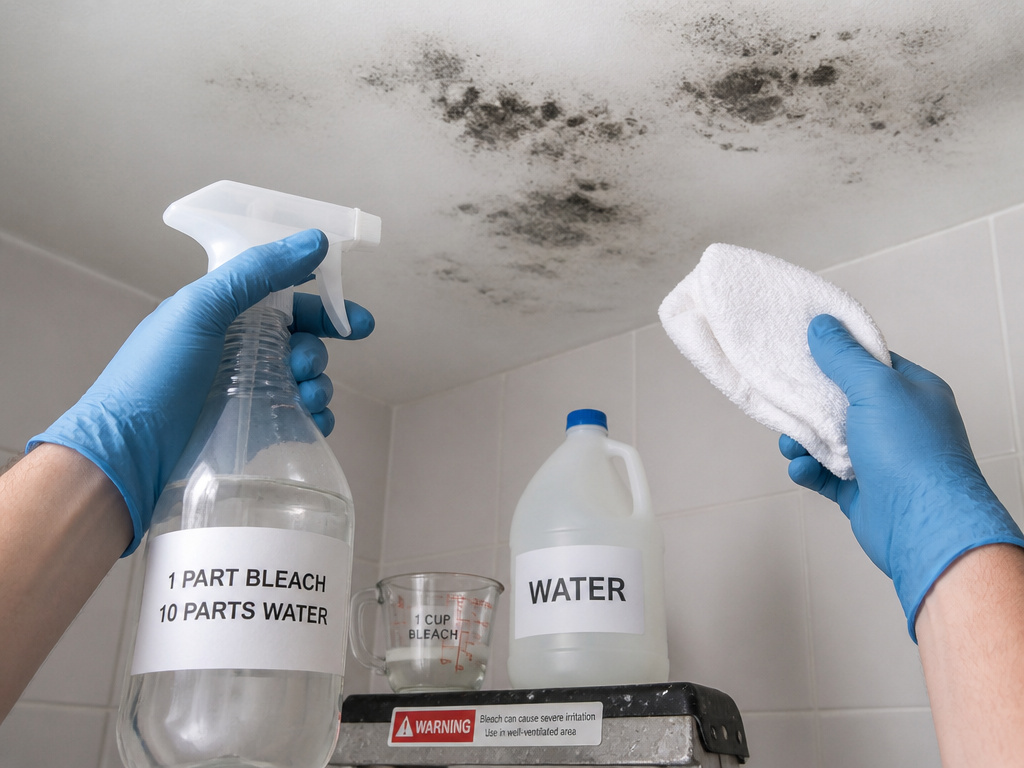
Do you actually need bleach up there?
The four agencies do not agree, and pretending they do would be dishonest. Here is where each one lands.
| Source | Recommended cleaner | Position on bleach |
|---|---|---|
| EPA | Detergent and water | Not endorsed; detergent and water only |
| CDC | Bleach or dish detergent | Allowed, with windows or doors open |
| Wisconsin DHS | Household cleaner without ammonia | Typically unnecessary unless sewage released |
| Massachusetts DPH | Approved biocide | Harsh chemicals not recommended in most cases |
That table is the honest answer. If you want a ready-made option rather than mixing your own, the best mold removers for painted surfaces are worth a look before you commit to a bucket of bleach.
The Bleach Dilution, if You Use It
Wisconsin gives a specific mix: one cup (8 ounces) of bleach per gallon of tap water. It also notes that regular household bleach runs between 1% and 5% chlorine, which is why the dilution matters more than the brand.
The CDC’s position is looser. Bleach or dish detergent can be used to clean mold in the home, and windows or doors should be open whenever you use any cleaning product.
Why the Ammonia Warning Matters More Than the Bleach Question
Wisconsin’s warning is the one worth taping to the bottle. Never mix bleach with other household cleaners. Ammonia plus chlorine bleach can form a toxic gas that causes serious injury or death.
If you cannot name what is in the bottle sitting next to the bleach, do not let the two meet. Ammonia and chlorine bleach form a toxic gas, and no exhaust fan makes that reaction safe.
What’s the Actual Step-by-Step for a Bathroom Ceiling?
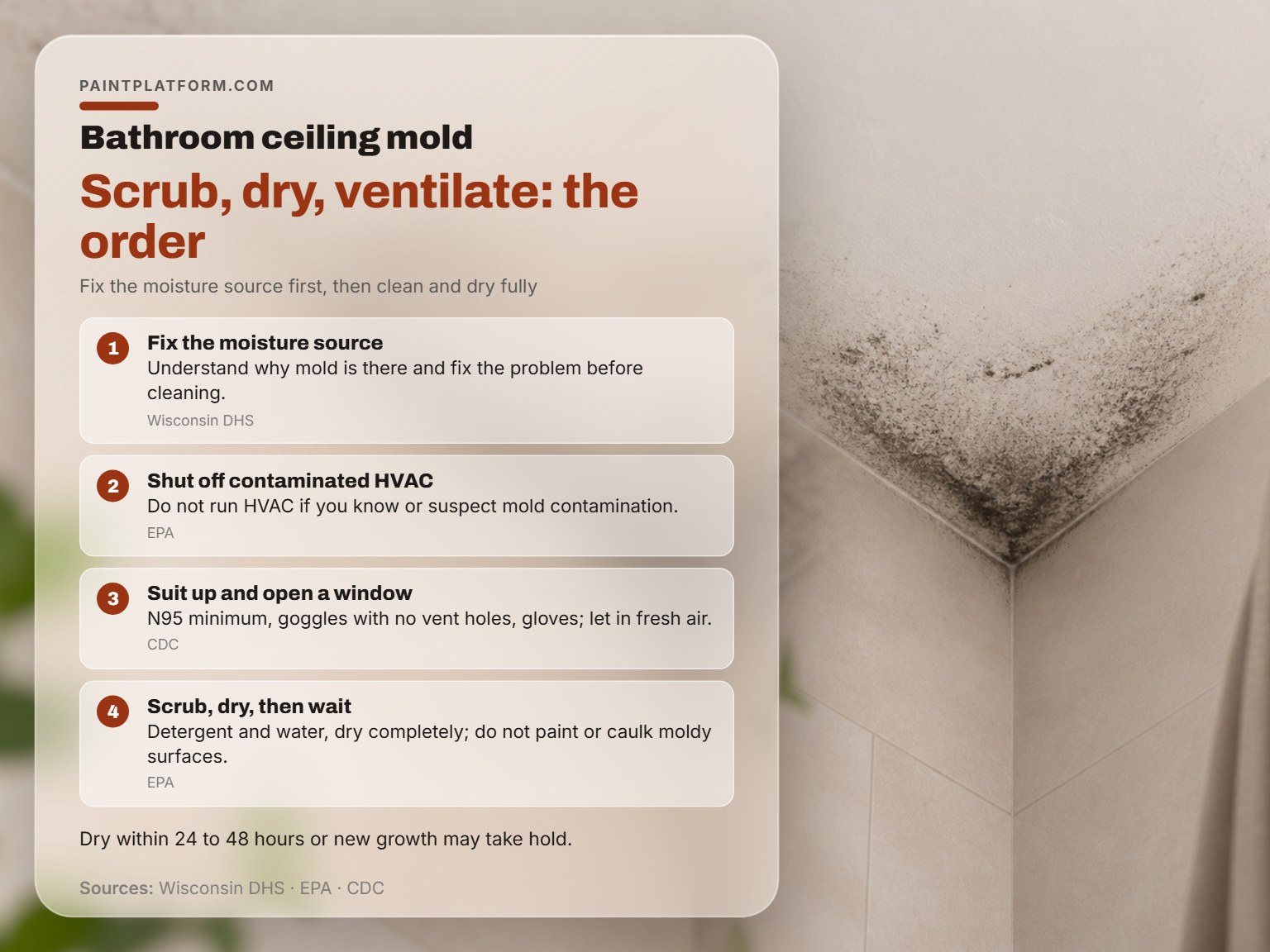
The order of operations matters less than the drying. If you want the short version of how to remove mold from a bathroom ceiling, it’s scrub, dry, and ventilate.
- Find the moisture source first. Wisconsin’s guidance is blunt: understand why the mold is there and fix the problem causing the growth before you clean anything. Skip it and the spots return.
- Shut off the HVAC if you suspect the ductwork is contaminated. The EPA says running a contaminated system can spread mold throughout the building.
- Suit up and open a window. N95 at minimum, goggles with no vent holes, gloves. The CDC recommends fresh air whenever you use any cleaning product.
- Scrub with detergent and water. The EPA’s instruction is to scrub mold off hard surfaces with detergent and water, then dry completely. On a painted ceiling that means a damp cloth and a mild cleaner, not a soaking.
- Bag the debris and change your shoes. Massachusetts says moldy items and cleanup rags can go in the regular trash, and they should move outside as soon as possible. Remove your shoes before leaving the work area so you don’t track spores through the house.
- Dry it fully. This is the step everyone rushes. Massachusetts notes it may be difficult or impossible to dry an area within 24 to 48 hours, and that window is when new growth takes hold.
- Wait before you prime. The EPA is explicit: do not paint or caulk moldy surfaces, because paint applied over mold is likely to peel.
The Drying Check That Actually Works
Then run the tape test again before anything else touches the ceiling.
The scrubbing technique matters more on a painted surface than on tile, and the how to remove mold from painted walls walkthrough covers how much pressure a latex ceiling will actually take.
If the spots sit on the wall above the tile line, clean bathroom walls is a shorter job with most of the same rules.
Why Does the Mold Come Back Two Months Later?
The paint gets blamed. It rarely deserves it.
I won’t recommend a mold-killing primer as a first move. Save it for after the airflow is sorted. Every time I’ve reached for the can first, I’ve been back on the step stool inside a season.
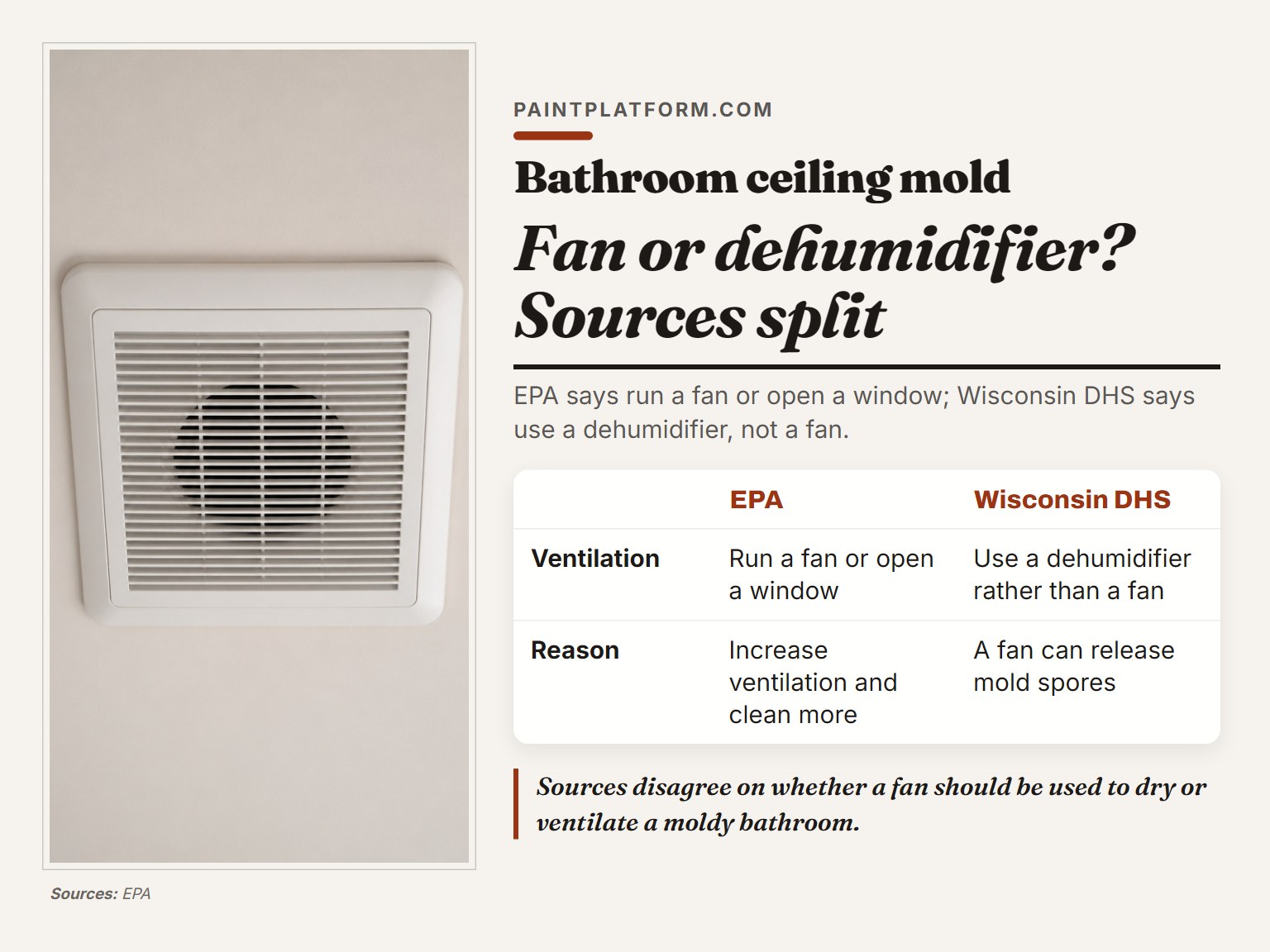
The EPA’s own bathroom section concedes that some mold seems to reappear, and its advice is to increase ventilation by running a fan or opening a window, plus cleaning more frequently, while Wisconsin DHS says to use a dehumidifier rather than a fan since a fan can cause mold spores to be released.
Here the sources split again. The EPA says run a fan or open a window. Wisconsin says use a dehumidifier rather than a fan, since a fan can cause mold spores to be released.
| What you see | Likely cause | What to do |
|---|---|---|
| Spots return within weeks | Fan runs too briefly after showers | Run it longer and time it |
| Stain spreads from one point | Active leak above the ceiling | Fix the water source first |
| Ceiling feels cool and tacky | Surface still holding moisture | Wait, then tape test |
| Growth clusters near the vent grille | Duct or fan housing contaminated | Stop the fan and investigate |
A cheap humidity meter beats guesswork here, and a small dehumidifier in a windowless bathroom does more preventive work than any additive. The stop mold returning checklist starts with airflow for the same reason, and prevent mold on painted walls comes down to moisture control more than coating choice.
For readers who want the research background, the NCBI damp indoor spaces and health volume is the peer-reviewed counterpart to the agency pages above.
When Should You Stop and Call a Professional?
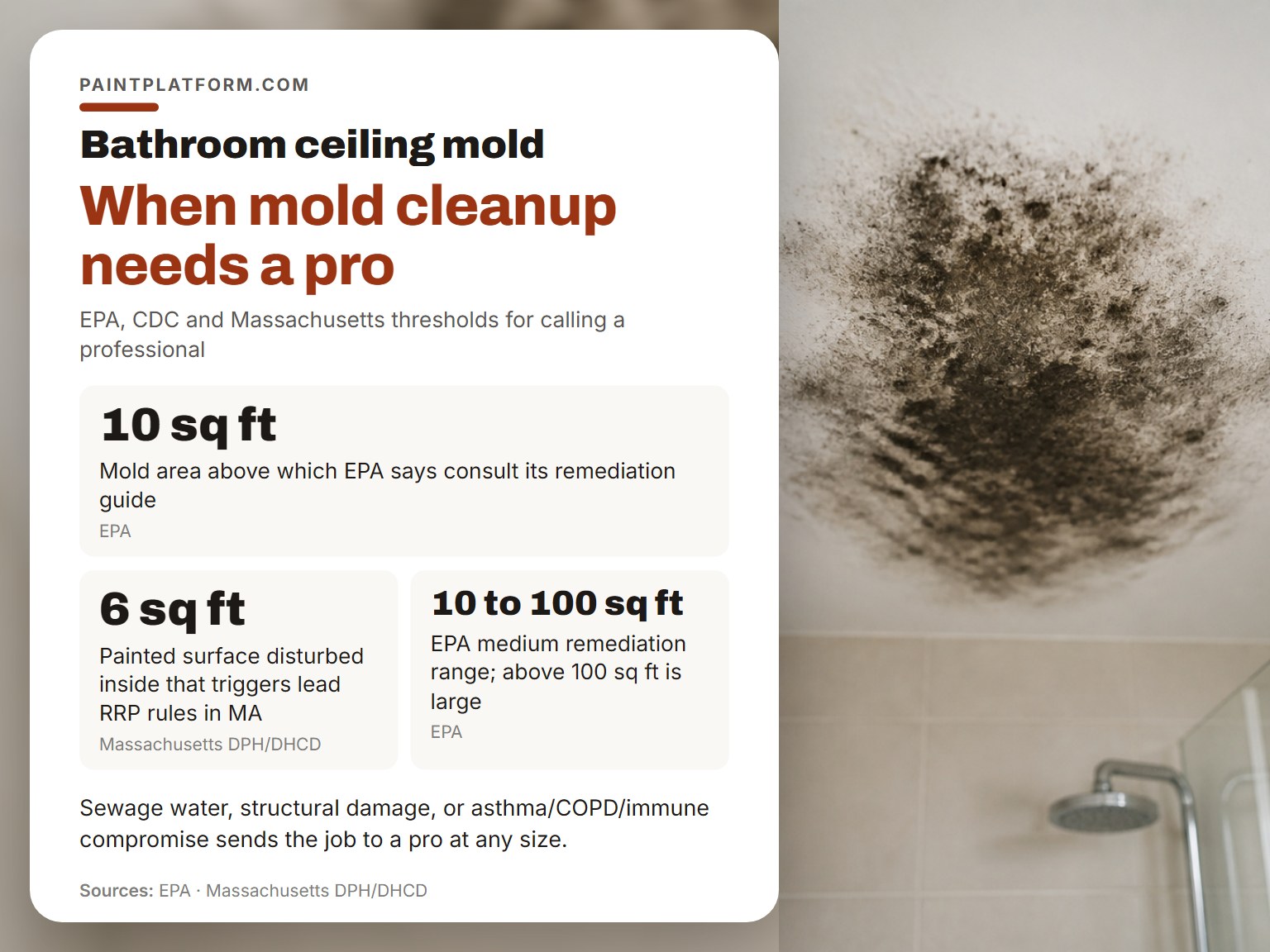
The EPA directs anything over 10 square feet to its remediation guide, and a few conditions send the job to a pro at any size.
- Water damage from sewage or other contaminated water, which the EPA sends to a professional regardless of area
- Structural, plumbing, or electrical damage, which Massachusetts says should be handled by an experienced or licensed professional
- Work that disturbs more than 6 square feet of painted surface inside, which triggers Renovation, Repair and Maintenance rules for lead under 454 CMR 22.11 in Massachusetts
- Anyone in the household with asthma, COPD, or immune compromise, who the CDC says should not be in the building during cleaning
Vetting a contractor is its own job. The EPA says to check references and ask them to follow its remediation guide plus the ACGIH or IICRC guidelines.
Testing is usually a waste of money. Wisconsin puts it plainly: if you can see and smell it, you have a mold problem. A thorough inspection to find the cause is the useful spend.
Massachusetts adds a detail worth knowing if you rent. The Housing Code regulates mold on surfaces and the conditions causing excess moisture, but it does not regulate mold or mold spores in indoor air.
Priming and Painting, Once It’s Genuinely Dry
Coatings only earn their keep after the moisture is handled. paint over mold is a real option once the surface is prepped and dry, and the bathroom ceiling paint options that hold up to steam are a different list from ordinary wall paint.
If the ceiling sits inside a shower stall, shower ceiling paint has to handle direct splash rather than just humidity.
Frequently Asked Questions
Can I just paint over the mold on my bathroom ceiling?
No. The EPA says not to paint or caulk moldy surfaces, and that paint applied over mold is likely to peel. Clean the surface, dry it completely, then prime. Painting a damp ceiling traps moisture and the coating lifts.
Does bleach kill mold on a ceiling?
The CDC allows bleach or dish detergent. Wisconsin says bleach is typically not necessary unless a sewage release occurred, Massachusetts says harsh chemicals like bleach aren’t recommended in most cases, and the EPA endorses detergent and water rather than bleach. If you do use it, Wisconsin’s mix is one cup of bleach per gallon of water.
How long should the bathroom fan run to keep mold from coming back?
There’s no single number in the agency guidance. The EPA’s advice for recurring bathroom mold is to increase ventilation and clean more frequently, while Wisconsin DHS recommends a dehumidifier rather than a fan since a fan can cause mold spores to be released.
Do I need to test for mold before cleaning?
Wisconsin says testing is generally not necessary. If you can see and smell it, you have a mold problem. A thorough inspection to find the moisture source is more useful than a spore count.
What if the mold covers more than 10 square feet?
The EPA points you to its remediation guide for larger areas. Wisconsin treats about 10 square feet as the start of a three-phase procedure with plastic sheeting at least 4 mm thick, a HEPA-cartridge respirator, and a commercial-grade HEPA vacuum rather than a home vacuum.
Can I stay in the house while it’s being cleaned?
If you have asthma, COPD, or are immune compromised, the CDC says you should not stay in a moldy home or be there while it’s being cleaned.
The Bottom Line
Here’s the trigger I’d use. That’s a moisture problem, and it’s above the ceiling or inside the fan duct.
One concession. Everything above assumes drywall or plaster in reasonable shape. If the board crumbles when you press it, or the stain has a soft edge that gives under a finger, the material is compromised and cleaning it is theater. Cut it out.
And the opinion I’ve earned the hard way: I’d rather see an ugly, scrubbed, slightly stained ceiling with a fan that runs for thirty minutes than a beautifully primed one over a bathroom that never dries out. The coating is the last five percent of the job.
