
How to Remove Mold From Painted Walls: Step-by-Step
This post contains affiliate links. As an Amazon Associate, we earn from qualifying purchases.
To remove mold from painted walls, fix the moisture source first, then scrub the surface with detergent and water, rinse, and dry it completely before repainting. The EPA puts DIY cleanup at under about 10 square feet; anything larger, or any mold fed by sewage, needs a professional.
Paint is a thin film over gypsum board, and the board underneath is where a colony actually feeds. Scrubbing the film lifts what you can see while the paper face keeps holding moisture against the substrate, which is why knowing how to remove mold from painted walls matters.
What follows is the order that works: the size cutoff, the gear, the scrub, the drying window, and the primer that goes on last. It also covers the one argument the agencies have never settled, which is whether bleach belongs in the bucket at all.
Key Takeaways
- Under about 10 square feet, the EPA says you can handle the cleanup yourself. Above that, its guidance points to professional remediation.
- Dry the wall completely before painting. The EPA says paint applied over moldy surfaces is likely to peel.
- Bleach is genuinely contested. The EPA and NEHA don’t recommend it as routine, though NEHA allows up to 1 cup per gallon when appropriate; the CDC and North Carolina’s health department allow it.
- Painted drywall is porous underneath. Scrubbing the paint doesn’t reach mold growing in the paper facing and gypsum core.
- Moisture control is the whole job. The EPA says the mold will reappear if the water source isn’t fixed.
When a Painted Wall Is Still a DIY Job
Ten square feet is the line the EPA draws between a job you can do and a job you should hand off. That’s a patch roughly 3 feet by 3 feet.
Mold remediation guidance is organized by the size of the affected area rather than by mold species. The EPA sets do-it-yourself cleanup below roughly 10 square feet, limited containment with a single layer of 6-mil fire-retardant polyethylene sheeting between 10 and 100 square feet, and full containment above that, per EPA document 402-K-01-001.
NEHA’s guidance lands in the same place: consider a remediation contractor once the affected area passes 10 square feet.
Three situations override the square footage entirely.
- Sewage or contaminated water. The EPA pulls this out of DIY scope completely, no matter how small the patch is.
- A mold-contaminated HVAC system. Don’t run it. The EPA warns the system can spread mold through the whole building.
- Anyone in the house with asthma, COPD, or a suppressed immune system. The CDC says these people shouldn’t take part in cleanup at all, and shouldn’t be in the home while it happens.
One more thing worth knowing before you start judging the patch by eye. The CDC’s NIOSH arm states plainly that mold color doesn’t indicate whether it’s more or less dangerous, and that toxigenic species like Stachybotrys chartarum should be treated the same as any other mold that grows indoors.
What to Wear Before You Touch the Wall
Respirator choice tracks how long you’ll be in the dust, not how bad the mold looks when you compare a how to remove mold from painted walls.
Before you start: A NIOSH-approved N95 is the CDC’s minimum for a small patch, and it filters 95% of airborne particulates. If you’re pulling out moldy drywall, step up to a half-face or full-face respirator. Never mix a bleach solution with ammonia or an ammonia-based cleaner, because the fumes are toxic.
The rest of the kit, per the CDC mold clean up guidelines:
- A NIOSH-approved N95 is the common hardware-store version of the CDC minimum. Fit matters as much as the rating.
- Gloves. Non-latex, vinyl, nitrile, or rubber for general work. The EPA adds natural rubber, neoprene, polyurethane, or PVC if you’re handling a biocide. NEHA wants long gloves reaching to mid-forearm.
- Goggles that seal. Safety glasses with open vent holes don’t count, and NEHA is explicit about that.
- Disposable coveralls for anything medium or large.
No bare hands on moldy material. That’s the CDC’s line, and it’s a simple one to hold.
The Cleaning Sequence That Actually Removes Mold
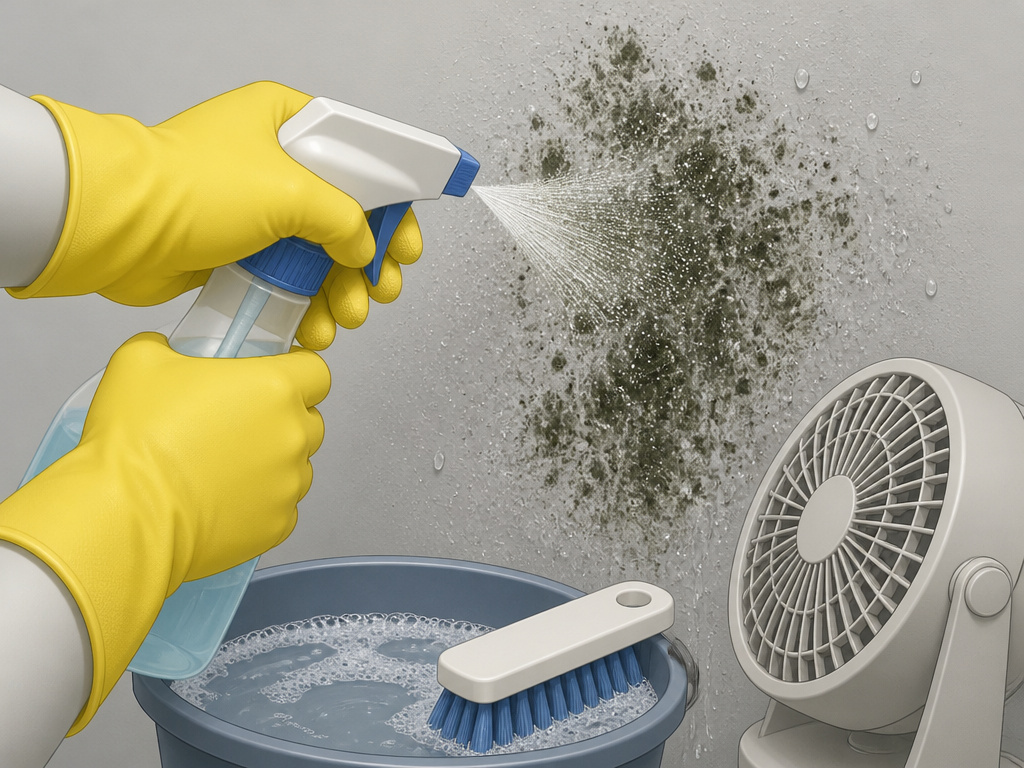
Four moves in order for how to remove mold from painted walls: wet it, scrub it, rinse it, dry it. The wetting step is the one that gets skipped, and it’s the one that keeps the rest of the room clean.
North Carolina’s health department publishes the most concrete version of this protocol, and it’s worth following closely. Here it is with the failure mode attached to each step.
- Mist the patch before you scrub. A light spray of water and detergent knocks the dust down. Scrub a dry patch and you aerosolize spores onto every surface in the room.
- Scrub with a non-ammonia detergent and hot water. The non-ammonia qualifier exists for a reason: if a disinfectant step follows, bleach plus ammonia produces toxic gas. Keep the surface wet as you work.
- Rinse with clean water. A wet-dry vacuum can pull up the excess, but the EPA limits that tool to material that’s still wet and forbids it on gypsum board.
- Disinfect only if you’ve decided to. That’s a real decision, covered below. If you do it, leave the solution on the surface per the label rather than wiping it straight off.
- Dry it fast. Fans and a dehumidifier. NC DPH states that material not dried properly is very likely to grow mold again.
If you’d rather buy a formulated product than mix your own, the best mold removers for painted walls are the ones matched to a painted surface rather than bare tile. You can clean mildew from painted surfaces with the same detergent-and-water approach, though bathroom humidity makes the drying step harder.
The full state protocol is at NC DPH cleaning moldy non-porous materials, and it’s short enough to read in one sitting.
Does Bleach Actually Kill Mold on a Painted Wall?
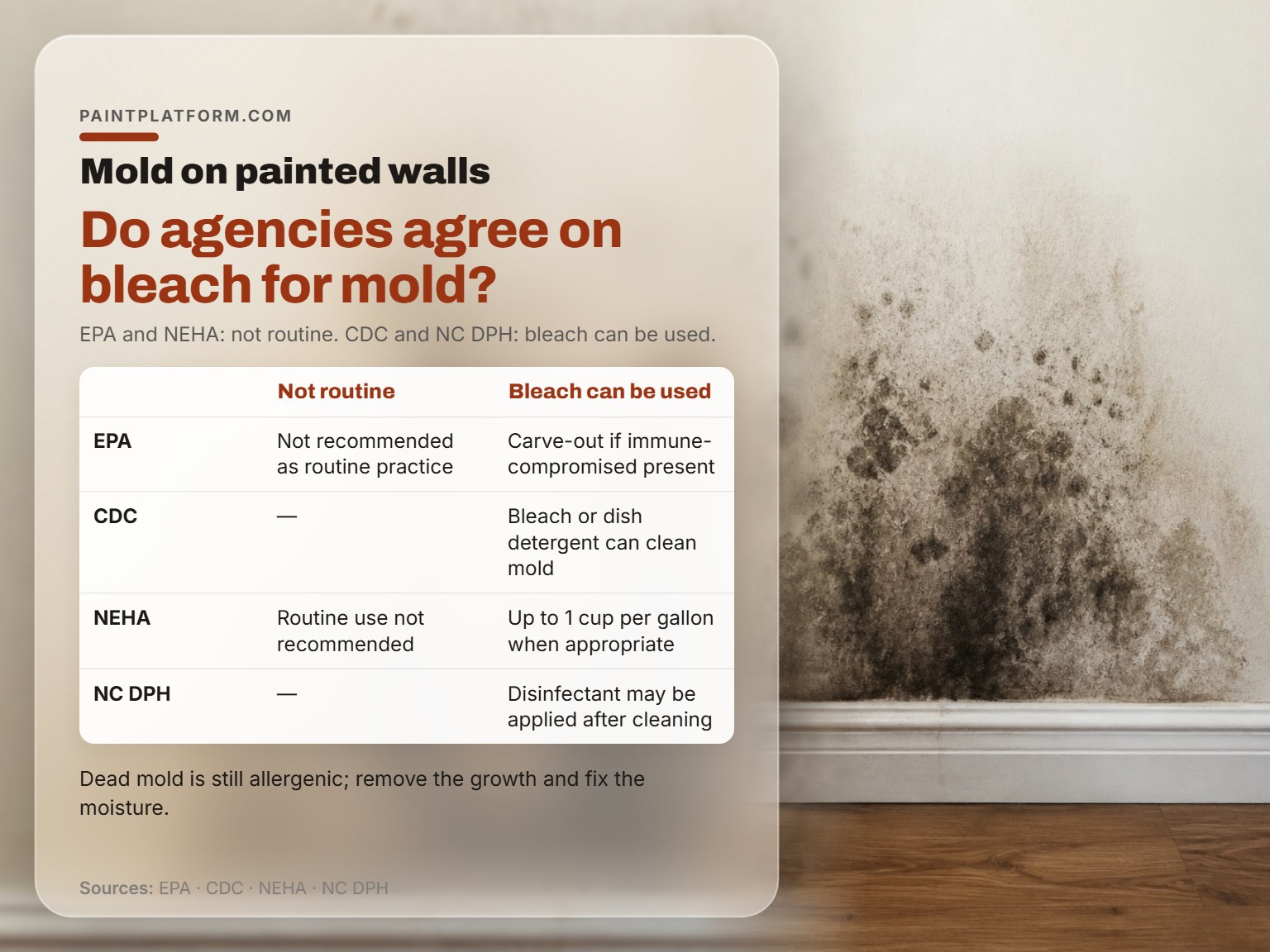
Killing mold and removing mold are two different outcomes, and the agencies split on whether the first one is worth doing.
The EPA’s reasoning is the part most cleaning articles leave out. Dead mold is still allergenic, and some dead molds are potentially toxic. NEHA adds that completely sterilizing an area is usually unnecessary and not possible, because a background level of spores remains in the air regardless. What matters is that the growth is physically gone and the moisture is fixed.
Here’s where each agency actually stands.
| Agency | Position on bleach or disinfectant |
|---|---|
| EPA | Not recommended as routine practice; carve-out when immune-compromised occupants are present |
| CDC | Bleach or dish detergent can be used to clean mold at home |
| NEHA | Routine use not recommended; up to 1 cup per gallon can be used when appropriate |
| NC DPH | A disinfectant such as household bleach may be applied after cleaning and rinsing |
The NEHA indoor mold concerns guide adds the detail that settles it for painted walls specifically. Bleach works best on nonporous surfaces like tile or sealed countertops. It’s less effective on porous materials, and drywall, wood, and fabric are named directly. A painted wall sits closer to the porous end of that scale than most people assume.
If you do use bleach, NEHA’s ceiling is 1 cup of household laundry bleach per 1 gallon of water, well ventilated, with rubber gloves, boots, and goggles. Going stronger etches the paint film and buys nothing.
One hard rule regardless of which camp you land in: never mix bleach with ammonia or with a cleaner that contains it. The EPA and NC DPH both flag the toxic fumes.
Why Painted Drywall Is a Different Problem
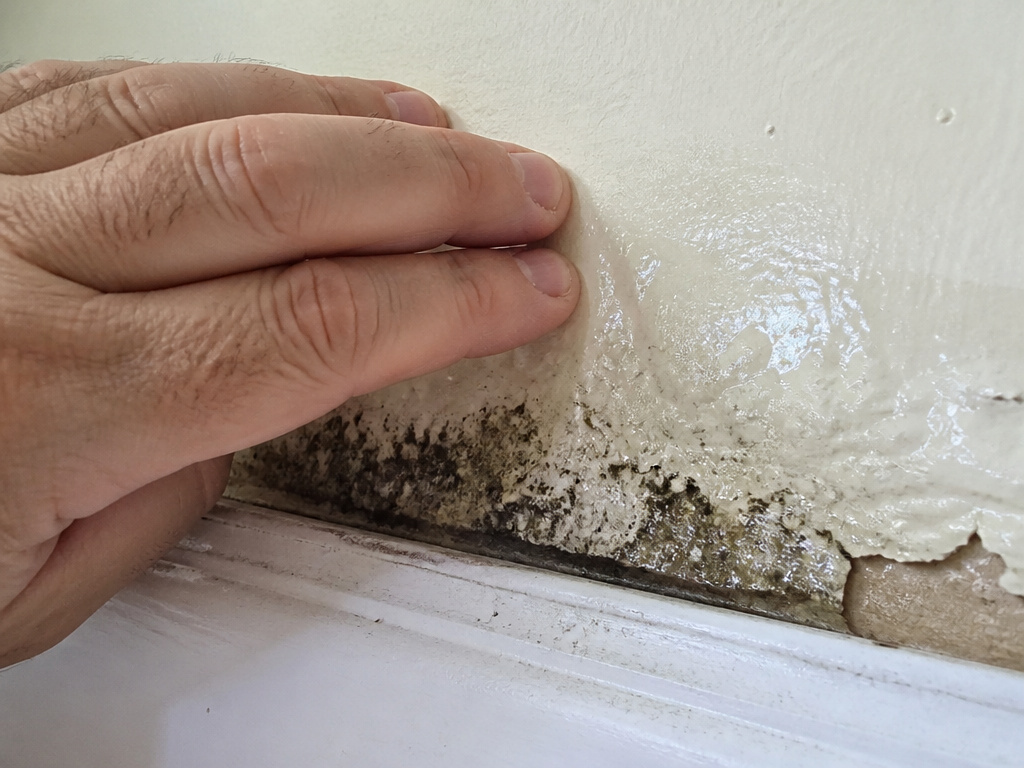
Gypsum board is a paper-faced sandwich with a chalky core, and mold feeds on the paper facing and the dust settled into it.
This is where the standard advice starts to break. The EPA’s guidance is written around porous versus nonporous material, and paint over drywall is a coating on a porous substrate. Scrubbing the coating does nothing for growth that has moved into the paper behind it. That’s why the EPA says absorbent and porous materials may have to be thrown away, since mold fills crevices and can be difficult or impossible to remove completely.
NC DPH, meanwhile, publishes a scrub-rinse-disinfect-dry protocol that implies cleaning rather than discarding for semi-porous surfaces. Both positions are defensible. The deciding factor is how far the growth has traveled.
Stand in the doorway and pay attention to two things. A room with active growth smells like wet cardboard, and a wall that’s still damp feels cool and faintly slick under the back of your hand.
When to Discard Instead of Clean
Soft, crumbly, or delaminating drywall is past cleaning. So are ceiling tiles, carpet, and upholstery that have been wet for more than 24 to 48 hours, which is NEHA’s cutoff for possibly having to discard them.
Trim, doors, and window casings are a separate case. Mold on painted wood behaves differently because the substrate is solid rather than paper-faced, so surface cleaning reaches more of the problem.
Where this goes sideways: Painting or caulking over a moldy patch to hide it. The EPA says paint applied over moldy surfaces is likely to peel, and the CDC calls painting over water-damaged material inappropriate remediation that causes further problems.
How Long Does a Wall Take to Dry?
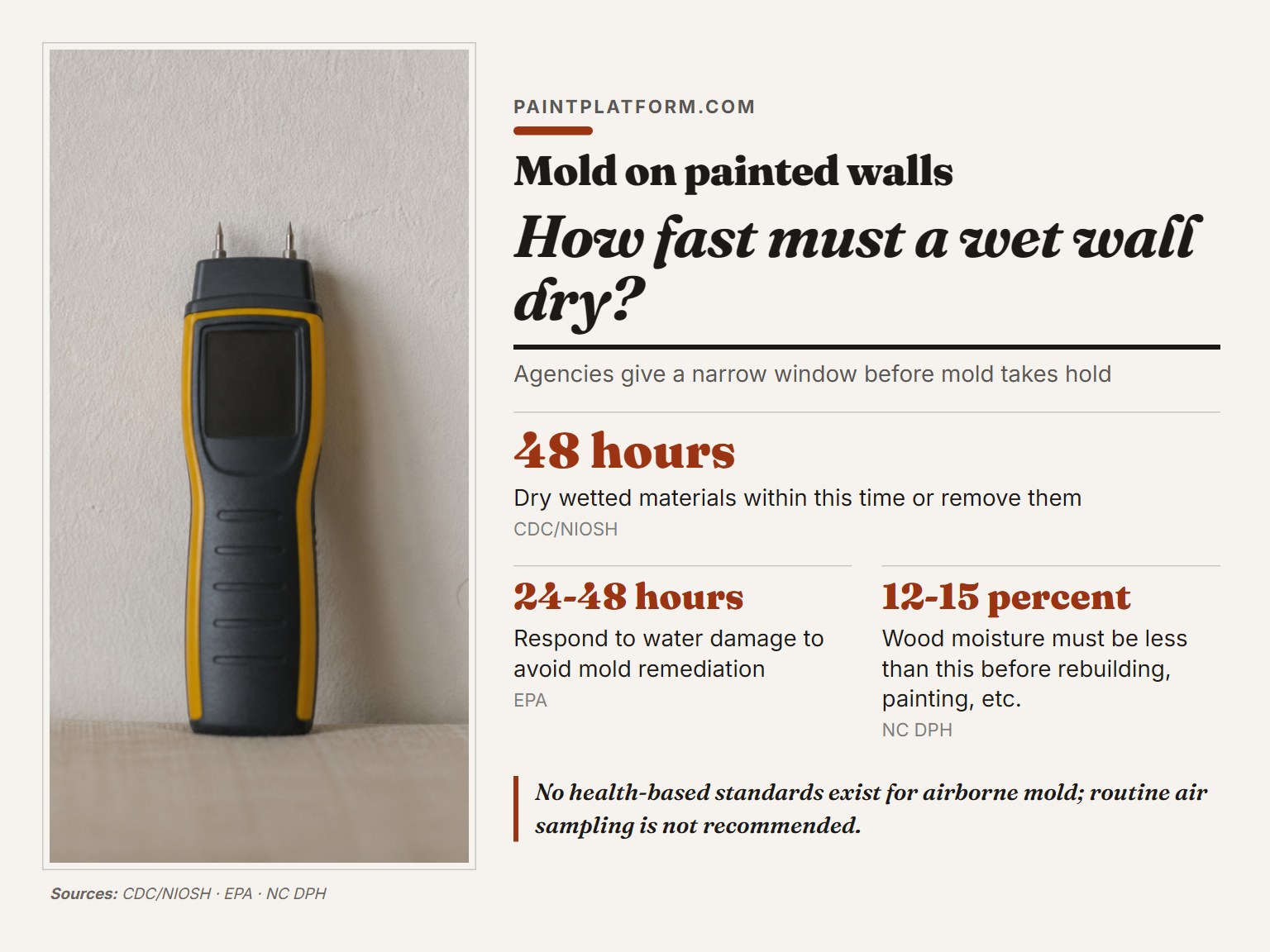
Wet drywall doesn’t dry on your schedule, and the agencies give you a narrow window.
CDC/NIOSH says to dry wetted materials within 48 hours of getting wet, or remove them. The EPA frames the same window as responding to water damage within 24 to 48 hours to avoid needing remediation at all. NEHA repeats the 24 to 48 hour figure and adds that porous materials wet beyond it might have to be discarded.
| Specification | Source | Value |
|---|---|---|
| Dry wetted materials | CDC/NIOSH | Within 48 hours |
| Respond to water damage | EPA | Within 24 to 48 hours |
| Wood moisture before painting | NC DPH | Under 12 to 15 percent |
| Indoor humidity | NEHA | 30 to 50 percent |
That wood-moisture number is the one I’d frame on a studio wall. NC DPH puts the threshold for rebuilding or painting previously wet framing at under 12 to 15 percent, which is a reading you can only get with a meter.
A cheap pin-style moisture meter is the tool I reach for before any primer goes on. I check walls against a known-dry spot nearby, and anything reading well above it gets left alone until I know why. Running a small dehumidifier in my basement corner dropped those readings noticeably, with zero paint involved.
Skip the home mold test kit. CDC/NIOSH doesn’t recommend routine air sampling, and spore counts from short-term samples can’t be interpreted against health risk. Spend the money on a dehumidifier instead.
There are no health-based standards for mold in indoor air, and as of December 2000 the EPA had set no regulations or threshold limit values for airborne mold concentrations. Anyone selling you a test with a pass/fail number is selling you something the science doesn’t support. The NIOSH mold testing and remediation page lays out what monitoring actually looks like.
Priming and Repainting Without Feeding the Mold
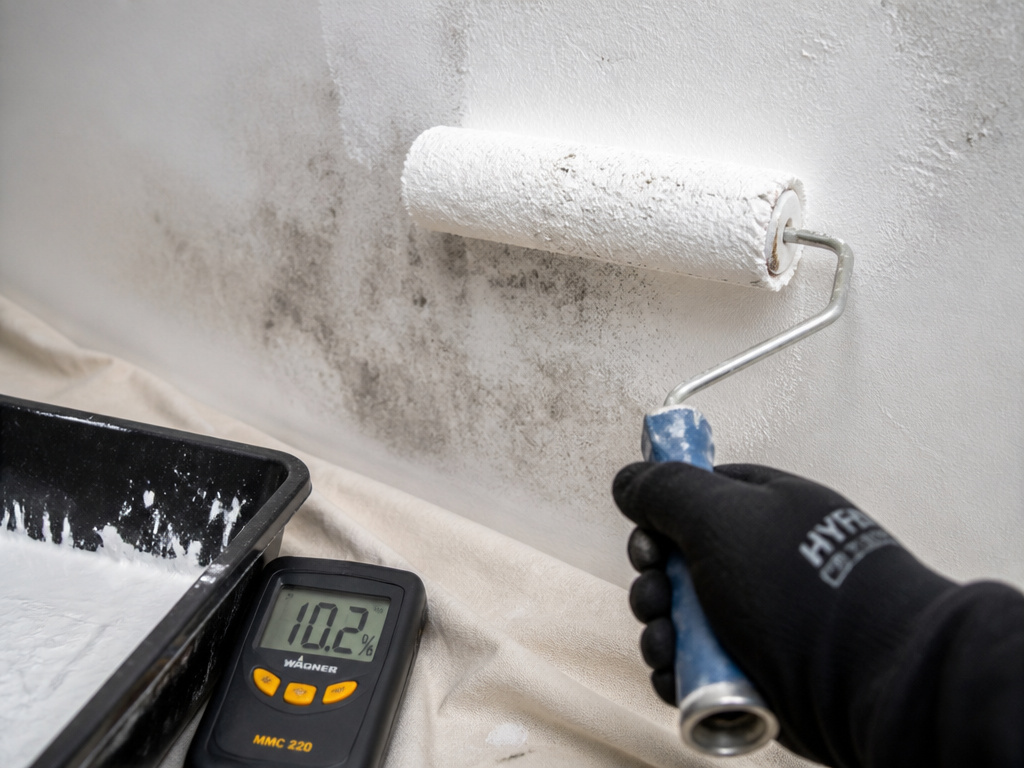
The wall looks clean, the primer goes on, and by the next morning a gray shadow is bleeding back through the film.
That shadow usually means moisture is still in the substrate. The EPA’s rule is unambiguous: clean and dry the surface before painting, and don’t caulk over a moldy joint either. There’s a right way and a wrong way to go at painting over mold, and the difference is whether the wall is dry.
Once it is dry, a mold-killing primer does real work on residual staining and spores. A mold-killing primer is the one I keep on the shelf. A liquid mold treatment is the one I reach for when I want to treat an area without adding a film at all.
The mold-resistant paint vs mold killer distinction matters more than the marketing copy admits. A mold-resistant topcoat slows growth on the surface. It does nothing about moisture inside the wall, which is where the colony started.
What a Primer Can and Can’t Do
A stain-blocking primer seals the surface so old discoloration doesn’t telegraph through the finish coat. A mold-killing primer adds a biocide on top of that. Neither one dries out a damp wall, and neither one fixes a leak.
My own worst version of this: I rolled two coats of good white over a few gray freckles in a corner and felt very pleased with myself. Before long the freckles were back through the new coat. If the spot is still visible when you paint, you’re giving the mold a nicer ceiling to live under.
Stopping It From Coming Back
A mold-killing additive in the topcoat solves less than the label suggests.
The EPA’s central line is that the key to mold control is moisture control, and that failing to address the source means the mold problem will simply reappear. NEHA adds the monitoring step: reassess the area after remediation to confirm moisture and mold haven’t returned.
The long game is to prevent mold on painted walls by holding indoor humidity between 30 and 50 percent, which NEHA lists as the target range for air conditioners and dehumidifiers. Open windows and run fans when you can. Vent moisture-generating appliances outdoors.
For a bathroom that keeps growing mold, the EPA’s advice is direct: increase ventilation and clean more frequently. Same logic applies if you’re trying to stop mold returning anywhere else in the house.
Easy to miss: HEPA vacuum filter changes. The EPA requires PPE while swapping the filter and disposal of the filter and its contents in well-sealed plastic bags. Bag the debris before it leaves the containment area, and double-bag unsalvageable material in 6-mil polyethylene sheeting.
One last piece of housekeeping. Don’t use fungicides formulated for outdoor plants, soil, or grain on an indoor mold problem. The EPA rules that out explicitly.
Frequently Asked Questions
Can I just paint over mold on a wall?
No. The EPA says paint applied over moldy surfaces is likely to peel, and the CDC classifies painting over water-damaged material as inappropriate remediation that causes further problems. Clean the growth off, dry the substrate completely, then prime and paint.
Is bleach the right way to kill mold on painted drywall?
The agencies disagree, and the disagreement is real. The EPA and NEHA don’t recommend bleach as a routine step, partly because dead mold is still allergenic. The CDC allows bleach or dish detergent, and NC DPH permits a disinfectant after scrubbing and rinsing. NEHA notes bleach works best on nonporous surfaces and less well on drywall.
How do I know the wall is dry enough to repaint?
Use a pin-style moisture meter and compare the patch to a known-dry spot nearby. NC DPH puts the threshold for painting previously wet wood at under 12 to 15 percent moisture content. If you don’t have a meter, give it more time than feels necessary and keep a fan and dehumidifier running.
When should I call a professional instead?
When the moldy area exceeds about 10 square feet, when the water came from sewage or another contaminated source, or when the HVAC system may be contaminated. The CDC adds that anyone with asthma, COPD, allergies, or a suppressed immune system shouldn’t be doing the cleanup or staying in the home during it.
Does the color of the mold tell me how dangerous it is?
No. CDC/NIOSH states that mold color doesn’t indicate whether it’s more or less dangerous, and that mycotoxin-producing species like Stachybotrys chartarum should be treated the same as any other mold growing indoors. Treat every patch with the same procedure.
Before You Go
Here’s the trigger I’d actually act on. If a wall reads above 12 to 15 percent moisture, or if the room still smells like wet cardboard after you’ve cleaned and run a fan, stop. Don’t prime. Don’t paint. Find the water first, because every coating you add before that is a coat you’ll be scraping off before long.
That’s the part I learned the expensive way, twice, in the same corner of the same room.
So try this today: put your hand flat on the wall where the mold was, then on a wall in a dry room. If the first one feels cooler, you have your answer, and it isn’t in a paint can.
