
How to Stop Mold Returning After Painting: Dry It First
This post contains affiliate links. As an Amazon Associate, we earn from qualifying purchases.
To stop mold returning after painting, fix the water before you fix the wall. The EPA says all wet areas should be completely dried within 48 hours, and it sets the do-it-yourself limit at roughly 10 square feet. Clean, dry, then prime. EPA says paint applied over moldy surfaces is likely to peel.
Forty-eight hours is the upper end of the number that decides everything downstream. Mold spores do not grow without moisture, so a wall that stays wet past that window is already a candidate for hidden growth behind the drywall. The gray freckle you can see is the last thing to appear.
What follows is the order that holds up: find the water, contain the dust, clean, dry completely, then prime and paint. It also covers where the agencies split on bleach, and the point where the job stops being yours.
Key Takeaways
- Fix the water first. EPA is blunt about this: clean the mold, skip the leak, and the mold problem comes back.
- Dry within 48 hours. That is EPA’s window for wet areas, and past it hidden growth is likely.
- Under roughly 10 square feet, EPA says most homeowners can handle the cleanup themselves.
- Skip bleach by default. EPA says detergent and water; Massachusetts DPH says harsh biocides are not recommended in most cases, but provides a maximum dilution of 1 cup laundry bleach per 1 gallon water if used.
- Mold-resistant primer is a backup coat, and it only goes on after the surface is clean and dry.
Why Mold Comes Back Through a Fresh Coat of Paint
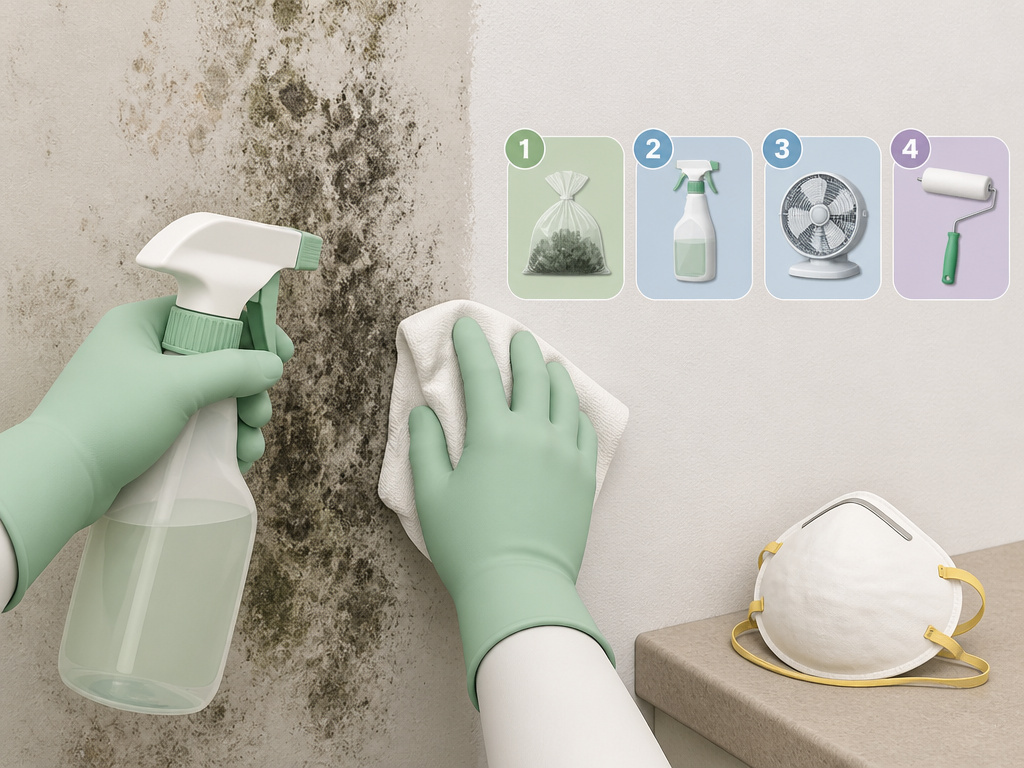
Paint hides the freckles and does nothing else. It does not kill spores, and it does not stop the water feeding them.
EPA guidance is direct on this point: moldy surfaces should not be painted or caulked. Cleaning and complete drying come first. Paint applied over mold is likely to peel, and EPA states that if the water problem is not fixed, the mold problem will most likely come back regardless of how well the surface was cleaned.
That was one of the cheaper lessons I have been handed.
The mechanism is simple enough. Spores sit in the dust film on the wall, and a coat of paint seals them under a flexible film along with whatever moisture is still in the substrate.
That is why painting over mold without cleaning first only buys you time. It does not buy you a fix.
If you want the longer version of that mistake, the whole guide to painting over mold is worth reading before you open a can.
The 48-Hour Window: How to Stop Mold Returning After Painting
Forty-eight hours is the upper end of the line between a cleaning job and a rebuilding job. EPA puts the drying window for wet areas at 48 hours, and its remodeling guidance says damaged areas and items should be dried within 24 to 48 hours to prevent growth.
Massachusetts DPH is more candid about how often that actually happens. Its homeowner guide says it may be difficult or impossible to dry an area inside that window, and that the result is mold in one or more places in the house.
A musty smell in a room that looks perfectly dry is the tell. EPA treats any area that smells moldy or musty as a place to investigate, because water has entered somewhere you cannot see.
Find the water first.
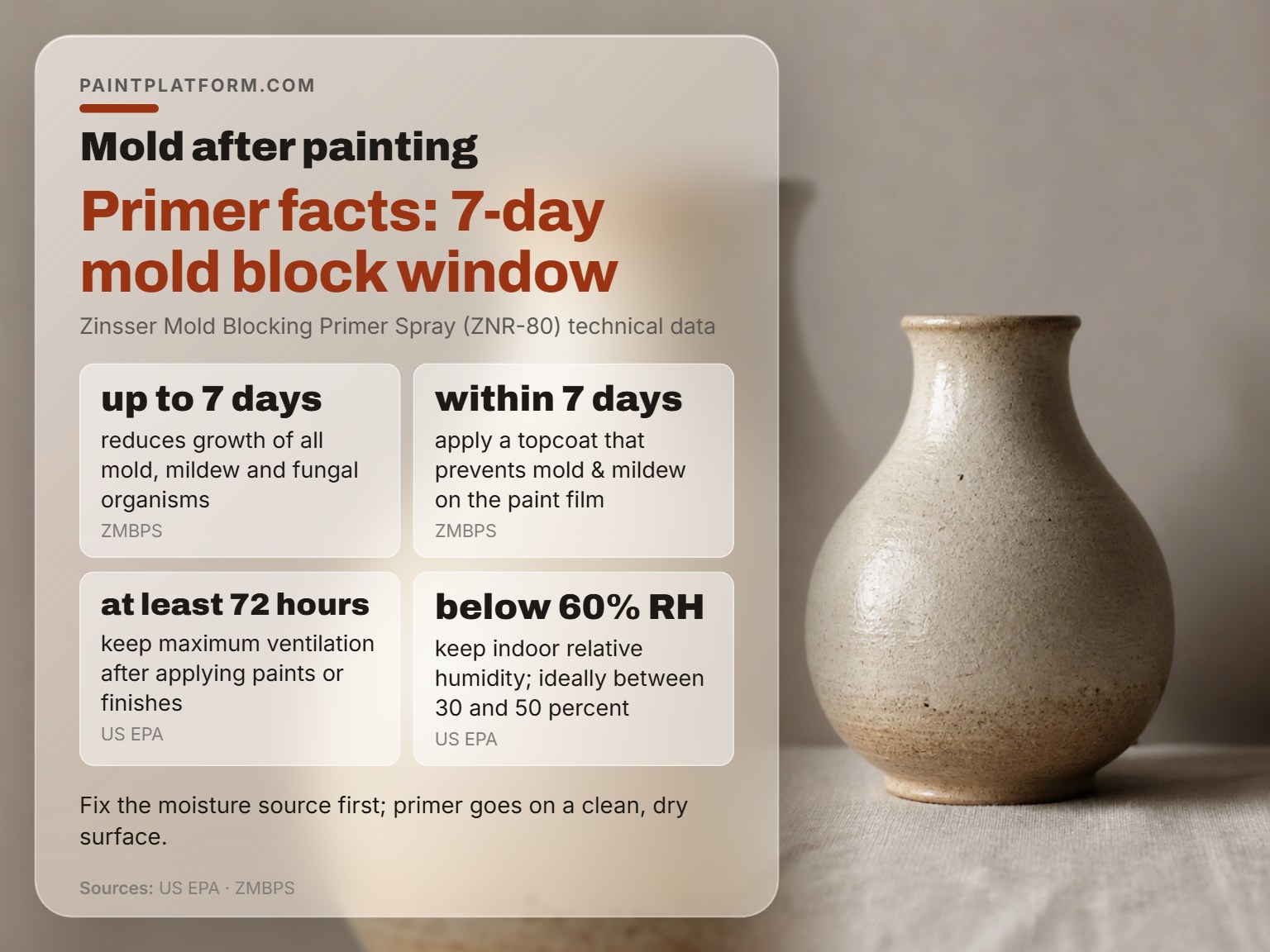
Humidity is the other half of the number. EPA says relative humidity above 60 percent is likely to produce condensation, and condensation is what feeds growth on cold surfaces.
Four things keep a wall wet long after the visible leak is gone:
- A furnace humidifier that has not been cleaned, or a humidifier filter that has gone moldy and is now blowing spores into the room.
- A condensate pan under the air handler that does not drain, which lets water into the ductwork.
- An HVAC filter that has been left damp.
- Water seeping into a crawl space or basement, which is where a sump pump or regrading the ground around the building actually solves the problem.
The same logic drives how you prevent mold on walls in the first place, and how hard you ventilate a room while finishes cure.
If the wall is still damp on day three, stop and find the water. Paint over a wet substrate and you are just starting the clock again.
How Do You Know If You Can Clean It Yourself?
How do you know if the job is yours? Two agencies answer that differently, and the split is worth knowing before you buy anything.
EPA draws a clean numeric line. If the moldy area is less than about 10 square feet, which is roughly a 3 ft by 3 ft patch, most homeowners can handle it themselves. Above that, or with a lot of water damage, EPA points you to its remediation guide for schools and commercial buildings. Massachusetts DPH, by contrast, sets no size threshold and instead routes the decision through whether you are allowed or able to do the work.
Massachusetts DPH draws no size line at all. Its guide routes the decision through whether you are allowed or able to do the repair work and the mold cleanup, which is a permitting question as much as a physical one.
That split is real. A small patch over a failed plumbing joint is not a homeowner job under the Massachusetts framing, because the plumbing repair itself may require a professional.
The size question is only half of how to stop mold returning after painting.
Call someone in when any of these is true:
- The water came from sewage or another contaminated source. EPA is unambiguous here.
- You suspect the HVAC system is contaminated. EPA says to consult its air duct guide and to stop running the system, because a running system spreads spores through the building.
- The damage is structural, electrical, or plumbing related.
- Anyone in the house has worsening allergies or breathing problems.
- The mold keeps coming back after you clean it.
The peer-reviewed side of this is thinner than the agency guidance. The Institute of Medicine’s Damp Indoor Spaces and Health report deliberately stops short of recommending which interventions fit which circumstances, which leaves the step-by-step procedures to EPA and to state agencies.
Once the water is fixed, the cleanup itself follows a mold removal from walls sequence that starts with containment and ends with a completely dry surface.
Should You Use Bleach on Mold?
This is the one place where two government sources pull in opposite directions, so it is worth showing both rather than picking a side and calling it settled.
| Cleanup approach | EPA position | Massachusetts DPH position |
|---|---|---|
| Detergent and water | Named method for hard surfaces | Consistent with its guidance |
| Bleach | Not endorsed; detergent and water named instead | Not recommended in most cases |
| Bleach if used anyway | No dilution given | Maximum 1 cup per 1 gallon of water |
| Other biocides | Not addressed | Generally not recommended |
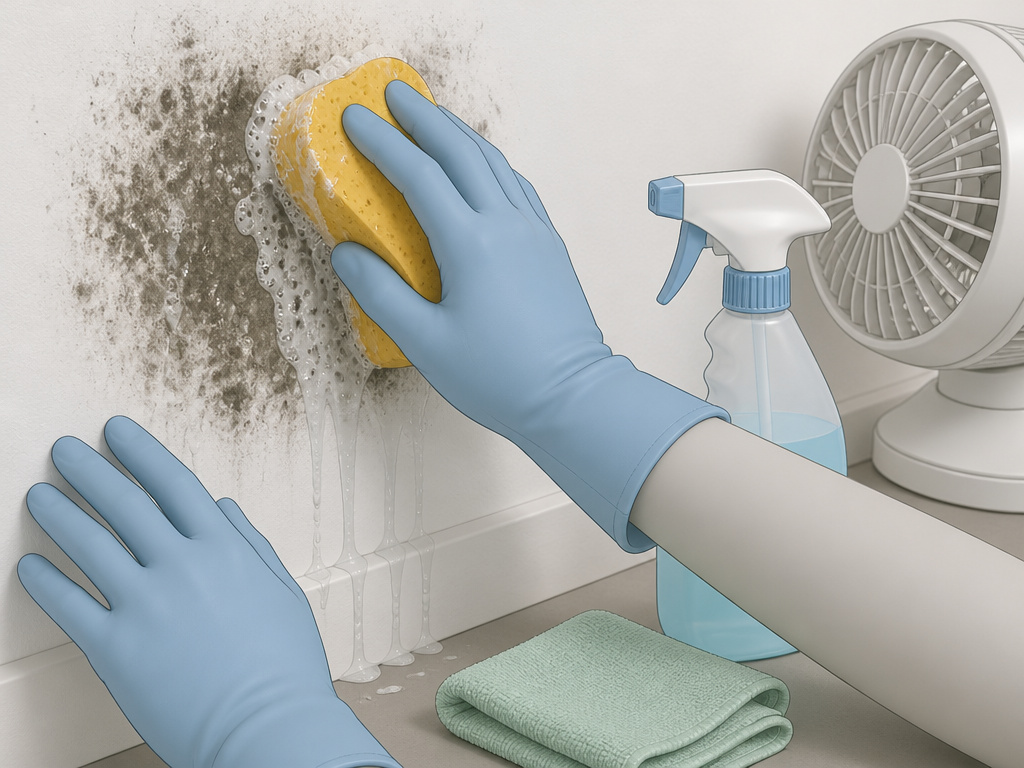
Neither agency is telling you to reach for bleach. EPA scrubs with detergent and water and stops there. Massachusetts DPH goes further and calls harsh chemicals like bleach or other biocides not recommended in most cases, then supplies a maximum dilution of 1 cup laundry bleach per 1 gallon water in case you insist.
Easy to miss: Detergent and water lifts spores off a hard surface. Bleach changes the color of the stain, and on a porous surface it never reaches the crevices where EPA says mold fills in and becomes hard to remove.
If you would rather use something with a label that says what it does, a mold remover designed for painted walls is easier to control than a kitchen jug.
One hard rule regardless of route: never mix bleach with vinegar or ammonia. The combination releases chlorine gas, and a small bathroom is the worst place to find that out.
The Cleanup Order That Holds
Four moves, in this order: contain, clean, dry, then prime and paint. Order matters more than products.
Before you start: Dry-scrubbing launches spores into the air, so fit an N95 respirator, sealed glasses, and gloves before you touch the wall. Never combine bleach with vinegar or ammonia; in a small bathroom the reaction releases chlorine gas within seconds. And if you set up a box fan to exhaust the room, EPA warns that depressurizing a house can pull carbon monoxide back down a gas water heater’s flue.
An N95 mask is the boring answer for the respirator, and boring is what you want here.
Contain the Work Area Before You Touch the Mold
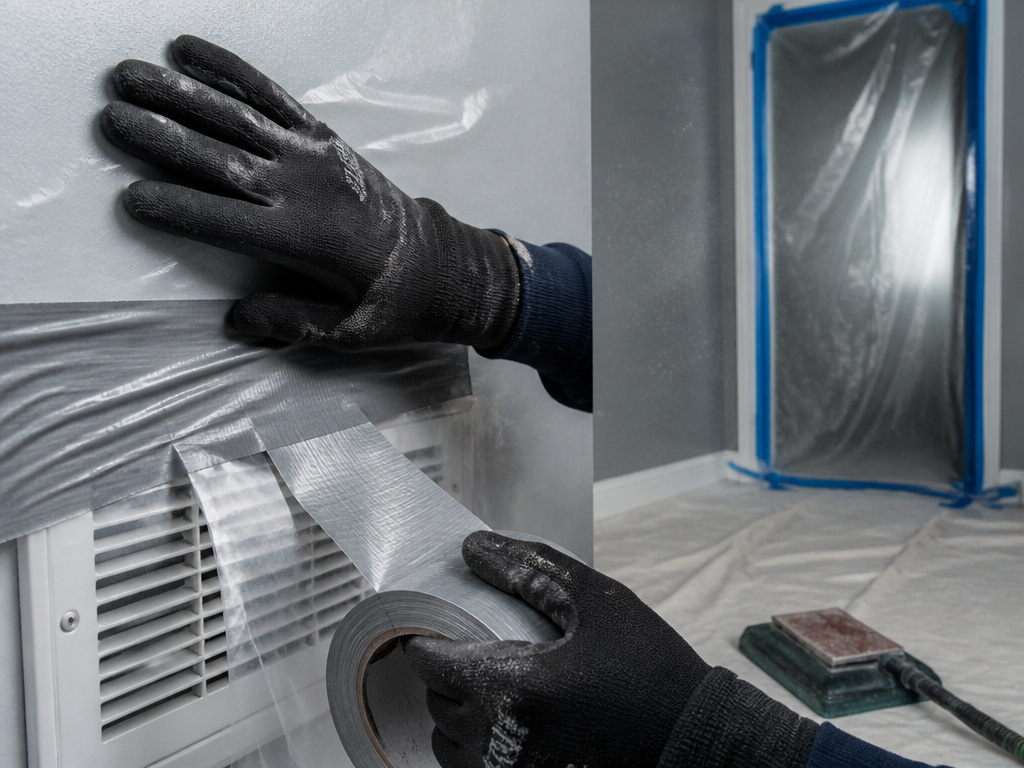
EPA’s containment method is plain. Tape 6 mil poly sheeting over doors and other openings in the room, and tape the same sheeting over any supply and return registers serving that room. Skip the registers and the HVAC system pulls spores into the ductwork, where they are far harder to reach.
EPA also suggests low-dust practices, like misting a surface with water before you sand or scrape it.
Clean With Detergent, Not a Cloud of Spores
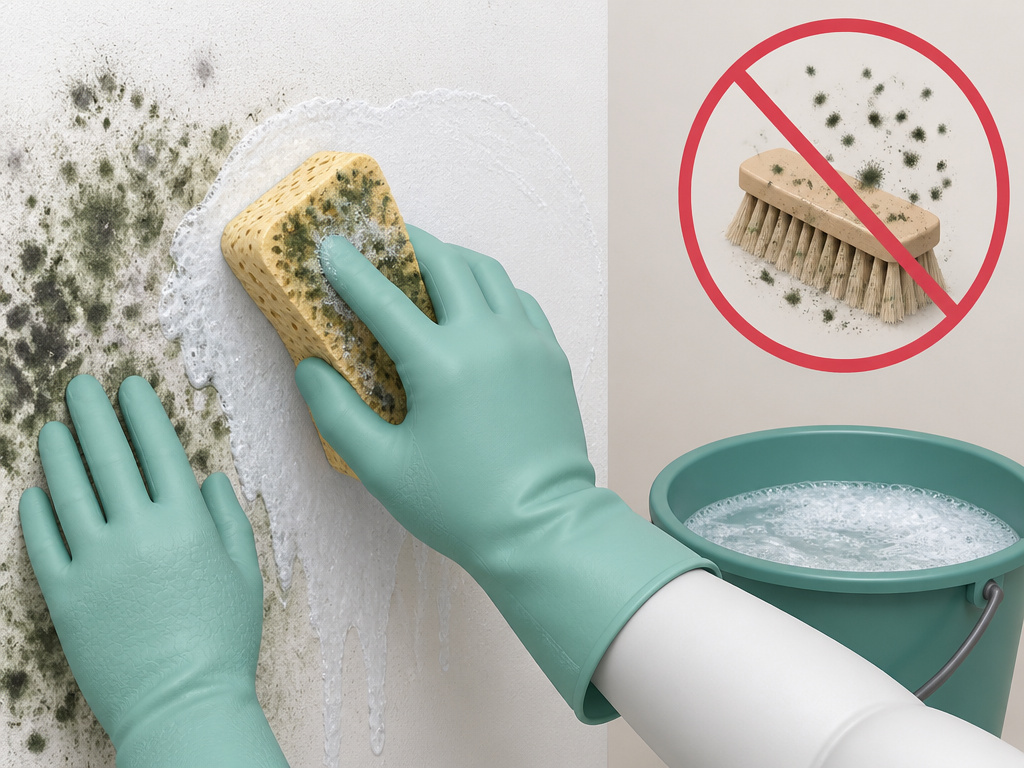
Scrub the mold off hard surfaces with detergent and water, then dry completely. That is EPA’s method, and the reason it works is mechanical: detergent lifts spores off the surface so a cloth can carry them away, while a dry brush launches them into the air you are standing in.
Absorbent materials are a different story. EPA says ceiling tiles and carpet that have gone moldy may have to be replaced, because mold fills the empty spaces and crevices inside them and can be impossible to remove completely.
Dry Completely, Then Prime and Paint
Dry means dry. A surface that feels dry to the back of your hand still holds moisture underneath, and that is enough to start the next bloom.
Then prime. A mold killing primer goes on after the surface is clean and dry, and it is the coat doing the real work. The paint on top is mostly there for color and scrubbability.
EPA’s remodeling guidance says to keep maximum ventilation going during installation and for at least 72 hours after the finish goes on. That is a longer tail than most people give it.
If the house was built before 1978, EPA says to assume the paint contains lead unless an inspection proves otherwise. Scraping or sanding that wall without lead-safe practices spreads lead dust, and EPA notes that children are especially at risk.
The whole sequence, with the consequence attached to each step:
- Find and stop the water. Skip this and you are repainting the same wall next season.
- Contain the room with 6 mil poly sheeting over doorways and registers. Skip the registers and spores ride the ductwork into the rest of the house.
- Scrub the mold off hard surfaces with detergent and water, then dry completely. Leave it damp and you have fed it.
- Dry the whole area inside EPA’s 24- to 48-hour window. Miss the window and hidden growth is likely.
- Prime, then paint, only after the surface is clean and dry. Paint first and you have bought yourself a few months.
When the Damp Never Stops, Paint Is the Wrong Conversation
It is February, the inside of the window frame is beading with water, and the same corner has grown a fresh gray bloom for the third winter running. That pattern is a different problem from a one-off leak, and it needs a different answer.
EPA treats condensation on windows, walls, and pipes as a sign rather than a surface. The sign points at indoor humidity above 60 percent, and the fix is reducing moisture in the air, not wiping the glass.
That is chronic moisture.
Massachusetts DPH splits the two cases explicitly. An acute problem is a single leak or spill you can dry out. A chronic problem is one where the repair has to stop the problem from coming back, and under 105 CMR 410.220(B) a local enforcement agency can require mechanical ventilation when natural ventilation is not removing the excess moisture.
EPA’s own bathroom tip concedes the limit of cleaning. In a place that is always damp, more ventilation and more frequent cleaning will usually prevent recurrence, or at least keep the mold to a minimum.
The thing that actually changed the outcome was moving air.
I keep a mold-resistant primer on the shelf and I reach for it every time, but I have stopped calling it a fix. It is a backup coat. What stopped my corner from blooming was a fan.
Mold-resistant primer and paint do have a job. They help prevent future growth, but only after the mold has been completely removed.
If you want to weigh the options properly, the comparison of mold-resistant paint and mold killer lines up with what I found on that scrap board. The same caution applies to painting over damp walls in a basement or a bathroom: the finish is the last step, and it is the one that gets blamed when the water was never fixed.
Think of it like wiping down a counter while the tap is still running. You can get the counter clean. It will not stay clean.
Frequently Asked Questions
How long should I wait before painting over a cleaned wall?
EPA’s window for wet areas is 24 to 48 hours, and its cleanup guidance says to dry all items completely before painting. Wait until the surface is dry and the room’s humidity has come down. Painting too soon traps moisture under the film, which is the exact condition mold needs.
Can I use mold-resistant paint instead of cleaning?
No. Mold-resistant primer and paint help prevent future growth, but only after the mold has been completely removed. EPA is direct that moldy surfaces should not be painted or caulked, and that paint applied over mold is likely to peel.
Does bleach kill mold on painted walls?
EPA does not recommend bleach. Its guidance says to scrub mold off hard surfaces with detergent and water. Massachusetts DPH goes further and says harsh chemicals like bleach or other biocides are not recommended in most cases, though it gives a maximum dilution of 1 cup of laundry bleach per 1 gallon of water if you use it anyway.
Why did the mold come back after I painted?
Because the water never stopped. EPA states that if you clean up the mold but do not fix the water problem, the mold problem will most likely come back. Paint seals spores under a film where they keep growing, and the film fails from behind.
When should I call a professional?
EPA sets the line at roughly 10 square feet; above that, or with a lot of water damage, it points to its remediation guide. Massachusetts DPH uses no size threshold and instead asks whether you are allowed and able to do the work. Sewage-contaminated water and suspected HVAC contamination are professional jobs either way.
Does a dehumidifier stop mold from returning?
Keeping indoor humidity below 60 percent removes the condensation that feeds growth on cold surfaces, which is what EPA points to. A dehumidifier helps with the air, but it does nothing about water coming through a wall. Fix the source first, then manage humidity.
The Bottom Line
Two blooms in the same corner is your trigger. One is a leak. Two is a moisture problem, and Massachusetts DPH treats those differently: the repair has to stop the problem from coming back, and under 105 CMR 410.220(B) a local enforcement agency can require mechanical ventilation when natural ventilation is not clearing the excess moisture. Stop painting that wall.
Everything above assumes you can find the water. If you cannot, or the patch is bigger than roughly 10 square feet, the honest move is to stop and bring someone in.
So the practical answer to how to stop mold returning after painting is a sequence, not a product: find the water, clean with detergent and water, dry completely, then prime and paint. None of it works out of order.
