
How to Store Paint Brushes Between Coats: What Works
This post contains affiliate links. As an Amazon Associate, we earn from qualifying purchases.
To store paint brushes between coats, wrap the brush airtight in plastic film, foil, or a bag. A wrapped brush stays workable overnight, and This Old House stretches that to 24 hours in the refrigerator. Longer than that, clean it. Wooster Brush Company says fast-drying coatings need cleaning every two to four hours.
That two-to-four-hour figure is the one that catches people out. It applies to fast-drying coatings, and to dry, hot or windy days, when the paint at the heel of the brush skins over long before the wall in front of you does. Once that skin sets near the ferrule, wrapping just traps it there, which is why how to store paint brushes between coats matters.
What follows is three storage methods and the failure each one prevents, the two places where the manufacturers flatly contradict each other, and the rule that flips completely once you pick up oil-based paint.
Key Takeaways
- Wrap it airtight and a loaded brush stays workable overnight, as Graham & Brown and Wooster describe; This Old House takes that to 24 hours in the fridge, while Graham & Brown instead stores oil-based brushes immersed in solvent.
- Fast-drying coatings get cleaned every two to four hours in hot, dry or windy conditions, per Wooster Brush Company.
- Don’t stand a brush on its end or rest the bristles on a jar bottom. Wooster says the filaments curl and stay curled, though Wooster and British Paints allow hanging and Graham & Brown permits immersion in solvent as long as the bristles are suspended.
- Wooster says natural bristle gets solvent, never soap and water, or the bristles flare for good, while Graham & Brown’s soap-and-water wash makes no natural-bristle exception.
- A well-cared-for brush lasts about three to six months, according to contractor Mauro Henrique in This Old House.
What Actually Happens to a Brush Left Out Overnight
Years into painting, I left a brush standing bristle-down in a water jar overnight. By morning the bristles had bent into a permanent curl that no comb would fix. I have never done it since.
Wooster Brush Company’s care bulletin names the cause plainly: standing a brush on its end makes the filaments curl. Graham & Brown is blunter still, saying that resting bristles on the bottom of a jar for any length of time is certain to ruin them.
Prolonged soaking attacks a brush at four points at once. The adhesive holding the filament plug softens, the filaments themselves take on water, wooden handles swell and can crack as they dry, and the ferrule rusts from the inside out. Wooster Brush Company lists all four as documented outcomes of leaving a brush submerged.
Push a thumb into the base of a brush that’s been sitting out and you feel the problem before you see it. The tips still flex. The heel near the ferrule has gone stiff and tacky, because that’s where paint skins over first and where a quick rinse never reaches.
An hour out of the paint is recoverable. Overnight is a different job, and when you compare a how to store paint brushes between coats, the only route back is a proper remove dried paint session with the right solvent and a comb.
How Long Can You Leave a Brush Wrapped Between Coats?
Twenty-four hours is the longest anyone in this source set will commit to, and that number comes with a refrigerator attached.
This Old House describes the method: seal the tool in an airtight bag, squeeze the air out, then put it in the fridge. Graham & Brown stops at the wrap itself, saying cling film applied as airtight as possible keeps a brush soft overnight. Wooster’s version is foil, or a plastic bag with the handle sticking out and tied shut with a twist tie or rubber band.
| Break length | What the sources suggest | Who says it |
|---|---|---|
| A few minutes | Plastic wrap or heavy-duty foil | This Old House |
| Overnight | Cling film, as airtight as possible | Graham & Brown |
| Up to 24 hours | Airtight bag, air squeezed out, refrigerator | This Old House |
| More than a day | Clean it thoroughly by paint type | This Old House |
| Fast-drying coatings | Clean every two to four hours | Wooster Brush Company |
The method I actually use is the cheapest one going. A plastic bag, the loaded brush dropped in with the handle sticking out, the air squeezed out, the whole thing tied shut with a twist tie or rubber band. It holds overnight without fuss.
The fridge version works too, though it is editorial advice from This Old House rather than an OEM method.
Fair warning: the refrigerator trick appears in no manufacturer document in this set. It’s editorial advice from This Old House, and no OEM in this group recommends it.
Four things worth having within arm’s reach before you start:
- A roll of plastic wrap or heavy-duty foil
- Airtight sandwich bags, the kind with an actual seal rather than a fold-over top
- A twist tie or rubber band for the bag neck
- An extra set of brushes, since Wooster recommends keeping a spare set so work continues while the used brushes dry after cleanup
A wrapped brush buys you hours. A cleaned brush buys you months. Match the effort to the gap, not to your mood at nine at night.
Wrap It, Cover It, or Clean It: Three Ways Compared
Three options, three different time budgets.
Wrapping in film, foil, or a bag
This is the quick version. Wooster’s guidance is to wet the brush with paint and seal it in aluminium foil, or a plastic bag with the handle out and the neck tied closed. Graham & Brown reaches for cling film and stresses an airtight wrap. BEHR PRO notes that before commercial brush covers existed, pros used foil and plastic wrap, and those methods still work for limited storage.
The failure mode here is a sloppy seal. A bag with a gap lets air at the heel, and the heel is the part you can’t inspect without splaying the bristles, so how to store paint brushes between coats comes down to the seal.
Brush covers and keepers
BEHR PRO recommends hanging a brush upside down in its original keeper to dry so it holds its shape. BEHR also carries the only number in this set for covers, noting that some advertise up to 60 days of keeping a brush wet. No test method or standard is cited for that figure, so treat it as a marketing claim.
Cleaning between coats
The slow option, and the only one that resets the clock completely. This Old House says to clean thoroughly if you’re storing tools for more than a day. Benjamin Moore simply says clean immediately after use, full stop.
| Method | What it buys you | Main risk |
|---|---|---|
| Airtight film or bag | Overnight, up to 24 hours chilled | Condensation and paint creeping onto the handle |
| Commercial brush cover | Overnight, with makers claiming far longer | No test method behind the long claims |
| Full clean and dry | Indefinite storage | A few hours of drying before reuse |
Here’s the timing surprise that decides most people’s choice. Wrapping is quick. Cleaning takes longer plus the drying time, which Benjamin Moore puts at a few hours depending on brush thickness and how wet it is.
That trade is why the shortcut wins for a short break and loses for longer storage. For the fuller version of this, there’s a whole brush storage walkthrough worth reading before you build a routine around bagging.
Where the Manufacturers Actually Disagree
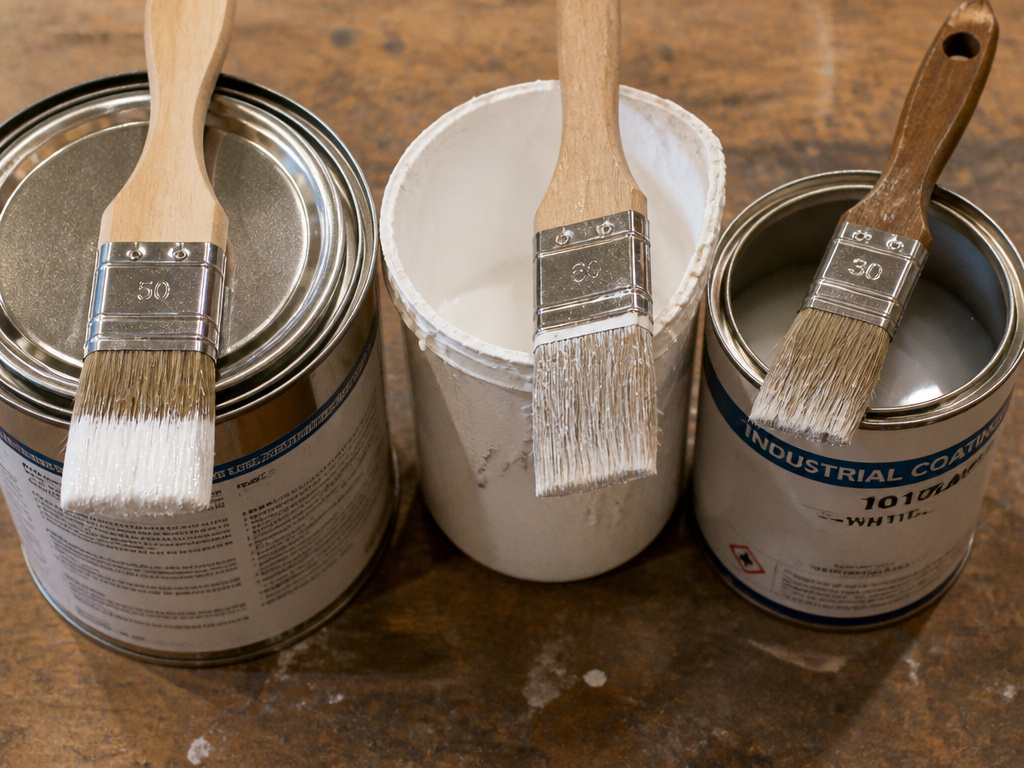
BEHR PRO tells professional painters to skip the wash entirely when the same paint and colour are going back on the brush tomorrow, arguing that wrapping and storing saves both time and water.
Wooster and Benjamin Moore sit on the opposite side of that line. Benjamin Moore’s instruction is to clean paintbrushes immediately after using them. This Old House goes further and says to clean tools immediately after use even if you plan to use them again the next day.
Both positions have a logic to them. BEHR is optimising a working day where the brush never really stops. The clean-immediately camp is optimising the brush’s lifespan, which This Old House puts at roughly three to six months with proper care.
Both can be true at once. Graham & Brown treats immersion in solvent as the method for oil-based work, while Wooster warns that prolonged soaking is what wrecks a brush. The distinction is duration, not liquid.
Common mistake: Leaving a brush sitting in solvent for a week because “solvent doesn’t dry out.” Wooster’s failure list applies to solvent soaks as much as water soaks, and the ferrule starts rusting from the inside where you can’t see it.
A brush that sat too long can develop hardened paint at the heel, where a quick rinse never reaches.
Oil-based cleanup has its own rules and its own solvents, laid out in this piece on cleaning after oil-based paint.
Natural Bristle vs Synthetic: Which Cleaning Rule Applies?
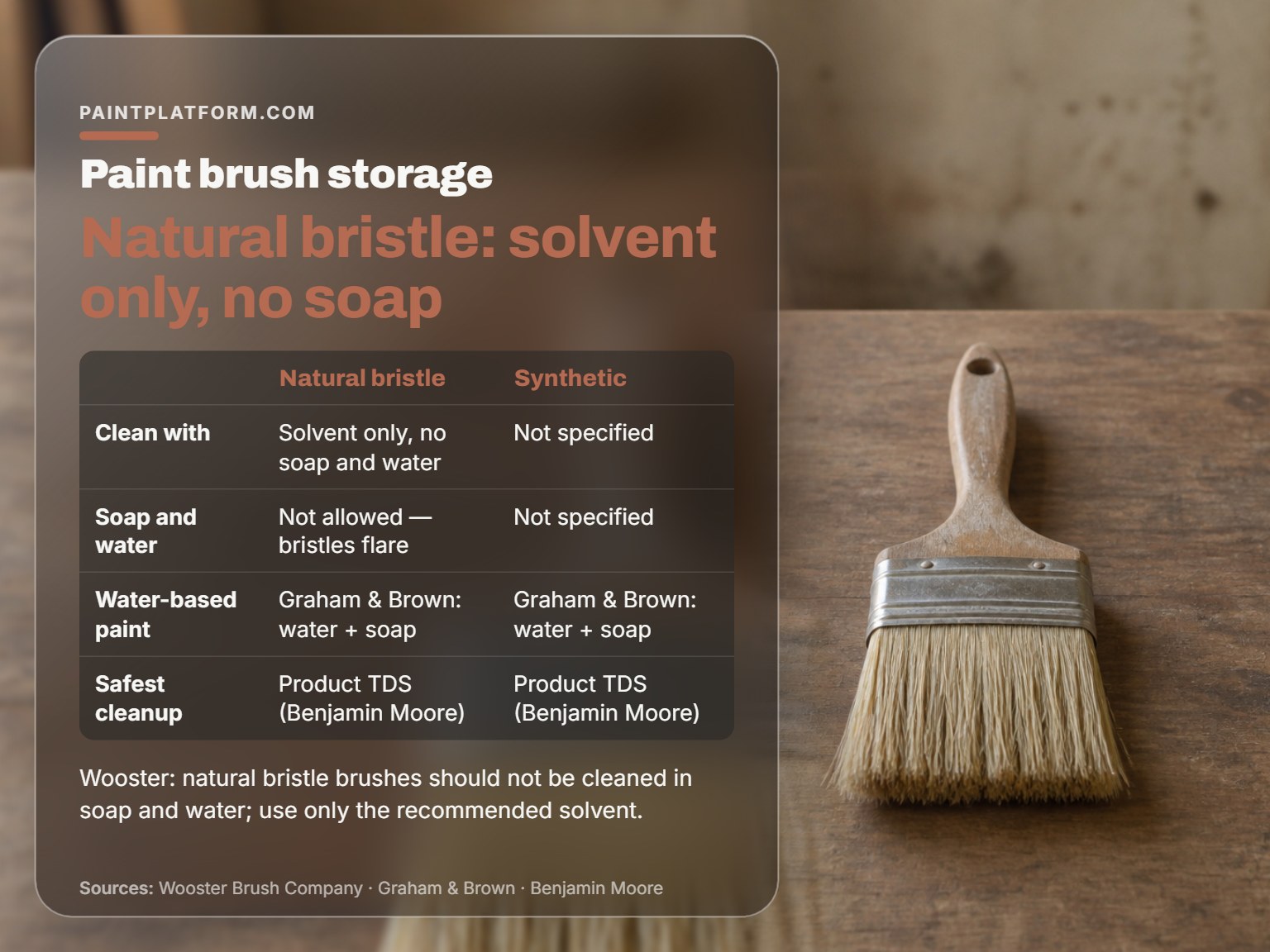
Get this one wrong and the brush flares for good.
Wooster is explicit: natural bristle brushes should not be cleaned in soap and water. Use only the solvent recommended for thinning the coating, which keeps the bristles from flaring. Synthetic brushes get solvent first, then the standard soap-and-water routine.
Graham & Brown’s instruction to wash with water and a little soap is written for water-based paint and doesn’t carve out natural bristle at all. That gap is easy to fall into if you only read one guide.
Benjamin Moore sidesteps the whole argument by pointing readers at the product’s Technical Data Sheet, or TDS, for the cleanup method. That’s the safest move when you’re using something unfamiliar.
Before you start: mineral spirits and paint thinner are flammable, so keep open containers away from pilot lights, water heaters and anything with a flame. Work with ventilation, since the fumes build fast in a closed garage. And check with your local public works department on disposal, because BEHR PRO notes that regulations vary widely by area and any amount of paint down a drain causes problems.
- Scrape the excess back into the can or onto scrap paper first. Benjamin Moore’s reasoning holds up: it saves paint and makes everything after it easier.
- Rinse under warm water, working the paint out with your fingers. This Old House notes that hotter water cleans better, so wear gloves.
- Work in a few drops of mild soap and keep going. Too much soap is its own problem, since it leaves residue in the filaments.
- Rinse until the water runs clear. Stopping early leaves soap in the heel, and the brush dries stiff.
- Comb the filaments while damp. The Wooster 1832 Painter’s Comb is built for exactly this, separating filaments so soap reaches the heel and straightening them before storage.
- Reshape and dry flat or hanging. Skip this and the bristles dry in whatever splayed shape they were left in.
For the full method with water-based paint, this walkthrough on how to clean paint brushes covers the rinse-and-repeat cycle in more detail.
Storing Rollers, Cans, and the Rest of the Mid-Project Mess

Rollers and cans have their own rules, and the roller rules contradict each other outright.
Two OEMs say upright, while This Old House permits vertical or horizontal storage in a cool, dry place; the sources disagree, so pick based on which guidance you trust. There’s a fuller comparison in this piece on roller storage between coats.
Cans are simpler. British Paints suggests marking the can with the colour and date, or painting the side so you know what’s inside. I do the same thing on the lid with a marker, mostly because I have opened the wrong can more times than I’ll admit.
If you’re mid-project and juggling open cans, store paint cans properly between sessions and you’ll stop buying duplicates.
The Storage Mistakes That Ruin a Brush
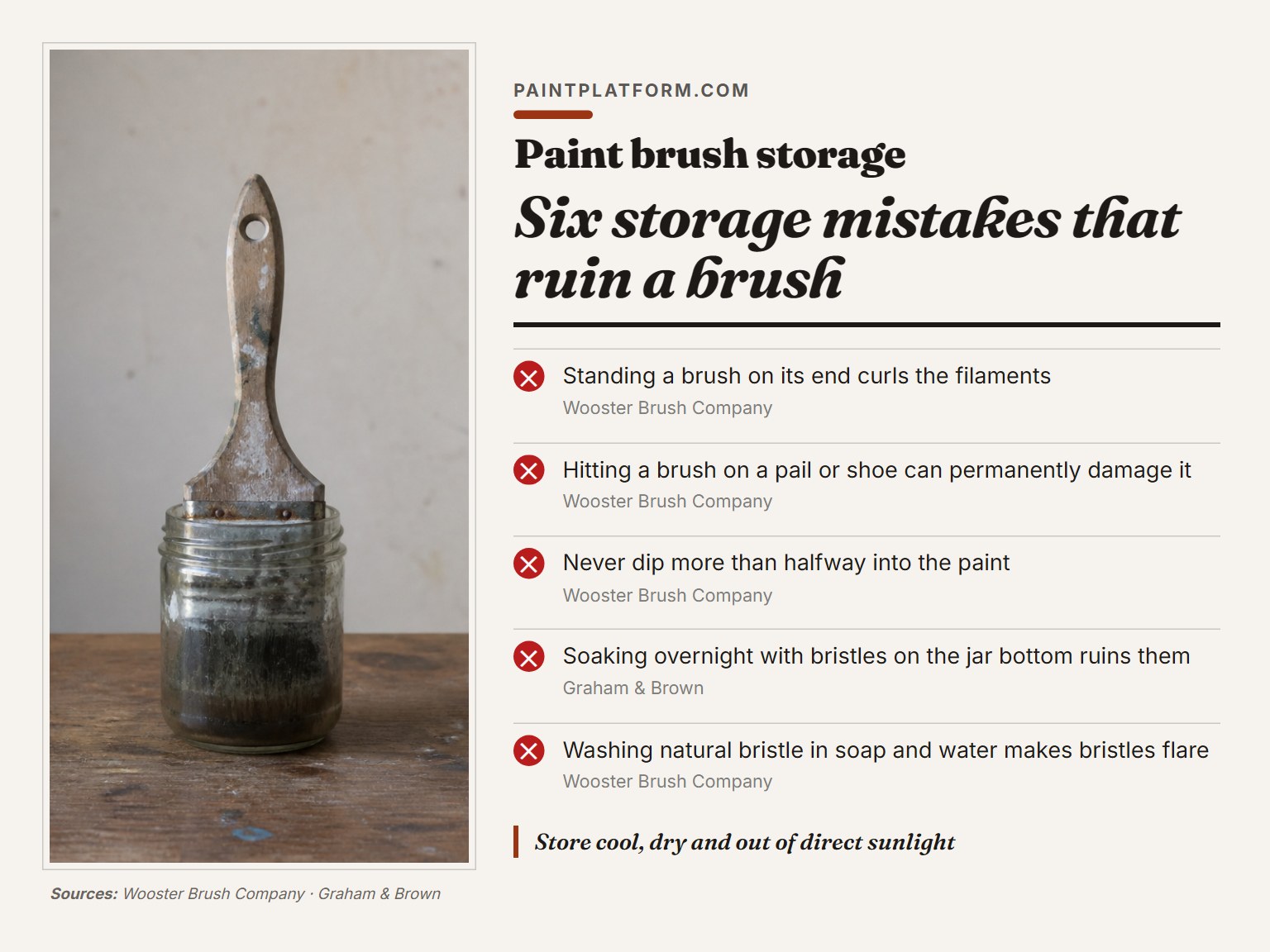
Six habits, and every one of them is fixable in under a minute.
- Standing a brush on its end. Wooster says the filaments curl, and they don’t straighten back out.
- Hitting the brush on a pail or the top of your shoe to shake water out. Wooster states plainly that this can permanently damage the brush.
- Dipping more than halfway into the paint. Wooster’s rule is halfway, maximum. Deeper and the paint climbs into the ferrule where you can’t rinse it.
- Soaking overnight “to loosen the paint.” Graham & Brown’s verdict is that any length of time with bristles on the jar bottom ruins them.
- Washing natural bristle in soap and water. Covered above, and it’s the single most common way a natural bristle brush gets ruined.
- Storing in a humid garage or shed. This Old House warns that high humidity promotes mould and rust on metal parts, so pick somewhere cool, dry and out of direct sunlight.
Where this goes sideways: A brush stored in a damp garage for a season comes out with a rust bloom on the ferrule and a musty smell in the bristles. By the time you notice, the filament plug has already started to let go.
If the bristles are already bent rather than ruined, this guide to reshape a brush covers the boiling-water-and-wire-comb method This Old House recommends.
Frequently Asked Questions
Can I leave a paint brush wrapped overnight without cleaning it?
Not every source agrees. Wooster’s method is to wet the brush with paint and seal it in foil or a bag with the handle out and the neck tied, and Graham & Brown uses cling film applied airtight, while Graham & Brown also stores oil-based brushes immersed in solvent. The limit is roughly overnight to 24 hours, after which This Old House says to clean thoroughly.
Is it OK to put a paint brush in the fridge between coats?
This Old House says yes for breaks up to 24 hours: airtight bag, air squeezed out, then refrigerated. Worth knowing that no manufacturer document in this set recommends it. It’s editorial advice, and it works, but it isn’t an OEM method.
Should I clean my brush between coats if I’m using the same paint tomorrow?
The sources split. BEHR PRO says skip it, since wrapping and storing a brush for the same paint and colour saves time and water. Benjamin Moore and This Old House both say clean immediately, even for next-day reuse. Pick based on whether you’re protecting the working day or the brush.
How do I store a brush for oil-based paint between coats?
Graham & Brown says to store it immersed in an appropriate cleaner or solvent, suspended so the bristles never rest on the jar bottom, while Wooster warns that prolonged soaking can damage the brush, so keep the soak short. Wooster also notes that natural bristle should only ever see the solvent recommended for thinning the coating.
Can a brush recover if the bristles have already bent?
Sometimes. This Old House suggests dipping a warped brush in boiling water, reshaping with a wire comb, and letting it dry completely in the right shape. If the bristles stay splayed after that, or shed when you load them, the brush is done.
The Bottom Line
Everything above comes down to one number you can actually act on: two to four hours. That’s Wooster’s cleaning interval for fast-drying coatings and for dry, hot or windy days, and it’s the point past which wrapping stops helping and starts preserving a problem.
Try this today. Before you open a can, tear off two squares of plastic wrap and set them beside your station. The first time you stop for lunch, wrap the brush instead of rinsing it, and see how it feels when you pick it back up. If the heel is still soft, you’ve found your working method. If it’s tacky, you waited too long, and now you know where your own limit sits.
One concession worth naming: none of this holds if you’re using a fast-dry trim enamel on a hot afternoon. In those conditions the wrap is a five-minute tool, not an overnight one, and the spare brush in the drawer earns its keep.
