
How to Remove Dried Paint From Brushes: 3 Methods
This post contains affiliate links. As an Amazon Associate, we earn from qualifying purchases.
To remove dried paint from brushes, match the method to the paint: hot water and dish detergent for latex, a 20 to 30 minute soak in chemical brush cleaner for hardened acrylic, or a 1 to 2 hour distilled vinegar bath for stubborn dried paint. Work from the ferrule outward, toward the tip.
That match matters more than any single technique. A latex brush with dried paint needs nothing more than hot water and a few drops of detergent. A brush that sat in oil-based enamel needs a solvent bath. Knowing how to remove dried paint from brushes starts with identifying the paint. Pair the wrong solvent with the wrong paint and the bristles pay for it.
What follows is the three methods ranked by how bad the damage is, the tools that help, and the one move that ruins a brush faster than dried paint ever will.
Key Takeaways
- Match the solvent to the paint. Hot water and dish detergent for latex, chemical cleaner for hardened acrylic, and, per Sherwin-Williams, vinegar for stubborn dried paint, though This Old House warns against vinegar as a harsh chemical that can damage bristles. The wrong solvent wastes time and can damage bristles.
- Twenty to thirty minutes in chemical brush cleaner handles most hardened brushes, per This Old House, though Sherwin-Williams recommends soaking dried bristles in distilled vinegar for 1 to 2 hours. Overnight soaking turns bristles too soft to hold paint.
- Skip the wire brush, per This Old House’s Mauro Henrique and Mario. It damages the ferrule and frays the bristles, though This Old House’s pro article says use a brush comb or wire brush gently on dried paint. A soft scrub pad and a brush comb do the job.
- Hang brushes bristles-down after cleaning. Water that seeps into the ferrule rusts the metal and loosens the glue.
- A few hours of drying is normal. A brush that still feels damp the next morning wasn’t rinsed clean enough.
Why Dried Paint Is a Different Problem
Dried paint holds onto a brush because the resins in the coating bind to the filaments as they cure, not because the water simply evaporates. Once that bond sets, plain water cannot break it. The solvent has to match the paint chemistry: detergent for latex, mineral spirits for oil, and, per This Old House, chemical cleaner for fast-dry acrylics.
Dried paint binds to bristle filaments through resin cross-linking, not simple evaporation. Once the film sets, water alone cannot break the bond. The solvent has to match the coating chemistry: detergent for latex, mineral spirits for oil, and, per This Old House, a chemical cleaner for fast-dry acrylics that cure within minutes.
I used to rinse acrylic straight down the bathroom sink. The paint that didn’t go down the drain dried in the trap, and a plumber had to snake it out later. Now there’s a rag on the worktable before the brush ever touches water.
The bristles feel stiff at the base when paint has cured, like a cheap broom that got wet and dried wrong. That stiffness is the resin bond. You can feel it before you see it.
Try this: next time you finish a session, wipe the brush on a rag before you do anything else. A quick wipe now saves a longer cleanup later.
The 3 Methods, Ranked by How Bad the Damage Is
Start with the least aggressive method and work up. A brush that dried yesterday needs hot water. A brush that dried in March needs a solvent bath.
Before you start: Chemical brush cleaner gives off fumes that build up in a small room within minutes, so open a window or work outside. Boiling vinegar can splash and burn; pull the pot off the heat and let it cool before you touch the brush. Paint thinner is flammable, so keep it away from a water heater or pilot light.
Method 1: Hot Water and Dish Detergent
This is the first move for latex and acrylic paint on synthetic bristles, and it’s what Benjamin Moore’s paintbrush cleaning guide recommends for dried paint on a brush, though This Old House says natural bristle brushes need cool water and mild soap. Run hot water over the bristles and add a few drops of Dawn dish soap. Work the soap through with your fingers, from the ferrule toward the tip.
The hotter the water, the better it works, per Benjamin Moore, though This Old House says use room-temperature or lukewarm water for rinsing dried-paint brushes. Wear rubber gloves if the water is hot enough to sting. Don’t use too much soap; a few drops is enough, and extra soap just means more rinsing.
If the paint is still soft, this takes only a short time. If it has cured hard, move to Method 2.
Method 2: Chemical Brush Cleaner Soak
This Old House’s dried-paintbrush walkthrough has painter Mauro Henrique soaking a dried brush in chemical brush cleaner for 20 to 30 minutes. Pour the cleaner into a small bucket, filling it just above the height of the dried paint on the brush. If the bucket has a magnet, park the ferrule against it so the brush stays put.
After the soak, work the paint loose with a soft-bristled brush, brushing from the ferrule toward the tip. Rinse in a separate bucket of room-temperature water, per This Old House, though Benjamin Moore says the hotter the water, the better you can clean your brush. A 2-inch by 4-inch scrap of lumber in the rinse bucket gives you something to brush against.
A chemical brush cleaner is the one to reach for when a brush has cured hard. It’s a soap-based cleaner that lifts both oil and water-based paint without the solvent smell. For a broader look at what’s on the shelf, the best paint brush cleaners break down by paint type.
One warning: don’t leave the brush in chemical cleaner overnight. As painting expert Jim told This Old House, the bristles will turn much too soft to hold paint.
Method 3: Distilled Vinegar Soak
Sherwin-Williams’ tool cleaning guide recommends soaking dried bristles in distilled vinegar for 1 to 2 hours. If the bristles are still stiff after that, boil the vinegar, pull it off the heat, and let it cool before you put the brush back in. The heat breaks down the cured film faster.
Comb out the loosened paint with a brush comb, then rinse with clean water.
This is where sources disagree. This Old House warns against vinegar, saying harsh chemicals can damage bristles. Sherwin-Williams recommends it. My take: vinegar is fine on synthetic bristles and risky on natural bristle. More on that below.
Why the Sources Disagree on Water Temperature
Benjamin Moore says the hotter the water, the better you can clean a brush. This Old House says use room-temperature or lukewarm water for rinsing dried-paint brushes. Both are manufacturer or trade sources, and both are right for their context.
The difference is what the water is doing. Hot water softens cured latex faster. Lukewarm water protects the glue in the ferrule during a long rinse. Use hot water for the wash, lukewarm for the rinse.
| Question | One Position | The Other |
|---|---|---|
| Water temperature | Hot water cleans better (Benjamin Moore) | Lukewarm water for rinsing (This Old House) |
| Dried-paint soak | 20 to 30 minutes in chemical cleaner (This Old House) | 1 to 2 hours in distilled vinegar (Sherwin-Williams) |
| Wire brush | Never use one (This Old House, Mario) | Use one gently (This Old House, pro article) |
| Overnight soaking | Do not soak overnight (This Old House, Jim) | Soak 1 to 2 hours (Sherwin-Williams) |
Chemical brush cleaner gives off strong fumes. That smell is the solvent doing its job. If the smell fades while the brush is still stiff, the cleaner is spent.
The wire brush question is the one I get asked most. This Old House’s own site contradicts itself: one article says never touch a wire brush, another says use one gently on dried paint. My rule is simple. No wire brush on a brush you want to keep. A soft scrub pad does the same job with less risk.
Pick one and stay consistent. Mixed advice is how a brush ends up in the bin.
How Do You Handle Dried Paint on Natural Bristle Brushes?
Natural bristle brushes need cool water and mild soap, per This Old House, not the hot water that works on synthetic, though Benjamin Moore says the hotter the water, the better you can clean your brush. This Old House is specific about this: natural bristle is more delicate and needs gentler cleaning. Synthetic bristles can take warmer water and stronger solutions.
Here’s the natural bristle routine:
- Cool water only, per This Old House. Hot water swells the bristles and softens the glue in the ferrule, though Benjamin Moore says the hotter the water, the better you can clean your brush.
- Mild soap, not dish detergent. Dawn is too aggressive for natural bristle.
- Work from the ferrule outward. Bending bristles backward forces water into the ferrule.
- Reshape while damp. A brush that dries out of shape stays out of shape.
Cool water only, per This Old House. That’s the rule for natural bristle, though Benjamin Moore says the hotter the water, the better you can clean your brush.
I keep a separate jar for natural bristle brushes, so I never accidentally drop one in the hot water bucket. When you’re ready to reshape a paint brush, do it while the bristles are still damp and the shape will hold.
The Tools That Actually Help (and the One That Hurts)
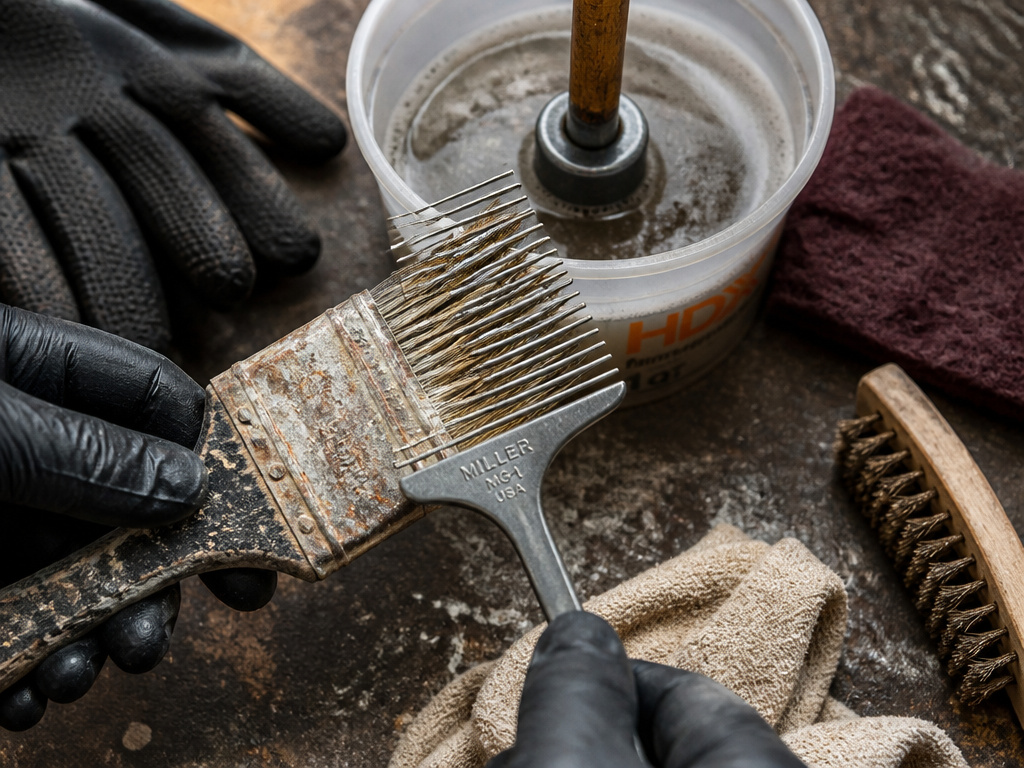
Most of the tools in this section cost less than a sandwich. The one that hurts costs more and does damage.
- A brush comb. A brush comb reaches into the bristles without pulling them out. It reaches into the bristles without pulling them out.
- A soft scrub pad. For paint near the ferrule. Gentle pressure, not scrubbing.
- A small bucket with a magnet. This Old House’s trick for holding the brush upright during a soak.
- Rubber gloves. Hot water and chemical cleaner both want gloves.
- A rag. For the first wipe, before anything touches water.
The tool that hurts is the wire brush, per This Old House’s Mauro Henrique and Mario, though This Old House’s pro article says use a brush comb or wire brush gently on dried paint. It scratches the ferrule plating, and once water gets under the plating, rust starts. A wire brush also frays the bristle tips, which changes how the brush lays paint.
Skip it, per This Old House’s Mauro Henrique and Mario, though This Old House’s pro article says use a brush comb or wire brush gently on dried paint. A soft scrub pad and a brush comb are all you need.
Try this: keep a small jar of water and a rag on the worktable. Dip, wipe, dip again. That’s the whole system for a brush you’re using right now, and it’s the same idea behind good brush care and storage between sessions.
How Long Should a Brush Soak Before You Give Up?
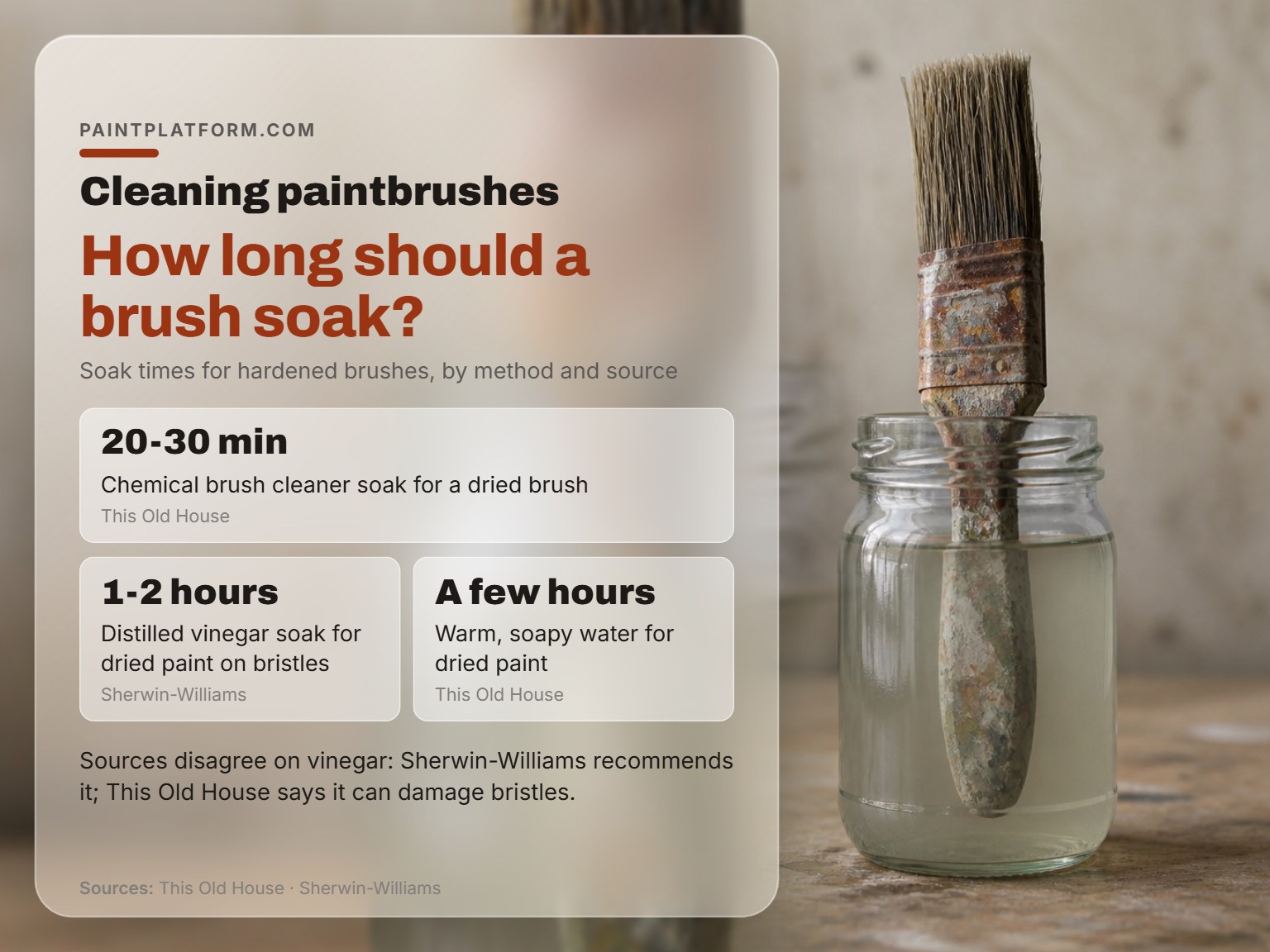
Twenty to thirty minutes in chemical brush cleaner handles most hardened brushes, per This Old House, though Sherwin-Williams recommends soaking dried bristles in distilled vinegar for 1 to 2 hours. If the bristles are still stiff after that, soak again. If they’re still stiff after a second soak, the paint has cured past the point of return.
| Situation | Method | Time |
|---|---|---|
| Dried latex or acrylic | Hot water + dish detergent | A few hours |
| Any hardened brush | Chemical brush cleaner soak | 20 to 30 minutes |
| Dried paint, alternative | Distilled vinegar soak | 1 to 2 hours |
| Dried oil-based paint | Paint thinner or mineral spirits | Repeated dips |
Twenty minutes is plenty for most brushes, per This Old House, though Sherwin-Williams recommends soaking dried bristles in distilled vinegar for 1 to 2 hours. If you’re reaching for a second soak, check the bristles first. If they flex at the base, keep going. If they’re still rigid, the paint has won.
For oil-based paint specifically, the steps to clean oil paint brushes step by step are different enough that they deserve their own routine.
When to Throw the Brush Away
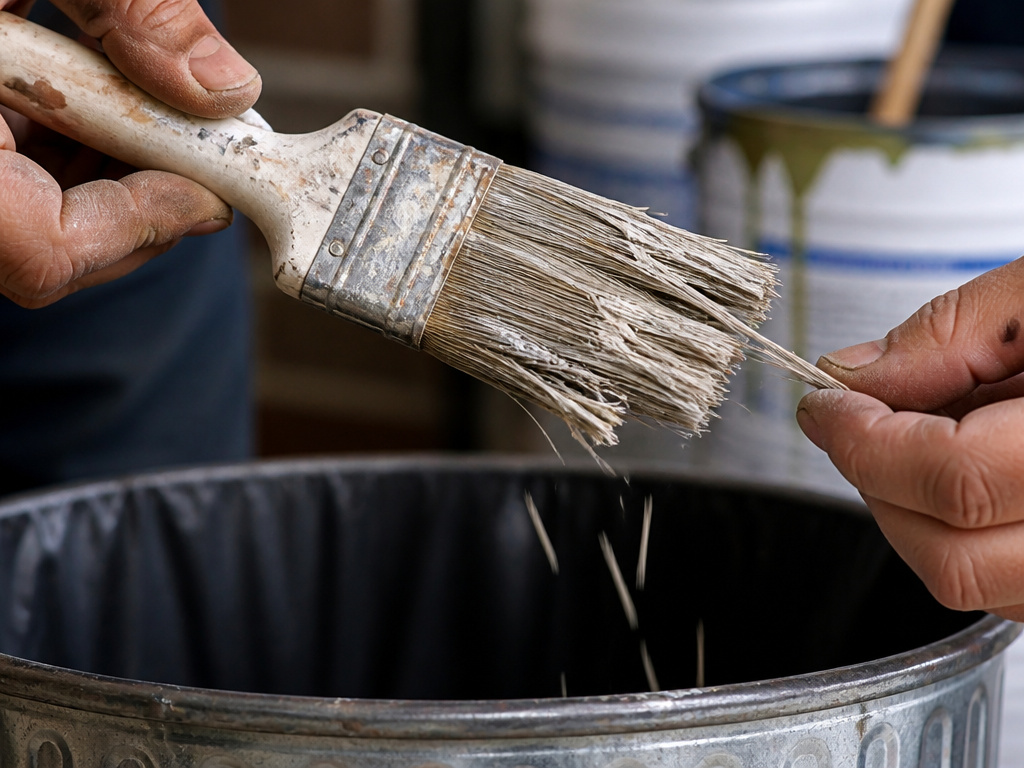
Some brushes are past saving. This Old House lists the signs: bristles that stay bent or misshapen after cleaning, significant bristle loss, a loose or damaged ferrule, or a brush that no longer applies paint evenly.
What most people get wrong: Soaking a brush for hours in the hope that it’ll come back. The glue in the ferrule is water-based on most brushes, and long soaks soften it. The bristles start shedding within a few uses. Twenty to thirty minutes is the window, per This Old House, though Sherwin-Williams recommends soaking dried bristles in distilled vinegar for 1 to 2 hours. Past that, you’re trading a stiff brush for a shedding one.
I’ve thrown away brushes that would have survived one more soak. I’ve also kept brushes that were already shedding, and watched them leave bristles in a fresh coat of paint. The second mistake is worse.
Here’s my honest take: commercial brush-restoring products are overrated for brushes that were abandoned weeks ago. They work on a brush that dried yesterday. They’re a waste of money on a brush that dried in March. Wooster’s own care manual agrees for oil-based coatings: it may not make sense economically to clean the brush at all, so let it dry and throw it away.
Let it go. A new brush is cheaper than a ruined paint job.
Frequently Asked Questions
Can you save a brush that dried solid?
Sometimes. Soak it in chemical brush cleaner for 20 to 30 minutes, per This Old House, then work the paint loose with a soft-bristled brush, though Sherwin-Williams recommends soaking dried bristles in distilled vinegar for 1 to 2 hours. If the bristles flex at the base after one soak, the brush is salvageable. If they’re still rigid, the paint has cured past the point of return. Wooster’s own care manual says for oil-based coatings it may not make sense economically to clean the brush at all.
Does vinegar really work on dried paint?
Sherwin-Williams says yes: soak bristles in distilled vinegar for 1 to 2 hours, or boil the vinegar if the bristles are still stiff. This Old House warns against vinegar, saying it can damage bristles. The disagreement is real. Vinegar is fine on synthetic bristles. On natural bristle, use cool water and mild soap instead.
How long does a cleaned brush take to dry?
Few hours, depending on brush thickness and how wet it is, per Benjamin Moore. Hang the brush bristles-down so water drains away from the ferrule. Never store a wet brush with bristles facing up; water seeps into the ferrule, rusts the metal, and loosens the glue.
Should you use hot or cold water on natural bristle brushes?
Cool water and mild soap, per This Old House, which is specific: natural bristle is more delicate and needs gentler cleaning, though Benjamin Moore says the hotter the water, the better you can clean your brush. Hot water swells the bristles and softens the glue in the ferrule. Synthetic bristles can take warmer water and stronger solutions.
When should you just throw the brush away?
When the bristles stay bent after cleaning, when there’s significant bristle loss, when the ferrule is loose or damaged, or when the brush no longer applies paint evenly. This Old House lists all four. A brush that fails any of these tests will leave bristles in your next coat.
The Bottom Line
The methods above assume the brush was worth saving. A cheap chip brush that sat in oil enamel for a month isn’t worth the solvent, and Wooster’s own care manual says so for oil-based coatings: let it dry and throw it away. Save the effort for the brushes you actually like.
Try this today: before you put a brush down, wipe it on a rag. That single habit prevents most of the scenarios described above. Ten seconds now, ten minutes saved later.
Honestly? Start smaller than you think you need to. A jar of water, a rag, and a few drops of dish soap handle most brushes most of the time. The chemical cleaner and the vinegar soak are for the brushes you forgot about. The rag is for the ones you didn’t.
