
10 Best Paint Brush Cleaners in 2026
This post contains affiliate links. As an Amazon Associate, we earn from qualifying purchases.
For artists and DIYers, the best paint brush cleaner keeps bristles soft and extends the life of your tools. The Masters Brush Cleaner and Preserver wins as Best Overall because it cleans and conditions in one step. Its non-toxic formula is safe for both synthetic and natural bristles. For those switching between paint types, the Speedball Pink Soap Brush Cleaner is our Best Multi-Paint Cleaner, while the Green Piece Paint Brush Cleaner & Restorer leads as the Best Natural Formula.
The real problem with brush cleaners is finding one that works on your specific paint type without damaging delicate bristles. Many cleaners are harsh or only effective on wet paint, leaving you with stiff brushes or a drawer full of half-used bottles. What matters is matching the cleaner to your paint medium and how quickly you clean up.
This guide is research-based, drawing on manufacturer specifications, expert recommendations, and patterns in owner feedback across ten top-rated products. We evaluated each cleaner for effectiveness, safety, bristle care, and versatility so you can choose with confidence.
Top 10 Paint Brush Cleaners in the Market
Certain content that appears on this site comes from Amazon. This content is provided "as is" and is subject to change or removal at any time.
The Best Paint Brush Cleaners, Reviewed
The Masters Brush Cleaner and Preserver

What We Like
- Cleans and conditions in one step
- Safe for both synthetic and natural bristles
- Non-toxic formula
Trade-offs
- Requires up to several hours soak for dried paint
- No built-in brush restorer for severely damaged bristles
A single product that cleans and conditions in one step means you don’t need a separate conditioner or solvent. The Masters Brush Cleaner and Preserver is formulated for use with oil, acrylic, watercolor, gouache, tempera, ink, dye, stain, and varnish, so it covers a wide range of mediums. Its non-abrasive formula is safe for both synthetic bristles and delicate natural hair like Kolinsky sable, which makes it a gentle choice for expensive brushes. The non-toxic ACMI AP certification also meets standards for safe use. This is the brush cleaner that suits artists who want a single, reliable product for daily maintenance and occasional deep rescues.
The trade-off is the small 1-ounce container. For someone who cleans brushes after every session, that size runs out faster than larger bottles from options like Speedball Pink Soap. But for an all-around cleaner that conditions as it cleans and protects delicate bristles, The Masters delivers a complete solution in a compact, non-toxic package.
Product photos
Speedball Pink Soap Brush Cleaner

What We Like
- Cleans oils, acrylics, and watercolors
- Conditions and preserves brush bristles
- Leaves no greasy residue
- ACMI certified non-toxic
Trade-offs
- Liquid formula can spill if tipped over
- Not designed for latex or oil-based house paints
Speedball Pink Soap Brush Cleaner handles oils, acrylics, and watercolors from a single tub, so you don’t need separate cleaners for different paint types. The formula acts as a brush cleaner, preserver, and conditioner, and it rinses away without greasy residue. ACMI CL certification is listed on the packaging, which indicates it meets certain safety standards.
Speedball Pink Soap Brush Cleaner weighs 0.8 pounds and has a 7.9-inch width, so it takes up more bench space than a solid soap like The Masters Brush Cleaner and Preserver, which weighs 0.1 pounds and has a 2.2-inch width. If you work with multiple paint types and want one cleaner that does all the jobs without harsh solvents, this is a straightforward solution.
Green Piece Paint Brush Cleaner & Restorer

What We Like
- 100% natural, non-toxic formula
- Works on wet or dry paint
- Safe for hands
- Effective on shellac finishes
Trade-offs
- Not designed for watercolor or gouache
- Liquid formula can spill if stored carelessly
A 100% natural, non-toxic formula made from fruit extracts and minerals means this cleaner tackles paint without the harsh fumes or chemicals of traditional thinners. It works on wet or dry acrylic, latex, oil, and shellac, so you can revive a crusty brush or clean a fresh one with the same bottle. The fresh citrus scent is a bonus for anyone tired of solvent smells. The fact that it’s safe on hands makes it a practical choice for artists who prefer not to glove up every time they clean.
This cleaner removes wet or dry paint in seconds, so you can clean brushes without scrubbing for minutes. It works on acrylic, latex, oil, and shellac, but if you mostly use watercolor or gouache, you’d want a dedicated brush soap instead.
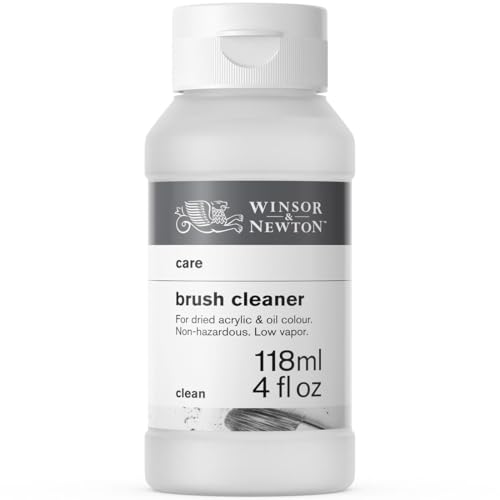
Winsor & Newton Brush Cleaner & Restorer
What We Like
- Non-damaging to natural and synthetic brushes
- Leaves no oily residue
- Biodegradable and water-soluble formula
- Non-flammable and non-abrasive
Trade-offs
- Only 4 oz per bottle for frequent cleaning
- Non-toxic but emits low vapor, not odorless
A biodegradable, non-flammable formula that cleans both natural and synthetic brushes without damaging the bristles is the core reason this cleaner stands apart. It leaves no oily residue. The low vapor and non-toxic nature are listed features that may be relevant for studio use.
The 4-ounce bottle is small, so if you clean brushes daily or work through heavy oil or acrylic sessions, you will go through it faster than a larger option like Speedball Pink Soap. The formula is biodegradable, non-flammable, and non-abrasive, and it leaves no oily residue, so it is a good choice for anyone who wants a low-vapor cleaner that won’t damage brush heads. Reviewers note that it safely cleans both natural and synthetic brushes without harming the bristles.
Trekell Paint Brush Restorer and Preserver

What We Like
- Non-toxic, biodegradable, water-soluble formula
- Conditions and reshapes natural and synthetic brushes
- Low vapor, non-flammable, non-abrasive
- Made in the USA
Trade-offs
- Requires separate brush soap for initial cleaning
- Only suitable for brushes already washed of paint
A dedicated conditioner that works after washing, not instead of it, sets this restorer apart. The liquid formula is non-toxic, biodegradable, and water-soluble, so you can massage it into clean bristles without worrying about harsh fumes or flammability. This makes it a smart pick for artists who want to extend the life of both natural and synthetic brushes. It is especially useful if you work with acrylic, watercolor, or oil paints and prefer a gentle, low-odor solution that reshapes and preserves the brush’s original form.
If you want a brush conditioner that reshapes and preserves bristles after washing, this 4 oz bottle delivers targeted care for brushes you want to keep around for years. The catch is that it is a two-step process: you need a brush soap first to remove paint, then dip into the conditioner. That extra pass means it is not a one-step cleaner, but it gives you dedicated conditioning for natural and synthetic brushes.
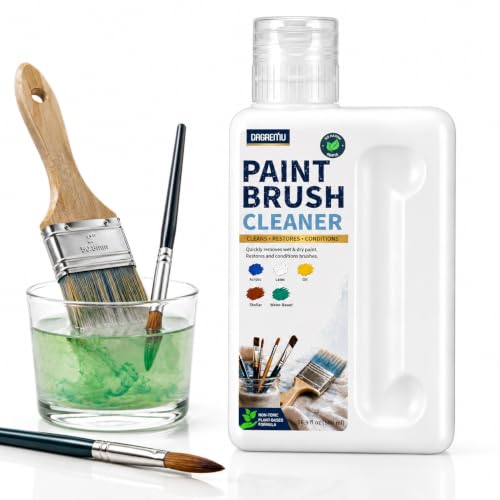
DAGREM U Paint Brush Cleaner & Restorer
What We Like
- Removes fresh paint in seconds
- Works on multiple paint types
- Safe on hands, no harsh chemicals
- Biodegradable and non-toxic
Trade-offs
- Not effective on paint fully hardened for days
- Requires 30-minute soak for semi-dry paint
This cleaner dissolves fresh acrylic, latex, oil, water-based, and shellac paint in seconds, which means you can rinse a brush clean between color changes without scrubbing or waiting. The plant-based, odorless formula is gentle enough to use bare-handed, and it rinses completely so bristles stay soft and flexible rather than turning brittle. For anyone who switches between paint types frequently or works in a shared studio space, the quick action and lack of chemical fumes make it a practical everyday choice.
Fresh paint dissolves in seconds, but if the paint has started to set, you’ll need to soak the brush for 30 minutes to soften the residue. The manufacturer warns that brushes with paint fully hardened for days won’t be restored, so this cleaner works best for regular maintenance rather than rescuing long-neglected tools. On the plus side, the formula is non-toxic and safe on hands, making it a practical choice for everyday cleaning without harsh chemicals.
Product photos
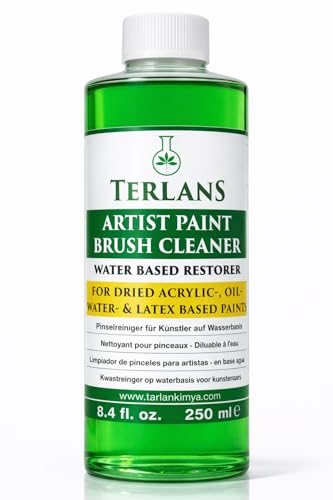
TERLANS Art Paint Brush Cleaner & Care Solution
What We Like
- Non-flammable, non-abrasive, water-based formula
- Revives hardened or clogged brushes
- Pleasant lemongrass scent
- Safe for natural and synthetic bristles
Trade-offs
- Hardened paint requires 2-4 day soak
- Not suitable for stripping paint film
The water-based, non-flammable, non-abrasive formula removes fresh and dried acrylics, oils, varnishes, and mediums without phosphates, acids, or caustic alkalis. It also acts as a brush restorer, reviving bristles that have hardened or clogged over time. The lemongrass scent is a pleasant addition for artists who work in small studios or shared spaces where odor matters.
Product photos
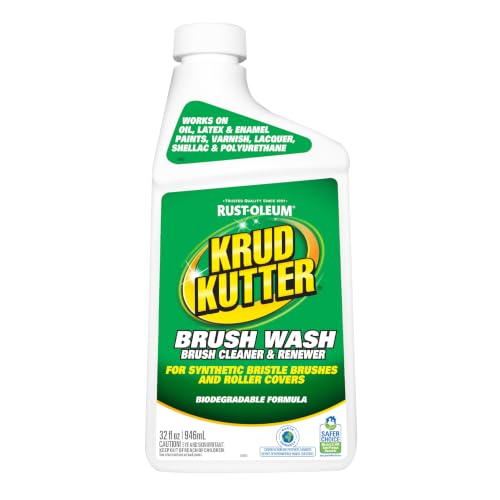
Rust-Oleum Krud Kutter Brush-Wash Cleaner and Renewer
What We Like
- Cleans dried latex and oil paint
- Restores stiff, hardened brush bristles
- Works on both brushes and rollers
- Simple soak-and-rinse process
Trade-offs
- Requires soaking time for dried buildup
- Strong chemical odor during use.
A 32-ounce bottle that specifically targets dried paint buildup means this cleaner is built for the worst-case scenario: brushes left crusty and stiff after a forgotten cleanup. It works on both latex and oil based paints, so whether you are a house painter or a DIYer who switches between water-based and solvent-based coatings, one soak handles both. The formula penetrates hardened bristles to restore flexibility, which extends the life of rollers and brushes that would otherwise be tossed. This is the cleaner you reach for when a quick rinse won’t cut it and you need to salvage tools that have been sitting too long.
The main drawback is the soak time. This cleaner is built for deep restoration, not everyday touch-ups, so it is not the quickest option for light cleaning. For heavy-duty revival of workhorse brushes and rollers caked with dried paint, this is the most direct solution in the guide.
Product photos
Angelus Brush Cleaner

What We Like
- Non-toxic conditioning formula
- Works on dried acrylic and oil
- Safe for airbrush parts
- Twist-top cap reduces waste
Trade-offs
- Requires thorough rinsing after cleaning.
The 8-ounce bottle is compact and lightweight, making it easy to keep beside your airbrush station without cluttering your workspace. Angelus Brush Cleaner is formulated to break down dried acrylic, oil, and water-based paints, which is exactly what you need when paint dries inside a fine airbrush nozzle. The non-toxic conditioning agent also helps keep bristles soft, so your tools stay in good shape between sessions.
The 8-ounce bottle is compact and lightweight, so it fits easily beside an airbrush station without taking up much space. Heavy users may find they need to replace it more often than some other options. For targeted airbrush cleaning, the formula’s ability to break down dried acrylic, oil, and water-based paints is exactly what that job requires.
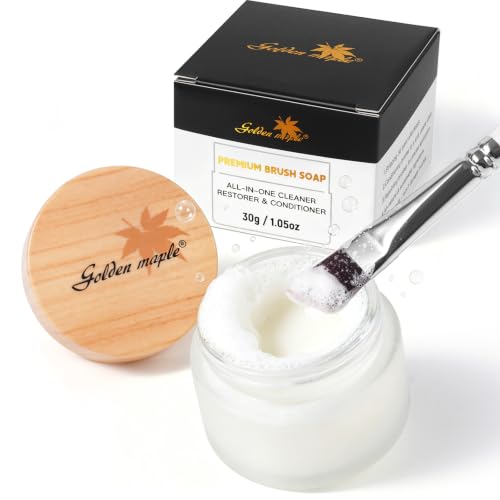
Golden Maple Professional Brush Cleaning Soap
What We Like
- Plant-based, vegan formula
- Conditions bristles while cleaning
- Works on oil, acrylic, and watercolor
- Compact 30g bar for travel
Trade-offs
- Solid bar requires wetting before each use
- Not suitable for removing dried or hardened paint
A 30g solid soap bar that provides approximately 50 to 75 cleanings means you can refresh brushes many times before needing a new block. This plant-based and vegan formula is made without harsh chemicals or solvents, and it helps remove stubborn oil, acrylic, and watercolor paints while conditioning bristles. It suits artists who want a gentle cleaning routine that works on sable, synthetic, and bristle brushes. The compact size slips into any kit, making it a practical companion for studio sessions or plein air trips.
The solid bar requires you to wet your brush and swirl it on the soap before rinsing, a small extra step compared to liquid cleaners you can pour straight into a jar. Against The Masters Brush Cleaner and Preserver, another solid soap, Golden Maple offers a similar approach but with a plant-derived formula for those who prefer a vegan option. If you clean brushes often and value portability, this bar provides a solvent-free way to maintain your brushes.
Product photos
How We Evaluated Paint Brush Cleaners
We built this guide by analyzing product specifications from manufacturers, studying expert round-ups from art and DIY publications, and identifying consistent patterns in owner feedback across a range of paint brush cleaners. Our goal was to find products that reliably clean brushes without causing damage, regardless of the paint medium used.
We focused on four key criteria. Effectiveness measured how well each cleaner removes wet, semi-dry, and fully dried paint. Bristle care considered whether the formula conditions, preserves, or restores natural and synthetic bristles. Safety evaluated non-toxic certifications, biodegradability, and skin-friendliness. Versatility looked at how many paint types (oil, acrylic, watercolor, latex) each cleaner handles.
Instead, we rely on what manufacturers state and what owners consistently report. This approach helps you make an informed choice without needing to try every product yourself.
What To Look For In Paint Brush Cleaners
Choosing a brush cleaner comes down to understanding your paint type and cleaning habits. The right product saves you money on brushes and keeps your work consistent.
Look for a cleaner that matches your primary paint medium. That could be oil, acrylic, watercolor, or latex. Check for non-toxic certification if you work in a small space. Decide whether you need a conditioner built in or prefer to use one separately.
Paint Type Compatibility
The most important factor is whether the cleaner works with your paint. Oil-based paints require solvent-based or specialized cleaners, while acrylic and watercolor need water-soluble formulas. Some cleaners, like the Speedball Pink Soap, handle multiple types, while others, like the Rust-Oleum Krud Kutter, are designed specifically for dried latex and oil house paints. Using the wrong cleaner can leave residue or fail to remove paint entirely.
Bristle Conditioning
A good cleaner does more than remove paint, it should also condition the bristles. Conditioners prevent bristles from drying out, cracking, or losing their shape. The Masters Brush Cleaner and Preserver and Trekell Paint Brush Restorer both include conditioning agents. If you already use a separate brush soap, a dedicated conditioner like the Trekell can extend brush life further.
Safety and Odor
Non-toxic, biodegradable, and low-vapor formulas are safer for use in studios or homes without strong ventilation. ACMI-certified products like the Speedball Pink Soap are tested for art materials safety. Natural formulas like the Green Piece cleaner are plant-based and safe for skin. Strong chemical odors, as noted with the Rust-Oleum Krud Kutter, may require open windows or a mask.
- Does the cleaner match your paint type (oil, acrylic, watercolor, latex)?
- Is the formula non-toxic and low-odor for your workspace?
- Does it condition bristles or require a separate conditioner?
- How long does it take to soak dried paint, minutes or days?
- Is the bottle size practical for your frequency of use?
For daily cleaning, a quick-acting liquid or solid soap works best; for restoring hardened brushes, a soak-based restorer is necessary.
Paint Brush Cleaners Compared
The table below compares all ten paint brush cleaners side by side, highlighting their strengths, limitations, and best-use scenarios.
| Product | Paint Types | Non-Toxic | Size |
|---|---|---|---|
| The Masters Brush Cleaner and Preserver | Oil, acrylic, watercolor, gouache, tempera, ink, dye, stain, varnish | ACMI AP Non-Toxic | 1 oz |
| Speedball Pink Soap Brush Cleaner | Oils, acrylics, watercolors | N/A | 12-Ounce |
| Green Piece Paint Brush Cleaner & Restorer | Acrylic, Latex, Oil, Shellac | Non-Toxic | 18 Oz |
| Winsor & Newton Brush Cleaner & Restorer | N/A | Non-toxic | 4.0-oz |
| Trekell Paint Brush Restorer and Preserver | Acrylic, watercolor, oil | Non-toxic | 4 oz |
| DAGREM U Paint Brush Cleaner & Restorer | Acrylic, latex, oil, water-based, shellac | Non-Toxic | 16.9 Oz |
| TERLANS Art Paint Brush Cleaner & Care Solution | Acrylic, oil, varnish, mediums | N/A | 8.4 fl oz |
| Rust-Oleum Krud Kutter Brush-Wash Cleaner and Renewer | Latex and oil based | N/A | 32 oz |
| Angelus Brush Cleaner | Acrylic, Oil, Water-Based | Non-Toxic | 8 ounces |
| Golden Maple Professional Brush Cleaning Soap | Oil, acrylic, watercolor | N/A | 30g/1.05oz |
Frequently Asked Questions
What is the best brush cleaner for oil paint?
The Speedball Pink Soap Brush Cleaner is an excellent choice for oil paint because it cleans without leaving greasy residue and conditions bristles. For a non-toxic option that also works on acrylic and watercolor, The Masters Brush Cleaner and Preserver is a versatile alternative.
Can brush cleaner restore hardened paint brushes?
Yes, several cleaners are designed to restore brushes with dried paint. The Rust-Oleum Krud Kutter Brush-Wash Cleaner and Renewer works on dried latex and oil paint, while the TERLANS Art Paint Brush Cleaner can revive hardened bristles with a soak of two to four days.
What is the difference between brush cleaner and brush soap?
Brush cleaner is typically a liquid or paste designed to dissolve paint, while brush soap is a solid bar that cleans and conditions during use. The Golden Maple Professional Brush Cleaning Soap is a portable solid bar, whereas The Masters Brush Cleaner is a paste that conditions as it cleans.
Are paint brush cleaners safe for synthetic brushes?
Most modern brush cleaners are safe for both synthetic and natural bristles. The Winsor & Newton Brush Cleaner & Restorer is specifically formulated to be non-damaging to both types. Always check the product label to confirm compatibility with your brush material.
How do I clean brushes without damaging them?
Use a cleaner matched to your paint type, avoid soaking brushes in harsh solvents for extended periods, and rinse thoroughly. Conditioning formulas like the Trekell Paint Brush Restorer help maintain bristle shape. Never leave brushes standing in water or cleaner, as this can loosen the ferrule.
The Bottom Line
The Masters Brush Cleaner and Preserver is the Best Overall pick for artists who want a single, non-toxic cleaner that conditions brushes and works across multiple paint types. It is ideal for daily use and occasional dried-paint restoration, though it requires a soak for fully hardened paint.
If you regularly switch between oil, acrylic, and watercolor, the Speedball Pink Soap Brush Cleaner offers exceptional versatility. For those who prefer plant-based ingredients, the Green Piece Paint Brush Cleaner & Restorer is a safe, effective natural formula. And if you need to restore brushes with dried latex or oil paint, the Rust-Oleum Krud Kutter is your best bet.
The single most important factor in choosing a brush cleaner is matching it to your paint type. Get that right, and your brushes will last longer, perform better, and save you money over time.
