
Latex Paint Pros and Cons: Where It Wins and Loses
This post contains affiliate links. As an Amazon Associate, we earn from qualifying purchases.
Latex paint pros and cons start with drying speed: latex dries in 2 to 4 hours and cures in 30 days, cleans up with water, and holds color and gloss better than oil. Its flexibility costs abrasion resistance. For most interior walls, the pros win.
Flexibility is the whole story here. The same polymer that allows a latex film to stretch with the wood instead of cracking also allows a scrubbing pad to cut through it faster than it would a harder alkyd film. Benjamin Moore’s own Paint 201 training material states it plainly: the flexibility of latex paints results in a corresponding decrease in abrasion resistance.
What follows: the drying and curing numbers side by side, the open-time problem that quietly ruins more paint jobs than bad brushes do, where latex genuinely loses to oil, and the one exterior situation where straight latex fails outright.
Key Takeaways
- Latex dries in 2 to 4 hours but cures in 30 days. Oil dries in 4 to 8 hours and cures in 10 days, so latex feels finished long before it is.
- Flexibility is the trade. The same film that resists cracking gives up abrasion resistance, and Benjamin Moore’s training material says so directly.
- Control low- and zero-VOC commercial paints tested had open times of 0 to 2 minutes. That is the open-time problem in one number.
- Oil-modified latex finishes outperformed straight alkyd on badly weathered exterior wood. They held up across 11 years of exposure.
- Water cleanup and low emissions are real, measurable wins. NIST ties both to the water carrier.
Latex Paint Pros and Cons: Four Things It Does Better
Four advantages, in the order they matter: color and gloss retention, resistance to yellowing, water cleanup, and lower emissions on application.
Latex paint forms a film from a water carrier plus a synthetic binder of polyvinyl acetate or acrylic polymers. Once the carrier evaporates, the coating keeps microscopic pores that let moisture vapor pass through the film instead of trapping it underneath. That vapor transmission is the mechanism behind latex’s tolerance for moisture and blistering.
Benjamin Moore’s Paint 201 material lists superior color retention and gloss retention, resistance to yellowing over time, and easy cleanup as the latex advantages over oil and alkyd. NIST’s BEES product file adds the emissions piece: because latex doesn’t use solvents as the primary carrier, it emits far fewer VOCs on application, and tools clean up without solvent at all.
- Color and gloss retention. A latex film holds its sheen and its color longer than an alkyd film does.
- No yellowing. Alkyd films amber with age. Latex films don’t.
- Water cleanup. Brushes and rollers rinse under a tap, and there’s no solvent rag to dispose of.
- Lower VOC emissions on application. NIST attributes this directly to the water carrier.
The breathability claim deserves its own line. Latex keeps microscopic pores after the carrier evaporates, and those pores let moisture vapor move through the film. Benjamin Moore frames that as blister tolerance. UC ANR’s wood-finishing chapter frames the same property as a way to minimize peeling and blistering. Both descriptions point at one behavior.
I found that out by doing it wrong: Now it’s press a damp rag down, lift, move to a clean patch, repeat.
None of this settles the water-based vs oil-based question on its own. It just tells you which side of the ledger latex is playing on.
How Long Does Latex Paint Take to Dry and Cure?
Two to four hours gets the film dry. Thirty days gets it cured.
Benjamin Moore draws the line clearly: drying happens when the carrier has evaporated from the coating, and curing happens when the coating reaches optimum hardness and resistance. Those are two different events on two very different clocks.
| Property | Latex | Oil / alkyd |
|---|---|---|
| Dry to touch | 2 to 4 hours | 4 to 8 hours |
| Full cure | 30 days | 10 days |
| Abrasion resistance | Lower, from flexibility | Higher |
| Color and gloss retention | Superior | Yellows over time |
| Cleanup | Water | Solvent |
| Flexibility | Higher | Lower |
That gap is where most of the disappointment lives.
You can watch the change happen.
The latex vs oil-based for walls choice usually comes down to this table rather than to anything on the label.
The Open-Time Problem That Ruins Otherwise Good Paint Jobs
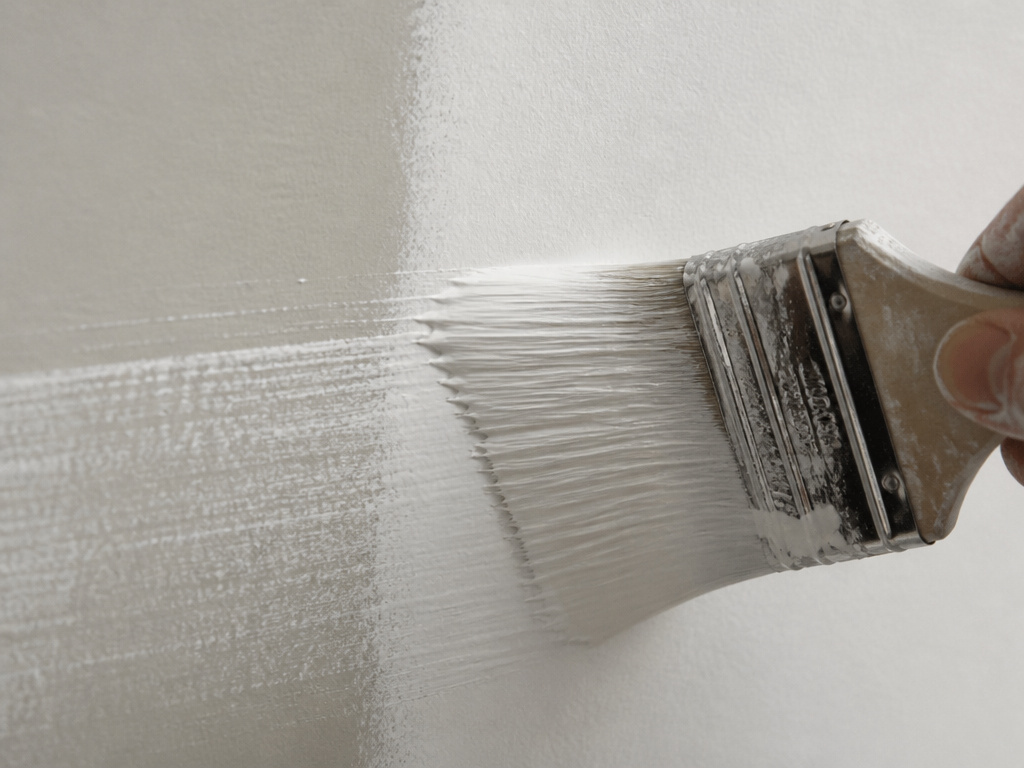
Lap marks come from chemistry more often than from technique.
ASTM D7488 exists for exactly this reason. The standard’s own scope says latex paints dry very quickly, which often causes difficulty in the final appearance of painted areas, especially below 100 g/L VOC where less solvent sits in the can. The test measures how long a paint stays open enough to brush back into.
The CoatingsTech paper that ran the test put numbers on it. Across the commercial low- and zero-VOC paints tested, control samples had open times of 0 to 2 minutes. With an open-time additive, the same paints ran 4 to 12 minutes. Conditions were a room held at 20 C and 50 percent relative humidity, applied with a 10 mil drawdown bar, brushed 15 strokes at two-minute intervals, and rated after 24 hours of drying.
Why Zero-VOC Formulas Are the Hardest to Brush
Coalescents and cosolvents are what keep a film workable long enough to brush back into. Strip them out to hit a zero-VOC target and open time is the first thing to go. The CoatingsTech authors call it a major challenge, which is a polite way of saying the paint closes behind your brush.
The published record splits here. EPA research concluded that paint performance did not appear to be related to VOC content. The industry’s own low-VOC paint technical paper concedes that open time becomes a major challenge once coalescents come out. Both can be true at once: VOC level doesn’t predict overall performance, and removing coalescents still wrecks one specific property.
Indoor air splits the same way. Benjamin Moore calls latex’s low VOC emissions an especially desirable feature. EPA’s testing found two low-VOC, low-odor paints that emitted elevated formaldehyde on gypsum wallboard. Low VOC on the label and low emissions in the room are two different measurements.
Vapor behavior indoors is its own research problem, and the ACS study on paint VOC emissions is where the detail lives.
None of that means you should skip low-VOC paint. It means you should read the open-time behavior before you commit a whole room to it, and use paint brushes that hold enough paint to keep a wet edge moving.
Where Latex Paint Loses: Abrasion, Water, and Weathered Wood
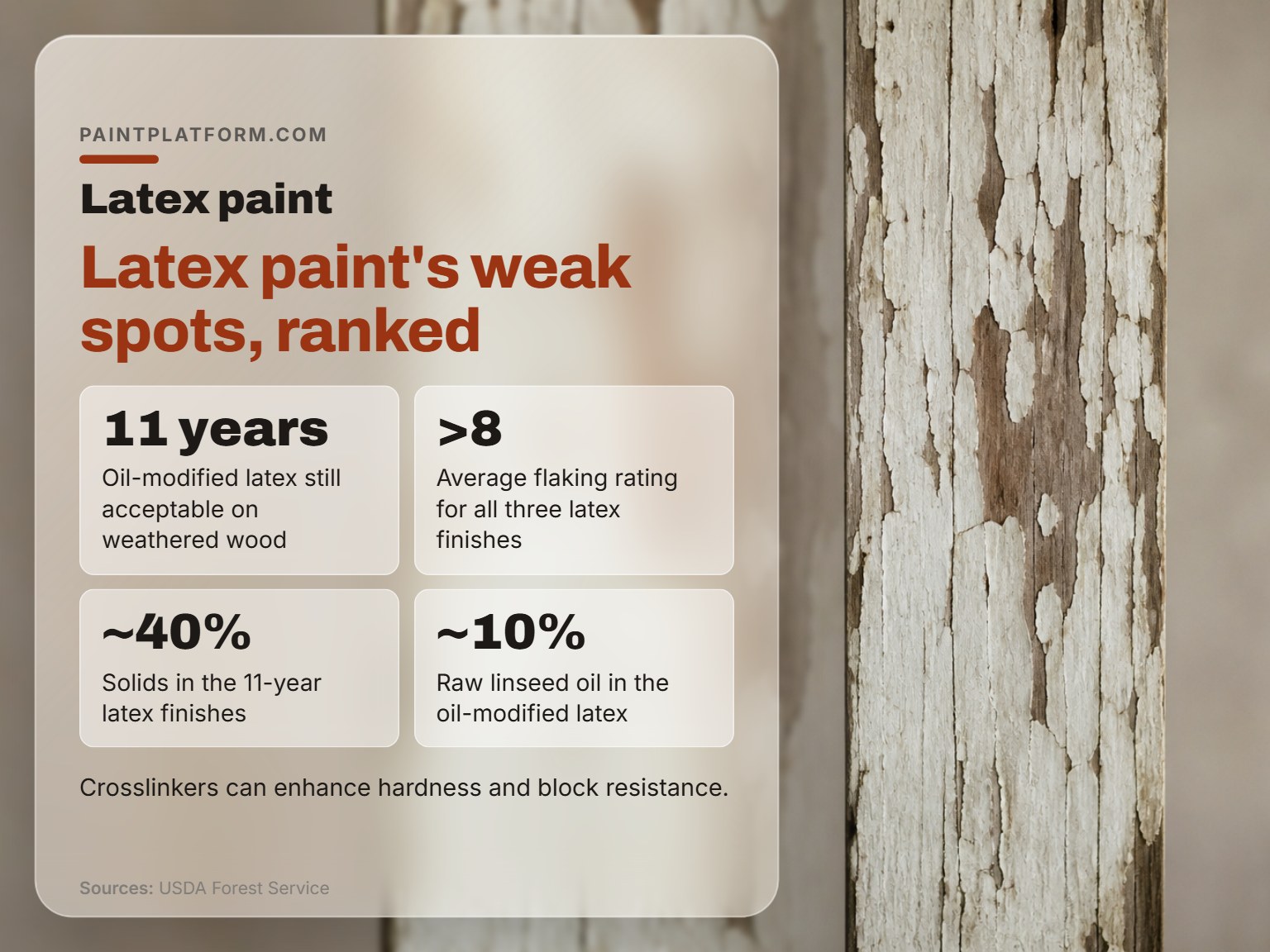
A latex film is softer than an alkyd film, and careful application doesn’t change that.
UL Prospector’s technical note on ambient-cured latex lists the shortfalls directly: poorer chemical resistance, moisture resistance, adhesion, surface hardness, abrasion resistance, and block resistance than solvent-borne counterparts. It also names what causes latex’s water sensitivity, which comes from carboxyl functional groups, water-sensitive thickeners, low residual surfactant at the boundary layer, and leftover cosolvent or amine.
Here’s how those weak spots rank in practice.
- Abrasion.
- Block resistance.
- Chemical resistance.
- Water sensitivity.
Formulators work around the softness with crosslinkers. Self-crosslinking latex or a dual-functional triethoxy silane crosslinker raises hardness, block resistance, and moisture and chemical resistance. Polyaziridine, carbodiimide, and isocyanate crosslinkers work too, but they create an unstable system unless the coating is applied within a few days, which is why those products ship as two-component systems.
What the 11-Year Exposure Study Actually Found
USDA Forest Service researchers ran six finishes on severely weathered wood, south-facing, near Madison, Wisconsin, for 11 years. The oil-modified latex finishes, at roughly 40 percent solids, 10 percent raw linseed oil, and 11 percent acrylic resin, were still acceptable at the end. All three latex finishes scored an average flaking rating above 8, better than all three alkyd finishes. The latex that skipped the raw linseed oil flaked slightly more than the other two.
The mechanism the authors propose is substrate stabilization. Linseed oil partitioned to the wood surface during coalescing, cured slowly, and left a reinforced surface in close contact with the latex film. On wood that far gone, the latex finishes behaved more like penetrating stains than paints. Mildew and discoloration pulled their appearance ratings down.
Now the part that gets conflated. Benjamin Moore’s training material says latex flexibility produces a corresponding decrease in abrasion resistance versus alkyd. The USDA study found oil-modified latex outperformed alkyd on weathered wood over 11 years. Those aren’t the same test. One measures a film’s resistance to rubbing. The other measures how a film and a substrate survive a decade of weather. Both results stand, and neither cancels the other.
Breathability gets the same treatment. Benjamin Moore and UC ANR both credit moisture vapor transmission for latex’s blister resistance. The USDA authors point at linseed oil stabilizing the wood surface as the bigger factor on severely weathered stock. Same observed durability, different explanation.
If you want the other side of the ledger in full, the oil-based paint pros and cons are worth reading before you decide. For anything outside, go straight to exterior latex paint rated for the job.
Do You Need a Primer With Latex Paint?
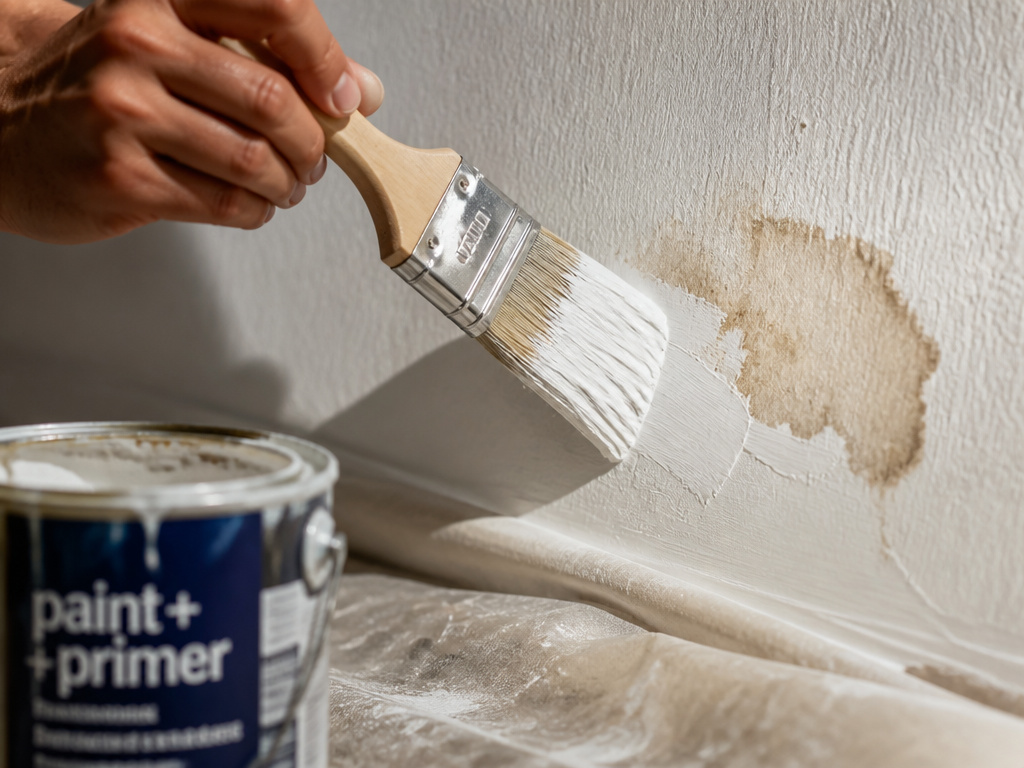
That’s the whole case against combo products on problem surfaces. Paint-and-primer is thicker paint. On a sound, previously painted wall it does fine, and I still use it there. Over a stain, a knot, or bare wood, there’s no blocking primer in the can to do the job.
Where Paint-and-Primer Actually Works
The product earns its place on a wall that’s already coated and already sound. It saves a coat and a trip to the store. It does not rescue a surface with a problem underneath, and the water ring is the cheapest way to learn that.
UC ANR’s guidance on wood is blunt about prep. The surface has to be free of dirt, oil, and other foreign matter before anything goes on. Bare exposed wood degrades enough within four to six weeks to dramatically reduce finish adhesion, so the window for painting new wood is short.
The system UC ANR describes is a water repellent, then a primer, then two topcoats, at a total dry film thickness of four to six mils. Applied that way, quality paint can last up to ten years, at least two to three times a typical two-coat job.
Before you start: Set the ladder on a hard, level surface, not on a drop cloth.
When you’re picking the topcoat, the best interior paint shortlist matters less than the primer underneath it.
What Freezing Does to a Can of Latex Paint
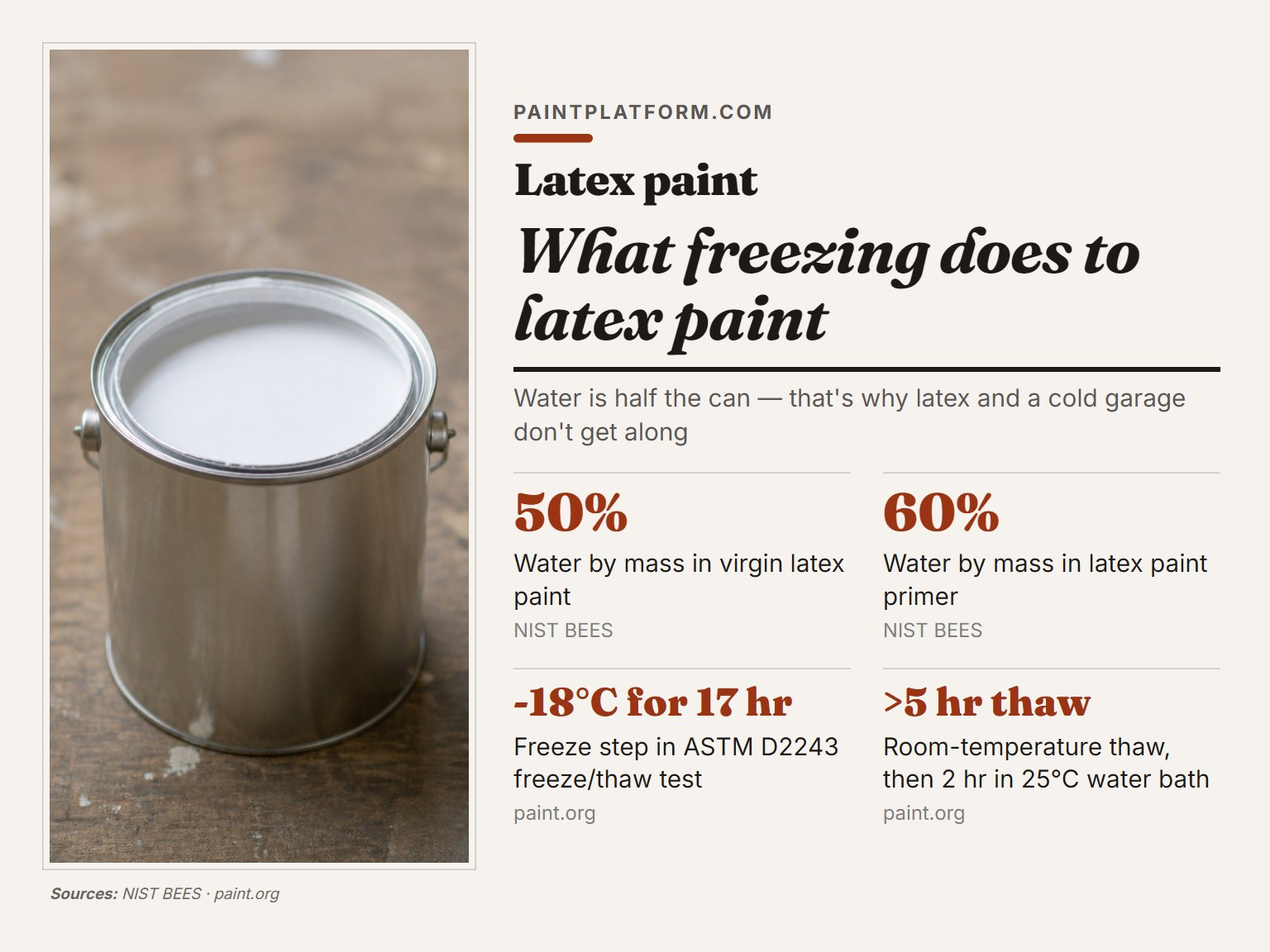
Water is half the can. That’s the whole reason latex and a cold garage don’t get along.
NIST’s BEES model puts virgin latex paint at 50 percent water by mass, alongside 25 percent resin, 12.5 percent titanium dioxide, and 12.5 percent limestone. The primer version runs 60 percent water. Freeze that and the binder has to survive ice forming around it.
The industry tests it with ASTM D2243. A half pint sits at -18 C for 17 hours, thaws for more than five hours at room temperature, then spends two hours in a 25 C water bath. That’s one cycle. Viscosity gets checked before and after with a Brookfield viscometer using a #3 spindle at 60 RPM, plus Stormer viscosity per ASTM D562 and ICI viscosity per ASTM D4287.
Benjamin Moore lists freezing as a latex disadvantage outright. The practical version: don’t store leftover latex in an unheated garage or a shed that dips below freezing.
Worth knowing before you start:
Which Latex Paint Should You Actually Buy?
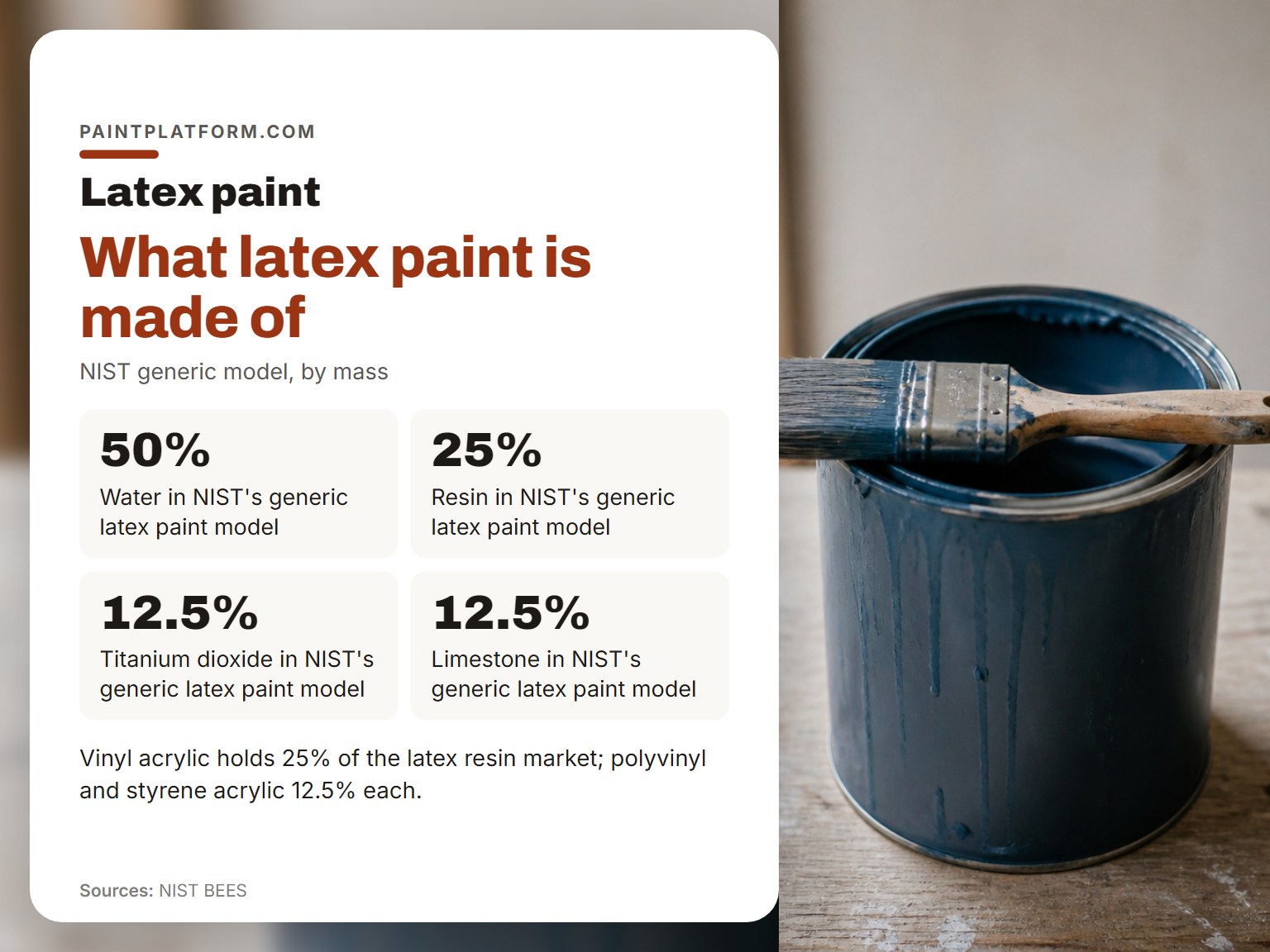
Paint is a system, and the variables that matter are the binder and the solids, not the name on the lid. NIST’s generic model is a useful baseline: 25 percent resin, 12.5 percent titanium dioxide, 12.5 percent limestone, and 50 percent water by mass. Vinyl acrylic holds 25 percent of the latex resin market, with polyvinyl acrylic and styrene acrylic at 12.5 percent each.
High gloss belongs on a door or a cabinet you’ve prepped properly, not on a wall that will advertise your sanding.
The acrylic vs latex distinction is worth understanding before you shop, because the two words get used interchangeably on labels and they don’t mean the same thing.
Four steps before you commit a whole wall:
1. 2.
- Judge it after it cures, not after it dries. The film keeps changing for weeks, and the color you approve at hour four isn’t the color you’ll live with. 4.
Frequently Asked Questions
Is latex paint better than oil-based paint?
For walls and ceilings, yes, for most people. Latex dries in 2 to 4 hours instead of 4 to 8, cleans up with water, and holds color and gloss better. Oil still wins on surface hardness and abrasion resistance. On severely weathered exterior wood, oil-modified latex beat straight alkyd across 11 years of exposure.
How soon can I put furniture against a latex-painted wall?
Dry is not cured. Latex dries in 2 to 4 hours but cures over 30 days, and a film that’s still curing marks easily under pressure. Give it more time than the dry time suggests, and longer if the room stays humid.
Does latex paint need a primer?
On bare wood, yes. UC ANR’s system is a water repellent, then a primer, then two topcoats at four to six mils total. On a sound, previously painted wall, a paint-and-primer product handles it. Over a stain or a knot, use a real blocking primer, because combo paint won’t stop a bleed.
Can latex paint go over oil-based paint?
Only after the surface is clean and dull. UC ANR is explicit that the surface must be free of dirt, oil, and other foreign matter before any coating goes on, and a glossy alkyd film is exactly that kind of foreign layer until you scuff it.
Why does my latex paint show lap marks?
Open time. ASTM D7488 measures how long a latex film stays workable, and some low- and zero-VOC commercial paints tested at 0 to 2 minutes. Once the edge closes, brushing back into it drags the film and leaves a ridge.
Can you use latex paint outside?
Yes, with the right product. Straight latex on severely weathered wood behaves like a stain rather than a paint, per the USDA’s 11-year study. An oil-modified latex or a finish formulated for exterior exposure is the better bet.
The Bottom Line
The one number that should decide most of this is 30 days. Latex cures for a month, and nearly everything that goes wrong in that first month, from the shelf mark to the scrubbed crayon, traces back to a film that isn’t hard yet.
The one surface that should change your mind is bare, grey, checked exterior wood. Straight latex is the wrong finish there. The USDA data shows oil-modified latex holding up while straight latex acted like a stain, and no amount of careful brushing fixes a chemistry mismatch.
All of the above assumes a sound, clean, previously painted surface. If the old coating is chalky, peeling, or of unknown origin, prep matters more than the paint choice, and the four-to-six-mil system UC ANR describes is the target to hit.
So do this: buy a quart of one line, paint a two-foot square on the wall you actually care about, and write the date on the lid. That square will teach you more about latex paint pros and cons than any spec sheet will.
