
10 Best Brushes For Latex Paint in 2026
This post contains affiliate links. As an Amazon Associate, we earn from qualifying purchases.
For a smooth, professional-looking finish with water-based paints, the Purdy Nylox Sprig Paint Brush is our best overall pick, thanks to its soft nylon bristles designed specifically for latex. For precise cut-in work, the Wooster Tip Angle Sash Paintbrush excels, while the Pro Grade Angle Paint Brush 12 Pack offers unbeatable value for multi-room projects.
The challenge with latex paint is that its thinner consistency can highlight every brush stroke and bristle mark. A brush that works well with oil-based paints may not perform the same way with latex, making the right filament material and brush shape critical.
This guide is based on a thorough analysis of manufacturer specifications, expert recommendations, and patterns found in owner feedback. We’ve broken down the key features to help you choose the right brush for your specific project, whether that’s cutting in a ceiling or painting a smooth piece of trim.
Top 10 Brushes For Latex Paint in the Market

Certain content that appears on this site comes from Amazon. This content is provided "as is" and is subject to change or removal at any time.
The Best Brushes For Latex Paint, Reviewed
Purdy Nylox Sprig Paint Brush

What We Like
- Soft nylon bristles for ultra-smooth finish
- Designed specifically for latex paints and primers
- Natural hardwood handle with beaver-tail shape
Trade-offs
- 3-inch width limits tight corner and sash work
- Soft bristles less suited for heavy-bodied paints
A 3-inch beaver-tail handle and soft 100% nylon filaments make this brush a natural fit for anyone laying down latex paint on interior doors, windows, and trim.
The trade-off is that the 3-inch width and soft nylon bristles are not ideal for tight sash corners or heavy-bodied coatings. If most of your work is detailed window mullions, the Wooster Tip Angle Sash Paintbrush offers a narrower 2-inch profile that fits tighter spaces. But for broad trim and door panels, the Purdy Nylox Sprig delivers a clean result.
Wooster Tip Angle Sash Paintbrush

What We Like
- Soft polyester filaments reduce brush marks
- Angled sash design for precise cutting-in
- Works with latex and oil-based paints
- Corrosion-resistant stainless steel ferrule
Trade-offs
- 2-inch width is narrow for broad wall sections
- Polyester bristles lack the stiffness some prefer for heavy-bodied paints
A 2-inch angled sash brush with 100% CT polyester bristles is built for control, not speed. The soft filaments are designed to deliver smooth, even coverage with minimal brush marks, which is useful when cutting in along edges, corners, trim, and detailed surfaces. The stainless steel ferrule resists corrosion after washing, and the hardwood handle provides a comfortable grip. For detail work that requires a refined finish, this brush offers the precision needed for accurate paint application.
At 2 inches wide, this brush is nimble around window sash and baseboards, but it will slow you down on open wall sections compared to a wider brush like the Wooster Gold Edge Wall & Trim Paintbrush at 3 inches. If your project is mostly large flat areas, a broader brush makes more sense. But when the job is about clean lines and a refined finish on trim and edges, this Wooster Tip is the better tool for the task.
Product photos
Pro Grade Angle Paint Brush 12 Pack

What We Like
- 12 brushes for multi-project value
- Thick synthetic blend holds more paint
- Thinner tip for better cut-in precision
- Wooden comfort grip for easier handling
Trade-offs
- 2.5-inch width is wide for very tight corners or small trim
- No natural bristles for shellac or varnish work
Twelve brushes in one pack means you can keep cutting in without stopping to rinse between colors or rooms. The 2.5-inch angle shape with a thinner tip gives you the precision needed for clean lines along trim and ceilings, while the thick synthetic filament blend holds enough paint to reduce dipping and streaking. That combination makes this set a practical choice for anyone tackling multiple coats or whole-house projects where efficiency and consistency matter more than a single ultra-premium brush.
The medium-stiff synthetic blend bristles are durable and easy to clean, but they are not as soft as some other brushes designed for delicate finishes. At 2.5 inches wide, this brush works well for walls and baseboards but may feel less maneuverable in very tight spaces like narrow window mullions. For painters who need a single brush for fine detail work, a narrower or softer brush might be a better fit, but for large-scale cut-in projects, this twelve-pack offers good value.
Corona Excalibur Chinex Professional Brush

What We Like
- DuPont Chinex filaments maximize paint release
- Soft-flagged edge for smooth, even coverage
- Stainless steel ferrule resists rust
- Unfinished hardwood handle for comfortable grip
Trade-offs
- 2-inch width slower for large wall areas
The 100% DuPont Chinex tapered synthetic filament is the key reason this brush handles heavy latex paints so well. That material releases thick paint cleanly, so you don’t fight drag or leave uneven streaks on the surface. The hand-formed, soft-flagged edge guarantees smooth, even, fast coverage, which is useful when you’re working with heavy water-based paints, acrylics, and alkyd-modified latex coatings and primers. This brush is designed for painters who regularly tackle those tough coatings.
Its 2-inch width makes it nimble for trim and sash work but slower on broad wall sections compared to a 3-inch brush like the Purdy Nylox Sprig. You’ll move faster on large surfaces with that wider option, but for precision around windows and doors, the Excalibur’s narrower head gives you more control. The unfinished hardwood handle is comfortable to grip but lacks a sealed finish, so it may darken or swell if left soaking in water. Clean and dry it promptly to keep it in good shape.
Product photos
Wooster Gold Edge Wall & Trim Paintbrush

What We Like
- Angle sash design for precise cutting in
- Stainless steel ferrule resists rust
- Comfortable wood handle for balanced grip
- Works with latex, acrylic, and oil paints
Trade-offs
- Wood handle requires drying care to avoid cracking
- 3-inch width is too wide for tight sash corners
The stainless steel ferrule means this brush won’t rust or loosen after repeated cleaning, so it keeps its shape wash after wash. That durability pairs with the angled sash design to give you the control needed for crisp lines along trim, windows, and corners without taping everything off. If you spend most of your painting time cutting in rather than rolling large walls, this brush is built for that exact job.
The 3-inch width covers trim quickly, so it’s a good match for long, straight runs on baseboards or door frames. Compared to the Purdy Nylox Sprig, which also comes in a 3-inch size but uses a beaver tail handle, the Wooster’s wood handle shifts the balance point. Some reviewers find that more comfortable during extended cutting-in sessions. This brush is built to hold up through many cleanings, thanks to a stainless steel ferrule that resists rust.
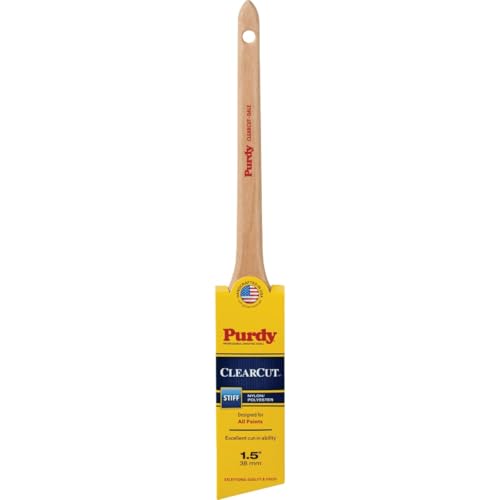
Purdy Clearcut Dale Angular Trim Brush
What We Like
- Stiff Tynex nylon and Orel polyester filaments
- Handcrafted in the USA with global materials
- Stainless steel ferrule and alderwood handle
- Designed for well-defined lines and cut-in
Trade-offs
- Stiff blend less suited for oil-based paints
At just 0.1 pounds with a slim 1-1/2-inch head, this brush is built for control where every millimeter matters. The stiff Tynex nylon and Orel polyester blend holds its shape against latex paint, so you can trace a crisp line along baseboard or window casing without the bristles splaying. That combination of light weight and firm filament is exactly what makes it a natural fit for precision trim work, think door frames, crown molding, and the tight corner where the wall meets the ceiling.
That narrow head means you are trading coverage for accuracy. For broad wall sections, a wider brush like the Wooster Gold Edge 3-inch will cover more ground per stroke. But when the job demands a clean edge and you are willing to take a few extra passes, the Clearcut Dale delivers the kind of sharp detail that makes a painted room look finished by a pro.
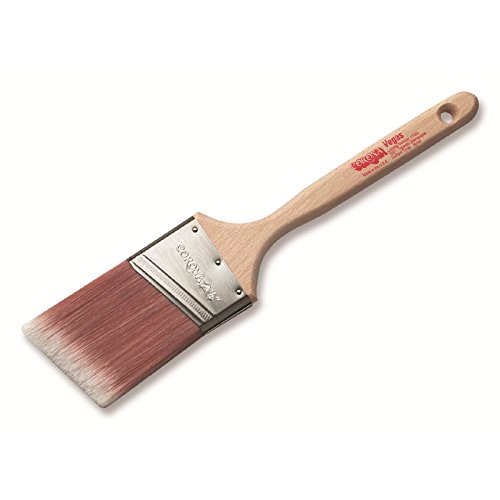
Corona Champagne Nylon Vegas Brush
What We Like
- Softest 100% nylon bristles for smooth finish
- Fine flagg tips improve paint pick-up
- Superior flex and working action
- Carefully spaced rows enhance release
Trade-offs
- 2.5-inch width limits large wall coverage
- Not suitable for oil-based paints
The softest 100% nylon bristles on this 2.5-inch brush deliver an exceptionally smooth finish with water-based paints, stains, and varnish. Fine flagg tips boost paint pick-up and release, while the superior flex lets you work into corners and trim without leaving brush marks. It suits anyone who prioritizes a glass-like surface over raw speed, especially on cabinets, doors, or furniture where every stroke shows.
The same softness that gives you that silky finish won’t cut through rough surfaces or heavy-bodied paints the way a stiffer brush can. If your project demands a flawless look on smooth trim, this brush earns its spot in your kit.
Product photos
Vermeer Angled Paint Brush Set

What We Like
- Zero bristle loss adhesive bonding
- Includes 2-inch angle stubby for tight spaces
- Covers all common trim and edge sizes
- Works with latex, oil, and specialty paints
Trade-offs
- Set lacks a wider flat brush for large wall sections
- No flat brush included for broad wall coverage
Five dedicated angled brushes from 1 to 2.5 inches mean you always have the right tool for cutting in around ceilings, baseboards, and crown molding without switching to a flat brush. The stubby 2-inch handle reaches inside cabinets and window sashes where a full-length brush won’t fit, and the zero-bristle-loss adhesive bonding keeps filaments locked in place even with thick latex paint. This set suits painters who value precision edge work and want a complete angle collection rather than mixing flat and angled brushes from different sets.
The set’s medium-stiff synthetic bristles hold latex paint well and release clean lines, which suits precision work on trim and cabinets. The softwood handles are comfortable for extended use, as noted in the product description. For painters who want a complete angle collection rather than mixing flat and angled brushes, this set covers every common trim size with five dedicated brushes, including a 2-inch stubby for tight spaces.
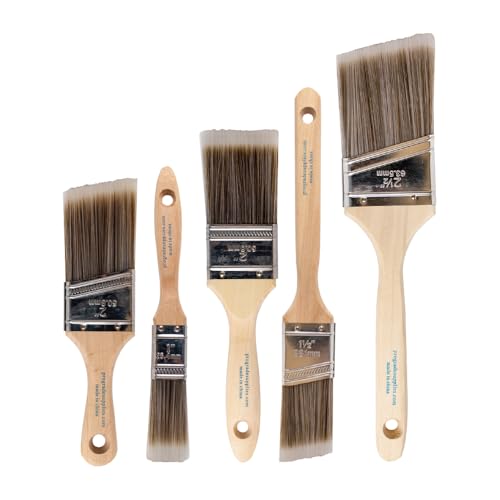
Pro Grade Paint Brush Set 5-Piece
What We Like
- Includes 2" angle stubby for tight spots
- Works with latex, oil, primer, stain
- Five sizes cover walls to trim
Trade-offs
- No angled flat brush for broad cutting-in
The set covers every common painting task. The 2.5-inch angled sash handles baseboards and crown molding, the 2-inch angle stubby slips into cabinet interiors and window sashes where longer brushes are clumsy, and the 1- and 2-inch flats lay down smooth coats on walls and furniture. For DIY homeowners and contractors who burn through brushes on every job, this is a practical way to keep fresh tools on hand without overspending.
The softwood handles are lighter and affordable, but they lack the moisture resistance of hardwood handles found on some other brushes. If you leave brushes soaking in water, the softwood may swell or splinter over time. For weekend projects and turnover crews who wash brushes promptly, the savings outweigh the difference. The Pro Grade set gives you the right brush for every stroke at a price that makes replacing them painless.
Product photos
PinStone Smooth Finish Paint Brushes 3-Pack
What We Like
- Short rubber handle for tight spaces
- Shed-free synthetic bristles for smooth finish
- Angled tip for clean edge lines
- Works with latex, oil, and stains
Trade-offs
- Short handle limits reach on large walls
- 2-inch width slower for broad surfaces
At just 6.5 inches long with a rubber short grip, this brush puts your hand close to the work, giving you precise control in tight spots like window sashes, cabinet corners, and trim edges. The synthetic bristles are shed-free and hold paint well, so you can cut in crisp lines without fighting stray hairs or brush streaks. It’s a natural fit for detail work and touch-ups where a full-size handle would feel clumsy or cramped.
Because of its short handle, this brush is less suited for large wall sections where a longer handle would provide more reach. At 2 inches wide, it is designed for trim work rather than broad surfaces. For projects that involve both walls and trim, a brush with a longer handle, such as the Purdy Nylox Sprig (3-inch) or the Wooster Tip Angle Sash (2-inch), may offer more versatility. The PinStone pack includes three brushes, which is convenient for multiple touch-up tasks.
Product photos
How We Evaluated Brushes For Latex Paint
Our evaluation focused on the specific demands of latex paint, which requires a brush that can hold a decent load, release it evenly, and lay down a smooth, mark-free film. We relied on manufacturer data about filament types (nylon, polyester, Chinex), ferrule materials, and handle ergonomics, combined with patterns identified in expert round-ups and extensive user reviews.
The three most critical criteria were filament composition, bristle tip design, and brush shape. Nylon and polyester filaments are engineered to work with water-based paints without absorbing water and swelling like natural bristles. Flagged or tapered tips are essential for a smooth finish, as they help minimize visible brush marks. The shape, whether angled for cutting in or straight for broad strokes, determines the brush’s best application.
A key limitation of this research-led approach is that we cannot replicate the feel of a brush in your hand or the way it behaves with a specific brand of paint. We prioritize features and materials that consistently receive positive feedback for their intended use, helping you narrow down the field before you make a purchase.
What To Look For In Brushes For Latex Paint
Choosing the right brush for latex paint comes down to a few key features that directly affect your finish and efficiency.
Look for synthetic filaments (nylon, polyester, or Chinex), flagged tips for a smooth finish, and a comfortable handle. An angled sash brush is best for cutting in, while a straight brush is better for large, flat surfaces.
Filament Material: Nylon, Polyester, or Chinex
Natural bristles absorb water from latex paint, causing them to swell and lose their stiffness, which leads to poor performance and a rough finish. Synthetic filaments are the only choice for latex. Nylon filaments, like those in the Purdy Nylox Sprig, are very soft and flexible, providing an ultra-smooth finish with minimal brush marks.
Polyester filaments, found in the Wooster Tip Angle, are slightly stiffer and offer good paint release. Chinex filaments, used in the Corona Excalibur, are a premium synthetic designed for maximum paint release and durability, making them ideal for thicker latex paints.
Bristle Tip Design: Flagged vs. Tapered
The tip of each bristle is crucial for a smooth finish. Flagged tips are split at the end, like a tiny brush, which helps them hold more paint and release it evenly. Tapered tips are thinner at the end, allowing for a finer edge and more precise lines. Brushes that combine both features offer the best of both worlds: good paint capacity and a smooth, mark-free laydown. Look for a brush that specifies “soft-flagged” or “fine flagg tips” for the smoothest results.
Brush Shape and Size: Angle vs. Straight
The shape of the brush dictates its primary purpose. An angled sash brush, with its chiseled edge, is designed for cutting in around trim, windows, and ceilings. The angle allows for more control and precision. A straight-edged brush is better for painting large, flat surfaces like walls and doors. The width also matters: a 2-inch brush is excellent for trim and tight spaces, while a 3-inch brush covers more area on walls. Choose your shape and width based on the specific task.
- For cutting in, choose an angled brush between 1.5 and 2.5 inches wide.
- For large walls, a 3- to 4-inch straight brush is more efficient.
- For trim and cabinets, a 2-inch angled brush offers the most control.
- For thick or heavy-bodied latex paints, look for stiffer filaments like Chinex.
- For a glass-smooth finish on furniture, choose a brush with the softest flagged nylon bristles.
A good rule of thumb is to match your brush’s filament and shape to the paint’s consistency and the surface you are painting.
Brushes For Latex Paint Compared
The table below compares the top 10 brushes for latex paint, highlighting their key strengths and best use cases so you can find the right tool for your project.
| Product | Bristle Material | Brush Width | Handle Material |
|---|---|---|---|
| Purdy Nylox Sprig Paint Brush | 100% nylon filaments | 3 inches | Natural hardwood (alderwood) |
| Wooster Tip Angle Sash Paintbrush | 100% CT polyester | 2 inches | Hardwood |
| Pro Grade Angle Paint Brush 12 Pack | Medium stiff synthetic blend | 2.5 inches | Durable wooden comfort grip |
| Corona Excalibur Chinex Professional Brush | DuPont Chinex tapered synthetic | 2 inches | Unfinished hardwood sash |
| Wooster Gold Edge Wall & Trim Paintbrush | Premium synthetic filament blend | 3 inch | Wood |
| Purdy Clearcut Dale Angular Trim Brush | Tynex nylon & Orel polyester | 1-1/2 inch | Alderwood |
| Corona Champagne Nylon Vegas Brush | 100% nylon | 2.5 in | N/A |
| Vermeer Angled Paint Brush Set | Medium stiff synthetic | 1, 1.5, 2, 2 stubby, 2.5 inch | Softwood |
| Pro Grade Paint Brush Set 5-Piece | Synthetic (SRT filaments) | 1" flat, 1.5" angle, 2" flat, 2" angle stubby, 2.5" angle | Softwood |
| PinStone Smooth Finish Paint Brushes 3-Pack | Synthetic filaments | 2-inch angled | Rubber short handle |
Frequently Asked Questions
What kind of brush is best for latex paint?
A brush with synthetic filaments, such as nylon, polyester, or Chinex, is best for latex paint. Natural bristles absorb water and swell, leading to a poor finish. Look for flagged or tapered tips for a smooth, even application with minimal brush marks.
Can I use a natural bristle brush with latex paint?
You should not use a natural bristle brush with latex paint. The water in the paint causes the bristles to swell and become limp, making them difficult to control and resulting in visible brush strokes and a rough texture. Always use a synthetic brush for water-based paints.
What size brush should I use for cutting in with latex paint?
For cutting in around trim, ceilings, and corners, a 2-inch to 2.5-inch angled sash brush is the most common and versatile choice. A 1.5-inch brush offers more control for very tight spaces, while a 3-inch brush can be used for faster work on longer runs of trim.
How do I clean latex paint from my brushes?
Clean latex paint from synthetic brushes with warm, soapy water immediately after use. Rinse thoroughly until the water runs clear, then gently reshape the bristles. For dried paint, a brush comb or a soak in a brush cleaner can help restore them. Always dry brushes flat or hanging bristle-down.
Why are there brush marks in my latex paint?
Brush marks in latex paint are often caused by using the wrong type of brush, applying paint too thickly, or not using a brush with properly flagged tips. A high-quality synthetic brush with soft, flagged filaments will lay down a much smoother finish. Using a paint conditioner can also help level the paint.
The Bottom Line
For most painters, the Purdy Nylox Sprig Paint Brush is the best choice, offering a perfect balance of softness and control for a flawless finish on trim, doors, and cabinets. Its nylon filaments are purpose-built for latex, making it a reliable tool for both DIYers and professionals.
If your primary need is precise cut-in work, the Wooster Tip Angle Sash Paintbrush is a top-tier option for detail work. For those on a budget or with multiple rooms to paint, the Pro Grade Angle Paint Brush 12 Pack provides excellent value without sacrificing performance.
The single most important factor when buying a brush for latex paint is choosing a high-quality synthetic filament. It is the only material that will give you the smooth, professional-looking finish you want from a water-based paint.
