
Acrylic vs Latex Paint for Walls: Which Should You Buy?
This post contains affiliate links. As an Amazon Associate, we earn from qualifying purchases.
Acrylic vs latex paint for walls is a binder-chemistry question: “latex” wall paint is a vinyl-acrylic, PVA, or acrylic emulsion, while 100% acrylic uses an all-acrylic resin. For low-moisture interior drywall, quality latex is the practical pick. For bathrooms, kitchens, and exteriors, 100% acrylic wins.
The label on the can is where the confusion starts. “Latex” has been the trade word for water-based wall paint for decades, even though the rubber-latex part disappeared long ago. What’s actually inside is a polymer emulsion, and the specific polymer decides how the film handles moisture, sunlight, and scrubbing.
What follows: how the three main binder types differ, which one belongs in each room, and where the standards bodies and the contractor forums actually disagree about what’s worth paying for.
Key Takeaways
- “Latex” is a misnomer. Most water-based wall paint is a vinyl-acrylic, PVA, or acrylic emulsion, not rubber latex.
- 100% acrylic wins in wet rooms. Bathrooms, kitchens, and exteriors need the denser, more flexible film.
- Quality latex is fine on drywall. Low-moisture interior walls over primed gypsum don’t need the upgrade.
- Prep beats binder type. Contractor forums argue primer and surface prep matter more than the label on the front.
- “Zero-VOC” isn’t zero after tinting. Point-of-sale colorant adds VOCs the base didn’t have.
What “Latex” Actually Means on a Paint Can
The word latex on a paint can describes a manufacturing method, not a rubber ingredient. Modern water-based wall paint is a polymer emulsion: a resin dispersed in water, plus pigment, fillers, and additives. The resin is the part that matters.
Water-based wall paints are polymer emulsions. The binder is either an all-acrylic resin, a vinyl-acrylic copolymer, or a polyvinyl acetate dispersion. Each dries to a continuous film, and the film’s hardness, flexibility, and resistance to alkali and ultraviolet light are set by the binder chemistry rather than by the pigment load.
Three binder families show up on retail shelves. 100% acrylic uses an all-acrylic resin, which OEM data sheets from Dow, BASF, and Arkema describe as a methyl methacrylate and butyl acrylate copolymer. Vinyl-acrylic blends acrylic with vinyl acetate, which is cheaper and less resistant to alkali and UV light. PVA is polyvinyl acetate, the budget end of the range, and it carries more fillers.
Both acrylic and latex are water-based when wet, so cleanup is soap and water either way. The difference shows up after the film cures. The latex paint pros and cons shift depending on which binder the can actually contains.
Fresh latex on carpet comes up quickly if you blot instead of wipe. I learned that by buffing a quarter-sized blob into a dinner-plate smear on a beige rug. Press a damp rag down, lift, move to a clean spot, repeat.
The oil paint vs acrylic paint for walls decision runs on the same film-chemistry logic, which is why both water-based binders clean up so easily.
A few things to check before you buy:
- The binder line on the technical data sheet, usually listed under “vehicle” or “resin”
- Whether the can says 100% acrylic or just “acrylic”
- The scrub-resistance figure, if the sheet lists one
- The VOC number, and whether it was measured to ASTM D3960
Which Binder Wins for Interior Drywall?
Which binder actually belongs on a bedroom wall? For most low-moisture interior drywall over properly primed gypsum, a vinyl-acrylic or PVA latex is the practical choice.
Nova Color, an artist-paint manufacturer, puts it plainly: for most interior drywall in low-moisture rooms, properly primed and prepped quality latex is still the practical choice. The Master Painters Institute goes further and treats vinyl-acrylic and PVA as acceptable for low-traffic drywall where cost and touch-up dominate.
Contractor forums push back on the whole framing. The recurring argument there is that prep and primer matter more than the binder label, and that a premium vinyl-acrylic can outperform a cheap can that says 100% acrylic on the front.
Before you start: Store water-based paint above roughly 40°F, because a frozen can is permanently damaged at the film level. Tinted “zero-VOC” paint can still release VOCs from the colorant, so ventilate the room for the first day.
The Low-Traffic Case for Vinyl-Acrylic
Vinyl-acrylic earns its place in bedrooms, hallways, and ceilings. It levels out nicely, covers well, and touches up easily, which is why Nova Color calls good latex the practical choice for everyday touch-ups.
Owners on r/paint report the opposite for high-sheen acrylics, where touch-ups show as flashing under raking light. The disagreement comes down to sheen. Touch-up results depend on sheen: owners report high-sheen acrylics show flashing, while lower-sheen finishes hide touch-ups better.
Where 100% Acrylic Pays Off
100% acrylic earns its price in rooms that see moisture or scrubbing. Nova Color states that in bathrooms, kitchens, and areas with temperature swings or moisture, 100% acrylic architectural paint usually outperforms standard latex.
The Master Painters Institute’s scrub test, run to ASTM D2486, typically shows 100% acrylic scoring higher cycles than vinyl-acrylic. A technical data sheet that lists a scrub count is a better signal than the front label. The best interior latex paint for walls is usually a mid-range line, not the top shelf.
| Binder | Best For | Known Weakness |
|---|---|---|
| 100% acrylic | Bathrooms, kitchens, exteriors, masonry | Costs more than vinyl-acrylic |
| Vinyl-acrylic | Low-traffic interior drywall | Less alkali and UV resistance |
| PVA | Budget interior walls, low moisture | Softest film, most fillers |
Why Bathrooms and Kitchens Need 100% Acrylic
ASTM D3273 is the mold-resistance test method printed on the back of high-moisture interior paints. It’s the number to look for if the room has a shower in it.
A 100% acrylic film is denser and more flexible than a vinyl-acrylic one, per Nova Color, and it stands up better to moisture and to the expansion and contraction a wall goes through. The softer vinyl-acrylic film stays slightly tacky, which is less ideal for surfaces that flex or face moisture.
Run a fingernail across a cured vinyl-acrylic and it gives slightly. A 100% acrylic film feels harder and slicker.
Easy to miss: The bathroom ceiling needs the same acrylic upgrade as the walls. Steam collects there first, and a soft vinyl-acrylic film gives mildew a place to start.
Upgrade to acrylic when any of these apply:
- The room has a shower, a stove hood, or a washer
- The existing paint chalks when you rub it with a thumb
- You’re coating exterior masonry, stucco, or a garden wall
- The wall has shown mildew staining before
- The color change is dramatic enough to need a tinted primer
Acrylic vs Latex Paint for Walls: Exterior and Masonry
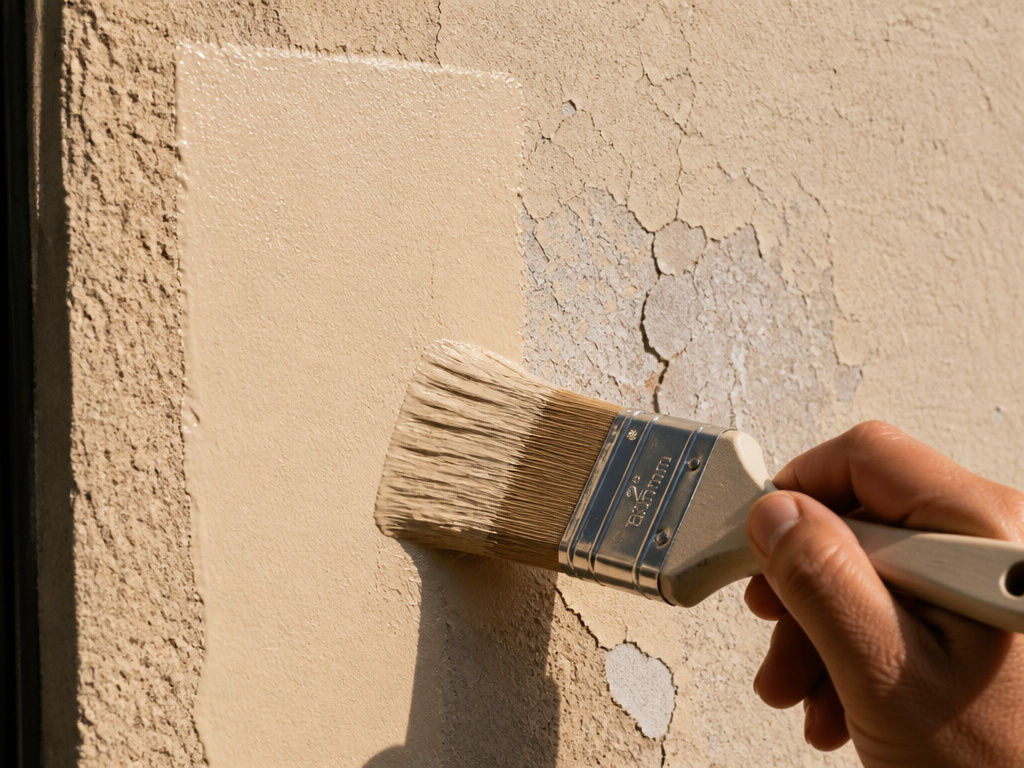
A south-facing stucco wall in August takes sun, rain, and freeze-thaw in the same year. That combination is where the binder argument actually matters.
The Master Painters Institute specifies 100% acrylic for exterior masonry and stucco under MPI #119, and the Paint Quality Institute makes the same case: acrylic films hold flexibility and UV resistance better than vinyl-acrylic. The Portland Cement Association adds alkali resistance to the list.
Contractor forums disagree. A recurring argument there is that a vinyl-acrylic exterior paint performs comparably to 100% acrylic at lower cost, and that the premium is not always earned on a repaint over sound, aged masonry. Both positions have real backing. The disagreement is about how much the extra UV and alkali package is worth on your specific wall.
Where this goes sideways: Applying vinyl-acrylic over fresh masonry. The alkali in the substrate attacks the film, and the paint chalks or peels within a season.
The other exterior failure is mud-cracking over chalky or unprimed masonry, which the MPI surface-prep standards address directly. Skipping the primer is the usual cause.
Nova Color states that its acrylic paint is suitable for exteriors as mural paint once the location is chosen and the surface prepared. That’s a different claim from architectural paint. No standards source endorses artist acrylic as a wall coating, because artist acrylic carries a higher pigment load and different rheology, and it lacks the exterior additive package.
If you’re weighing a solvent-borne coating instead, the water-based vs oil-based paint comparison is a separate decision with its own trade-offs.
Does “Zero-VOC” Actually Mean Zero VOCs?
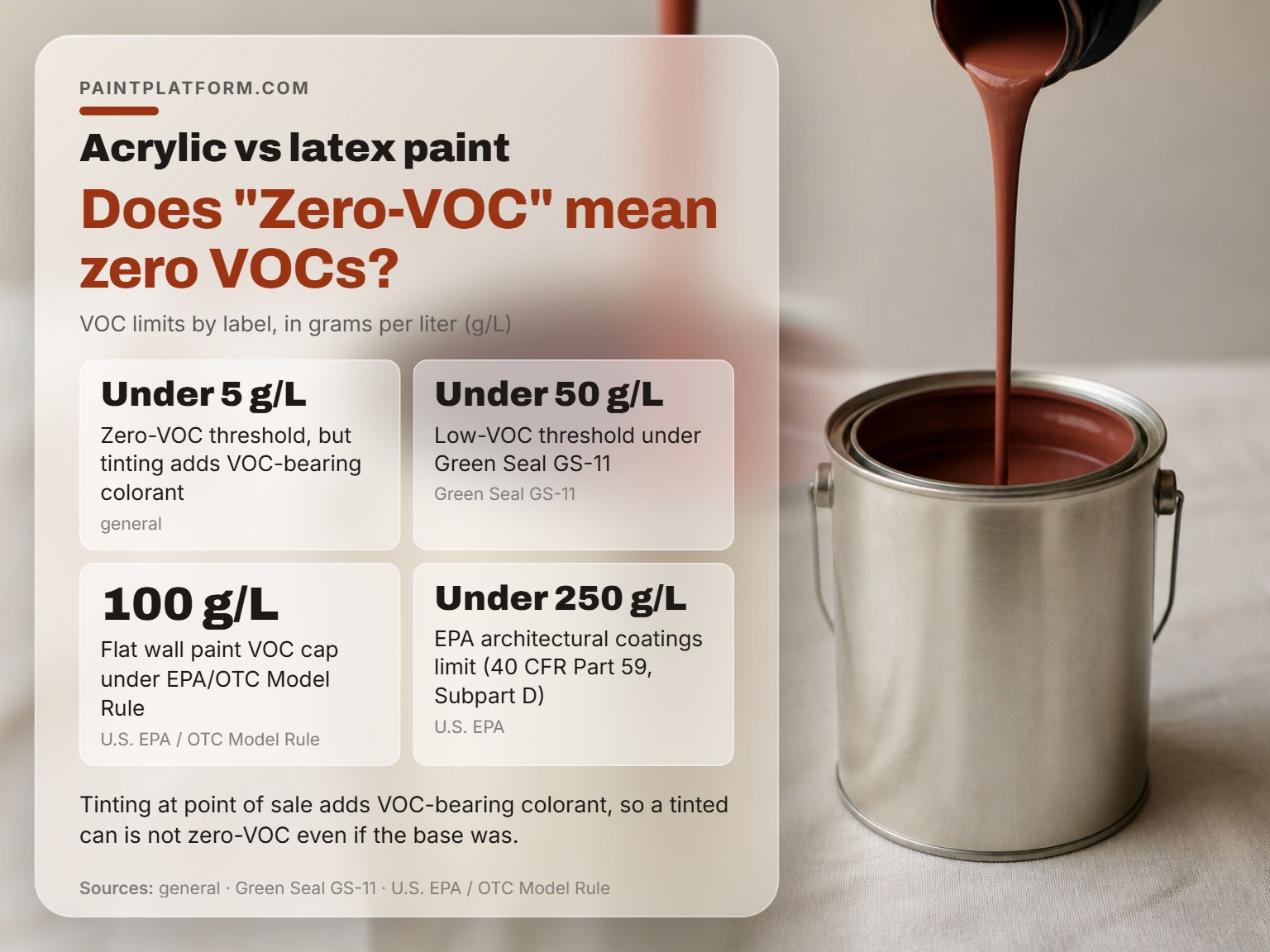
No. “Zero-VOC” is defined as under 5 g/L, and the EPA’s own rule preamble notes that tinting at the point of sale adds VOC-bearing colorant. The tinted can is not zero-VOC, even when the base was.
The numbers stack up like this:
| Label | VOC Limit | Set By |
|---|---|---|
| EPA architectural limit | Under 250 g/L | 40 CFR Part 59, Subpart D |
| Flat wall cap | 100 g/L | EPA / OTC Model Rule |
| Non-flat wall cap | 150 g/L | EPA / OTC Model Rule |
| Low-VOC | Under 50 g/L | Green Seal GS-11 |
| Zero-VOC | Under 5 g/L | EPA / Green Seal definitions |
Here’s where the labels get slippery. Green Seal GS-11 defines low-VOC as under 50 g/L, while the EPA architectural limit under 40 CFR Part 59, Subpart D is under 250 g/L. A product can be EPA-compliant and still fail a green-building spec by a wide margin.
Owners sensitive to off-gassing report odor and irritation from tinted zero-VOC paint, which lines up with the colorant explanation. Sheen matters here too. The interior paint types and sheens guide covers which finishes are scrubbable and which ones flash under light.
How to Choose: A Room-by-Room Decision Table
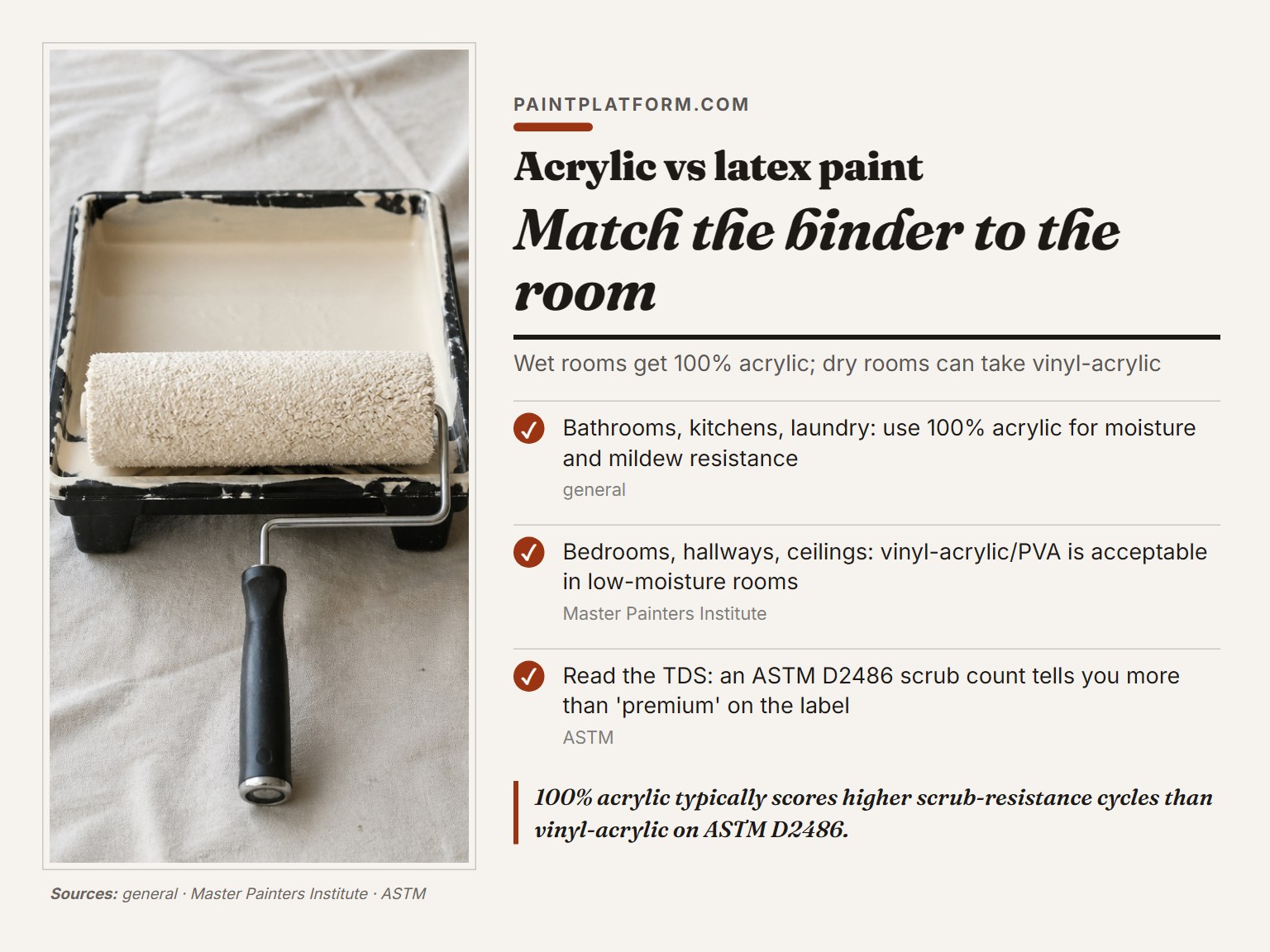
Three rooms, three answers. The binder question resolves faster when you match it to the room instead of the label.
- Match the binder to the room’s moisture. Bathrooms, kitchens, and laundry rooms get 100% acrylic. Bedrooms, hallways, and ceilings can take vinyl-acrylic. Skip this and a soft film in a wet room grows mildew along the grout line.
- Read the TDS, not the front label. A technical data sheet that lists an ASTM D2486 scrub count tells you more than the words “premium” or “pro.” A can with no scrub figure is usually a budget film.
- Prime for any big color change. My navy-to-cream repaint took several coats before I started tinting the primer. It took far fewer coats after.
- Buy a quart before you buy gallons. Paint a small sample square and look at it under the room’s real light. A color that looks right under store fluorescents can go muddy at night.
- Plan for two thin coats. The first coat looks even while wet and dries patchy. Skipping the second coat is the most common repaint regret I hear about.
Going from a dark navy to a pale cream took me several coats the first time I tried it. With a gray-tinted primer, the same wall needed far fewer coats. Now I ask the paint counter to tint the primer toward the topcoat color. Red walls under a pale topcoat were a different story, and the tinted primer saved me a lot of grumbling.
The best paint for walls shortlist is shorter than the aisle suggests.
Where the Pros Disagree With the Labels
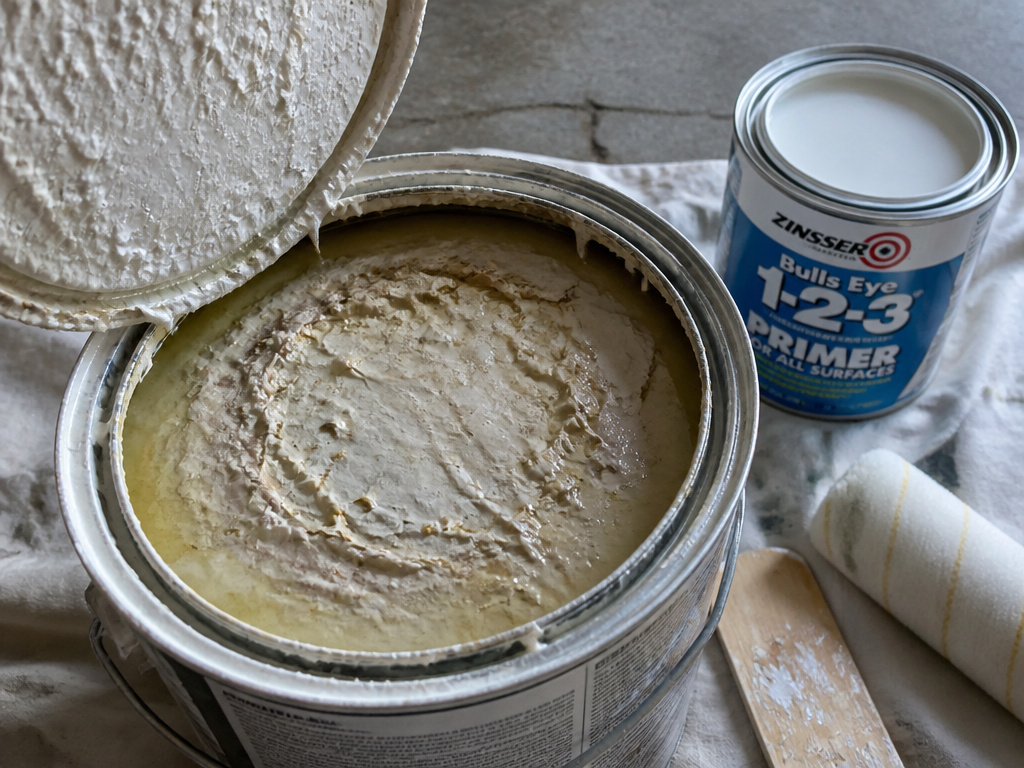
Contractor forums will tell you the binder label matters less than the primer underneath. They’re pointing at where the failure actually starts.
The OEM resin data sheets are clear that 100% acrylic means an all-acrylic copolymer, distinct from vinyl-acrylic or PVA. Owners on painting forums report that some retail lines labeled 100% acrylic behave like vinyl-acrylic, because the term is not tightly regulated at retail. Both things can be true: the chemistry is real, and the label is a weak guarantee.
The other marketing claim that gets pushback is paint-and-primer-in-one. Trade forums report it failing over dramatic color changes and bare drywall, which is why a separate primer is still the safer call on a stained or dark wall.
I’ve stopped buying the top-tier can for a normal bedroom. A mid-range line over a proper primer has held up better in my own hallway than the premium can I rolled without priming. Prep is where the money goes.
My own stance, and it’s a stance rather than a lab result: mid-priced interior paint is the sweet spot for a normal room. I reach for a mid-range interior paint depending on what the store has, and I put the saved money into primer and a roller. A paint aisle is like a kitchen supply store. You can cook well with salt, a pan, and one good knife.
The best brushes for acrylic latex paint matter more than the can tier, honestly.
I learned the film-thickness lesson with craft acrylic, not wall paint. A bottle that looked fine in the jar was thick enough to clog an airbrush until I thinned it. Wall paint is formulated for the roller, which is why you don’t thin it.
If a can has ever frozen solid, don’t shake it and hope. Water-based paint that freezes is damaged at the film level, and no amount of stirring brings it back.
A can that froze over winter opens with a skin of lumpy film and a sour, cheesy smell. That’s the freeze-thaw tell, and it’s the one thing no amount of stirring fixes.
Frequently Asked Questions
Is acrylic paint better than latex for walls?
It depends on the room. For low-moisture interior drywall over a primer, quality latex is the practical choice, and the Master Painters Institute treats vinyl-acrylic and PVA as acceptable for low-traffic walls. For bathrooms, kitchens, and exteriors, 100% acrylic holds up better to moisture, sunlight, and scrubbing.
Can I use acrylic paint over latex paint?
Yes, as long as the surface is clean and sound. Scuff-sand glossy walls, wipe the dust, and spot-prime any bare patches. The bigger risk is skipping the primer on a dramatic color change, which is where paint-and-primer-in-one products tend to fail.
Which is cheaper, acrylic or latex wall paint?
Vinyl-acrylic and PVA are cheaper to make than 100% acrylic, and that usually shows up on the shelf. The catch is that a cheap can over no primer can cost more in extra coats than a mid-range can over a primer.
Does 100% acrylic paint really resist mildew better?
The test method is ASTM D3273, and it’s the one to look for on a high-moisture interior product. A denser acrylic film resists moisture movement better than a softer vinyl-acrylic, which is why acrylic-modified and 100% acrylic products get specified for bathrooms and kitchens.
What does “zero-VOC” actually mean on a paint can?
It means under 5 g/L in the base. The EPA’s rule preamble notes that tinting at the point of sale adds VOC-bearing colorant, so a tinted can is not zero-VOC even when the base was. Ventilate the room for the first day regardless.
Do I need a primer if I buy paint-and-primer-in-one?
On a stained wall, bare drywall, or a dramatic color change, yes. Trade forums report these products failing over exactly those surfaces. On a clean, previously painted wall in a similar color, the built-in primer is usually enough.
The Bottom Line
One rule I’d tape to the shelf: if the room has a shower, a stove hood, or an exterior wall, buy the 100% acrylic. Everywhere else, a mid-range vinyl-acrylic over a real primer will hold up as well as the premium can you skipped the primer on. Contractors argue that, and my own hallway agrees with them.
This week’s ten-minute job is the quart test. Buy a sample of the color you think you want, paint a small square on the actual wall, and look at it that night under the room’s real light. Half the repaints I’ve regretted started with a color that looked perfect under store fluorescents.
The acrylic vs latex paint for walls question has a short answer for most rooms, and it’s usually the cheaper binder. The longer answer is that no binder saves a wall that wasn’t primed. Prep first, then pick the can.
