
Interior Paint Types Explained: Sheen Levels That Matter
This post contains affiliate links. As an Amazon Associate, we earn from qualifying purchases.
Interior paint types explained by the numbers on the spec sheet: flat sits at gloss 5 or lower at 60 degrees, eggshell runs 10 to 25, satin 20 to 35, semi-gloss 35 to 70, and gloss 70 to 85. Those MPI gloss levels decide how a wall hides flaws and how well it scrubs.
The Master Painters Institute scale is where those bands come from, and a gloss meter reads them at a fixed angle under ASTM D 523. Two cans can carry the same word on the label and land in different bands once you measure them.
What follows walks all seven levels, the eggshell number two standards disagree about, and the 50–95 °F window where even a good coat fails.
Key Takeaways
- Flat hides everything and scrubs nothing. Level 1 caps out at gloss 5 at 60 degrees, which is why a hallway in flat shows every handprint by spring.
- “Eggshell” is not a durability promise. MPI Level 3 and Level 2 velvet share the same 10-to-35 sheen band at 85 degrees, so the word tells you less than the number does.
- Oil-based paint is a minority of what gets sold and 70 to 98% of the indoor vapor emissions, according to the 2022 ACS study.
- Budget over half your time for prep. The City of Seattle guide puts prep above 50% of total job time, and that’s the part everyone cuts.
The Seven MPI Gloss Levels, Numbered
The Master Painters Institute assigns every interior finish a level from 1 to 7, and the University of Houston’s Section 099123 spec reproduces the whole table.
Gloss and sheen are measured per ASTM D 523 using a specular gloss meter at a fixed angle. A single paint therefore carries two numbers, and the angle matters as much as the value.
| MPI Level | Finish name | Gloss at 60 deg | Sheen at 85 deg |
|---|---|---|---|
| Level 1 | Flat | 5 or less | 10 or less |
| Level 2 | Velvet | 10 or less | 10 to 35 |
| Level 3 | Eggshell | 10 to 25 | 10 to 35 |
| Level 4 | Satin | 20 to 35 | 35 or more |
| Level 5 | Semi-gloss | 35 to 70 | not specified |
| Level 6 | Gloss | 70 to 85 | not specified |
Two things in the interior paint types explained table trip people up. Flat gets read at 85 degrees because a 60-degree reading on a matte surface lands too close to zero to tell you anything. Every level above flat gets read at 60.
Run a thumb across a flat wall and it drags, faintly chalky. Run the same thumb across semi-gloss and it slides. That difference is the whole reason the levels exist.
Flat and Velvet: The Bottom Two Bands
Level 1 caps gloss at 5 and sheen at 10. Flat hides surface imperfections better than anything else on the shelf, and it takes scrubbing worse than anything else too, per the City of Seattle’s painting guide.
Level 2 velvet sits just above it, capped at gloss 10 with sheen running 10 to 35. Velvet is where the naming gets slippery, and I’ll get to that in a minute.
Semi-Gloss Through High Gloss
Level 5 semi-gloss runs gloss 35 to 70. Level 6 gloss runs 70 to 85, and Level 7 high gloss goes above 85. The glossier the coat, the more the wall prep shows, because a reflective surface bounces light straight back at every ridge and pinhole.
Paint sheens that look matte in a showroom can flash under a window.
Why Does “Eggshell” Mean Two Different Things?
Two different numbers sit under the word eggshell in the same specification document. The MPI Level 3 table in the University of Houston master spec puts eggshell at gloss 10 to 25 at 60 degrees. The prose definitions in section 1.3.C.2 of that same document put it at 20 to 35.
Same word. Same file. Different band.
| Finish | Gloss at 60 deg | Sheen at 85 deg | What it means in practice |
|---|---|---|---|
| Flat (Level 1) | 5 or less | 10 or less | Hides flaws, scrubs poorly |
| Velvet (Level 2) | 10 or less | 10 to 35 | Shares eggshell’s sheen band |
| Eggshell (Level 3) | 10 to 25 | 10 to 35 | Shares velvet’s sheen band |
The practical result of the interior paint types explained is that “eggshell” is not a reliable durability proxy across brands. A Level 3 eggshell from one manufacturer and a Level 2 velvet from another can measure inside the same sheen range at 85 degrees, which means the label word tells you almost nothing about how the wall will clean up.
Satin has its own wrinkle. The University of Houston prose definitions list no satin band at all; satin only appears in the MPI table, at Level 4, gloss 20 to 35 with sheen at 35 or above.
Common mistake: Mixing two sheens to land on an in-between finish. Blending a flat and a semi-gloss gives you a number nobody certified, and on any job that references an MPI level it voids the spec.
Which Sheen Survives Scrubbing?
Ever scrubbed a wall and watched the paint come off on the rag?
Flat and matte finishes hide surface imperfections well but don’t stand up to scrubbing, per the Seattle guide. Eggshell and satin clean up easier, and their more reflective surface reduces how much unevenness they hide. Semi-gloss and gloss are the easiest to keep clean and the most brutal about showing what’s underneath.
Greenseal’s paint standard sets performance levels for scrubbability, hiding power and washability, which is a more useful set of criteria than the finish name on the lid. Those three measures are what you actually care about.
There’s a catch on the low-VOC side. An EPA study of low-VOC paints found performance “varied substantially” across ASTM tests, so a low-VOC label does not guarantee equivalent durability.
For a hallway or a kid’s room, an eggshell finish is the one I reach for. An eggshell finish holds up to a damp rag without going shiny in the scrubbed spot. A satin finish handles the wall behind a stove better, and a flat finish is fine on a low-traffic ceiling where nothing ever touches it.
If you’re picking room by room, paint by room is a faster way to sort it than reading gloss tables all afternoon. And if you want the shortlist version, the quality interior paint comparison covers what separates a mid-range can from a premium one.
The Application Window That Ruins a Perfect Coat
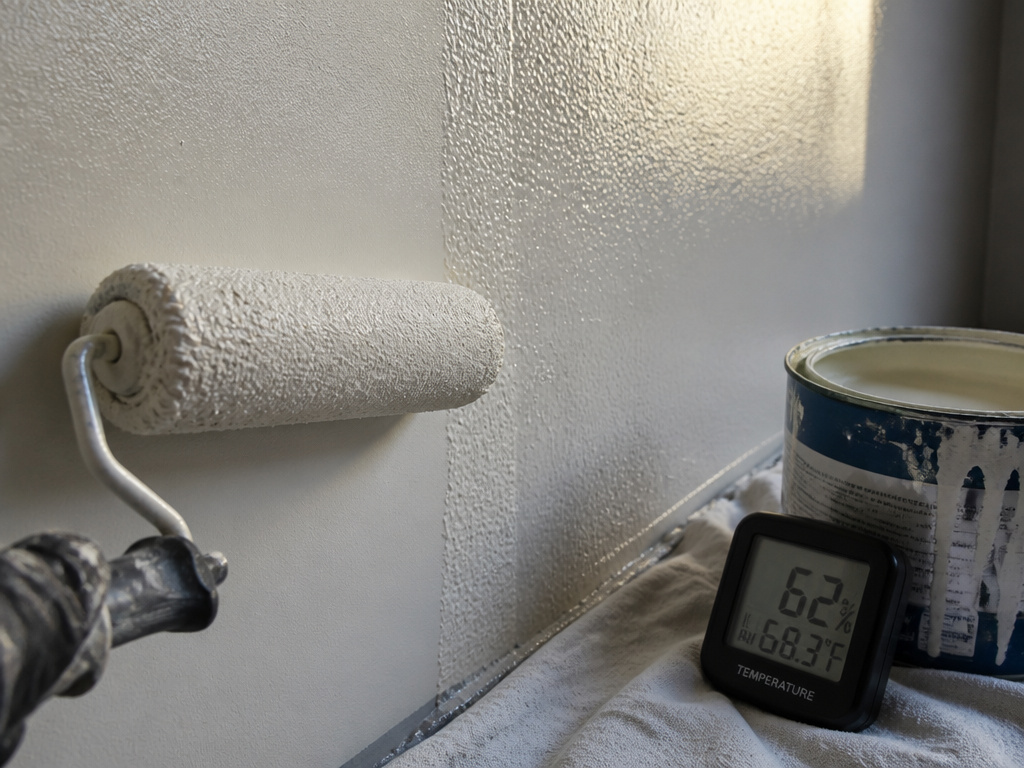
Temperature decides more than sheen does.
Before you start: Solvent-based paints and strippers carry real hazards. Methylene chloride, common in conventional paint strippers, is listed by the EPA as a probable human carcinogen and can cause kidney and liver damage or death at high long-term exposure. Wear skin and eye protection with any caustic stripper, and never reach for a torch or open flame to remove paint.
The University of Houston spec sets four conditions, and all four have to hold at once:
- Ambient and surface temperature between 50 and 95 F. Below 50 F the film does not form correctly.
- Relative humidity at or below 85%. Above that the water in a latex can’t leave the film fast enough.
- Surface at least 5 F above the dew point. Drop closer than that and condensation forms on the wall between coats.
- No damp surfaces. Do not apply paint to damp surfaces.
The University of Houston spec goes deeper on film formation than any paint aisle label will, if you want the mechanism rather than the rule.
Where this goes sideways: Rolling a second coat on before the first has set. The solvent gets trapped under a skinned surface and works its way out.
What Changes on Historic Plaster and Pre-1960 Walls
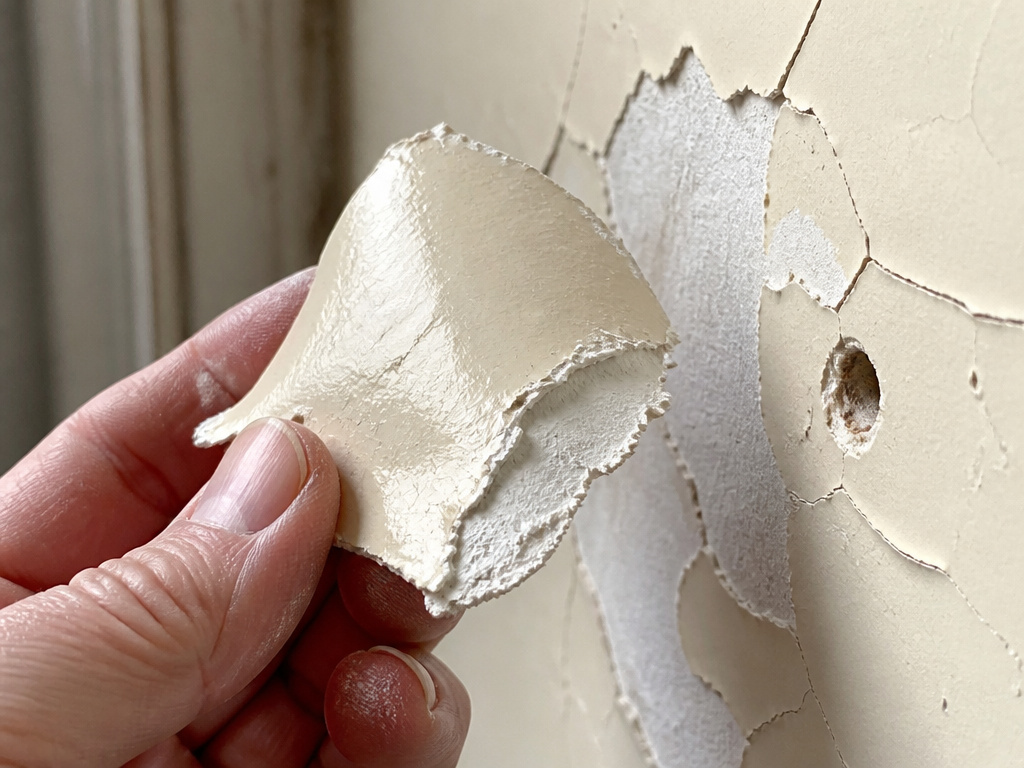
You pull a curtain rod anchor out of a 1920s wall and a palm-sized sheet of paint comes with it, chalky on the back and glossy on the face.
That chalky back is a clue. Per the National Park Service’s Preservation Brief 28, water-based paints historically used hide-glue binders on interior plaster, so a modern acrylic laid over that substrate behaves differently than it would over drywall. The bond is only as good as the old binder underneath.
The same brief traces how binders changed: natural boiled linseed oil gave way to alkyd oils generally derived from soybean or safflower, and synthetic resins like acrylics and epoxies became prevalent in the last 30 years or so. Factory-made paint didn’t arrive until after 1875; before that, pigments were hand-ground and uneven.
Then there’s lead. Homes built before 1960 almost certainly contain some lead-based paint, according to the Seattle guide, and only licensed professionals should attempt removal. Do-it-yourself lead removal is likely to increase health risks rather than decrease them. Heat guns vaporize the lead in old paint and turn it into an inhalation hazard, and they do the same to other heavy metals like mercury.
If you’re sorting out what will actually stick to plaster, brick, or old trim, paint by surface is worth a read before you buy anything.
I’d rather see a homeowner paint around a suspect window casing for another year than scrape it themselves. The dust is the hazard, and DIY scraping puts more of it in the air than leaving the trim alone.
Water-Based or Oil-Based: What the Emissions Data Says
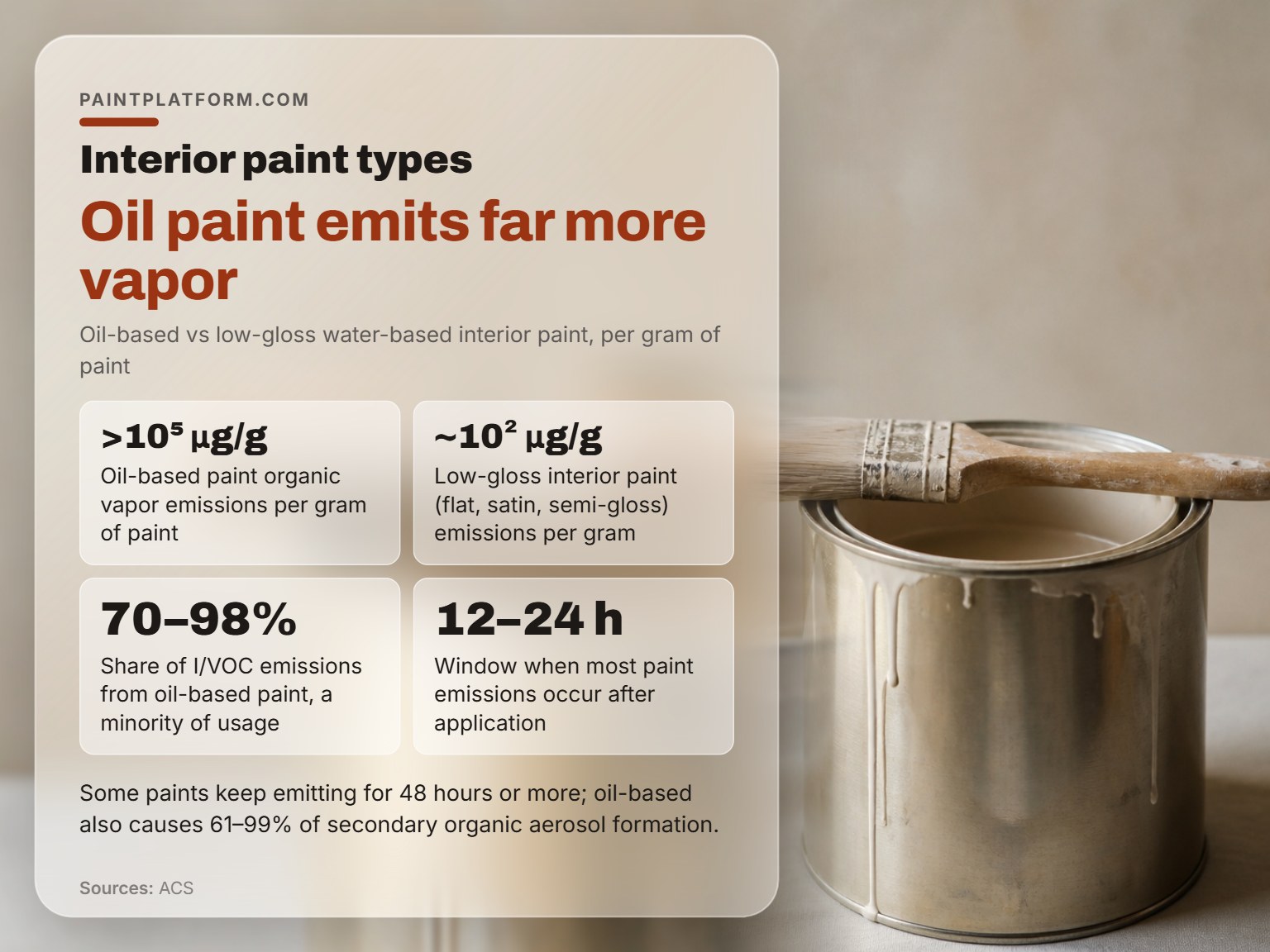
The two families of interior paint split on chemistry, cleanup, and what they put into the air.
Start with the word “latex.” It doesn’t contain latex, the natural rubber compound. “Latex” is a term for any substance that stays flexible when it dries, which is why the label survives even though the material it named never showed up.
Within the water-based family, acrylic resins are generally more durable than latex (PVA) resins, which is why an acrylic can costs more and lasts longer than a straight vinyl-acrylic blend.
The Acrylic vs PVA Difference
PVA, or polyvinyl acetate, is the older, cheaper resin. Acrylic holds up better to repeated cleaning and to sunlight. Many cans are blends of the two, and the ratio is what separates a builder-grade paint from a mid-range one.
The emissions picture is lopsided. The 2022 ACS study on organic vapor emissions from architectural coatings found oil-based paints release more than 10^5 micrograms per gram of paint, while low-gloss interior paints (flat, satin, semi-gloss) release roughly 10^2. That’s a spread of roughly three orders of magnitude.
Oil-based paint also accounts for 70 to 98% of indoor vapor emissions and 61 to 99% of secondary organic aerosol formation, despite being a minority of what gets used.
- Most emissions land within 12 to 24 hours of application.
- Some paints keep emitting for 48 hours or more, which is why “dry to touch” isn’t the same as “done off-gassing.”
- Total US paint emissions are estimated at 48 to 155 Gg per year.
You smell it before the lid is off. An oil-based can carries a sharp solvent note that sits in a closed room for days, and that smell is the vehicle leaving the film.
Oil-based products also harden over time, which makes them vulnerable to cracks and failure, and they tend to yellow and become brittle with age. The latex vs oil-based paint for interior walls breakdown covers where each one still earns its place.
Primer, Samples, and the Prep Time Nobody Budgets
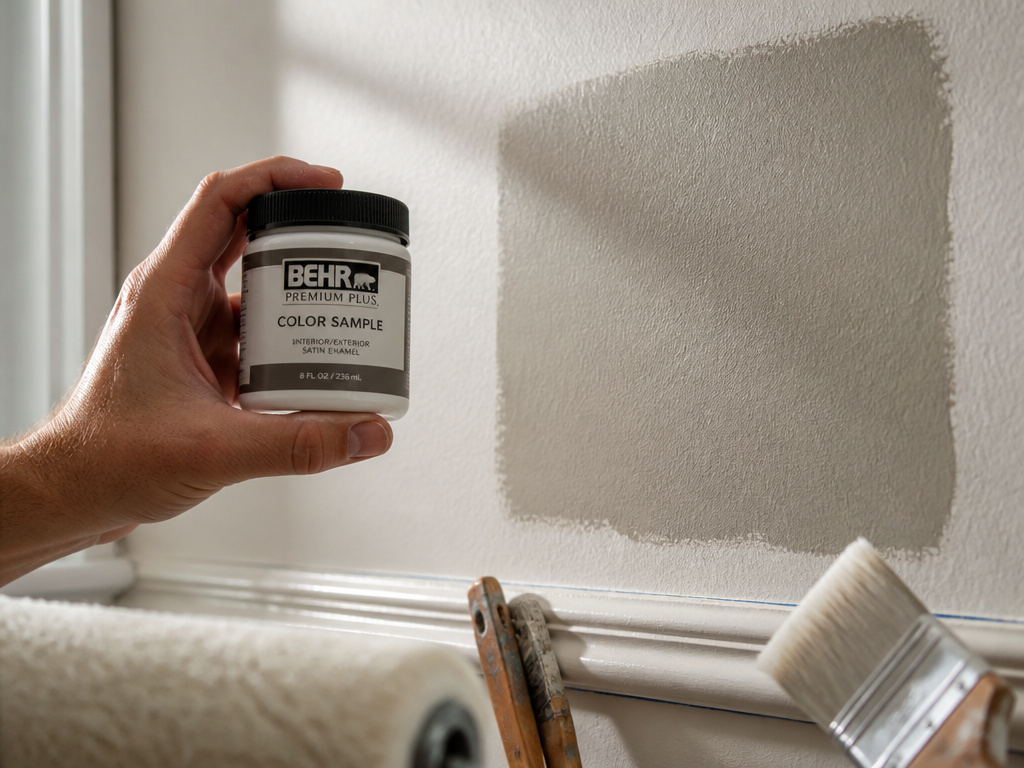
Three things eat a paint job: prep, primer, and color choice.
Well over half the total time spent on a paint job should go to the prep stage, per the Seattle guide. That’s not a suggestion from a slow painter; it’s the ratio the guide states outright, and it’s the line most people skip past.
Primer Rules That Actually Matter
Use a primer if the surface is previously unpainted, weathered, or otherwise likely to challenge the adhesion of the final coat. That’s the whole test.
Many believe oil-based primer is necessary, especially for exterior wood, but the Seattle guide notes new high-quality acrylic primers perform equal or superior with substantially less toxicity, and they stay flexible over time. Oil-based products harden over time and become vulnerable to cracks and failure, per the Seattle guide. Prime bare wood within 24 hours, then repaint.
A water-based acrylic primer is the one I keep on the shelf for most interior work. For a stained ceiling or a dramatic color change, a dedicated primer does the sealing job that a paint-and-primer-in-one claim won’t.
On tools: an angled brush for cutting in, and a roller cover with a nap depth matched to the wall texture. Synthetic bristles perform best with latex and acrylic paints; natural bristles are for oil-based. Wet a water-based brush a half hour before you start and it works noticeably better.
I’ve had a color look perfect on the wall while wet and dry deeper by evening. It’s happened enough times that I stopped trusting the wet read entirely. Now I paint the brush-out, walk away, and come back the next morning before I buy a gallon.
The Seattle guide’s method: paint a 12- to 18-inch square on the wall itself, in the room’s actual light. Samples run about 8 ounces. Colors tend to look darker on inside walls than they do on a chip, and lighter colors bounce light from windows and reduce how much artificial light the room needs.
I skipped a scuff sand on one slick drawer front years ago and the finish scratched off under a fingernail. Same lesson applies to a glossy trim board: no tooth, no bond.
Buy the quart before the gallon. The 12- to 18-inch brush-out on the actual wall is the only color test that tells you the truth, and an 8-ounce sample gets you there.
Frequently Asked Questions
What is the difference between eggshell and satin paint?
Eggshell is MPI Level 3, gloss 10 to 25 at 60 degrees with sheen 10 to 35 at 85 degrees. Satin is Level 4, gloss 20 to 35 at 60 degrees with sheen at 35 or above. Satin reads shinier and cleans up easier, but it also shows wall imperfections that eggshell would soften.
Does interior paint type really matter in a bathroom?
Yes, and the reason is moisture rather than scrubbing. A semi-gloss or gloss holds up to repeated damp wiping better than flat or eggshell, and its reflective surface is less of a problem in a small room with limited wall space.
Can I paint over oil-based paint with water-based paint?
The bond depends on prep, not on the paint family. Scuff the surface, clean it, and use a bonding primer. Skipping that step is how you end up with a water-based coat that beads and peels within a season.
What temperature is too cold to paint indoors?
Below 50 F ambient or surface temperature, per the University of Houston spec. The upper limit is 95 F. Humidity above 85% or a surface less than 5 F above the dew point will also stop the film from forming correctly.
Is flat paint a bad choice for a hallway?
For a hallway that gets touched, yes. Flat hides scuffs and imperfections better than any other finish, but it doesn’t stand up to scrubbing, so the first real cleaning takes paint with it. Eggshell is the usual compromise there.
The Bottom Line
If a wall gets touched regularly, skip flat entirely. That’s the threshold. Hallways, stairwells, kids’ rooms, the wall behind the light switch: all eggshell or satin, no exceptions.
Here’s the concession, though. A ceiling, a guest room, a wall behind a bed nobody leans on: flat is the better-looking choice, and paying more for a scrubbable finish in those spots buys you nothing.
One thing to do today. Buy a single 8-ounce sample, paint a 12- to 18-inch square on the actual wall, and look at it tomorrow morning in daylight. That square will tell you more about the color than any chip ever will, and it’s the cheapest mistake you’ll avoid.
