
What Is Paint Binder: How It Holds Coatings Together
This post contains affiliate links. As an Amazon Associate, we earn from qualifying purchases.
A paint binder is the film-forming ingredient that holds pigment particles together and locks them to the surface. In water-based paint it dries by evaporation; in oil-based paint it cures by polymerization. The binder decides how long a coating lasts. Pigment and color come second.
That evaporation-versus-polymerization split is the reason two paints can feel identical on the brush and behave completely differently a year later. A non-convertible binder like a latex stays chemically the same as it dries. A convertible binder like an alkyd keeps reacting long after the surface looks dry.
The rest walks through what is paint binder, how the dry-versus-cure split changes your cleanup and layering, and where the water-based versus solventborne line gets blurry. By the end you’ll be able to read a paint label and know what the film will do.
Key Takeaways
- Binder is the film-former. Pigment gives color; the binder is what actually sticks to the surface and holds everything together.
- Water-based paints dry; oil-based paints cure. Water evaporates out of an acrylic; an alkyd or linseed oil polymerizes with oxygen over days.
- Binder choice beats pigment choice for longevity. NPS data shows traditional linseed oil and lead white paints hitting 20 years or more, while most modern coatings need reapplication every 5 to 7 years.
- Solvent and binder must match. Xylol thins alkyd enamel beautifully and does nothing useful for nitrocellulose lacquer.
- A blend can underperform its parts. Chalmers found binder B5 worked acceptably alone but poorly in a polybinder mix.
What Is Paint Binder and What Does It Actually Do?
Ever watched a drop of acrylic dry into a solid skin and wondered what just happened? That skin is the binder doing its one job.
A binder is the part of the paint that turns liquid into film. It wets the pigment particles and holds them in suspension while the paint is wet. Once the carrier leaves, it locks everything to the surface.
A binder is the non-volatile film-forming component of a coating. It wets and suspends pigment particles, adheres to the substrate after the carrier leaves, and determines the coating’s mechanical properties. Water-based binders dry by evaporation; oil-based binders cure by oxidative polymerization. The binder class, not the pigment, sets the service life.
The full picture of paint composition includes pigment, binder, solvent, and additives, but the binder is the only one that forms the film. Paint pigments give the color, but they’re just powder without something to hold them.
Resene frames the binder as the primary performance determinant. It’s the thing that decides whether a coating belongs on a swimming pool, a jet aircraft, or a weatherboard.
The Three Jobs a Binder Does
- Wet the pigment. A binder has to coat every particle so the pigment disperses evenly instead of clumping.
- Form a continuous film. As the carrier leaves, the binder molecules pack together and fuse into a solid layer.
- Adhere. The film has to grip the surface, whether that’s canvas, wood, or metal.
Resene splits the term by carrier: solventborne binders are often called resins, and waterborne paint binders are called a latex.
Same job, different chemistry.
Convertible vs Non-Convertible Binders
| Type | How It Sets | Examples | Predictability |
|---|---|---|---|
| Convertible | Polymerizes chemically | Alkyd, linseed oil | Changes over years |
| Non-convertible | Evaporates only | Lacquer, latex | Same at day 1 and year 10 |
Non-convertible binders don’t change chemically as they dry. That means you know exactly what they’ll be like after one day and after ten years. The better-performing ones are generally high molecular weight, which gives toughness without further reaction.
Why the Binder Decides How Long Paint Lasts
Twenty years. That’s how long traditional linseed oil and lead white paints have been documented lasting on exterior wood, according to the NPS traditional and modern paints guide.
Modern coatings typically need reapplication every 5 to 7 years. The exception is some dark red acrylic latex exterior paints, which can hit 15 years on properly prepared wood, partly because red pigments resist UV so well.
- Traditional linseed oil and lead white: 20 years or more, documented on exterior wood.
- Modern coatings: 5 to 7 years between reapplications.
- Barn red acrylic latex: up to 15 years, with proper prep.
What separates the two is what the binder does after the carrier leaves. A curing binder like linseed oil cross-links into a dense film that keeps going. A drying binder like a latex relies on particle coalescence, which is more predictable but less durable in harsh conditions, though NPS/APT notes modern coatings can perform nearly as well as lead-based linseed oil paints in less harsh environments.
The gap is about the binder.
There’s no agreed test that predicts 20-year performance from a data sheet. The long-term record on traditional oils is genuinely deeper than the record on modern acrylics, and anyone who tells you otherwise is selling something.
Does Paint Dry or Cure? The Split That Changes Everything
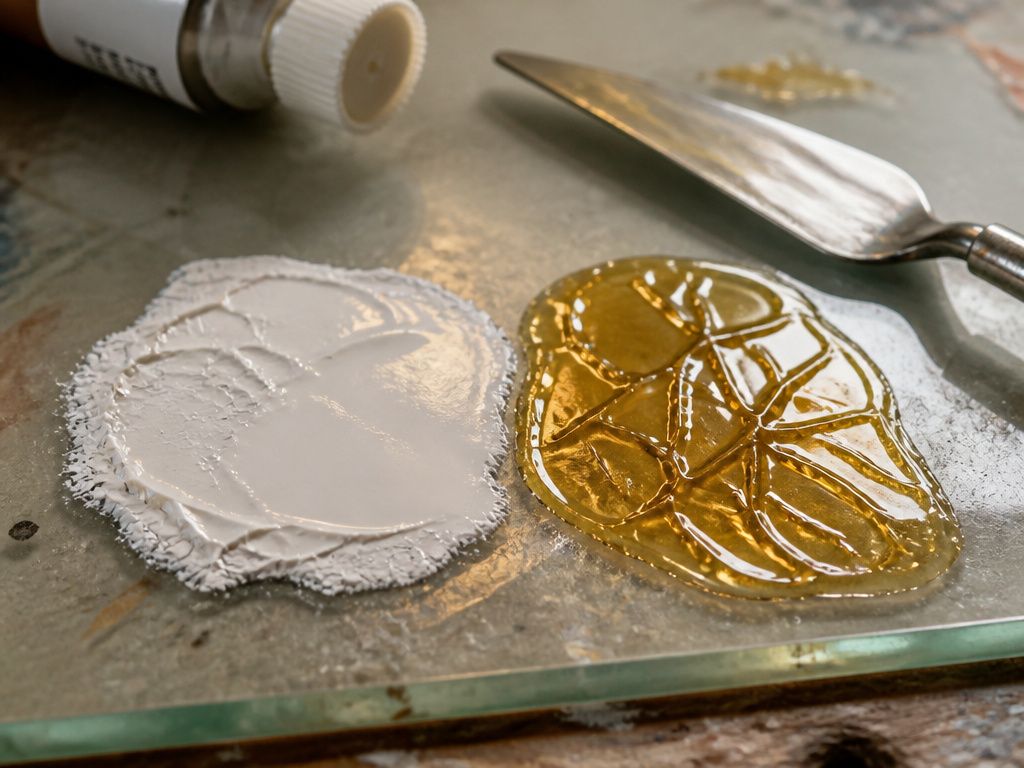
Two paints can feel identical on the brush and behave completely differently a year later. The difference is whether the binder dries or cures.
NPS/APT is explicit about this: water-based binders dry, oil-based binders cure. Drying binders evaporate; curing binders polymerize. And what are commonly called “drying oils” are actually curing binders, which is why a linseed oil film keeps hardening for weeks after it feels dry.
The Universidad de Murcia uses “binder” more loosely, defining it by its film-forming and adhesion role without drawing the dry/cure distinction. Resene classifies binders as convertible versus non-convertible instead. All three are describing the same materials from different angles.
Why Water-Based Paints Dry and Oil-Based Paints Cure
A water-based acrylic forms a film when the water evaporates and the polymer particles pack together. That’s a physical process. Once the water is gone, the film is essentially done.
An alkyd or linseed oil does something different. Oxygen from the air reacts with the oil’s double bonds, and the molecules cross-link into a network. That’s a chemical process, and it keeps going for days or weeks after the surface feels dry.
I used to mix a big puddle of acrylic at the start of every session, thinking I was saving time. Before long, a skin would form on top and the paint underneath would still be wet. Now I mix in small batches as I go, and I waste much less than I used to.
This is the mistake I see most often: assuming dry-to-touch means fully cured.
Common mistake: Layering a second coat of oil paint while the first is still curing. The solvent in the new coat can trap the partially cured film underneath, and the whole thing wrinkles or stays tacky for weeks.
Layering oil paint too soon is like putting a lid on a pot before the sauce has reduced. The moisture has nowhere to go, and the whole thing stays soupy.
Where the Sources Disagree on Drying vs Curing
The terminology isn’t settled. NPS draws a hard line between drying (evaporation) and curing (polymerization). The Universidad de Murcia treats binder as a broad category covering glues, resins, oils, and waxes without a carrier split. Resene uses “binder” loosely and classifies by convertible versus non-convertible instead.
None of these is wrong. They’re describing different aspects of the same materials.
Solids content is the practical number to watch here. It tells you how much of the can will actually stay on the surface after the carrier leaves, and it’s a better predictor of film build than the dry/cure label.
Try this: mix a small puddle of your usual acrylic and time how long it takes to skin over. That number tells you more about your binder than the label does.
How Solvency Decides What Your Solvent Can Actually Do
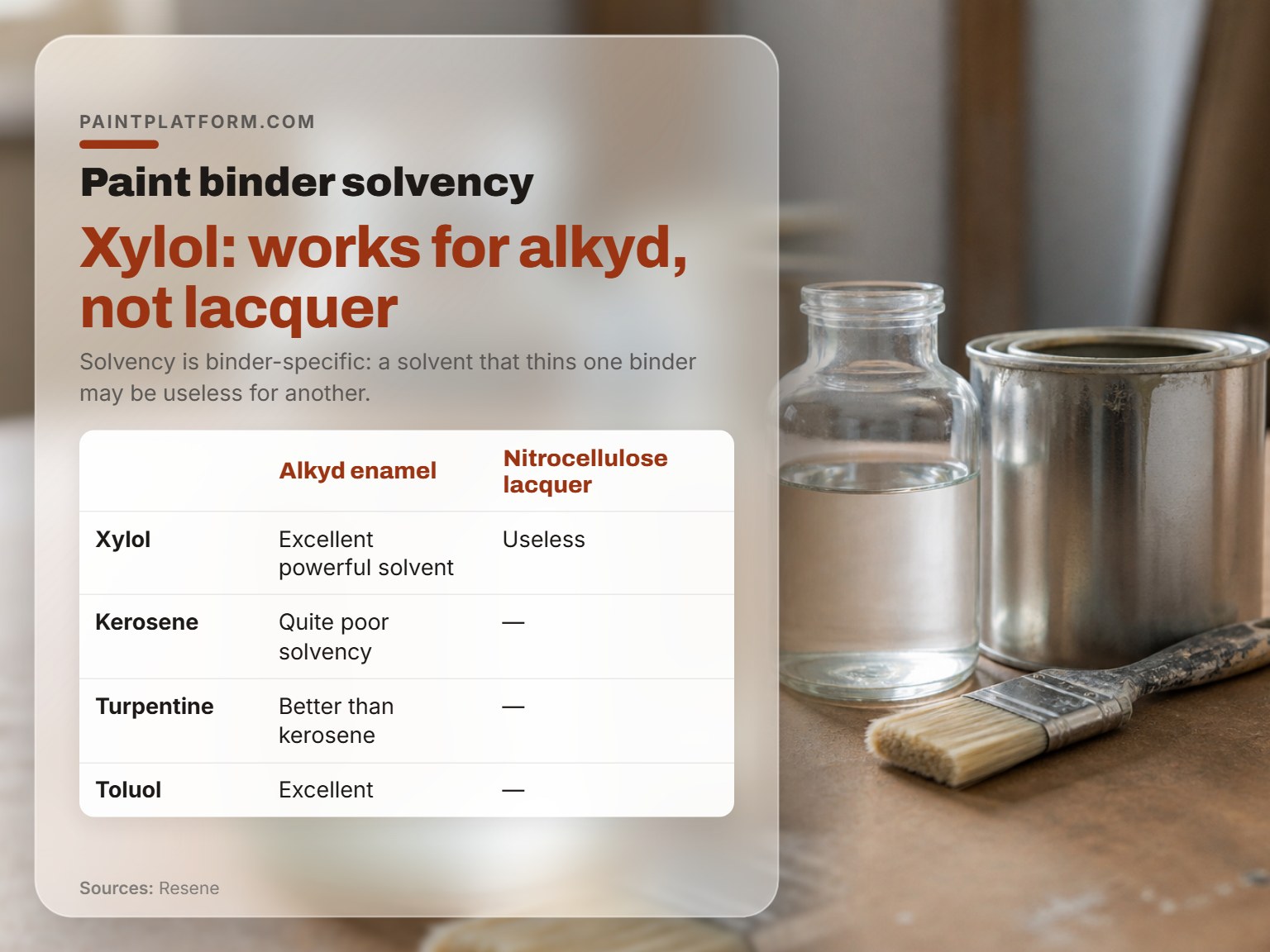
Xylol thins alkyd enamel beautifully. It does nothing useful for nitrocellulose lacquer. The reason is chemistry. Solvency is binder-specific.
Resene defines solvency as a solvent’s power to dissolve or thin a particular binder. A solvent that works with one binder may be completely inadequate with another. Xylol is excellent for alkyd enamel and useless for nitrocellulose lacquer. When thinning alkyds, kerosene has poor solvency, turpentine is better, and toluol is excellent.
Match the solvent to the binder, not the brand on the can. Xylol and alkyd are a pair; xylol and nitrocellulose are a divorce waiting to happen.
Paint additives like thickeners and defoamers change how the binder behaves, not what it is. Resene warns that if paint is thinned more than a few percent, the properties controlled by those thickeners may be compromised. That’s why thinning a can to make it “go further” usually backfires.
Slow vs Fast Evaporating Solvents
Slow-evaporating solvents like kerosene (for some alkyds) and propylene glycol (for latex paints) keep the paint wet and fluid longer. That gives you a good wet edge, which is why brush marks flow out instead of staying put.
Fast-evaporating solvents are for spray application, where you want the paint to set before it runs. But Resene warns that excessively fast evaporation can cause dry spray, solvent popping, or bubbling. The last solvent to evaporate needs high solvency for the binder, or you get serious gloss problems.
A solvent-rich alkyd smells sharp and sweet, almost like nail polish remover. That smell is the solvent leaving the film. When it fades, the film is still curing, which is exactly the trap.
Where the Water-Based vs Solventborne Line Gets Blurry
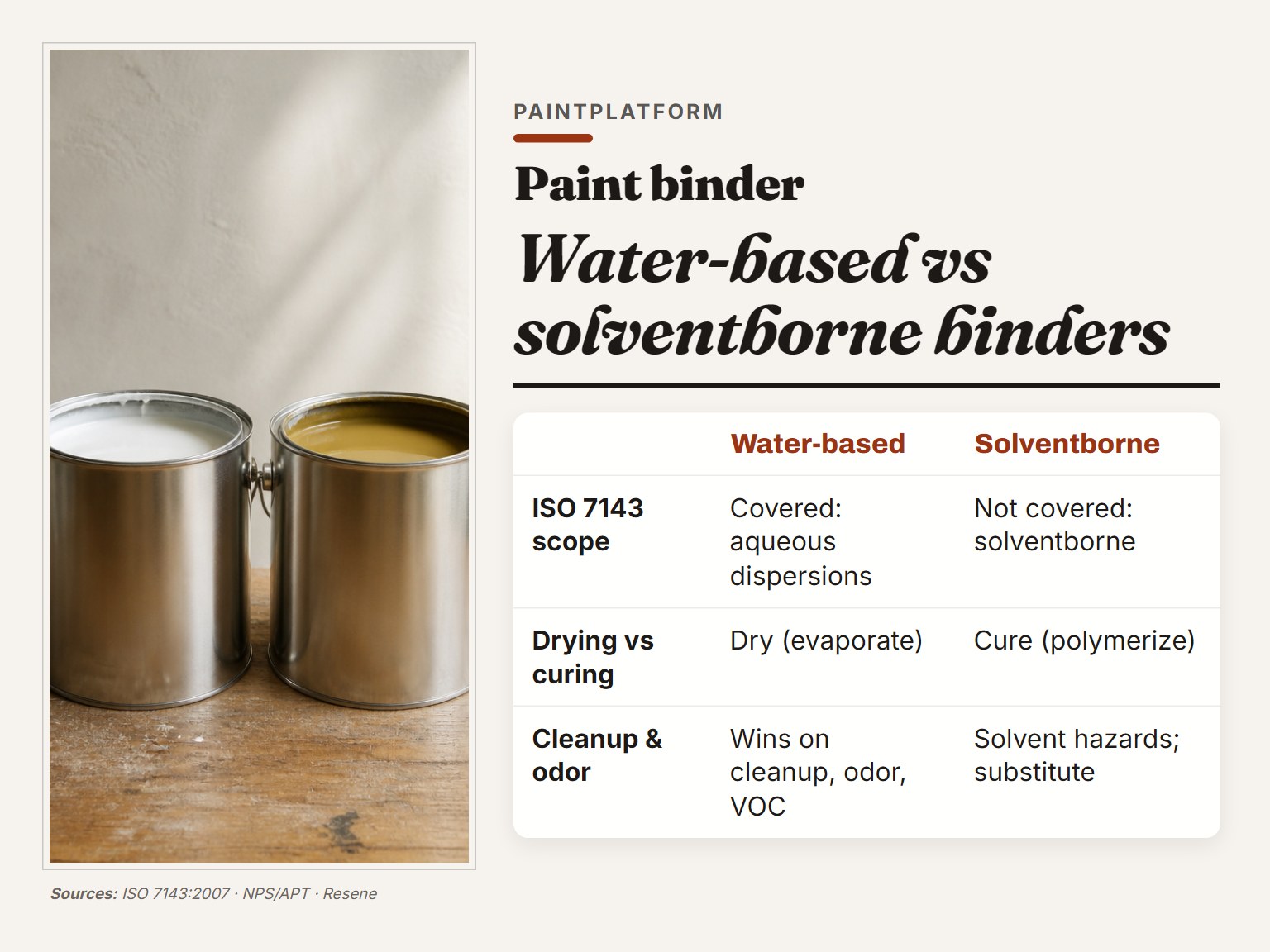
The ISO 7143:2007 standard that governs binder testing only covers water-based binders, though Resene splits the term by carrier and the Universidad de Murcia treats binder as a broad category without a water/solvent carrier split.
The ISO 7143:2007 binder standard specifies test methods for aqueous dispersions and solutions of polymers and copolymers. It’s scoped to water-based coating materials, which means solventborne resins fall outside its test methods. Anyone citing “ISO binder test methods” as universal is overstating the scope.
ISO does have a separate standard for polyisocyanate resins, ISO 11909:2025 binder testing, which covers the 2K-PU crosslinker class. Two standards, two scopes, and neither one covers the whole field.
The ISO Scope Problem
ISO 7143:2007 is a 4-page document under ISO/TC 35 (Paints and varnishes), ICS 87.060.20 (Binders). It was published in 2007-02, corrected in 2007-03, and is still confirmed at stage 90.93. It’s a test-method standard, not a definition of what a binder is.
That’s the gap most articles skip. The standards tell you how to test a binder; they don’t tell you which one to buy.
Water-Based vs Solventborne: Which Wins
Latex paint is the most common water-based binder system on a shelf, and it wins on cleanup, odor, and VOC profile. Solventborne alkyds win on penetration and hardness, especially on bare wood and metal.
- Interior walls: water-based wins, every time.
- Exterior trim and metal: solventborne still has the edge for adhesion and hardness.
- Historic exterior wood: a traditional linseed oil system can outlast both, at the cost of slow cure and more maintenance.
The paint manufacturing process is mostly about dispersing pigment into the binder without trapping air. That’s why the same pigment can behave differently in two different binder systems.
Which one should you reach for? Match the binder to the surface, and the rest gets easier.
When a Binder Blend Fails (and Why More Isn’t Better)
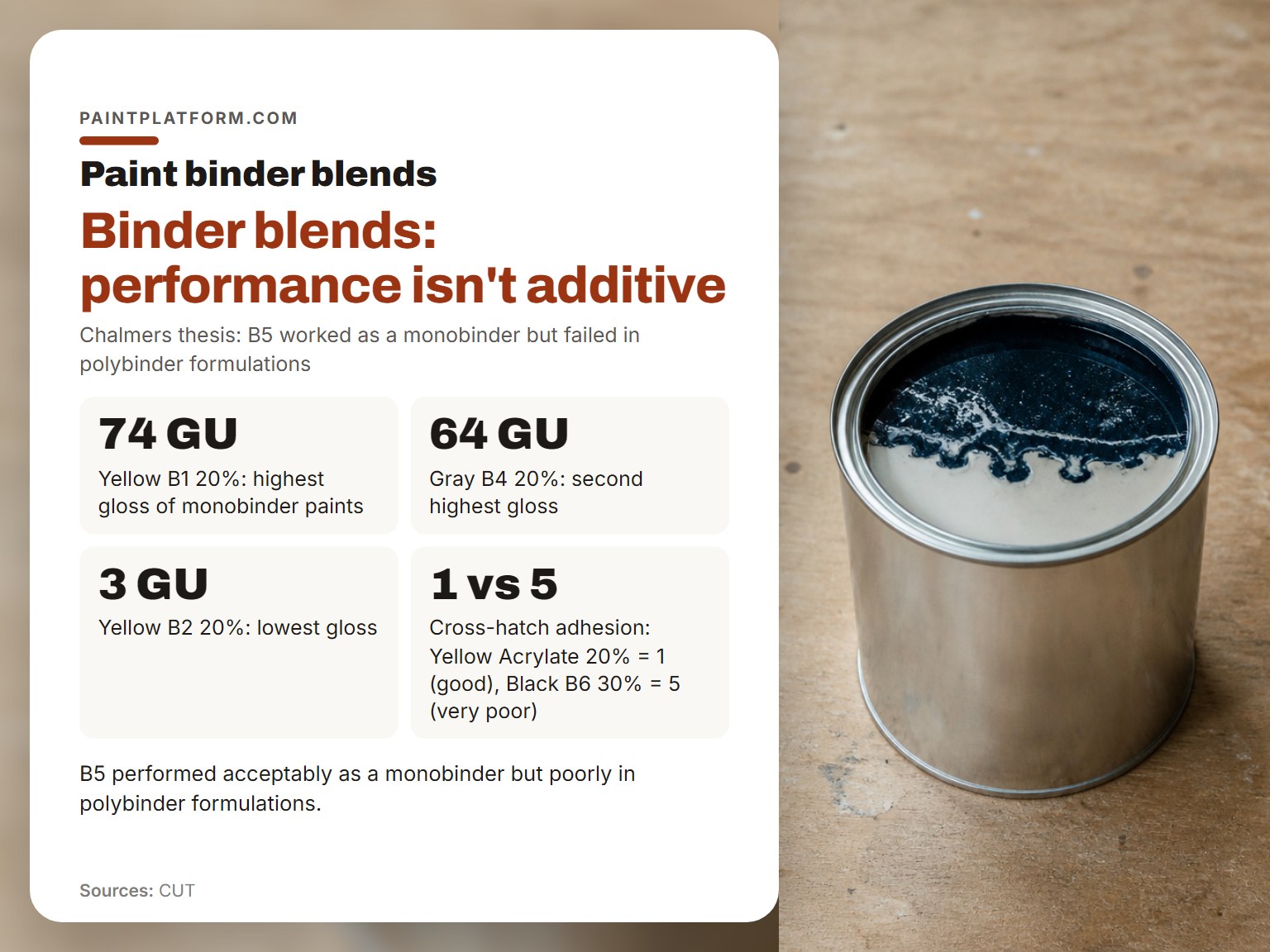
A binder that works fine on its own can fall apart in a blend. That’s the finding from a Chalmers University thesis that tested six binders in monobinder and polybinder matrices.
Binder B5 performed acceptably as a monobinder but poorly in polybinder formulations. It also gave poor results both when partially and when completely replacing the acrylate content. Binder performance is not additive across a blend.
The Universidad de Murcia makes a related point: avoid complex mixtures of binders, mediums, thinners, and varnishes. Blends are risky and hard to predict.
I’ve had a can of paint separate on me, and I stirred it like that would fix it. It didn’t. Pigment separation looks like a black layer floating on white, or a thin yellow film on top of a lighter bulk. Once that’s happened, the binder-pigment balance is off.
Where this goes sideways: Thinning a paint more than a few percent to stretch it. The thickeners that control flow, leveling, and sag resistance get diluted along with everything else, and the film won’t build the way it should.
The Gloss and Adhesion Data
The Chalmers thesis found real differences between binders. Yellow B1 20% hit 74 gloss units, the highest of the monobinder paints. Gray B4 20% came second at 64 GU. Yellow B2 20% was the lowest at 3 GU.
| Paint | Gloss (GU) | Solid Content | Note |
|---|---|---|---|
| Yellow B1 20% | 74 | , | Highest gloss |
| Gray B4 20% | 64 | , | Second highest |
| Yellow B2 20% | 3 | , | Lowest gloss |
Cross-hatch adhesion told the same story. Yellow Acrylate 20% scored a 1, meaning good adhesion. Black B6 30% scored a 5, meaning very poor adhesion. Same test, same lab, wildly different results based on the binder.
Paint chalking is the long-term version of this. When the binder itself breaks down under UV, it leaves pigment powder on the surface. Chalking points to the binder. The pigment is just the visible symptom.
What Should You Actually Do With This?
Three things matter more than the brand on the label: binder type, solvent match, and how thick you lay it down.
- Match the binder to the surface. Water-based acrylic for canvas and paper, alkyd or oil for bare wood and metal, traditional linseed oil for historic exterior wood.
- Match the solvent to the binder. Xylol for alkyd, turpentine or toluol for thinning, and never the wrong one for nitrocellulose.
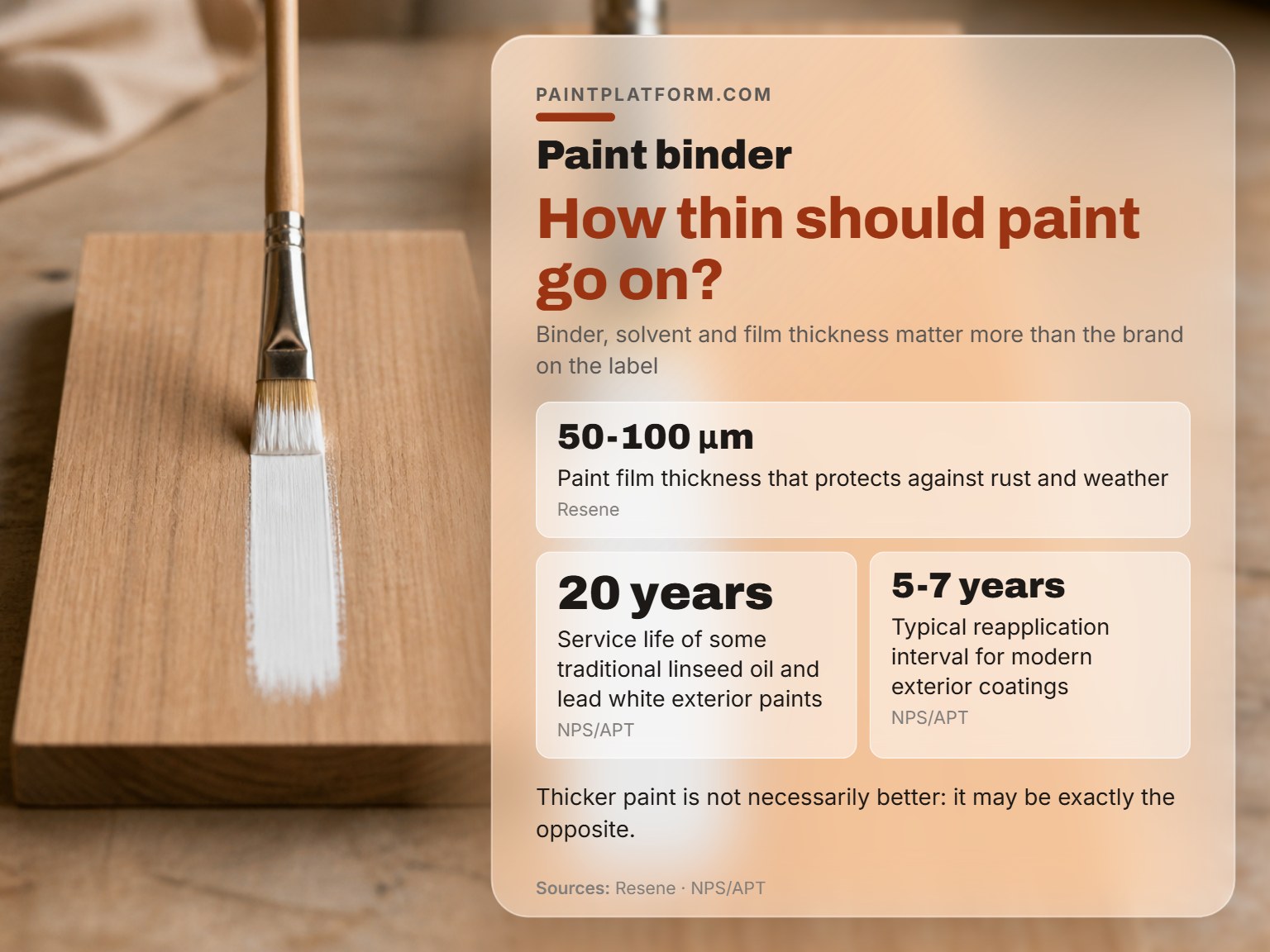
- Lay it down thin. A 50-100 μm film is enough to protect a surface from rust and weather, according to Resene. Thicker paint is just more likely to wrinkle or stay tacky.
Before you start: Solventborne paints give off fumes that build up fast in a closed studio. Crack a window and wear nitrile gloves, because skin contact with xylol or toluol is a real hazard. Resene recommends substituting solvent-rich paints with Eco Choice Aotearoa approved products where you can.
If you want one answer and you paint on canvas or paper: a water-based acrylic for water-based work, a solvent for thinning oils safely, and a small starter set to learn on before you upgrade. Those three cover most of what a beginner actually needs.
Skip the lightfastness ratings rabbit hole for casual practice work. If your painting lives in a sketchbook on a shelf, small differences in lightfastness rating won’t show up in your lifetime. Save that worry for commissioned work or gallery pieces.
I keep a cheap sketchbook on the desk for testing paint behavior before I commit to a real surface. A quick swatch tells you more about how a binder will behave than any label ever will.
Grab a cheap canvas board and test three different binders side by side. A little observation beats a lot of reading.
Frequently Asked Questions
Is paint binder the same as resin?
Mostly, yes. Resene notes that solventborne binders are often called resins, while waterborne binders are called latex. The underlying job is the same: hold the pigment and form the film.
What happens if I use the wrong solvent?
The paint either curdles, refuses to level, or forms a gummy mess. Xylol works on alkyd enamel but is useless on nitrocellulose lacquer. Match the solvent to the binder class, not the brand.
Why does my oil paint stay tacky for days?
Oil-based binders cure by polymerization, not evaporation. The surface can feel dry while the film underneath is still cross-linking. Cool temperatures and poor ventilation slow that reaction down, sometimes for weeks.
Can I mix water-based and oil-based paints?
No. Water-based and oil-based binders are chemically incompatible. Mixing them gives you a curdled, uneven film that won’t adhere properly. Use one system per project.
What is a non-drying oil?
An oil that never hardens, like some vegetable oils. NPS notes that non-drying oils leave surfaces oily or tacky and aren’t suitable as a primary binder. They’re used as additives or plasticizers, not film-formers.
Does thicker paint mean better quality?
Usually the opposite. Resene points out that all paint is artificially thickened, and a paint that needs a lot of thinner to reach usable consistency may have compromised properties. Thickness is a formulation choice. Quality is a separate question.
The Bottom Line
If a can of paint has been sitting a long time and separates when you stir it, don’t fight it. Return it or toss it. The binder-pigment balance is already off, and no amount of stirring brings it back. That’s the practical side of what is paint binder: the film-former is doing its job whether you’re watching or not.
This week, mix a small puddle of your usual paint and time how long it takes to skin over. That single observation tells you more about your binder than the label does. If it skins quickly, you’re working with a fast-drying system and you should mix smaller batches.
One concession: this all changes if you’re working on exterior wood in a harsh climate. The 20-year linseed oil number comes from documented historic applications, not from a south-facing deck in full sun. In that setting, a modern acrylic might actually outperform the traditional system, and the NPS report itself says modern coatings can perform nearly as well in less harsh environments.
So: know your binder, match your solvent, and lay it down thin. The chemistry does the rest.
