
Paint Bucket Grid Guide: Sizes, Fit, and Cleanup
This post contains affiliate links. As an Amazon Associate, we earn from qualifying purchases.
A paint bucket grid guide starts with three numbers: grid width, bucket rim, and roller cover size. Grids marketed for 5-gallon buckets run from 9 inches to 12.05 inches wide, so measure the rim before you buy. The Premier 991 is the only one in this set built for 10-inch rollers.
That 10-inch pairing decides how much of the cover actually touches mesh.
What follows: the width conflicts between brands, a dry-fit check that catches a sliding grid before it drops, and the cleanup argument that splits manufacturers from painters.
Key Takeaways
- Measure the rim, not the pail. Grids sold for 5-gallon buckets come in 9-inch, 10-inch, and 12.05-inch faces.
- Wedge the grid before the first dip. A loose grid slides into the paint mid-roll and costs you time fishing it out with a stir stick.
- Manufacturers call grids reusable. A working painter calls cleanup the drawback. Both are true, depending on the coating.
- A tray still wins for trim, doors, and color changes. Hyde puts a tray on small patches and one ordinary room.
What Size Grid Fits a 5-Gallon Bucket?
Four brands sell a grid for a 5-gallon bucket and they publish three different widths. Leaktite’s M009GRID024 is 9 inches of galvanized wire mesh with 4-side reinforcement. Premier’s 991 measures 12.05 inches long by 10.15 inches wide and weighs 1.00 lb.
A 5-gallon bucket grid hooks over the rim rather than sitting inside the pail. Nominal width describes the mesh face, not the hook span, so a 9-inch Leaktite grid and a 10.15-inch Premier grid both hang on the same bucket class. Roller pairing is a separate spec entirely.
The mesh face is the number that matters for loading. The hooks are what hold the grid on the rim, and every grid here hangs on a standard paint pail.
| Grid | Nominal size | Weight | Fits |
|---|---|---|---|
| Premier 991 | 12.05 x 10.15 in | 1.00 lb | 5-gal, 10-in rollers |
| Harbor Freight 57370 | 11.87 x 10 x 1.93 in | 0.56 lb | 5-gal buckets |
| Leaktite M009GRID024 | 9 in mesh face | Not published | 5-gal buckets |
| Soto large | 10 x 12 in | Not published | 2- and 5-gal |
| Linzer HD RM 416 H | Heavy-duty 5-gal | Not published | 5-gal buckets |
Weight tells you more about how a grid behaves than width does. The Harbor Freight 57370 weighs 0.56 lb. The Premier 991 weighs 1.00 lb, and Premier describes it as 3 percent heavier than standard bucket grids.
You hear the difference before you feel it.
Mesh style matters too. Harbor Freight says its grid uses angled wire mesh. Premier uses plated steel with 4-sided wrapped mesh, and Leaktite uses 4-side reinforced galvanized wire.
Why No Paint Bucket Grid Guide Can Name One Width
There is no standard width. Four brands, three nominal sizes, and no published spec that settles it.
Dunn-Edwards sells a 1-gallon size grid and states it fits 1-, 2-, and 5-gallon pails. Soto sells a large grid at 10 by 12 inches for 2- and 5-gallon buckets and a small grid at 5.5 by 7 inches for 1-gallon buckets. Those are opposite answers to the same question.
Soto adds a wrinkle worth reading twice. The large grid is described as ideal for 1 gallon of paint. The small grid is described as ideal for 1 quart. The size label on the box describes the pail it hangs in, not the volume you pour into it.
Common mistake: Buying a grid by the bucket size printed on the label. Dunn-Edwards fits one 1-gallon grid to 1-, 2-, and 5-gallon pails while Soto sells separate sizes for the same range. Check the mesh face against your rim instead.
Roller pairing is the gap nobody fills. Premier designs the 991 for 10-inch rollers. Leaktite and Soto publish nothing about roller width at all. Match a 9-inch Leaktite grid to a 10-inch cover and you are guessing about coverage.
How to Set Up a Bucket and Grid Station
The first time I hung a grid on a bucket rim, I gave it a half-hearted push and started rolling. Two dips in, the grid slid off the rim and went under the paint. I spent time fishing it out with a stir stick while the coating began to skin over.
Wedge it down firmly before the first dip. That is the whole lesson.
Before you start: A filled 5-gallon pail weighs far more than it looks and the handle can slip out of a wet hand. Set the bucket on level ground before you open the can, and never carry a filled open station up stairs or over a threshold, which Hyde flags as a spill waiting to happen.
- Read the coating label first. Check working time and any mixing or container limits.
- Dry-fit the cover in the station. Hyde’s test is that the cover turns and loads across its full width. A cover that overhangs the mesh loads lopsided all day.
- Mark a stable spot and a clear route. Keep the station away from cords, stairs, and traffic.
- Press the grid down until the hooks bite. A loose grid slides into the paint on the first hard roll, which is exactly how I lost time fishing it out.
- Charge gradually and test on a sample. Run one slow roll on scrap before you touch the wall.
- Count refills, moves, and waits for one zone. Those three numbers tell you whether the station sits in the wrong place.
If you want the full rhythm of charging the cover, this is how to load a paint roller without drowning it.
The Dry-Fit Check
Hyde’s procedure is stricter than any brand’s clamp-it-in copy. The cover must clear every wall, rim, attachment, and insert without tilting during the dry fit. Hyde rejects any system where the grid moves during loading.
That single gate catches the failure I hit.
Fill level is the other shaky spot. RepaintNow tells you to pour about two gallons into a 5-gallon bucket, then says not to fill it more than half full. Two gallons is less than half of five, so the two instructions contradict each other. No manufacturer in this set publishes a fill spec at all.
Grid vs Tray: Which Wins for Your Job?
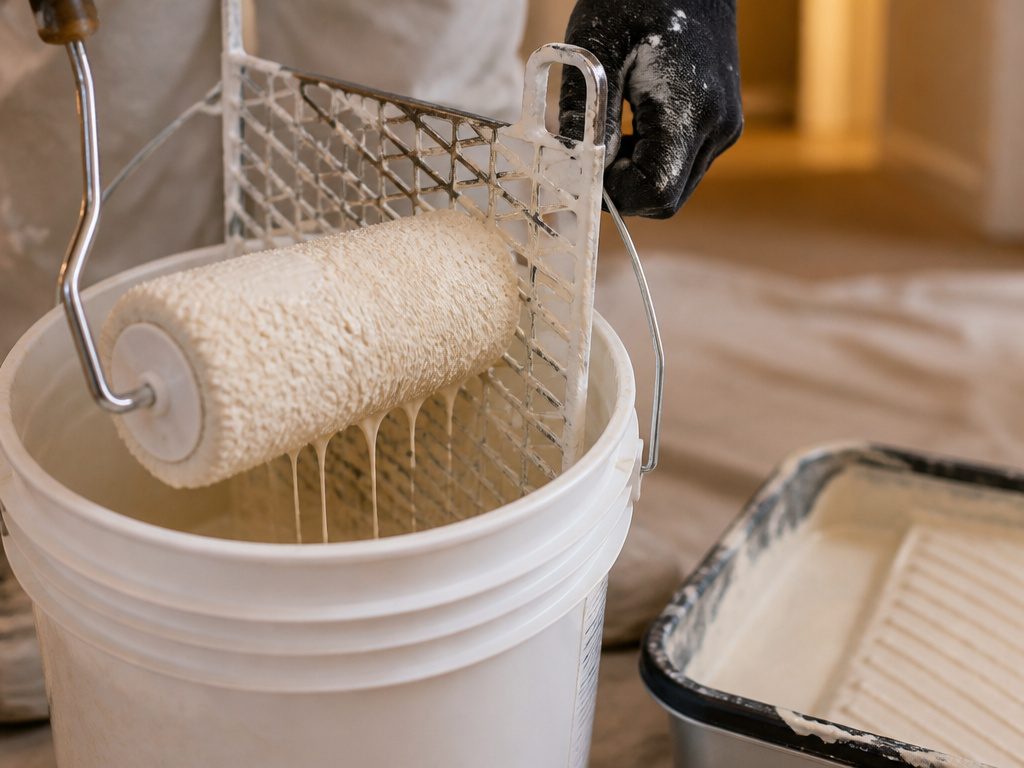
A long hallway, one color, one roller, and a tray you keep topping up. That is the job a bucket and grid was built for.
Hyde frames the choice by job rather than by preference. A tray suits small patches, trim, doors, touch-up, color changes, and one ordinary room with cut-up walls. A bucket with a grid holds more under its metering face and cuts refills on a long run of one color.
| Job | Bucket and grid | Tray |
|---|---|---|
| Long run, one color | Fewer refills | Topped up often |
| Trim and doors | Awkward to work | Easier |
| Color changes | Slower to swap | Quick swap |
| Ladder work | Handle helps | No handle |
| Small patch | Overkill | Right size |
For a long run of one color, the bucket and grid wins. For trim, doors, and color changes, the tray wins and I would not argue about it.
Where the Tray Still Wins
RepaintNow argues a grid is a good alternative to a tray and that both are worth keeping handy. That is the honest answer for anyone painting a whole house. Two setups, one job.
There are several paint tray types and the shallow ones refill fastest, which matters when you are cutting in around a door frame. If you are weighing options, the best paint trays for rolling have deeper wells and a ramp that actually spreads the load.
I stopped stepping in the tray about the second time I switched to a bucket.
How Do You Clean a Paint Bucket Grid?
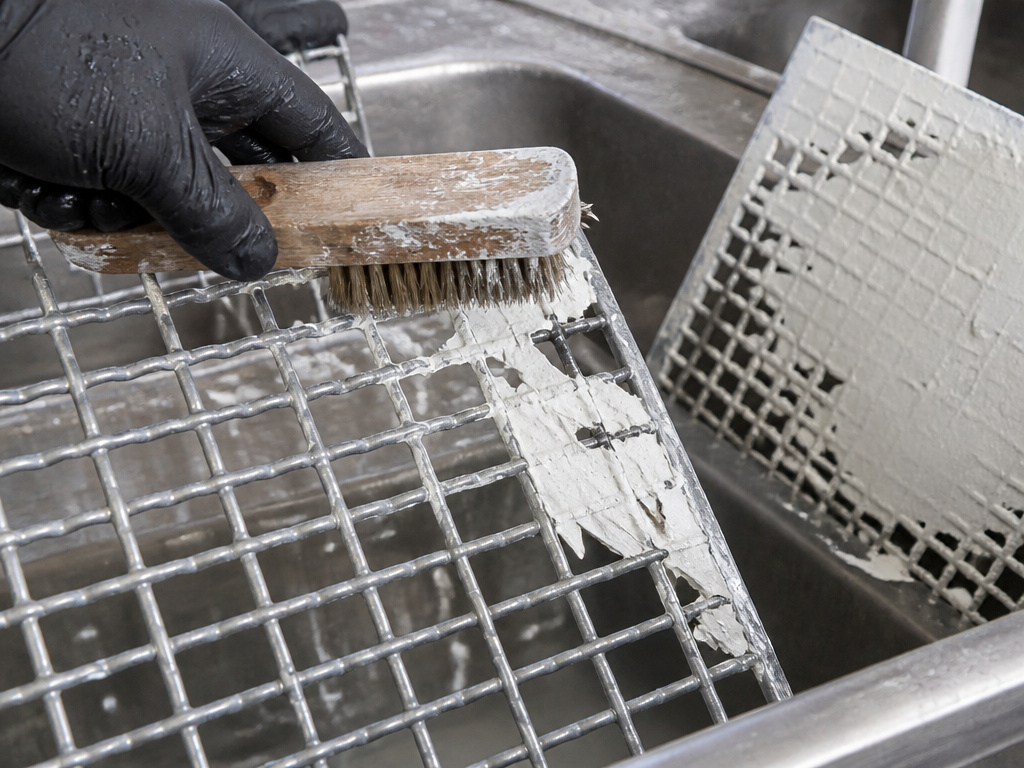
Cleanup is the argument, and it splits cleanly in two.
Every manufacturer in this set calls its grid reusable. Sherwin-Williams describes the Economy Metal 5-Gallon Grid as rust-resistant and reusable. Premier, Leaktite, and Soto all market reuse as well. RepaintNow, a working painter’s blog, calls cleanup the greatest drawback and says storing a grid for reuse is almost impossible.
Both positions hold up, because they describe different coatings.
Dried water-based paint skins over the mesh like a drum head. You can watch the film bridge the gaps and shift from glossy to chalky as it dries.
Water-Based vs Solvent Cleanup
RepaintNow’s steps assume water-based paint. Scrape the big clumps off with a stiff brush or a scraper first, because soap will not cut through a cured film. Then scrub with dish soap or a dedicated cleaner and a soft-bristled brush. A stiff metal brush can take the coating off along with the paint.
Sherwin-Williams markets its grid as solvent resistant. That is a materials claim, not a cleanup procedure. Nobody in this set publishes a solvent cleanup method, and RepaintNow recommends a fresh grid after oil-based paint rather than fighting the old one.
Where this goes sideways: Leaving a water-based grid to dry overnight before cleaning. The film cures hard across the mesh and the scrubbing takes much longer. Rinse it while the paint is still tacky and the job takes minutes.
A bulleted cleanup routine that works:
- Scrape first, soap second. Large clumps come off with a stiff brush or scraper, not with detergent.
- Use a soft-bristled brush only. A stiff metal brush can damage the grid’s coating.
- Retire it after oil-based paint. RepaintNow says replace rather than reuse, and a fresh grid is cheap enough that arguing is silly.
Run old paint through a paint strainer before it goes back in the can, and the same discipline applies when you clean paint trays.
When a Bucket Grid Is the Wrong Tool
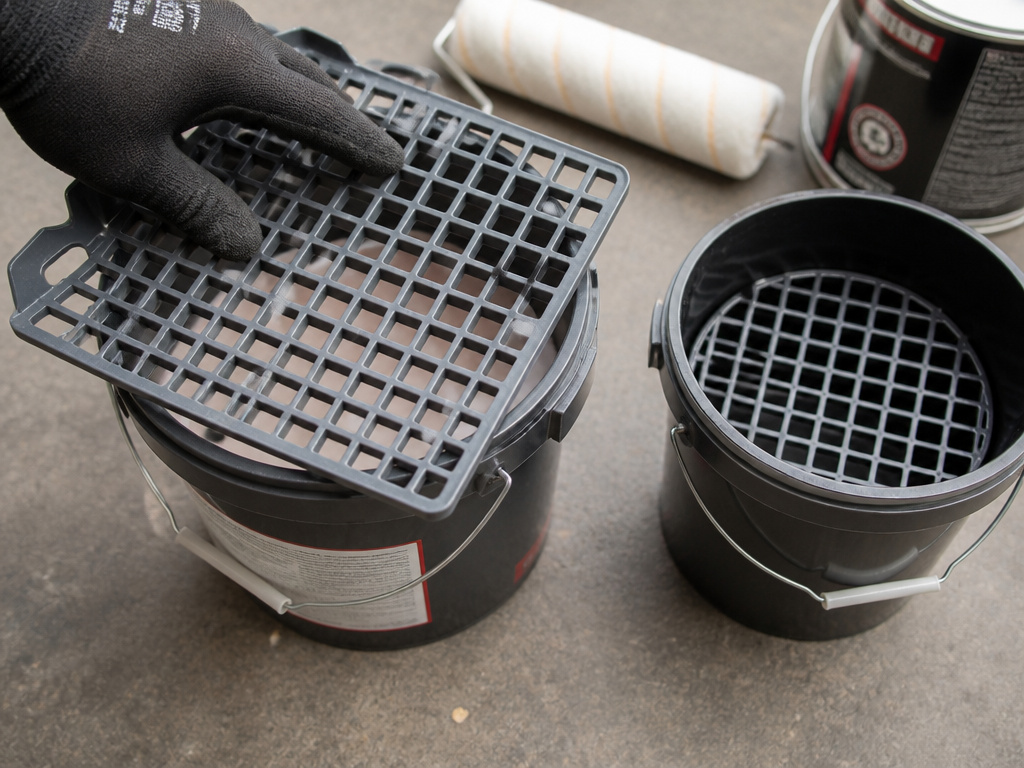
Three situations break the standard setup, and each one has a workaround.
- Sub-5-gallon pails. A 9-inch or 10-inch grid will not seat in a 1-gallon bucket. Soto sells a small grid at 5.5 by 7 inches for 1-gallon buckets, while Dunn-Edwards states its 1-gallon size grid fits 1-, 2-, and 5-gallon pails.
- Cold garages. The Section 09 91 23 interior painting standard sets storage at 45 degrees F ambient minimum and limits concrete substrate moisture to 12 percent on an electronic meter. A grid sitting in a garage below 45 degrees F is outside that spec.
- Two-part coatings. Hyde warns against pouring a small time-limited batch into a bulk reservoir. Mix what you can use and follow the coating’s own instructions.
The sub-5-gallon case catches people most. A grid sold for a 5-gallon pail is too wide for a quart can, and no amount of wedging fixes a mesh face that overhangs the rim.
Hyde’s framing helps here: pick the smallest setup that feeds the roller and fits the site. A grid is a tool for volume. When the job is small, the tool is wrong.
If you are still working out the motion, this covers how to use a paint roller on a wall without overloading the cover.
Frequently Asked Questions
What size paint bucket grid do I need for a 5-gallon bucket?
Any grid marketed for a 5-gallon bucket will hang on the rim, but the mesh face varies. Leaktite’s M009GRID024 is 9 inches, Harbor Freight’s 57370 is 10 inches wide, and Premier’s 991 measures 12.05 by 10.15 inches. Match the face to your roller cover, not just to the pail.
Will a paint bucket grid fit a 1-gallon bucket?
Soto sells a small grid at 5.5 by 7 inches for 1-gallon buckets, and Dunn-Edwards states its 1-gallon size grid fits 1-, 2-, and 5-gallon pails. Those two brands disagree about whether one size covers the range.
Are paint bucket grids reusable?
Manufacturers say yes. Sherwin-Williams, Premier, Leaktite, and Soto all market reuse. RepaintNow calls cleanup the greatest drawback and recommends a fresh grid after oil-based paint. Water-based paint cleans up fine if you rinse before the film cures.
How much paint should I pour into a 5-gallon bucket with a grid?
No manufacturer in this set publishes a fill spec. RepaintNow says about two gallons, then says not more than half full, which contradicts itself. Keep the paint line below the grid’s lowest hook and you stay safe either way.
Do I need a grid if I already have a paint tray?
Not for trim, doors, touch-up, or color changes. Hyde puts a tray on small patches and one ordinary room with cut-up walls. A bucket and grid earns its place on a long run of one color, where it cuts refills.
Before You Go
One rule to carry out the door: if you cannot press the grid down and feel the hooks bite, stop and reseat it. A grid that moves during loading fails Hyde’s test and it fails yours, usually on the second dip when the paint is already open.
That is the whole paint bucket grid guide in a line. Press it down until it holds.
Here is the concession, though. If you are painting one door and a length of baseboard, skip the bucket entirely. A tray is the right size for that job, and a five-gallon pail with a grid in it is a lot of setup for a small job.
