
Varnish Pros and Cons: When It Wins and When It Fails
This post contains affiliate links. As an Amazon Associate, we earn from qualifying purchases.
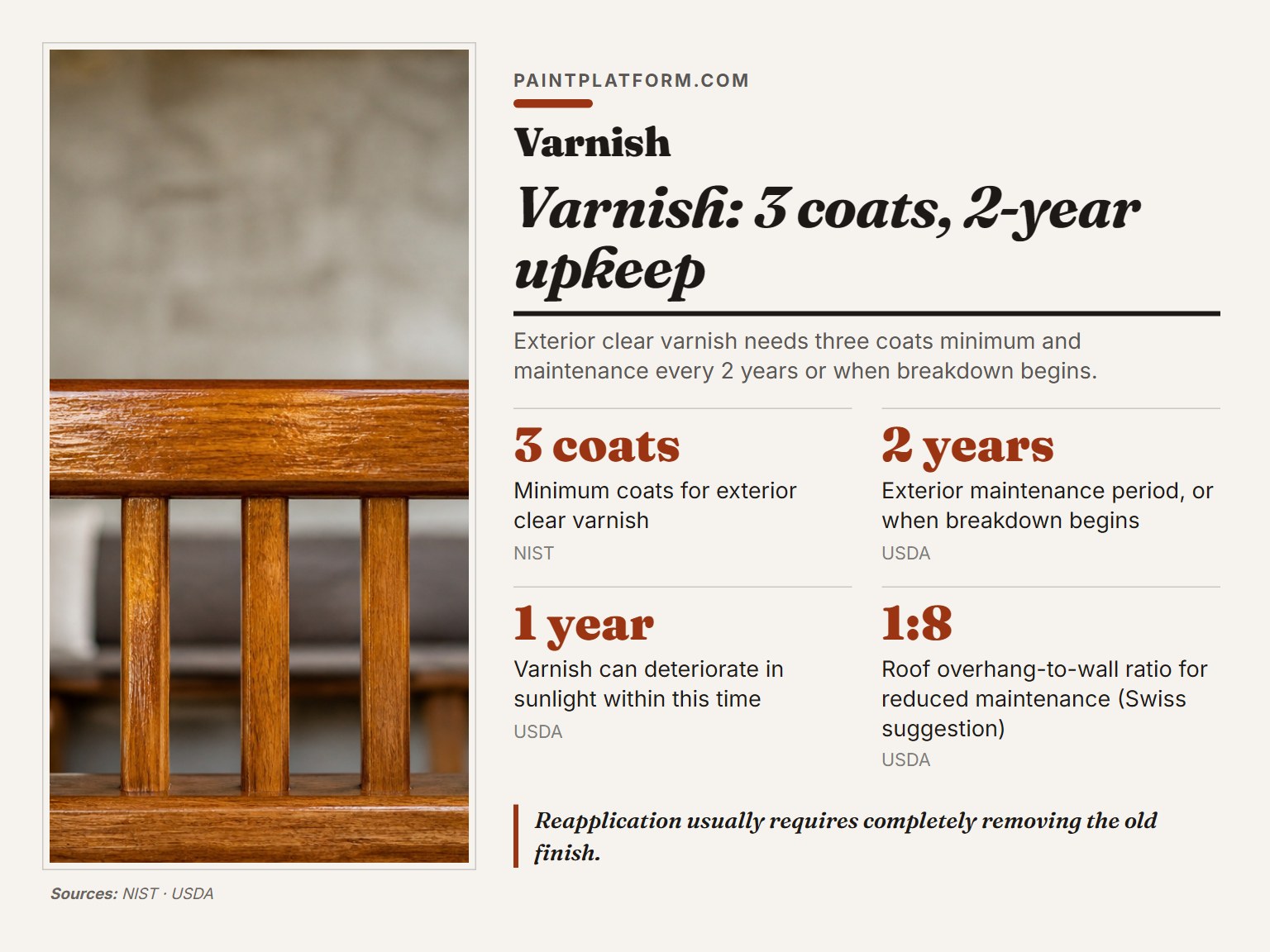
The varnish pros and cons balance out like this: you get a hard, warm film that resists most household chemicals, foods and drinks, and you pay with slow drying, dust sensitivity, and a real maintenance cycle. The USDA Forest Service Wood Handbook warns that most varnishes should not be used on wood exposed to sunlight because the film will deteriorate after a limited time, sometimes within one year.
That one-year figure is the whole argument compressed into a sentence. A varnish film is a sacrificial layer, and sunlight plus moisture eats it. Once the film starts to check and craze, the Wood Handbook notes that reapplication means stripping the old finish back to bare wood first.
What follows is where varnish earns its keep, where it quietly ruins a weekend, and why a canvas and a porch rail want completely different versions of the same word.
Key Takeaways
- Three coats minimum on exterior work, with a recoat at two years or the moment breakdown starts.
- Sun-exposed wood is the worst case. The Wood Handbook says the film can deteriorate after a limited time, sometimes within one year, while a maintained boat finish is a different story.
- Slow drying is the tax. Varnish stays tacky for hours, so dust, insects, and studio lint all get a vote.
- On a painting, varnish is a separate decision from the paint itself, and it waits for the paint to cure.
- Skip it below the waterline. Water eventually penetrates the film and blisters it.
Where Varnish Earns Its Keep
A varnish film is the closest thing to armor you can brush onto wood, and it’s the only clear finish that gives dark wood that lit-from-inside depth. It also shrugs off most of what a kitchen throws at it.
A cured varnish film forms a continuous layer that resists most household chemicals, foods and drinks. Its durability rests on two things: adhesion, the bond between film and substrate, and cohesion, the internal bond among varnish molecules. Both get measured in the lab, and a film that fails either one will crack or lift.
That second sentence is the one worth memorizing when you weigh the varnish pros and cons. A varnish durability peer-reviewed study comparing conventional and UV-cured coatings on beech and oak found both properties shift with species and finish type. Beech, a diffuse-porous wood, and oak, a ring-porous wood, behave differently under the identical film.
Which is why “varnish” on a label tells you almost nothing. Marine spar varnish, conversion varnish, and the craft-store can are three different animals. Marine spar varnish is built for exterior marine work where the film has to stay flexible, not for a bookshelf.
If you’re weighing it against an opaque coating, the paint vs varnish question really asks whether you want to see grain at all.
The Cons Nobody Puts on the Label
- Dust is a permanent housemate. Varnish stays tacky for hours, so anything airborne lands and stays.
- Slow. Lacquer and shellac dry in minutes; varnish does not.
- It needs rubbing out and polishing before it loses the brush marks.
- Repair means stripping, not touching up.
- High initial cost and high maintenance cost, per the Wood Handbook’s own summary table.
Common mistake: Coating straight over a checked, crazed film. The new coat sits on a failing layer, and the whole thing lifts within a season.
Lacquer dries fast because its solvent flashes off almost immediately, which is why factory furniture runs it and why lacquer paint work belongs in a spray booth rather than on a brush.
I’ve made a version of this mistake with paint-and-primer combos, expecting a thicker product to do a job it was never built for, which is the varnish pros and cons lesson in miniature. A brown water ring bled straight back through. Varnish sits in the same category: it’s a topcoat, not a sealer.
How Long Does Varnish Actually Last Outdoors?
Two years, or when breakdown begins, is the Wood Handbook’s maintenance interval for clear varnish, and that’s the optimistic case.
| Situation | What the sources report | What drives it |
|---|---|---|
| Sun-exposed exterior wood | Film can deteriorate after a limited time, sometimes within one year | Wood Handbook: not suitable for exterior wood except limited cases; NIST and International guides treat spar varnish as a maintained exterior coating |
| Exterior finishes generally | Reapplication between 1 year and 7-10 years | Wood Handbook |
| Constant immersion | Not a valid use | Water penetrates and blisters the film |
The NIST spar varnish durability tests show how fast that flips. Fifty commercial spar varnishes sat under continuous carbon-arc light for 60 days, and only the very poorest showed any failure. Then came a 17-hour water spray. By morning, all but a few of the most durable coatings were completely covered in fine checks.
A finish that survives light alone tells you nothing. Add water and the clock starts.
The NIST cycle got harsher from there: 21 hours of light plus 3 hours of spray, four days a week, then a half hour in an oven at about 70 C and an hour at minus 10 C on the remaining days. That schedule broke coatings far faster than light alone.
Design buys you more time than product choice does. The Wood Handbook cites a Swiss recommendation that a roof overhang-to-wall-height ratio of 1:8 substantially reduces maintenance requirements.
Varnish vs Polyurethane vs Shellac vs Lacquer
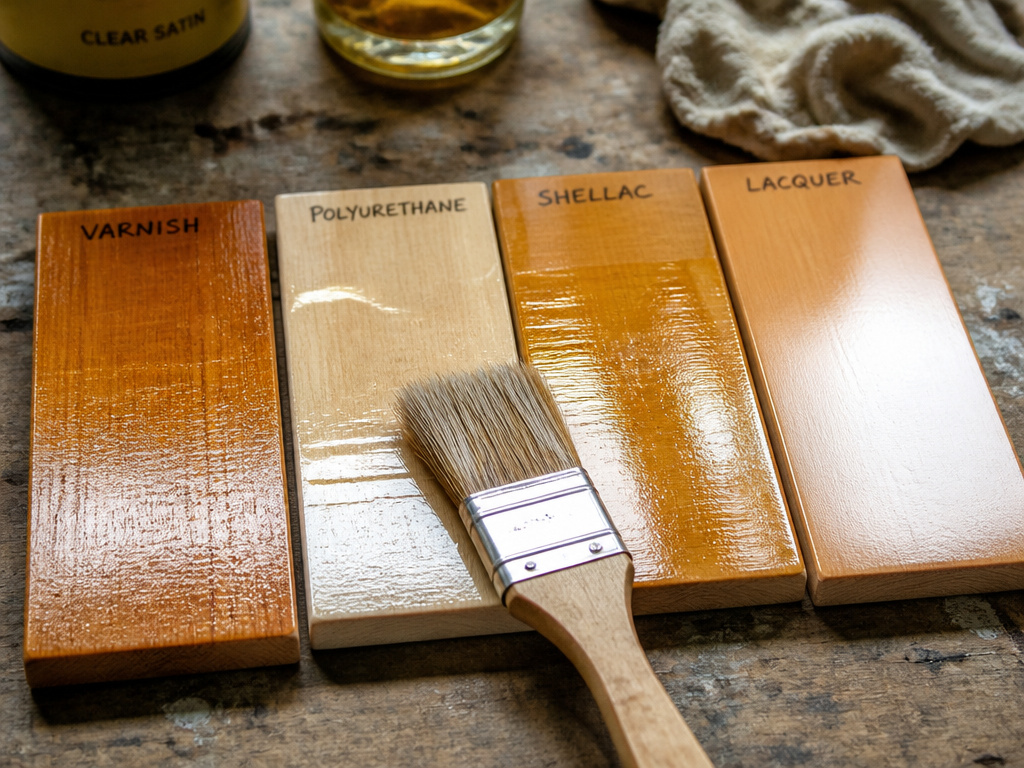
Polyurethane gets recommended for every project on the internet. Half those projects would be better served by something else.
| Finish | Best for | Weak spot |
|---|---|---|
| Varnish | Handled furniture, warm depth | Slow dry, dust, needs rubbing out |
| Polyurethane | Floors, tabletops, traffic | Can read plasticky, poor repair |
| Shellac | Sealing, quick jobs, antiques | Water-vulnerable once aged |
| Lacquer | Factory-smooth finishes | Solvent-heavy, needs spray gear |
Varnish vs Polyurethane
Both are film finishes, and both will show you every flaw in your prep. The practical split comes down to repairability. Polyurethane is tougher against abrasion and cheaper to buy, but a damaged spot is hard to blend invisibly. Varnish is softer, and it polishes out.
For a table that gets used hard, polyurethane wins. For a piece you want to look deep and warm and you’re willing to maintain, varnish wins.
Shellac and the Hardness Trap
Here’s a result that surprises people. A 2018 study in Coatings found shellac measured harder than polyurethane, and harder still after UV ageing, yet less durable overall and badly water-vulnerable once aged. Hardness and durability point in opposite directions.
If you’re choosing between the two for a restoration job, the shellac vs polyurethane comparison matters more than either product’s spec sheet. A film can be scratch-resistant and still fail at the first wet glass.
Can You Varnish an Acrylic Painting the Same Way as an Oil?
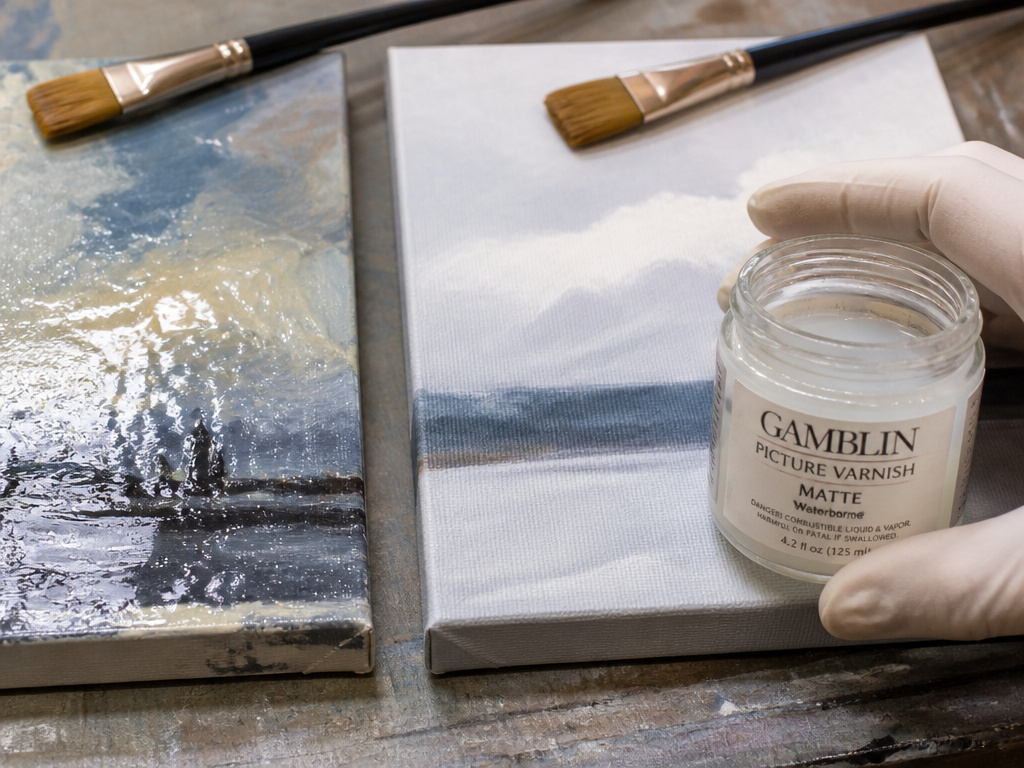
No, and the difference is cure time, not brand loyalty.
The Cure Rule Comes First
Oil paint oxidizes and keeps changing for months. Acrylic forms a film fast but keeps shedding water and solvents for a while after that. Varnish traps whatever is still escaping underneath, and trapped solvent turns into a cloudy film or a wrinkled one.
A removable picture varnish is formulated to go on thin over a fully dry painting and stay removable later. A water-borne picture varnish is the route for acrylics, and it stays workable with water rather than solvent. If you want the full sequence, this walkthrough on how to varnish an acrylic painting covers the dry-time question properly.
Removable Beats Permanent
A removable picture varnish comes off with the right solvent, which matters more than most beginners realize. A varnish that can’t be removed locks in every future yellowing problem.
The same logic applies to varnishing an oil painting: thin coats, full cure first, and a removable resin so a conservator has options in forty years.
The First 30 Days Decide How the Finish Ages
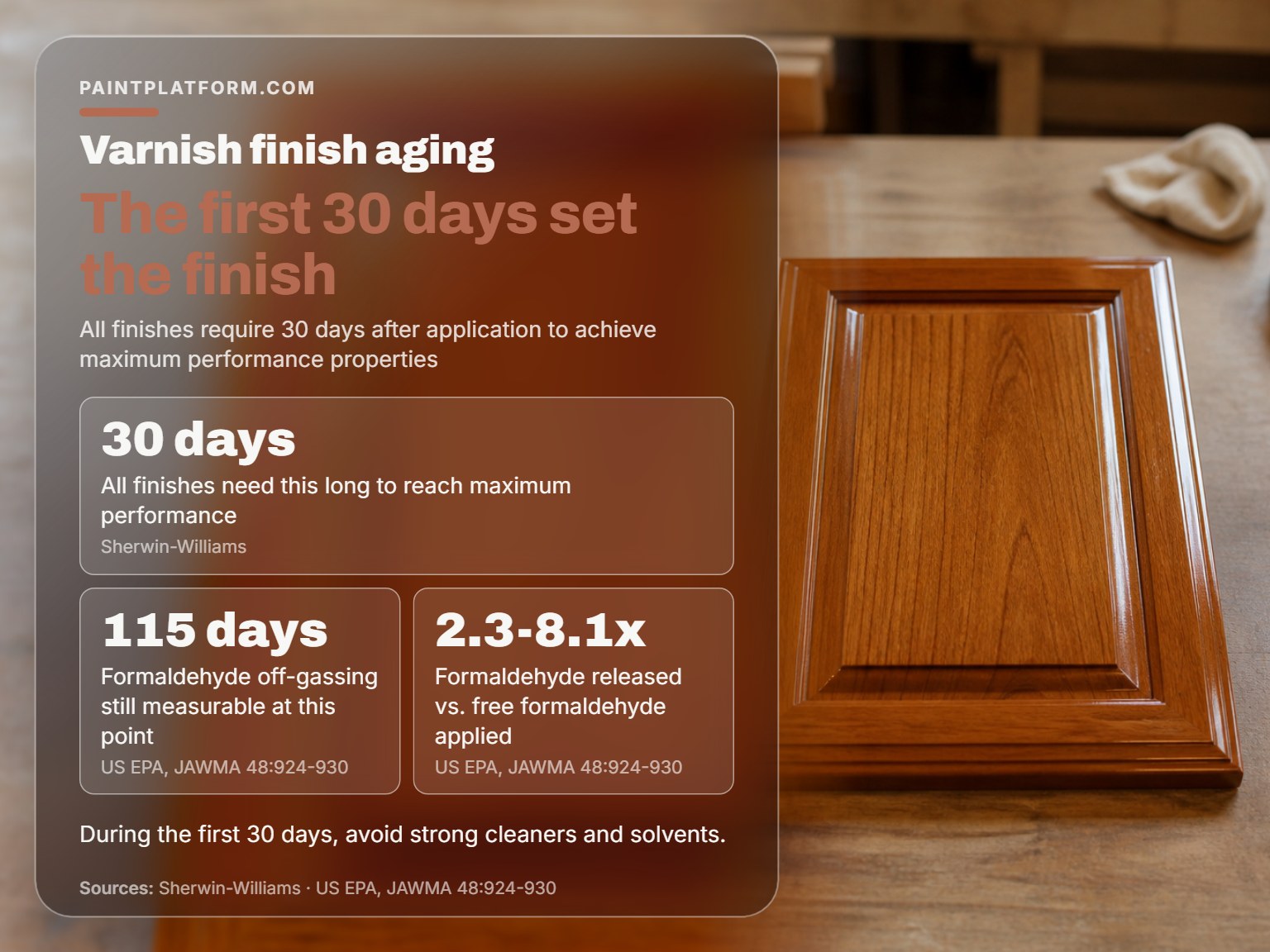
Thirty days. A factory conversion varnish needs that long before it reaches full chemical resistance.
The Sherwin-Williams care sheet for Northland cabinetry states the coating meets ANSI/KCMA A161.1-1995, approved March 22, 1996, and that all finishes need 30 days after application to hit maximum performance. During that window, strong cleaners and solvents stay in the cupboard.
The chemical test itself is worth knowing: panels were aged 30 days, then exposed to household substances including ammonia, vinegar, lemon juice, 50% ethyl alcohol, mustard, and 10% sodium carbonate.
Worth knowing before you start: Solvent-borne varnish keeps off-gassing long after the smell fades. An EPA conversion varnish emissions report measured formaldehyde released at 2.3 to 8.1 times the free formaldehyde applied, and detectable off-gassing at 115 days at a long-term rate of 0.17 mg/m2/h.
Where Varnish Is the Wrong Tool
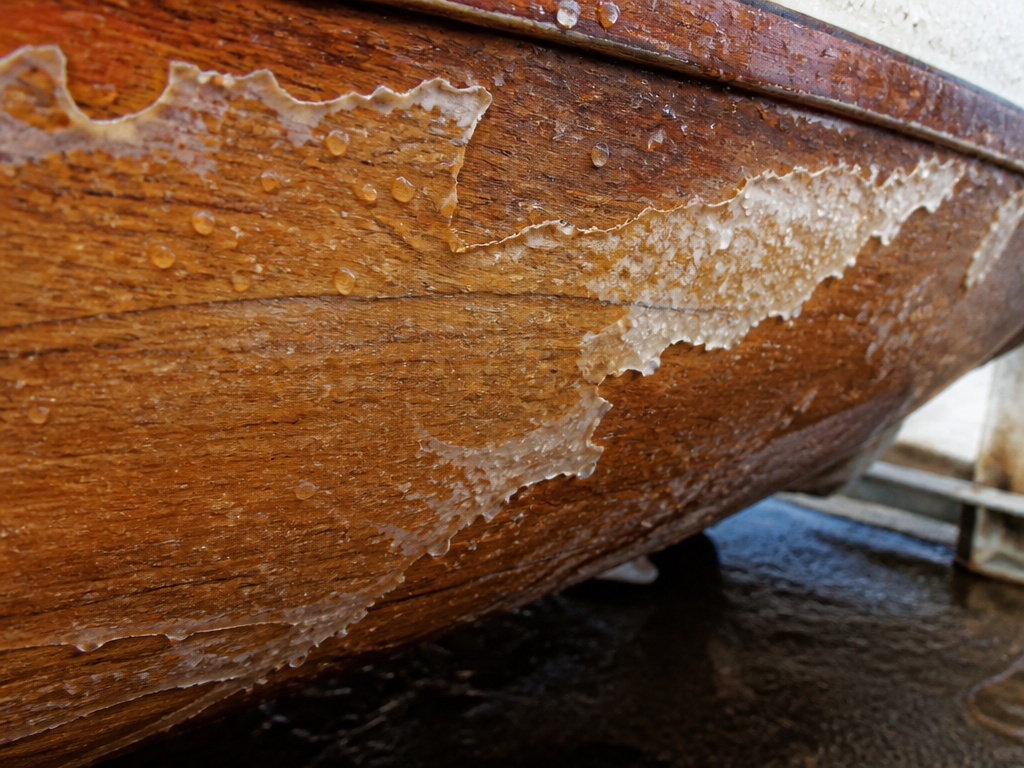
Constant immersion is the clearest no. The International varnishes guide is blunt about it: water eventually penetrates the film, the coating blisters, and varnish is not a below-waterline product.
- Below the waterline on any boat. Blistering, then peeling.
- On wood that flexes hard and often, unless the film is built for it.
- Over a dirty or waxy surface, where adhesion never forms.
- On anything you can’t take out of service for a recoat every couple of years.
Violin makers have argued about this for centuries. A Scientific Reports violin varnish study using neutron imaging found that worn or incomplete coatings lose their moisture-barrier function even under short humidity swings, and the paper argues for a minimum number of layers and total thickness while preserving vibration. Traditional makers build up many thin layers instead.
If you want to go deeper into how museums think about old finishes, the Smithsonian’s material on the nature of varnish in historic coatings is worth an afternoon.
How to Apply Varnish Without Wasting a Weekend
Four things decide the outcome: surface prep, temperature, coat count, and patience.
Before you start: Solvent varnish is flammable and the fumes build fast in a closed room, so work with cross-ventilation and keep rags flat and outdoors to dry. Wet varnish stays tacky for hours, which means one stray insect or dust plume ruins a coat you can’t touch up. Sand between coats or the next layer won’t bond.
- Sand to bare, sound wood and wipe with a tack cloth. Skip the wipe and dust sits under the first coat, visible forever through a gloss film.
- Seal porous grain first if the wood is open-pored, or the first coat sinks unevenly and you’ll chase it with extra layers.
- Brush thin coats, three minimum for exterior work. Flooding a thick coat traps solvent, and trapped solvent wrinkles the surface as it escapes.
- Wait for full dry between coats, not just touch-dry. Varnish stays tacky for hours, and sanding a half-cured coat balls up the paper and drags the film.
- Rub out and polish once the last coat is hard. Frank Pollaro notes that even a very large dining table won’t take more than an afternoon to rub out and polish, which is the part most people dread and then skip.
The amber cast is a feature, not a flaw. Pollaro points out that varnish’s warm glow suits darker woods best, unless you specifically want to add warmth to maple or ash.
Frequently Asked Questions
Does varnish yellow over time?
Yes, and the amber shift is built in. Pollaro describes varnish’s warm amber glow as one of its defining traits, which is why it flatters walnut and mahogany and can look odd on pale maple. On a painting, yellowing is the reason removable picture varnishes exist.
Can you put varnish over paint?
Only over a fully cured, sound paint film that has been deglossed and cleaned. Over a fresh or failing coating, the varnish bonds to the weak layer instead of the wood, and it lifts with it. Test a hidden patch first.
How many coats of varnish do I need?
Three coats minimum for exterior clear varnish, per the Wood Handbook’s summary table. Interior furniture often takes fewer, but thin coats build better than thick ones. A single heavy coat traps solvent and wrinkles.
Is varnish waterproof?
No. Water eventually penetrates the film and blisters it, which is why marine guides rule it out below the waterline. It’s water-resistant enough for a tabletop or a porch rail that gets recoated on schedule.
Can you varnish over an old finish without stripping?
Sometimes, if the old film is intact and well bonded. Once it has checked, crazed, or started lifting, the Wood Handbook notes that reapplication means removing the old finish completely first. A new coat over a failing layer sits on a failing layer and lifts with it.
The Bottom Line
Here’s the threshold that decides it: if you can’t commit to a recoat every two years, don’t start with clear varnish on exterior wood. Pick a penetrating oil or a semi-transparent stain instead and save yourself the stripping job.
The second threshold is sunlight. A piece that sits in direct sunlight is the worst possible home for a clear film, and the Wood Handbook says so directly. Shade, an overhang, or UV-blocking glass changes the math more than any product upgrade will.
So the first thing to do this week is small. Buy one can, grab a scrap of the actual wood you plan to finish, and brush the recommended coats on it. Write the date on the back with a pencil. When it starts to fail, you’ll know exactly how long your conditions give you, which beats any number in any guide, including this one.
