
Types of Painter’s Tape Explained: Which Roll Wins?
This post contains affiliate links. As an Amazon Associate, we earn from qualifying purchases.
Types of painter’s tape explained in one line: the label gives you a day rating and an adhesive strength, and those two numbers decide where a roll belongs. Day ratings run from 1 to 60 days depending on brand and class, with Shurtape offering clean removal from 1 to 60 days. Widths run from 6 mm to 3 inches.
The day rating describes how the adhesive behaves over time, not how long your project will take. Tape left past its window keeps bonding to the surface, and Shurtape’s Trent Starnes names the two outcomes plainly: residue and lockdown.
What follows walks the label top to bottom. Day number, adhesive class, width, and the removal angle that keeps an edge crisp. Ten minutes from now you’ll pick a roll off the shelf without guessing.
Key Takeaways
- The day number is a removal deadline. A 5-day rough-surface tape and a delicate roll rated up to 60 days by some brands are different tools wearing the same logo.
- 1.5 inch is the most popular Scotch width, and the extra margin helps with a wandering hand.
- One 60-yard roll masks an average-sized 10 ft. X 10 ft. Room, ceiling, baseboards, and door and window trim included.
- 3M says fresh paint needs at least 24 hours before tape touches it, while FrogTape allows taping once the paint is dry to the touch; a delicate-surface roll covers the first 30 days.
- Pull at 90 degrees per Shurtape (3M’s sheet says 45 degrees) and take the tape off as soon as the job is finished.
Types of Painter’s Tape Explained: Three Questions That Pick Yours
Surface, environment, and time. 3M hands professional painters that exact checklist, and answering the three in order narrows the shelf faster than reading every label in the aisle.
Painter’s tape is a masking tape built around a pressure-sensitive adhesive formulated for clean removal. Day ratings from 1 to 60 days describe how long the adhesive can stay on a surface before the bond strengthens past the point of clean peel. Adhesive classes run from low-tack delicate formulations to heavy-duty exterior grades.
Smooth drywall and glossy trim grab differently. So do brick, glass, and wallpaper that’s been up since the previous owner. A tape that holds beautifully on painted wood can fail on a rough brick face, which is why “it didn’t stick” is almost always a surface problem.
- Surface. Drywall, glossy trim, brick, glass, wallpaper. Each one wants a different adhesive class.
- Environment. Interior or exterior, sun or shade, humidity. Scotch Exterior Surface Painter’s Tape is built for rain, humidity, wind, and direct sun.
- Time. How many days the tape sits before you pull it. This is the one people guess at, and the one that decides whether paint comes up with the tape.
If you’d rather work backwards from your project than forwards from the label, there’s a longer walkthrough on how to choose painter’s tape that starts with the surface and ends with a shopping list.
What the “Day” Number on the Label Actually Means
Shurtape builds day tapes in six ratings: 1, 3, 5, 8, 14, and 30 days. Starnes told PaintPro that contractors walk in asking for a specific day tape by number, the way you’d ask for a wrench size.
That number is a clean-removal window. It’s how long the adhesive can sit on a surface and still peel away without dragging the topcoat with it.
The 30-day class splits in two directions. Some 30-day tapes carry a light adhesive for delicate surfaces like wallpaper. Others are built outdoors and made to come off cleanly after a month of heat and rain.
| Tape Class | Clean-Removal Window | Where It Belongs |
|---|---|---|
| Low-adhesion / delicate | 1 week to 60 days, brand dependent | Wallpaper, faux finishes, fresh paint |
| Medium multipurpose | Up to 14 days | Drywall, plaster, painted wood, glass |
| Rough surface | 5 days | Brick, concrete, stucco, rough wood |
| Exterior / waterproof | 7 days in testing | Outdoor trim, metal, vinyl |
Read across that table and the spread is enormous. Five days for rough-surface tape, up to 60 for a delicate roll like FrogTape, though Shurtape’s delicate tape is rated 30 days.
Treat the day number as a removal deadline. Tape left past it keeps bonding, and a stronger bond is exactly what lifts paint when you finally pull.
If you want the shortlist rather than the theory, this best painter’s tape roundup sorts the same classes by job.
Low, Medium, or Heavy-Duty: Match the Adhesive to the Surface
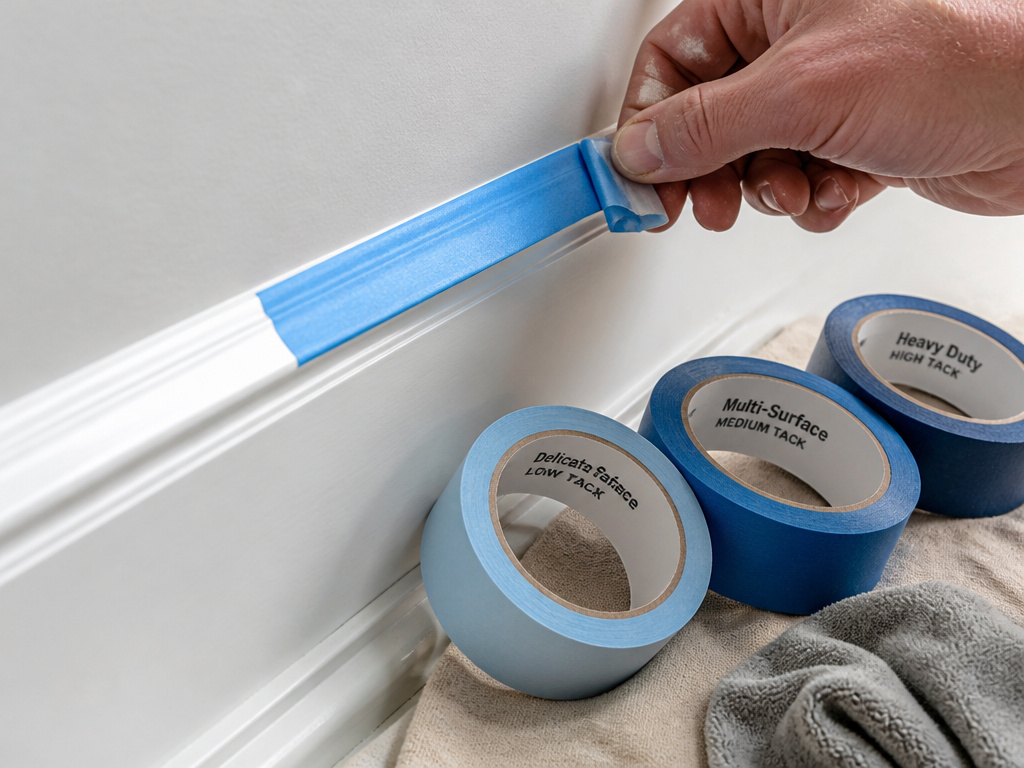
You pull a strip of blue tape off a baseboard and a crescent of paint comes with it. The roll was too aggressive for that surface, and the label said so before you started.
Adhesive strength is the second half of the label, and it comes in three broad tiers.
- Low-adhesion. Delicate surfaces: faux finishes, wallpaper, decorative paint jobs, fresh paint. These stay put from 30 days (Shurtape) to 60 days (FrogTape) depending on brand.
- Medium. Drywall and plaster, plus painted wood, metal, glass, and stone. Up to 14 days, per Bob Vila’s testing.
- Heavy-duty. Outdoor work, drop cloths, and stick-resistant surfaces like concrete, brick, and stucco; on lacquered paints sources disagree (ScotchBlue’s guide says not recommended, the 2060 sheet lists lacquer). Pull weather-resistant tape within 7 days.
Dust is the quiet killer. A baseboard that looks clean will leave a grey film on a rag, and tape laid over that film peels at the corner before you’ve finished the wall. 3M’s own FAQ puts the blame for most non-sticking tape on dirt and moisture.
Delicate Surfaces and Fresh Paint
Scotch Delicate Surface Painter’s Tape covers wallpaper, wood floors, and freshly painted surfaces less than 30 days old. 3M recommends that same roll for masking wood floors, and BEHR’s pro guidance points it at varnished hardwood too.
Fresh paint is the trap. 3M says wait at least 24 hours before taping a freshly painted surface, while FrogTape allows it once the paint is dry to the touch, so a wall you finished last night is still off limits this morning under 3M’s guidance.
If you’re taping over something you painted last week, low-tack tape is the only class worth reaching for.
Rough Surfaces: Brick, Stucco, Concrete
Rough-surface tape bonds to concrete, brick, stucco, and rough wood, holds for about 5 days, and comes off without sticky residue. Scotch Rough Surface Painter’s Tape 2060 is the 3M version, and BEHR recommends it by name for brick.
One caution from hands-on testing. Bob Vila’s crew found ScotchBlue Exterior Surface tape adhered well to metal, vinyl, painted wood, and glass but performed poorly on brick and other rough surfaces. Exterior and rough are two different jobs, and the labels treat them that way.
Where this goes sideways: Taping a wall you painted yesterday. Standard painter’s tape can lift fresh paint, and 3M’s own answer is a 24-hour wait plus a Delicate Surface roll for anything under 30 days old.
Both cases have their own playbook: tape for painted walls covers the fresh-paint side, and textured wall tape covers brick, stucco, and rough wood.
Why Is the 1.5-Inch Roll the Most Popular Width?

Most manufacturer lines carry four primary widths: 18 mm (3/4 inch), 24 mm (1 inch), 36 mm (1 1/2 inch), and 48 mm (2 inch). Scotch runs from 3/4 inch up to 3 inches, 3M’s blue line runs from 1/2 inch to 3 inches, and Shurtape goes as narrow as 6 mm.
- 18 mm and 24 mm. Trim, corners, short runs, and detail work where a wide strip would wander.
- 36 mm. The general-purpose width, and the most popular Scotch size, because it leaves margin for a messy hand.
- 48 mm and wider. Ceilings, baseboards, and anything where coverage beats precision.
Narrow rolls earn their place. ProMask Blue measures 0.94 inch, which makes it the one to grab for corner and detail painting. Shurtape’s 6 mm tape exists for grout lines in faux finishing work.
Width also changes how fast you burn through a roll. A wider strip covers the same linear feet with more surface behind it, so the roll count you estimate from a tape measure is only half the story.
How Much Tape Does a Room Actually Take?
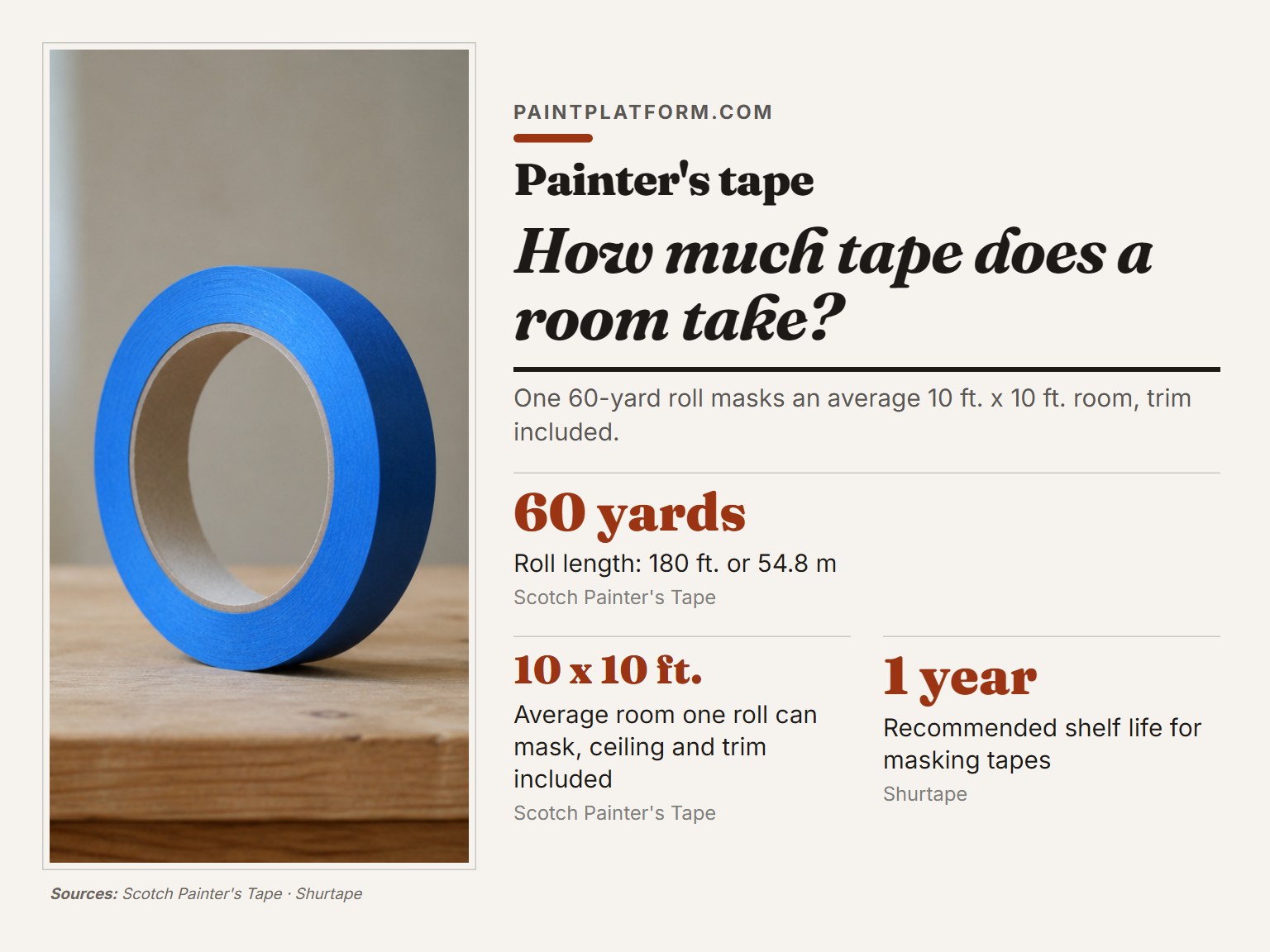
One 60-yard roll masks an average-sized 10 ft. X 10 ft. Room, ceiling, baseboards, and door and window trim included. That’s 180 feet, or 54.8 meters, per roll.
A living room, a basement, or a kitchen with a run of cabinet fronts might take two or three rolls. The number sounds generous until you’re standing in that kitchen.
Measure before you buy. List every surface: baseboards, window and door trim, ceiling line, and fixtures. Pull the outlet covers and vent plates instead of taping around them, which saves time and tape in the same pass.
Storage matters as much as quantity. 3M puts the shelf life of masking tape at about one year, so a roll that’s spent a long time in a hot garage is a gamble you don’t need to take.
The part nobody mentions: A roll past its one-year shelf life may not release cleanly. Old adhesive is the reason a tape that worked last spring suddenly lifts corners.
For ceilings and whole walls, masking film covers a lot of ground fast, which is why it usually rides along with tape on bigger jobs.
Where the Tape Manufacturers Disagree
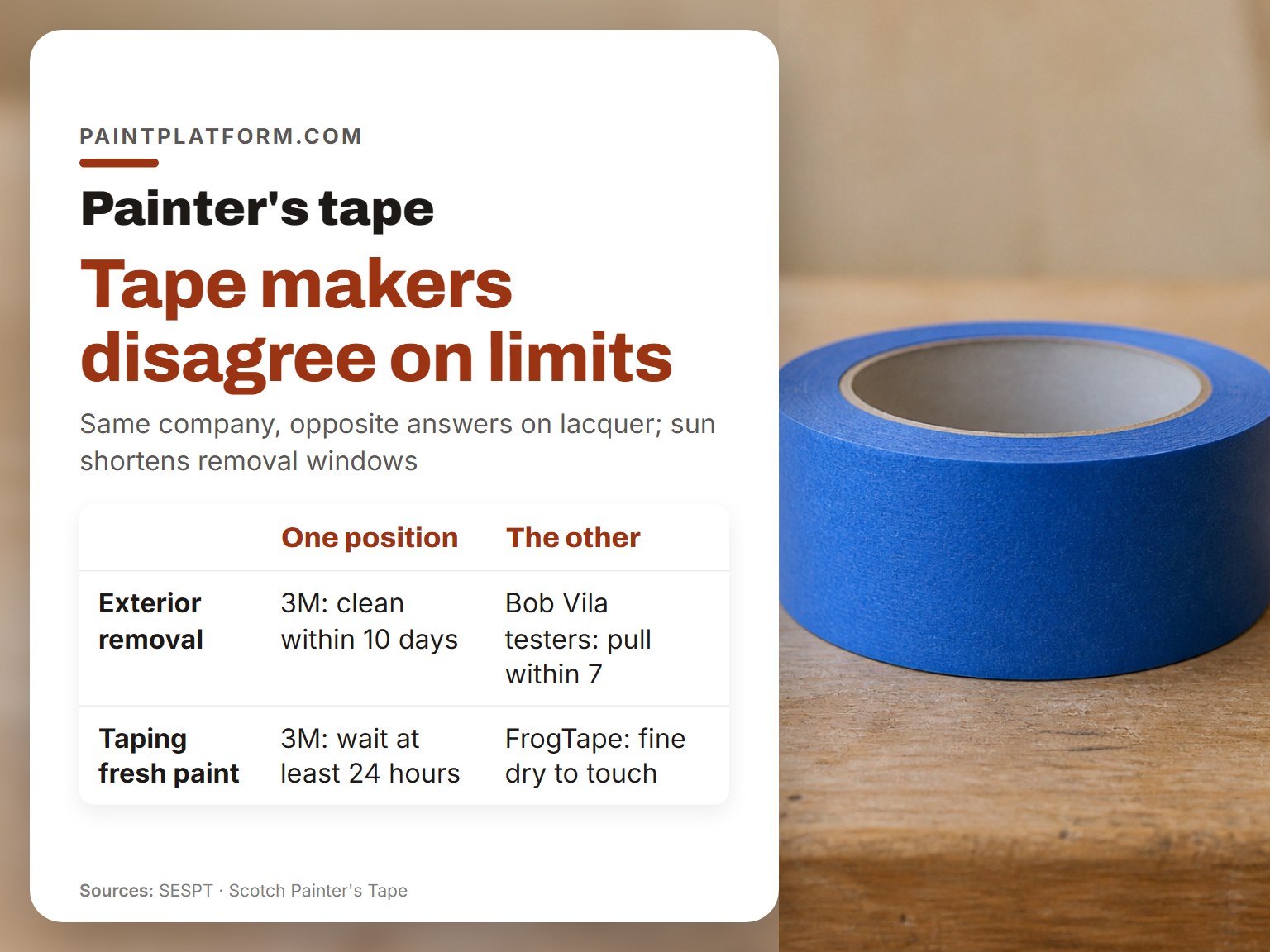
Every brand publishes a removal window. The windows don’t match, and a couple of them contradict the same company’s other paperwork.
| Question | One Position | The Other |
|---|---|---|
| Exterior tape removal | 3M claims clean removal within 10 days | Bob Vila’s testers pull within 7 |
| Sun during the window | ScotchBlue 2090: UV resistant 14 days, indoor and outdoor | FrogTape: limits assume no direct sunlight |
| Lacquered surfaces | ScotchBlue surface guide: not recommended | 2060 data sheet lists lacquer as a use |
| Taping fresh paint | 3M: wait at least 24 hours | FrogTape: fine once paint is dry to touch |
Sunlight: Two Opposite Sets of Instructions
ScotchBlue Original Painter’s Tape 2090 carries a 14-day clean-removal claim and UV resistance for the same 14 days, indoors and out. FrogTape qualifies every removal limit with a no-direct-sunlight note.
The practical read is to treat direct sun as a timer that runs faster than the label. If a wall faces south and you’re leaving tape up for a week, pull it earlier than the number suggests.
The Lacquer Contradiction
3M’s ScotchBlue surface guide states that none of its ScotchBlue painter’s tapes are recommended for lacquered surfaces. The Scotch Rough Surface 2060 data sheet lists lacquer coating as a recommended use. Same company, opposite answers.
Test on an inconspicuous spot. That’s the only advice that survives both documents.
I keep one delicate-surface roll and one 1.5-inch medium roll in the same bucket, and I test anything glossy on a hidden patch before I commit. That habit has saved more finishes for me than any single tape ever did.
Getting the Tape Off Without Lifting Paint
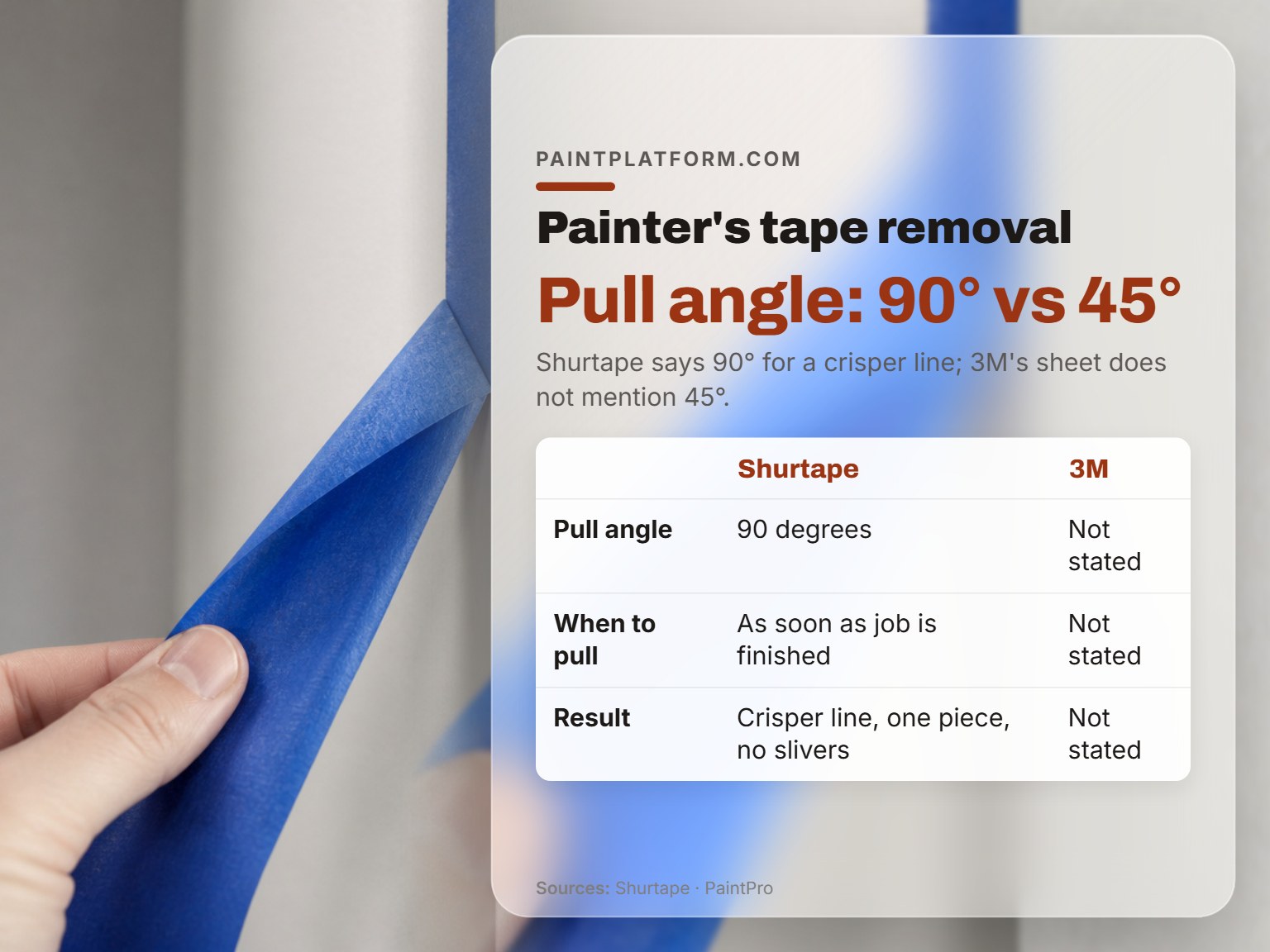
Removal is where a tape job either holds or ruins the wall. Shurtape’s rule is a 90-degree pull for a crisper line, one piece, no slivers left behind, while 3M’s technical sheet says to pull the tape back on itself at 45 degrees once the paint is dry to the touch. Both work; Shurtape favors the 90-degree pull for keeping the strip intact.
- Pull as soon as the last coat is done. The longer tape stays on, the stronger the bond, and a stronger bond is what lifts paint.
- Work at 90 degrees to the surface (Shurtape’s rule; 3M’s sheet says 45). Pulling straight out into the room puts all the stress on the paint edge.
- Go slow and even. A steady pull keeps the adhesive with the tape instead of on the wall.
- Check for residue before you call it done. Shurtape names residue and lockdown as the two big problems from leaving tape up too long.
A slow, even pull makes a low, steady tearing sound and the strip comes up whole. A fast yank gives you a snap, and then you’re picking slivers off the floor.
The 90-Degree Pull, in Practice
Hold the strip between thumb and forefinger, keep your hand close to the wall, and pull back over itself rather than out, at 90 degrees per Shurtape or 45 per 3M. The angle matters because a strip pulled straight out concentrates the load on one thin line of paint.
If clean edges are the whole point of the job, there’s a fuller walkthrough on crisp paint lines and a step-by-step on how to use painter’s tape that covers the press-down pass most people rush.
I spent my first few years buying the fanciest roll on the shelf. Then a friend taped off a room with a plain blue roll and got sharper edges than mine, because she wiped the trim down first and pulled while the paint was still soft. Same lesson I learned with cheap paint: the hand matters more than the price tag.
Easy to miss: Tape pressed hard along the edge and barely touched in the middle. The edge seals, the middle lifts, and paint creeps under the loose section.
Frequently Asked Questions
What’s the difference between painter’s tape and masking tape?
Painter’s tape is built with an adhesive designed for clean removability, while regular masking tape can leave residue behind on removal. White painter’s tape is sometimes sold as masking tape and is usually general purpose and cheaper. If you’re taping a wall edge you care about, reach for the painter’s tape.
How long can painter’s tape stay on a wall?
It depends on the class. Medium multipurpose tape comes off easily up to 14 days after application, even in direct sunlight, per Bob Vila’s testing. Rough-surface tape is rated around 5 days, and delicate rolls run from 30 days (Shurtape) to 60 days (FrogTape) depending on brand and sun exposure.
Can I use painter’s tape on fresh paint?
3M says wait at least 24 hours before applying tape to a freshly painted surface, and use a tape designed for it, such as Scotch Delicate Surface. FrogTape’s guidance is looser, allowing use once the paint is dry to the touch. When two brands disagree, test a hidden patch first.
Does painter’s tape work on brick or textured walls?
Only if you buy the rough-surface class. Bob Vila’s testers found standard blue and exterior tape struggle on brick, concrete, and stucco, though 3M’s Rough Surface 2060 is recommended for brick. Rough-surface tape bonds strongly to those surfaces and comes off without sticky residue after about 5 days.
What width of painter’s tape should I buy?
Start with 1.5 inch, the most popular Scotch width, because the extra margin forgives a wandering hand. Add a narrower roll for corners and detail work, and a wider one if you’re masking ceilings or long baseboard runs; Scotch runs from 3/4 inch to 3 inches and 3M’s blue line from 1/2 inch to 3 inches.
How long does painter’s tape last in storage?
3M puts the recommended shelf life for masking tapes at about one year. Heat and humidity shorten that. A roll that has been baking in a garage for a long time is worth replacing before you trust it on a finished wall.
Before You Go
Two rolls cover a lot of what a home painter runs into: a 1.5-inch medium-adhesive tape for everyday trim and a delicate-surface roll for anything painted in the last 30 days or finished with varnish. Keep them in the same bucket so you stop hunting for them mid-wall.
Here’s the trigger that matters. If a roll has been sitting more than a year, don’t trust it on a finished surface. 3M’s shelf-life guidance is about a year, and old adhesive may not release cleanly, which is exactly how you end up repairing a paint line you spent an hour taping.
And one concession: everything above assumes you’re taping a surface that’s clean and dry. On a chalky, dusty, or damp wall, no tape on the shelf will hold, and the fix is a rag, not a better roll.
Start before you feel ready. Then wipe the trim down first.
