
Milk Paint vs Chalk Paint: Which Should You Buy?
This post contains affiliate links. As an Amazon Associate, we earn from qualifying purchases.
In the milk paint vs chalk paint decision, milk paint is a dry powder you mix with water, and chalk paint is a pre-mixed liquid you stir and use. Milk paint shows the grain and distresses on its own. Chalk paint covers in one coat and dries smooth and matte. Pick chalk paint for a predictable finish.
That predictability comes from one thing: chalk paint arrives already mixed, so the variable you’d otherwise fight is gone. In the milk paint vs chalk paint question, milk paint hands that variable back to you, and the result swings with how well you stir it.
What follows covers what each paint is made of, how long a mixed batch actually lasts, which one wins the one-coat test, and where the published advice flatly contradicts itself on sealing.
Key Takeaways
- Chalk paint covers in one coat; the one documented side-by-side test needed two coats of milk paint for a semi-opaque finish.
- Mix only what you’ll use today. Sources give a range for mixed milk paint, from 24 hours to 5-7 days refrigerated.
- Treehugger and Resin Expert say milk paint on non-porous surfaces needs a bonding agent, or it flakes instead of sticking, while Bob Vila says a bonding agent is only needed for a non-distressed uniform finish.
- Bob Vila says neither paint requires sanding unless the surface is slick or uneven, though The Spruce notes fine-grit sanding improves adhesion.
- Renovated Faith says waxing chalk paint means re-waxing every 6 months if you want the finish to hold.
Milk Paint vs Chalk Paint: What Actually Separates Them?
Casein, the milk protein, is the reason milk paint behaves the way it does. It’s also the reason the two paints get confused, because once both are on a piece they read as cousins.
Milk paint is a dry powder of casein, lime, and pigment that the user mixes with water. Chalk paint is a pre-mixed liquid of calcium carbonate, talc, and pigment in an acrylic binder. One is mixed on site; the other is stirred and used. The powder gives control over thickness and color; the liquid gives consistency and convenience.
The form difference drives everything downstream. With a powder, you can mix a small batch for a small job. A liquid commits you to a whole can whether you need it or not.
Here’s the part that trips people up. “Chalk Paint” is a product name from Annie Sloan, and plenty of writers now use it as a generic term for any chalky matte furniture paint. Some sources treat it as a brand, others as an open category. Both readings are in circulation, so check what’s actually in the can before you assume.
Milk paint has its own naming trap.
There’s an honest split on how much this matters. The milk paint pros and cons come down to control and unpredictability in the same breath. The Spruce lays out the material difference plainly: milk paint is a dry powder base with separate dry pigments, chalk paint ships complete and fully mixed but needs stirring to redistribute pigment.
One smell tells you which you’re working with. Milk paint’s casein gives off a faint scent of fresh-cut grass for about an hour after application. Chalk paint has no smell at all, according to Treehugger, though the wax you put over it may.
How Long Does Mixed Milk Paint Actually Last?
Twenty-four hours is where most sources land. They don’t all agree, and the spread is wide enough to matter.
The Spruce puts most milk paints at a day or two, with some additive-enhanced products reaching about two weeks. Treehugger says a few days refrigerated in a sealed container, best used within 24 hours. Renovated Faith reports 5-7 days in the fridge before it spoils. Resin Expert simply says use it within 24 hours.
| Source | Storage guidance for mixed milk paint |
|---|---|
| The Spruce | A day or two; up to about two weeks with additives |
| Treehugger | A few days refrigerated; best within 24 hours |
| Renovated Faith | 5-7 days refrigerated, then it spoils |
| Resin Expert | Best used within 24 hours |
The 24-Hour Camp and the 5-7 Day Camp
The disagreement isn’t really about spoilage speed. It’s about how much risk each writer is willing to hand a beginner.
The safe move costs you nothing. Mix only what you need for the current project and dump the rest, which is exactly what Resin Expert recommends. Refrigeration buys you a little time if you’re mid-project and want to stop for the night.
If you’re mixing from powder anyway, the milk paint recipe matters more than the storage question. Lumps are the real enemy.
Chalk paint doesn’t have this problem. Treehugger notes it can be stored for long periods without losing quality, though RMP Finishes warns you need to keep it from drying out between uses. Screw the lid down properly and it keeps.
Which One Covers in a Single Coat?
Chalk paint wins the one-coat test.
That verdict rests on one documented side-by-side: I SPY DIY painted a thrift dresser with Rust-Oleum Milk Paint on one side and chalk paint on the other. Chalk paint hit full coverage in one coat and hid all the grain and imperfections. Milk paint at one coat was more transparent with a textured brushed effect, and two coats got it to semi-opaque matte.
| Trait | Milk paint | Chalk paint |
|---|---|---|
| Form | Dry powder, mixed with water | Pre-mixed liquid, stirred |
| One coat | Transparent, shows grain | Full coverage, hides grain |
| Distressing | Self-distresses without topcoat | Needs sanding to distress |
| Storage | 24 hours to about a week | Long-term, keep lid sealed |
The One Documented Side-by-Side Test
Treat that result as a single tester’s observation, not a benchmark. Nobody has published a controlled comparison of these two product categories, so the honest framing is “one person, one dresser, one afternoon.”
Still, the finding lines up with everything else in the record. If you’re covering a dark piece or a water ring you’d rather forget, that’s the chalk paint advantage in plain terms.
If grain is the whole point of the piece, flip it. Milk paint at one coat is the better tool, and a whitewash effect is genuinely hard to get any other way.
For a first furniture project where you want the shortest path to a finished-looking result, the best chalk paint for wood furniture is the lower-risk buy. You’ll spend less time fixing coverage mistakes.
Do You Need a Topcoat? Where the Advice Splits
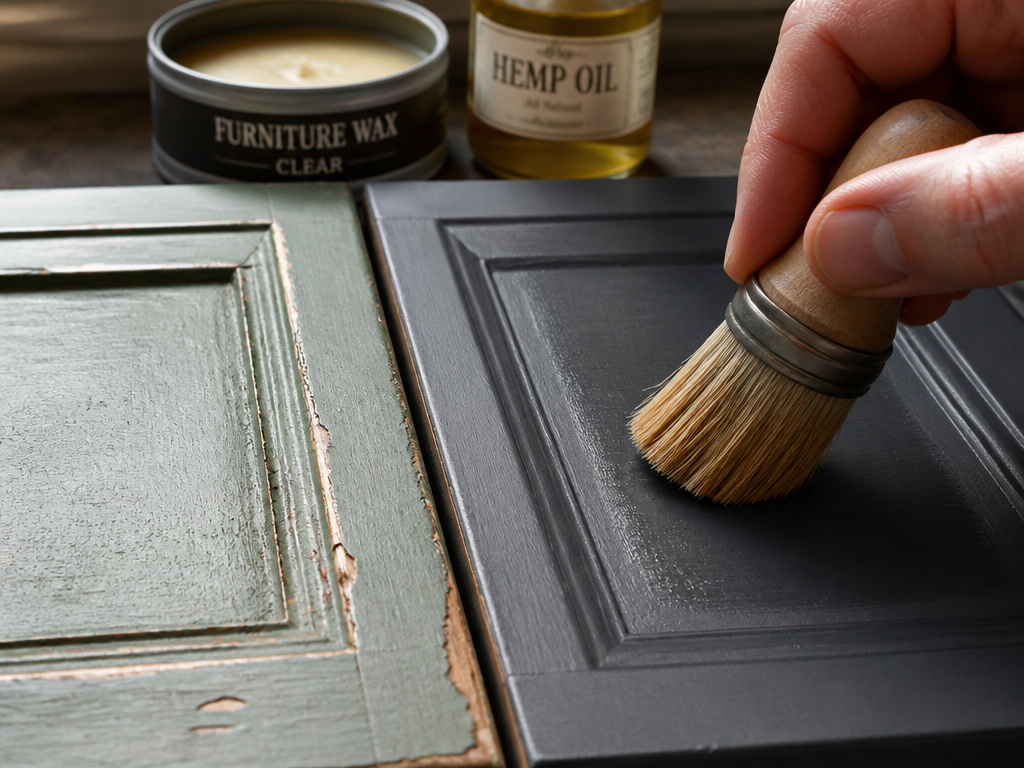
You’ll find milk paint described as needing no sealer and as flaking off without one, sometimes in the same afternoon of reading.
The Spruce says milk paint doesn’t need to be sealed, though sealing is recommended for better protection, and unsealed milk paint absorbs liquids. RMP Finishes goes further: milk paint surfaces crack, chip, and flake without a top coat, which is precisely why it’s good at distressing.
Milk Paint: Sealed or Not?
Both positions are describing the same behavior from different angles. Unsealed milk paint is fragile on purpose. That fragility is the look.
If you want the chipped farmhouse finish, skip the topcoat and let it happen. If you want the color to stay where you put it, seal it. RMP Finishes notes that a coat of wood wax or a finishing oil like hemp or tung oil over milk paint gives exceptional durability.
Chalk Paint: Wax or Nothing?
Same split, different paint. Treehugger says chalk paint is more susceptible to damage than milk paint and that unsealed chalk paint can chip off high-traffic pieces. I SPY DIY takes the project-dependent view: skip the topcoat for a super matte finish unless drinking glasses will be set on the piece, because water rings may leave marks.
Wax is the usual answer. The waxing painted furniture routine matters here, and so does which wax you pick. Annie Sloan Soft Wax contains mineral spirits and carries a much stronger odor than Miss Mustard Seed Furniture Wax, per Eighthundred Furniture. Neither gives a gloss finish; both are formulated matte.
Where this goes sideways: Using a freshly waxed piece hard in the first month. Both waxes are dry to the touch in 24-48 hours but need 20-30 days to cure, and most damage to newly painted furniture happens in that window.
Renovated Faith adds a maintenance number worth knowing before you commit: if you wax chalk paint, you’ll be re-waxing every 6 months. The best wax for chalk paint is the one you’re willing to reapply, not the one with the nicest tin.
The Distressed Look: Self-Distressing vs Sanding
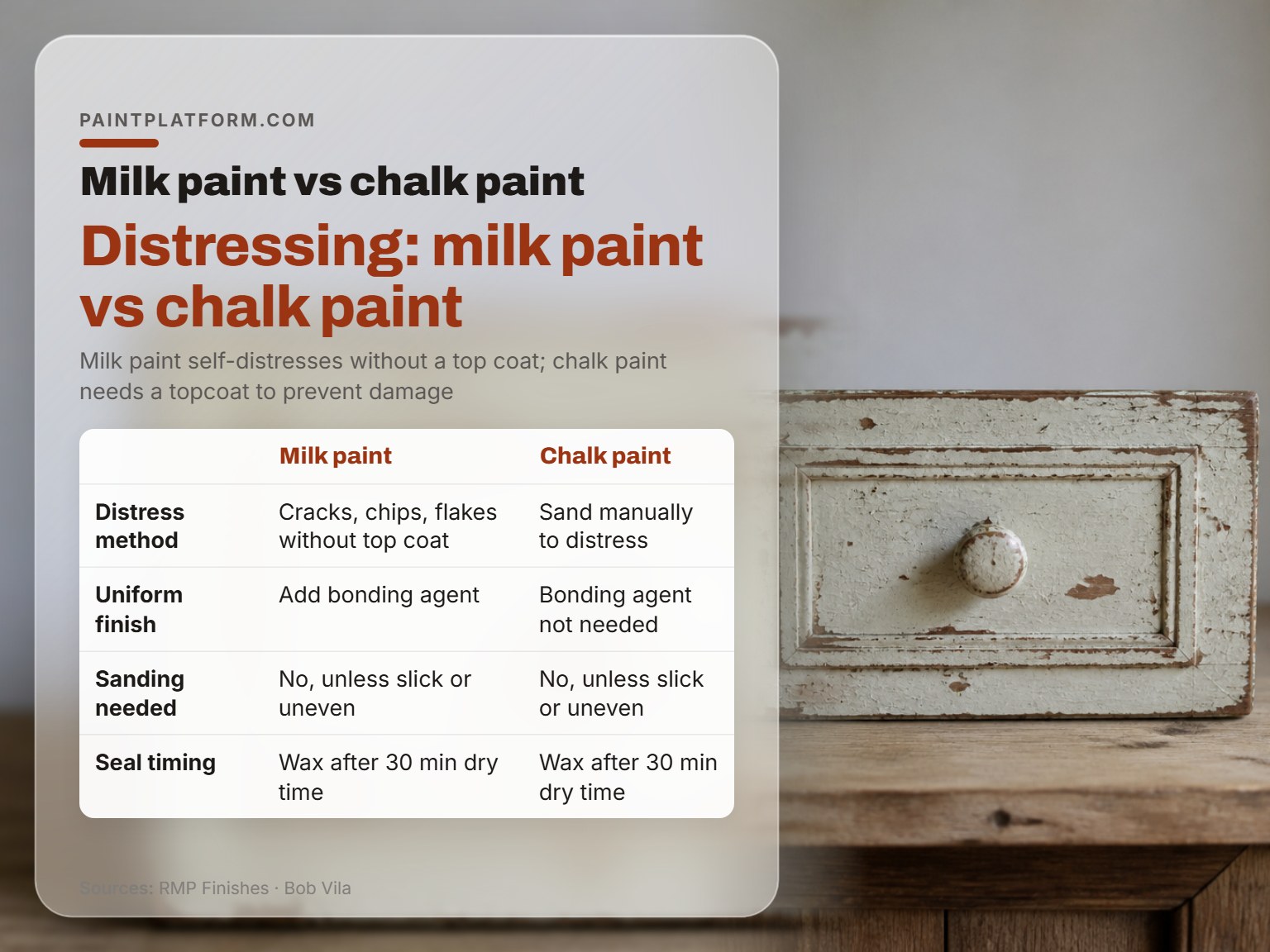
Distressing is where the two paints part company most visibly.
Milk paint does it for free. RMP Finishes describes surfaces cracking, chipping, and flaking without a top coat, which produces the chipped look fast.
Chalk paint holds its shape. To distress it you sand manually, and Bob Vila points out that sanding also takes chalk paint the other direction, toward a smooth modern finish if you layer and sand fine.
Here’s the mixing tell. If it dribbles or clumps, it needs more stirring, and the finish will show it.
If you want a controlled, uniform milk paint finish rather than a chipped one, Bob Vila’s answer is a bonding agent mixed into the paint for better surface adherence. Skip it and you get the self-distress.
A short sequence that keeps the distress where you want it:
- Clean the piece with a degreaser and wipe it down, or the paint will fish-eye where hands have been.
- Sand lightly only if the surface is slick or uneven, since neither paint requires it otherwise.
- Apply one coat and let it dry fully before judging, because milk paint at one coat looks worse than it is.
- Decide on the topcoat after the second coat, not before, since sealing locks in whatever distress you have.
Step 4 is the one people rush. Seal too early and you’ve committed to a look you were still deciding on.
Which Is More Expensive, and Does It Matter?
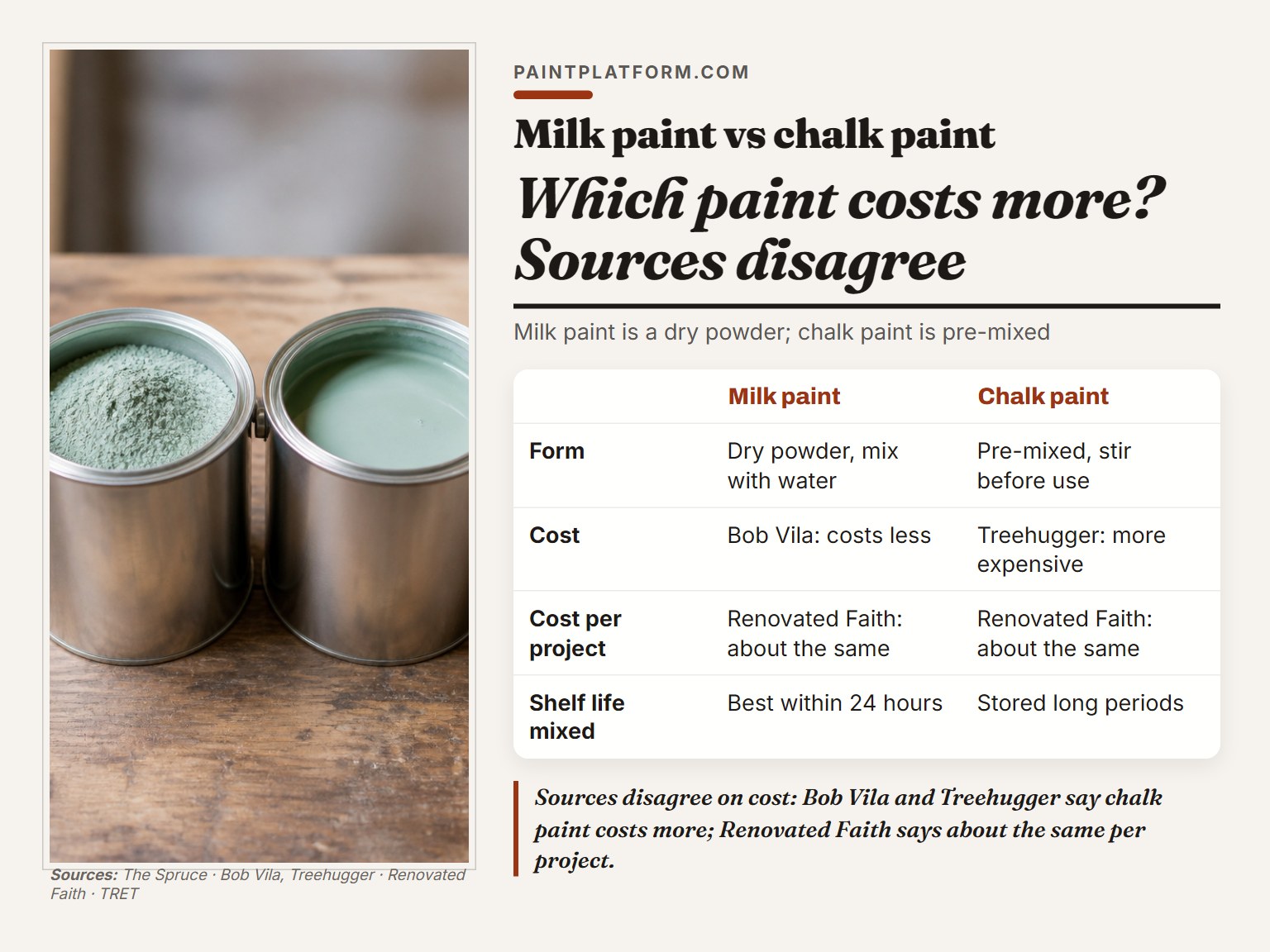
Cost is the argument that never quite settles.
Bob Vila says milk paint tends to cost less than chalk paint, and that chalk paint’s pre-mixed convenience runs more expensive. Treehugger says chalk paint is more expensive than milk paint. Resin Expert says chalk paint costs a little more. Renovated Faith breaks ranks and says milk paint costs about the same per project, because it’s thinner and doesn’t cover as far.
Both things can be true.
Fair warning, that was chalk paint against latex, not chalk against milk. The chalk paint vs regular paint comparison is a different question with a different answer.
Common mistake: Assuming the pricier can is the better can for a beginner. On a first piece, the difference between a mid-range and a premium chalk paint shows up in the color range, not in whether the thing sticks.
Matching the Paint to the Piece
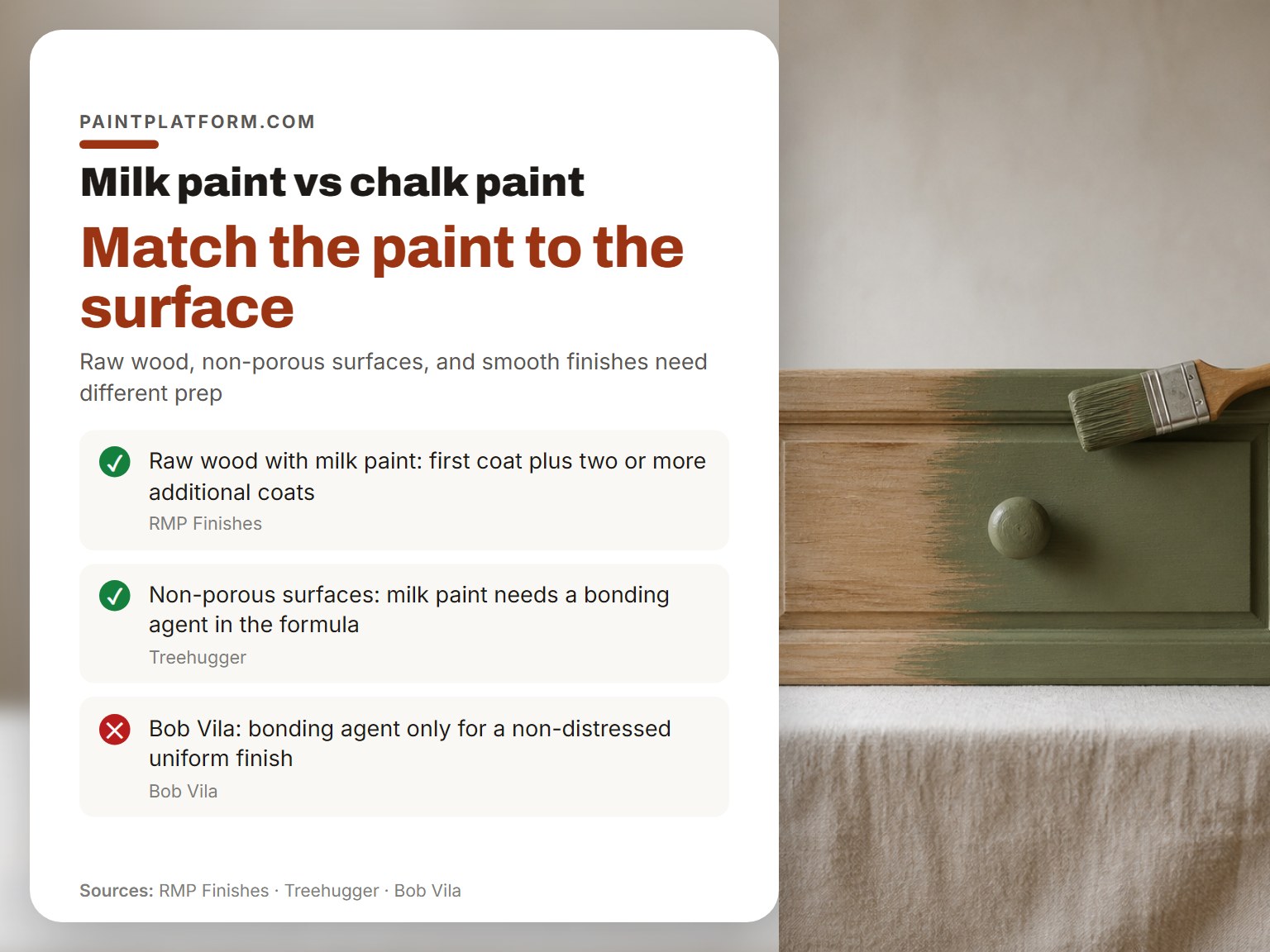
Three things decide it: the surface, the grain, and how much control you want over the mess.
If You’re Painting Raw Wood
Milk paint is the natural fit, with one catch. RMP Finishes notes raw wood is thirsty, so you may need a first coat plus two or more additional coats to get the color you expected. Budget the extra passes.
If You’re Painting Laminate, Glass, or Metal
This is where the sources genuinely disagree, and the disagreement matters. Treehugger and Resin Expert both say milk paint on a non-porous surface requires a bonding agent in the formula. Bob Vila says a bonding agent is only needed for a non-distressed uniform finish, and that neither paint requires sanding or primer unless the surface is slick.
My read: trust the stricter version on non-porous surfaces. A bonding agent is cheap insurance against a whole afternoon of flaking.
If You Want a Smooth Modern Finish
Chalk paint, then sand between coats.
If you’re weighing a full refinish rather than a decorative topcoat, the paint for refinishing furniture question has more variables than this one, and it’s worth reading before you commit a weekend.
Frequently Asked Questions
Is milk paint more durable than chalk paint?
RMP Finishes counters that milk paint cracks and flakes without a topcoat. Both are describing the same surface from different goals: one calls the wear character, the other calls it failure.
Can you use chalk paint over milk paint?
Scuff the surface first if it’s been sealed or waxed, since paint won’t key to wax.
Do you have to sand before either one?
No. The Spruce and Bob Vila both say sanding isn’t required, though fine-grit sanding improves adhesion. The exception is a high-gloss or lacquer surface, where I SPY DIY recommends light sanding plus a shellac primer such as Zinsser Cover-Stain.
Is chalk paint vegan?
Yes. Treehugger notes chalk paint contains no animal products. Milk paint is not, since casein comes from dairy. If that’s a deciding factor for you, the choice is already made.
How far does one quart go?
Eighthundred Furniture puts one quart of Miss Mustard Seed Milk Paint at an average dresser plus a small side table or a few picture frames. Coverage shifts with color, coat count, and how thirsty the wood is.
The Bottom Line
Here’s the concession. If you’re painting raw wood and you want a uniform, non-distressed color, milk paint stops being the easy answer.
