
How to Use a Platform Ladder for Painting: Step-by-Step
This post contains affiliate links. As an Amazon Associate, we earn from qualifying purchases.
To use a platform ladder for painting, set it on level ground with all four side rails supported, lock the spreaders with the base fully open, and stand centered on the platform with the ladder close to the wall. The American Ladder Institute requires a railing at least 20 inches above the platform on three sides, and knowing how to use a platform ladder for painting means following these setup steps.
Four side rails means four contact points, and the how to use a platform ladder for painting rule is that any slope at all can put three of them down and one of them floating. That floating foot is where the tipping starts, and it starts before you have opened a single can.
What follows walks the duty rating sticker, the 20-inch railing, the inside-versus-outside mount question, and the tool tray rule that two Little Giant manuals answer differently.
Key Takeaways
- Check the duty rating sticker before anything else. Type I tops out at 250 pounds and Type III at 200, and the sticker is required on the side of every ladder.
- All four side rails need level ground. A sloped driveway or a stair landing rules the platform ladder out entirely.
- Capacity is not one number. Little Giant rates its platforms at 300 pounds; a generic aftermarket platform manual claims 400.
- Standing on the platform while it holds your paint depends on the model: the PLATFORM PRO manual forbids it, while the generic aftermarket manual and the Little Giant Classic manual allow it.
- Descend before you move the ladder. Every time, even for a six-inch shift.
What the Duty Rating Sticker Actually Tells You
Type IAA holds 375 pounds, Type IA holds 300, Type I holds 250, Type II holds 225, and Type III holds 200. Those five numbers come from the Painting and Decorating Contractors of California safety guide, and they are the first thing to read on any ladder you are about to stand on.
A platform ladder is a self-supporting portable ladder, non-adjustable in length, with a platform at the highest intended standing level. The American Ladder Institute specifies a railing at least 20 inches above the platform surface on three sides, and sizes from 2 ft. To 18 ft. Standards: ANSI A14.1 for wood, A14.2 for metal, A14.5 for reinforced plastic.
The sticker matters because it counts you, your tools, and the paint. PDCA is blunt about this: the ladder has to be duty rated for the painter’s weight plus the materials carried. On a construction jobsite, only Type IA and Type I are acceptable.
| Type | Duty rating | Where it’s acceptable |
|---|---|---|
| IAA | 375 lb | Extra heavy duty |
| IA | 300 lb | Construction jobsites |
| I | 250 lb | Construction jobsites |
| II | 225 lb | Medium duty |
| III | 200 lb | Light duty |
Here is the wrinkle. The platform has its own rating, and the Little Giant PLATFORM PRO manual says never to exceed the duty rating of the ladder underneath it. So your real ceiling is whichever number is lower. A 300-pound platform on a Type II ladder is a 225-pound setup, no matter what the platform’s own sticker says.
If you want the wider version of this, our notes on ladder safety tips cover the ratings alongside the setup rules.
Why the 20-Inch Railing Changes How You Stand
The American Ladder Institute’s platform ladder definition starts with the railing, and that ordering is deliberate when you consider how to use a platform ladder for painting. Three sides of rail, at least 20 inches above the platform surface, is what separates a platform ladder from a stepladder with a wide step. That cage is the reason you can hold a brush in one hand and a cut bucket in the other.
Standing position matters just as much. ALI says to climb and work with your body near the middle of the steps or platform, and to set the ladder close to the work. Both instructions exist to prevent the ladder tipping sideways from over-reaching.
Set the ladder close enough that your belt buckle never crosses the side rail. If you have to lean, you have already picked the wrong spot to stand.
Platform ladders run from 2 ft. To 18 ft., measured from the bottom along the side rail to the top of the platform. Platform ladders run from 2 ft. To 18 ft., measured from the bottom along the side rail to the top of the platform. If you are sizing a purchase, how to choose a ladder height walks the measurement properly.
How Do You Set Up a Platform Ladder on Uneven Ground?
Level ground under all four side rails is the whole ballgame. ALI is direct about it: if that condition does not exist at the work site, a platform ladder should not be selected for the job. Not shimmed. Not propped. Selected out.
That rules out a lot of real driveways and most stairwells. It also rules out the trick everyone tries once, which is setting a foot on a box, a barrel, or a scaffold plank to gain a few inches. ALI forbids that outright.
Before you start: a platform ladder carries injury risk in three specific places. Loose anti-slip feet turn a level garage floor into a slide, so press down on each one before you climb. A spreader that has not locked will fold sideways under load, so open the base until you hear it seat. And a platform that is not fully hooked on the rungs can drop out from under you the moment you shift your weight.
Fair warning: a spreader that seats properly locks the base fully open. A spreader that half-seats leaves the base partially open, and a partially open base is how a self-supporting ladder folds sideways. Listen for the clack.
- Pick the spot before you pick up the ladder. Walk the ground where all four side rails will land. Any slope at all and the platform ladder stays in the truck.
- Open the base until the spreaders lock. ALI says the ladder must not be used as a single ladder or in the partially open position, and a half-open base is exactly how a self-supporting ladder folds sideways.
- Press down on each anti-slip foot. Worn or missing feet are a hard stop, and ALI requires them present and in good condition before use.
- Seat the platform hooks. The PLATFORM PRO has to sit level and fully hooked on the rungs, with both RAPID LOCK fasteners rotated 90 degrees until the locking pin is fully seated.
- Load the tray on the ground. Tools, tape, and the cut bucket go up in one trip or they go up on a rope. There is no third option that ends well.
Where this goes sideways: setting up on ice, snow, or a wet deck. ALI permits it only when suitable means to prevent slipping is employed, and never defines what that means. If you cannot name the means, do not climb.
For the step-ladder version of this same routine, how to use a step ladder safely covers the parallel checks.
Inside Mount or Outside Mount: What the Manual Actually Says
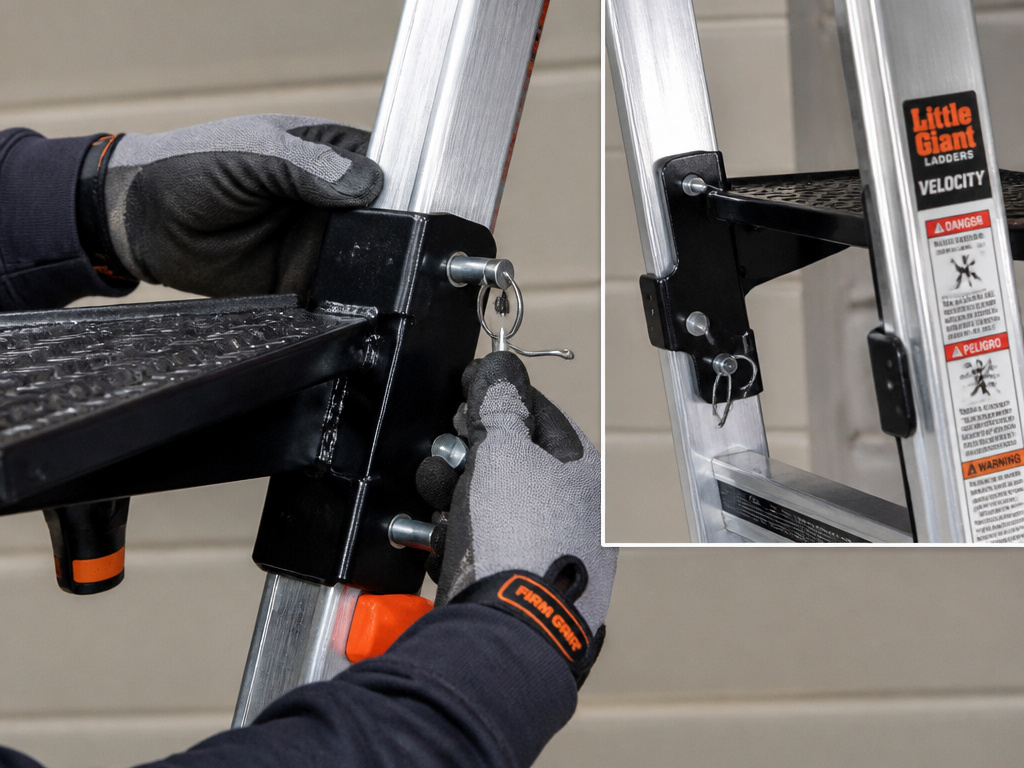
Little Giant’s manual permits something a lot of painters assume is forbidden: setting the platform on the outside of the ladder. The adjustable arms are built to go either way, inside or outside, and the manual shows both positions.
The catch is buried in the warning block. The manual says never to use the platform as a standing platform when it is mounted on the bottom rungs on the outside of the ladder, because the ladder could tip. It never defines where the bottom rungs end. That gap is why plenty of working painters refuse outside-mount standing altogether, on any rung.
Why 90-Degree Mode Is Off Limits
The PLATFORM PRO manual has one flat prohibition that catches people in stairwells: do not use the platform on articulated extendable ladders in 90-degree ladder mode. That is the configuration most of us reach for when a staircase wall needs cutting in, and it is the one configuration where the platform is simply not permitted.
The Little Giant Classic manual is different. It lists 90-degree ladder as one of the five configurations the ladder itself supports, and it never addresses the platform restriction. Two manuals from the same company, two different answers.
Skip this if: your articulated ladder is set in 90-degree mode. The PLATFORM PRO manual forbids the platform there, and the Classic manual is silent, so you are on your own for that setup.
If you are deciding between ladder styles for a job like this, step ladder vs extension ladder lays out where each one actually wins.
Should You Stand on the Platform While It Holds Your Paint?
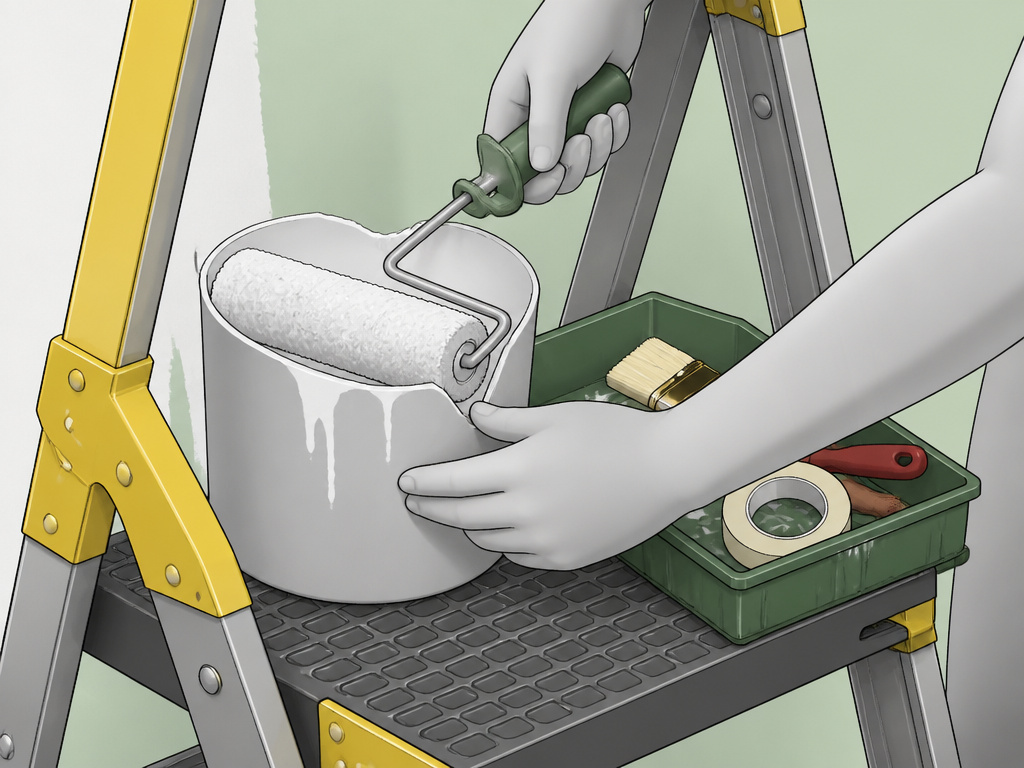
You are three rungs up with a roller in one hand and a cut bucket balanced on the platform edge, and the next thing you need is a second hand. That is the exact moment the manuals stop agreeing with each other.
The PLATFORM PRO manual is unambiguous: never stand on the platform while it is being used as a tool tray, while the generic aftermarket manual and the Little Giant Classic manual allow it. The generic aftermarket platform manual says the opposite in spirit, telling you to stand on the anti-slip surface and keep tools in the integrated tray for easy access, while the PLATFORM PRO manual forbids standing on the platform while it is used as a tool tray. The Little Giant Classic manual sits in the middle, describing the Work Platform as usable either as a tray for a paint bucket or as a standing platform, while the PLATFORM PRO manual forbids standing on the platform while it is used as a tool tray.
| Platform | Rated capacity | Standing while it holds tools |
|---|---|---|
| Little Giant PLATFORM PRO (84007) | 300 lb, or the ladder’s duty rating if lower | Not allowed |
| Little Giant Classic Work Platform | 300 lb | Allowed, tray or platform |
| Generic aftermarket platform | 400 lb | Allowed, tools in integrated tray |
Notice the capacity column. Same accessory category, and the aftermarket platform claims a third more load than either Little Giant. Neither manual reconciles the other, so treat the number printed on your own platform as the only one that applies to you.
I keep the platform as a tray on short jobs and step down to load it. The PLATFORM PRO line about never standing on it while it holds tools is one of those sentences you cannot unread once you have seen it.
One practical fix is an extension pole for the roller and a platform tray for everything else, though the PLATFORM PRO manual forbids standing on the platform while it holds tools. That keeps your hands free without asking the platform to do two jobs at once.
What Fails First on a Platform Ladder
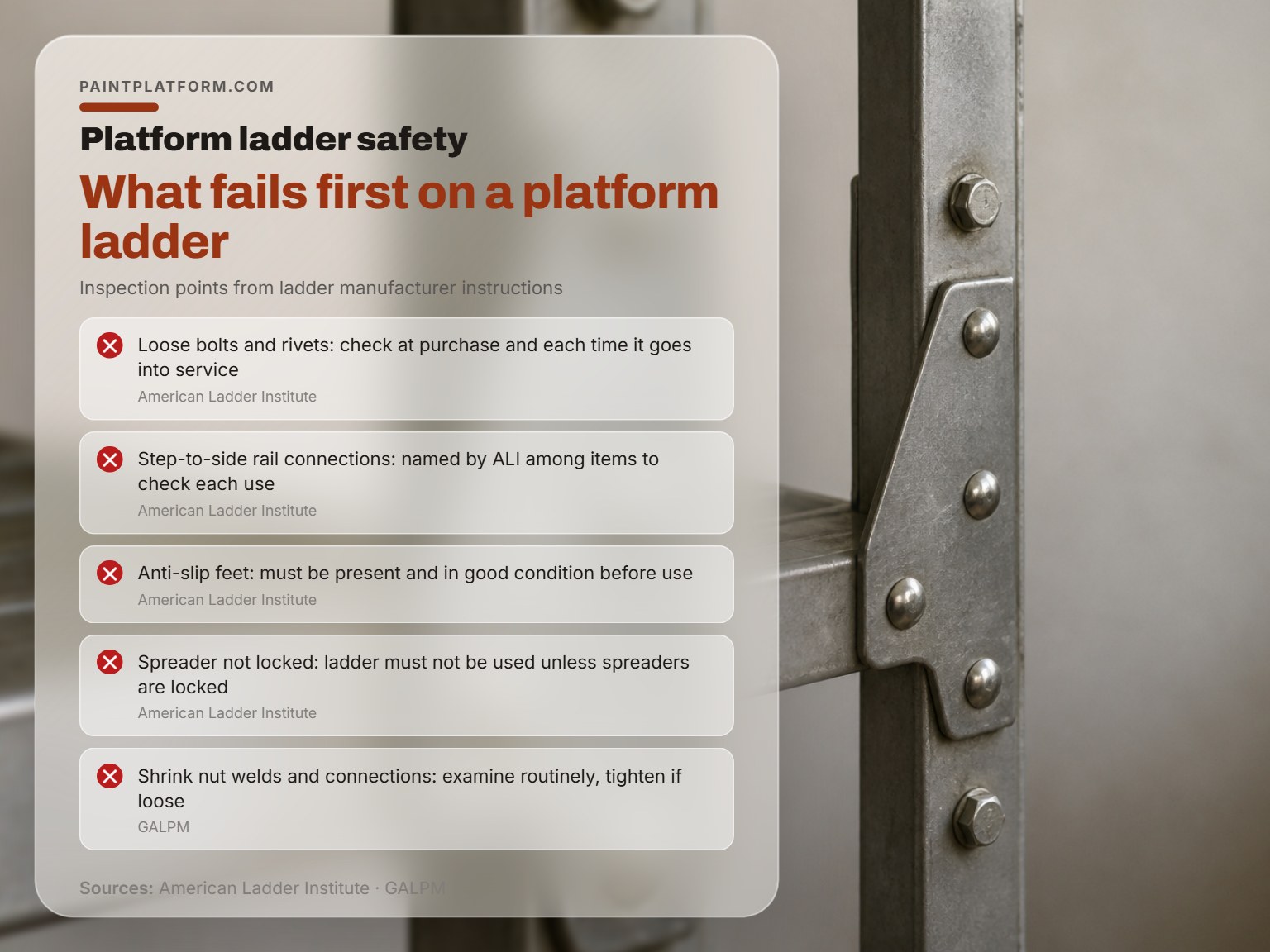
Bolts, rivets, and step-to-side rail connections are the three things the American Ladder Institute tells you to check every time. The inspection is required at purchase and again each time the ladder goes into service.
The generic aftermarket manual adds a fourth item: shrink nut welds and connections, which you tighten if they are loose. Little Giant’s instruction is shorter and stricter, requiring inspection on receipt and before each use, with a flat refusal to use anything damaged, bent, or broken.
The Four-Point Inspection That Catches Most Failures
- Bolts and rivets. A loose fastener is one of the working parts ALI says to check at purchase and each time the ladder goes into service.
- Step-to-side rail connections. ALI names these specifically among the items to check at purchase and each time the ladder goes into service.
- Anti-slip feet, sometimes called safety shoes. Worn rubber or a missing foot is a hard stop.
- Working parts. Hinges, spreaders, and platform hooks. If a spreader will not lock, the ladder does not go up.
Then there is the surface. ALI requires climbing and gripping surfaces to be cleaned if they have been exposed to oil, grease, or slippery materials, and the generic manual says the same about keeping the anti-slip surface free of oil or water. Wet paint counts. So does the film that builds up when you wipe a brush against the rail.
Solvent stripper splashed on a fiberglass rail is a separate problem. ALI warns that ladders exposed to corrosive substances such as acids or alkalis may have reduced strength and must be removed from service. A rail that has been soaked does not get wiped down and put back. It comes out of rotation.
A rail exposed to corrosive substances such as acids or alkalis may have reduced strength and must be removed from service. A rail exposed to corrosive substances such as acids or alkalis may have reduced strength and must be removed from service.
Different ladder materials handle this differently, and types of ladders covers which ones tolerate solvents and which ones do not.
Carrying Paint Up, and the Rope Rule
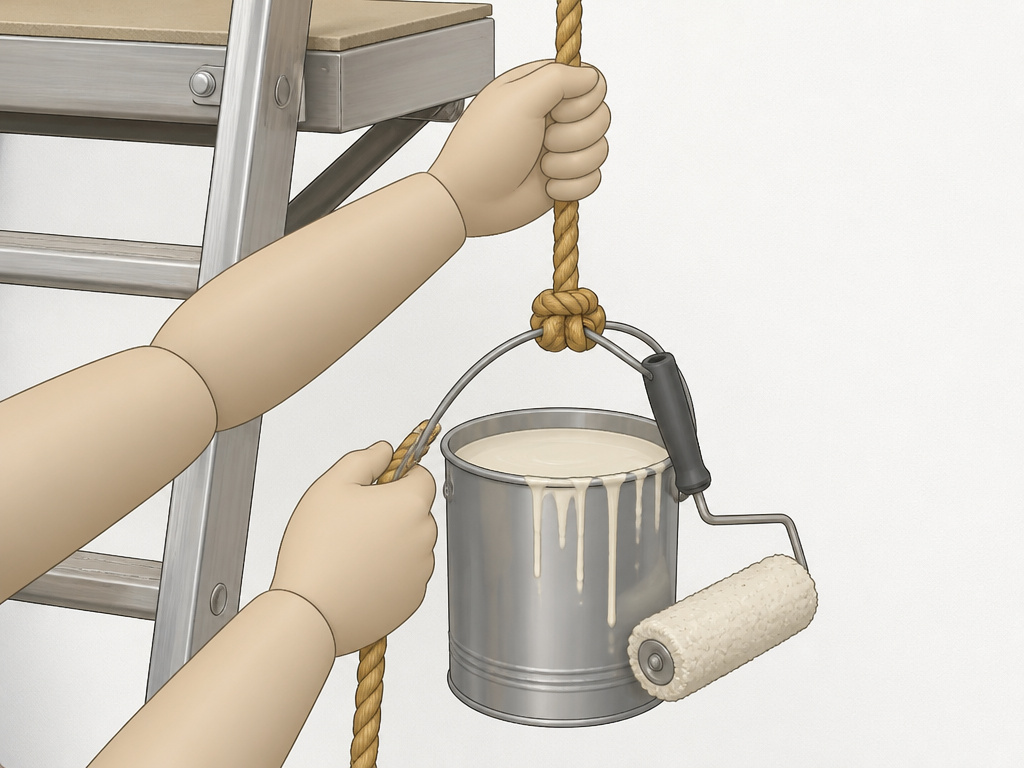
Paint is the load that gets people hurt, and every source agrees on that much. PDCA says do not carry heavy or bulky loads such as paint up or down a ladder, and to use a rope pull to hoist them instead. ALI says do not attempt to carry other objects in your hands while climbing. OSHA’s general-industry rule, as summarized by the Hyde job guide, prohibits climbing with any load that could cause a fall.
Where they part company is the method. PDCA names the rope pull. ALI does not specify a hoist at all, and OSHA’s language is about the load rather than the technique. So the rope is the trade-approved answer, and it is the one I would follow.
The Rope Pull, Step by Step
- Set the bucket on the ground beside the ladder base and tie off the handle. A bucket that tips while you are climbing sends paint up the ladder and down your arm.
- Climb with both hands free, facing the ladder, maintaining a firm hold on the rungs.
- Pull the rope up hand over hand once you are standing on the platform and have a foot planted.
- Lower it the same way at the end of the run. PDCA’s rule covers both directions, and the trip down is when people get careless.
Two more PDCA rules belong here because they are easy to break. Do not leave tools or materials on top of ladders, and do not carry putty knives in your back pocket while painting from a ladder. That second one is a PDCA rule because a putty knife in a back pocket is a hazard while painting from a ladder.
For the sort of work where you need the extra reach, reaching high ceilings covers the pole-and-platform combination properly.
Storing It So It’s Still Safe Next Spring
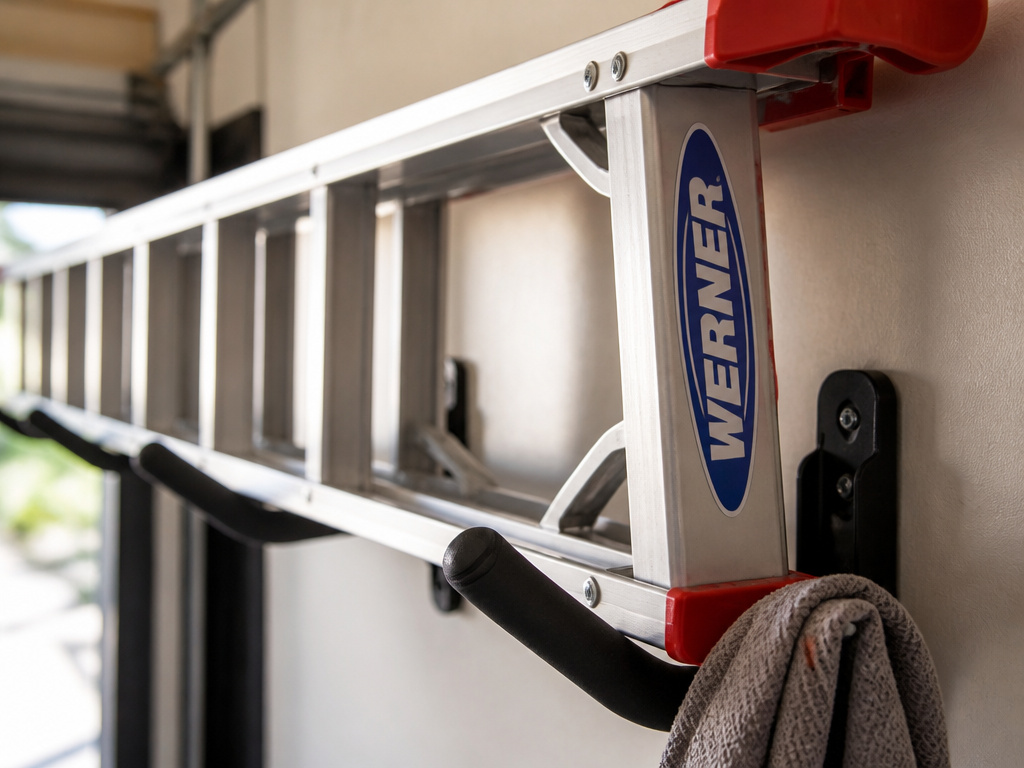
A ladder stored badly is a ladder you will replace. The generic platform manual asks for a dry, ventilated area, a wipe-down with a dry cloth to lift dust and debris, and a touch-up with anti-rust paint if the finish gets scratched. It also warns against harsh cleaners, which strip the painted finish and leave bare alloy underneath.
PDCA adds two storage rules that apply to the ladder itself: store out of sunlight on a rack, and do not store materials on the ladder. ALI goes further, requiring storage racks with enough supporting points to avoid sagging that can warp the ladder, and repeating that nothing else goes on the ladder while it is stored.
Transport has its own rules. ALI wants overhang beyond the rack’s support points minimized, with support points made of wood or rubber-covered pipe to cut vibration, chafing, and road shock. Minimizing overhang beyond the support points reduces vibration, chafing and road shock.
And when a ladder is genuinely finished, ALI is uncompromising: a discarded ladder must be destroyed so it cannot be used by anyone else. Leaving a cracked platform ladder at the curb is how someone else gets hurt with your equipment.
The generic platform manual says to touch up the painted surface with anti-rust paint if it gets scratched. Wipe it dry and touch it up with anti-rust paint if the finish gets scratched.
If your next job is overhead work at height, painting a high ceiling safely is the companion piece to this one.
Frequently Asked Questions
Can you stand on the top of a platform ladder?
The platform is the top. The American Ladder Institute defines a platform ladder as having its platform at the highest intended standing level, surrounded by railing on three sides. For ordinary step ladders the rule is different: PDCA says never stand on the top two rungs.
How much weight does a platform ladder hold?
It depends on the platform. Little Giant rates the PLATFORM PRO and the Classic Work Platform at 300 pounds each. A generic aftermarket platform manual claims 400 pounds. In every case the usable limit is the lower of the platform rating and the ladder’s duty rating underneath it.
Can you use a platform ladder on stairs?
Only if all four side rails get level support, and stairs rarely provide that. ALI says a platform ladder should not be selected when that condition does not exist. The PLATFORM PRO manual also forbids use in 90-degree ladder mode, which is the configuration most people reach for in a stairwell.
Do you still need three points of contact on a platform ladder?
The trade guidance says yes, while the Little Giant Classic manual’s selling point is working with both hands in any direction. PDCA requires two hands and a foot, or two feet and a hand, on the ladder at all times, while the Little Giant Classic manual says the platform lets you work with both hands in any direction. The platform’s selling point is working with both hands in any direction, which by definition removes a hand. The sources never reconcile that conflict, so use your judgment on how much you trust the railing.
Can you put a paint tray on a platform ladder?
On some models, yes. The PLATFORM PRO has paint tray locks that work with most metal paint trays. If the tray tabs are too wide to lock with the knobs vertical, rotate the knobs to the 45-degree position with the longer tab upward. Whether you can stand there while the tray is loaded depends entirely on the model.
How high can you reach from a platform ladder?
Platform ladders run from 2 ft. To 18 ft., measured from the bottom along the side rail to the top of the platform.
The Bottom Line
The platform ladder earns its place on one kind of job: long stretches where you stand in the same spot and need both hands. Cutting in a ceiling line. Rolling the wall above a stairwell. Trimming out a window head. Loading a platform with everything you need before you climb keeps your hands free. Get it all within reach on the ground first, then climb once.
If you are moving constantly, a plain step ladder is faster and lighter, and the platform just adds a thing to carry up the stairs. Save it for the jobs where your shoulders stay overhead long enough to complain.
The outside-mount question stays open: Little Giant allows setup on either the outside or inside of the ladder, while PDCA’s trade guidance collapses the distinction into general rules. Little Giant allows standing on an outside-mounted platform but warns against it on the bottom rungs and never says where the bottom rungs end, while PDCA’s trade guidance collapses the distinction into general rules. If you cannot get a straight answer for your specific model, do not stand out there. Mount it inside and keep the ambiguity off the job.
Grab your ladder, open the base until it clacks, and put a hand on the top rail before you trust it with your weight.
