
How to Thin Gouache Paint (Without Losing Opacity)
This post contains affiliate links. As an Amazon Associate, we earn from qualifying purchases.
To thin gouache paint, add water a few drops at a time until the mix drops off the brush slowly and covers the palette without showing white underneath. Strathmore calls that ideal consistency “similar to double cream.” Stop before it flows, because water also cuts opacity.
The catch is that water does two jobs at once. It makes the paint flow, and it lowers the pigment load in every layer you put down after it. A mix that looks perfect on the palette can still dry streaky over a layer that’s already set, because the water in your brush re-wets whatever is underneath. This is the how to thin gouache paint trade-off in a nutshell.
What follows is the consistency test, the ratio I actually use, and the places where the big brands flatly disagree about what water does.
Key Takeaways
- Aim for double cream, not milk. The mix should drop off the brush slowly and hide the palette underneath.
- Add water a few drops at a time, then adjust by single drops rather than by spoonfuls.
- Strathmore and Caran d’Ache say water lowers opacity, so thin your underlayers and keep the top ones lean.
- Acrylic gouache doesn’t want water at all. Liquitex formulates its version ready to use.
- Keep two water jars. One for rinsing, one for thinning, and your colors stay clean all session.
What Double Cream Consistency Actually Looks Like
Strathmore’s technique sheet gives three checks you can run quickly, and none of them need a measuring cup.
Ideal opaque gouache consistency is thin enough to layer smoothly and evenly but thick enough to cover what sits underneath. The mix should resemble double cream, drop for the brush slowly, and cover the palette evenly without leaving much of a wake or revealing the white of the palette beneath.
Read those three checks in order and you have a diagnostic. Tilt the palette and watch the drip. A mix that’s right holds for a beat and then slides, and the white plastic stays hidden under the color the whole way down.
Too thin looks different. The paint spreads flat, moves when you tilt it, and you can see white right through it. Too thick is the opposite problem: it sticks in clumps on the brush and drags instead of flowing.
| What you see | What it means | Fix |
|---|---|---|
| Flows when you tilt the palette, white shows through | Too thin to paint opaquely | Add paint from the tube, not more water |
| Drops off the brush slowly, palette stays covered | Right for opaque work | Paint with it |
| Sticks in clumps on the brush | Too thick to layer smoothly | Add water one drop at a time |
Thin paint has its uses. Strathmore notes that diluted gouache works well for underlayers, or if you simply like painting with it the way you’d use watercolor. The mistake is expecting a thin mix to cover a top layer.
Why Does Water Make Gouache Both Thinner and Less Opaque?
Ever had a wash dry two shades paler than it looked on the palette?
The reason is pigment spread. Water carries the same amount of pigment across more surface, so there’s less pigment per square inch once it dries. Strathmore puts it plainly: the less water in the mix, the more opaque it will be, and the more watered down the mix, the less it stands out against the layers under it.
The more water in the mix, the more it wakes up the layer underneath. That’s the whole trade: flow now, mud later.
Reactivation is the part that surprises people. Gouache stays water-soluble after it dries, which is exactly why you can rework an old painting. Canson notes it can be reworked even several years later. It also means a wet brush going over a dry layer lifts and blends that layer whether you wanted it to or not.
Caran d’Ache’s gouache guide describes the same split from the other direction: with plenty of water the paint behaves like watercolor, and with little or no water it stays opaque. That’s the gouache vs watercolor line in practice, and it’s a dial you control with your brush.
I learned this the expensive way. My first month with gouache, I thinned everything to skim milk because it felt smoother to paint with, and I wrecked several small studies before I worked out that the streaks weren’t a pigment problem.
How Much Water Should You Add? Start at 1 Part Water to 2 Parts Paint
Roughly a few drops of water at a time is where I start, and it lands near double cream most of the time.
From there, work in drops.
- Squeeze out more paint than you think you need. Gouache dries slightly lighter than it looks wet, per Schmincke, and matching a mix later is harder than mixing enough now.
- Pick up water with the brush, not the cup. A loaded brush holds more water than you expect, and dumping it in means adding paint back to fix it.
- Stir until the mix is uniform. Canson recommends stirring vigorously to bring separated blends back together.
- Run the drip test on the palette. If it flows and shows white, add tube paint. If it clumps on the brush, add one drop of water.
- Keep the rinse jar separate from the thinning jar. One jar turns grey within minutes and starts tinting everything you mix.
My rinse water goes cloudy grey early in a session. I keep two jars now, and my colors stay clean through a whole sitting instead of going chalky by the third mix.
The Brands Don’t Agree About What Water Does to Opacity
Pébéo’s own FAQ says diluting Studio Gouache makes it more opaque. Strathmore and Caran d’Ache both say water reduces opacity.
That’s a direct contradiction, and I’d rather show it to you than pick a winner.
| Source | What they say | What it means for you |
|---|---|---|
| Strathmore | Less water means more opacity | Thin underlayers, keep top layers lean |
| Caran d’Ache | Water reduces coverage and opacity | Same direction as Strathmore |
| Pébéo | More dilution makes Studio Gouache more opaque | Opposite claim; test it on scrap |
Two of the three point the same way, so the Strathmore and Caran d’Ache position is the safer default. Pébéo’s line may describe a specific effect inside its own formula, or it may be an error on the page. I can’t tell you which, and anyone who claims to know is guessing.
I test every new tube on a scrap of the actual paper before it goes near a painting. Two minutes of scrap work tells you more about a brand’s opacity than any label copy ever will.
Worth knowing before you start: A mix that looks opaque on a white palette can still go transparent over a dark underpainting. Test on the paper you’re actually using, not on the palette.
When Water Won’t Do It: Adding White to Boost Opacity
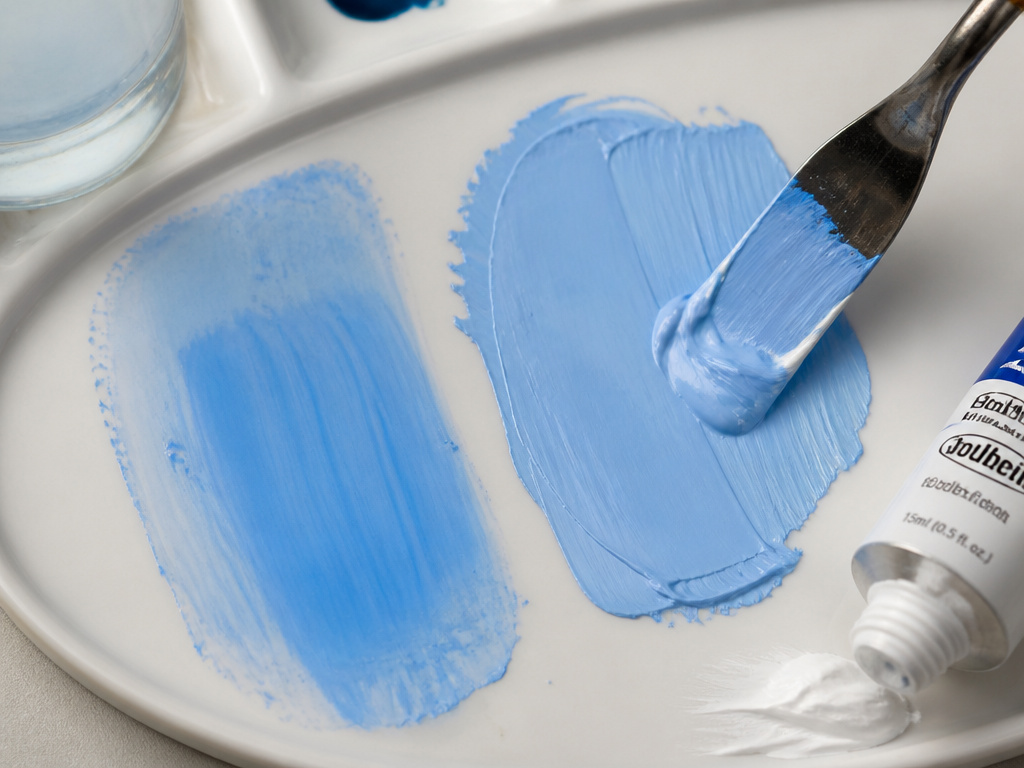
Water can’t fix a similar-value layering problem.
If you’re laying a mid-blue over a slightly different mid-blue, thinning won’t help you cover it. Strathmore’s fix is to add white to the color, which makes it more opaque and helps it layer better over similar values. Caran d’Ache keeps a tube of white on hand for the same reason: brightening accents and adding depth.
Schmincke disagrees, at least about its own paint. The HORADAM Gouache range has a natural opacity that the company says is not reinforced by adding white, because the pigment load is already high. Read that as a product philosophy difference rather than a general rule about gouache.
So: if you’re working with Schmincke HORADAM, try the color straight before you reach for white. If you’re working with a traditional gum arabic gouache, a touch of white is a normal move for lifting a color’s covering power.
Acrylic Gouache Is a Different Paint Entirely
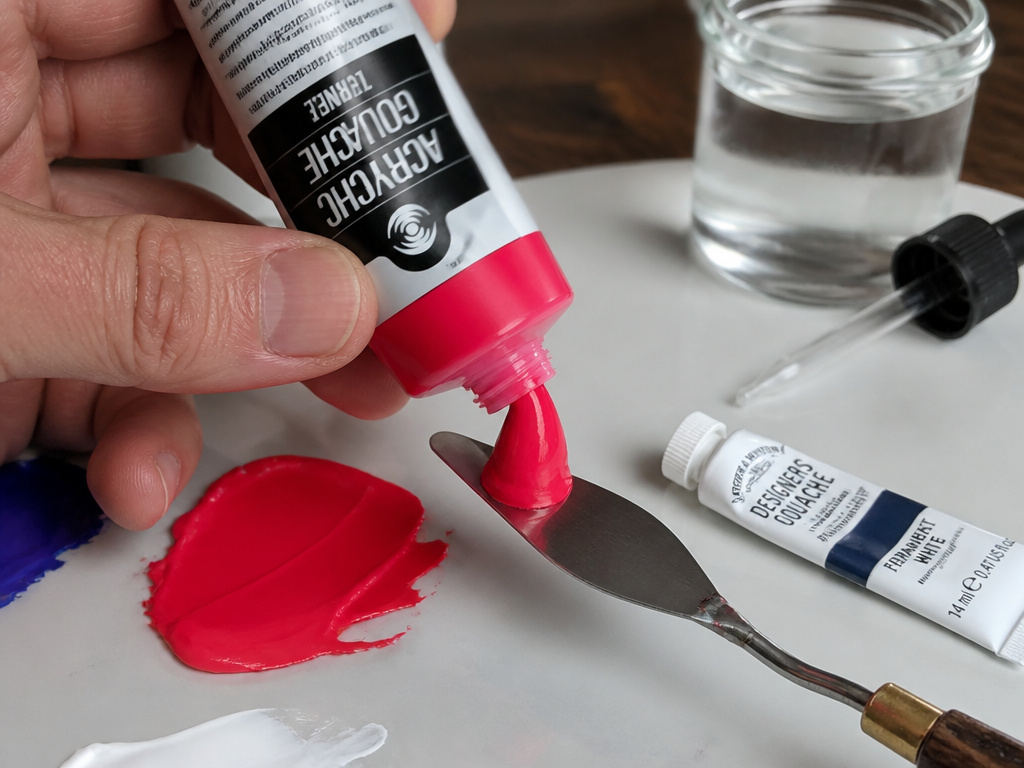
Liquitex Acrylic Gouache ships in a bottle, not a tube, and the formula inside is built to be used as it comes.
No water. None. Liquitex states the paint is ready to use, and that excess water upsets the balance of pigment, acrylic polymer and water so the film won’t dry structurally sound. Diluting also weakens color intensity and breaks down the acrylic structure.
That’s the opposite of every traditional gouache instruction on this page, and the reason is chemistry. Traditional gouache binds pigment with gum arabic, which re-wets happily. Acrylic gouache binds with a polymer that cures. If you’re used to thinning acrylic paint by adding water a few drops at a time, that habit doesn’t transfer here either.
The gouache vs acrylic split explains the rest. Liquitex spent two years developing its 50-color range, so the brushout is already there.
Skip this if: You’re painting with acrylic gouache. The whole water-and-consistency routine belongs to gum arabic gouache, and applying it to an acrylic formula gives you a weak, chalky film.
Paper Weight, Thick Layers, and the Cracking Argument
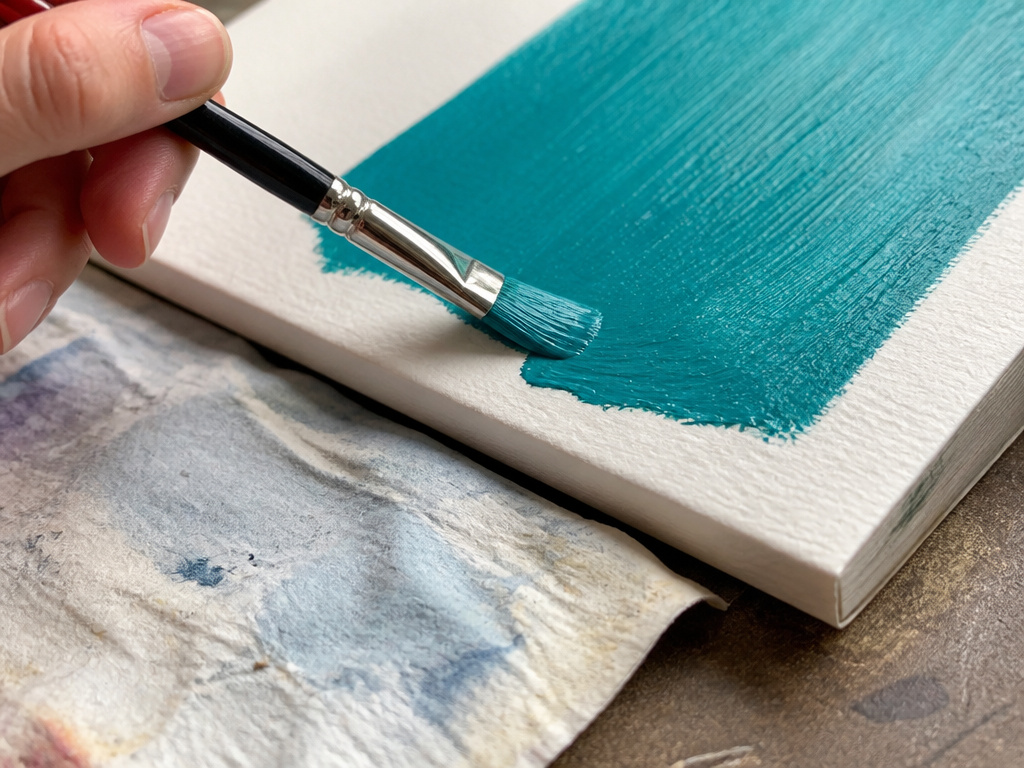
The corners of your page lift before the first layer is dry, and the paint usually gets the blame. Check the paper first.
Caran d’Ache is specific about this: paper under 250 g tends to curl in reaction to the water used to dilute gouache, and a 250 g/m2 mixed media paper handles almost any wet or dry medium. That’s the number to look for on the pad.
I stopped using thin sketchbook paper for wet paint after the surface pilled and tore under a single wash. Thin paper is for pencil studies now. Anything wet gets the heavier stock.
Thick layers are the other argument. Strathmore warns that gouache can crack and flake off if applied too thickly on a flexible surface. Caran d’Ache says its gouache will never crack and invites thick, cumulative layers. Canson sits in the middle, advising you to store finished pieces flat and never rolled because the paint can easily crack.
Where this goes sideways: Building up heavy impasto on stretched canvas or canvas board. The surface flexes, the thick paint film doesn’t, and you get cracks and flakes along the flex lines. It shows up months later, not the day you paint it.
On rigid panels and heavy paper, thick layers are safer. On anything that bends, keep them thin.
Rescuing Gouache That’s Too Thin, Too Dry, or Muddy
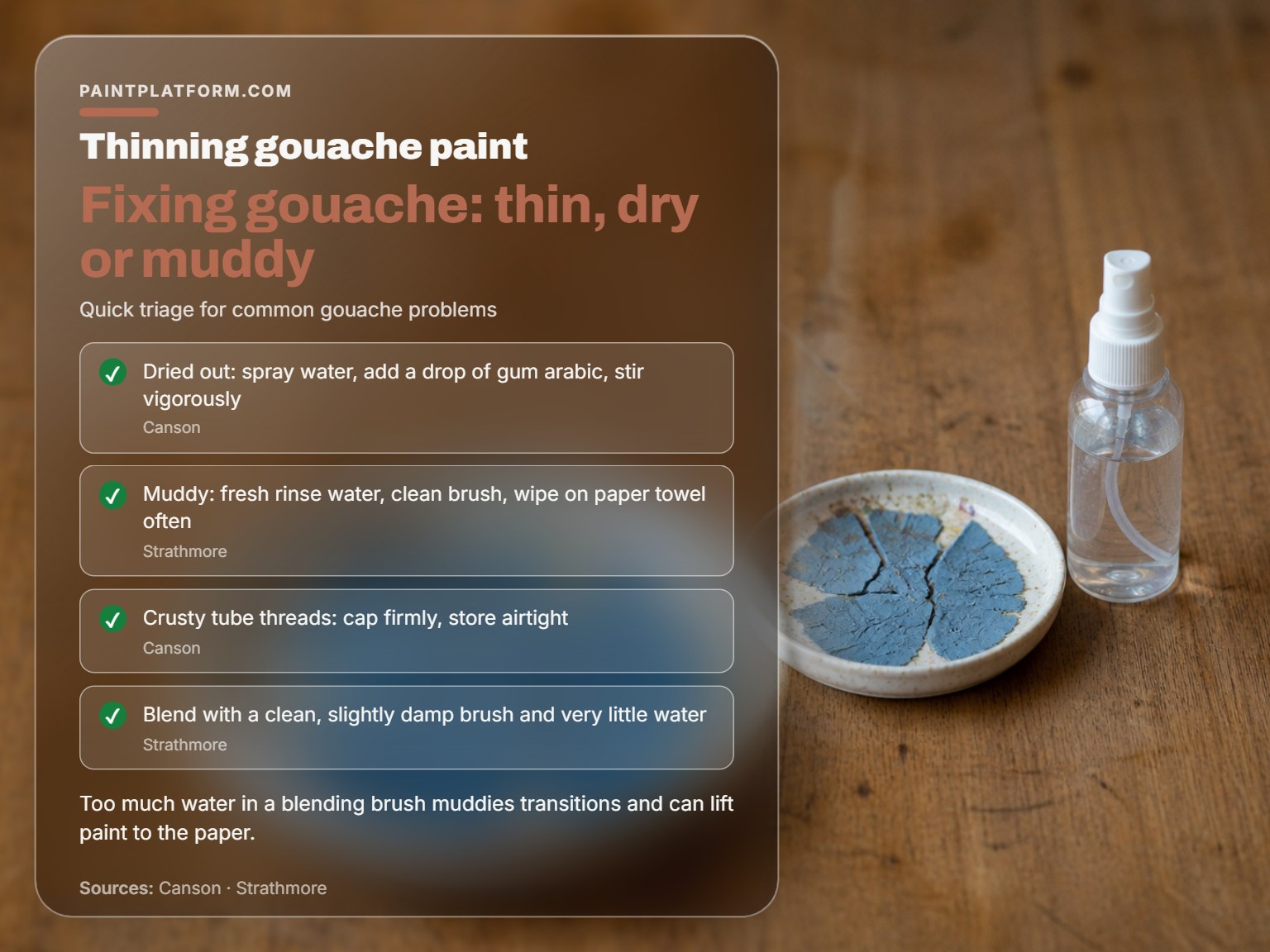
Over-dry gouache comes back with a spray of water and a little gum arabic, according to Canson’s materials guide.
Here’s the triage:
- Too thin to cover: add tube paint. More water makes it worse, and no amount of stirring fixes a pigment load that isn’t there.
- Dried out on the palette or in a pan: spray with water, add a drop of gum arabic, and stir vigorously to bring the blend back together.
- Muddy or chalky: fresh water in the rinse jar, clean brush, and wipe the excess on a paper towel between passes. Strathmore recommends wiping often during blending for exactly this reason.
- Crusty tube threads: cap firmly and store in the original packaging or an airtight container, per Canson, or the next opening costs you a chunk of paint.
One more habit worth building: blend with a clean, slightly damp brush carrying very little water. Strathmore notes that too much water in a blending brush muddies the transition and can lift paint all the way down to the paper.
Frequently Asked Questions
Can you thin gouache with just water?
Yes, for traditional gum arabic gouache. Strathmore, Schmincke, Caran d’Ache and Canson all treat water as the standard thinner. Acrylic gouache is the exception, and Liquitex says its version needs no dilution at all.
What happens if you add too much water to gouache?
The mix loses opacity and stops standing out against the layers beneath it. It also reactivates the paint underneath more aggressively, which muddies the piece. Strathmore notes both effects directly.
How do you thin gouache without losing opacity?
Use as little water as you can get away with, and add white to the color when you need extra covering power. Strathmore recommends white specifically for layering over similar-value colors, since water alone won’t solve that.
Does gouache need thinning before you use it?
Not always. Schmincke says HORADAM can go straight from the tube or be thinned with water, and Liquitex acrylic gouache is ready to use. Traditional gouache out of a tube is usually stiff enough to want a little water, though.
How do you revive gouache that dried out in a pan?
Spray it with water, add a small amount of gum arabic, and stir. Canson gives that as the recovery method, and notes that gouache stays reworkable for a long time because the film is permeable.
Is thinning acrylic gouache the same as thinning regular gouache?
No. Acrylic gouache is formulated to be used undiluted, and Liquitex warns that excess water upsets the pigment-polymer-water balance so the paint won’t dry structurally sound. Treat it as a different product with different rules.
The Bottom Line
Here’s the threshold I’d give you. If you can see the palette white through the mix when you tilt it, you’re already past the point where that mix will cover a top layer. Add tube paint. Water won’t bring it back.
The short version of how to thin gouache paint: water in drops, stop at double cream, and test on the paper you’re actually painting on. The brands will keep disagreeing about opacity, and that’s fine. The drip tells you what the label can’t.
One concession, though. Everything above assumes traditional gum arabic gouache. If your tube says acrylic, close this page and use it as it comes.
