
How to Set Fabric Paint: Step-by-Step
This post contains affiliate links. As an Amazon Associate, we earn from qualifying purchases.
To set fabric paint, air-dry it completely, then heat it to the temperature your paint brand specifies: an iron for 5 minutes on the reverse side, a home dryer for 60 to 90 minutes, or an oven at 350°F for 2 to 3 minutes (Artistic Artifact) or 300°F for 5 minutes (Setacolor). Wait 48 hours to 14 days before washing.
Those ranges are wide on purpose. Artistic Artifact prints 10 to 14 days on its label, Pebeo Setacolor says 48 hours, and each number is right for its own formula. Dharma Trading describes heat setting as locking color into the fiber, which is why an iron, a dryer, and an oven all work. They just deliver that heat at different speeds. Knowing how to set fabric paint helps explain why those methods differ.
What follows covers four heat sources, the air-dry window that decides whether any of them work, and the one number the sources fight about most.
Key Takeaways
- Air-dry first, every time. Heat on wet paint traps moisture and leaves a gummy film that never fully cures.
- Iron 5 minutes on the reverse side per Artistic Artifact and Setacolor, while Dharma’s 15 to 25 seconds per square foot is a different method the sources disagree on.
- Wait 10 to 14 days before the first wash with Artistic Artifact paint, while Setacolor says 48 hours.
- Wash at 104°F or cooler, inside out, mild detergent, never hot.
Why Air-Drying Decides Whether the Set Holds
I rushed a second layer onto a canvas once, before the first was fully dry. The underlayer lifted into streaks and I lost about an hour of work. Fabric paint punishes the same impatience, except the damage shows up in the wash instead of on the easel.
Heat setting drives pigment into the fiber and evaporates the carrier liquid in one pass. Residual moisture flashes to steam under a hot iron and pushes paint away from the weave, leaving a pale halo around the design. A fully dry surface prevents that steam from forming, which is why all three manufacturers list drying before heat.
Artistic Artifact’s sheet says to let the paint air-dry thoroughly and gives no clock at all. Dharma Trading asks for at least 30 minutes, then adds that curing up to two weeks in a warm, dry room gives the best result. Pebeo Setacolor says roughly an hour, longer for heavy applications.
Paint that looks dry can still feel cool and slightly tacky against the back of your hand. That tack is the tell. Give it another hour.
Dharma suggests placing the fabric under a lamp when you need to speed things along. I’ve done this on a rainy studio day and it works, though the lamp heats unevenly, so rotate the piece halfway through.
Signs the piece is actually ready:
- The surface feels room temperature, not cool to the touch.
- A fingertip drags across it without catching or smearing.
- Thick areas near a stencil edge have lost their wet sheen.
- The fabric has stiffened slightly where the paint sits.
How Do You Set Fabric Paint With an Iron?
The iron is the method most people reach for, and the one that scorches the most projects.
Before you start: A dry iron on the cotton setting gets hot enough to scorch cotton in under a minute of standing still, and hot enough to melt a polyester blend outright. Keep the iron moving, protect the board with a Goddess sheet or a scrap of cotton, and leave the water reservoir empty. Steam is the enemy here.
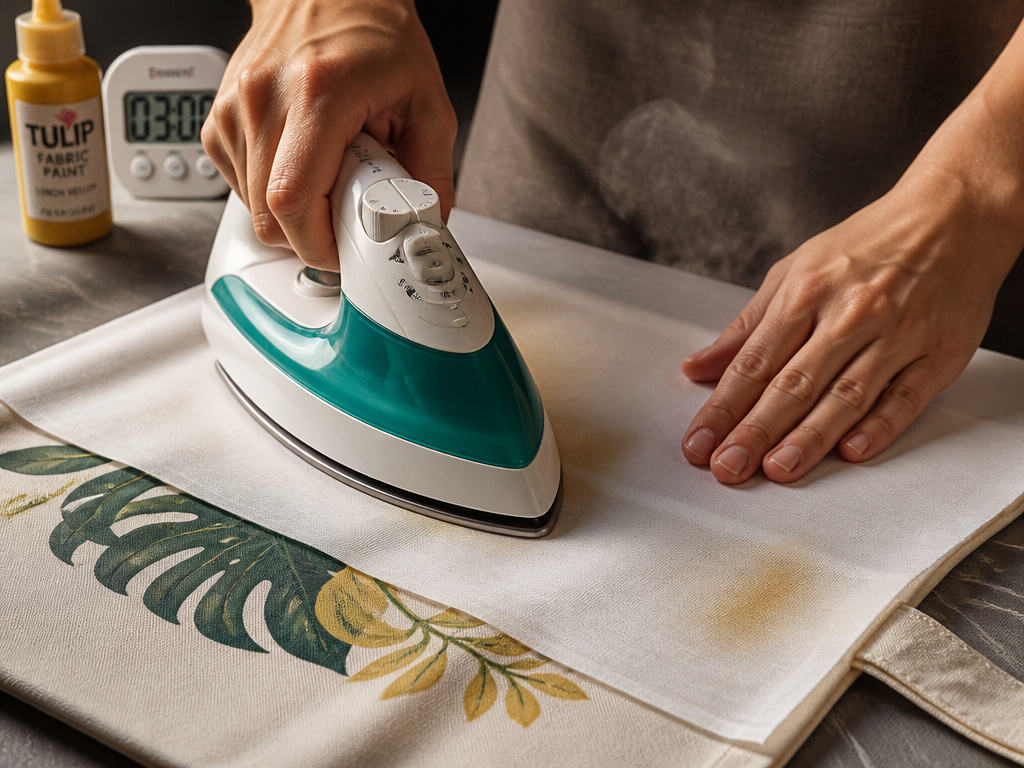
- Set the iron dry and hot. Use the hottest setting the fabric can take, steam off, no spray. Artistic Artifact is explicit about the dry part, and skipping it blisters the paint along the edges.
- Protect the board. A Goddess sheet or scrap fabric under the piece keeps paint off the cover. Skip this and you’ll be scraping cured acrylic off the board with your fingernail.
- Turn the piece painted-side down.
- Press the back for 5 minutes, keeping the iron moving. Standing still in one spot is how scorch marks happen, and they show up as a yellow-brown shadow that never washes out.
- Or use a press cloth on the front.
A dry iron moving over cotton makes a soft rasp. A wet one hisses, and that hiss is water leaving the reservoir and heading straight for your paint.
I keep a dedicated iron for fabric work and never put water in it. The first time I tried heat-setting with a steam iron, the design blistered along one edge and the paint crept under the press cloth. Now the reservoir stays dry and the spray bottle lives across the room.
The Iron Dwell Time Nobody Agrees On
Five minutes or fifteen seconds per square foot. Both numbers are in circulation, and they describe different jobs.
Read the method and the two numbers reconcile.
Dharma’s figure is 15 to 25 seconds per square foot. Artistic Artifact’s 5 minutes assumes a hand iron worked back and forth across a whole piece.
| Brand | Iron method | Oven or conveyor | Wait before washing |
|---|---|---|---|
| Artistic Artifact | 5 min, reverse side, dry iron | 2 to 3 min at 350°F, rolled in newsprint | 10 to 14 days |
| Pebeo Setacolor | 5 min, cotton setting, reverse side | 5 min at 300°F, stabilized | 48 hours |
| Dharma Trading | 15 to 25 sec per sq ft, foil under painted side | Conveyor at 350°F for 3 min | Not specified |
The Foil Trick and the Press Cloth
Dharma’s foil method is the one nobody else mentions. Lay aluminum foil on the ironing board, set the fabric painted-side down on it, and press the back. The foil keeps paint off the board and traps heat underneath, so the design gets hit from both directions.
The press cloth route runs the other way. Put a clean cloth over the painted face and iron directly on it, then flip and repeat on the unpainted side without the cloth.
Can You Set Fabric Paint in a Dryer or an Oven?
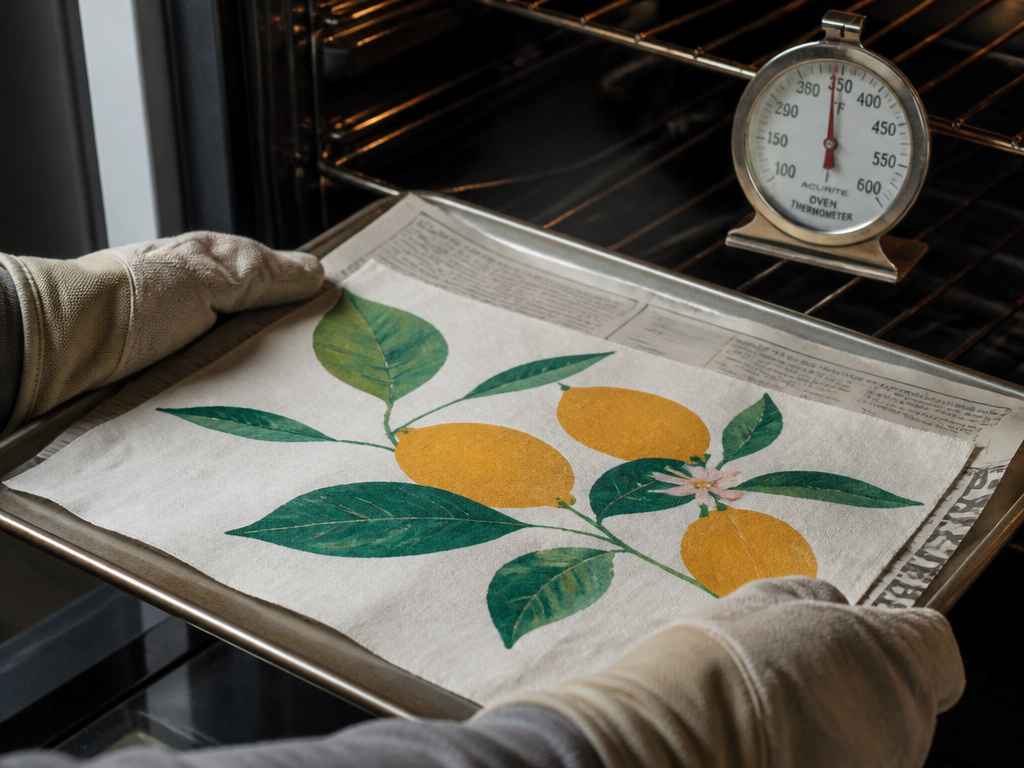
Yes, with caveats that depend entirely on whose instructions you read.
| Method | Best for | Time | Main risk |
|---|---|---|---|
| Iron | Small pieces, spot fixes | 5 min per area | Scorching from a still iron |
| Home dryer | Soft fabrics, large pieces | 60 to 90 min | Never reaches setting temperature |
| Commercial dryer | Production runs | 45 to 60 min | Not available to most home studios |
| Oven | Flat yardage, stiff pieces | 2 to 5 min at 300 to 350°F | Uneven heat near the element |
Dharma specifies commercial dryers, pre-heated.
Both are describing the same physics. A home dryer’s thermostat cycles on and off, and the drum loses heat every time the door opens. Whether yours reaches setting temperature is a how to set fabric paint question about your machine, not about the method.
Oven Method Without Scorching
Where this goes sideways: Rolling painted fabric in newsprint that still has print on it transfers ink into the design under heat. Use unprinted newsprint only, and keep the roll loose so hot air reaches every layer.
Dharma’s test for a finished piece is refreshingly low-tech. The fabric should be hot to the touch when it comes out. Warm is not enough.
How Long Before You Can Wash It?
The wait is the part that ruins projects, and it’s the number the sources fight about hardest.
Both are manufacturer statements about their own paint, and both are probably right.
When you compare a how to set fabric paint label, follow the one on the bottle you actually used. If the label is long gone, use the longer number and sleep fine.
Wash rules that hold across all three brands:
- Cold or lukewarm water, never hot, on a gentle or delicate cycle with mild detergent.
- Turn garments inside out before they go in the drum.
- Don’t mix in jeans or heavy coarse items when drying painted pieces, and don’t overload the dryer.
Both numbers sit cooler than what most people call a hot wash, which is the point. Heat is what got the paint into the fiber. Heat is also what will walk it back out.
What Goes Wrong and How to Fix It
Moisture causes most heat-setting failures. Temperature gets blamed.
- Pale halo around the design. Steam pushed pigment outward. The piece wasn’t dry enough. Re-iron from the back once it’s fully cured and the halo usually softens, though it rarely disappears.
- Paint lifts onto the press cloth. Either the cure was too short or the iron was too hot. Drop one setting and add cure time.
- Stiff, plastic-feeling patch. Too much paint, not enough heat penetration. Iron longer at the same temperature rather than hotter.
- Yellow-brown shadow on the fabric. Scorch. Irreversible. Keep the iron moving next time.
- Design cracks after the first wash. The wait was too short or the wash was too hot. Both are recoverable only by repainting.
When the Paint Still Feels Tacky
Tack after a full iron pass usually means the paint layer is too thick. Setacolor notes that heavier applications need longer drying before fixing, and the same logic applies after. Give it another day of air cure, then iron again from the back.
If it’s still tacky after two rounds, the paint may be past its shelf life. Old craft acrylics skin over in the bottle and never fully cure on fabric.
Picking Paint and Fabric That Play Nice
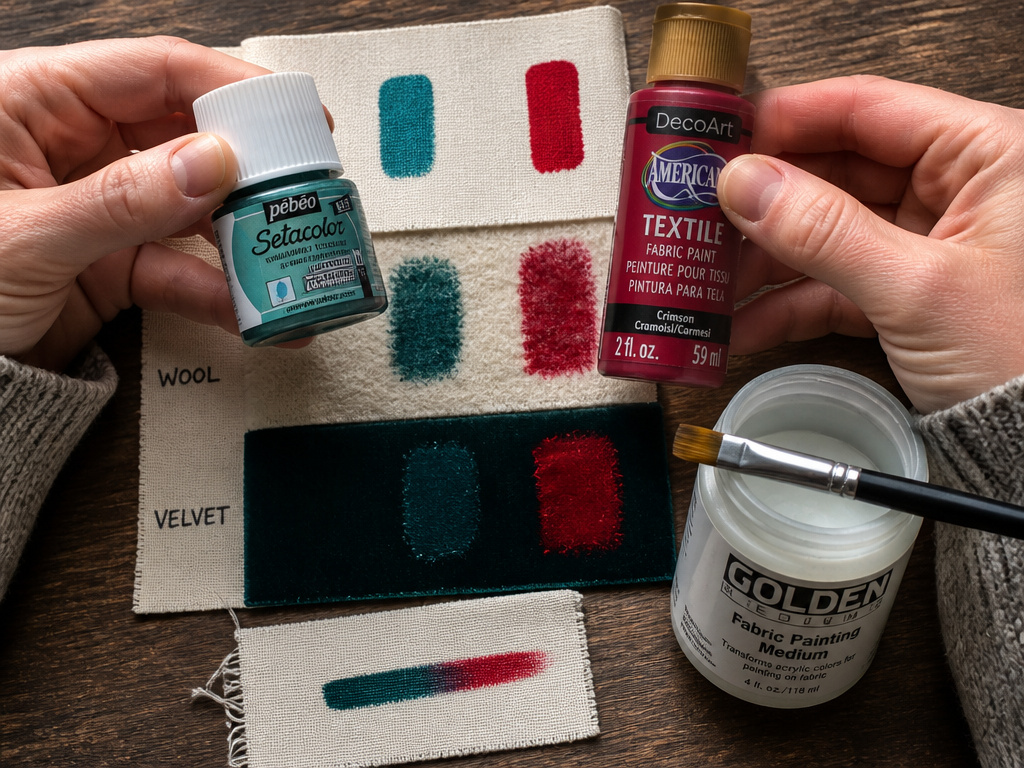
Pebeo Setacolor runs on cotton, wool, velvet, non-woven, and leather.
Bottle craft acrylics are fine for sketchbook pages and loose experiments. They’re also the paint most likely to fade, so don’t put a craft-acrylic shirt into the regular laundry rotation and expect it to survive a summer. Try it on scrap first.
If you’re working from tubes instead of bottles, the rules shift a little, and acrylic paint on fabric covers the medium ratios and heat settings in more detail.
The types of fabric paint differ mostly in how they cure, which is why the wash waits vary so wildly between brands. A fabric medium thins tube acrylic without wrecking the bond, and it’s the cheapest way to stretch a paint you already own.
For a starting point on brands, the best fabric paint roundup sorts by washability. And best fabric to paint matters more than most people expect, since a tight cotton weave takes paint far more evenly than a loose knit.
If you’d rather mix your own, you can make fabric paint at home from acrylic and medium without buying a dedicated textile line.
Frequently Asked Questions
Can I set fabric paint with a hair dryer?
Not reliably. A hair dryer moves air but doesn’t hold a steady temperature, so the paint never reaches the heat it needs to bond. Setacolor does allow a hair dryer for expanding puff paste, which is a different product with a different job.
What happens if I iron the painted side directly?
You risk lifting paint onto the soleplate and smearing the design. Artistic Artifact allows it only with a clean dry cloth over the front. Dharma allows a press cloth on the painted side but wants a 5 to 7 day cure first.
Do I have to use aluminum foil under the fabric?
No, but it helps. Dharma’s foil method keeps paint off the board and reflects heat back into the design. A Goddess sheet or scrap of cotton works as a substitute for board protection, just without the reflected heat.
Can I set fabric paint without an iron?
Yes, if you have a dryer or an oven.
Why did my paint wash out even after heat setting?
Usually the piece was laundered too soon. Washing in hot water is the other common cause, since both brands cap safe washing well below a hot cycle.
The Bottom Line
One rule covers most of this: if you can feel any coolness or tack on the surface, you’re not ready to apply heat. That single check prevents more ruined pieces than any temperature chart.
Your first move this week is small. Paint a scrap of the same fabric you plan to use, let it dry overnight, and run the iron across it for 5 minutes from the back. Wash it after the wait time your paint’s label specifies and see what happens. That test costs you a square of cotton and tells you more about your paint than any label will.
Fair warning: the scrap test is the step people skip, and it’s the step that catches the bad bottle, the wrong fabric, and the iron that runs hot. Make the mess on a scrap first.
