
10 Best Fabric Mediums For Acrylic Paint in 2026
This post contains affiliate links. As an Amazon Associate, we earn from qualifying purchases.
The Nicpro Professional Effects Fabric Medium takes the best overall spot because it delivers a waterproof, fade-resistant finish that needs no heat setting, saving time and effort. For budget-conscious beginners, the Tulip Textile Medium offers a safe, simple mix-and-apply process, while the Golden Acrylic Polymer GAC-900 is the go-to for experienced painters who need a large professional jar.
Turning acrylic paint into permanent fabric art comes with one big question: will it survive the wash? The right medium makes all the difference between a stiff, cracked design and a soft, flexible print that lasts. You also need to decide whether you want an air-dry formula or one that requires heat setting.
This guide is built from manufacturer specifications, expert round-ups, and patterns in owner feedback. We compared ten products across key criteria to help you choose the right medium for your project size, workflow, and budget.
Top 10 Fabric Mediums For Acrylic Paint in the Market
Certain content that appears on this site comes from Amazon. This content is provided "as is" and is subject to change or removal at any time.
The Best Fabric Mediums For Acrylic Paint, Reviewed
Nicpro Professional Effects Fabric Medium

What We Like
- No heat setting needed
- Waterproof and fade resistant finish
- Non-toxic, safe for all ages
- Prevents cracking and flaking
Trade-offs
- 8.45 oz bottle is smaller than some competitors
- 1:1 ratio uses medium quickly on large projects
No heat setting is required, so you can mix Nicpro Professional Effects Fabric Medium 1:1 with acrylic paint, apply it to fabric, and let it dry without ironing or curing. The waterproof and fade-resistant finish helps colors stay vivid and designs intact after exposure to moisture or washing. This makes it a straightforward option for custom T-shirts, bags, and similar textile projects, especially if you prefer to skip extra steps.
The 8.45-ounce bottle is smaller than some competitors, such as ABEIER’s 33.8-ounce container, so for large items or frequent use you may need to restock sooner. The 1:1 mixing ratio means you use equal parts medium and paint, which can add up on bigger projects. The non-toxic formula meets ASTM D4236 and EN71 safety standards, making it suitable for family use, and the soft-touch finish keeps fabric flexible rather than stiff.
Product photos
7 Artists Fabric Medium for Acrylic Paint

What We Like
- 1:1 mixing ratio simplifies use
- Soft flexible finish resists cracking
- Washable and long-lasting on fabric
- Works on light and dark fabrics
Trade-offs
- 8.45 oz volume limits large projects
- Requires following fixing instructions for durability
An 8.45-ounce bottle at a 1:1 mixing ratio means you mix equal parts medium and acrylic paint to create fabric paint. The soft matte finish moves with the fabric instead of cracking, so your design stays flexible through washes and wear. Beginners and crafters on a budget will appreciate the straightforward equal-parts mixing and the fact that the medium works on both light and dark fabrics.
The 8.45-ounce bottle of 7 Artists Fabric Medium is a compact size that fits easily in a craft tote. But for large projects like a denim jacket or multiple yards of fabric, you might want to consider the ABEIER Fabric Medium, which comes in a 33.8-ounce bottle with a pump for cleaner batch mixing. After painting, you must follow the fixing instructions to make the design washable, which adds a step. Still, for casual customizing and small-to-medium textile projects, this medium offers an economical way to turn acrylics into flexible fabric paint.
Product photos
Tulip Textile Medium

What We Like
- AP-certified non-toxic for safe handling
- Makes acrylic paint permanent on fabric
- Creates custom fabric colors from any acrylic
- Simple mix-and-apply process
Trade-offs
- Only 8 fl oz, smaller than some alternatives
- Requires following package directions for best results
An 8 fl oz bottle of Tulip Textile Medium turns any acrylic paint into a permanent fabric color. That means you can match any shade you already own without buying a whole new set of fabric paints. The AP-certified non-toxic label makes it a safe choice for beginners who might be painting with kids or in a shared space. The process is straightforward: mix the medium with your acrylic, apply, and let it cure. Follow the package directions for mixing, application, drying, curing, and fabric-care guidance.
The trade-off is that 8 fl oz goes quickly if you are covering large items like a tote bag or a jacket. For bigger projects, the Golden Acrylic Polymer GAC-900 offers a 32 oz jar, which provides more volume. But if you are just starting out with fabric painting or want to test the waters on a few t-shirts or pillowcases, this smaller bottle keeps the commitment low. Follow the package directions to get reliable results.
Product photos
Golden Acrylic Polymer GAC-900

What We Like
- Large 32 oz professional jar
- Heat set for permanent fabric adhesion
- Trusted Golden brand formulation
Trade-offs
- Requires heat setting for permanence
- 32 oz jar is heavy for casual use
- Only one size option available
The 32-ounce jar (946 ml) is a large volume for fabric medium, offering enough to mix for multiple projects without needing to reorder quickly. Golden’s GAC-900 is labeled as a heat-set fabric painting medium, so it is designed for use with heat to set the paint on fabric. This makes it suitable for painters who work on textiles and want a formulation intended for that purpose.
The jar weighs 2.3 pounds, which is heavier than smaller bottles like the 8.45 oz 7 Artists Fabric Medium, so it is less convenient to carry around for quick projects. Because it is a heat-set medium, it requires a heat source like an iron to complete the setting process, unlike air-dry options. For someone who goes through fabric medium regularly, the larger size can be practical, but it does mean more storage space and a specific workflow.
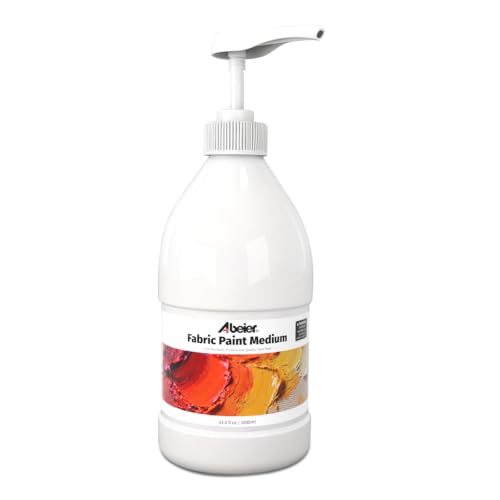
ABEIER Fabric Medium for Acrylic Paint
What We Like
- Large 1 L volume with pump dispenser
- Easy 1:1 mixing ratio
- Non-toxic for classroom use
- Soft, flexible, washable finish
Trade-offs
- Volume best for group projects, not single shirts
A full liter of fabric medium is the kind of quantity that changes how you plan a project. With a pump dispenser for clean, controlled pours and a simple 1:1 ratio with acrylic paint, this bottle is built for classrooms, workshops, or anyone who paints fabric regularly. The non-toxic formula meets ASTM and EN71 standards, so it fits easily into shared creative spaces, and the finish helps reduce stiffness, cracking, and flaking compared with acrylic paint used alone. For group sessions or frequent use, the large volume supports ongoing projects without needing to buy a new bottle as often.
A full liter of fabric medium with a pump dispenser is built for frequent use in classrooms, workshops, and group craft projects, not for someone painting a single T-shirt now and then. If you only need a small amount for an occasional project, a smaller bottle like the 8 oz Artecho Fabric Medium might be more practical. But if you teach, run a craft group, or just hate running out of medium mid-project, the ABEIER delivers the capacity and convenience that smaller bottles cannot match.
Product photos
Liquitex Professional Effects Fabric Medium

What We Like
- Enhances blending and workability
- Improves adhesion on fabric
- Controls bleeding of thinned colors
- Ultimate flexibility and adhesion
Trade-offs
- Small 118 ml bottle for big projects
- Only 4 oz compared to larger competitors
This fabric medium is a fluid medium that incorporates an acrylic polymer to improve adhesion and flexibility on fabric. It enhances the workability of acrylic paint and helps control bleeding when colors are thinned with water. For artists painting on textiles, that means smoother application and less worry about colors spreading where they shouldn’t.
The 118 ml bottle is the size you get. If you are covering multiple garments or working with a group, you may need more than one bottle. For a single project, it is enough to mix with your acrylics and get the adhesion and flexibility benefits the medium provides.
Jacquard Colorless Fabric Paint Extender

What We Like
- Keeps fabric soft after application
- Increases transparency without altering viscosity
- Works on synthetic and natural fabrics
Trade-offs
- Small 2.25 oz bottle limits large projects
- Requires heat setting for permanence
A 2.25-ounce bottle of colorless extender that you mix with Jacquard Textile Color to increase transparency without changing the paint’s texture or adhesive properties. That means you can thin out the color while keeping the same body and soft hand on fabric, which helps when layering or working on detailed designs where heavy opacity would look clumsy. The fabric stays pliable, not stiff or plasticky, because the extender does not alter the paint’s viscosity.
The 2.25-ounce bottle keeps your workspace tidy and fits easily into a drawer, but that small volume means it’s best for precise adjustments on individual projects rather than stretching paint across a whole shirt. If you need to extend a large batch, the 8.45-ounce Nicpro Professional Effects Fabric Medium offers more paint for bigger jobs. This extender is about control, not quantity.
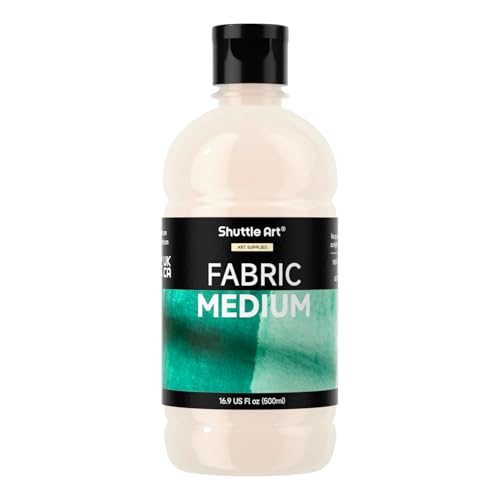
Shuttle Art Fabric Medium
What We Like
- Waterproof and fade-resistant finish
- No heat setting needed
- Prevents cracking, peeling, and color bleeding
- Non-toxic and acid-free
Trade-offs
- Requires 1:1 mixing ratio with paint
- Requires mixing before each use.
The Shuttle Art Fabric Medium delivers a waterproof, fade-resistant finish that stays vivid through multiple washes without cracking or peeling. Its 500 ml bottle gives you plenty of medium for multiple projects, and the no-heat-set formula means you can finish custom T-shirts, shoes, or bags in one sitting. This makes it a strong match for anyone who wants durable, washable results on both synthetic and natural fibers without extra steps like ironing.
The trade-off is the 1:1 mixing ratio, which means you’ll use equal parts medium and paint. That’s straightforward, but if you’re working with small amounts of paint, you might end up mixing more than needed. Compared to the 8.45 oz Nicpro Fabric Medium, Shuttle Art’s larger bottle offers a higher volume for frequent users. It’s a practical choice for committed DIYers who prioritize longevity and ease of use.
Product photos
Artecho Fabric Medium

What We Like
- Sealed bottle prevents leaks
- Non-toxic, water-based formula
- Heat-set for durable machine washability
- Won't crack, peel, or feel stiff
Trade-offs
- Requires ironing at 212°F for 3-5 minutes
- Only 8 oz bottle for smaller projects
The 1:1 mix ratio with acrylic paint means you can turn any color you already own into fabric paint without guesswork, and the heat-set step at 212°F locks it in for machine washing. This makes Artecho a straightforward entry point for someone new to fabric painting who wants predictable, lasting results on cotton, denim, or canvas. The sealed bottle and non-toxic, water-based formula keep cleanup simple and the workspace safe, which matters when you’re still building confidence with a new medium.
Heat-setting is required to make the paint permanent, so you’ll need an iron and a few minutes of patience, not as instant as air-dry alternatives. The Artecho bottle holds 8 oz, the same size as the Tulip Textile Medium, which also needs heat-setting. If you want a no-iron fabric medium, the Liquitex Professional Effects Fabric Medium is an option, but Artecho’s instructions and machine-washable results make it a reasonable choice for beginners.
Product photos
Falling in Art Fabric Paint Medium

What We Like
- No heat-set needed after drying
- Improves flexibility to prevent cracking
- Non-toxic and safe for use
- Works on cotton, denim, linen
Trade-offs
- Requires mixing with separate acrylic or fabric paint before use
- Only 8 ounces per bottle for large classroom projects
The fact that Falling in Art fabric paint medium requires no heat-setting after drying is its defining advantage. Once the paint dries, it forms a permanent protective layer that resists washing and fading without you ever needing to break out an iron or heat press. That makes it especially appealing for beginners or anyone working on delicate fabrics where heat might cause damage, and it simplifies the whole process of customizing t-shirts, tote bags, or home decor textiles. The medium also boosts flexibility, so your designs are less likely to crack or peel over time, even after multiple washes.
The trade-off here is that you get only 8 ounces in the bottle, which is a modest amount if you are covering large surfaces or working on multiple projects in one sitting. Compared to the ABEIER Fabric Medium, which comes in a 33.8 oz container with a pump for easier batch mixing, Falling in Art is better suited for smaller, more focused work rather than classroom or production-scale use. But if you value convenience and want a medium that does not force you to add a heat-set step to your routine, this is a thoughtful, low-fuss option.
Product photos
How We Evaluated Fabric Mediums For Acrylic Paint
This guide is based on manufacturer documentation, expert recommendations, and common themes from user experiences. We analyzed what makes a fabric medium work well for different types of projects.
The most important criteria were finish durability, ease of use, and volume. We looked for mediums that prevent cracking and flaking after washing, and we favored those that don’t require heat setting for casual users. The mixing ratio also mattered, as a simple 1:1 formula is easier for beginners to follow.
We also considered the honesty of the trade-offs. A medium that needs heat setting is fine for dedicated artists but less ideal for quick DIY projects. By weighing these factors together, we matched each product to the user who will benefit most from its specific strengths.
What To Look For In Fabric Mediums For Acrylic Paint
Choosing a fabric medium means balancing durability, workflow, and volume. The right one depends on whether you want to iron your project or let it dry, and how much painting you plan to do.
Look for a medium that matches your preferred fixing method (heat-set or air-dry), offers a simple mixing ratio, and comes in a volume suited to your project size.
Heat-Set vs. No-Heat-Set
Some fabric mediums require ironing or heat pressing to permanently bond the paint to the fabric fibers. These tend to offer excellent washability and are favored by frequent painters. Others, like the Nicpro Professional Effects Fabric Medium, are air-dry formulas that set permanently without heat, which is more convenient for quick projects or when you don’t have an iron available.
Mixing Ratio
Most mediums require a 1:1 ratio with acrylic paint, which is straightforward and easy to measure. Some products offer different ratios or are ready-to-use. A simple mixing ratio reduces waste and makes it easier to scale up for larger designs.
Finish and Flexibility
A good fabric medium should prevent the paint from feeling stiff or rubbery after drying. Look for descriptions of a “soft, flexible finish” that moves with the fabric. This is especially important for clothing items like T-shirts and jeans that are worn and washed frequently.
- Check whether the medium requires heat setting for permanence.
- Confirm the mixing ratio and whether it matches your preferred paint brand.
- Look for non-toxic, AP-certified formulas if children will be using it.
- Consider the bottle size: small bottles suit occasional projects, while larger sizes are better for frequent painting.
- Read the wash instructions: some mediums need a wait time before the first wash.
For most DIY projects, a 1:1 mixing ratio and a no-heat-set formula offer the simplest, most reliable results.
Fabric Mediums For Acrylic Paint Compared
The table below compares all ten fabric mediums side by side, highlighting their key features, volume, and best use cases to help you make a quick decision.
| Product | Volume | Mixing Ratio | Safety Standards |
|---|---|---|---|
| Nicpro Professional Effects Fabric Medium | 8.45 oz | 1:1 | ASTM D4236 & EN71 |
| 7 Artists Fabric Medium for Acrylic Paint | 8.45 fl oz | 1:1 | N/A |
| Tulip Textile Medium | 8 fl oz | N/A | AP-certified non-toxic |
| Golden Acrylic Polymer GAC-900 | 32 oz | N/A | N/A |
| ABEIER Fabric Medium for Acrylic Paint | 33.8 oz / 1 L | 1:1 | ASTM D-4236, EN71 |
| Liquitex Professional Effects Fabric Medium | 118 ml (4-oz) | N/A | N/A |
| Jacquard Colorless Fabric Paint Extender | 2.25 oz | N/A | N/A |
| Shuttle Art Fabric Medium | 16.9 oz (500 ml) | 1:1 | ASTM D-4236 & EN71-3 |
| Artecho Fabric Medium | 8 oz / 236 ml | 1:1 | ASTM D-4236 compliant |
| Falling in Art Fabric Paint Medium | 8 oz | N/A | ASTM D-4236 certified |
Frequently Asked Questions
Can I use fabric medium with any acrylic paint?
Yes, most fabric mediums are designed to mix with any water-based acrylic paint. The medium thins the paint slightly and helps it bond to fabric fibers, preventing cracking and stiffening.
How does fabric medium make acrylic paint permanent on fabric?
Fabric medium works by creating a flexible film that adheres to the fibers. Some mediums require heat setting with an iron to fully cure the bond, while others are air-dry and become permanent after a drying period.
Do I need to heat set fabric medium for it to last?
It depends on the product. Some fabric mediums, like the Nicpro Professional Effects Fabric Medium, are formulated to be permanent without heat. Others, such as the Golden Acrylic Polymer GAC-900, require heat setting for the most durable, machine-washable finish.
What is the best fabric medium for dark fabrics?
Look for a medium that works on both light and dark fabrics, like the 7 Artists Fabric Medium for Acrylic Paint. These formulas are designed to maintain color vibrancy and prevent the paint from looking washed out on darker materials.
How much fabric medium do I need for a T-shirt project?
For a single T-shirt design, a small 4 to 8 ounce bottle is usually enough. If you plan to paint multiple items or larger surfaces like bags and jeans, a larger volume, such as the 32 oz Golden jar or the 1 L ABEIER bottle, is more economical.
The Bottom Line
For most DIY enthusiasts and hobbyists, the Nicpro Professional Effects Fabric Medium is the best overall choice. Its waterproof, heat-free finish and non-toxic formula make it ideal for custom T-shirts, bags, and shoes without the hassle of ironing.
If you are on a budget or just starting out, the Tulip Textile Medium offers a safe, beginner-friendly process. The Golden Acrylic Polymer GAC-900 is worth paying more for if you need a large professional jar for frequent projects. The single most important factor is choosing a medium whose fixing method matches your workflow: air-dry for convenience, heat-set for maximum durability.
