
How to Remove Paint From Upholstery: Step-by-Step
This post contains affiliate links. As an Amazon Associate, we earn from qualifying purchases.
To remove paint from upholstery, lift the wet paint with a dull tool before it sets, then match the method to the surface: vinyl takes warm soapy water and a mild detergent, while fabric needs a test patch and a solvent chosen for the paint type. Blot from the outside edge inward. Never rub.
That split between vinyl and fabric carries most of the decision. A soapy rag that a vinyl seat shrugs off will drive pigment deeper into a cotton cushion, and cured paint behaves nothing like the wet puddle you just knocked over. Knowing how to remove paint from upholstery starts with that distinction.
What follows is the order I’d actually work in: the first five minutes, the paint-type matchup, the vinyl-versus-fabric split, and the four places where the manufacturers flatly contradict each other.
Key Takeaways
- Lift wet paint with a dull knife, spoon, or spatula before it cures. Cured paint needs solvent and patience instead.
- Test one or two drops of any solvent on a hidden patch before it touches the visible stain.
- Warm soapy water handles most vinyl stains. Morbern lists Tex Aktiv and 303 Product Detailer for the stubborn ones.
- Blot, don’t rub. Rubbing pushes pigment deeper into the fibers and grows the stain.
The First Five Minutes Decide Most Spills
Speed beats technique on a fresh spill. DTNA’s driver manuals put it plainly: paint should be removed immediately. Every minute the film sits, it creeps further into the grain and sets up harder.
Wet paint lifts. Scoop the bulk with a dull knife, a spoon, or the edge of a credit card. The Spruce’s guidance runs the same way, and adds one detail worth keeping: work from the outside of the stain toward the center so you don’t paint a bigger circle.
Morbern’s care document states that most stains lift with warm soapy water and clear water rinses. Moderate scrubbing with a medium bristle brush loosens soiling from the depressions of embossed vinyl surfaces. Detergents are not for routine use, and repeated rinsing with clear water follows every cleaning procedure. Unspecified cleaners should not be used.
What you reach for when you compare a how to remove paint from upholstery matters as much as how fast you move. DTNA is blunt about two products: do not use paint remover or liquid-type brush cleaner on vinyl. Those two cause damage that no amount of rinsing undoes.
Pull on gloves before you start. Paint on hands is its own small job, and paint from skin is a lot easier to solve than a smeared armrest.
Match the Method to the Paint Type
Two variables decide almost everything about how to remove paint from upholstery: whether the paint is water-based or oil-based, and whether it’s still wet.
Get those two right and the rest is detail. Get them wrong and you’ll spend an afternoon making a small stain into a permanent one.
| Paint type | First move | Watch out for |
|---|---|---|
| Water-based, still wet | Lift with a dull tool, blot with a damp cloth | Rubbing, which drives pigment deeper |
| Water-based, cured | Scrape gently, then warm soapy water | Oversaturating the padding underneath |
| Oil-based, still wet | Blot with turpentine on an unprinted cloth | Solvent touching non-vinyl trim |
| Oil-based, cured | Gel stripper on vinyl, a pro on fabric | Lacquer solvent, which ruins vinyl instantly |
The logic that governs paint from carpet carries over here almost unchanged: soft surfaces reward patience and punish scrubbing.
For latex paint, water is your friend as long as the film is fresh. Once it’s cured, water alone stops working and you’re into scraping territory.
For oil paint, the whole game changes. Water does nothing to a cured oil film. You need a solvent, and solvents are where vinyl gets hurt.
Easy to miss: A cleaner that worked last year may not be the same formula this year. Morbern warns that manufacturers change formulations without notice and disclaims responsibility when they do. Test a new container in an inconspicuous spot before it goes anywhere visible.
Vinyl and Fabric Follow Different Rules
Vinyl is a coated surface. Fabric is a bundle of fibers with air between them. Paint sits on one and sinks into the other, and the cleaning method has to respect that.
On Vinyl, Soap First and Solvent Last
Morbern’s normal-cleaning routine is about as gentle as it gets. Warm soapy water, clear water rinses, and a medium bristle brush worked into the embossed grain.
For the stubborn stuff, Morbern names two commercial products directly: Tex Aktiv and 303 Product Detailer, used per the maker’s instructions. That’s a short list, and it’s short on purpose.
DTNA’s version adds a soak. Wash with warm water and mild soap, saddle soap or oil soap, apply to a large area, let it sit a few minutes, then rub briskly with a cloth. Note that word, because The Spruce says the opposite for fabric: never rub, blot instead. On vinyl, a brisk rub is what the truck manual asks for.
You’ll hear the difference before you see it. A medium bristle brush dragged across embossed vinyl makes a dry rasp when the surface is clean, and a softer, wetter sound when soil is still sitting in the grain.
On Fabric, the Cleaning Code Rules
Fabric upholstery usually carries a tag with a letter code, and that code outranks whatever you’ve read about paint types.
- W means water-based detergent is fine.
- S means solvent only, such as dry cleaning solvent or paint thinner.
- O means cold water methods only, and no heat at all.
The Spruce’s dilution for a water-safe fabric is 1 teaspoon of dishwashing liquid to 2 cups of warm water. Dawn is the one I keep by the sink, and it does the job without a fragrance cloud.
For paint stains on fabric that have already set, the approach is closer to laundry than to spot cleaning. Same rules, more patience.
Where the Two Overlap
Both surfaces lose when you oversaturate. The Spruce is explicit: don’t soak the fabric or the padding under it, and rinse with a damp towel rather than a wet one.
Both also lose when you use the wrong solvent. Morbern states that some household cleaners and solvents strip plasticizers out of vinyl, which leaves it brittle. Any lacquer solvent causes immediate, irreparable damage.
I’ll say this plainly: I keep a rag clipped to the easel now, because a cadmium spill once worked its way into the arm of a studio chair while I was busy pretending I’d get to it later. I did not get to it later. Try it on scrap first, and keep the rag closer than the paint.
How Do You Get Dried Paint Off Upholstery?
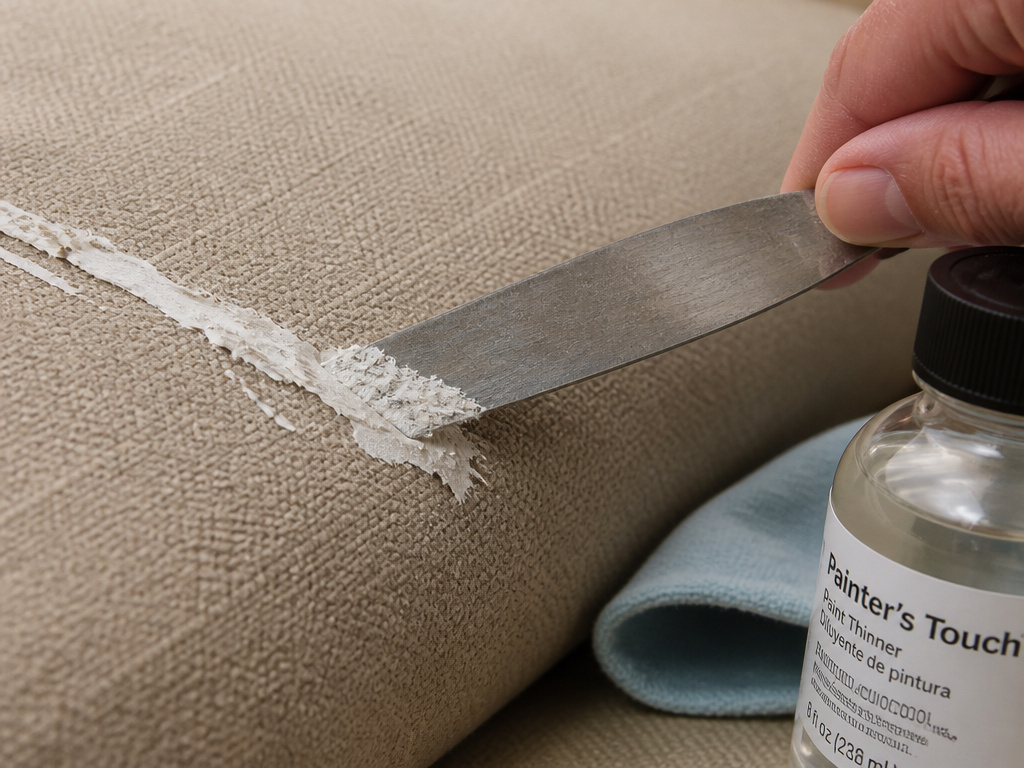
Dried paint needs a sequence, and skipping a step costs you more than it saves.
- Scrape the ridge with a dull knife or a credit card edge. Skip this and your solvent has to dissolve a thick film instead of a thin one, which takes longer and spreads wider.
- Test one or two drops of solvent on a hidden area. Skip it and you learn about fading or dye transfer on the front of the cushion instead of the back.
- Blot from the outside edge toward the center. Working the other direction pushes the stain outward and makes it bigger.
- Move to a clean section of cloth as paint transfers. A loaded cloth just redistributes what you already lifted.
- Rinse with a clean, damp microfiber towel. Don’t oversaturate, and don’t leave soap residue behind.
- Air dry away from direct heat and sunlight. A circulating fan in the room speeds it up considerably.
For oil-based paint, The Spruce suggests a few drops of paint thinner, dry cleaning solvent, or turpentine on a microfiber cloth, blotted from the outside edge. Morbern’s version for dried oil paint is a semi-solid gel-type stripper, scraped and then rinsed with soap and water.
That’s a real conflict with DTNA, and I’ll get to it in the next section.
Where the Manufacturers Genuinely Disagree
Two care documents, both from manufacturers, and they contradict each other on four separate points. This isn’t a case of one being outdated. They’re just different positions.
| Topic | DTNA says | Morbern says |
|---|---|---|
| Wax on vinyl | Any hard wax, such as automotive wax, may be used | Never; causes premature embrittlement and crocking |
| Paint remover | Do not use paint remover on vinyl | A gel-type stripper is allowed on dried oil paint |
| Solvent choice | Naphtha or turpentine on an unprinted cloth | Alcohol or mineral spirits, last resort only |
| Abrasives | Powdered cleaners, used with caution | Not recommended; can scratch and dull |
Read that table twice if you’re working on something you can’t replace.
On wax, DTNA’s S2 and Cascadia manuals both say waxing or refinishing improves soil resistance and cleanability for all vinyls. Morbern says wax should never touch vinyl upholstery at all. Both positions come from documents with real weight behind them.
On solvent, DTNA permits naphtha or turpentine on an unprinted cloth, with a caution to keep it off any non-vinyl upholstery nearby. Morbern permits full-strength rubbing alcohol or mineral spirits only as a last resort, and warns that indiscriminate solvent use can severely damage or discolour vinyl.
Naphtha and turpentine announce themselves the second the cap comes off. That sharp smell filling a garage is your reminder to open a window and keep the rag away from anything that sparks.
Where this goes sideways: Following DTNA’s turpentine instruction on a printed or patterned vinyl. Morbern warns that direct contact from a stripper removes the print pattern itself. That’s a total loss, not a stain, and no rinse brings the pattern back.
My read: on anything printed, patterned, or otherwise irreplaceable, follow the stricter document. Morbern’s caution costs you a little scrubbing time. DTNA’s permission can cost you the surface.
What Not to Do, and What It Costs
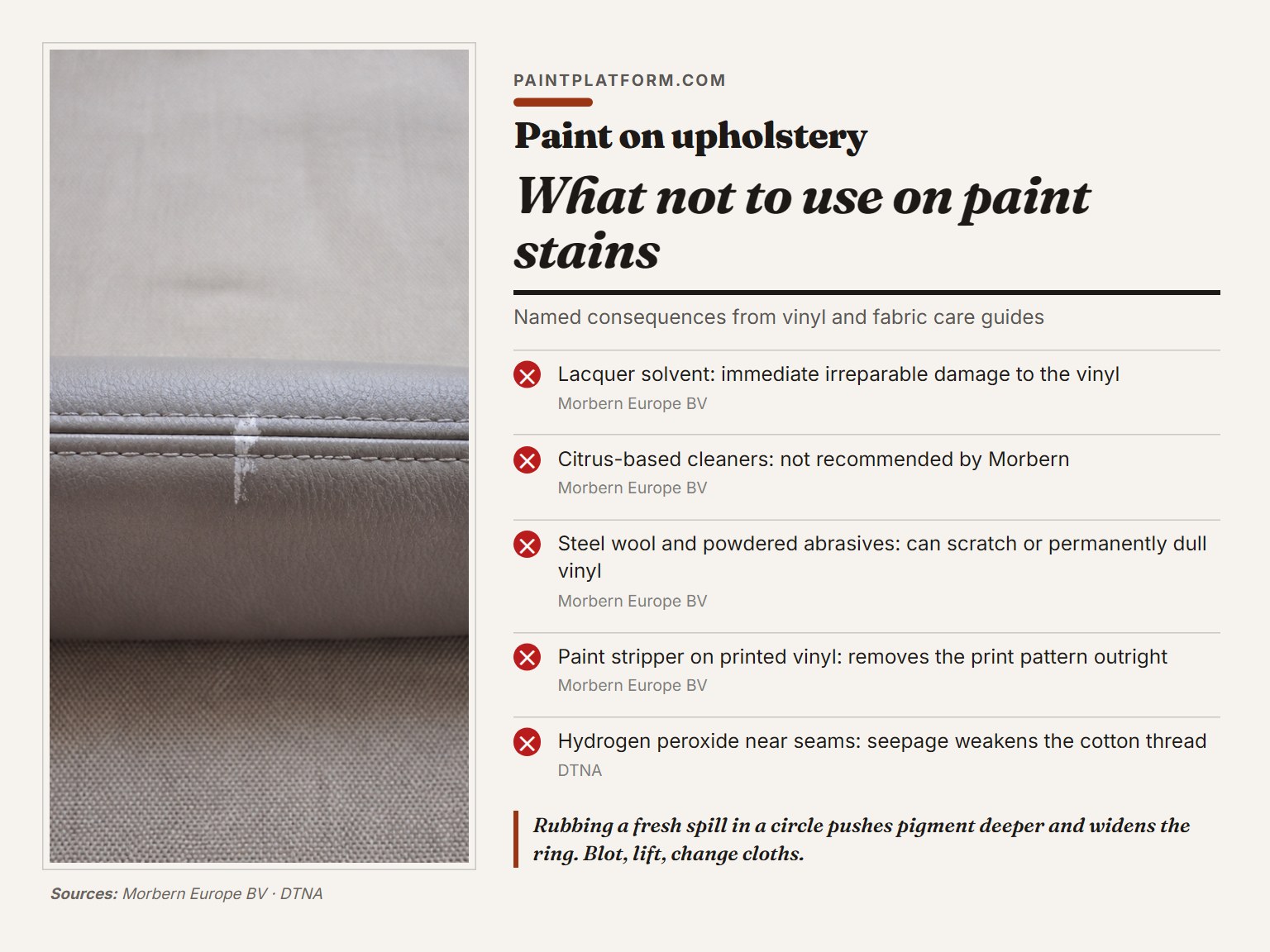
The don’ts here are short and specific, and each one has a named consequence.
- Lacquer solvent. Morbern: immediate irreparable damage to the vinyl.
- Citrus-based cleaners. Not recommended by Morbern, and DTNA offers no guidance either way.
- Steel wool and powdered abrasives. Morbern rules them out. DTNA allows powdered cleaners with caution, noting they can scratch vinyl or leave a permanent dull appearance.
- Paint stripper on printed vinyl. Removes the print pattern outright.
- Hydrogen peroxide near seams. DTNA uses 6 percent hydrogen peroxide for sulfide stains, 30 to 60 minutes, overnight for stubborn spots, but warns that seepage into seams weakens the cotton thread.
- Oversaturating fabric. The Spruce’s warning, and a fast route to a water ring.
Common mistake: Rubbing a fresh spill in a circle to “work it out.” All that does is push pigment deeper and widen the ring. Blot, lift, and change cloths.
If you remember one rule from all of this: lift what you can, dissolve what you must, and rinse everything twice. The rinse is the step everyone skips.
How Long Does It Take to Dry?
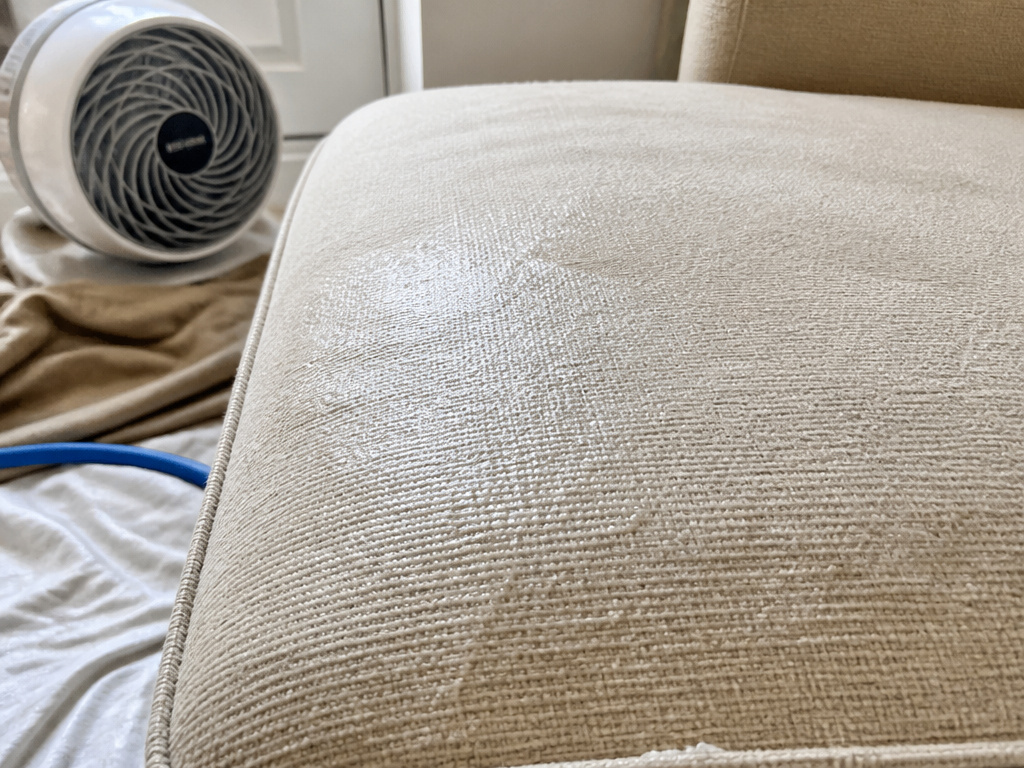
Plan on the upholstery taking up to eight hours to dry completely, per The Spruce. Air dry away from direct heat and sunlight, and put a circulating fan in the room to speed it along.
Don’t be tempted to aim a hair dryer at it. Heat is the enemy of a lot of upholstery finishes, and the O code on fabric tags specifically rules it out.
The best defense is still the boring one. Drop cloths and a cheap sheet over the couch turn a two-hour cleanup into a ten-second one.
If you’re thinking about repainting a piece rather than rescuing it, fabric paint for upholstery is a different project with different rules. Don’t confuse the two.
Frequently Asked Questions
Can you get dried paint out of upholstery?
Sometimes. Cured water-based paint often lifts after gentle scraping and warm soapy water. Cured oil-based paint on fabric usually needs a solvent or a professional. On vinyl, Morbern allows a gel-type stripper for dried oil paint, though DTNA prohibits paint remover outright.
Does dish soap remove paint from upholstery?
It handles fresh water-based paint and general soiling well. The Spruce’s mix is 1 teaspoon of dishwashing liquid to 2 cups of warm water. It won’t touch cured oil paint, and Morbern cautions against using detergents as a routine cleaner.
What removes paint from vinyl seats?
Start with warm soapy water and a medium bristle brush. For stubborn marks, Morbern names Tex Aktiv and 303 Product Detailer. Full-strength rubbing alcohol or mineral spirits are a cautious last resort, and lacquer solvent should never come near vinyl.
Is rubbing alcohol safe on vinyl upholstery?
DTNA permits it for ballpoint ink, applied immediately with a damp cloth. Morbern allows full-strength rubbing alcohol only as a last resort on very stubborn stains. Both treat it as a targeted tool, not a general cleaner.
What if the paint is on a printed or patterned vinyl?
Be extremely careful. Morbern warns that direct contact from a stripper removes the print pattern, which is permanent. Test in an inconspicuous area first, and consider stopping there.
Before You Go
Here’s the threshold I’d actually use. If the upholstery is printed, patterned, or otherwise one-of-a-kind, treat every solvent as a last resort and follow Morbern’s stricter guidance, not DTNA’s permission. The cost of being slow is an afternoon. The cost of being wrong is the piece.
The other concession worth naming: none of this is a guarantee. The Spruce says plainly that not every paint stain can be safely removed from upholstery, and that’s the honest framing. Some stains come out. Some become a slightly different color that you learn to live with.
So start with one thing this week. Put a rag and a dull scraper within arm’s reach of wherever you paint, before the next spill happens. That single habit solves more upholstery emergencies than any product on a shelf.
Go make a mess. Just keep the rag closer than the paint.
