
How to Develop a Painting Style: Copy First, Deviate Later
This post contains affiliate links. As an Amazon Associate, we earn from qualifying purchases.
To develop a painting style, make work fast and often, then notice what you keep repeating. Style is the residue left by volume. Paint a stack of small studies in different approaches, keep the ones that feel like you, and let the rest go.
Volume sounds easy until you sit down to do it, and the how to develop a painting style question is really the hard part of making marks without judging each one. Judging stops you from producing enough work to see a pattern in, and the pattern is the whole point.
What follows: five habits that build volume without turning it into a grind, two tables that sort useful signals from noise, and some honest notes on the tools question. I spent years buying supplies I didn’t need, so you don’t have to.
Key Takeaways
- Style is a byproduct of volume, not a decision you make before you start painting.
- Copy the artists you love. It’s a legitimate learning tool, not cheating.
- Student-grade paint is fine to start. Expensive tubes mostly reward skills you haven’t built yet.
- Notice what you repeat across studies. That repetition is your style already forming.
- Don’t abandon a direction after a handful of attempts. The first few tries always feel awkward.
How to Develop a Painting Style Without Chasing a Signature
You can’t think your way into a style. You paint your way into one, and the thinking happens afterward when you look at the stack and notice what you did without deciding to.
In single-session painting, each mark is laid while the previous layer remains wet. The wet surface allows edges to blend without a drying interval, which compresses the decision window and forces the painter to commit to a stroke before evaluating it. The result is a surface built from sustained, uninterrupted decisions.
That compression is the point.
When you work alla prima, you don’t have time to second-guess every mark. You make the mark, live with it, and adjust on the next one. Do that enough times and your hand starts making decisions your brain hasn’t caught up to yet.
Why Speed Forces Decisions
A slow painting gives you room to edit yourself into blandness. A fast study doesn’t. You can hear the difference between the two: the study has the soft scratch of a dry brush moving quickly across cold-press paper, and the finished piece has long, deliberate strokes with pauses between them. The scratch is where the learning happens.
Here’s the practice loop I’d start with:
- Set a timer and paint faster than feels comfortable. If you blow past the timer, you’ve turned a study into a project, and the point was the study.
- Work small. A small surface forces decisions because you can’t hide a bad mark in a big field of colour.
- Change one variable per study. Same subject, different surface. Same palette, different brush. If you change everything at once, you learn nothing about which change mattered.
- Copy an artist you admire, then copy a second one. The overlap between the two is where your own stuff starts.
- Review the stack once a month. Dump it out, look for what repeats, and write down what you notice. Skipping this step means you’re making work without learning from it.
That fifth habit is the one people skip. Every time.
What Counts as a Style, Anyway?
A style is the set of choices you make without thinking about them. Palette, edge quality, how you handle a brush, what you leave out. It’s the residue of a hundred small decisions, not a brand you apply to your work.
The Australian architectural paint standard AS/NZS 2311 has a line I think about a lot. It says the standard itself can’t be nominated as a painting specification, you can’t just call it up in a contract and expect a painter to know what you want. You have to specify the detail you’re deriving from it.
Style works the same way. “Loose and expressive” isn’t a spec. It’s a direction. You have to name the detail: which marks, which palette, which edges you’re chasing.
The same standard makes a point about moisture that’s worth borrowing. It says liquid-applied paints should never be treated as completely impervious to moisture, design the wall assuming water will get in and give it a way out. Product literature often implies the opposite (a sealed, impervious finish), though no primary source in this set backs that up. Style works the same way: assume new influences will get in, and don’t seal it so tight that nothing can escape.
If your palette keeps drifting and you can’t say why, that’s where color theory earns its keep. I’m not the person to give you a formal lecture on it. I mix by instinct and trial, and half the time I can’t tell you why a palette works. But I can tell you what I’ve noticed about how palettes form.
Bright reds, yellows and oranges cover weakly. AS/NZS 2311 notes these colours have limited opacity and need two or more coats, and the pigment chemistry is the same in artist paint. If your palette keeps pulling toward those colours, expect to layer. Patience is part of the palette.
Here’s a diagnostic table for the signals you’ll notice in your own work:
| What you’re noticing | What it usually means | What to try |
|---|---|---|
| Same colours keep showing up | Palette preference forming | Lean in, don’t fight it |
| Every painting has the same stroke | Technique habit setting | Try a different brush shape |
| Work feels flat after a while | You’ve stopped looking | Go copy someone new |
| You’re bored of your own work | You’re ready to stretch | Change one variable: surface, size, tool |
| Nothing feels like “you” | Not enough volume yet | Make more studies, judge less |
Copy First, Deviate Later
Copying is a legitimate learning tool. Every painter who ever lived learned to see by copying, and the purist stigma against it is mostly gatekeeping.
Copy an artist you love until their moves feel like yours. Then copy someone else. The overlap between the two is where your own style starts.
If you want to learn loose brushwork fast, start with Impressionism. The edges are soft, the marks are visible, and the whole approach rewards speed over precision. If you want to learn to see, realism painting is the discipline, it forces you to measure what’s actually there instead of what you assume is there.
What Copying Does to Your Hand
Copying trains your hand to make marks it hasn’t made before.
That’s the whole mechanism. You’re not stealing a style; you’re borrowing a set of motor patterns long enough for your own to form.
The trick is to copy from life or from a reproduction, not from memory. Memory flattens everything into what you already know how to do.
How Do You Study Your Own Work Like a Conservator?
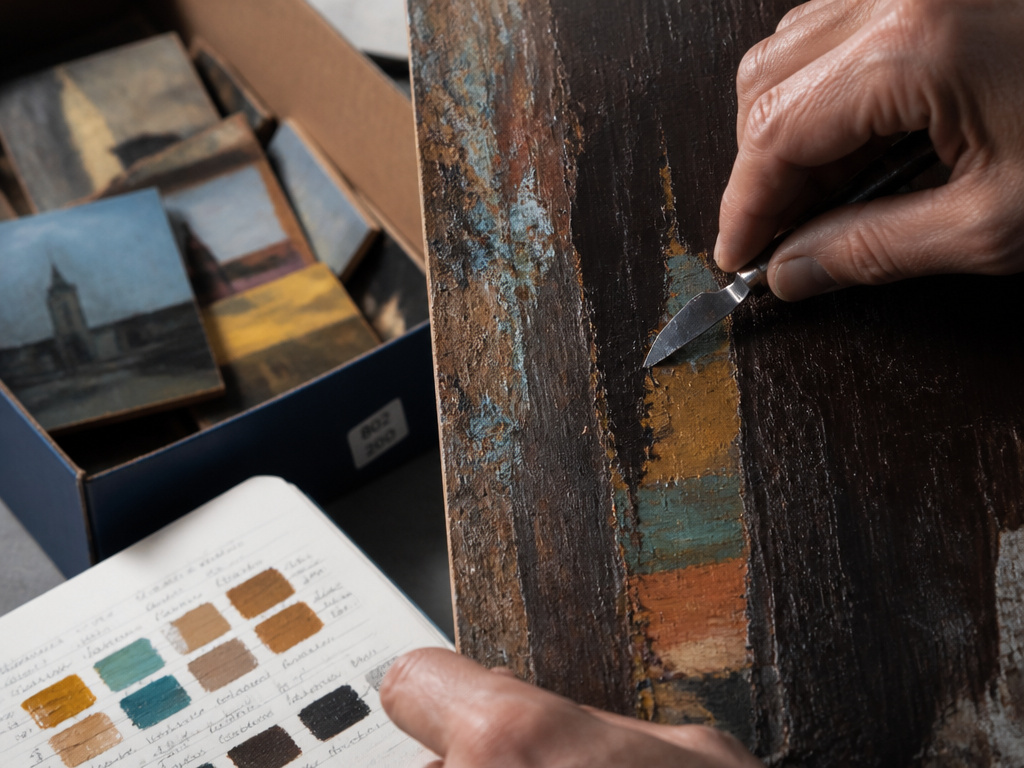
The colour-matching method in AS/NZS 2311 is worth stealing. To match paint on an old building, you don’t eyeball it, you scrape down through the layers with a scalpel at several spots and record the first finish colour you hit. That’s forensic work, not a swatch match.
Studying your own work should work the same way. Scrape down through the stack of studies, look at several spots, and find the colour and mark you keep returning to. The pattern is in the layers, not in any single piece.
I keep a shoebox of failed studies. Once a month I dump it out and look for what I keep doing wrong, and what I keep doing right without noticing. The right stuff is usually more interesting than the wrong stuff.
If you want to see what your work looks like when you slow down, try glazing. Thin transparent layers force you to build slowly and look at what’s already there before adding more. It’s the opposite discipline from alla prima, and it’ll teach you things speed can’t.
The Tools Question Has a Clear Answer
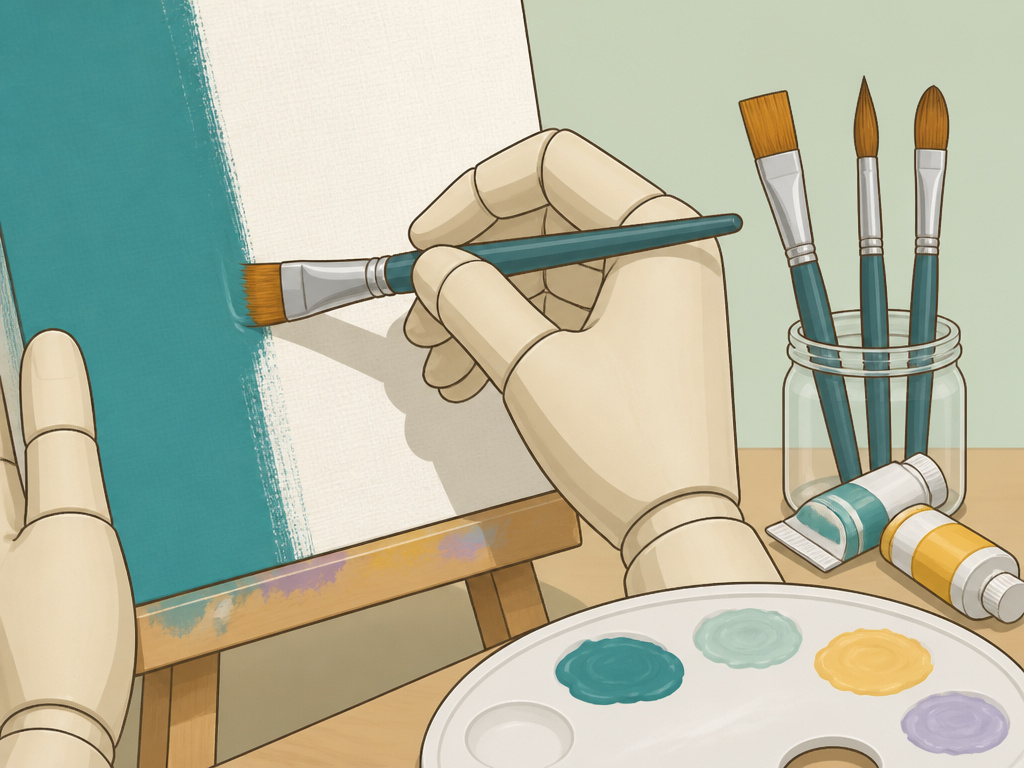
I spent a long time convinced that better paint would make better paintings. Then I did a whole series with student-grade tubes and got work I still like. The paint was never the problem.
There’s a study that backs this up, cited in the UNI autobody surface coating manual. The Pacific Northwest Pollution Prevention Research Center found that differences in transfer efficiency due to painter skill level with a single gun type were often larger than the differences between gun types. In plain terms: the hand matters more than the tool.
Equipment marketing says the opposite. It emphasises high-transfer-efficiency spray guns as the driver of transfer efficiency, which is true in a narrow sense but misses the bigger variable. Here’s the disagreement laid out:
| Position | What it claims | What it means for you |
|---|---|---|
| Pacific Northwest study (via UNI manual) | Skill differences often larger than gun-type differences | Practice beats gear |
| Equipment marketing | High-transfer-efficiency guns drive efficiency | Gear beats practice |
| The honest read | Both matter, but skill compounds | Buy student-grade, practice more |
What Actually Matters in a Brush
A cheap bristle brush sheds hairs into wet paint. A synthetic brush that holds its shape through a full session and gives you a clean edge when you ask for one is worth paying for. That difference is real, and it’s worth paying for.
What isn’t worth paying for is a full set of brushes before you know which shapes you actually reach for. Knowing your brush shapes is the difference between a mark you meant and a mark you got. Start with a few core shapes and add from there.
Student-grade paint is fine for year one.
Common mistake: Rushing a second layer onto a wet surface. The underlayer lifts into streaks, and you lose an hour of work.
When a Direction Feels Wrong After Several Tries
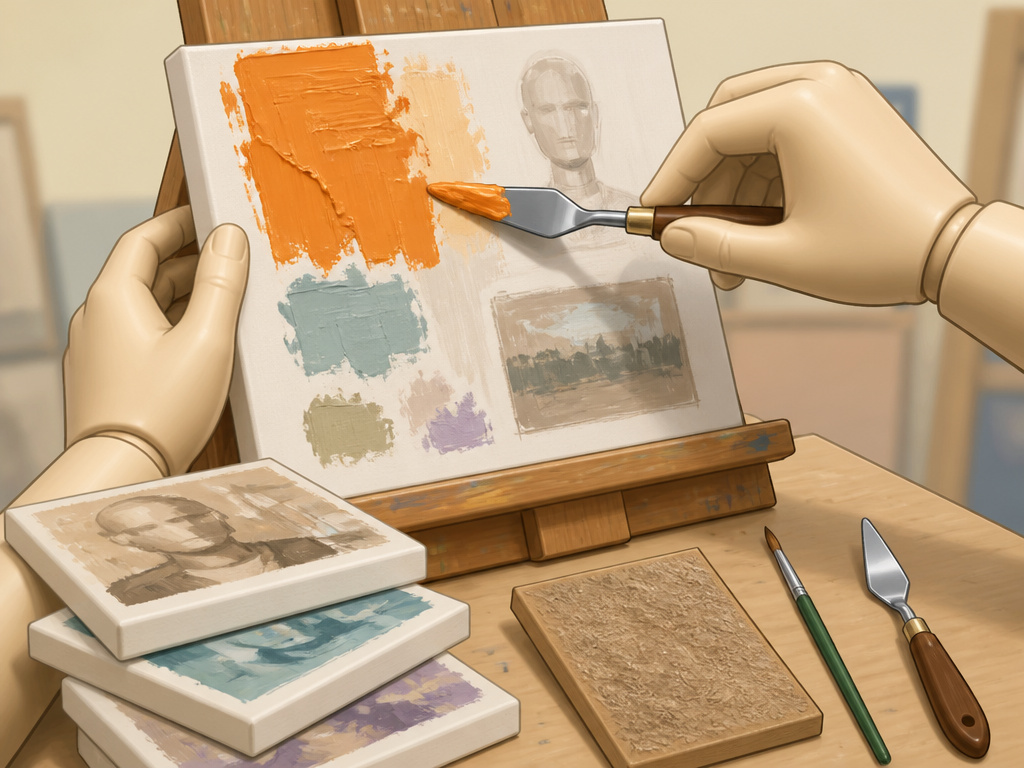
You’re a few studies into a new direction and nothing feels right. That’s normal. The first few attempts in any new approach feel awkward because you’re using muscles you haven’t built yet.
Sound familiar?
I’ve abandoned directions after a few studies and regretted it. The third one is usually where something clicks.
When a direction stalls, try one of these before you walk away:
- Change the surface (paper to canvas, smooth to rough)
- Change the tool (brush to palette knife)
- Change the scale (small studies to one big piece)
- Change the subject (same approach, different thing)
If you want to break a tight hand, abstract painting is the fastest way. No subject to get right, no proportion to check, just marks and colour and the question of whether it holds together. If you want to add texture and weight, impasto is the volume shortcut, thick paint, visible strokes, a surface you can read from across the room.
Fair warning: the first study in a new direction will look like a mistake. That’s the diagnostic run, not the result. Give it several more before you decide anything.
Where this goes sideways: Abandoning a direction after a handful of attempts. You never find out whether it would have worked, and by the time you come back to it, you’ve lost the thread.
Frequently Asked Questions
How long does it take to develop a painting style?
There’s no fixed timeline, and anyone who gives you one is guessing. The pattern shows up in volume, not in a single piece. Make a stack of studies, review them, and notice what repeats. That’s the work.
Can you develop a style without formal training?
Is it bad to copy other artists?
No. Copying is a learning tool, and the purist stigma against it is mostly gatekeeping. Copy until the moves feel like yours, then copy someone else. The overlap is where your own style starts.
Should I stick to one medium while developing a style?
Not necessarily. Switching media can reveal habits you didn’t know you had. But if you switch constantly, you never build enough volume in any one medium to see a pattern. Pick a primary and explore from there.
What if my style keeps changing?
That’s fine. Style isn’t a fixed destination. It shifts as you make work and as your interests change. The only problem is abandoning a direction before you’ve given it enough attempts to know whether it’s yours.
The Bottom Line
Here’s the threshold I’d give you for how to develop a painting style: if you’ve only made a handful of studies in a direction, you don’t have enough data to know whether it’s yours. The pattern shows up in volume, not in a single piece. Make more before you decide.
This all assumes you’re working in a medium where you can produce fast. If you’re an oil painter working large, volume looks different, fewer pieces, more time each. The principle holds; the pace changes.
This week: buy the cheapest sketchbook you can find and fill a chunk of it with studies that aren’t allowed to be good. Then look at what you did when you stopped trying. That’s the beginning of your style, and it was there the whole time.
