
Cabinet Paint vs Furniture Paint: Which Do You Need?
This post contains affiliate links. As an Amazon Associate, we earn from qualifying purchases.
In the cabinet paint vs furniture paint question, the honest answer is that the two categories overlap heavily. Plenty of products are sold as “Cabinet & Furniture” paint, and the genuine differences are durability demand and prep routine. Cabinets face daily hand grease and constant wiping, so they need a harder, more stain-resistant film.
That grease is where the cabinet paint vs furniture paint decision actually gets made. A kitchen cabinet door collects a film of cooking oil along its lower edge that a bedroom dresser never sees, and paint that bonds poorly to an oily surface lifts there first.
What follows is a surface-by-surface breakdown: where the two products genuinely differ, where the spec sheets contradict each other, and the prep sequence that decides whether either one survives.
Key Takeaways
- Prep decides the outcome, not the label. A degreased, dulled surface holds paint; a wiped-down glossy one peels.
- Cabinet paints carry higher resin levels than wall paint, per Consumer Reports, which makes them more resistant to scratches, staining, and fading.
- Dry times vary wildly between brands. Rust-Oleum Cabinet Transformations Basics is touch-dry in 30 minutes; the Valspar Cabinet & Furniture satin data sheet lists 2 hours.
- Chalk paint is interior-only and not wipeable, so it fails in a kitchen even when the finish looks fine.
- Two coats is the floor, not a suggestion. Rust-Oleum states two coats are required for durability.
Cabinet Paint vs Furniture Paint: What Actually Separates Them
Resin content is the first real difference, and it shows up the moment a wet cloth hits the film.
Cabinet coatings carry higher resin levels than standard wall paint, which produces a harder, less porous film. That film resists scratching, staining, and fading better on high-touch surfaces. Furniture coatings share much of the same chemistry but are tuned for a wider range of substrates, including bare wood and metal.
Consumer Reports makes the case directly: cabinet paints are formulated with higher resin levels than traditional wall paint, so they handle grease, scratching, staining, and fading better on surfaces that get handled constantly. That is the entire argument for reading the label.
Then the labels blur. BEHR sells a Cabinet, Door & Trim enamel. Valspar sells Cabinet & Furniture enamel. HGTV Home by Sherwin-Williams sells Cabinet & Furniture. Insl-X Cabinet Coat lists cabinets, shelving, furniture, doors, and trim on the same can. The category split is mostly marketing convenience.
What changes between a kitchen cabinet and a dresser is the abuse pattern.
| Demand | Cabinet paint | Furniture paint |
|---|---|---|
| Daily hand contact | Constant, often greasy | Occasional |
| Cleaning frequency | Wiped weekly | Wiped rarely |
| Main abrasion source | Drawer edges and handles | Feet, pets, floor traffic |
| Typical sheen sold | Satin to semi-gloss | Matte to satin |
| First place to fail | Handle and drawer edge | Top surface and corners |
A cabinet door gets handled with greasy fingers dozens of times a day. A dresser gets a lamp set on it and a sweater draped over it. Same chemistry, very different survival test.
The best cabinet paint shortlist skews harder and glossier than the best furniture paint shortlist, and that gap is the whole story.
Where the Sources Genuinely Disagree on Prep
Three of the manufacturers in this comparison contradict each other on whether primer is required at all.
Rust-Oleum’s Cabinet Transformations Basics instructions are blunt: scrub the surface with a degreaser and prime before application. Benjamin Moore’s Insl-X Cabinet Coat page claims the opposite, stating that it adheres to difficult surfaces, even polyurethane and varnish, without using a primer. Valspar’s oil-enriched enamel page says most projects will require little-to-no prep work.
All three can be accurate at once, because each is describing a different starting surface. A greasy oak cabinet and a factory-finished melamine door are not the same problem.
Skip this if: Your cabinets are laminate or melamine in good condition. Consumer Reports says those need a high-quality water-based acrylic urethane primer or sealer, not a standard bond coat.
The Primer Argument, Side by Side
Consumer Reports lands on the conservative side. It recommends layering a primer before painting, and its expert explains that primers bond mechanically and chemically to the surface and close it off so the topcoat is not fighting the substrate.
Insl-X is making a narrower claim. Its own FAQ still requires every surface to be clean, dry, sound, and free of dirt, grease, oils, waxes, and mildew, and calls prep essential. Read the two statements together and the no-primer promise shrinks to one case: a clean, sound, previously finished surface.
So the disagreement is mostly vocabulary. Benjamin Moore’s Insl-X says a separate primer can be optional on clean, sound surfaces, while Rust-Oleum requires priming and Consumer Reports recommends a primer before painting; cleaning and dulling the surface is the step all sides agree on.
The primer for furniture question deserves its own pass, because metal wants a rust-protecting base layer and laminate wants acrylic urethane, and those are two different products.
One more wrinkle. Paint without sanding exists and some of it works, but “no sanding” in marketing usually means “no full strip.” It rarely means “no dulling.”
Which Product Wins for Which Surface
Insl-X Cabinet Coat CC-65XX is what I would hand someone facing an unknown previous finish.
It is a urethane acrylic satin enamel built for cabinets, shelving, furniture, doors, and trim, and the primer-free adhesion claim is why it gets reached for on thrift pieces carrying someone else’s old varnish. The catch sits in the same FAQ: clean, dry, sound, no grease, no wax, no mildew.
I reach for Insl-X when I do not know what is already on the piece. The no-primer claim holds up, but only after the surface is genuinely clean and dull, and most secondhand furniture is neither.
The Cabinet Pick: BEHR Premium Cabinet No. 7520
For a full kitchen, BEHR Premium Cabinet, Door & Trim Satin Enamel No. 7520 publishes the most useful number in the category. Cabinets, doors, and windows can be closed as early as 2 hours after the final topcoat. That is the figure that decides whether you can paint a kitchen and still use it the same evening.
BEHR also states the cured film may be cleaned with a mild, non-abrasive liquid detergent after 2 weeks, and warns that darker colors and cooler, more humid conditions need additional dry time. It is explicitly not for floors.
The Furniture Pick: HGTV Home by Sherwin-Williams Cabinet & Furniture
For furniture, HGTV Home by Sherwin-Williams Cabinet & Furniture has unusually specific prep language. Sand glossy surfaces dull, spot prime bare areas, and use a stain-blocking primer on bleeding woods like redwood and cedar.
That last point matters more on furniture than on cabinets. A cedar chest will push tannin through a topcoat that would have been fine on a painted cabinet door.
Rust-Oleum Cabinet Transformations Basics is the straightforward value route, and it is honest about what it needs: two coats required for durability, degreaser first, primer second, up to 400 sq ft per gallon, soap and water cleanup.
The Prep Sequence That Decides Whether It Sticks
I learned this the expensive way on a thrift-store dresser. I wiped it down, skipped the scuff sand, and painted. Before long the drawer edges were peeling off in sheets where hands and knees had been hitting them.
Now I degrease, scuff sand, and wipe again. That sanding pass leaves a dull, chalky drag under the palm, and the drag is the signal that the factory finish has opened up enough to grip.
Before you start: Sanding old paint can release lead dust, and the Valspar data sheet calls for a NIOSH-approved respirator plus proper containment when that risk exists. Removing mildew with a bleach solution needs rubber gloves and eye goggles. Keep solvent-based product off your skin.
- Remove the doors and label them. Skip the labeling and you will spend an hour guessing which door goes where.
- Degrease with a TSP substitute. Kitchen grease defeats adhesion, and the peel starts at the handle edge first.
- Scuff sand to dull the finish. A glossy factory finish gives paint nothing to bite, and the first coat slides around.
- Wipe the dust with a damp cloth. Leftover grit shows as bumps under the topcoat, and sanding them out means repainting.
- Prime bare or stained areas. Skip it on redwood or cedar and the tannins bleed through as a brown patch.
- Apply two thin coats. One heavy coat looks covered but cures soft and wipes away at the corners.
- Wait the full recoat window. Stacking early traps solvent, and the film stays tacky for days.
Common mistake: Wiping a cabinet door with a damp rag and calling it clean. Cooking oil smears instead of lifting, and the paint bonds to the smear.
Grab a rag and a degreaser and test one door before you commit to a whole kitchen.
Does the Sheen Matter More Than the Label?
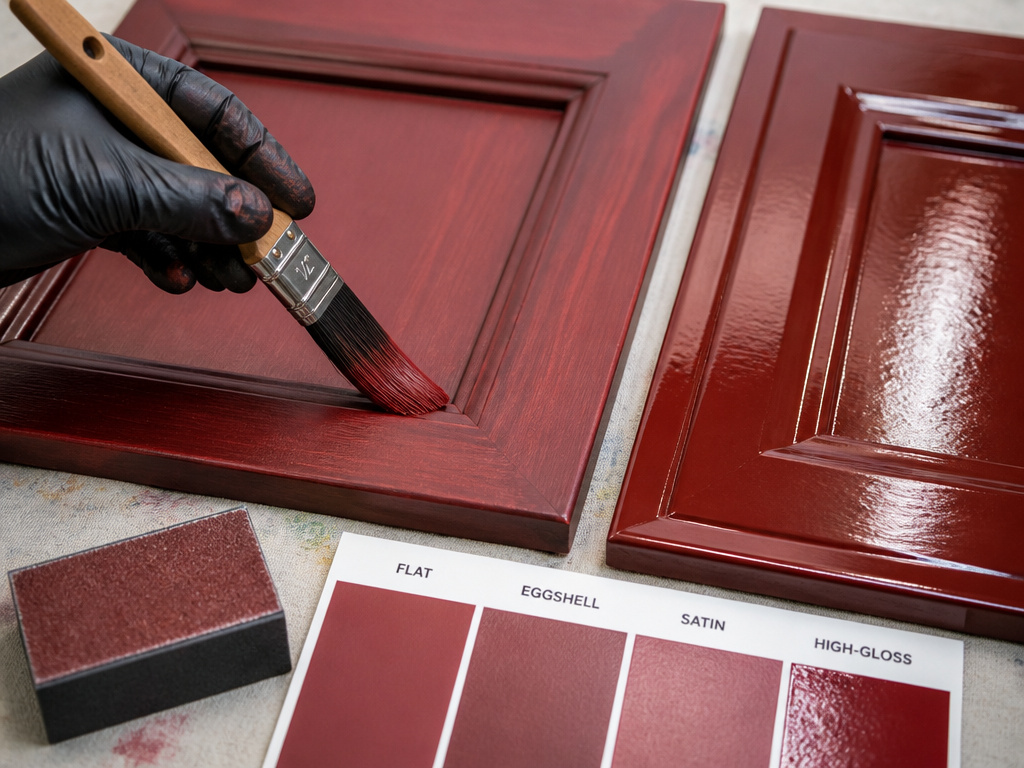
Consumer Reports ranks high-gloss as the most durable and stain-resistant finish, then adds the catch: it highlights even minor cosmetic imperfections. That makes it a fit for cabinets in very good to excellent condition and a poor fit for anything with dings.
Eggshell stands up to scuffs and scratches better than flat paint, which is why it shows up on furniture far more often than on cabinets. Flat hides flaws and wipes badly.
The Good Housekeeping Institute tested 20 paints in identical satin and eggshell sheen and the same red shade, then ran 750 passes with fine-grit sandpaper on an abrasion machine. That is the kind of number that separates a durability claim from a label.
Settling the sheen levels before you buy matters more than picking a brand, because sheen changes your cleaning routine.
Two thin coats beat one thick coat every time. A heavy pass traps solvent under a skin that looks dry and stays soft for days.
Why Chalk Paint Keeps Disappointing People
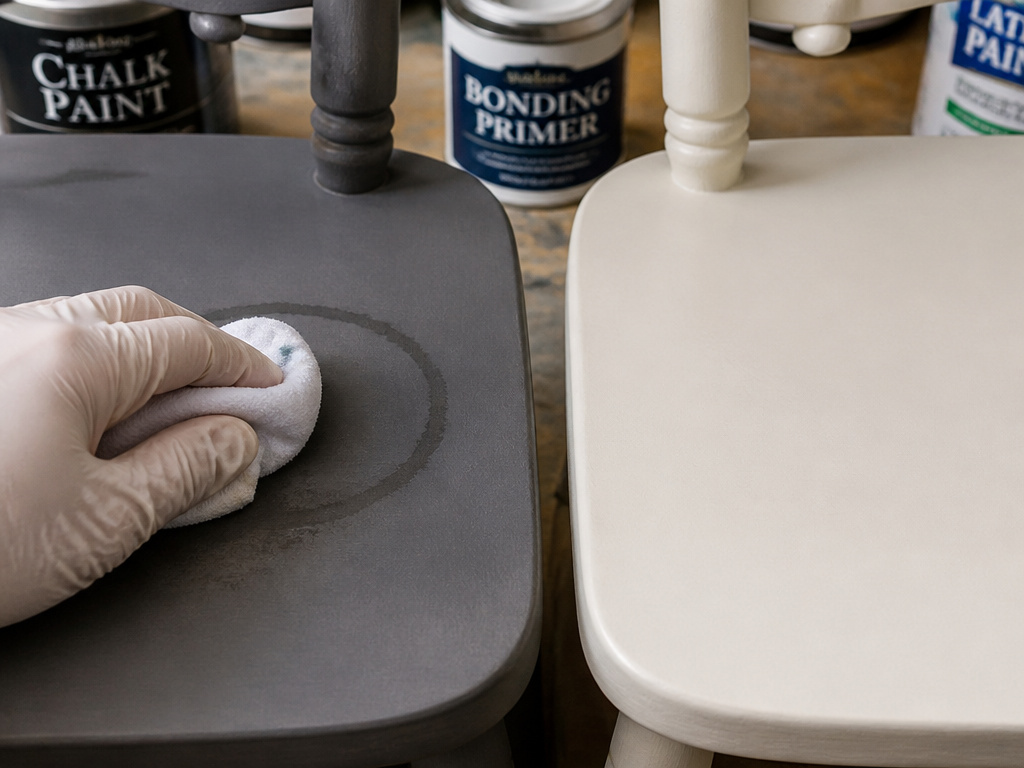
Chalk paint gets sold as the no-prep answer, and on a decorative shelf it can be, though Real Homes notes it is not wipeable or stain resistant and is interior-only. In a kitchen it fails for a boring reason: Real Homes notes it is not wipeable or stain resistant, and it is interior-only.
I ran that comparison myself on two matching thrift chairs. One got a branded chalk paint, the other a basic latex over a coat of bonded primer. After ordinary use I could not tell them apart without squinting.
The difference showed up in cleaning. The chalk-painted chair picked up a mark from a damp cloth that the primed chair shrugged off, and the mark did not come back out.
The chalk paint vs regular paint breakdown covers where each one genuinely holds up, which is mostly on low-traffic decorative pieces.
If you are spraying instead of brushing, light passes beat a heavy wet coat on anything woven or spindly. The spray paint vs brush paint comparison is worth ten minutes before you commit a whole can.
How Long Before You Can Close the Doors?
You finish the last coat at four in the afternoon and somebody wants to shut the drawers by dinner. The answer depends entirely on which can you opened.
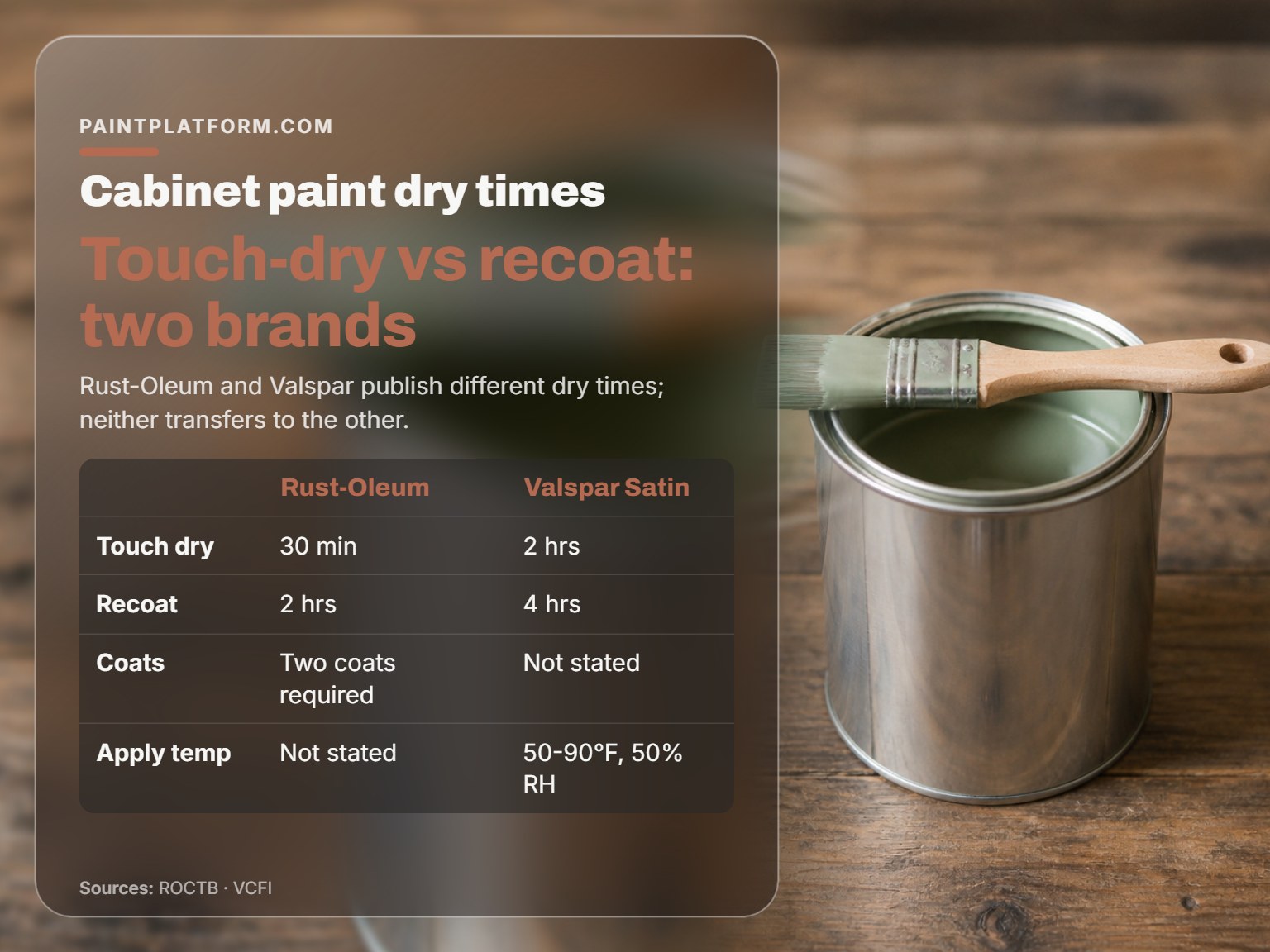
Rust-Oleum lists 30 minutes to touch and 2 hours to recoat. The Valspar Cabinet & Furniture satin data sheet lists 2 hours to touch and 4 hours to recoat. Both are telling the truth about their own product, and neither number transfers to the other brand.
Where this goes sideways: Stacking a second coat at the 30-minute touch-dry mark. Touch-dry is not recoat-ready, and the second coat will wrinkle the first.
| Product | Touch dry | Recoat | Note |
|---|---|---|---|
| Rust-Oleum Cabinet Transformations Basics | 30 min | 2 hrs | Two coats required |
| Valspar Cabinet & Furniture Satin (PDS) | 2 hrs | 4 hrs | Apply 50-90 F, 50% RH |
| BEHR Premium Cabinet No. 7520 | Not published | Not published | Closable 2 hrs after topcoat |
| Insl-X Cabinet Coat CC-65XX | Not published | Not published | No primer over polyurethane |
Half of that table reads “not published,” and that absence is worth naming. Most cabinet paint pages in this comparison publish no dry time at all, so the two that do become the reference points by default.
Those are the numbers that tell you whether your garage in February counts as a legal painting environment.
Once the film is fully cured, a sealer is optional on most cabinet paints and genuinely useful on high-traffic furniture. Whether you need to seal painted furniture depends on how hard the piece gets used, not on what the can says.
Frequently Asked Questions
Can I use cabinet paint on furniture?
Yes, and it usually works well. Cabinet paint is formulated for harder use than most furniture sees, so a dresser or a bookshelf is a lighter assignment. The one thing to watch is sheen: cabinet paints skew satin to semi-gloss, which can look heavy on a bedroom piece.
Is furniture paint durable enough for kitchen cabinets?
It depends on the specific product and the sheen. Consumer Reports notes that cabinet paints carry higher resin levels than wall paint, which is the durability argument. A furniture enamel in a satin or semi-gloss sheen can hold up in a low-traffic kitchen, but a matte furniture finish will show every fingerprint.
Do I really need to sand before painting cabinets?
The manufacturers disagree, and the disagreement is narrower than it sounds. Insl-X claims adhesion to polyurethane and varnish without a primer, while Rust-Oleum requires degreasing and priming. Both still require a clean, sound surface. Dulling a glossy finish is the step Valspar and HGTV Home by Sherwin-Williams call for, though Valspar’s oil-enriched enamel page says most projects need little-to-no prep.
How many coats of cabinet paint do I need?
Two is the minimum. Rust-Oleum states plainly that two coats are required for durability, and thin coats cure harder than one heavy pass. Deep or bright colors may need an additional coat for full hide, which Valspar notes on its own product page.
Can I use chalk paint on kitchen cabinets?
You can, and it will look good for a while. Real Homes notes chalk paint is not wipeable or stain resistant and is interior-only, which is a bad match for a surface that gets wiped weekly and collects cooking grease.
What temperature should I paint cabinets in?
Valspar specifies application between 50 and 90 F at 50% relative humidity, and BEHR warns that cooler temperatures and higher humidity extend dry time.
The Bottom Line
Here is the trigger that should change your plan. If your cabinets are laminate, melamine, or metal, stop shopping for cabinet paint and shop for the right primer first. Consumer Reports is specific on this: laminate and melamine want a water-based acrylic urethane primer or sealer, and metal wants a rust-protecting base layer. Paint over either without that step and you will be repainting sooner than you expect.
For everyone else, the first move this week is one door. Take it off, label it, degrease it, sand it dull, and paint one face. You will learn more from that single door than from any label on any can.
And the concession: if the piece is a cheap thrift chair you are experimenting on, none of this matters much. Paint it badly. Learn something. The stakes are low and the lesson costs less than the furniture did.
