
Paint Disposal Safety Guide: Rules Differ by State
This post contains affiliate links. As an Amazon Associate, we earn from qualifying purchases.
Paint disposal safety guide basics: Pennsylvania, Ohio, and Wisconsin let you dry latex paint and put it in the trash. California presumes latex waste hazardous and bans drying it out at all. Oil-based paint, thinner, and solvent-soaked rags go to a household hazardous waste site everywhere.
The gap between those two positions is jurisdictional, not chemical, and the paint disposal safety guide question comes down to your zip code. The same gallon of latex paint sits in a garage in Sacramento and a garage in Columbus, and only one of those garages has a legal path to the curb.
What follows: the state-by-state split, the drying method that actually works, the containers and rags people get wrong, and the two phone numbers that settle the whole question.
Key Takeaways
- Latex is not one thing legally. California presumes latex waste hazardous. Pennsylvania DEP says latex is not hazardous and can go out with regular waste.
- Drying is the hinge. Ohio EPA and Wisconsin Extension both let you harden small amounts and trash them. California DTSC says spreading latex to dry it is not permitted.
- Oil-based paint, stains, varnishes, thinner, and solvent rags are hazardous in every source here. They go to a household hazardous waste site.
- A can less than one-fourth full will dry in place per Ohio EPA. Lid off, stir every few days.
- Call first. California’s line is 1-800-CLEANUP (1-800-253-2687). Pennsylvania’s HHW hotline is 1-800-346-4242.
Why the Same Can of Latex Paint Is Legal in Ohio and Illegal in California
CalRecycle’s paint page says it plainly: latex paint waste is presumed hazardous in California. Pennsylvania DEP’s fact sheet says the opposite in almost the same number of words: latex paint is not hazardous and can be disposed with regular waste.
Latex paint waste is presumed hazardous under California’s paint stewardship framework, while Pennsylvania’s Department of Environmental Protection classifies the same material as non-hazardous household waste. Washington’s Department of Ecology takes a third position: water-based paints are less likely to designate as dangerous waste, though some still do because of toxic ingredients.
Three agencies, three answers, and a homeowner standing in the middle holding a dripping can. The classification decides everything downstream: whether you can harden a can in the sun, whether the empty container goes in recycling, and whether a drop-off site will take it at all.
| State | Latex classification | Dry and trash? | Source |
|---|---|---|---|
| California | Presumed hazardous | No, prohibited | CalRecycle |
| Pennsylvania | Not hazardous | Yes, after drying | PA DEP |
| Ohio | Not classified hazardous | Yes, small quantities | Ohio EPA |
| Wisconsin | Not classified hazardous | Yes, small quantities | UW Extension |
California’s version is the strictest in this set. The California paint stewardship page covers architectural paint in containers of five gallons or less, and the state prohibits paint from disposal on land or water entirely. Dried paint still has to go to a drop-off site there.
The EPA household hazardous waste overview is the federal baseline, and it stays deliberately general. Monitor use, storage, and disposal, and check with your local environmental, health, or solid waste agency for what applies where you live.
That vagueness is the point. The federal government sets the shape of the problem and hands the specifics to the states, which is why the rest of this paint disposal safety guide question depends entirely on your zip code.
How Do You Dry Out Latex Paint for the Trash?
Small amounts dry in the can if you leave the lid off and stir. Ohio EPA’s household hazardous waste guide sets the threshold at less than one-fourth of the container, in a well-ventilated spot away from open flame, children, pets, and rain.
Before you start: Solvent-based paint gives off vapors that can ignite, so keep every open can away from pilot lights, space heaters, and cigarettes. Ohio EPA also warns against mixing cleaners, oils, or degreasers into paint waste, because the mixture can react. Work outdoors or in a garage with the door up, and keep kids and pets out of the drying zone.
- Check the volume first. Less than one-fourth of the can and Ohio EPA says it will dry in place. More than a gallon and you need the layering method below. Skip this check and you’ll be waiting on a can that physically cannot dry.
- Brush the last inch onto cardboard or newspaper. That’s Ohio EPA’s small-quantity method, and it uses the paint up rather than drying it in a puddle. A thick pool skins over on top and stays soft underneath.
- Leave the lid off and stir every few days. Stirring breaks the surface film so moisture can escape. Ohio EPA lists it as a drying accelerator.
- Add absorbent material if it’s stubborn. Kitty litter or sawdust speeds drying per Ohio EPA. A commercially available paint hardener does the same job with less mess.
- Set it out with the lid off. Ohio EPA is explicit here: the collector needs to see hardened paint. A lidded can gets rejected, or opened by someone who isn’t expecting liquid.
Anything over a gallon goes into half-inch layers in a plastic-lined cardboard box, each layer dry before the next. That’s slow work, and drying out paint at that volume is a project.
The Wisconsin Extension paint disposal publication allows the same hardening for small quantities of water-based paint. If the stick sinks, it isn’t done.
Common mistake: Drying paint with the lid on in a closed garage. The solvent has nowhere to go, a skin forms across the top, and the can stays liquid underneath while you keep checking it.
In California this entire procedure is off the table. CalRecycle states that intentionally drying paint without a permit to treat hazardous waste is prohibited, and that leftover paint, including dried paint, should go to a drop-off site.
Four Sources, One Answer on Oil-Based Paint
Oil-based paint is hazardous in every source I checked, from CalRecycle to Pennsylvania DEP to Washington’s Department of Ecology. There’s no state in this set where a half-can of oil-based enamel goes in the kitchen trash.
That smell is the solvent, and it’s the reason the rules are uniform here.
Washington’s state dangerous waste paint guidance assigns oil- and solvent-based paint a waste code of D001 because it’s ignitable and toxic. Pennsylvania DEP says the same thing in plainer language and adds the hotline number for when you can’t find a collection event.
Thinner and Turpentine
Paint thinner, turpentine, and mineral spirits are reusable, and Pennsylvania DEP spells out the method. Let the solids settle in a closed container, pour the clear liquid off into a clean container, and keep it for the next project.
What’s left at the bottom dries with cat litter, sawdust, or shredded newspaper and goes out with household waste. Paint thinner disposal gets messier once the settled solids stop separating cleanly, because at that point you’re hauling liquid instead of reusing it.
Oily Rags
Ohio EPA’s guide is blunt about solvent paints and ignition sources: never work near an open flame or a cigarette.
A few rules worth taping inside the cabinet door:
- Never mix paint waste with cleaners, oils, or degreasers. The EPA warns that incompatible products can react, ignite, or explode, and contaminated waste can become unrecyclable.
- Never burn it. Ohio EPA bans paint waste in a burn pile or burn barrel outright.
- Keep the original container and label. The EPA is direct about this one, and about never storing hazardous products in food containers.
- Empty cans still count. The EPA notes that even empty HHW containers can pose hazards from residual chemicals, so handle them carefully.
For the full picture on solvent-based leftovers, oil-based paint disposal covers the collection routes state by state.
The Container Rules Nobody Reads
Empty and non-empty are different legal categories, and the difference trips people up at the drop-off door.
Empty Cans
CalRecycle notes that aerosol paint and empty paint containers are not currently part of PaintCare’s program in California. Contact your city, county, or solid waste provider instead. Aerosol coatings and coating-related products join the program at stewardship plan implementation or January 1, 2028, whichever comes first.
Half-Full Cans and Rusted Rims
Non-empty containers need to go to a paint drop-off site or be safely disposed, per CalRecycle. The EPA says corroding containers require special handling: call your local hazardous materials official or fire department before you move it.
The California paint disposal FAQ page defines recyclable latex paint narrowly: water-based latex, still liquid, transferred for recycling. A can that’s been open for years doesn’t qualify.
| Situation | What it means | What to do |
|---|---|---|
| Can under one-fourth full | Dries in place | Lid off, stir every few days |
| More than one gallon left | Too much to dry in the can | Half-inch layers in a lined box |
| Paint has separated | Clear liquid on top | Pour it off, absorb with litter |
| Rim is corroded | Special handling required | Call hazmat or fire department |
| Latex froze over winter | Not shareable | Dry and trash, or drop off |
Where this goes sideways: Setting a lidded, half-full can on the curb. Landfills generally can’t accept liquid waste, per Ohio EPA, so the can gets left behind, or opened by a collector who then has a spill to deal with.
Container handling has its own set of traps, and paint can disposal covers the recycling side once the paint is genuinely gone.
What Happens If You Pour It Down the Drain?
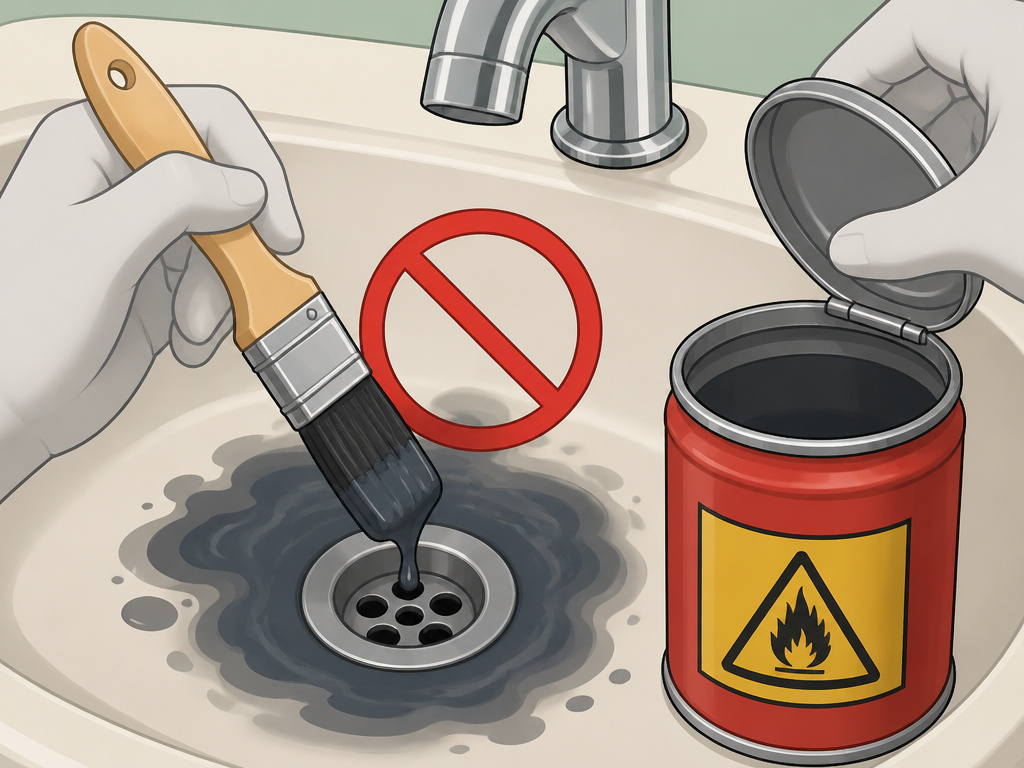
Wisconsin Extension states it flatly: do not pour these products down the drain or sewer, and do not put flammable products in the garbage, drains, or storm sewers, because it’s illegal.
California is the one source here that allows any drain contact at all, and even there the permission is narrow. CalRecycle says some brushes used for latex paint might be okay to rinse in a sink connected to the sewer. Oil-based paint and the solvents used to clean brushes should be collected and taken to an authorized hazardous waste facility.
The same page puts the burden squarely on you: it’s your responsibility to determine whether your rinse water is hazardous waste. Nobody at the treatment plant is going to make that call for you.
Paint rinse water from anything solvent-based should be collected and disposed of at an authorized hazardous waste facility.
Do You Have a Neighbor Who Needs That Can?
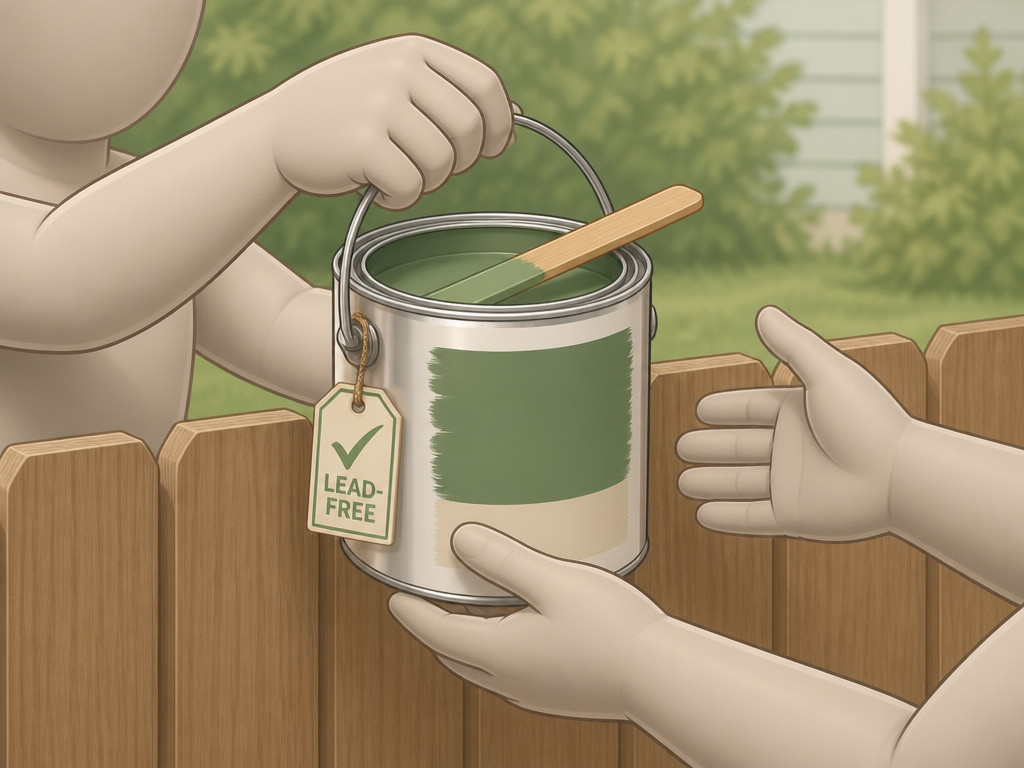
Reuse beats disposal in every source here. California DTSC’s own phrasing is that the best way to get rid of latex paint is to use it up in the manner it was intended.
Wisconsin Extension sets four conditions on sharing paint, and all four have to hold:
- It’s lead-free.
- It’s in the original can.
- The label is legible.
- If it’s latex, it hasn’t been frozen.
CalRecycle adds that paint gets recycled into new paint.
Buying the right amount in the first place is the cheapest fix. Pennsylvania DEP puts coverage at about 400 square feet per gallon, though that varies by brand and surface, so measure the wall before you buy.
For the full route from leftover to reprocessed, paint recycling walks through what actually happens to the can after you hand it over.
When the Can Is Frozen, Rusted, or Full of Lead
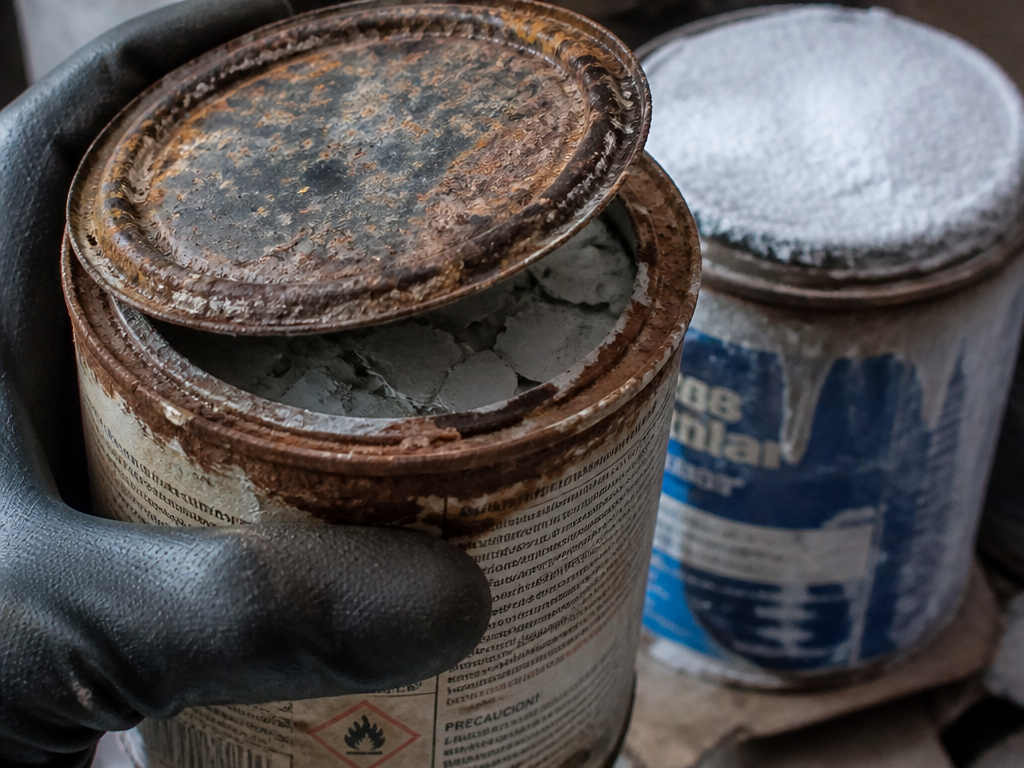
Three situations break the standard procedure: a can that froze over winter, a can with a corroded rim, and anything that came out of a house painted before 1978.
Ohio EPA notes that the Consumer Products Safety Commission banned lead in consumer paints in 1978. Anything older is a different category, and Washington’s guidance suggests requesting SW-846 Method 1311, the Toxicity Characteristic Leaching Procedure, if you suspect lead, chromium, or cadmium in a primer.
Wisconsin Extension excludes latex that has been frozen from reuse, so
The part nobody mentions: Some collection events no longer take paint at all. Ohio EPA notes that the sheer volume of household paint waste pushed some programs out of the business, and some centers now tell homeowners to solidify and landfill it themselves. Call before you load the car.
Businesses get a different answer entirely. California DTSC says HHW centers sometimes accept Conditionally Exempt Small-Quantity Generators, defined as businesses producing less than 220 pounds of federally regulated hazardous waste per month. New York’s rules are tighter: CESQGs can use a paint collection site, but small or large quantity generators cannot.
Illinois adds a permit layer on top. No one may accept hazardous paint waste for storage, treatment, or disposal without a Resource Conservation and Recovery Act permit, and non-hazardous paint waste needs a state permit. A properly permitted sanitary landfill may accept a homeowner’s paint waste there.
Frequently Asked Questions
Can I put latex paint in the regular trash?
It depends on the state. Pennsylvania DEP says latex paint is not hazardous and can be disposed with regular waste once it’s dried with an absorbent material. Ohio EPA and Wisconsin Extension allow small quantities to be hardened and trashed. California presumes latex waste hazardous and prohibits any land disposal.
How long does latex paint take to dry out for disposal?
No agency in this set publishes a fixed timeline, because volume, humidity, and airflow all change the answer. Ohio EPA’s method is to stir every few days and let it dry in the can when it’s less than one-fourth full. Test it physically: a stick should stand up in a matte, cracked surface.
Is dried paint still considered hazardous waste?
In California, yes. CalRecycle states that leftover paint, including dried paint, should be taken to a paint drop-off site, and that intentionally drying paint without a hazardous waste permit is prohibited. In Pennsylvania and Ohio, fully dried latex is treated as regular household waste.
What should I do with old paint thinner?
Let the solids settle in a closed container, pour the clear liquid into a clean container, and reuse it on the next project, per Pennsylvania DEP. Dry the residue completely with cat litter, sawdust, or shredded newspaper before disposing of it with household waste.
Where do I find a drop-off site near me?
California residents can call 1-800-CLEANUP (1-800-253-2687). Pennsylvania’s Household Hazardous Waste Hotline is 1-800-346-4242. PaintCare runs a site locator for states with stewardship programs, and the EPA advises checking with your local environmental, health, or solid waste agency for what applies where you live.
The Bottom Line
Here’s the threshold that decides everything: walk out to the can and look at the level. Under one-fourth full and you’re in drying territory in Ohio and Wisconsin. Over a gallon and you’re layering it into a lined box. In California you’re driving it to a drop-off either way, dried or not.
None of that applies to oil-based anything. Solvent paint, thinner, varnish, and the rags that touched them go to a household hazardous waste site in every state in this set, and no amount of kitty litter changes the classification.
The concession worth stating plainly: if you’re running a business rather than a household, most of this stops applying. Generator status, permits, and pickup requests replace the drop-off model, and the thresholds are lower than you’d guess.
Try this today. Pick up the oldest can on your shelf, read the label for the words alkyd or oil-based, and decide which of the two paths it’s on. That’s a two-minute job, and it keeps the next can from joining the pile.
