
How to Clean Paint Rollers: Latex, Oil, and Storage
This post contains affiliate links. As an Amazon Associate, we earn from qualifying purchases.
Cleaning paint rollers means matching the method to the paint: warm soapy water for latex and acrylic, mineral spirits or paint thinner for oil-based, and a clean water flush afterward on any roller with internal seals after solvent cleanup. Scrape the excess back into the tray first, then wash, rinse, and dry completely before storage.
Those internal seals are the reason the water flush exists at all. Mineral spirits can dry the seals inside a pump roller until they stiffen and fail, which is why Wagner requires a water flush after any solvent touches the Smart Edge Roller, and it is the same logic behind how to clean paint rollers with a pump. Get that order wrong and the roller can start weeping paint at the housing.
What follows: the paint-type split, the two places the manufacturers flatly contradict each other, the flush counts for Wagner’s pump rollers, and the drying step that decides whether a cover survives to next spring.
Key Takeaways
- Match the method to the paint first. Latex and acrylic take warm soapy water; oil-based takes mineral spirits or paint thinner.
- Never use hot water on a Wagner Smart Edge Roller. The manual specifies lukewarm soapy water, while Benjamin Moore’s roller page calls for hot water with dish detergent.
- Pump rollers get flushed, not just washed. Wagner’s EZ-Roller needs a minimum of 5 plunger cycles per component while submerged.
- Dry completely before storage. Benjamin Moore states plainly that storing a roller wet will damage it.
- Some jobs aren’t worth cleaning. Benjamin Moore itself says oil-based cleanup may cost more in solvent and disposal than the cover is worth.
What Paint Type Are You Cleaning Off the Roller?
Latex and acrylic come off with soap and water. Oil-based and most alkyds need mineral spirits or paint thinner first, and the roller’s own manual decides whether that solvent is even allowed.
Latex and acrylic paints clean up with warm, soapy water, while traditional oil-based paint requires mineral spirits or paint thinner. A waterborne alkyd such as Benjamin Moore Advance takes soap and water. Wagner limits oil-based use in the Smart Edge Roller to paints cleanable with mineral spirits and excludes paints that need a stronger solvent.
Here’s the split as a working list, because the third item is the one that trips people up:
- Latex and acrylic. Warm soapy water, refreshed with fresh water as it loads up. Sherwin-Williams recommends a bucket rather than a running tap.
- Traditional oil-based and most alkyds. Mineral spirits or paint thinner, worked in a well-ventilated area.
- Waterborne alkyd, such as Benjamin Moore Advance. Soap and water, even though the label says alkyd. This is the exception that breaks the rule.
- Paints needing a stronger-than-mineral-spirits solvent. Not for the Wagner EZ-Roller at all. The manual says those should not be used with the unit.
Behr’s CoverPro guidance on how to clean paint rollers follows the same two-track logic: warm soapy water for water-based coatings, the paint manufacturer’s recommended solvent for oil-based.
The Waterborne Alkyd Exception
Benjamin Moore Advance cleans up with soap and water, full stop. That single line contradicts every “oil-based equals solvent” shortcut you’ll read on a forum. If you’re rolling Advance, you don’t need mineral spirits and you don’t need the ventilation setup.
The catch is that the classification boundary isn’t universal. Wagner’s manuals treat all oil-based paints as mineral-spirits-only, and the EZ-Roller excludes anything needing a stronger solvent. When the paint label and the roller manual disagree about which bucket a paint falls into, the paint’s Technical Data Sheet settles it. Benjamin Moore points readers there directly for cleanup method.
Hot Water or Lukewarm? Where the Manuals Split
Wagner’s Smart Edge manual says, in capitals, do not use hot water when cleaning or flushing the unit. Benjamin Moore’s roller page tells you to put a latex cover in a bucket of hot water with a few drops of dish detergent.
Same operation. Opposite instructions. Neither company is being careless; they’re answering different questions. Wagner is protecting seals and plastic internals. Benjamin Moore is writing about a bare cover on a frame, where there’s nothing to damage but the fibers.
That’s not the only place the sources part ways. Here’s the full set of disagreements worth knowing before you pick a method:
| Question | Position A | Position B |
|---|---|---|
| Water temperature | Wagner: no hot water, lukewarm soapy only | Benjamin Moore: hot water plus dish detergent |
| Oil-based cleanup | Benjamin Moore: disposal may beat the solvent cost | Sherwin-Williams: strain and reuse the solvent |
| Drying position | Benjamin Moore: stand on end, never flat | Behr and Sherwin-Williams: no orientation given |
| Mid-project storage | Benjamin Moore: plastic wrap, then refrigerator | Wagner: plastic bag over the cover |
Read that table as a decision tree rather than a contradiction. The temperature row is the one people argue about, and the answer depends entirely on what’s in your hand.
Which Instruction Wins
If the roller has a pump, a trigger, a fill tube, or any internal seal, the tool manual wins every time. Wagner’s “do not use hot water” is a seal instruction, not a fiber instruction, and it applies to the whole unit including the cover that sits on it.
If you’re holding a plain knit or microfiber cover on a wire frame, Benjamin Moore recommends hot water with a few drops of dish detergent, while Wagner specifies lukewarm soapy water. Hot water with a few drops of detergent cuts dried latex faster, which is why Benjamin Moore recommends it. Lukewarm water is gentler on the cover’s nap over repeated washes.
I keep a bucket of warm water by the sink and skip the hot tap entirely, mostly because I’ve scorched the nap on a cheap cover once and it never held paint evenly again. That’s a preference, not a rule. Fair warning, though: the moment a pump roller enters the picture, follow the manual.
How to Clean Paint Rollers: The Wash That Works on a Standard Cover
The wash itself is a scrape, a soak, a rinse, and a dry, in that order. Skipping the scrape is what turns a quick job into a much longer one.
Before you start: Mineral spirits and paint thinner both give off vapors that ignite near a pilot light or space heater, so work in a well-ventilated area and keep the open container away from any flame. Let solvent solids air-dry away from children, pets, and open flames before they go in the trash.
- Scrape the excess back into the tray. Use a putty knife or the curved edge of a 5-in-1 tool, then roll out what’s left onto scrap paper. Skip this and you carry a cup of paint into your wash water, which just reloads the cover you’re trying to clean.
- Pull the cover off the frame. If paint has dried on it, the EZ-Roller manual suggests prying with a screwdriver or a paint can remover, while the roller-cover assembly sheet says a mallet tap will do it. Do not tap the inner cap either way, because it damages easily.
- Wash in a bucket, not under the tap. Warm soapy water for latex, mineral spirits for oil-based in a ventilated space. Refresh the solution with fresh water as it gets cloudy.
- Rinse until the water runs clear. The rinse water comes off cloudy grey at first, then goes clear. Stop when it’s clear, not when you’re bored.
- Press the moisture out. Sherwin-Williams recommends pressing the roller into a paper or cloth towel rather than wringing it.
- Stand it on end to dry. Benjamin Moore is explicit here: stand the cover on its end and do not lay it flat.
A quick scrape saves the whole rest of the process. The paint tray cleaning routine belongs in the same session, since the tray holds the same paint you just scraped back into it.
While you’re at the sink, the clean paint brushes job shares the same bucket. One trip, one mess.
Wagner’s Plunger Flush: 5 Cycles, Then 2 to 3 Solvent Flushes
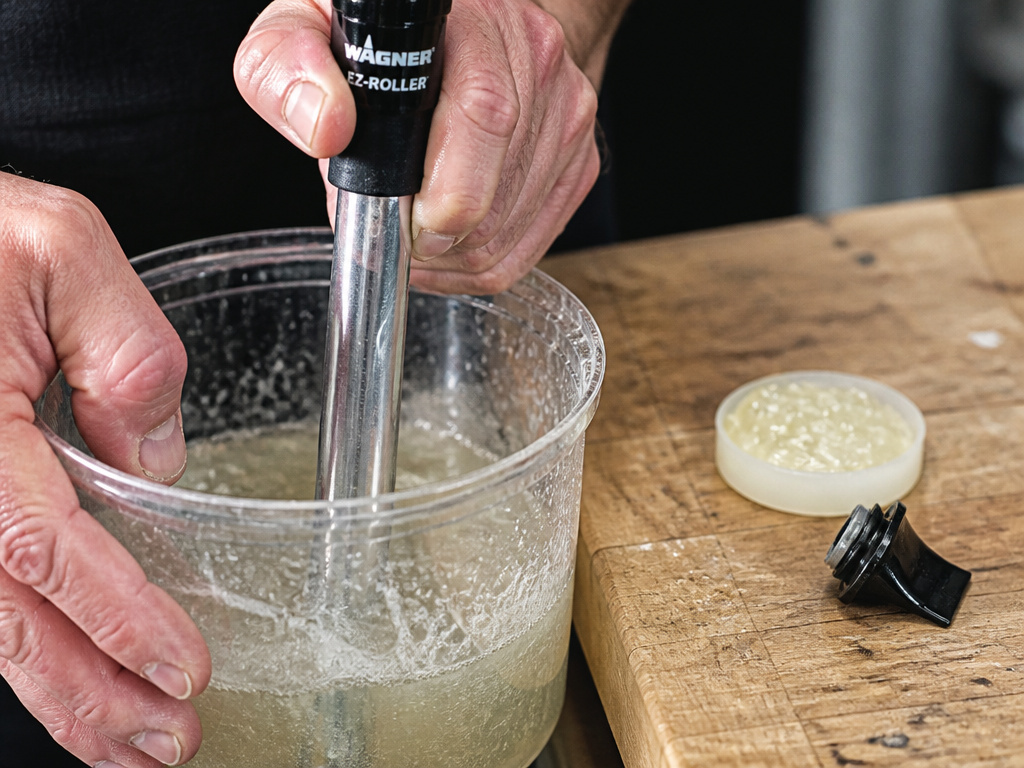
Five is the number that matters on the EZ-Roller. Every component gets a minimum of 5 plunger cycles while submerged in cleaning solution, and that’s per component, not per roller.
| Tool | Component | Minimum |
|---|---|---|
| Wagner EZ-Roller | Fill tube | 5 plunger cycles submerged |
| Wagner EZ-Roller | Fill valve and roller arm | 5 plunger cycles submerged |
| Wagner EZ-Roller | Head and fill valve | 5 plunger cycles submerged |
| Wagner Smart Edge | Oil-based cleanup | 2 to 3 mineral spirit flushes |
| Wagner Smart Edge | After any solvent | Mandatory water flush |
The Smart Edge numbers run the other way around. Oil-based cleanup requires flushing mineral spirits a minimum of 2 to 3 times, and then a water flush is mandatory because mineral spirits can dry out and damage the seals inside the unit.
Latex cleanup on the Smart Edge is a different animal again. It needs a garden or faucet hose adapter threaded to the trigger housing so you can flush the paint tube directly. No hose available? The manual redirects you to the oil-based procedure using warm soapy water instead.
The Parts That Need Petroleum Jelly
Reassembly is where pump rollers quietly die. Wagner specifies petroleum jelly on the plunger O-rings, the inside of the fill valve housing, the roller arm, and the roller caps. The duckbill valve gets a full coat, and every fill valve part must be dry before it goes back together.
That last point matters more than it sounds. Trapped moisture behind a reassembled valve is how you get a roller that pulls air instead of paint on the next job.
One more constraint: the EZ-Roller takes Wagner-brand roller covers only. A generic cover isn’t compatible, and you may be convinced the pump is broken.
The part nobody mentions: A pump roller that sat with paint in the tube over the winter usually needs a new duckbill valve, not a new roller. Inspect that valve for tears before you blame anything else.
Should You Wrap It or Wash It Mid-Project?
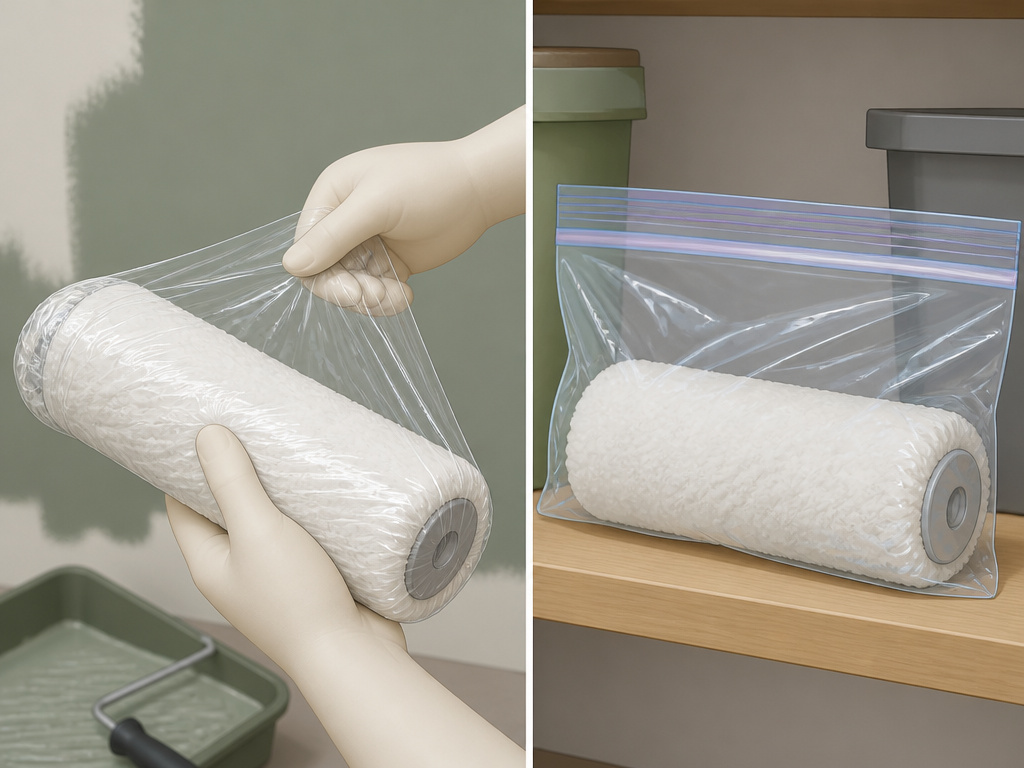
Sunday evening, roller still loaded, half a wall left, and you’re standing there deciding whether to wrap it or wash it. Benjamin Moore has an answer for exactly this: wrap the roller in plastic wrap and put it in the refrigerator, then let it warm to room temperature before you reuse it.
Wagner’s approach for the Smart Edge is simpler. During extended breaks, put a plastic bag around the roller cover so it doesn’t dry out and plug the feeder holes. No refrigeration mentioned, and for a pump roller that’s the right call, since cold paint is thicker and harder to push through a tube.
For longer-term storage, wash it. The storing rollers between coats question is best answered by washing the roller for longer-term storage.
Long-term storage is where Benjamin Moore and Sherwin-Williams line up. Both want the cover bone dry first. Benjamin Moore states that storing a roller wet will damage it. Sherwin-Williams adds the airtight step: seal the dried roller in a plastic bag or other airtight container. A cover stored damp can come out stiff through the nap, which is why it must be completely dry first.
Common mistake: Wrapping a wet cover in plastic and calling it stored. Trapped moisture works into the core, the nap mats down, and the cover lays paint in streaks on the next wall.
Do it right and the numbers are generous. Benjamin Moore says a properly cleaned and stored cover is reusable several times, and the frame itself can be reused indefinitely if you keep paint from hardening in it.
When Cleaning Is the Wrong Call
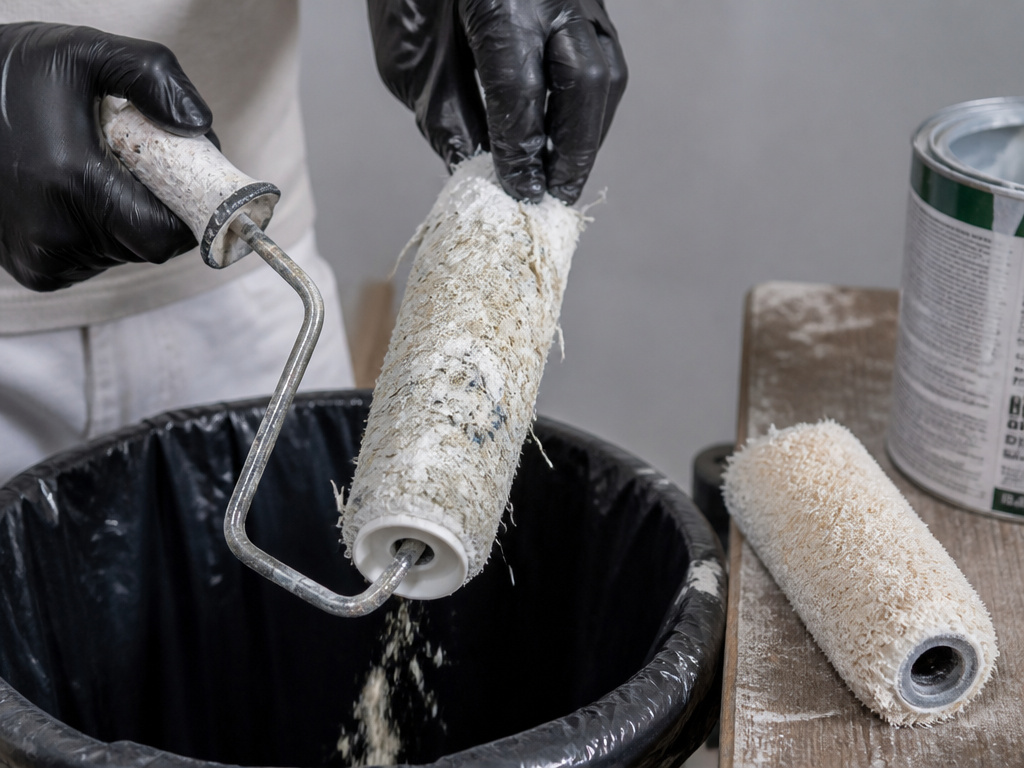
Some covers should go in the trash, and pretending otherwise wastes time and mineral spirits.
Benjamin Moore makes the case itself: cleaning a roller after oil-based paint may not be worth the cost of mineral spirits and the effort of proper disposal. That’s an OEM telling you to throw the cover away. Sherwin-Williams takes the opposite view and lays out a full solvent-reuse protocol, straining the solids and pouring the liquid back into the original container.
Both are defensible. My rule is that a cheap cover plus oil-based paint equals disposal, and a cover plus latex equals a wash. Here’s when the cover is done regardless:
- It sheds fibers onto the wall as you roll. No cleaning fixes that.
- It’s significantly worn, with a flat or glazed nap.
- It’s covered in hardened paint debris you can’t break loose.
- It came off a paint needing a stronger solvent than mineral spirits, on an EZ-Roller.
The same logic applies to the rest of the kit. An edger pad also needs cleaning, so cleaning edger pads belongs in the same session. And if you switched to a sprayer for the trim, flushing a paint sprayer matters too, because cured paint inside a gun is much harder to remove.
Easy to miss: The roller frame outlives several covers, but only if paint never hardens inside it. Rinse the frame every time, even when you’re tossing the cover.
If you did use oil-based paint and you’re keeping the cover, the oil-based paint cleanup sequence applies to brushes and rollers alike, with the same ventilation rules.
Frequently Asked Questions
Can I clean a paint roller with hot water?
It depends on the roller. Wagner says do not use hot water when cleaning or flushing the Smart Edge Roller, and specifies lukewarm soapy water for latex. Benjamin Moore recommends hot water with a few drops of dish detergent for acrylic or latex covers on a plain frame. If the roller has internal seals, follow the tool manual.
How do I get dried paint off a roller cover?
The EZ-Roller manual suggests prying with a screwdriver or a paint can remover, while the roller-cover assembly sheet says a mallet tap will dislodge it. Either way, don’t tap the inner cap, because it damages easily. If the cover is significantly worn, shedding fibers, or covered with paint debris, it is usually finished.
Can I put a wet paint roller in the fridge overnight?
Benjamin Moore says yes for a short break: wrap the roller in plastic wrap, refrigerate it, and let it warm to room temperature before reuse. Wagner’s guidance for the Smart Edge is a plastic bag around the cover during extended breaks, with no refrigeration. For longer-term storage, it should be washed.
Do I need mineral spirits for water-based paint?
No. Latex and acrylic clean up with warm soapy water. The one wrinkle is waterborne alkyd paint such as Benjamin Moore Advance, which is soap-and-water cleanable despite being an alkyd. Check the paint’s Technical Data Sheet if the label and the roller manual disagree.
How many times can I reuse a roller cover?
Benjamin Moore says a properly cleaned and stored cover can be reused several times, and the frame can be reused indefinitely if paint never hardens inside it. Discard the cover once it’s significantly worn, shedding fibers, or covered in paint debris.
The Bottom Line
One rule overrides everything above: if the roller has seals, the manual beats the paint label, the forum thread, and me. Wagner’s flush counts and its no-hot-water warning exist to keep a pump working, and no shortcut is worth a roller that pulls air halfway through a wall.
For a bare cover on a frame, you have room to move. Hot water and a drop of detergent is fine. Lukewarm is fine. What isn’t negotiable is the dry: a cover that goes into storage damp comes out matted, and you’ll blame the paint.
Here’s the small thing to try today, before your next project even starts. Put a putty knife and a scrap of cardboard next to the tray before you open the can. Scraping the roller back down is quick when the tools are already there, and it’s the difference between a bucket of grey soup and a cover you can actually reuse.
