
Oil Paint vs Acrylic Paint: Which Should You Buy?
This post contains affiliate links. As an Amazon Associate, we earn from qualifying purchases.
In the oil paint vs acrylic paint choice, acrylic dries in 10 to 30 minutes and darkens as it dries, while oil stays workable for two to five days and holds the color you mixed. Acrylic cleans up with soap and water; oil needs solvent.
The oil paint vs acrylic paint two-to-five-day window is the number that changes how you actually work. Oil keeps moving under the brush for days, so a mistake on Tuesday is still a mistake you can wipe off on Thursday. Acrylic gives you one pass and then it’s set.
Below: drying, color shift, layering order, solvent safety, and a starter kit that makes sense for each medium.
Key Takeaways
- Acrylic dries in 10 to 30 minutes in thin layers; oil stays open two to five days depending on the pigment.
- Mix acrylic one step lighter than your target, because the binder is milky when wet and dries clear.
- Oil over acrylic is fine. Acrylic over oil peels. Acrylic gesso is the standard ground for oil.
- Solvents are the toxic part of oil painting, not the oil, according to Master Oil Painting. Cut them out and most of the health worry goes with them, though Art Studio Life notes the pigment makes a paint toxic and both mediums use the same pigments.
- Oily rags self-ignite. Lay them flat to dry or seal them in a metal can with water.
Oil Paint vs Acrylic Paint: The Drying Gap That Decides Everything
Ten minutes on one side, five days on the other. That gap explains almost every other difference between these two mediums, including the ones that get blamed on talent.
Acrylic film forms when water evaporates from the polymer emulsion, a process that finishes in 10 to 30 minutes for a normal thin layer. Oil film forms by oxidation instead, as the binder absorbs oxygen from the air. That reaction runs for two to five days before the surface stops being workable.
Note the word “workable.” Those numbers describe the window where you can still push paint around, not the point where the painting is finished. Art in Context puts full oil cure at around six months, and I Paint You Sip says several months before you can safely varnish or frame. Both are describing that later milestone, not the touch-dry one.
| Property | Oil Paint | Acrylic Paint |
|---|---|---|
| Working time | Two to five days, pigment dependent | 10 to 30 minutes in thin layers |
| Color on drying | Essentially unchanged | Dries noticeably darker |
| Cleanup | Solvent, or oil then soap | Soap and water |
| Finish | Glossy, holds brush texture | Matte, film shrinks and flattens |
| Track record | Centuries | About 70 years |
That last row earns more weight than people give it. Oil has been in wide use since the 15th century, with roots back to at least the 12th. Acrylic arrived around the 1950s, so conservators work from roughly 70 years of evidence instead of centuries.
The texture row is the one that surprises beginners. Acrylic is mostly water, and the film shrinks as that water leaves, so crisp impasto ridges soften and thin passages sink. You can rebuild texture with heavy gel or modeling paste. Texture is free in oil.
I rinse brushes the second I stop painting now. A quick rinse at the sink beats picking dried polymer out of a ferrule, which is a job I have done exactly once.
The acrylic paint pros and cons mostly trace back to that clock. Fast drying means you can stack layers in one sitting and carry the panel home the same evening.
Why Does Acrylic Dry Darker Than the Color You Mixed?
You mix a skin tone that matches the back of your hand, it dries, and suddenly it’s a shade too dark. Every acrylic painter hits this in the first week.
The cause is the binder. Acrylic binder is milky white when wet and dries clear, so the milkiness is lightening your color while you work and then vanishes. Color2OilPaint calls it a shift you can count on every single time. Luuk Minkman and I Paint You Sip both describe it as slight darkening. Same direction, different severity, and the fix is the same either way.
Mix every acrylic color one step lighter than the target and test it on a scrap you let dry completely. If a passage looks right while wet, it will dry wrong.
Oil doesn’t do this. The binder is transparent from the start, so the color you mix is essentially the color that dries. There’s a caveat worth knowing: linseed oil yellows slightly over years, more so on paintings stored in the dark, and some passages “sink in” and read darker until you wipe a trace of oil across them.
A few things that help:
- Add a drop of retarder to slow the skin-over, though the color will still shift.
- Keep a dried swatch card next to the palette so you’re matching dry paint against dry paint.
- Reach for Golden OPEN when you need a longer open window, knowing it never gets close to oil’s hours of adjustability.
- Save the finicky color-matching work for oil and use acrylic for the block-in.
Thin acrylic washes behave a lot like watercolor once you water them down, and the darkening gets more obvious the thinner you go.
Try it on a scrap first.
The Layering Rule That Ruins More Paintings Than Bad Brushes
Order matters more than brand. Paint them in the wrong sequence and the top layer falls off.
Oil over acrylic is fine. Acrylic over oil is not. Color2OilPaint says acrylic cannot bond to an oily surface, so it sits there looking correct for a while and then peels, while Art in Context lists painting oil over acrylic as an option for adding layers and texture. Acrylic gesso is the standard ground for oil paintings, and an acrylic underpainting under oil layers is a legitimate time-saver.
Before you start: Oily rags self-ignite as the oil oxidizes and generates heat, so lay them flat to dry or seal them in a metal can with water. Solvent vapors cause dizziness and nausea, so open a window before you open the can.
The Order That Works
- Seal the board with acrylic gesso and let it cure fully.
- Block in the big shapes in acrylic if you want speed.
- Switch to oil for the layers that need blending.
- Never run steps 2 and 3 backward.
House painters run into the same rule. Water-based vs oil-based coatings have recoat windows, and applying them in the wrong order is exactly what causes peeling.
One more thing about that peel. The failure shows up months later, after the acrylic has fully cured and seasonal humidity swings start working on the bond. That delay is why people blame the paint instead of the order.
What’s Actually Toxic in Oil Paint?
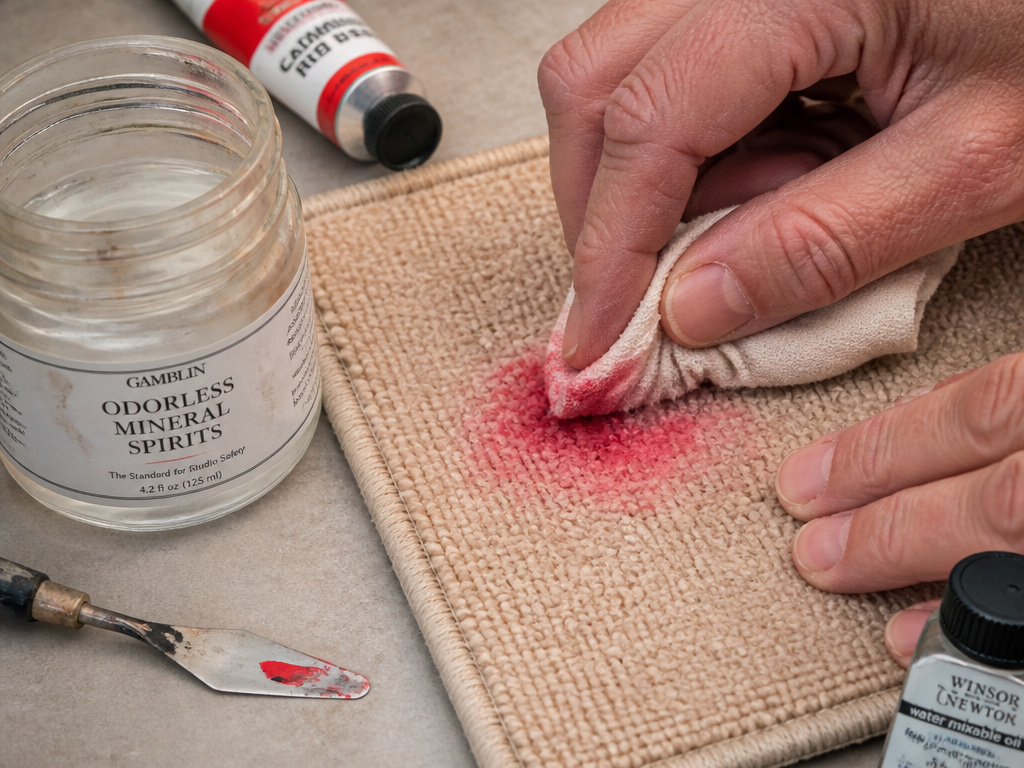
A cadmium red smudge landed on a rental carpet once, and I spent ten minutes dabbing at it with a wet rag. Water did nothing except spread the pigment into a pink halo. A dull knife and a rag lightly dampened with odorless mineral spirits lifted it. I skipped the hidden-corner test that day and lightened a patch of carpet I then had to explain.
That story is really about solvents, and solvents are the part of oil painting worth worrying about. Master Oil Painting puts it plainly: turpentine and its relatives are the toxic component, and drop the solvents and most of the health difference between traditional oils, water-mixable oils, and acrylics goes away.
The pigment question is separate and gets muddled constantly. Art Studio Life argues that the pigment makes a paint toxic or not, and that oils and acrylics use the same pigments. Fair point, and incomplete, because some oil pigments are lead, cadmium, or cobalt, which are harmful if ingested or inhaled. Luuk Minkman notes that acrylic can carry formaldehyde and heavy metals too, plus VOC emissions that affect indoor air.
Here’s where the sources split, and it’s worth seeing side by side:
| Claim | One side | Other side |
|---|---|---|
| Acrylic water resistance | Water-resistant when dry (Luuk Minkman) | Not water-resistant; moisture affects it, sealant helps (I Paint You Sip) |
| Acrylic film | Flexible, resists cracking (Luuk Minkman) | Less flexible, prone to cracking (I Paint You Sip) |
| Acrylic health risk | No hazards at all (PaintingTube) | Formaldehyde, heavy metals, VOCs (Luuk Minkman) |
| Acrylic after drying | Can be reactivated with water (Art in Context) | Water-resistant when dry, so it can’t (Luuk Minkman) |
Notice that the same two blogs land on opposite sides of three of those four rows. PaintingTube’s position that oil has hazards and acrylic has none doesn’t survive contact with the VOC data, so treat it as the optimistic end of the range rather than the consensus.
I keep a window cracked and a lid on the solvent jar even for a short session. The headaches I used to get after painting weren’t from the paint. They were from the can.
Water-mixable oils arrived around 1990 as the solvent-free answer, and they mostly work. The catch is film hardness: they don’t dry with as hard a shell as traditional oils. Robert Gamblin has said he will never produce one because he doesn’t trust the science, which tells you how the traditionalist side sees it.
The oil paint drawbacks people actually complain about are almost all solvent problems wearing a paint costume.
Which Medium Should You Actually Buy First?
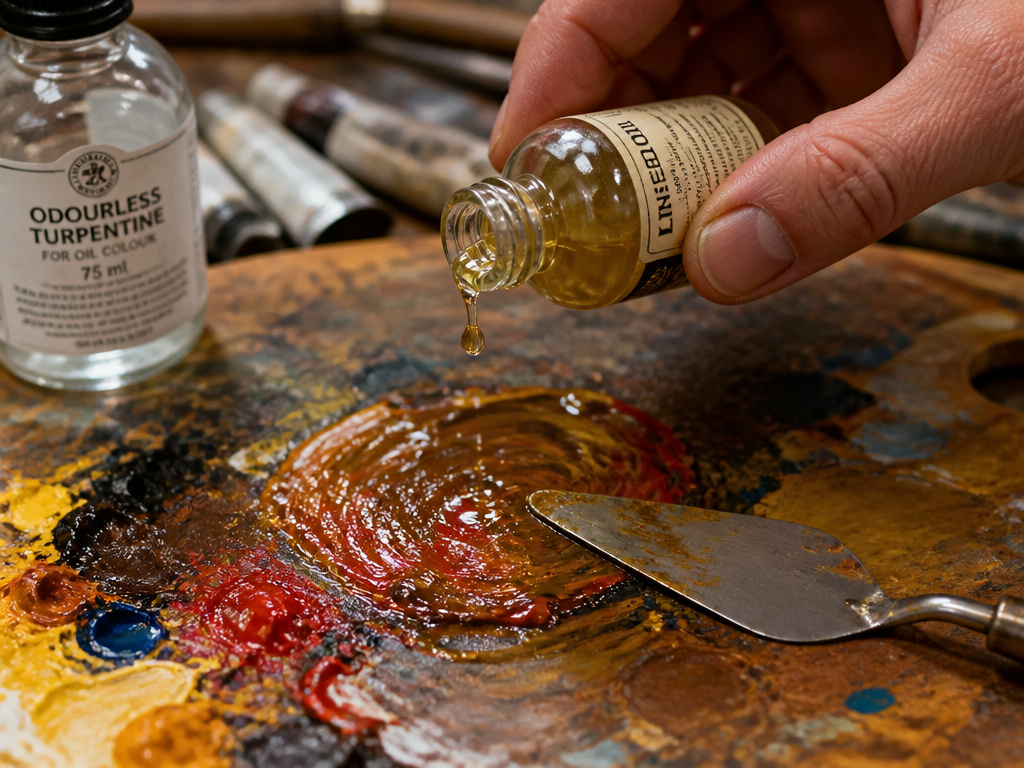
Picture a kitchen table, a paper plate for a palette, and forty minutes before dinner. That’s the situation most beginners are painting in, and it decides the answer.
Buy acrylic first if cleanup ease matters most. I Paint You Sip calls acrylic the best choice for beginners, but Color2OilPaint argues acrylic is easier to clean up, not easier to master, and oil is technically more forgiving. Color2OilPaint makes the point sharply: acrylic is easier to clean up, not easier to master, and oil is technically the more forgiving medium because it stays wet for days.
Where this goes sideways: Buying a large tube set before you know which few colors you reach for. Most of those tubes will still be sealed when the pigment inside them separates.
If You Paint in Short Bursts
Acrylic is the pick if cleanup ease matters most, though Color2OilPaint argues oil is technically more forgiving. For a first oil set later on, a student-grade set is the sane starting point. It’s student grade, it behaves like oil, and it won’t make you feel bad about wasting a tube while you learn. An artist-grade set is the step up once you know you’ll keep going.
If solvent smell is what’s stopping you, a water-mixable oil line is what I’d point you toward. Go in knowing the film dries softer than traditional oil.
If You Paint in Long Sessions
Oil earns its keep here, because you can leave a face at lunch and keep pushing the same paint at four in the afternoon. If you love acrylic’s speed but hate the blending race, Golden OPEN buys a longer window without switching mediums.
Where each one wins:
- Fast, graphic, layered work in one sitting: acrylic, every time.
- Portraits and soft edges: oil, because you can still blend the cheek an hour later.
- Small apartments and shared rooms: acrylic, since cleanup is soap and water.
- Glazing and impasto: oil, which holds brush marks and lets you wipe a glaze off hours later.
- Outdoor painting: acrylic, which Luuk Minkman says handles weather and temperature swings better.
For a wider view of what’s on the shelf before you commit, this rundown of the best art paint covers the tiers. If you’re torn between acrylic and something flatter and more opaque, gouache is its own conversation.
A few tubes and one decent brush will teach you more than a large kit.
The Materials Bill Nobody Warns You About
Oil costs more, and the reason is boring. Pigment load and production complexity drive the price, and the extra supplies (primer, solvent, varnish) stack on top. Acrylic is cheaper and easier to find, which is a large part of why it dominates classrooms and craft stores.
Surfaces split cleanly. Acrylic adheres to canvas, wood, paper, and fabric without much fuss. Oil wants a primed surface, and acrylic gesso is the standard ground for it, which means most oil paintings start with an acrylic product anyway.
Common mistake: Varnishing an oil painting before it’s fully cured. Full cure runs around six months, and varnish applied at week three traps solvent in the film, which stays soft and eventually cracks.
Varnish is another spot where the sources don’t agree. I Paint You Sip says oil requires varnishing, and that acrylic doesn’t require it but should be varnished for protection. Art in Context recommends a fixative or sealant on acrylic to prevent chipping and peeling. Color2OilPaint treats acrylic as the zero-fuss option and doesn’t frame varnish as mandatory. My read: varnish both, and accept that acrylic is the more forgiving one to skip.
The same medium question shows up in paint for walls, where the answer flips. Acrylic is often chosen indoors because it stays flexible and, when properly sealed, is less prone to yellowing. Luuk Minkman’s view that acrylic resists weather makes it a common choice for exterior paint as well.
Cleanup is where the bill really lands. Soap and water handles acrylic. Oil needs solvent, or the solvent-free route: wipe the brush thoroughly, rinse it in cheap vegetable or safflower oil, then finish with soap and water. I still end up with a streak of titanium white somewhere on me for most of a week.
Frequently Asked Questions
Is oil painting harder than acrylic painting?
Color2OilPaint argues no, and the reasoning holds up. Oil is chemically messier but technically more forgiving, because it stays wet for days and you can blend, correct, or scrape off a mistake. Acrylic dries in minutes, which makes soft blending and color matching genuinely harder. Acrylic is easier to clean up, not easier to master.
Can you put acrylic paint over oil paint?
Color2OilPaint says no: acrylic cannot bond to an oily surface, so it will eventually peel, though Art in Context lists painting oil over acrylic as an option for adding layers and texture. The reverse works fine. Acrylic gesso is the standard ground for oil paintings, and an acrylic underpainting beneath oil layers is a common time-saver.
Do acrylic paints dry darker than they look?
Yes. The binder is milky when wet and dries clear, so every color darkens as it dries. Mix slightly lighter than your target and test a dry swatch before committing. Oil has minimal shift, so the color on the palette is essentially the color that dries.
Can you paint with oils without solvents?
Yes. Wipe brushes well, rinse them in inexpensive vegetable or safflower oil, and finish with soap and water. No mineral spirits required. The one habit you can’t skip is rag safety: dry oily rags flat or seal them in a metal can with water, because they self-ignite as the oil oxidizes.
Is acrylic paint waterproof when it dries?
The sources disagree. Luuk Minkman describes acrylic as water-resistant once dry. I Paint You Sip says acrylics are not water-resistant and can be affected by moisture in the air, and recommends a sealant. Art in Context also recommends a fixative or sealant to prevent chipping and peeling. Seal it and the question mostly stops mattering.
The Bottom Line
One number to carry with you: if a painting needs to be dry enough to varnish, count roughly six months for oil and 10 to 30 minutes for thin acrylic layers. That single timeline decides your framing schedule, your storage, and whether you can stack panels in a closet.
If you’re starting out, buy a tube of titanium white, a color you actually like, and a brush. Paint a circle on a primed board and try to blend a soft edge into it.
And if you already own both, don’t run them in parallel at first. Pick one, live with it, and let the other sit. I know that cuts against the advice to try everything. Trying everything is how you end up with a shelf of unopened tubes and no finished painting.
