
Emulsion vs Enamel Paint: Which Goes Where?
This post contains affiliate links. As an Amazon Associate, we earn from qualifying purchases.
In the emulsion vs enamel paint decision, emulsion is a water-based, breathable coating made for plastered walls and ceilings, while enamel forms a harder, sealed film made for wood and metal. Match the paint to the surface. Put either one on the other’s substrate and the coating fails.
That sealed film is the whole story. In the emulsion vs enamel paint question, emulsion lets a small amount of moisture vapour pass through the film, and enamel doesn’t, which is why a sealed coat on plaster traps vapour behind it and shows up as blistering. The same mismatch explains why a wall paint on a steel gate gives up while the steel underneath keeps rusting.
What follows sorts the two by surface: broad walls, doors and trim, metal, and the damp corner where neither paint is your real problem. Two of the sources I read also contradict each other outright, so you’ll get both sides before you climb a ladder.
Key Takeaways
- Match the surface first. Broad plaster and masonry take emulsion; doors, frames, skirting, cabinets and metalwork take enamel.
- Enamel is a finish category. It can be water-based acrylic or solvent-based alkyd, and the two age very differently.
- Humidity above 70% stretches touch-dry, recoat and full cure, so extend every interval instead of trusting the tin.
- Metal needs a system: rust removal, a compatible anti-corrosive primer, then an exterior-grade enamel topcoat.
- Touch-dry is not cured. Close a painted door too early and the two faces block together and tear.
Emulsion vs Enamel Paint: What Actually Separates Them?
Breathability is the dividing line. Emulsion lets a small amount of moisture vapour pass through the film. Enamel forms a hard, non-porous seal, which is exactly wrong for a wall that needs to breathe.
Emulsion is built on an acrylic or vinyl binder carried in water, and the dried film stays slightly open to moisture vapour. Enamel forms a hard, non-porous film from an oil, alkyd or two-part polyurethane system. The binder decides how the film behaves. That difference decides which surface each one can protect.
| Property | Emulsion | Enamel |
|---|---|---|
| Binder | Acrylic or vinyl, carried in water | Oil, alkyd or two-part polyurethane |
| Film | Breathable, vapour passes slowly | Hard, sealed, non-porous |
| Sheen range | Matt through silk or satin | Satin through full gloss |
| Suits | Plaster, masonry, ceilings | Wood, metal, doors, trim |
Emulsion covers the whole paint finishes range from matt to soft sheen. Enamel starts at satin and climbs to full gloss. That overlap catches people out, because silk emulsion can look close to satin enamel from across a room. Shine in the tin tells you less than the binder does.
Washability doesn’t follow sheen either. A premium washable matt emulsion can take routine wall cleaning better than a glossy product that was recoated too soon and never cured. woodreno makes that point, and it’s the one I’d write on the lid of every tin.
Choose by Substrate, Not by Price Tag
The tin’s price tells you nothing about whether it belongs on your wall.
I spent a long time buying small, expensive tins and rationing them. My test boards were timid, because every brushload felt like it cost something. When I switched to a bigger, cheaper tub I painted far more samples, and the extra mess taught me more than any spec sheet on the shelf.
Pigment load arguments lose me when the paint is so pricey I won’t slop it on thick. An affordable paint I’m not afraid of beats a precious one sitting in the cupboard.
The rule that decides it is simpler than the label suggests. Emulsion goes on broad, porous masonry surfaces when the substrate is sound and dry. Enamel goes on doors, frames, skirting, cabinets and metalwork that take knocks, fingerprints or repeated cleaning.
On durability, the sources split. PremiumWalls argues neither paint is inherently more durable and that the substrate match decides. NoBroker says emulsion is water-based and lasts longer. Both can be true at once if you read them as answers to different questions, because emulsion on a wall it suits outlasts an enamel used somewhere it doesn’t belong.
Walls, Ceilings and the Kitchen Question
- Bedrooms and corridors: a washable acrylic emulsion, matt if the plaster ripples, silk if you wipe the walls often.
- Kitchen walls: a washable, moisture-resistant emulsion where cooking vapour is intermittent and extraction is adequate. Clean the grease before you sand, or the new coat crawls and patches.
- Bathroom walls: a bathroom-grade emulsion above the tiled wet zone, once the plaster is dry and condensation can escape.
- Anything with blistering, salt deposits or soft plaster: that’s a moisture problem, so fix the source before you repaint.
Emulsion is a family, not a single product. Older walls that have only ever had distemper need a different start, and the distemper vs emulsion comparison covers what happens when the two meet. If you’re still working out which binder belongs where, the interior paint types breakdown goes through it room by room.
The shelf in any Indian paint shop runs from a budget interior emulsion up to a premium washable one, and many brands sell both tiers under separate labels. For a hallway that gets wiped, the washable tier is the one to buy, which in most shops means stepping up from a budget interior emulsion to a premium washable one.
I’d rather see ten sloppy test boards than one careful square on a tin I’m afraid to waste. The boards teach you how the paint moves. The tin just teaches you to be careful.
Try this: paint two scrap boards, one with each product, and leave them in the room they’re going into for a while before you commit.
Two Paints Share the Name Enamel and Behave Nothing Alike
A white door in a dim hallway, some time on, going the colour of weak tea. Nobody touched it.
That’s alkyd yellowing. Solvent-based alkyd binders develop a warm yellow cast, most obvious in cupboards, behind furniture and other low-light locations, and most visible on a white door sitting next to a cool-white wall. Water-based acrylic enamel is generally more colour-stable.
Open a tin of solvent alkyd and the room tells you what you’re dealing with before the brush is wet. That smell is the solvent leaving, and it’s the reason solvent systems need real ventilation rather than one open window in a shut room. The US EPA note on indoor air quality and VOCs is the plain-language version of why that matters.
The two sources I trust most here don’t define the word the same way. PremiumWalls treats enamel as a chemistry: oil, alkyd or two-part polyurethane. Woodreno calls it a hard-wearing finish category that may be water-based acrylic or solvent-based alkyd. Both usages are live in the trade, and the difference decides whether your white door stays white.
This is also why matt enamel confuses people. Matt enamel is an enamel formulated to dry with low sheen. It is not wall emulsion, and its binder, primer requirements and cure behaviour all depend on the manufacturer’s formulation.
If you want the full list of where a hard film helps and where it bites, the enamel paint pros and cons covers it surface by surface. The water-based vs oil-based paint split is the other half of the same decision.
Wall Emulsion on a Door Is a Wasted Weekend
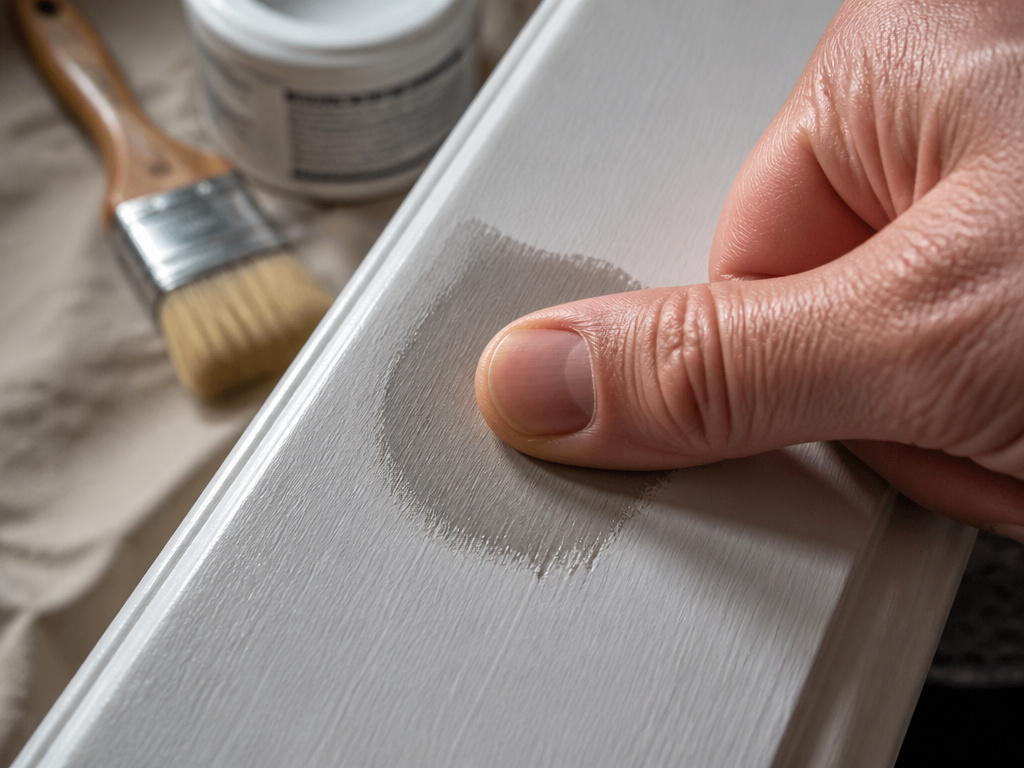
That one costs you a repaint.
Wall emulsion on a door leaves a softer film. The surface quickly develops hand marks and polished patches, and no amount of wiping brings the finish back. A compatible joinery enamel does the job the door actually needs.
Run a thumb across the stile where every hand lands and the sheen has gone glassy and grey in a patch the shape of a palm. That’s a wall paint doing a door’s job.
Common mistake: Painting a door with the wall emulsion you already own. The film stays soft, hand marks polish into the surface quickly, and the only fix is sanding back to a sound coat and starting again with a joinery enamel.
What Actually Happens on a Door
- Thin, even coats beat one heavy coat, which wrinkles on top while staying soft underneath.
- Cabinets and furniture need extra cure time before doors close, shelves load or objects sit on the finish.
- Enamel is more rigid than emulsion, so a hard film can crack if the timber or metal underneath moves. Emulsion flexes with minor plaster movement instead.
There’s a mirror-image failure on walls. Enamel on plaster seals moisture in rather than letting it out, and the result shows up as blistering. The wall was never built to hold that film.
If you can still smell the paint, don’t close the door. Smell is a better clock than touch.
Pick the paint for trim and doors by the surface it covers, then match the tool to the paint. A soft brushes for enamel set lays a hard film flatter than a worn wall brush ever will.
Metal Needs a System, Not a Topcoat
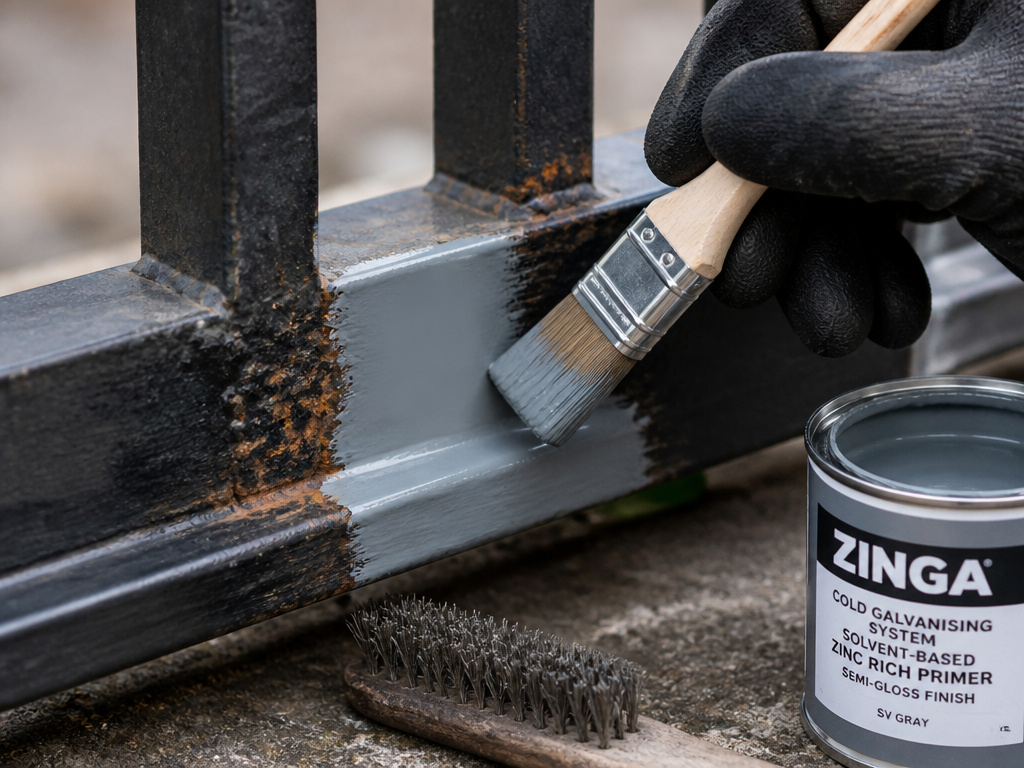
Rust comes back first at welds, lower rails, sharp edges and missed backs.
That’s the pattern to plan around. Metal takes a coating system: strip the loose rust, clean the steel, apply a compatible anti-corrosive primer, then finish with an exterior-grade enamel topcoat. Enamel alone doesn’t stop corrosion.
Before you start: Solvent-based enamel gives off flammable vapour, so keep the tin closed between pours and work with genuine cross-ventilation. Bare steel edges cut, so wear gloves while you strip rust. Uncured enamel stays soft for a while, so keep hands, children and pets off the gate until the label’s recoat window has passed.
- Strip loose rust and failed paint. Leave it and corrosion keeps working under a topcoat that still looks sound, bubbling at the welds.
- Clean the steel. Grease or dust under the primer gives the whole system a weak first layer, and it fails from there.
- Apply a compatible anti-corrosive primer. Skip this and the enamel is a coloured film sitting on rust, nothing more.
- Finish with an exterior-grade enamel topcoat. An interior-grade enamel on a gate dulls and chalks much sooner outdoors.
- Respect the manufacturer’s recoat window. Recoat too early and trapped solvent wrinkles the film or leaves it soft.
The sources disagree on why emulsion fails on metal. PremiumWalls says it doesn’t bond properly to bare metal and gives no corrosion protection, with the coat failing within a season regardless of coat count. Woodreno frames the failure as the system rather than the topcoat, because the primer that should sit under the finish is missing entirely. Either way, the answer for a gate is the same.
Interior Metal vs Exterior Steel
Interior frames avoid rain and ultraviolet exposure but still rust around damp floors, welds and hand-contact areas. Exterior steel faces rain, dust, UV and large temperature swings, which is why the weak points show up first.
Avoid painting sun-heated metal in peak summer. Islamabad and Rawalpindi run 38 to 42 degrees Celsius in the hot months, and rapid solvent or water loss leaves brush drag, poor flow and weak edge coverage. During monsoon weather, don’t coat damp steel or paint when rain can reach the uncured film.
The 70% Humidity Rule Nobody Reads on the Tin
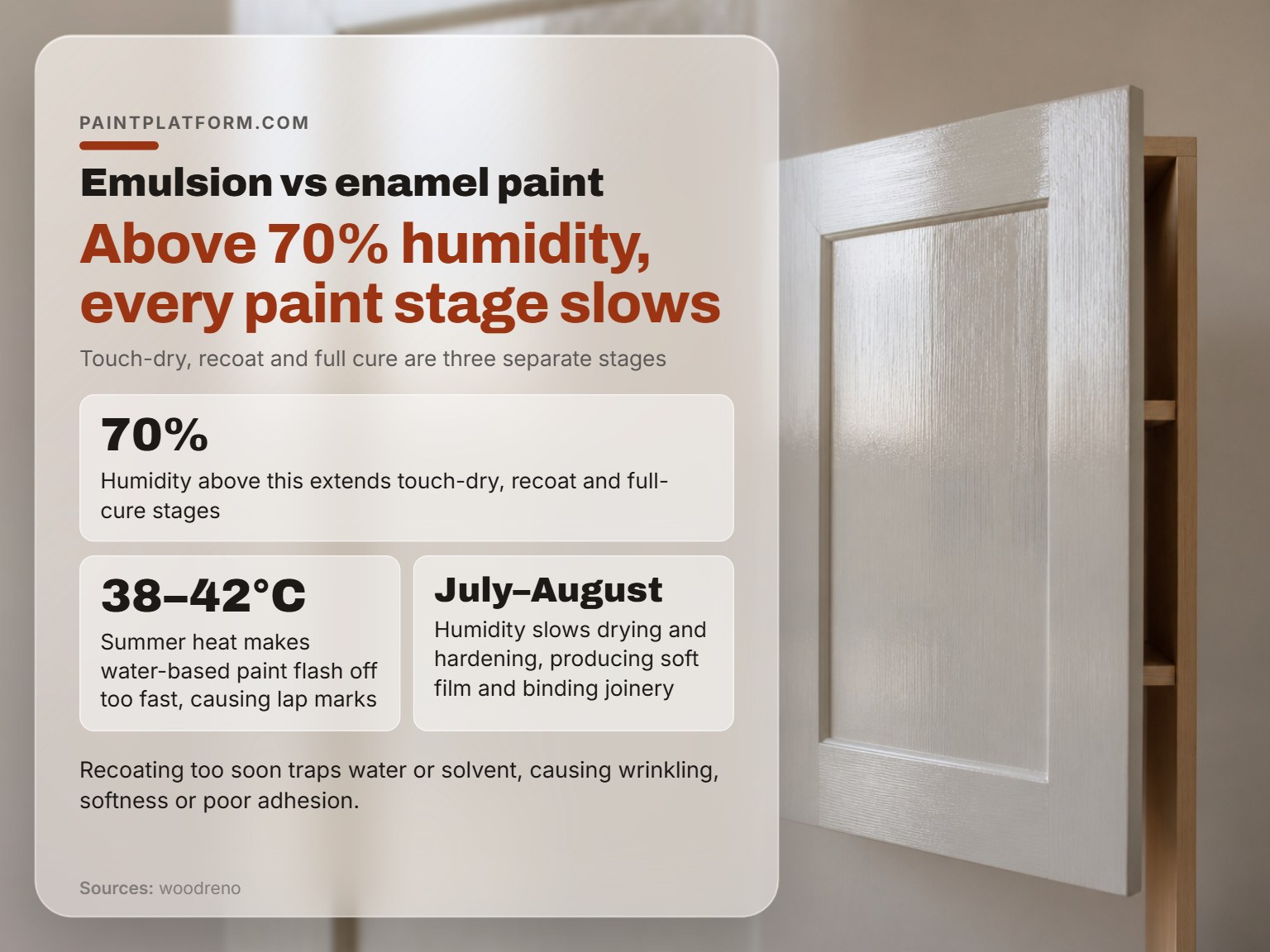
Humidity above 70% stretches every stage of the job.
Touch-dry, recoat time and full cure are three separate stages. Humidity above 70%, limited ventilation or a cold substrate extends each one, and a film that feels dry to a fingertip is often nowhere near cured.
| Condition | What you’ll see | What to do |
|---|---|---|
| Hot, dry summer | Lap marks and brush drag | Work smaller sections, avoid hot surfaces |
| Monsoon humidity | Soft film, dullness, binding joinery | Extend recoat and open-door time |
| Cold winter nights | Persistent tack on alkyd | Protect from dew, allow label-led cure |
| Construction dust | Gritty gloss and rough reflections | Isolate sanding, clean between stages |
Recoating too soon traps water or solvent, and the result is wrinkling, softness or poor adhesion. Follow the label and extend the interval in humid or cold weather. Overcoating early is like putting a lid on a sauce that hasn’t reduced. The water has nowhere to go, and it comes back as a wrinkled skin.
Where this goes sideways: Closing freshly painted doors and drawers because they feel dry. In humid weather two coated faces block together and tear when you open them, and the tear takes the new coat with it.
Cure Time Before You Load a Cabinet
Cabinets and furniture need extra cure before doors close, shelves load or objects sit on the finish. Dust control matters most on enamel, because a higher sheen makes every particle visible. Finish the dusty repairs first, vacuum the ledges, and wipe the prepared surface as the label directs.
Three Failures That Come From the Wrong Paint
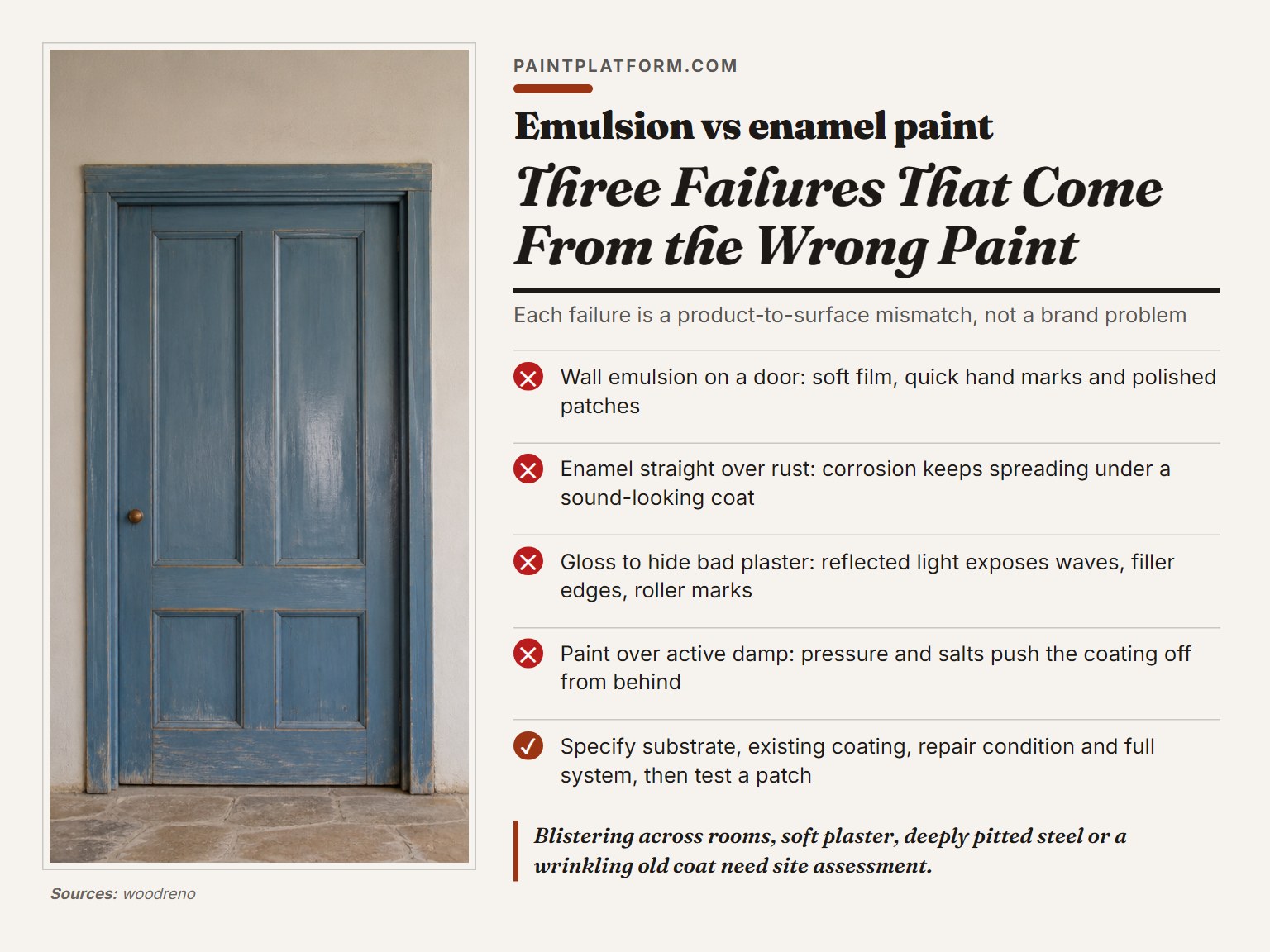
Three failures show up again and again, and none of them is about the brand.
- Wall emulsion on a door, which goes soft and polished quickly.
- Enamel straight over rust, where corrosion keeps spreading under a coat that still looks fine.
- Gloss chosen to hide bad plaster, which reflects light straight back at the waves, filler edges and roller marks.
- Paint over active damp, where pressure and salts push the coating off from behind.
A specification that says “two coats of paint” leaves the important decisions unresolved. Write down the substrate, the existing coating, the repair condition and the full system, then test a small patch before you commit a whole wall.
Get a site assessment if paint is blistering across several rooms, the plaster is soft under a thumb, rust has deeply pitted the steel, or a previous coating wrinkles during testing. Those conditions need moisture diagnosis or substrate repair, not another coat.
Frequently Asked Questions
Is emulsion or enamel better for walls?
Emulsion, in almost every case. It’s water-based and breathable, so moisture vapour passes through the film instead of collecting behind it. A sealed enamel film on plaster traps that vapour and blisters. The exception is a wall with active damp, where neither paint fixes the cause.
Can I use enamel on a wall if I want something wipeable?
You can apply it, but you’ll pay for it in cure time and odour, and the wall gets a film it wasn’t built to hold. A washable matt or silk emulsion handles routine wiping without sealing the plaster. Check that the tin says washable, then let it fully cure before you scrub anything.
Why did my white enamel door turn yellow?
Solvent-based alkyd enamel develops a warm yellow cast over time, and it shows worst on pale colours in low light. A cupboard door or a hallway with no daylight is the classic case. Water-based acrylic enamel is generally more colour-stable if you’re repainting.
Does enamel always mean gloss?
No. Matt and satin enamels exist, and matt enamel is still an enamel rather than a wall emulsion. Shine is an unreliable test anyway, because some silk emulsions look close to satin enamel from a distance. Go by the binder and the surface named on the tin.
How long before I can close a painted door?
Longer than the film feels like it needs. Touch-dry, recoat time and full cure are separate stages, and humidity above 70% stretches all three. If you can still smell solvent, leave it open.
Can I paint a metal gate with emulsion?
No. Emulsion doesn’t bond properly to bare metal and gives no corrosion protection, and PremiumWalls reports the coat failing within a season regardless of coat count. Metal needs rust removal and an anti-corrosive primer under an enamel topcoat.
Before You Go
Buy a cheap tin of each and paint two scrap boards this week. Leave them where they’re actually going to live. Time in the real room tells you more about sheen, marking and colour shift than any label on the shelf.
Everything above assumes sound, dry plaster and steel that’s worth saving. If paint is blistering across several rooms, the plaster is soft under a thumb, or rust has pitted the steel deeply, the coating isn’t the problem and no tin will fix it.
And I’ll keep saying this one: an affordable paint you’re not afraid of beats a precious one you ration. Messy brushes are a good sign.
Start with the walls. They’re the biggest surface in the house and the most forgiving place to learn how a paint actually moves.
