
Clay Paint Pros and Cons: What the Labels Won’t Tell You
This post contains affiliate links. As an Amazon Associate, we earn from qualifying purchases.
Clay paint pros and cons split cleanly: breathability and a dead-matt finish on one side, scrub resistance and fussy application on the other. Clay paint lets wall moisture escape and carries very low VOC levels, but it marks easily, needs two coats over most surfaces, and can take up to 28 days to fully cure.
Breathability is measured as an SD value, which is the water-vapour resistance of the dried film, and the clay paint pros and cons question starts with the two published figures for clay paint sitting close together at the low end: under 0.015 m for AURO No. 535, 0.02 m for Fenwick & Tilbrook to BS EN ISO 7783. A low SD means a damp wall can dry inward instead of pushing the coating off from behind.
What follows is the honest split. Where clay paint genuinely beats emulsion, where the four makers contradict each other on temperature, humidity and bathrooms, and the two tests worth running before you commit a whole wall.
Key Takeaways
- Breathability is the real argument, with SD values under 0.015 m at AURO and 0.02 m at Fenwick & Tilbrook.
- BioShield’s standard is two coats, with a third only needed when jumping from a very dark colour to a very light one.
- Fenwick & Tilbrook puts full cure at up to 28 days, so keep heavy condensation off the wall until then.
- Test patch first. AURO, Earles and CLAYTEC ask for it, and lime is where colours shift.
What Clay Paint Does Better Than Emulsion, in Numbers
AURO rates No. 535 at Class 2 for opacity and Class 3 for abrasion under DIN EN 13300, with a sheen level of matt at 85 degrees.
Clay paint is rated Class 2 for opacity and Class 3 for abrasion under DIN EN 13300, with a sheen level of matt at 85 degrees. Consumption runs 0.11 to 0.14 litres per square metre per coat, giving coverage of up to 9 square metres per litre depending on substrate and method.
Opacity Class 2 is the reason two coats usually does it, and it is a key part of the clay paint pros and cons. BioShield suggests a third coat only when you go from very dark to very light, which is a colour-difference problem rather than a hiding-power problem. The abrasion rating of Class 3 is the number to keep in mind for any wall that takes traffic.
The matt sheen is the other half of the appeal. Matt at 85 degrees means the film reflects almost nothing, so it swallows roller texture and drywall flaws instead of raking light across them.
Matt does the opposite. It hides the mess.
Useful context, because none of these four sheets rate their product for exterior walls.
Two Breathability Numbers, and Why They Don’t Match
Two published SD figures exist for clay paint, and they are not the same number.
AURO lists under 0.015 m for No. 535. Fenwick & Tilbrook lists 0.02 m to BS EN ISO 7783. Both are low, both describe a film that lets vapour through, and neither can be compared directly without the same film thickness and test conditions.
That pattern repeats across the technical sheets. Each maker tests to a different standard and quotes a different metric, and the numbers land close enough that the marketing claim survives while the data underneath it doesn’t quite line up. Anyone who tells you these figures are interchangeable is selling something.
The same thing happens with VOC claims. BioShield states its Clay Paints are no-VOC. Raheem and Olowu’s 2013 paper in IJERA describes clay paints as non-toxic and VOC-free. AURO prints a product VOC of under 1 g/l and adds a line most brands leave out: natural paints are not free from odours or emissions.
Read those together and you get the accurate version. Clay paint is very low emission, and the certificate matters more than the word. The AgBB scheme rates AURO No. 535 as very low-emission, and the EU limit for this product class under 2004/42/EC II A (aWb) is 30 g/l against a product figure under 1 g/l.
Is Clay Paint Washable Enough for a Hallway or Kitchen?
Not on its own, and the maker says so first.
BioShield’s own product page states that Clay Paint is not suited for frequent cleaning, because grease and other contaminants may remain embedded in the film. For hallways and kitchens the company recommends BioShield Wall Glaze #15 over the top, applied by spray or sponge, and explicitly not by roller.
Where Wall Glaze #15 Belongs
The glaze is an answer for high-impact zones, not for the whole house. Sprayed or sponged over a cured clay coat, it adds a protective layer that takes the scrubbing so the clay doesn’t have to. Roll it and you get an uneven film, which is why the instruction is so specific.
What a Damp Cloth Actually Removes
That is a genuine disagreement between two clay paint makers, and it changes where you’d hang the stuff.
I keep clay paint off anything within splashing distance of a sink. A damp cloth lifts the dust and leaves the grease, and grease is what actually ruins the look of a matt wall.
The practical split looks like this:
- Ceilings, bedrooms and dining rooms: the matt finish earns its keep and nothing scrubs them.
- Hallways and kitchens: glaze with Wall Glaze #15, or pick a different product.
- Anywhere within splash distance of a shower or sink: out, per BioShield.
- Old lime plaster, which is the substrate this whole category was built around.
Where this goes sideways: Painting a bathroom wall next to a shower without a glaze. BioShield limits clay paint to low-impact areas with no direct water exposure, and Fenwick & Tilbrook warns that heavy surface condensation before the 28-day cure damages the finish.
The Application Window Is Tighter Than Most Labels Suggest
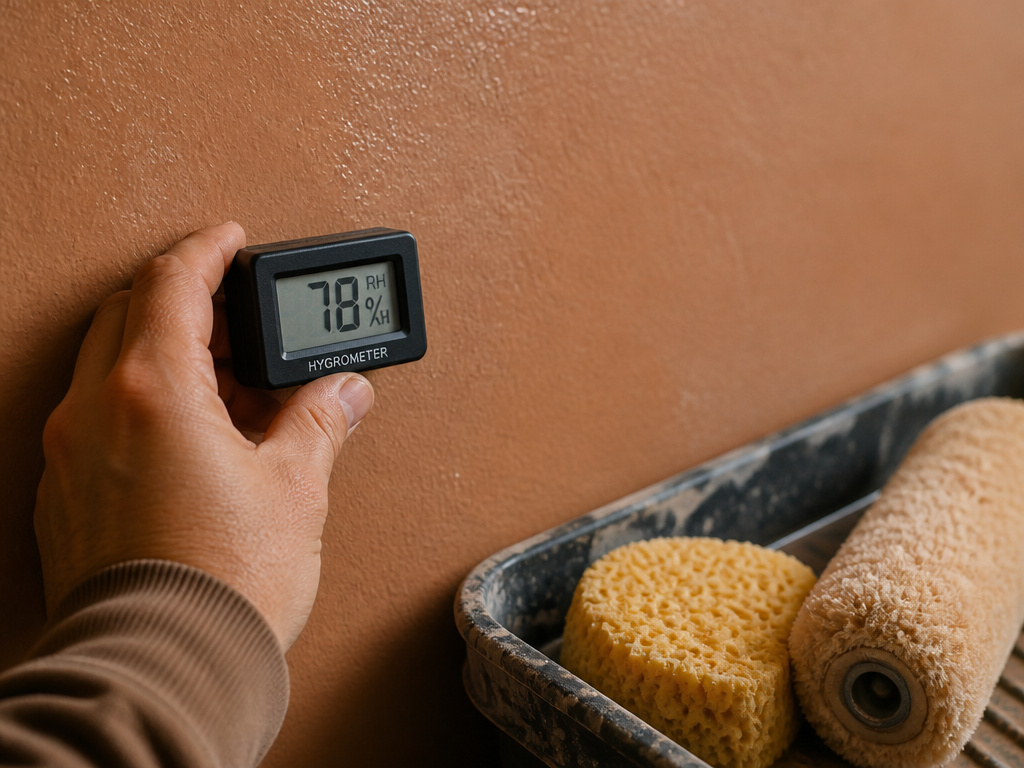
Earles caps relative humidity at 65%, while AURO allows up to 85% (optimal 40–65%).
Below the minimum, Earles is blunt about the result: poor film formation and poor adhesion.
| Setting | AURO No. 535 | Earles Natural Claypaint |
|---|---|---|
| Minimum temperature | 10 degrees C, optimal 20-23 | Above 5 degrees C |
| Maximum relative humidity | 85%, optimal 40-65% | 65% |
| Wait on new plaster | At least 6 weeks | 1-3 months on new lime render |
| First coat | Prime with AURO Wall paint, up to 10% water | Thin with up to 20% water |
That humidity gap is the one that bites. A muggy August afternoon can sit inside AURO’s 85% ceiling and well outside Earles’ 65%, so the same wall is fine for one brand and wrong for the other. Earles gives you a field test: wet the surface, and if it dries in 10 to 15 minutes, you can paint.
Before you start: Solvent-free does not mean risk-free. AURO’s sheet asks for skin protection and adequate ventilation, immediate rinsing after skin contact, and no inhaling of spray mist. If you are airless spraying, flush eyes with plenty of water and get a physician involved.
Here is the sequence that keeps all four sheets happy:
- Check the substrate is sound, dry and free of silicone or polymer sealer. Earles states those products are impervious to water and incompatible with its claypaint, and the result is poor adhesion rather than a breathable wall.
- Run a test patch on the actual wall. All four makers ask for it, and on lime or silicate AURO says high pH can shift the colour tone.
- Dampen clay or lime plaster first. Fenwick & Tilbrook asks for a lightly dampened wall so the surface doesn’t pull moisture out of the film too fast.
- Thin the first coat. Fenwick & Tilbrook says 10% water on new plaster and porous surfaces; Earles says up to 20%, especially on new work, to avoid mud cracking and visible brush lines.
- Roll with a short-pile sleeve and light, even pressure. Both AURO and Fenwick & Tilbrook specify short-pile, and Fenwick & Tilbrook specifies a short-pile roller sleeve and light, even pressure for a more even finish.
- Wait for the colour to settle before the second coat. BioShield says 8 to 12 hours. Fenwick & Tilbrook says a few hours for the colour to even out, and a full day for dark shades.
- Keep condensation off the wall for the full cure. Fenwick & Tilbrook puts complete cure at up to 28 days, and heavy surface condensation before then damages the finish.
Tools that match the sheets:
- A short-pile roller sleeve, which both AURO and Fenwick & Tilbrook specify for an even finish.
- A wide brush for cutting in, brushed out well rather than laid on thick.
- A mechanical stirrer, because Fenwick & Tilbrook warns that the high solids content settles and needs redispersing.
- Clean water and a sponge for immediate spatter removal.
Airless Spray Settings That Don’t Match Either
AURO tested with a Wagner MF 250 at 200 bar, nozzle size 419 on a Trade Tip 3, pistol AG 08. Fenwick & Tilbrook specifies a 0.46 mm tip, a spray angle of 60 to 85 degrees, pressure of 15 to 18 MPa, and dilution with up to 10% water. Different rigs, different numbers. Follow the sheet that came with your paint.
Can You Put Clay Paint on Lime Plaster?
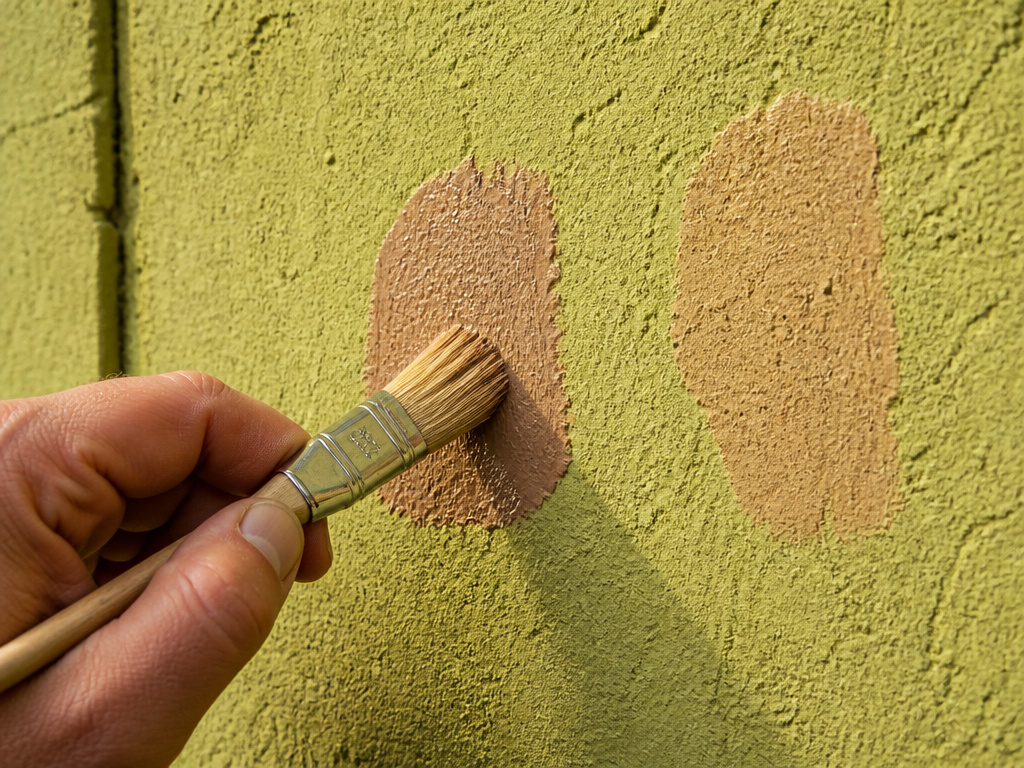
Earles, Fenwick & Tilbrook and AURO give three different answers, and the disagreement is worth understanding before you sand anything.
AURO asks for a pretest on a small area to check the colour reproduces correctly.
All three can be right at once. The wall is breathable in every case; what differs is how much colour drift the maker is willing to guarantee. AURO is telling you the pigment may read differently on a high-pH wall. Earles is telling you the film will still work.
On any wall with lime, silicate or fresh render in it, the test patch is the whole job. Paint a patch, let it dry fully, and judge the colour in daylight before you buy the rest.
There’s a second trap on repairs. Earles warns that filled cracks and holes have a different porosity from the surrounding wall, which shows up as patchiness once the paint goes on. Fenwick & Tilbrook says much the same about dark colours over variable-porosity lime render.
Easy to miss: Silicone and polymer fillers, sealers and waterproofers are impervious to water and incompatible with Earles Natural Claypaint. Paint over one and you get poor adhesion, not a breathable wall.
Recoat Windows, Dark Colours, and the 28-Day Cure
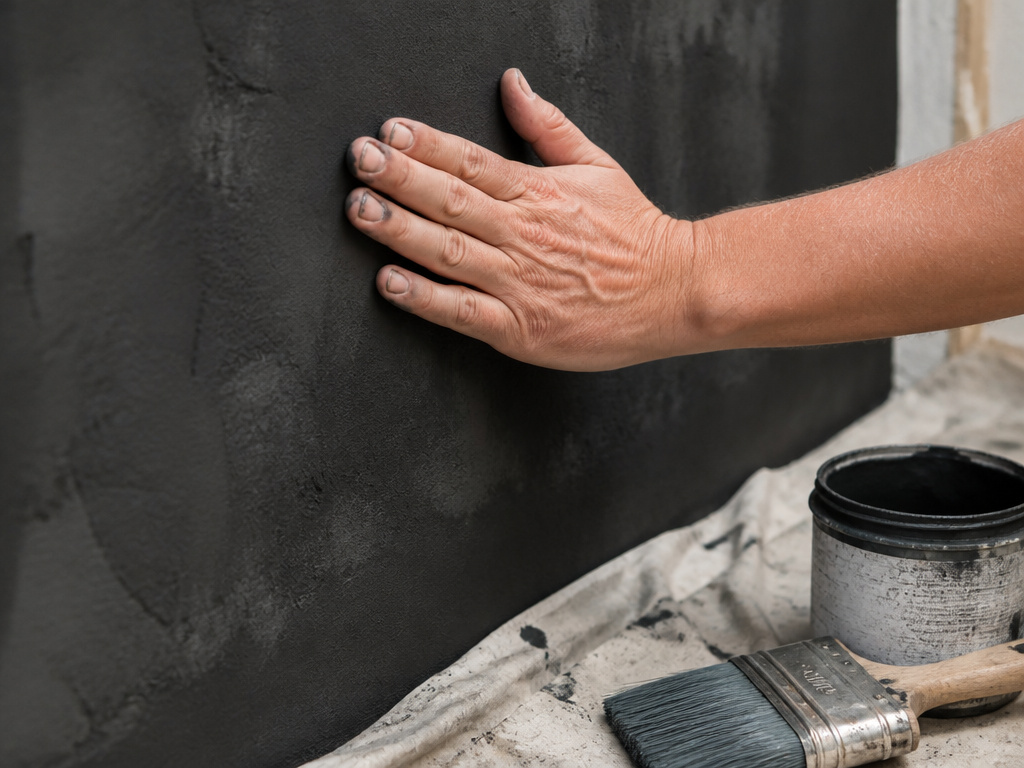
An hour of work gone. Now I press the back of my hand against a surface before I recoat anything, walls included, because skin feels cool and damp long before the eye sees a problem.
The published windows vary. BioShield says 8 to 12 hours between coats. Fenwick & Tilbrook says wait a few hours for the colour to even out, and for dark claypaints wait a day before the next coat. Both are describing the same film from different angles.
Patchiness at first is normal, and the sheets say so. Fenwick & Tilbrook is explicit that a wall can look uneven while it dries and that dark colours take much longer to settle to their final tone. Don’t panic-recoat a wall that’s still drying.
That’s a month of shower steam, kettle steam and window condensation to think about.
Dark colours on lime are the known trouble spot. Fenwick & Tilbrook says dark claypaint is trickier to apply because lime renders vary in porosity, which leads to patching.
Touch-ups have their own rule. Earles recommends a full single coat across the damaged wall rather than a spot dab, and paint from the same batch where possible, intermixed with any leftover from the original batch when it isn’t.
Clay Paint vs Chalk, Acrylic and Mineral Paint
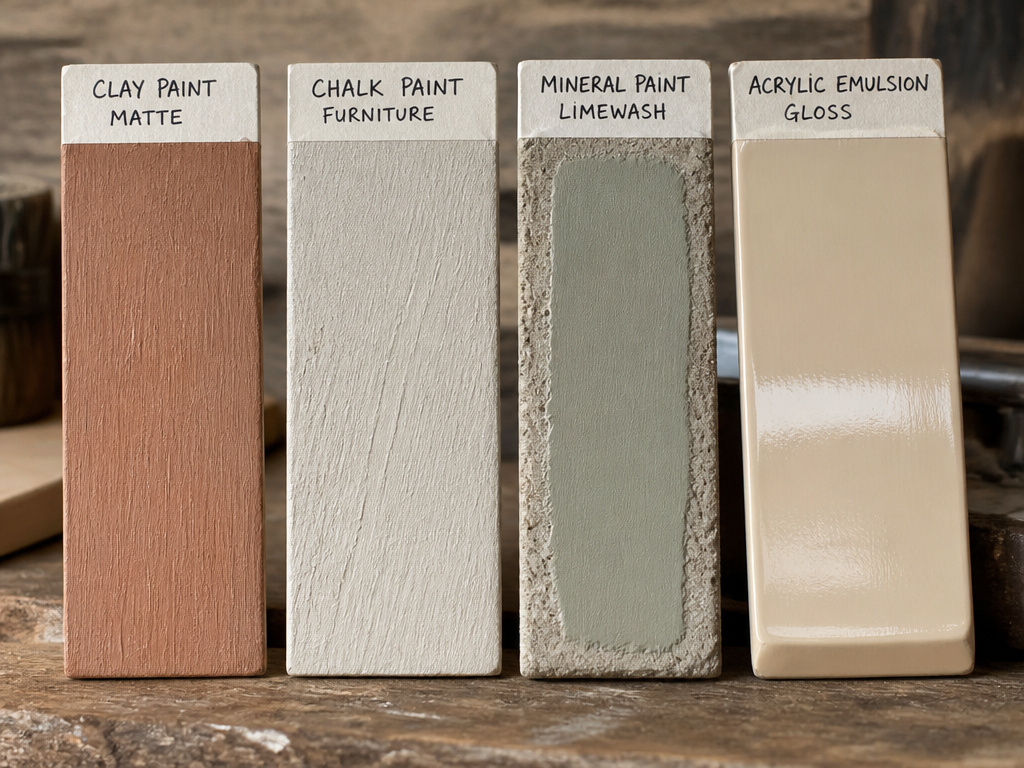
Clay paint wins on old, damp, breathable walls. It loses almost everywhere else.
| Paint type | Best for | Main trade-off |
|---|---|---|
| Clay paint | Old lime plaster, low-odour rooms | Matt finish marks, and it is not scrubbable |
| Chalk paint | Furniture and decorative pieces | Needs a wax or topcoat to survive handling |
| Mineral paint | Masonry and mineral substrates | Narrower colour range, fussier touch-ups |
| Acrylic emulsion | Hallways, kitchens, kids’ rooms | Wears hard, and the film holds moisture in |
The chalk paint comparison catches people out because both are matt and both look rustic on a sample board. Chalk paint is a furniture finish built for waxing. Clay paint is a wall coating built for a substrate that needs to breathe. Using one for the other’s job gets you a finish that fails early.
Against acrylic paint, the difference is the film itself. Acrylic lays down a plastic skin that scrubs well and traps vapour. Raheem and Olowu note that clay paints contain no plastics, which is why they regulate humidity and stay anti-static, attracting little or no dust.
Mineral paint is the other breathable option, and it bonds to mineral substrates through a different chemistry entirely. Both are low-odour. They are not interchangeable, and a wall that suits one won’t automatically suit the other.
Same word, different chemistry, different job.
Frequently Asked Questions
Is clay paint better than emulsion?
On an old lime wall, yes. A clay film with an SD value under 0.015 m or 0.02 m lets moisture out where an acrylic skin holds it in. On a hallway that takes constant scrubbing, emulsion wins, and BioShield’s own guidance points you to a glaze or a different product.
Does clay paint need a primer?
Not always. BioShield suggests two coats of Clay Paint over new drywall or existing solid coats of paint, with a third only when a strong colour difference exists. Fenwick & Tilbrook thins the first coat with 10% water on new plaster, then finishes with an undiluted coat.
Can clay paint be used in a bathroom?
Only in low-impact areas without direct water exposure, per BioShield. Keep it away from shower and sink splash zones, or overcoat with Wall Glaze #15. Fenwick & Tilbrook adds that heavy condensation before the 28-day cure will damage the finish.
Is clay paint really VOC-free?
Treat that as shorthand. BioShield and the 2013 IJERA paper both use VOC-free language, while AURO prints under 1 g/l and states plainly that natural paints are not free from odours or emissions. Very low emission is the accurate phrase.
How much wall will a litre cover?
AURO quotes up to 9 square metres per litre at 0.11 to 0.14 litres per square metre per coat. BioShield quotes 300 to 400 square feet per gallon per coat. Both figures shift with texture, porosity and application, so buy for two coats and keep the leftover.
How long before I can wash the wall?
Longer than the recoat window suggests. BioShield’s 8 to 12 hours is a recoat interval. Cure is a separate clock, and Fenwick & Tilbrook puts complete cure at up to 28 days.
Before You Go
One hard stop: if the wall has ever had a silicone or polymer sealer, waterproofer or filler on it, don’t start. Earles states those products are impervious to water and incompatible with its claypaint, and no amount of sanding turns an incompatible substrate into a compatible one.
One soft stop: a bathroom wall with a shower on the other side of it, or a kitchen wall behind a hob, is the wrong home for clay paint on its own. Glaze it or choose something else.
Then the part worth doing this week. Buy a sample, paint a patch you can see in daylight, and leave it a full day before you judge the colour. Dark shades need that day, and Fenwick & Tilbrook says so directly.
Buy only the amount you need, too. That beats every eco label on the tin, and it’s the one green decision that never depends on a certificate. A patch costs you an afternoon. A wall costs you a weekend. Start small and stay curious.
