
Acrylic vs Oil-Based Exterior Paint: Which Lasts Longer?
This post contains affiliate links. As an Amazon Associate, we earn from qualifying purchases.
Acrylic vs oil-based exterior paint is a flexibility question: acrylic stays flexible and moves with freeze-thaw, while oil-based alkyds cure hard and go brittle. For exterior siding in a climate with real winters, a 100% acrylic latex topcoat is the safer pick, and oil-based earns its place as a primer on bare wood.
Brittle is the word that decides this one. Oil-based paint hardens by taking oxygen out of the air and crosslinking into a rigid film, so it holds its shape while the wood underneath swells and shrinks through every thaw. Acrylic latex works the other way: the water leaves, the polymer particles crowd together and fuse, and the finished film keeps a little give.
What follows covers the coatings themselves, the narrow jobs where an alkyd still wins, and the temperature and rain windows that decide more of the outcome than the label on the can does.
Key Takeaways
- A 100% acrylic latex topcoat is the standard for siding in a freeze-thaw climate per Soca Services, though OUI Colour Paint frames acrylic as only ‘often’ the better choice in Toronto’s temperature swings.
- Oil-based paint still has a job: primers on bare wood, with some sources also allowing alkyds on bare metal trim and doors where a hard, leveled film helps.
- 10°C to 30°C is the working window for most exterior products, and a few premium acrylics go down to 1.7°C.
- 48 hours of dry weather above 5°C after the last coat decides whether the job cures or fails.
- Prep outranks product: painting over failing old paint is the most common cause of premature failure.
Why Acrylic Wins the Topcoat Job in a Freeze-Thaw Climate
Two to three winters. That is the failure window a Toronto painting contractor puts on an oil or alkyd film once freeze-thaw movement starts working on it (Soca Services Painting).
Acrylic latex forms its film in two stages: water evaporates, then the polymer particles crowd together and fuse into a continuous layer. That fused layer keeps some elasticity, so it stretches and recovers as the substrate moves. Oil-based alkyds cure by oxidation instead, building a rigid crosslinked film with far less capacity to move.
Elasticity is the whole argument. Wood siding takes on and gives up moisture all year, so it swells in fall and shrinks in January. A film that cannot follow that movement has to crack somewhere, and it usually starts at a joint or along a caulk line.
Not every source signs off on the same verdict, and it is worth knowing where they part ways. Best Century Painting argues oil-based paint holds better on chalky surfaces and lays down a harder, smoother finish that resists wear. Sohrabi Painting puts oil-based coatings in a similar slot, calling them durable and best suited to high-traffic areas, doors, and trim. Soca Services takes the harder line for Ontario: 100% acrylic latex on the topcoat, oil reserved for primers on bare wood.
Read those three together and the acrylic vs oil-based exterior paint split is about scope, not chemistry. Nobody is claiming a rigid film flexes. The argument is whether you want rigidity on a door that gets knocked around, or flexibility on a wall that moves.
Here is the part that convinces me every time. Rub a palm across siding that has chalked and you get a fine white dust on your hand, like flour. Best Century Painting gives oil the edge on gripping that chalky surface. Soca Services credits acrylics with excellent adhesion and calls acrylic latex the professional standard for siding. Either way, the chalk has to come off first, and that is a washing job, not a paint choice.
The pros and cons of acrylic paint land where you would expect once the film stays soft. It holds color and gloss longer under UV and resists the yellowing that oil-based products pick up with age, per Best Century Painting.
Where Oil-Based Paint Still Earns Its Place
Oil-based paint still has three jobs on an exterior.
- Priming bare wood. Soca Services reserves oil-based products for primers on bare wood substrates, and City Painters WA allows oil-based primers on bare timber or metal that needs extra bite.
- Bare metal trim. Soca names alkyds as still preferable on specific substrates like bare metal trim.
- Doors, shutters, and intricate trim. Best Century Painting credits oil with superior leveling that minimizes brush marks, which is why it suits detailed profiles and front doors.
That third one is the honest concession. A door is a small, flat, high-touch panel, and a hard film that levels out is genuinely pleasant there. The pros and cons of oil-based paint shift depending on whether you are coating two hundred square feet of siding or twenty square feet of door.
I keep one alkyd primer on the shelf and nothing else oil-based. The moment a full oil topcoat goes onto siding, you have bought yourself a film that can crack within two to three winters.
Cleanup is where the acrylic vs oil-based exterior paint question parts company hardest. Oil-based paint needs solvent, and water does nothing to it.
Scrape the excess first, then blot with a rag dampened with odorless mineral spirits.
If you are stocking up for a primer coat specifically, the best exterior oil-based primers are worth reading about separately, since primer chemistry has to match the topcoat going over it.
What Temperature Can You Actually Paint In?
Ten to thirty degrees Celsius. That is the band both Toronto sources publish for exterior painting, with Soca Services and OUI Colour Paint landing on the same 10°C to 30°C window (OUI gives it as 50°F to 85°F).
| Source | Minimum application temperature | What else it requires |
|---|---|---|
| Soca Services Painting | 10°C ambient, 10°C surface | 48 hours above 5°C to cure |
| OUI Colour Paint | 10°C to 30°C | 24 to 48 hours dry after |
| Premium acrylics (Aura, Weather King) | as low as 1.7°C to 2°C | Stable conditions, per Soca |
Soca is blunt about the floor: avoid painting when surface temperatures drop below 10°C, because proper film formation needs warmth. OUI agrees, and adds the ceiling at 30°C.
Then there is the exception worth knowing. Soca reports that some premium acrylic latex paints, naming Benjamin Moore Aura and PPG Weather King, can be applied as low as 1.7°C to 2°C, which stretches the season into early October when conditions hold.
Common mistake: Trusting the air temperature and ignoring the wall. A dark south-facing surface in direct sun can run well above the forecast, and the paint skins over before it levels.
The technical data sheet is the document that settles this, not the forecast app. Soca warns that ignoring a product’s minimum application temperature and curing time by even a few degrees can produce a finish that looks fine in October and fails by the following spring. That is a specific, checkable claim, and it is the one I would build a schedule around.
The Real Reason Midday Sun Ruins a Fresh Coat
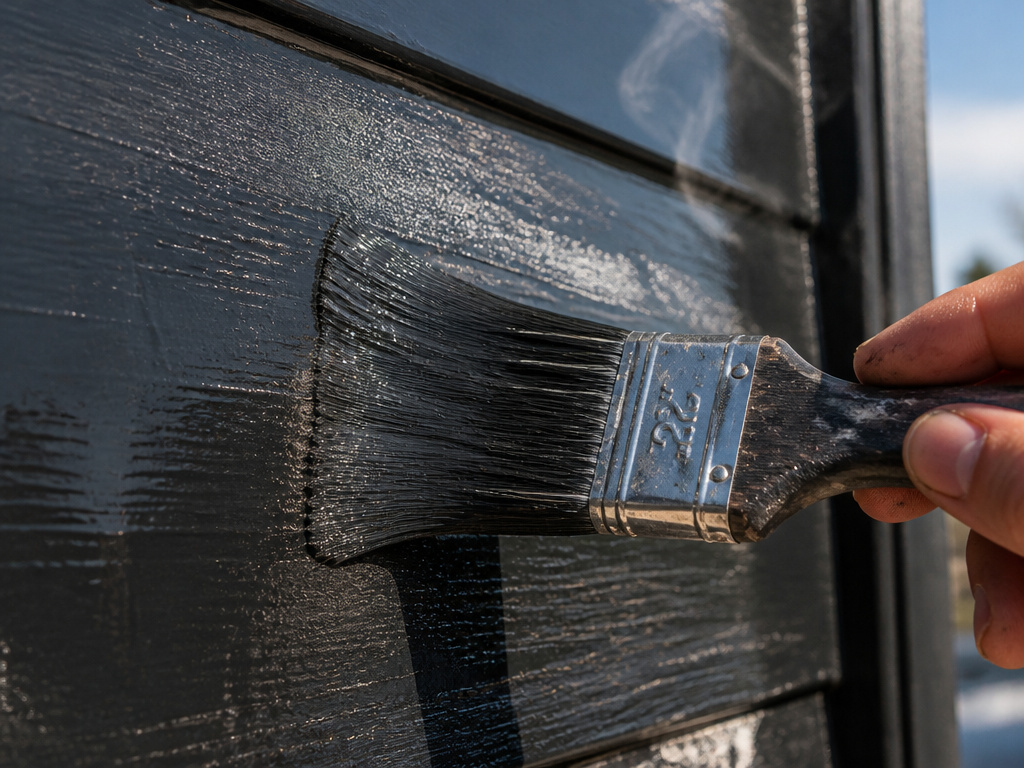
Midday sun is the worst thing you can give fresh paint.
Soca’s prep list names it directly: direct sun on a dark surface can raise surface temperature well above ambient, which pushes paint to dry too fast and leaves brush marks behind. The fix is dull and effective. Paint in shade, or work the cooler parts of the day.
I learned the same lesson the dumb way. I have painted thinner and waited longer ever since.
That is the exact failure mode a hot wall gives you, just faster. A coat that skins over in the sun goes glassy on top and stays soft underneath.
Some of the types of exterior paint tolerate heat better than others, and going lighter on a sun-facing wall buys you real margin. City Painters WA flags dark colors on sun-facing walls as a mistake, because darker shades absorb more heat and speed up the expand-and-contract cycle.
How Long After Painting Can It Rain?
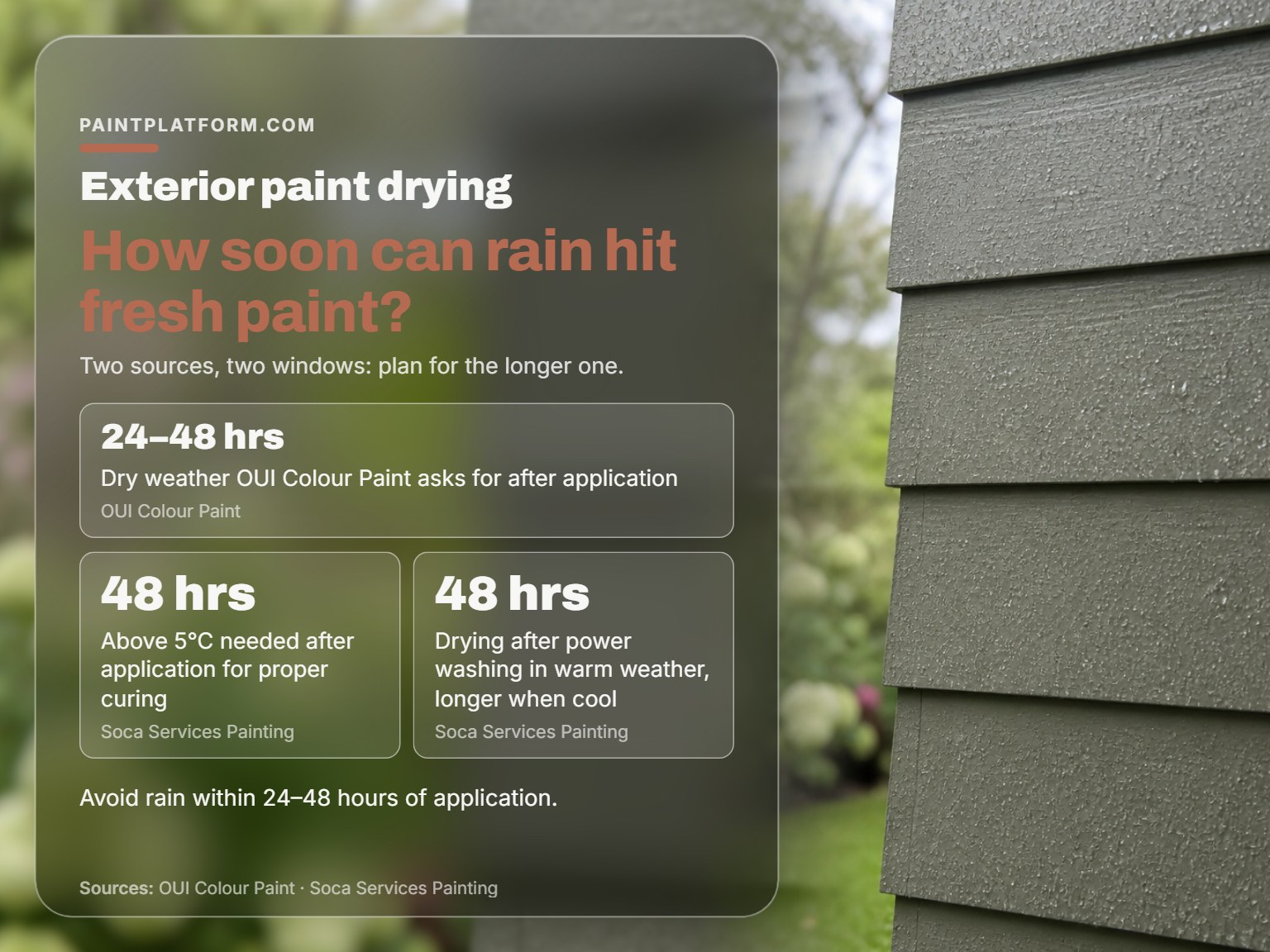
Twenty-four to forty-eight hours. OUI Colour Paint asks for at least that much dry weather after application and says to avoid rain inside the same window. Soca Services is looser at the front end, warning against painting when rain is forecast within a few hours, but it still wants 48 hours above 5°C for proper curing.
Fair warning: those two numbers are not the same promise. Plan around the looser one and an early downpour leaves you outside both.
Rain on a film that has not set leaves a mottled, slightly milky sheen that does not wash off. It looks like a stain from a distance and like a mistake up close.
If the forecast has rain inside 48 hours, the job waits. A coat hit early can look fine at first and then go chalky and patchy across the whole wall.
The same logic applies to washing. Soca asks for at least 48 hours of drying after power washing in warm weather, and longer when it is cool. Paint over a damp surface and you are sealing moisture in, which OUI lists as a straight no.
Acrylic vs Oil-Based Paint on Wood, Masonry, and Metal
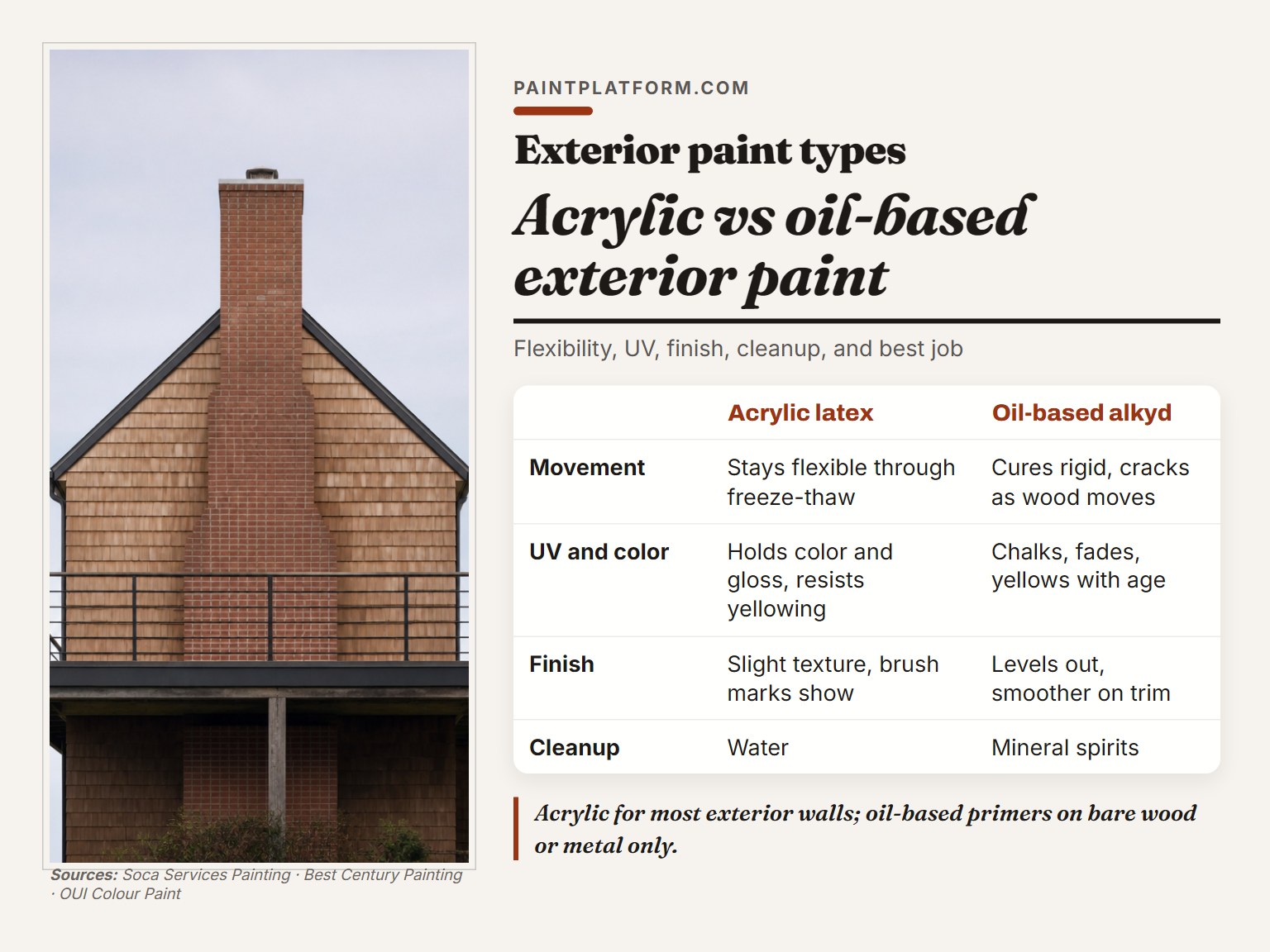
A cedar-sided wall, a brick chimney, and a steel railing, all on the same Saturday. Three surfaces, three different answers, and one of them genuinely wants an alkyd.
| Property | Acrylic latex | Oil-based alkyd |
|---|---|---|
| Movement | Stays flexible through freeze-thaw | Cures rigid, cracks as wood moves |
| UV and color | Holds color and gloss, resists yellowing | Chalks, fades, yellows with age |
| Finish | Slight texture, brush marks show | Levels out, smoother on trim |
| Cleanup | Water | Mineral spirits |
| Best exterior job | Siding, masonry, most of the house | Primers, bare metal, doors |
Wood siding and trim
For exterior wood siding, Soca recommends a 100% acrylic latex paint with a primer. Best Century Painting makes the same call for a different reason: wood expands and contracts, and acrylic’s flexibility prevents the cracking and peeling oil-based paint develops.
Cedar is its own case. OUI suggests penetrating oil-based stains or acrylic formulas made for wood, with UV blockers to keep cedar from graying, reapplied every 2 to 5 years depending on exposure.
Masonry, brick, and render
Masonry wants to breathe. OUI warns against film-forming products that trap water inside bricks and points to elastomeric or mineral-based paints for sealing and flexibility. Sohrabi Painting adds that rendered concrete walls need breathable coatings to avoid moisture entrapment.
That is the why-layer most guides skip. Brick holds moisture and releases it slowly. A tight film stops the release, and the water finds the mortar instead.
Metal, railings, and structural steel
Metal needs rust protection and flexibility according to Sohrabi, who specifies zinc-rich primers for structural steel and roofing. For bare metal trim on a house, Soca still allows an alkyd.
A quick label check saves a second trip. OUI recommends water-based acrylics carrying Green Seal or GREENGUARD certification, and asks for paint labeled “vinyl-safe” if you are going darker on vinyl siding.
That is the short version of water-based vs oil-based paint: the water-borne product handles most exterior walls, and the solvent-borne one handles the small hard-wearing bits.
If you want the shortcut, the best paint for home exterior shortlist is where I would start before walking into a paint desk. Benjamin Moore Aura Exterior gets named as a go-to line in Canada by OUI Colour Paint, and Soca names Sherwin-Williams Duration and Benjamin Moore Aura as the premium options that push a repaint closer to the ten-year mark.
For a straight siding job, acrylic exterior paint is the category to shop in. Dulux Weathershield covers around 16m² per litre with a 15-year warranty against peeling, flaking, and fading, per City Painters WA. Wattyl Solagard sits near 14m² per litre with a 15-year guarantee, and Haymes Solashield carries a 20-year warranty at roughly 15m² per litre.
The Prep Steps That Outlast Any Paint Choice
Before you start: Exterior painting puts you on a ladder with a scraper and often a caustic mildewcide.
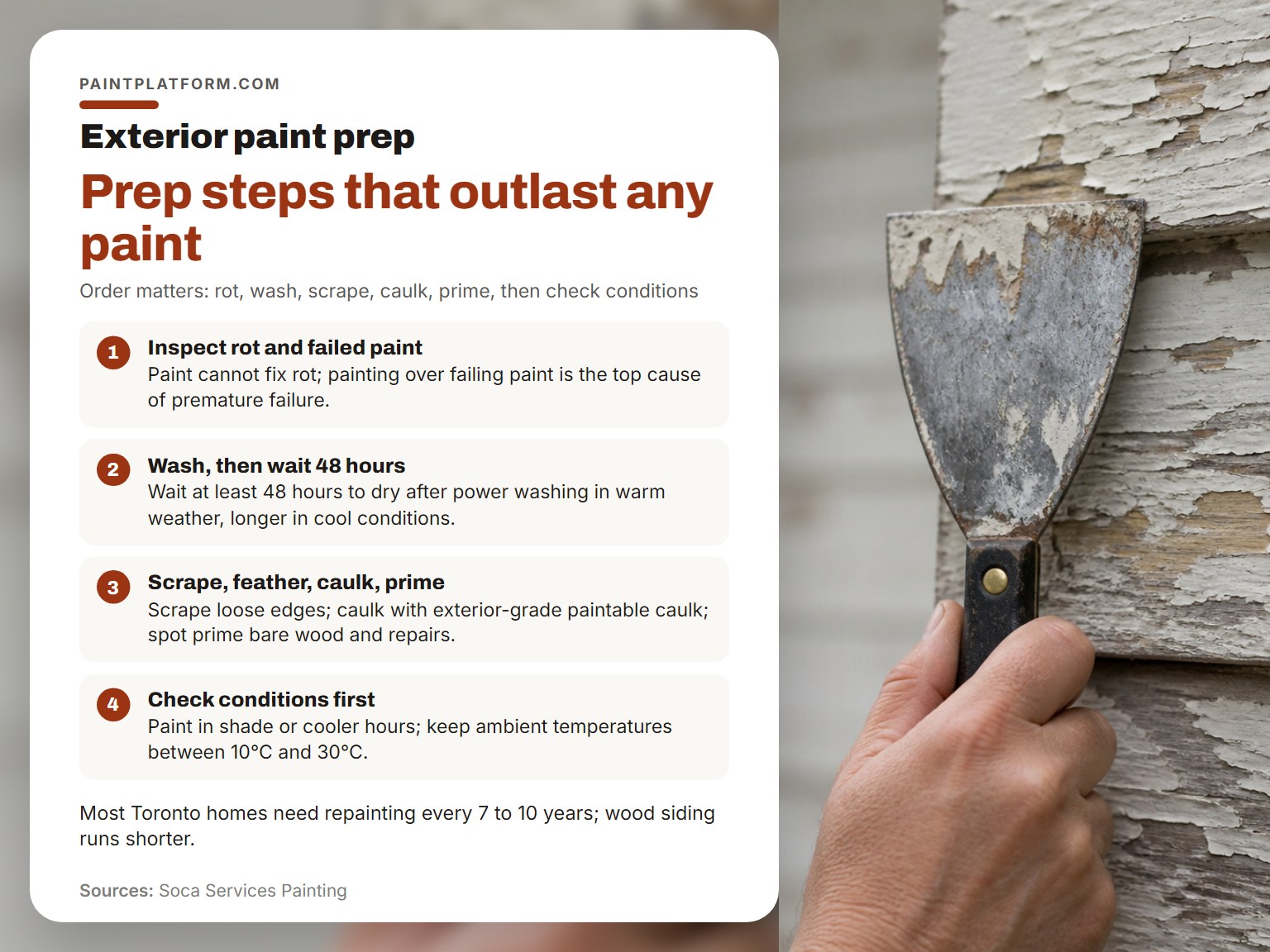
Here is the order that matters, borrowed from Soca’s prep sequence and trimmed to what actually changes the outcome.
- Inspect for rot and failed paint first. Paint cannot fix rot, and painting over failing old paint is the most common cause of premature failure.
- Wash with a mildewcide solution, then wait. Soca calls for at least 48 hours of drying in warm weather, longer when it is cool. Skip the wait and you trap moisture under the film.
- Scrape and feather every loose edge.
- Repair and caulk with exterior-grade paintable caulk rated for seasonal movement. Let it cure fully. Caulk painted while wet can pull away from the joint.
- Spot prime bare wood, repairs, and stained areas. Soca requires a primer matched to both the substrate and the topcoat chemistry. Spot priming is the cheapest insurance in the whole job.
- Check conditions before the first stroke. Shade or cooler hours only. OUI also flags skipping primer when switching product types, which is exactly what happens when you move from an old oil finish to acrylic.
Easy to miss: The repaint clock starts the day you finish, not the day it fails. Most Toronto homes need repainting every 7 to 10 years, and wood siding runs shorter than fiber cement or vinyl, per Soca Services.
Frequently Asked Questions
Is acrylic or oil-based paint better for a house exterior?
For siding, acrylic. Soca Services calls a 100% acrylic latex topcoat the standard for Ontario, City Painters WA calls it the clear winner for final coats, and OUI Colour Paint says acrylic is often the better choice in Toronto’s temperature swings. Oil-based keeps a narrow role on bare wood primers, bare metal trim, and doors.
Can you paint acrylic over an old oil-based finish?
Yes, with prep. OUI Colour Paint specifically warns against skipping primer when you switch product types, so clean the surface, dull the gloss, and use a primer matched to both the old film and the new topcoat. Going straight on without that step is where adhesion complaints start.
What happens if it rains a few hours after you paint?
You get a mottled, milky finish that does not wash off. OUI asks for 24 to 48 hours of dry weather after application, while Soca warns against painting when rain is forecast within a few hours. If the two forecasts disagree, trust the longer one.
How often does an exterior need repainting?
Most Toronto homes need it every 7 to 10 years, according to Soca Services, with premium paints like Sherwin-Williams Duration or Benjamin Moore Aura pushing toward the ten-year end. Wood siding needs attention sooner than fiber cement or vinyl. Wood stain is a different schedule entirely: OUI puts reapplication at every 2 to 5 years.
Can you paint a house exterior in October?
Sometimes. Soca says fall painting is viable through mid-October with low-temperature-rated products such as Sherwin-Williams Resilience or PPG Weather King, as long as daytime temperatures stay above 10°C and overnight temperatures do not drop near freezing during curing. Below that, the technical data sheet decides.
The Bottom Line
Here is the threshold I would actually use. If the forecast shows 48 hours of dry weather with nights staying above 5°C and daytime highs between 10°C and 30°C, you are clear to paint, and the brand matters less than you think. If it shows rain inside 48 hours or a night near freezing, no premium can on the shelf rescues that coat.
Buying exterior paint is like stocking a kitchen. A 100% acrylic latex over proper prep beats a premium can over a dirty, chalky wall.
The part I would push back on is the ultra-premium lifetime-warranty marketing aimed at people who plan to repaint within the normal interval anyway. Those coatings do extend the interval, and Soca’s numbers back that up. They just do not extend it enough to justify skipping the washing and scraping.
So start smaller than you think. Probe the trim, note where paint has blistered, and check the forecast for a three-day dry window. That walk tells you more about your next paint job than any label will.
