
How to Paint Over Graffiti: Step-by-Step
This post contains affiliate links. As an Amazon Associate, we earn from qualifying purchases.
To paint over graffiti, clean the surface first, then apply a primer and a color-matched exterior paint. City of Minneapolis advises a square larger than the tag with blended edges, while Seattle Parks and City of Nampa favor repainting the entire wall or a straight line to a height when the color match fails. Match the color and sheen, or the patch reads as a billboard. Acrylic paint works down to 32 degrees; latex needs 50 or warmer.
The sheen is the part that gets skipped, and it’s what gives a paint-out away. A flat paint laid over a satin wall catches light at a different angle, so the square shows up even when the color is dead on. This is why how to paint over graffiti matters.
What follows is the surface check, the patch-versus-repaint argument the city guides can’t settle, the temperature table, and the primer question that half of them skip entirely.
Key Takeaways
- Match the sheen, not just the color. A dead-on color in the wrong finish still shows as a rectangle.
- Latex needs 50 degrees or warmer. Acrylic goes down at 32, enamel at 22, and additives can push the limit lower than that.
- Paint a square larger than the tag and feather the edges. Tracing the letters leaves the shape readable from a distance.
- Repaint the whole wall when the color match fails, per City of Nampa. Mismatched blocks hand the next tagger a fresh, bright canvas, though City of Minneapolis advises a matched square larger than the tag with blended edges.
- City of Nampa recommends a protective coating after 2 to 3 paint-outs on masonry. Coats stack, pores close, and the wall starts to spall.
What Surface Are You Actually Painting Over?
Painted stucco, bare brick, and an aluminum sign box are three different jobs with three different answers on how to paint over graffiti. Get the surface wrong and the best paint in the world peels off in sheets.
Surface identification precedes any coating decision. Painted masonry, bare brick, aluminum sign panels, glass, and vinyl siding each accept a different primer and a different topcoat. Bare stucco and unpainted brick are removal-only surfaces under Minneapolis guidance, because coating them creates a maintenance problem the owner cannot easily reverse.
Glass is the one that surprises people. Acid etching on glass is a permanent mark, and Seattle Parks notes the pane often has to be replaced outright. A protective or decorative covering buys time, nothing more.
Cured paint on regular glass scrapes off with a razor blade held flat against the pane. Other marking materials need a solvent instead, and the surface-specific graffiti removal guide from Eau Claire is blunt about matching the product to the material.
Here’s the short version of the surface question:
- Painted masonry and siding: prime, then topcoat in a matched color.
- Bare brick or stucco: remove it. Coating unpainted masonry makes future maintenance harder, per Minneapolis.
- Aluminum sign panels: a separate spec applies, with an approved product list and no sandblasting allowed.
- Glass and plexiglass: clean it fast, because paint absorbs and etching is forever.
If the brick has already been painted once, anyone who has had to remove paint from brick will recognize the maintenance challenge. Same goes for a tagged concrete wall, where remove paint from concrete is a skill worth learning.
The Patch-vs-Repaint Argument Nobody Settles
Three city agencies, three different answers on how to paint over graffiti and how big a patch should be. All three are right, and that’s the problem.
| Agency | Their Rule | Why They Say So |
|---|---|---|
| City of Minneapolis | Match the paint in a square larger than the tag, blend the edges | Do not “picture frame” it in a contrasting color |
| Seattle Parks | Repaint the whole wall, or up to 7 feet with a straight top line | They claim this is 10 times more effective than patching |
| City of Nampa | Repaint the entire surface if the color match fails | Mismatched blocks give writers a bright new canvas |
| NYSDOT (aluminum) | Small rectangular patterns that kill readability | Minimizes the painted area on sign structures |
Seattle’s 10-times figure is their own claim, not a measured study, so treat it as a strong preference rather than a law of physics. The Seattle Parks graffiti removal guide also concedes the fallback: when a full repaint isn’t possible, use a closely matched color in neat squares.
Nampa takes the harder line. Random square blocks of mismatched paint, in their reading, are worse than doing nothing, because they advertise the wall to the next person with a can.
The practical compromise sits between them. City of Minneapolis advises patching with a matched square larger than the tag and blending the edges, while Seattle Parks favors repainting the whole wall or a straight line at 7 feet.
If you can see your own patch from the sidewalk, it’s too small. Go bigger, or go straight-line.
The Paint-Out, Step by Step
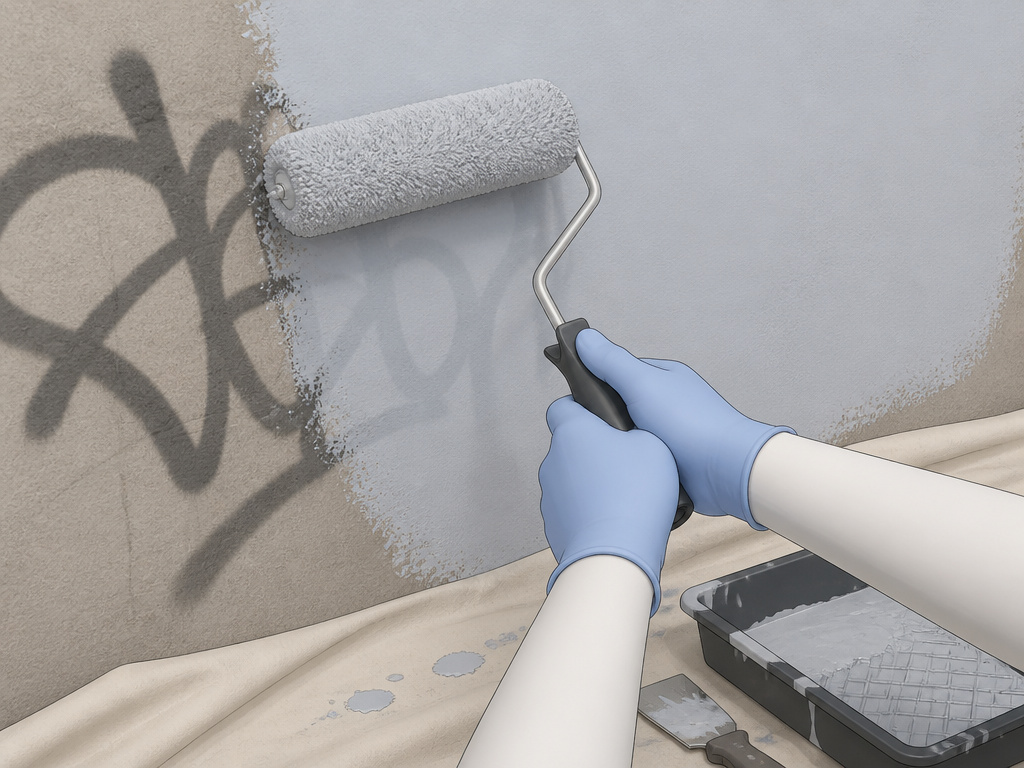
Six steps, and only one of them is actually about paint.
Before you start: Solvent-based removers need safety goggles, rubber gloves, and protective clothing, and the space needs ventilation. If you can’t vent it, wear a NIOSH-approved respirator. When untrained volunteers are helping, keep every product at or below a Health 2 / Flammable 2 rating on the SDS. Dirty cleaning water never goes into a storm drain or onto soil.
- Clean the surface first. Oil, mildew, or blistering old paint and the new coat won’t stick, no matter what you paid for it. Skip this and the patch lifts.
- Scrape anything loose. If you’re dealing with peeling paint under the tag, take it back to sound material.
- Prime the area. Minneapolis mandates a primer coat under the new paint. Skip it and dark spray paint can show through a light topcoat.
- Match color and sheen together. Bring a chip from the wall, not a photo. Screens lie about both.
- Paint a square larger than the tag and feather the edge. Light pressure at the end of the stroke, per the NYSDOT method. Feathering the edge helps the patch blend in.
- Protect the ground. A drop cloth or a sheet of cardboard under the wall catches drips you didn’t plan for.
A roller moving too fast throws fine dots of paint onto the sidewalk. Slow down.
Common mistake: Tracing the letters. Minneapolis calls this out directly. You end up with a legible outline in fresh paint, which is worse than the original tag.
If the tag is heavy marker or sticker residue rather than spray paint, a dedicated graffiti remover may be needed for a waxy surface that will reject the topcoat.
What Temperature Can You Actually Paint In?
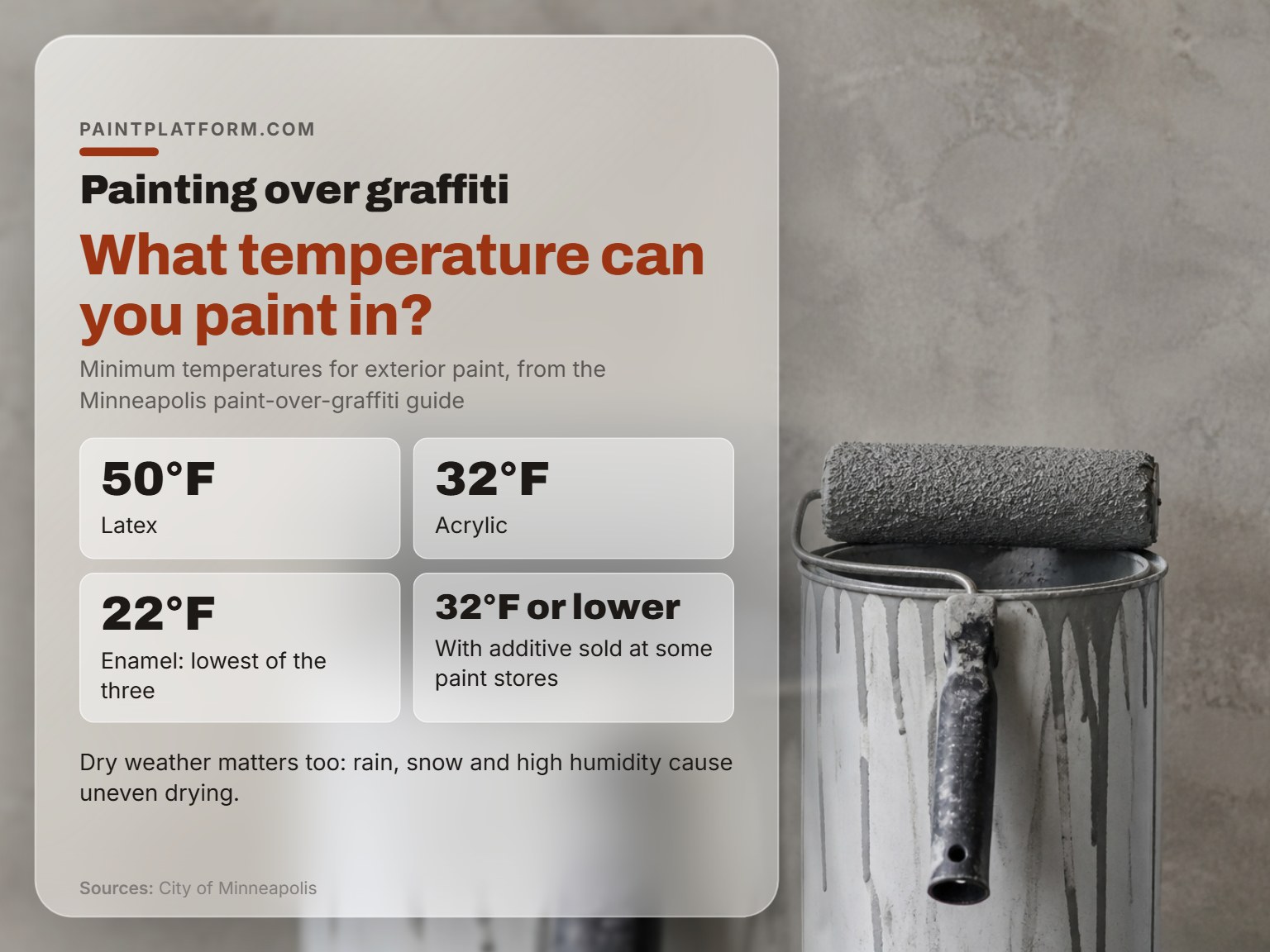
Fifty degrees is the number that kills most winter paint-outs.
| Paint Type | Minimum Temperature | Notes |
|---|---|---|
| Latex | 50 degrees | Cheaper and easier to clean up |
| Acrylic | 32 degrees | The usual choice for exterior masonry |
| Enamel | 22 degrees | Lowest of the three |
| With additive | 32 degrees or lower | Sold at some paint stores |
Those thresholds come straight from the Minneapolis paint-over-graffiti guide, and they’re the most concrete numbers any of the municipal sources publish.
Dry weather matters as much as temperature. Rain, snow, and high humidity cause uneven drying, which shows up as a blotchy patch that never quite cures.
Eau Claire pushes back slightly on the whole picture. Their brochure notes that oil-based paints are more durable than latex and can go on at lower temperatures and when rain is likely. Latex is cheaper and easier to clean up. Both statements are true at once, which is why the temperature table above is a starting point rather than a verdict.
Primer: Mandatory, Optional, or Surface-Dependent?
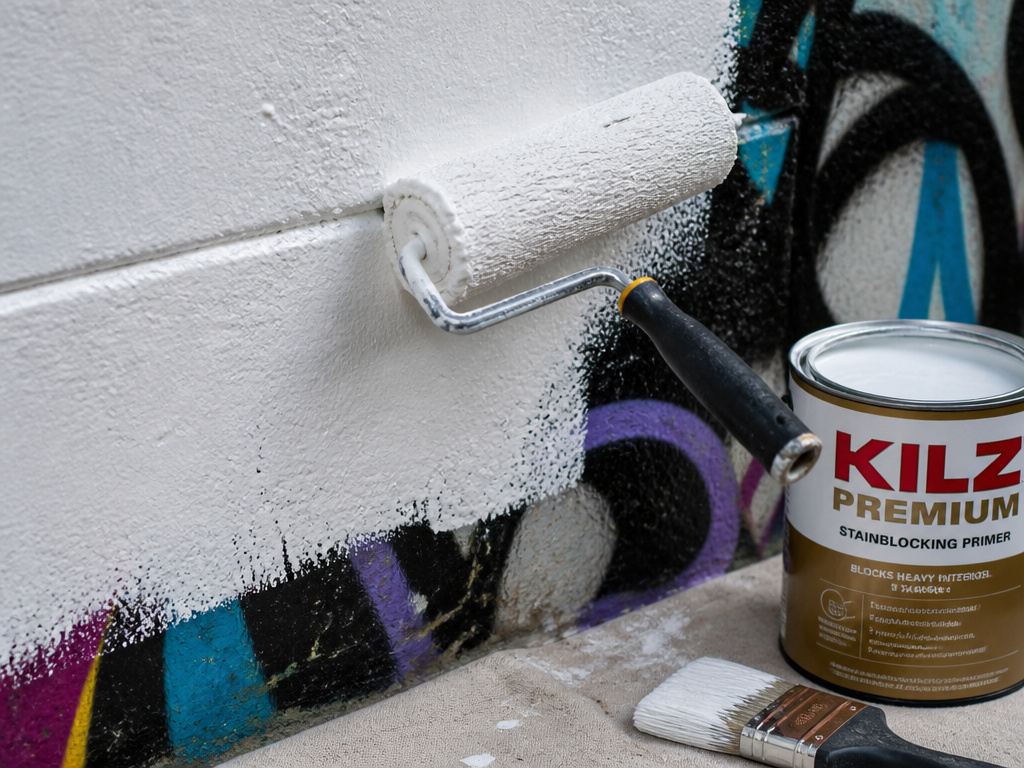
Minneapolis mandates a primer coat, Seattle’s procedure omits primer entirely, and the Sleepy Hollow spec requires a graffiti-specific hiding primer.
The gap matters more than it looks. A primer’s job here is hiding power, not adhesion alone. Dark spray paint bleeds through a light topcoat without something underneath to block it.
The Sleepy Hollow contract specification carries the strictest language: the primer has to be formulated specifically for covering graffiti, compatible with the substrate per the manufacturer’s data sheet, and it must resist fading and chalking.
For a homeowner, that translates to a stain-blocking primer rather than a general-purpose one. KILZ and BIN are the two the Eau Claire brochure names for exactly this job, and both are easy to find. If the wall is glossy or sealed, a bonding primer may help, because nothing sticks to a slick surface.
Primer over graffiti is the cheapest insurance in the job. One extra coat costs you little now and saves you a full repaint later.
Breathability and the 2-to-3 Paint-Out Limit
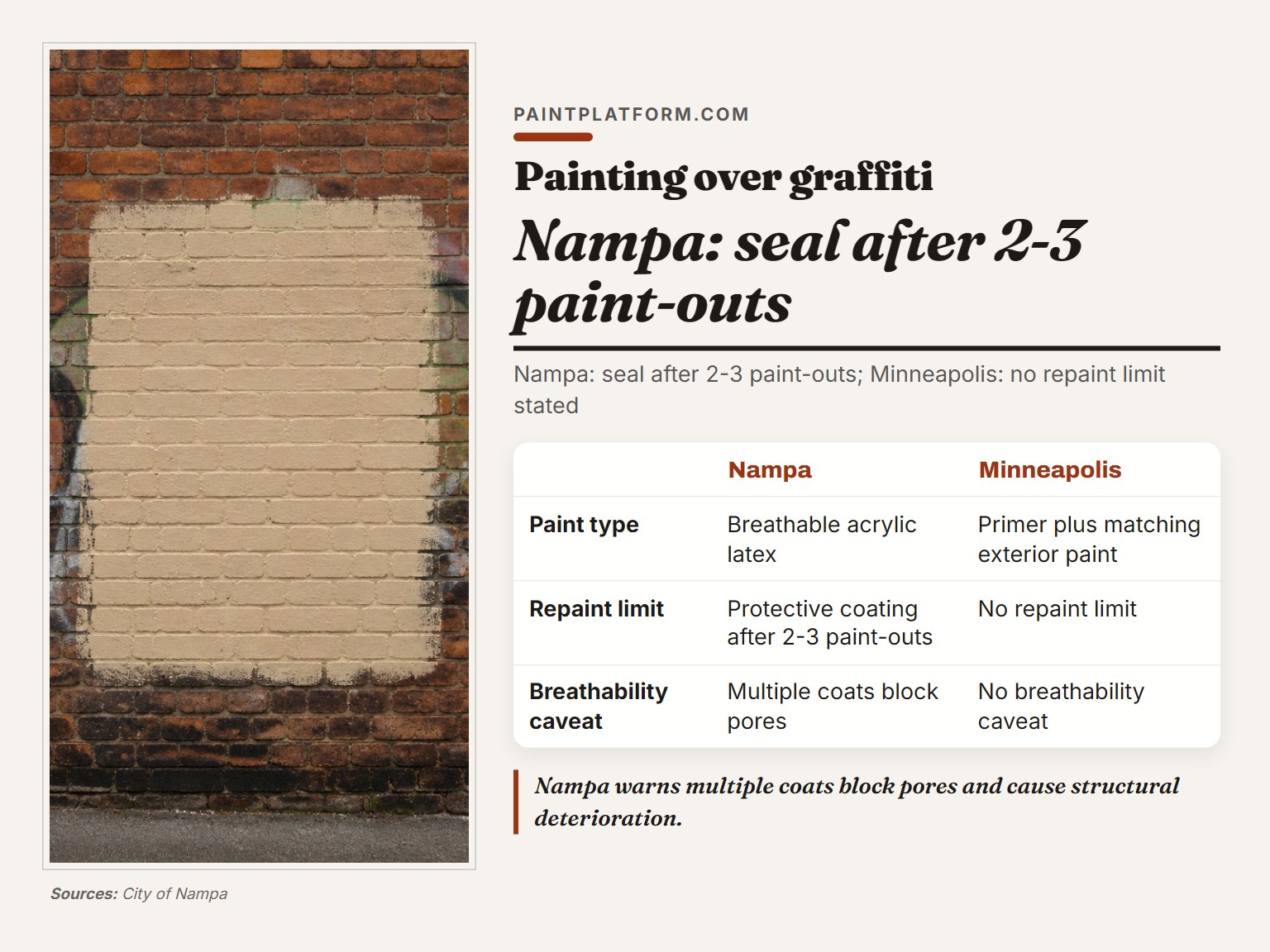
Coats stack up, and masonry doesn’t forgive it.
Nampa requires breathable acrylic latex on wood, concrete, block, and brick, and warns that multiple coats block the pores and cause structural deterioration. Their fix is a protective coating after 2 to 3 paint-outs.
That’s a genuinely different position from Minneapolis, which recommends primer plus matching exterior paint with no breathability caveat and no repaint limit at all. Nampa advises a protective coating after 2 to 3 paint-outs, while Minneapolis sets no repaint limit.
An anti-graffiti coating applied at that point does two things. It seals the pores you’ve been filling, and it makes the next tag come off with less work. Glossy enamel paints and sealers work the same way on a smaller scale, per Eau Claire.
Where this goes sideways: Painting the same wall four or five times without sealing it. The film gets thick enough to crack along the edges, and once water gets behind it, the coats come off in sheets.
If the wall carries a painted design rather than a flat color, the same logic applies. Learning to seal an outdoor mural properly can help protect the design.
How Do You Handle Metal, Glass, and Aluminum?
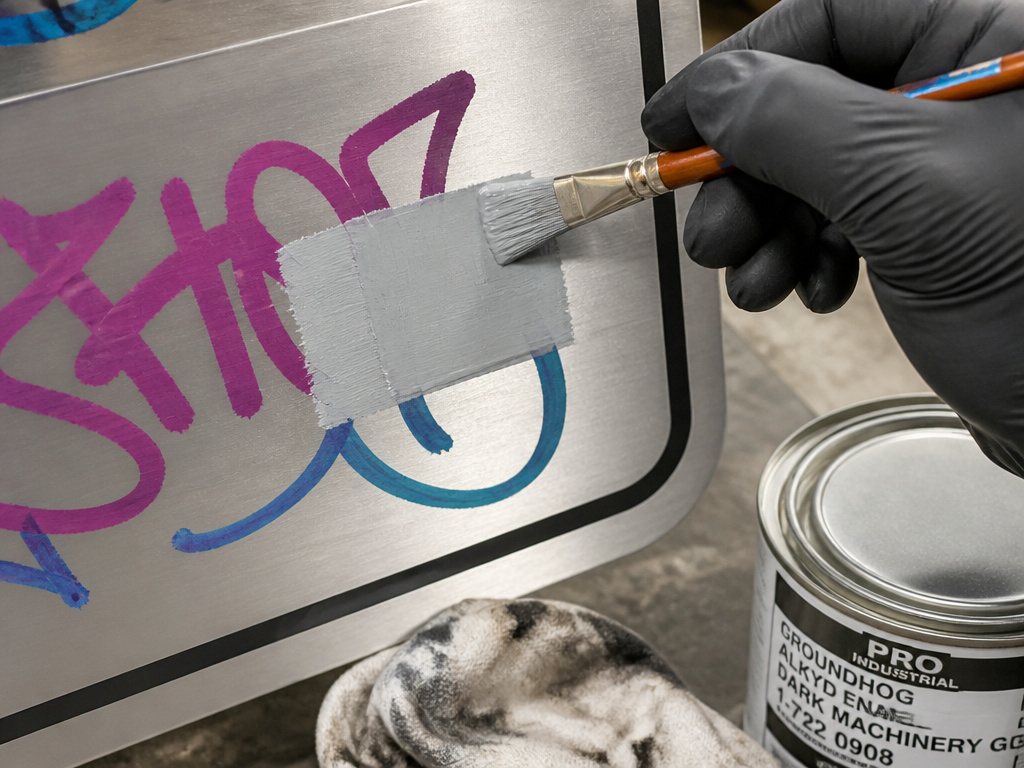
Aluminum sign structures run on a completely different rulebook.
The NYSDOT painting over graffiti spec requires finish paint from a Department Approved List with no substitutions, arriving on site in new, unopened containers. Surface prep follows a separate standard, and sandblasting is banned outright.
Two details from that spec are worth stealing for any metal job. Paint gets applied in small rectangular patterns to keep the graffiti from being readable, and the work isn’t accepted until the tag is completely hidden. No partial credit.
On polished aluminum, Eau Claire warns against aggressive cleaners entirely. Solvents, used sparingly, or nothing.
For painted metal siding that’s been hit with something other than spray paint, the approach shifts again. Learning to remove spray paint correctly on metal helps the topcoat adhere to a clean surface.
Frequently Asked Questions
Can you just paint over graffiti without cleaning it first?
No. Oil, mildew, and blistering old paint all prevent adhesion, and the new coat will fail. Cleaning is the step that decides whether the paint-out lasts.
What color should you use to cover graffiti?
The original wall color, matched as closely as you can get it. Seattle Parks also lists neutral gray, white, and beige as acceptable alternatives when a match isn’t possible. What you don’t want is a contrasting block, which Minneapolis calls a “picture frame” and warns will attract more tagging.
Does painting over graffiti actually stop it from coming back?
It discourages it, and that’s the honest ceiling. Every source here ties quick removal to reduced repeat tagging, and none of them claims paint alone solves the problem. A protective coating after 2 to 3 paint-outs is the closest thing to a durable answer.
Can you paint over graffiti on brick or stucco?
Minneapolis says don’t paint unpainted brick or stucco at all, because coating it makes the surface hard to maintain. Remove the graffiti instead. Nampa’s breathable acrylic guidance covers brick and block that’s already painted, which is a different situation.
How cold is too cold to paint over graffiti?
Below 50 degrees rules out latex. Acrylic holds to 32 degrees, enamel to 22, and some paint stores sell additives that let you work at 32 or lower. Rain, snow, and high humidity cause their own problems regardless of temperature.
The Bottom Line
Here’s the trigger I’d actually use: if your wall has been hit repeatedly, stop painting and start sealing. You’re past the point where a fresh coat solves anything, and every additional layer makes the eventual repair harder.
Fair warning, though. None of this replaces removing graffiti where removal is the right call. Bare brick, stucco, and etched glass are all cases where paint makes the problem more expensive to fix later.
My sketchbook has a graveyard section, and my walls have had one too. The pages I regret are the ones I covered up too fast.
Try this today: walk across the street at dusk and look at your wall from there. If you can spot the last paint-out, you’ve just found your weekend project.
