
What Paint to Use for Murals: Acrylic or Silicate?
This post contains affiliate links. As an Amazon Associate, we earn from qualifying purchases.
The paint to use for murals is 100% acrylic built for exterior work: Golden Paintworks Mural & Theme Paints, Chroma Mural Paint, or Nova Color Artists’ Acrylic. Golden’s data sheet puts application between 50F and 90F, with 65F to 75F ideal. Silicate paints like Keim Mineral Paints bond harder to masonry but come in a smaller palette.
That smaller palette is the trade for durability. Silicate paint sinks into brick and concrete and sets as part of the wall instead of sitting on top as a film. The Canadian Conservation Institute describes the bond as permanent and integral, then adds the catch: the what paint to use for murals question still needs proper surface prep and some experience with the product before it behaves.
What follows is the actual decision. Three paint families, the thinning rule that three credible documents can’t agree on, the pigments that go chalky outdoors, and the reason the wall matters more than the can.
Key Takeaways
- 100% acrylic is the default for indoor and outdoor murals. High-quality acrylic latex house paint works too, but the Canadian Conservation Institute says the shades come out dull.
- Apply between 50F and 90F, ideally 65F to 75F. Golden’s data sheet also says to store cool and dry, avoiding freezing and heat.
- Thinning is contested. Golden allows up to 10:1 water for washes, SUR caps tap water at 20%, and the Frankfort guide warns that more than a few drops harms longevity.
- Cadmiums and neons don’t belong outdoors. Golden’s technical paper pulls cadmiums from exterior use, and Chroma’s four neon shades are indoor-only.
- No clear coat is proven universal. A 2025 MDPI study tested five protective coatings and found none appropriate for all commercial mural paints.
What Paint to Use for Murals: Acrylic, Silicate, or House Paint
Three paint families show up on exterior murals, and they fail in different ways.
Golden Paintworks Mural & Theme Paints are a single-component, 100% acrylic waterborne formulation with VOC content below 50 g/l. The product complies with VOC regulations in all US jurisdictions and meets the criteria for LEED Credit 4.2, the low-emitting materials credit for paints and coatings. Exterior colorants are selected for lightfastness.
| Paint Type | Best For | Main Weakness |
|---|---|---|
| 100% acrylic (Golden Paintworks, Chroma, Nova Color) | Interior and exterior murals, widest color range | Film stays soft and tacky at low temperatures |
| Silicate (Keim Mineral Paints) | Brick, concrete, stucco, permanent bond | Smaller palette, needs experienced prep |
| Acrylic latex house paint | Large areas on a tight budget | Duller shades, limited selection |
Artist-quality acrylics are widely used for murals, and the Canadian Conservation Institute names Golden Artist Colours, Stevenson Acrylic Paint, and Nova Color Artists’ Acrylic among them. Chroma Mural Paint runs 37 colors plus 2 special FX, and the mural paint comparison lays out how that stacks against Golden’s line.
Silicate is the other serious outdoor option. Keim Mineral Paints combine a potassium silicate binder with inorganic fillers and natural earth oxide pigments. The paint penetrates masonry and forms a bond that’s integral with the surface. The palette is smaller. The pigments that are there resist fading well.
House paint sits in the middle, and the sources split on it. CCI calls high-quality acrylic latex house paint a popular choice, then notes the shades come out dull. The Frankfort mural installation guide goes further and says to avoid retail-tinted house paint in favor of 100% artist-grade acrylic. Both are describing the same trade. House paint is cheap and available, and it flattens your color.
For interior work the stakes drop, and the indoor mural paint list overlaps heavily with the exterior one minus the UV worries.
The Wall Decides More Than the Can
The Canadian Conservation Institute puts it bluntly: the wall is the predominant factor in how long a mural lasts. Not the brand. Not the pigment load. The wall.
Moisture is the primary enemy. Water sitting in masonry, combined with freeze/thaw cycles, causes flaking of the paint layers and sometimes spalling of the wall surface itself. Murals on old red clay brick are especially prone to this. The NIST guidance on painting exterior porous masonry covers the same territory from a what paint to use for murals angle.
So before anything else, the wall has to be clean, dry, and sound.
Before you start: Sanding or scraping old paint can release lead dust, and exposure may cause brain damage, especially in children and pregnant women. Golden’s data sheet calls for a NIOSH-approved respirator and adequate ventilation whenever you spray or sand. If overhead wires run near where a metal ladder will stand, get an electrician to check before the ladder goes up.
Here’s the checklist I run through before I buy a single bottle of paint:
- Loose material. Flaking paint, dirt, chalky residue. Scrape and sand down to a sound surface.
- Moisture. Damp patches, white efflorescence, soft mortar. Fix the source, not the symptom.
- Repellent surfaces. Release agents, silicone, oil. These stop adhesion dead.
- Repairs. Cracks and patches get fixed before paint, never after.
- Cleaning method. On historic buildings, the Frankfort guide forbids high-pressure water washing and sandblasting. Mild detergent and a soft bristle brush instead.
The Frankfort mural installation guide is the clearest municipal document I’ve found on this. It also recommends drawing your design with thinned acrylic rather than charcoal or chalk, because acrylic dries and won’t smear into the paint while you work. Charcoal lines wash away in rain.
If you’re new to the sequence, the wall mural guide walks from wall evaluation to final coat. And if the wall is brick, the mural on brick question has its own set of answers about mortar, efflorescence, and how much prep the surface actually needs.
Where this goes sideways: Painting over a chalky, dusty wall. The acrylic grabs the dust instead of the substrate, and the first hard rain takes the topcoat with it.
How Much Water Can You Add to Mural Paint?
Three credible documents give three different answers, and none of them is wrong for its own context.
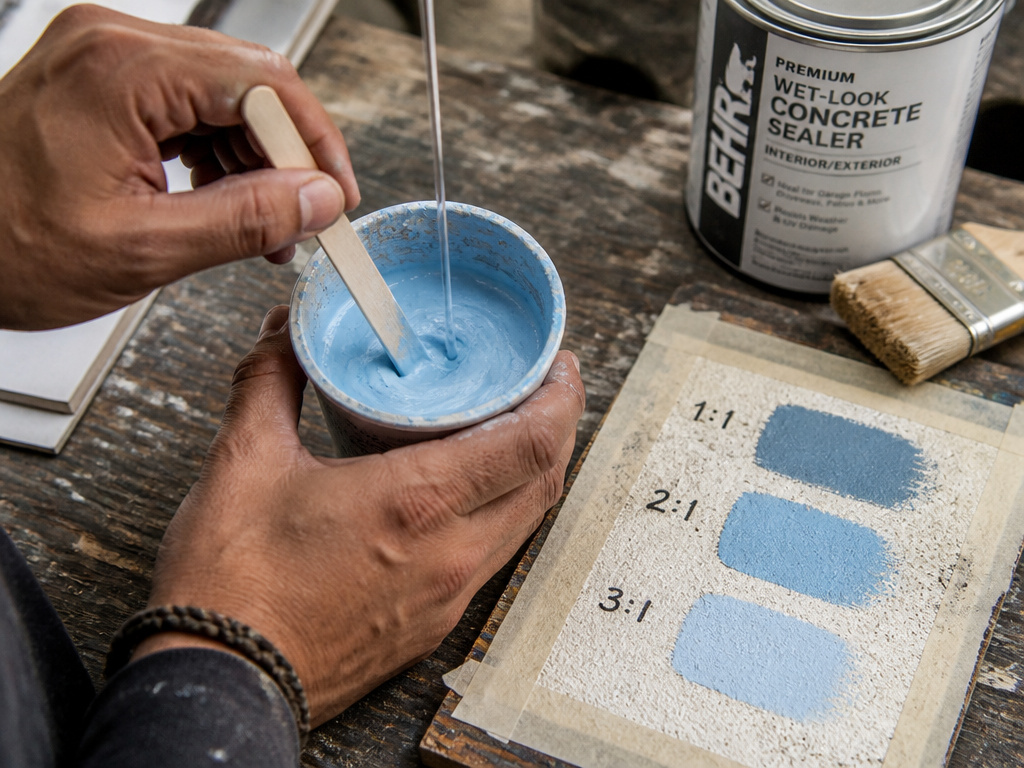
Golden’s data sheet allows thinning with water up to 10:1, ten parts water to one part paint, for color washes, while the Frankfort guide warns that more than a few drops harms longevity and SUR Quimica caps tap water at 20%. It also says a protective clear coating is recommended once you pass 1:1 or any time the work is exterior.
The Frankfort mural installation guide takes a stricter view: it warns that thinning acrylic with more than a few drops of water harms longevity, while Golden allows up to 10:1 for washes and SUR Quimica caps tap water at 20%.
SUR Quimica’s data sheet for Pintura Mural sits between them: if dilution is needed, don’t use more than 20% tap water, while Golden allows up to 10:1 for washes and Frankfort warns that more than a few drops harms longevity.
Three documents, three answers.
My read: the 10:1 figure is for washes and glazes, where you’re deliberately making transparent color, and Golden pairs it with a clear coat requirement. The Frankfort warning is about the same paint used as a straight topcoat. If you’re washing, thin it and plan to coat. If you’re covering, barely thin at all.
Thin for a wash, not for coverage. If the paint needs water to spread as a solid color, the wall prep is the actual problem.
I keep a scrap of the same wall material taped to my board and test the mix on it before it goes up. It’s quick and it has saved me from a bad ratio more than once.
50F to 90F, and What Happens Outside That Window
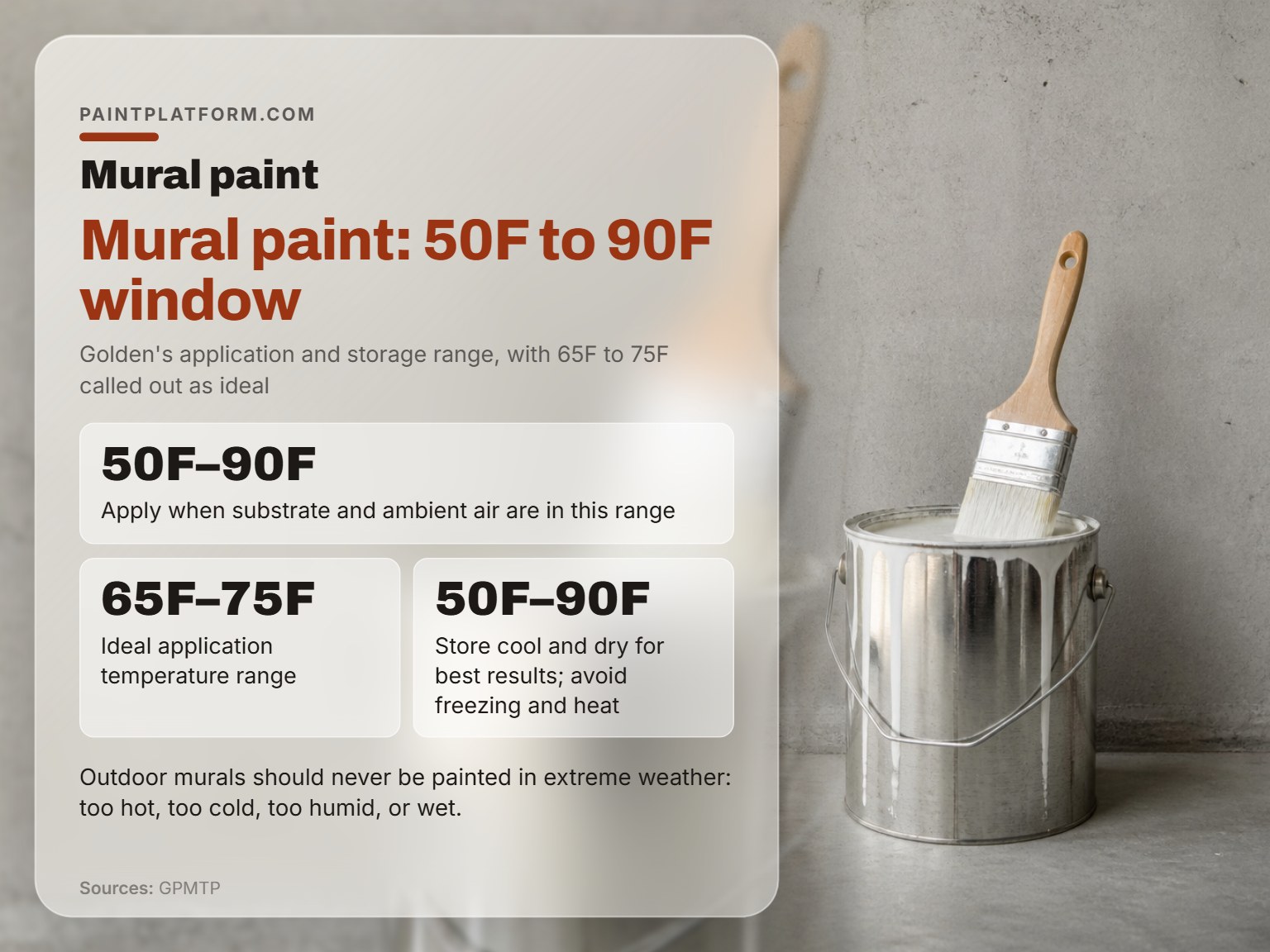
Golden’s data sheet gives one window for application: substrate and ambient air between 50F and 90F, with 65F to 75F called out as ideal. Storage is cool and dry, avoiding freezing and heat, with best results at 50F to 90F.
The Canadian Conservation Institute agrees in principle. Outdoor murals should never be painted in extreme weather, whether that’s too hot, too cold, too humid, or wet.
Cold paint is a different animal. CCI notes that outdoor murals should never be painted in extreme weather, whether too hot, too cold, too humid, or wet, which means a mural painted in a cold snap is outside the recommended conditions.
That’s normal for this chemistry and it fades as the film cures. What you don’t want is ammonia smell coming back off a wall that should be dry.
Allow 1 to 2 hours between coats. Coverage runs roughly 300 to 400 sq. Ft. Per gallon, though Golden is upfront that this depends heavily on application technique and substrate.
Worth knowing before you start: New concrete needs about 30 days to fully cure before paint goes on, per SUR Quimica’s data sheet. Painting a fresh pour early traps moisture under the film, and the paint lets go in sheets rather than flakes.
SUR also has a mildew protocol worth borrowing: apply an antifungal solution, let it sit about 20 minutes, then rinse and scrub.
Which Colors Fail Outdoors First?
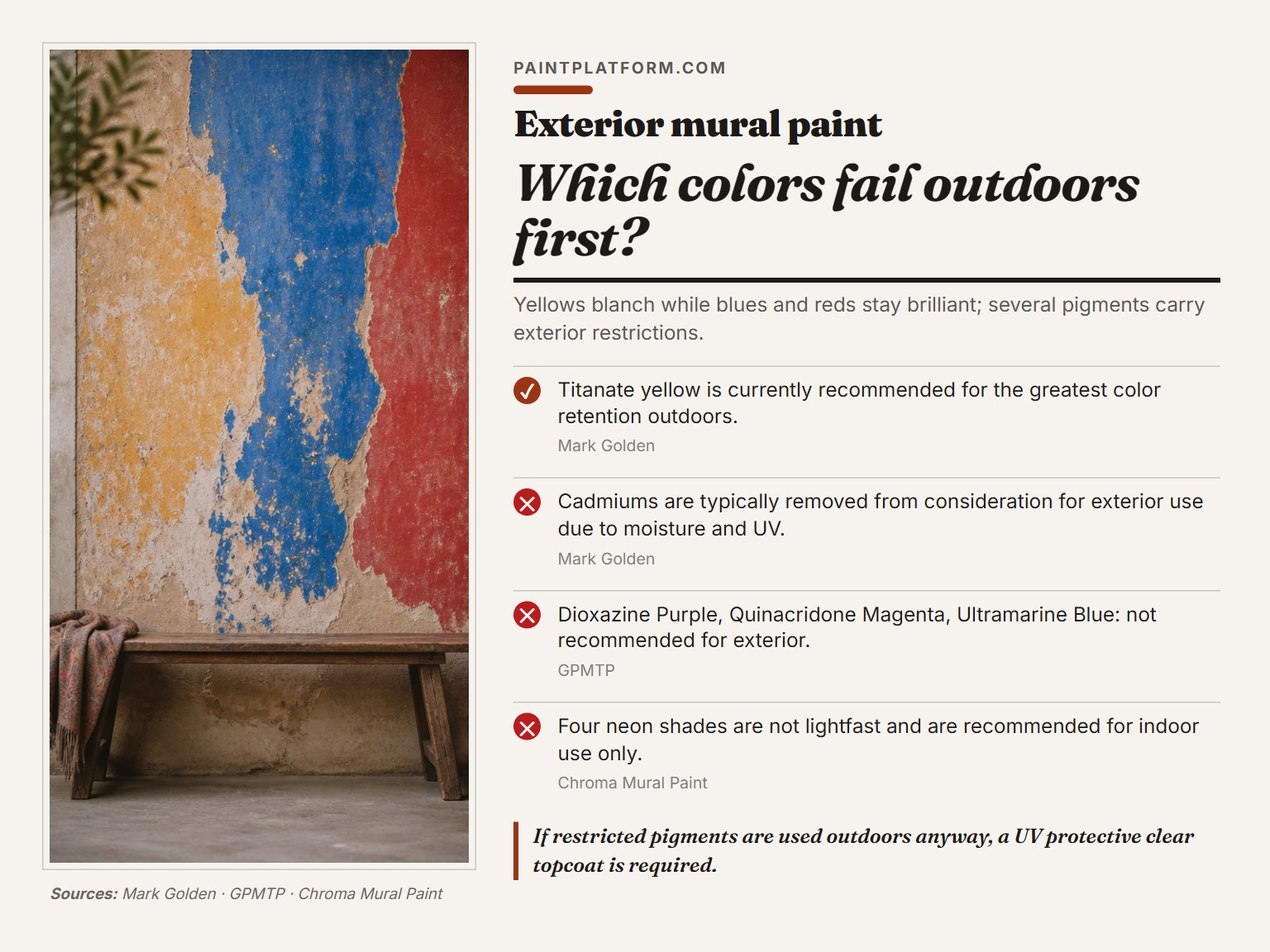
Yellow goes first. Not red, not blue.
Mark Golden’s technical paper on mural formulations is blunt about this. The Michlalah murals saw their yellows significantly blanch while the blues and reds stayed reasonably brilliant. The Michlalah murals’ yellows significantly blanched while the blues and reds remained reasonably brilliant, and no loss of material was reported.
That’s the pattern: the brightest, most saturated yellows go chalky while the deeper colors hold.
The current recommendation from Golden Artist Colors is titanate yellow for the greatest color retention outdoors. Cadmiums are typically removed from consideration for exterior use entirely, because of how they react to moisture and UV radiation.
Golden Paintworks’ own data sheet flags three more pigments with exterior restrictions. Dioxazine Purple, Quinacridone Magenta, and Ultramarine Blue are not recommended for exterior applications. If you use them outdoors anyway, a UV protective clear topcoat is required.
Chroma’s restrictions are simpler and stricter. Their four neon shades, Techno Yellow, Toxic Orange, Sizzling Pink, and Screaming Green, are not lightfast and are recommended for indoor use only. Metallic colors and the two Special FX shades carry the same indoor-only note.
So the exterior mural paint list gets shorter once you cut the pigments that fade. That’s not a knock on the paint. It’s how pigment chemistry works.
Clear Coats: The Manufacturer and the Peer Review Don’t Agree
No clean answer exists, and the sources are honest about it.
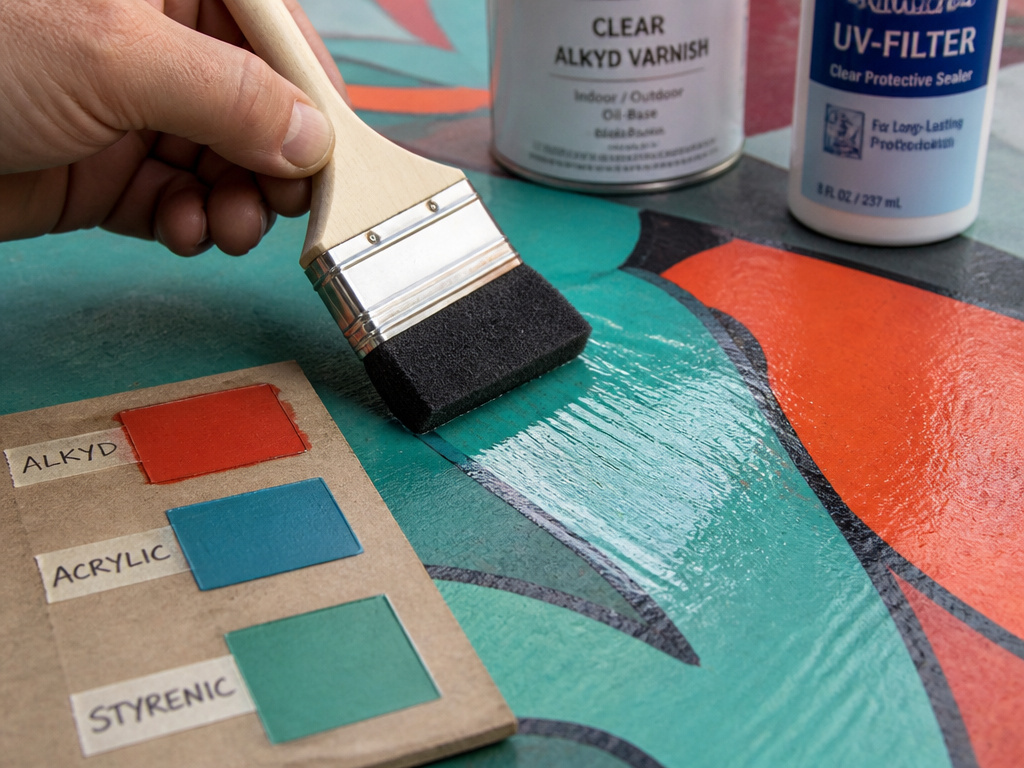
Golden recommends a protective clear coating for dilutions greater than 1:1 or any exterior application, and Chroma says to seal the surface before painting and varnish once cured, though a 2025 MDPI study found no specific and effective protection system appropriate for all commercial paints used by street artists.
The peer-reviewed side is more cautious. A 2025 study in MDPI Coatings tested five commercial protective coatings on alkyd, acrylic, and styrenic mock-ups. The conclusion: there is still no specific and effective protection system appropriate for all commercial paints used by street artists.
Two findings from that study are worth carrying into your own work. The underlying paint type dominates the final aesthetic result, and primer application materially affects how well any protection performs.
What Golden and Chroma Recommend
CCI also mentions automotive clear coats containing UV filters used successfully on murals on aluminum composite panels, and Soluvar as a coating Los Angeles mural groups have recommended.
What the 2025 MDPI Study Found
Five coatings, three paint chemistries, no universal winner. The study doesn’t say coatings are useless. It says the evidence doesn’t support one product as the answer for every paint.
I’d rather see a mural with a mediocre clear coat than none at all on a south-facing wall. The MDPI finding is real, and it means no product is guaranteed. That’s an argument for testing on a scrap first, not for skipping the coat.
CCI adds one more caution that applies to every product claim you’ll read. Accelerated ageing gives fast results but may not predict exactly how a paint will behave in the natural outdoor environment.
If you want the product-level detail, the outdoor mural sealer question has its own write-up, and the indoor mural protection side is simpler because UV isn’t doing the damage.
What About Oil, Enamel, and Alkyd Paint?
That one is contested, and three sources stake out three positions.
The Frankfort guide says oil and enamel are not recommended outdoors because the films are moisture-impermeable, so the wall can’t breathe and trapped moisture does the damage from behind, while Mark Golden’s paper points to saponification risk on fresh alkaline masonry and ArtsWA guidance lists oil among the most common and durable paints for public art.
Mark Golden’s paper points at a different failure: saponification risk when oils or alkyds go onto fresh alkaline masonry, and acrylics are preferred for exterior durability and adhesion to alkaline substrates, while the Frankfort guide says oil is not recommended outdoors and ArtsWA guidance lists oil among the most common and durable paints for public art.
Washington State Arts Commission guidance, cited in the research for this piece, lists oil among the most common and durable paints for public art, while the Frankfort guide says oil is not recommended outdoors and Mark Golden’s paper points to saponification risk on fresh alkaline masonry.
The Case Against Oil Outdoors
On masonry, the case is strong. Fresh concrete and brick are alkaline, and an alkyd film in contact with that surface can turn soft and soapy where it meets the wall. Once that happens the topcoat has nothing solid to hold onto.
The Case For It on Panels
On a properly primed panel, oil and alkyd have a documented history. The Norman Yates mural West and North at the University of Alberta, completed in 1987, consists of 202 four-by-eight-foot MDO plywood panels. The surface was first coated with two coats of alkyd primer, a slow-drying one then a fast-drying one, before a leafing aluminum layer went on.
That’s a specific system on a specific substrate. It doesn’t transfer to a bare brick wall.
Common mistake: Sealing a masonry wall with an oil or alkyd primer to lock it down. On fresh alkaline concrete or brick, the film can saponify where it touches the wall and turn soft and soapy under the topcoat.
For a beginner on masonry, acrylic is the safer bet. For a primed wood panel with a real primer schedule, oil has earned its place.
The Palette I’d Actually Start With
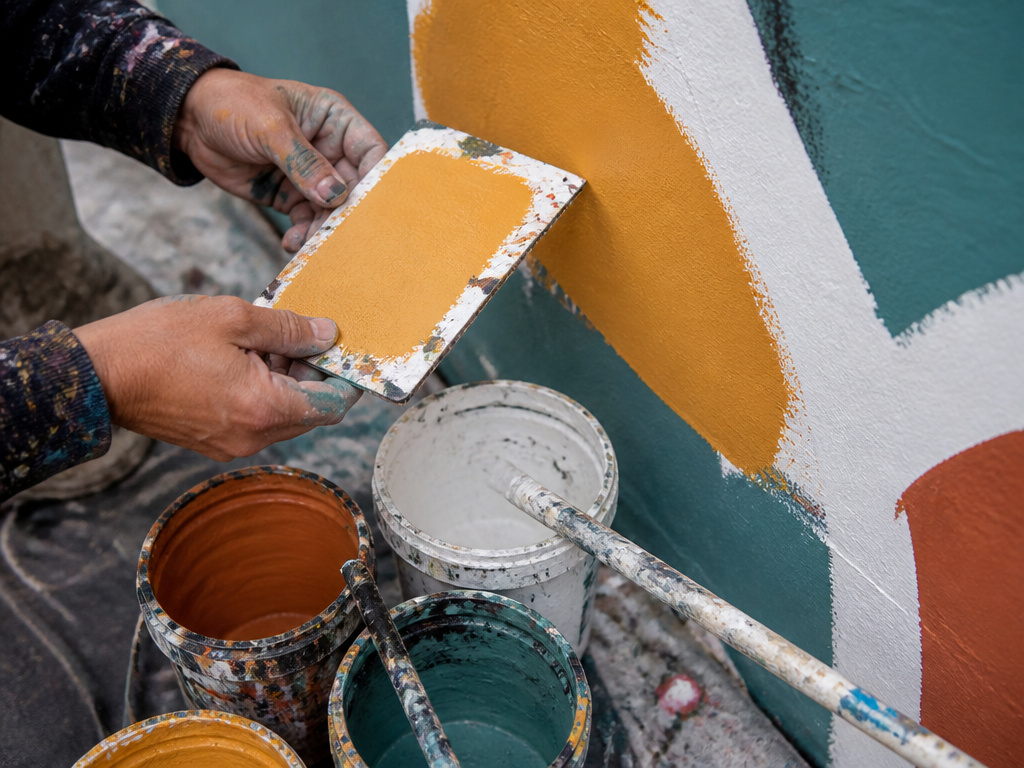
A wall, a bucket, and a Sunday. That’s how most first murals start.
Paint dries darker than it looks wet. I’ve had that catch me out enough times that I now mix a little lighter than I think I need and test a scrap before committing to a large area. It’s a small habit that saves a lot of repainting.
Start with a limited palette rather than a large set. A limited palette keeps a mural cohesive and forces you to mix rather than reach.
Golden vs Chroma vs SUR
Golden Paintworks vs Chroma Mural Paint: Golden wins on documented exterior specs. The ASTM D522 mandrel bend test was run on aluminum panels primed with alkyd primer, 10 mil of paint, at 72F and 45% relative humidity, and passed with no cracking. Golden also publishes its spray settings: a GRACO Mark V at 2,400 to 2,600 PSI with a 517 or 515 tip, and a 20% to 40% water reduction for HVLP.
Chroma wins on range and convenience for interior work, where all 37 colors and both Special FX shades are fair game. The Minis set contains 12 x 60ml colors.
SUR Quimica Pintura Mural is the one to look at if you want biocides built in. Its data sheet describes an acrylic resin base with enhanced weather and UV resistance plus high-quality biocides. SUR also specifies a white sealer coat diluted 20% to 25% with water for gypsum board before topcoating.
For the full outdoor mural paint spread, that comparison runs deeper than three brands.
If you want one answer: Golden Paintworks Mural & Theme Paints for anything that faces weather, and Chroma Mural Paint for an interior wall where you want the color range.
Frequently Asked Questions
Can I use regular house paint for a mural?
It depends who you ask, and both answers are defensible. The Canadian Conservation Institute calls high-quality acrylic latex house paint a popular choice for murals, though the shades come out dull. The Frankfort mural installation guide says to avoid retail-tinted house paint and use 100% artist-grade acrylic instead. If color vibrancy matters, go artist-grade.
Do I need to prime a wall before painting a mural?
Yes, and the prep matters more than the primer brand. The wall needs to be clean, dry, and free of loose material, with patches and repairs done first. SUR Quimica specifies a white sealer coat diluted 20% to 25% with water for gypsum board.
How long should mural paint dry between coats?
Golden’s data sheet says 1 to 2 hours between coats. That window assumes you’re inside the 50F to 90F application range.
What temperature is too cold for mural paint?
Below 50F is outside Golden’s stated application range. The Canadian Conservation Institute goes further and says outdoor murals should never be painted in extreme weather of any kind, whether hot, cold, humid, or wet. Below 50F is outside Golden’s stated application range, and the Canadian Conservation Institute says outdoor murals should never be painted in extreme weather of any kind, whether hot, cold, humid, or wet.
Can I thin mural paint with water?
It depends on the product and the purpose. Golden allows up to 10:1 water to paint for color washes, with a clear coat required above 1:1. SUR Quimica caps tap water at 20%. The Frankfort guide warns that more than a few drops harms longevity. Test on a scrap before you commit.
Will a clear coat make my mural last longer?
Probably, but nobody has proven it universally. A 2025 MDPI study tested five commercial protective coatings and concluded there’s still no specific and effective protection system appropriate for all commercial paints used by street artists. The underlying paint type and the primer matter as much as the coating.
Before You Go
Murals painted on old red clay brick walls are particularly prone to moisture/freeze-thaw damage, so fix the moisture before you buy paint. The Canadian Conservation Institute is unambiguous that moisture plus freeze/thaw is what kills murals, and no coating on the market reverses that.
Your first step this week is smaller than you think. Buy one bottle of the color you’re most worried about, paint a scrap of the actual wall material, and leave it outside to see how it holds up.
One concession: everything above assumes an exterior wall. Indoors, the UV and freeze/thaw sections mostly don’t apply, and the whole decision gets simpler.
