
Types of Paint Brushes for Artists: Hair, Shape, Handle
This post contains affiliate links. As an Amazon Associate, we earn from qualifying purchases.
The main types of paint brushes for artists split three ways: hair, shape, and handle. Hog bristle carries oils and heavy-body acrylics, sable and squirrel hold water for washes, and synthetic filament survives the scrubbing that fast-drying acrylics demand. Federal spec A-A-3193 pairs synthetic filament with water-borne paint and hog bristle with solvent-borne, though plenty of working artists cross that line.
That crossing point is where the types of paint brushes for artists question gets confusing. Jackson’s Art calls hog hair perfect for oils and heavy-body acrylics, then notes in the same paragraph that hog brushes lose longevity in water-based media because the bristles absorb water and swell. Both claims hold. The choice comes down to how long you want the brush to last against how much paint you want it to carry.
What follows walks through the four hair families, the shape and size numbers printed on a handle, handle length, and the care routine that keeps a head from going stiff. There’s also a 1992 recall in here, because it explains why brush specs exist at all.
Key Takeaways
- Hair type sets the job, not the price. Hog for oil and heavy-body acrylic, sable or squirrel for watercolor, synthetic where regular cleaning is brutal.
- A 1/2 inch flat is roughly equivalent to a #12 flat and 12 mm, per School Specialty, so the three labeling systems describe one brush.
- Store wood-handle brushes flat or hanging down. School Specialty warns that wetting handles causes cracking and loosening of the ferrules.
- Clear paint out of the ferrule every session. Isabey says residue encrusted there causes bristles to break.
- Skip the 24-piece set. One round and one flat, bought well, cover more ground than a box of shedding unknowns.
What Actually Separates a Good Brush From a Cheap One?
Four parts decide it: the tip, the belly, the ferrule, and the handle.
A brush is a pump with a metal collar. The tip takes paint in, the belly holds the reserve, and the ferrule keeps the whole head attached to something your hand can grip.
The tip is the slender extremity of a fine bristle or hair and the first point of paint absorption. Hog bristles carry multiple extremities because the tip divides into several sections. Fine hair carries a single extremity, which changes how much paint the brush loads and releases. A larger brush absorbs more material overall.
Isabey, the French brushmaker, describes the belly as the reserve that meters color out in a steady flow rather than dumping it. That description matches what your hand feels: a round releases paint evenly for a full stroke, and a bad one floods on contact.
Here is how the four parts break down:
- Tip: the entry point. Fine hair has one extremity, hog has several, and that difference decides load size.
- Belly: the reserve. It feeds paint out gradually, which is why a loaded brush paints a long line without reloading.
- Ferrule: the metal band. Isabey notes that paint encrusted here causes bristles to break.
- Handle: your distance from the work. Short for table work, long for the easel.
Isabey also states that every brush it makes is shaped during assembly with no cutting afterward, to preserve the natural qualities of the hair. Jackson’s Art points out that natural flags on hog bristle help a brush hold more paint, which is why the best hog is unbleached and unboiled rather than processed soft. A trimmed tip throws that away.
The Main Types of Paint Brushes for Artists, Sorted by Hair
Hair does most of the work in this decision.
Hog Bristle: Stiff, Split, and Built for Oil
Hog bristle is stiff, split at the tip, and carries heavy paint. Jackson’s Art describes the best hog as unbleached and unboiled, sourced from Chunking or Chinese hog, with the natural curl dressed inward toward the tip.
Individual hairs break under heavy use. A worn hog brush splays into a fan, and the tips turn chalky where the flags have snapped off. That is not a disaster for oil painters. Jackson’s notes that a worn bristle brush still earns its place for gestural marks and blending.
Sable, Squirrel, and the Spring Question
Sable has spring. Squirrel doesn’t, and it drinks water. Jackson’s Art draws that line plainly: sable offers spring, squirrel lacks it. Goat hair sits between them, with more body and resilience than squirrel but less snap than sable or synthetic.
Pony hair is the cheap end of the natural range, and it turns up in mixed-hair and starter brushes.
Goat, Pony, and the Camel Hair Label
Camel hair deserves a warning. Federal spec A-A-3191 lists Camel Hair as its own class, Class 4, requiring hair that is thoroughly sterilized and set to a single tapered point. Yet the Grumbacher recall records brushes marked CAMEL HAIR KOREA sold alongside separate OX and SABLE lines, which makes camel hair look like a trade label more than a species.
Treat the word as a marketing term until the maker says otherwise.
Synthetic Filament: The Practical Default
School Specialty lists synthetic head filaments as nylon, Sabletwin, Bristilina, and Konex. Jackson’s Art recommends synthetic fibers for acrylics because acrylic dries fast and cleaning partially dried paint is harsh on brushes.
Modern synthetic fibers are designed to mimic the performance of natural hair, which is where their color and water holding ability comes from.
Where this goes sideways: Scrubbing the brush on the canvas drives paint up into the ferrule. Jackson’s Art notes that the base of the tuft goes stiff while only the tip stays flexible, and those painters end up replacing brushes more often.
So Which Hair for Which Paint?
Here is where the sources genuinely split, and you should see both positions rather than a tidy rule.
| Source | Position on hog bristle for water-borne paint |
|---|---|
| A-A-3193 (GSA) | Hog bristle is for solvent-borne paint; synthetic filament is for water-borne. |
| Jackson’s Art | Hog suits oils and heavy-body acrylics, but loses longevity in water-based media. |
| School Specialty | Lists hog among natural head filaments with no medium restriction. |
Both positions survive contact with a canvas. Hog works with acrylic if you accept a shorter working life, because the bristles swell with water and the tips soften. Synthetic works with acrylic if you want the brush to outlast the painting.
My read: synthetic wins for acrylic you clean on a schedule, hog wins for acrylic you want texture from. For oils, hog or a stiff synthetic. For watercolor, sable if the budget allows, squirrel for a mop, synthetic for volume. If you want the longer version of this argument, there’s a full breakdown of natural vs synthetic brush hair worth reading before you spend.
A Size 10 Is 29 by 24 mm, and Other Numbers Worth Knowing
Federal spec A-A-3193 Type 1 (Oval) size 10 measures 29 mm wide with a 24 mm bristle length outside the ferrule.
That is a real, published number, and almost nobody quotes it. Here is the Type 1 oval run:
| A-A-3193 Type 1 (Oval) size | Width x bristle length (mm) |
|---|---|
| 6 | 22 x 18 |
| 8 | 25 x 21 |
| 10 | 29 x 24 |
| 12 | 32 x 27 |
Those figures govern brushes bought under that federal contract. They don’t bind a French brushmaker or a hobby line, so treat them as a reference point rather than a universal law.
Three labeling systems describe the same object. School Specialty states that a 1/2 inch flat brush is roughly equivalent to a 12 mm or a #12 flat. Inches, millimeters, and a bare number, all pointing at one head.
House painting lives in a different universe with the same vocabulary. Benjamin Moore states that paintbrushes generally come in sizes from 1 to 6 inches wide, with a 4 to 6 inch flat sash brush for siding and decking, a 3 to 4 inch flat for walls and doors, and a 1 to 2.5 inch angle sash for trim and molding. Useful if you’re painting a door. Irrelevant to a size 8 filbert.
There’s a catch the standards themselves admit. ASTM D5301 notes that a single brush may combine several chemically different filaments in several cross-sections, thicknesses, and lengths. The label on the handle describes an average, not a guarantee. The ASTM D5301 paint brush standard also states plainly that the practice is not a definitive analytical method for deformulating a brush.
If you want the consumer-facing version of this, the brush size guide covers how the numbers map to actual marks on paper.
Handle Length: Three Sources, Three Answers
Long handles get sold as oil brushes in most shops. Isabey says both handle lengths work for oils and acrylics depending on the artist’s preference, while Jackson’s Art says long-handled brushes are most often used for oil and acrylic.
Three sources, three positions:
- Isabey: short handles for watercolor precision and table work, either length for acrylics and oils, long handles mainly for easel work at a distance.
- Jackson’s Art: long-handled brushes are most often used for oil and acrylic, letting you work at arm’s length and see the whole composition.
- School Specialty: long or easel handles for oil and acrylic at an easel, short handles usually for craft brushes or children’s brushes.
None of them contradict each other on the physics. They disagree on who the default buyer is.
Handle length follows your elbow, not your medium. Stand at an easel and you want the long handle. Sit at a table with your wrist on the page and the short one gives you control.
For watercolor specifically, Isabey recommends a short handle for precision work and table work, though other sources treat handle length as a matter of medium and detail level. If you paint standing up, that changes. The watercolor brushes most people end up with are short-handled rounds for exactly this reason.
How Do You Keep a Brush From Dying Young?
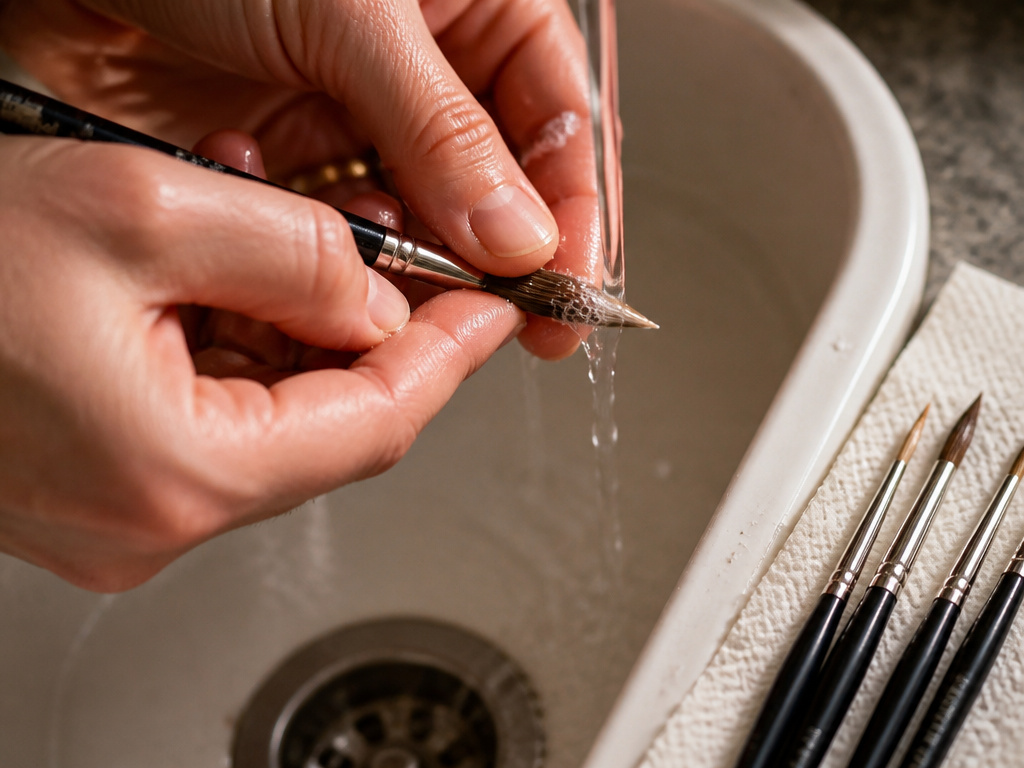
Ever pulled a brush out of the jar and found the tip bent into a hook?
That hook is water that wicked past the crimping and swelled the hairs into a set position. School Specialty is direct about the cause: wetting handles causes cracking and loosening of the ferrules, so the water line should only reach the crimping.
Before you start: Solvent-based paint and medium need ventilation, and oil residue shouldn’t go down a household drain. Lead is the older hazard in this craft. Handle coatings on 332,761 Grumbacher brushes exceeded the 0.06 percent lead limit by weight in 1992, so treat any unmarked vintage brush with a chipped painted handle as suspect.
The routine that actually keeps a head alive:
- Rinse the head before the paint sets. School Specialty warns that acrylic dried in the hairs may ruin the brush and permanently damage them.
- Lather up to the ferrule, not past it. Isabey says residue encrusted in the ferrule causes bristles to break.
- Keep the water line at the crimping. Soaking a handle cracks it and loosens the ferrule.
- Reshape the tip with your fingers. A head that dries out of shape sets that way.
- Dry flat or hanging down. School Specialty advises wood-handle brushes always be stored flat or hanging down so water can’t soak into the handle.
I stopped standing brushes tip-down in the jar after a round brush curled into a hook. Water wicks into the ferrule, the hairs stay bent, and no amount of reshaping brings the point back. Rinse, reshape, lay it flat.
I got burned enough by hardened bristles that I now rinse the moment I stop painting. A quick rinse at the sink right then keeps a brush useful, and the alternative is a jar of stiff relics.
Two more habits worth stealing. School Specialty suggests dipping natural hair brushes in liquid hand or dish soap, wiping the excess, reshaping the head, and letting them dry before long storage, which seals the hairs and keeps mites out. It also warns against cramped storage where hairs get bent out of shape and break.
The 1992 Recall That Explains Why Brush Specs Exist

The U.S. Consumer Product Safety Commission announced that M. Grumbacher, Inc. Was voluntarily recalling about 332,761 artists’ paint brushes because the paint on the wooden handles contained excess lead.
Read the details and the whole idea of a brush spec stops looking academic. The brushes sold in art and craft supply stores and in Army, Air Force, and Navy exchanges from January 1990 to January 1992, and they were imported from Korea and Sri Lanka.
Grumbacher ran its own independent laboratory tests to verify supplier claims that the brushes contained no lead or other heavy metals. The tests contradicted the suppliers. The handle coating lead exceeded the allowable limit of 0.06 percent by weight.
The recalled stock included three SKUs: 1140C, a five-brush utility set; 1141C, a three-brush hobby and ceramic set; and 114D, a 144-brush countertop display. The 114D display held only the No. 2 green, No. 3 blue, No. 4 yellow, and No. 5 red brushes, all marked CAMEL HAIR KOREA. Individually sold brushes included M. Grumbacher SABLE KOREA sizes 0, 2, 4, 2/0, and 3/0 on a yellow round handle, CAMEL KOREA sizes 4, 5, and 6 on a red round handle, and OX KOREA sizes 3/8, 1/2, and 1/4 on a green flat handle.
Neither the CPSC nor Grumbacher was aware of any health problems involving the brushes at the time. Consumers were urged to discontinue use and return them to the retailer for a full refund. The Grumbacher artists’ paint brush recall notice is still public and still worth a read if you buy vintage stock.
Easy to miss: The regulated failure was the paint on the handle, not the bristle. A brush can pass every hair spec on the shelf and still fail a lead limit, and the coating is the part nobody tests at home.
What to Buy First, and What to Skip
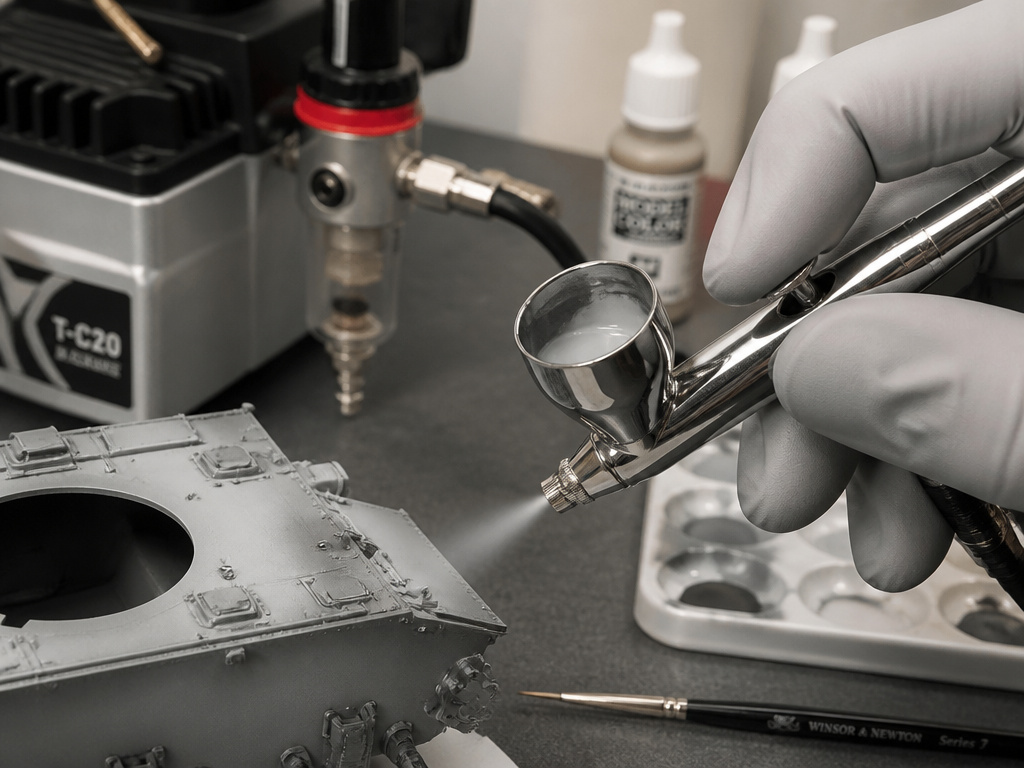
Buy two brushes, not twenty-four.
I used to buy the big sets with dozens of heads in them. Most shed hairs straight into the paint, lost their shape quickly, and taught me nothing except that volume is not the same as range. Now I keep a small handful of good brushes and look after them.
For a first watercolor round, a student-grade synthetic is the sensible starting point: consistent from brush to brush, and forgiving enough that you’ll actually use it. For acrylics, a synthetic round holds a point through scrubbing, and the synthetic filament shrugs off the fast drying time that wrecks natural hair. A synthetic is what I’d point a watercolor painter toward once they know they’ll keep going.
At the soft end, Isabey’s squirrel rounds are the mop of the drawer: thirsty, short on snap, and exactly what a wash wants. That lack of spring is a feature when you’re laying a flat field of color, and a nuisance when you’re signing your name.
What to skip:
- Any kit with more than a dozen brushes in it. The extras are filler, and filler sheds.
- Natural sable for a beginner. A synthetic handles the learning curve, and you won’t be afraid to wreck it.
- Brushes sold without a stated hair type. If the package won’t say what’s in the head, it’s hiding something.
- Bargain multi-packs of rounds. Four identical rounds is one brush with three spares.
Try it on a scrap first. Buy one round and one flat, paint three pages with them, and add a third brush only when you can name the specific thing the first two can’t do.
The Bottom Line
Here’s the trigger I’d use: if a brush keeps shedding hairs onto your paper, it’s finished. Retire it to the texture jar and stop fighting it. Shedding is the one fault you can’t fix with better care.
One concession. If you paint large canvases with heavy acrylic, one round and one flat won’t cover the square footage, and you’ll want a wide flat and a mop alongside them. The two-brush rule is for people learning, not for people covering a wall.
And a stance I’ll defend: I’d rather see a beginner with one scruffy synthetic round they’re not afraid to abuse than a full set they keep in the box for good. Brushes get better with use and worse with reverence. Start messy, refine later.
Frequently Asked Questions
Do I need natural hair brushes to paint well?
No. Synthetic filament handles acrylic, watercolor, and most oils without the upkeep natural hair demands. Jackson’s Art recommends synthetic fibers for acrylics precisely because acrylic dries fast and cleaning partially dried paint is harsh on brushes. Natural hair earns its place at the soft end, for washes and glazing, not as a requirement.
What does the number on a brush handle mean?
It’s a size designation, and it varies by system. School Specialty states a 1/2 inch flat is roughly a 12 mm or a #12 flat, so inches, millimeters, and bare numbers can all describe the same head. Federal spec A-A-3193 fixes exact dimensions for its own oval sizes, with size 10 at 29 by 24 mm.
Can I use one brush for both oil and acrylic?
You can, but the brush pays for it. Hog bristles absorb water and swell in water-based media, which Jackson’s Art notes reduces their longevity. A synthetic filament handles both without swelling, though solvent-based paint is harder on any fiber over time. If you switch, clean thoroughly between media.
Why do my brush tips bend into a hook?
Water wicked past the ferrule crimping and the hairs dried in a set position. School Specialty warns that wetting handles causes cracking and loosening of the ferrules, and advises storing wood-handle brushes flat or hanging down. Once a hook sets, reshaping won’t bring the point back.
Is camel hair a real animal hair?
It’s listed as one. Federal spec A-A-3191 includes Camel Hair as Class 4. But the Grumbacher recall shows brushes marked CAMEL HAIR KOREA sold alongside separate OX and SABLE lines, which suggests the label functions as a trade name. Ask the maker before you assume a species.
How often should I clean my brushes?
After every session, without exception. School Specialty advises cleaning immediately after painting and never letting paint sit or dry in the hairs. A deeper clean with regular hand soap now and then helps, and natural hair brushes benefit from an occasional brush conditioner to stop the hairs drying out and breaking.
