
How to Remove Crayon From Painted Walls: What Works
This post contains affiliate links. As an Amazon Associate, we earn from qualifying purchases.
To remove crayon from painted walls, lift the wax before you wipe: scrape the bulk off with the dull edge of a plastic card, then wash with a mild solution matched to your paint finish. Crayon is a wax stain plus a dye stain, so a wet sponge alone just pushes it around.
That split between wax and dye is why the how to remove crayon from painted walls advice online argues with itself. One source melts the wax with a hairdryer, another says heat damages the paint, and both are describing real behavior of the same material.
What follows is the order that actually works, the dilution Simple Green publishes, and the three places where the sources genuinely disagree, so you can pick a side on your own wall instead of guessing.
Key Takeaways
- Scrape the wax before any liquid touches the wall. A plastic card edge lifts the bulk and stops you rubbing pigment deeper into the texture.
- Match the solution to the finish, not to the stain. Flat paint punishes abrasion; semi-gloss tolerates it.
- Simple Green’s published ratio is 1 ounce per 2 cups of water, or 1 ounce per 4 cups for lighter marks.
- Sources disagree on heat and mayonnaise. Simple Green warns both can damage paint; The Spruce and The Cleaning Authority still recommend them.
- Stop the second the mark is gone. Extra passes take paint with them.
Why Crayon Is Two Stains Wearing One Coat
The University of Georgia Extension states it plainly: crayon removal means taking out a wax and grease stain as well as a dye stain. That one line explains why a plain wet rag smears instead of cleaning.
Crayon deposits two things on a wall: a waxy film that bonds to the paint surface and a pigment that can sink into it. Solvents and mild detergents attack the wax. Abrasion lifts wax and pigment together, but it also removes paint, which is why the finish type decides the method.
Fresh wax sits on top of the paint and comes away in soft greasy curls under a card edge. Wax that has been on the wall for weeks goes hard and slightly matte, and it needs moisture to move at all.
That difference matters more than brand choice. A mark from this morning is a two-minute job. A mark from last summer is a job where you decide between a mild solvent and a touch-up pot.
The Spruce makes the same point from a different angle, noting that crayon stains are oil-based and need a cleaner that cuts oil. Water alone won’t do it.
Scrape First, Wipe Second: The Plastic Card Trick
A mark that landed this morning lifts in one pass. The one from three weeks ago has gone hard and flat and fights you the whole way.
The UGA Extension crayon stain removal guide specifies the dull edge of a plastic credit card, worked gently so the surface doesn’t scratch. The Cleaning Authority suggests a plastic scraper or a butter knife. Both picks aim at the same thing: a tool softer than the paint.
I keep an expired gift card in the cleaning caddy for exactly this. It flexes against baseboard trim and it has never scratched a wall.
- Scrape with the card held at a shallow angle. Skip this and the wet cloth smears wax into the paint texture, turning a small scribble into a wide gray shadow.
- Brush the flakes onto the floor with a dry cloth. Loose wax crumbs turn to paste the moment water touches them, and paste is harder to lift than flakes.
- Wipe with a damp sponge and a mild solution, working in light circles rather than back and forth.
- Rinse with clean water and a second cloth. Leftover cleaner dries into a faint film that catches light at an angle.
- Let the wall dry completely before you judge it. Damp paint reads darker than dry paint, and a mark that looks gone while wet can reappear.
Common mistake: Wetting the wall before scraping. The crumbs turn to paste, and you’ll chase the smear across a foot of wall before it lifts.
The order is the same one that works when you clean painted walls for any other reason: dry first, damp second, dry again.
How to Remove Crayon From Painted Walls With Simple Green
Simple Green publishes an exact dilution, which is more than most sources bother to do: 1 ounce of All-Purpose Cleaner to 2 cups of water for standard crayon jobs, and 1 ounce to 4 cups for lighter marks.
The rest of the manufacturer’s sequence:
- Spot test a hidden area first. Simple Green says this outright, and so does The Spruce. A patch behind a door costs nothing.
- Spray and let it sit for a full minute. The dwell time is what softens the wax. A quick wipe does nothing but wet the surface.
- Scrub gently with a soft bristle brush or sponge if the mark is still holding on.
- Wipe with a damp cloth or damp paper towels, then dry the wall.
- Buff oil-based gloss or semi-gloss with a clean, non-abrasive cloth for a streak-free finish. Simple Green notes this step isn’t needed on latex.
Soap, Detergent, or Washing Soda?
Here is where the sources split cleanly. UGA specifies Washing Soda or detergent and says explicitly not soap. Crayola recommends warm water plus liquid dish soap, and The Cleaning Authority says the same thing.
Both camps want the same chemistry: something that lifts oil. Detergent is built for that job. Soap can leave a film that holds pigment against the paint. If your wall is washable and you have liquid dish soap on hand, a drop of liquid dish soap in warm water handles a light mark fine. For a stubborn one, follow UGA and reach for detergent.
If you would rather buy than mix, a mild grease-cutting household spray fills the same slot, and there are painted wall cleaners formulated for this exact job.
Either way, keep the solution mild. Simple Green’s own guidance is to use a non-abrasive cleaner on painted walls so it won’t discolor or diminish the paint.
What Paint Finish Are You Actually Cleaning?
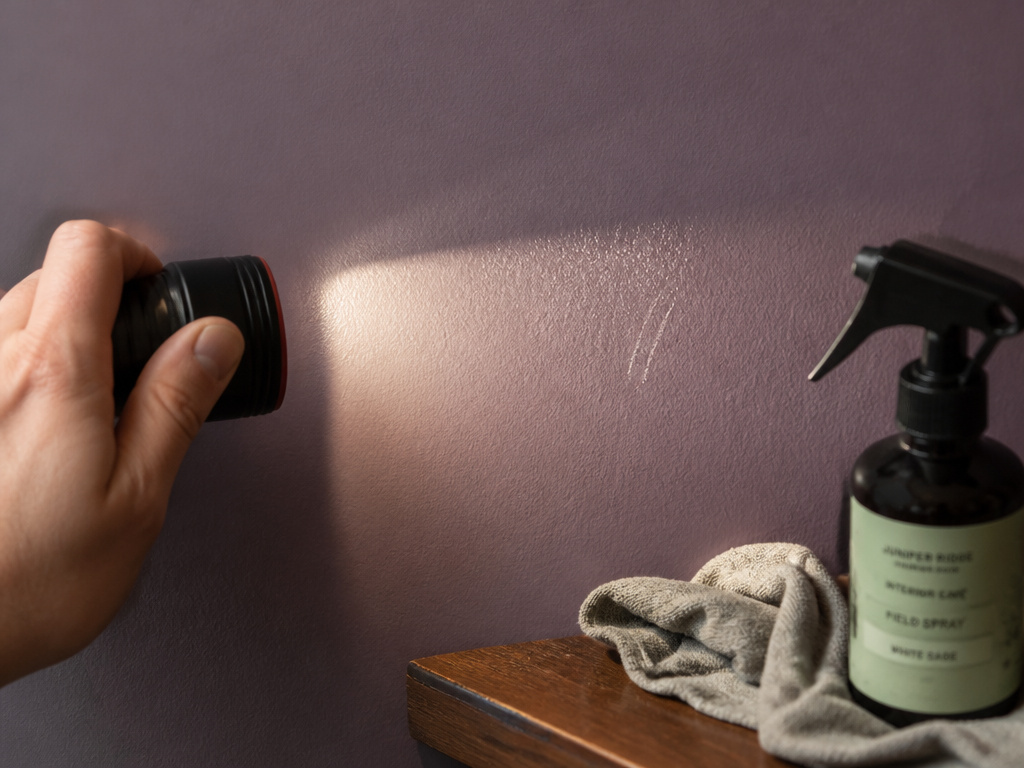
Check the sheen before you pick a method, because finish decides which tools are safe. Look at the wall from a low angle with a lamp on: flat paint goes velvety and even, while semi-gloss throws a soft band of light.
I took a palm-sized patch of sheen off a flat hallway wall once by scrubbing a scuff that would have come off with a dab. It showed from the doorway for two years until I repainted. Now I dab, wipe lightly, and stop after a few passes.
| Finish | Safest first move | Avoid |
|---|---|---|
| Flat or matte | Dry scrape, then dab with mild solution | Abrasive sponges, hard scrubbing |
| Satin | Soft sponge and mild solution | Long dwell times |
| Semi-gloss | Mild solution, then dry-cloth buff | Abrasive pads |
| High-gloss | Abrasive sponge is acceptable per The Spruce | Pressure on one spot |
Walls coated in a washable paint forgive more than builder-grade flat, and the washable paint for interior walls guide covers which sheens actually survive scrubbing.
One more disagreement worth knowing. UGA recommends rubbing a Crayerase bar, a mildly abrasive commercial block sold at hardware and wallpaper stores, over marks on flat or glossy painted surfaces, then sponging with hot water to kill any shine. Simple Green’s rule runs the other direction: use a non-abrasive solution so the paint isn’t discolored. UGA recommends a Crayerase bar on flat or glossy painted surfaces, while Simple Green advises a non-abrasive solution and The Spruce warns that abrasive methods strip flat paint, so the choice depends on the finish.
Where this goes sideways: Scrubbing a flat wall hard. Flat paint has no sheen to protect, so the film itself comes off, and by the time you finish the second pass the patch is drying a shade lighter than the wall around it.
Does a Magic Eraser Ruin Flat Paint?
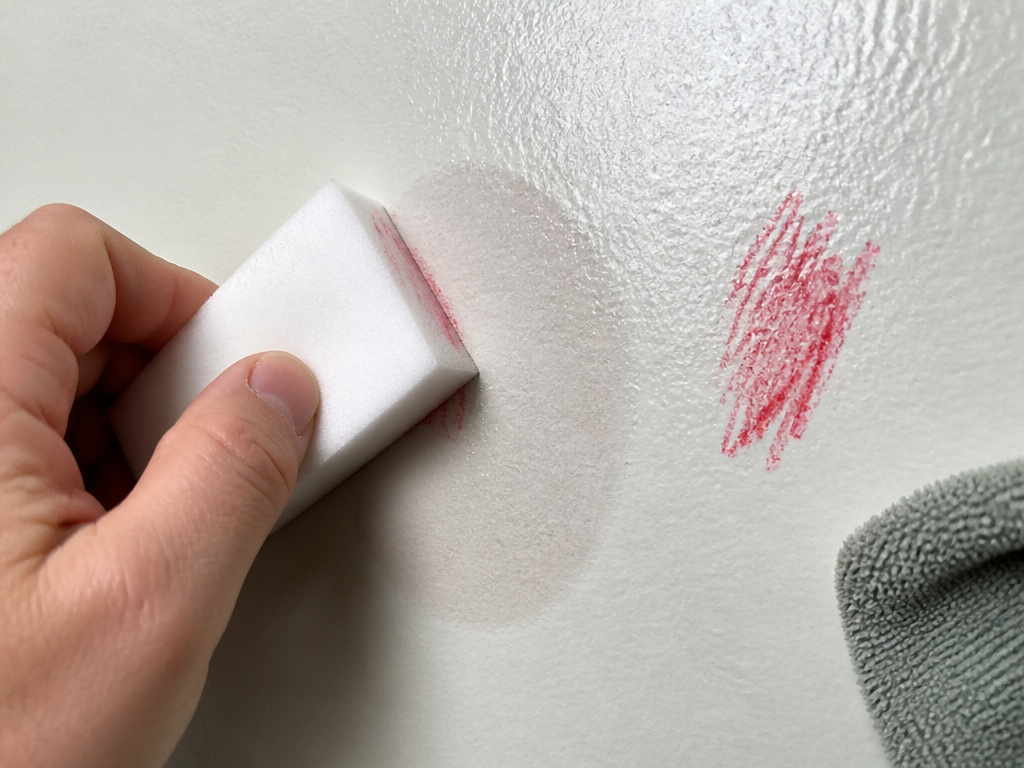
Crayola lists Mr. Clean Magic Eraser as an acceptable alternative for crayon on painted walls, used per the manufacturer’s direction. The Spruce says it will strip flat paint and limits it to satin and high-gloss finishes. Same sponge, opposite verdicts, and the finish is what separates them.
My own test settled it. A magic-eraser-style sponge took a crayon scribble off a semi-gloss wall in a couple of passes, and it took the sheen with it. The dull oval was visible from across the room.
I keep a magic eraser for semi-gloss doors and trim and I don’t touch flat walls with one. The mark comes off, sure, and so does the finish, in a dull patch that no amount of buffing brings back.
For anything short of a tough finish, a damp sponge and a mild solution is the safer first move. If the crayon is gone but the wall looks hazy, treat it the way you’d treat scuff marks and dab rather than scrub.
Simple Green, a mild grease-cutting spray, and a bottle of liquid dish soap cover almost everything on this list. The wall cleaners for painted walls worth owning are the mild ones.
Hairdryer, Mayonnaise, and the Remedies the Sources Fight Over
Two remedies, two sets of sources, opposite verdicts. Both are popular enough to fill the first page of results, and both carry a manufacturer warning.
| Method | Recommended by | Warned against by | Notes |
|---|---|---|---|
| Hairdryer, highest heat, lowest fan | The Cleaning Authority | Simple Green | Melts wax; heat is the risk |
| Mayonnaise | The Spruce | Simple Green | Oil lifts wax; oil can stain |
| Baking soda paste | The Spruce | No source in this set | Grainy paste for dried marks |
| Crayerase bar | UGA Extension | Simple Green (non-abrasive rule) | Sold at hardware stores |
Simple Green’s wording is blunt. It calls hair-dryer and mayonnaise methods things that “can actually damage the paint or the wall itself.” The Spruce takes the opposite view on mayonnaise, arguing the oil content works against the wax to lift marks. The Cleaning Authority goes the other way on heat, recommending the highest heat and lowest fan setting with a paper towel ready.
How do you choose? The Cleaning Authority and The Spruce say heat and oil can soften wax, while Simple Green warns that hairdryer and mayonnaise methods can damage the paint or the wall itself. Both can also carry the paint film with them on a wall that is old, chalky, or poorly bonded. Test on a hidden patch and watch what the paint does, not what the crayon does.
Pick the mildest method your finish will tolerate, test it somewhere hidden, and stop the moment the mark lifts. Every method on this page works. The damage comes from the second and third pass.
Frequently Asked Questions
Does dish soap really remove crayon from painted walls?
For light, fresh marks, yes. Crayola and The Cleaning Authority both recommend warm water with liquid dish soap worked in gentle circles. UGA’s guidance says detergent rather than soap for the same job. On a washable finish either will lift a light mark; for a dried one, start with detergent.
Is a magic eraser safe on flat paint?
The Spruce says no, and gives a clear reason: it strips the paint along with the crayon. Crayola lists Mr. Clean Magic Eraser as an acceptable alternative without limiting it by finish. On flat or matte walls, follow The Spruce and use a mild solution instead.
Can I use a hairdryer to melt crayon off a wall?
The Cleaning Authority says yes, on the highest heat and lowest fan setting, wiping the melted wax with a paper towel. Simple Green warns that hairdryer and mayonnaise methods can damage the paint or the wall. Heat is the variable. The Cleaning Authority says hairdryer heat can work on sound, well-bonded paint, while Simple Green warns it can damage the paint or the wall itself.
What if the crayon has been on the wall for months?
Wax that has cured goes hard and matte and resists a plain damp cloth. Scrape first, then give the solution its full minute of dwell time. If two passes don’t move it, stop and plan a touch-up rather than scrubbing harder.
Do I need to repaint after removing crayon?
Usually not. On satin, semi-gloss, and high-gloss finishes, a mild solution and a light hand leave no trace. Flat paint is the exception, because any abrasion shows up as a change in sheen rather than a change in color.
The Bottom Line
Here is the trigger worth remembering: if a mark survives two passes with a mild solution on the right finish, stop cleaning and start planning a touch-up. A third pass rarely lifts the crayon and almost always takes paint.
That is the part I wish someone had told me before I scrubbed a flat hallway wall into a shiny patch. The crayon came off in about four seconds. The sheen never came back.
For most walls, how to remove crayon from painted walls comes down to an order rather than a product: scrape dry, dab mild, rinse, dry fully, then check the wall from an angle before you call it done.
One concession. If your walls are flat builder-grade paint and the marks are old and heavy, no method here will leave the wall looking untouched. The honest answer in that case is a small touch-up in the same sheen, not a stronger cleaner.
