
How to Paint a Refrigerator: Step-by-Step (No Peeling)
This post contains affiliate links. As an Amazon Associate, we earn from qualifying purchases.
To paint a refrigerator, scuff the factory finish, mask the door seals, and apply two thin coats of appliance paint. Rust-Oleum Appliance Paint rolls on with a soft brush or short-pile mohair roller, four hours between coats. Krylon Appliance Epoxy sprays from 6 to 8 inches and dries to the touch in 30 minutes.
Rust-Oleum says to abrade with fine-grade abrasive paper and to test the paint on an inconspicuous area before you commit, while GE gives no do-it-yourself painting suggestions beyond following the label and suggests touch-up paint only for small areas. Skip either and the coating lifts along the door edge, starting at a corner you’ll notice every time you walk past.
What follows covers which appliances are fair game, the prep order that holds up, spray versus roll-on, and the how to paint a refrigerator topcoat argument the manufacturers don’t agree on.
Key Takeaways
- Prep decides whether this lasts. Rust-Oleum calls for fine-grade abrasive paper and a test spot before you open a full can.
- Krylon Appliance Epoxy dries to the touch in 30 minutes, but you handle it after 24 hours. Two different clocks.
- Rust-Oleum wants two coats, four hours apart. One heavy coat is how you get runs and a soft finish.
- Ranges and cooktops are off the list. GE says the porcelain enamel cracks and peels once heat hits a painted surface.
- GE sells no touch-up paint for Stainless, CleanSteel, or Black Stainless. LG only sells touch-up for Black, White, and Titanium.
Which Appliances Can Actually Be Repainted?
GE publishes a paintable-surface chart, and a refrigerator gets the widest permission on it: any surface.
GE Appliances lists a refrigerator and a freezer as paintable on any surface. A dishwasher is limited to the door panel, a washer to the top and lid, and a built-in oven to the outer door panel. Ranges and cooktops are excluded because baked-on porcelain enamel cracks and peels under heat.
That’s more latitude than most people expect. It comes with a caveat GE states plainly: it doesn’t give do-it-yourself painting suggestions beyond following the instructions on the tube or spray can.
| Appliance | Surface GE lists as paintable |
|---|---|
| Refrigerator | Any surface |
| Freezer | Any surface |
| Dishwasher | Door panel only |
| Washer | Top and lid |
| Ranges and cooktops | Outer storage drawer and sides |
| Built-in ovens | Outer oven door panel |
Read that chart before you buy anything. GE’s paintable-surface table lists Dishwasher as door panel only. GE’s paintable-surface table lists Refrigerator as ‘Any surface’.
The chart is also why this how to paint a refrigerator article stays on refrigerators and freezers. Everything else on that list has a smaller paintable footprint and its own failure modes.
What Prep Actually Matters Before the First Coat
Prep decides this job.
Rust-Oleum’s instructions are short. Abrade the surface with fine-grade abrasive paper, mask handles and door seals, and test the paint on an inconspicuous area. Krylon’s page adds the setup: remove the contents, unplug the fridge, and move it slightly away from the wall or other furniture.
Here’s what that looks like in practice:
- Fine-grade abrasive paper, enough to dull the whole door
- Painter’s tape for handles, seals, and trim
- A drop cloth or tarp, laid flat in a well-ventilated space
- Rust-Oleum Appliance Paint if you’re rolling, Krylon Appliance Epoxy if you’re spraying
- A soft brush or a small short-pile mohair roller for the roll-on route
Rust-Oleum instructs to abrade the surface with fine grade abrasive paper before painting. That band is what the paint grabs.
I test in a spot nobody will see, and I test early. A scrap of the same finish tells you more than a whole can does.
Mask it off and leave it alone unless you’re deliberately repainting it, because refrigerator interior paint has food-contact considerations this exterior job doesn’t.
Where this goes sideways: Painting over a greasy door edge. The coating bonds to the film of kitchen grease instead of the metal, and it lifts in a strip along the seal.
A refrigerator paint job that fails often fails right here, in the ten minutes of prep that got rushed.
Grab a scrap of painted metal and scuff it. Watch how fast the sheen goes.
How to Paint a Refrigerator in Six Steps
Six steps, in this order, and the order matters more than the products.
Before you start: Appliance paint and appliance epoxy both throw solvent vapor, so work in a well-ventilated space with the fridge unplugged and pulled slightly off the wall. Overspray travels further than you expect and settles on floors, so tape a drop cloth down before the can is shaken. Keep a spray can 6 to 8 inches from the surface; too close and the coat sags, too far and it lands dry and gritty.
- Empty it and unplug it. Krylon says to move the fridge slightly away from the wall. Krylon says to move the fridge slightly away from the wall.
- Wash the surface and let it dry completely. Paint over a film of kitchen grease and the coat lifts along the handle side.
- Scuff with fine-grade abrasive paper. Rust-Oleum calls for this first. Skip it and the factory finish stays glossy, and glossy is where peeling begins.
- Mask handles, door seals, and anything you don’t want painted. Rust-Oleum names handles and door seals specifically. Rust-Oleum names handles and door seals specifically.
- Apply two thin coats. Rust-Oleum specifies four hours between coats. Krylon sprays from 6 to 8 inches. One heavy coat sags and stays soft.
- Leave it alone. Krylon says dry to the touch in 30 minutes and handle after 24 hours. Two different clocks, and the second one is the one that matters.
That last step is where people get impatient.
If you’re still choosing a product, an appliance paint guide will narrow it faster than staring at a shelf of cans will.
Set a timer for the recoat window. Actually set it.
Spray or Roll? Picking Your Finish
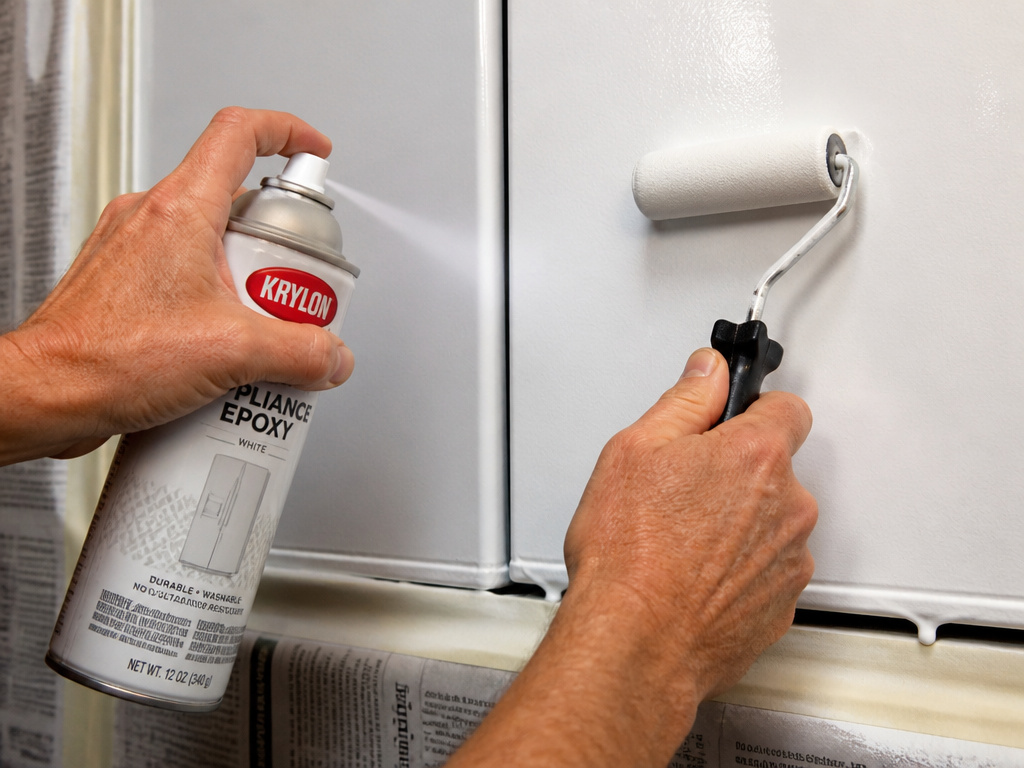
Two products cover almost every home job.
| Decision | Krylon Appliance Epoxy | Rust-Oleum Appliance Paint |
|---|---|---|
| Application | Aerosol spray, held 6 to 8 inches out | Soft brush or small short-pile mohair roller |
| Coats and timing | Dry to touch in 30 minutes, handle after 24 hours | Two coats, 4 hours apart |
| Best for | A large flat door with nothing to cut around | Indoor work with limited ventilation |
| Watch out for | Overspray on floors and adjacent cabinets | Brush marks on a big flat panel |
Krylon Appliance Epoxy
Krylon’s route is aerosol. Shake it for 1 to 2 minutes, hold the can 6 to 8 inches from the surface, and build the coat in passes. It’s the faster finish on a door with a lot of flat area and no trim to work around.
Rust-Oleum Appliance Paint
Rust-Oleum’s route is a soft brush or a small short-pile mohair roller, two coats, four hours apart. It’s the better pick if you’re working indoors with limited ventilation, because you’re not pushing solvent into the air at can pressure. Rust-Oleum says the paint goes directly onto factory-coated metal, stainless steel, and rigid plastic, with bare metal primed first, while Architectural Digest primes stainless and GE and LG advise against repainting stainless.
A run shows up as a glossy sag along the bottom edge of the door, and you’ll catch it while the coat is still wet enough to tip off with the brush.
If you want the short version of the epoxy paint comparison: spray for speed outdoors, roll for control indoors. There’s a wider field of best appliance paint options than these two, and the differences that actually matter are recoat time and finish sheen.
Tape a test strip to a scrap of sheet metal and spray one half. Compare it to the door in daylight.
Do You Need a Topcoat?
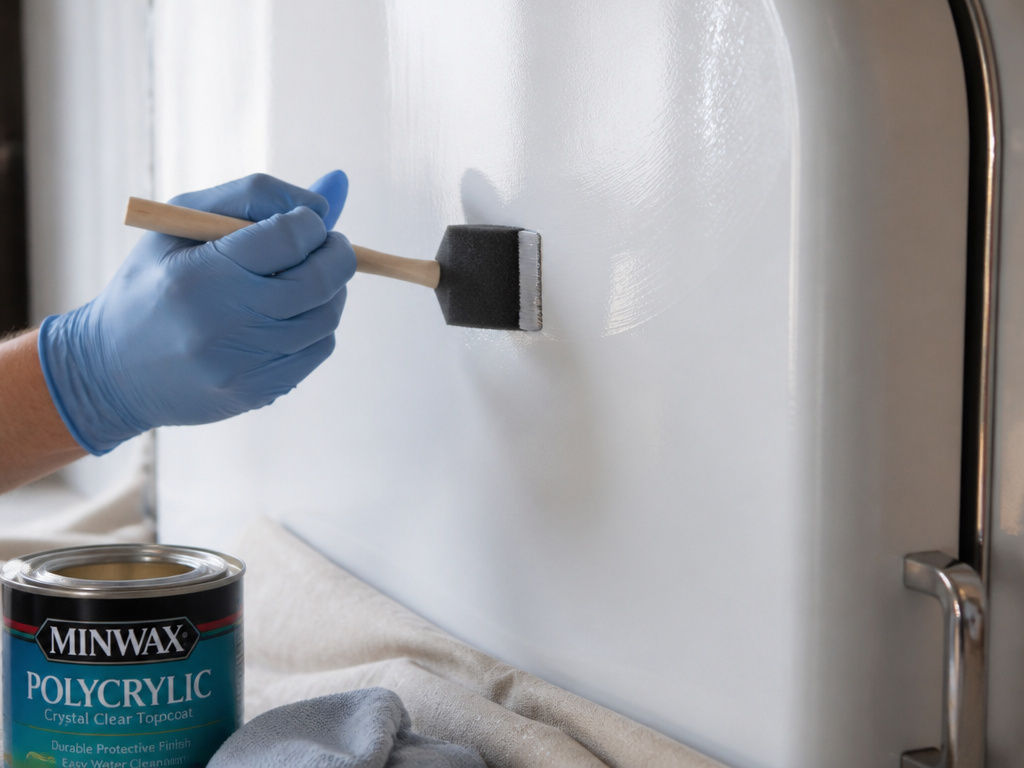
Krylon and Rust-Oleum both stop at the paint. Architectural Digest doesn’t.
Rust-Oleum describes its Appliance Paint as scrubbable, ultra-durable, and moisture-resistant, and its instructions end after two coats. Krylon’s Appliance Epoxy page lists dry and handle times and no topcoat step at all.
Architectural Digest’s fridge guide adds one. Two to three coats of Minwax Polycrylic Protective Finish, at least an hour between layers, then five days of gentle treatment while the sealer cures. For chalk paint, it calls for Annie Sloan Clear Chalk Paint Wax applied with a lint-free cloth.
If the manufacturer’s own instructions stop at the paint, a topcoat is your call and your risk.
The trade is real. Architectural Digest recommends a topcoat of two to three coats of Minwax Polycrylic Protective Finish, at least an hour between layers, then five days of gentle treatment while the sealer cures. Architectural Digest says to treat the fridge gently for at least five days for the sealer to cure completely.
The part nobody mentions: A sealer that hasn’t cured will print every fingerprint you put in it during the cure window.
Krylon and Rust-Oleum specify no topcoat step, while Architectural Digest recommends sealing with two to three coats of Minwax Polycrylic and curing for five days. If your fridge door is in a busy kitchen and gets wiped daily, the sealer earns its keep.
Stainless, Black Stainless, and the Colors You Can’t Match
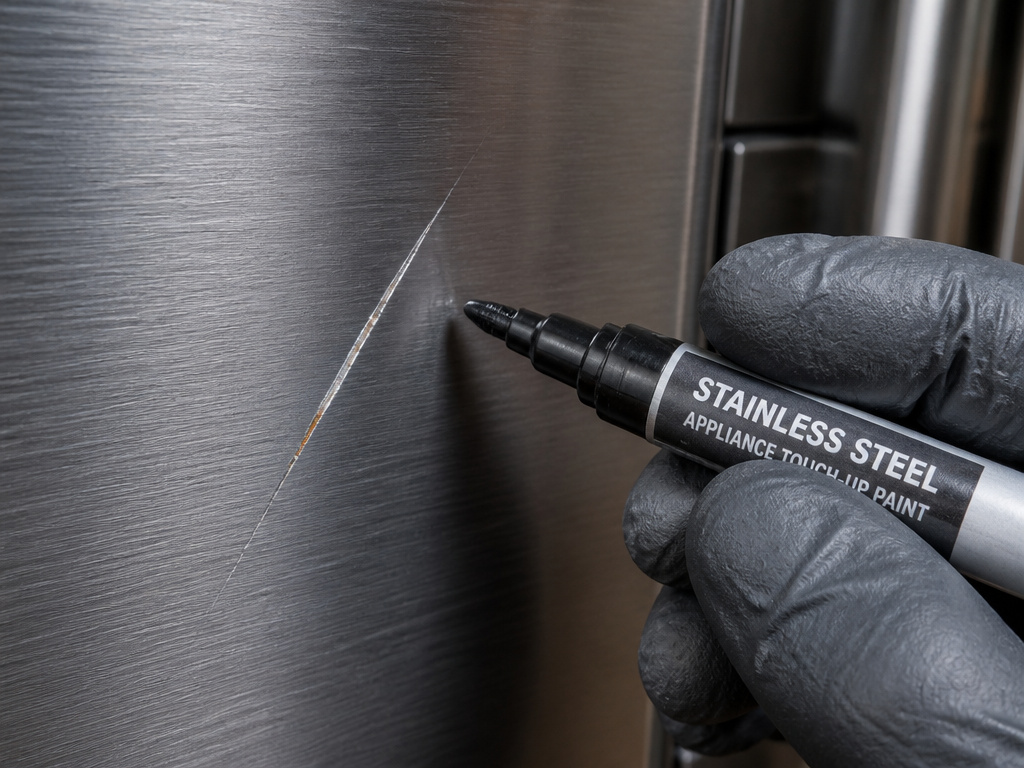
A scratch through the finish on a stainless door shows a bright line of bare metal against the grain.
LG explains what happens next. Once a scratch penetrates through the finish to the metal, humid air reaches it and the metal rusts. LG says you may be able to clean the rusted scratch and apply touch-up paint to keep it from coming back.
Why a scratch turns into rust
LG states scratches that penetrate the finish to the metal expose it to humid air, which will cause rusting. The finish is the barrier, and a scratch that reaches metal removes it. LG states scratches that penetrate the finish to the metal expose it to humid air, which will cause rusting.
The touch-up that doesn’t match
LG sells touch-up paint for Black, White, and Titanium cabinets only. The part numbers are TUP-3796BK, TUP-3796WH, and TUP-3796TG. LG also states that the titanium touch-up paint doesn’t match the door finish, which is worth knowing before you order one.
GE has its own version of the problem. It says two different shades of white have been used over the years, with Snow White in use since 1980, so an older unit may not match a current color. GE’s lacquer touch-up comes in tubes and pens, with some colors in spray cans. The Almond pen is part WR97X204, Bisque is WR97X10016, Black is WR97X243, and the Light Gray bottle for select refrigerator models is WR97X10123.
Three manufacturers, three answers on stainless:
- Rust-Oleum says its Appliance Paint goes directly onto stainless steel.
- GE says there’s no touch-up paint for Stainless, CleanSteel, or Black Stainless, and CleanSteel shouldn’t be repainted.
- LG sells touch-up only for Black, White, and Titanium.
If your fridge is stainless, get the model number and call the manufacturer before you buy anything. For chips rather than whole panels, appliance touch up paint is the smaller, safer move.
Find your model plate, usually inside the fridge or behind the kick plate, and write the number down before you call.
When to Stop and Call Someone
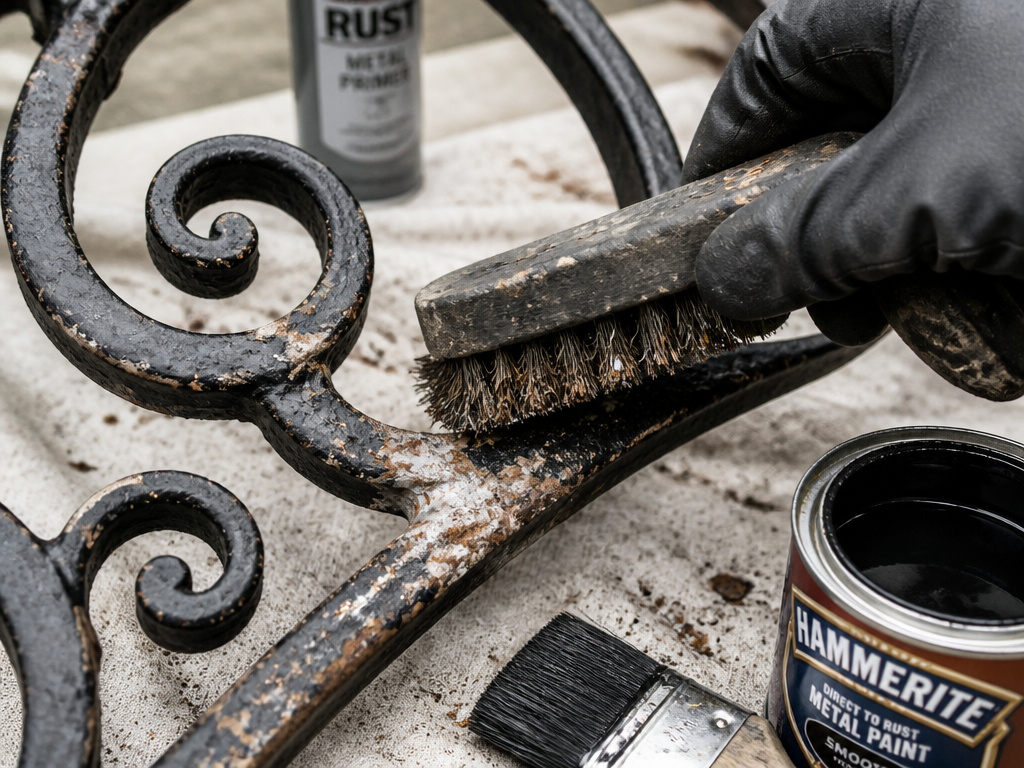
Some fridges shouldn’t be painted at all.
GE’s position is more cautious than either paint maker’s. It says the exterior of painted appliances may be repainted or touched up in most cases, then says it doesn’t give do-it-yourself suggestions beyond following the label, and that touch-up paint is for small areas only. It also points people toward professional refinishers and notes that some automotive body shops will paint appliances.
LG says dents can’t be removed from the cabinet. LG states dents cannot be removed from the refrigerator cabinet.
Ranges and cooktops are the clearest no. GE says the baked-on porcelain enamel cracks and peels once heat hits a painted surface, and the paint won’t adhere to the enamel.
Skip this if: You have a stainless, CleanSteel, or Black Stainless door. GE offers no touch-up paint for any of the three, and CleanSteel shouldn’t be repainted at all.
The same prep logic carries over to painting a washing machine.
Call GE Appliances Parts at 1-877-959-8688 before you assume a color exists.
Frequently Asked Questions
Can you paint a refrigerator that still works?
Yes, and that’s the case for doing it. GE says the exterior of painted appliances may be repainted or touched up in most cases, and Architectural Digest quotes a decorative painting specialist making the same point: a fridge is costly to replace, and painting is a quick way to improve one that’s in good working order.
How long before you can use the fridge after painting?
Krylon says the coating is dry to the touch in 30 minutes and can be handled after 24 hours. If you add a sealer, Architectural Digest says to treat the fridge gently for at least five days while it cures.
Can you paint a stainless steel refrigerator?
The sources split. Rust-Oleum says its Appliance Paint applies directly to stainless steel. GE says there’s no touch-up paint for Stainless, CleanSteel, or Black Stainless, and that CleanSteel shouldn’t be repainted. LG sells touch-up only for Black, White, and Titanium. Check your model with the manufacturer first.
Do you have to sand a fridge before painting it?
Rust-Oleum says to abrade the surface with fine-grade abrasive paper before painting. That step is what gives the coating something to grip, and it’s the difference between a finish that holds and one that lifts along the door edge.
What paint do you use on a refrigerator?
Rust-Oleum Appliance Paint and Krylon Appliance Epoxy are both made for the job. Rust-Oleum rolls on in two coats four hours apart and comes in over 100 colours with matt, satin, and metallic finishes. Krylon sprays on and dries to the touch in 30 minutes.
Before You Go
All of this assumes a fridge with a sound finish and a straight cabinet. LG is clear that dents can’t be removed from the cabinet, and no coating changes that. LG is clear that dents can’t be removed from the cabinet, and no coating changes that.
Your first move this week is small. Pick one door, find an inconspicuous edge, scuff it, and put a test patch on it. You’ll learn more from that patch than from reading.
