
10 Best Wood Stains For Deck in 2026
This post contains affiliate links. As an Amazon Associate, we earn from qualifying purchases.
If you need a deck stain that applies without laps, runs, or streaks, the Ready Seal Exterior Wood Stain & Sealer is our Best Overall pick. It requires no back brushing, can withstand rain within minutes, and applies in direct sunlight, making it a goof-proof choice for large projects. For sunny, high-traffic decks, the Olympic WaterGuard Semi-Transparent Stain & Sealer offers the best UV protection, while the Cabot Australian Timber Oil Wood Stain provides the deepest penetration for extreme weather exposure.
The challenge with staining a deck isn’t just picking a color, it’s finding a formula that will stand up to foot traffic, rain, and sun without peeling or fading in a single season. The wrong stain can leave you with a patchy finish or a weekend spent scrubbing off a failed coat.
This guide is research-based, drawing from manufacturer specifications, expert round-ups, and patterns in owner feedback to help you choose the right wood stain for your deck. We evaluated dozens of products and narrowed the list to the 10 that perform best in key categories like UV protection, fade resistance, and ease of application.
Top 10 Wood Stains For Decks in the Market
Certain content that appears on this site comes from Amazon. This content is provided "as is" and is subject to change or removal at any time.
The Best Wood Stains For Decks, Reviewed
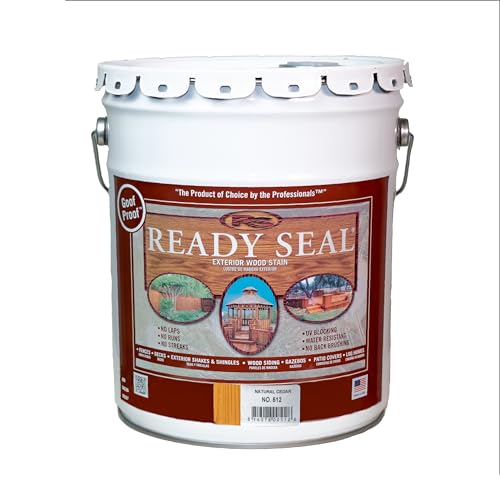
Ready Seal Exterior Wood Stain & Sealer
What We Like
- No laps, runs, or streaks
- No back brushing required
- Can withstand rain within minutes
- Applies in direct sunlight
Trade-offs
- 5-gallon size is heavy for small projects
- Oil-based formula has a stronger odor than water-based
A 5-gallon bucket of oil-based stain that resists rain within minutes means you can finish a large deck even when the weather is unpredictable. The formula requires no back brushing, so you can avoid lap marks, runs, or streaks. It suits DIYers who want a durable finish that resists cracking, chipping, flaking, or peeling, with excellent moisture resistance and UV protection. For a deck that sees regular use, this stain offers reliable protection with minimal effort during application.
The 5-gallon size is great for a big deck but overkill for a small fence or pergola, and the oil base has a noticeable odor compared to water-based options like Olympic WaterGuard. For a full-scale outdoor project where you want a forgiving application and aren’t afraid of a little smell, this is a practical solution.
Olympic WaterGuard Semi-Transparent Stain & Sealer

What We Like
- Advanced UV protection against fading
- Water-repellent barrier for rain and moisture
- Scuff Guard resists foot traffic wear
- Easy cleanup with soap and water
Trade-offs
- Semi-transparent coverage shows grain but not heavy color
- Dries in 24 hours, so plan for dry weather
Advanced UV protection means this stain actively blocks the sun’s fading and graying effects, keeping a deck’s color rich season after season. It pairs that sunblock with a water-repellent barrier that sheds rain and moisture, and its Scuff Guard technology stands up to foot traffic for up to three years on decks. For someone who wants a semi-transparent look that guards against the harshest element, sunlight, this is a smart, water-based pick that also cleans up with soap and water.
The UV protection in Olympic’s WaterGuard stain is what sets it apart from oil-based options like Ready Seal, which lack that defense, making it a smarter pick for a sunny deck that gets heavy foot traffic. You do have to wait a full 24 hours for it to dry between coats. That patience buys you color that stays rich season after season. Reviewers note that water-based stains can take more care during application, but the payoff is a water-repellent barrier that guards against rain and moisture.
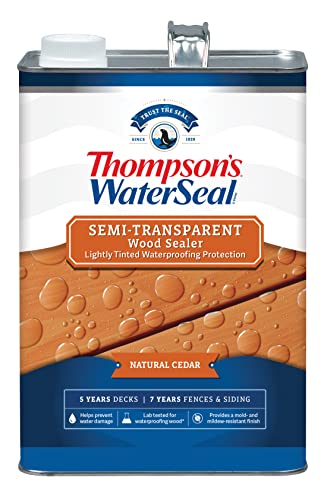
Thompson’s WaterSeal Semi-Transparent Stain
What We Like
- Fade-resistant advanced polymer formula
- Exceeds industry waterproofing standard ASTM D-4446
- Applies to damp or dry wood
- Semi-transparent finish shows wood texture
Trade-offs
- Semi-transparent hides wood grain, not just texture
- Only one color option in this listing (Natural Cedar)
Thompson’s WaterSeal Semi-Transparent Stain exceeds the ASTM D-4446 industry standard for waterproofing wood, which means it’s built to keep moisture out and your deck dry season after season. The fade-resistant polymers in the formula fight UV damage directly, so the lightly tinted color stays consistent through sun and rain. This makes it a strong fit for anyone who wants a reliable, low-maintenance finish that won’t wash out or gray prematurely.
The trade-off is that the semi-transparent finish hides the wood grain while letting texture show through. So if you love seeing every knot and line of the lumber, a transparent stain like Thompson’s own Transparent Waterproofing Stain might suit you better. Application is straightforward, it works on damp or dry wood, but the 1-gallon can means larger decks will need multiple containers. For fade resistance backed by a real waterproofing standard, this stain delivers confidence without guesswork.
Cabot Australian Timber Oil Wood Stain

What We Like
- Three-way oil blend for deep penetration
- Protects against extreme weather exposure
- Accentuates natural wood grain and patina
- Suitable for decks, siding, railings, furniture
Trade-offs
- Only 4 wood-toned color options available
- 1-gallon container weighs 7.3 pounds, heavy for one-hand use
The unique blend of oils in this stain delivers three-way protection that penetrates deep into dense, resin-rich woods. That means the finish works from the inside out, locking in durability against harsh sun, rain, and temperature swings. For anyone restoring a weathered deck or protecting new pressure-treated lumber, this is the kind of soak-in performance that keeps wood looking natural rather than plastic-coated. The Jarrah Brown color brings out rich depth and patina, so the wood itself stays the star of the show rather than the stain.
The trade-off is color choice: only four wood-toned shades are available, so if you want a custom or bold hue, you will need to look elsewhere. For deep-penetrating protection in classic wood tones, this stain delivers the oil-based performance described in its features.
Olympic Maximum Solid Color Stain & Sealer

What We Like
- Opaque coverage hides worn wood grain
- Waterproofing and UV protection in one coat
- Can apply down to 35°F
- Soap and water cleanup
Trade-offs
- Solid color hides natural wood grain completely
- Opaque finish hides natural wood grain entirely
A solid color stain that hides worn grain and delivers waterproofing in a single coat means you can refresh a tired deck without sanding down to bare wood first. Olympic Maximum’s opaque finish covers discoloration and old stain unevenness while its SunBlock UV defense and enhanced waterproofing shield the wood from moisture and sun damage. That combination works well for decks that have seen better days, where the priority is a uniform, fresh look rather than showing off the natural grain. The water-based formula cleans up with soap and water, and you can apply it even when temperatures drop to 35°F, so a chilly fall weekend still works for the job.
The solid color is opaque, so it completely hides the natural wood grain. If you want cedar or redwood character to show through, a semi-transparent option like Ready Seal would be a better match. The can weighs 10 pounds, which is heavier than the Olympic WaterGuard at 8.7 pounds, making it a bit more awkward to carry up stairs or around a large deck. For a weathered surface that needs a full color makeover and durable protection, this stain does the job in one step.
Thompson’s WaterSeal Transparent Stain

What We Like
- Fade-resistant polymers resist UV damage
- Applies to damp or dry wood
- Transparent finish shows wood texture
Trade-offs
- Requires thorough surface cleaning before application
- Transparent finish hides wood grain completely
The fade-resistant polymers also fight UV damage, so the Chestnut Brown color stays rich without turning chalky. That makes it a smart option if you want a clear protective layer that still lets the wood’s natural texture show through, especially on newer or well-maintained decks where the grain pattern adds character.
If you prefer a more natural look that preserves the full grain pattern, a semi-transparent stain like Ready Seal Exterior Wood Stain might suit you better. For someone who values strong waterproofing and UV protection in a transparent stain, this is a reliable choice.
Product photos
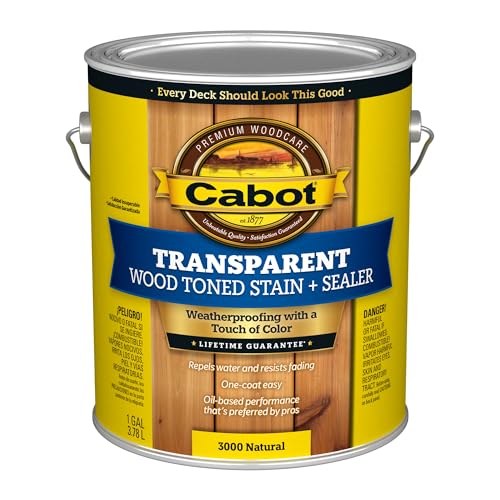
Cabot Wood Toned Stain + Sealer
What We Like
- One coat required for full coverage
- Mildew resistant and water-repellent
- Enhances natural wood beauty
- Works on decks, fences, siding, and trim
Trade-offs
- Only 4 wood toned color options available
- Only four wood tone color options available
The trade-off is that the flat, translucent look won’t appeal to everyone, if you prefer a glossy sheen or a more opaque color shift, you might find the result too subtle. It is best for those who value speed and natural aesthetics over bold color or high shine.
Product photos
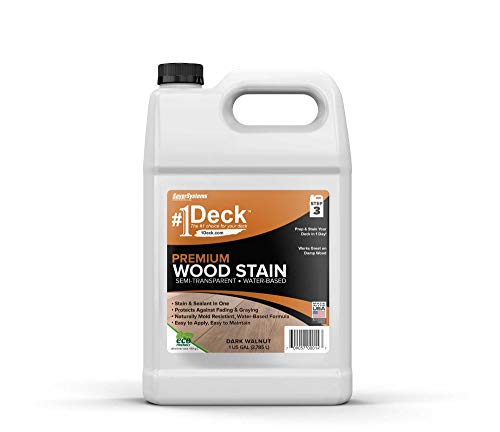
SaverSystems #1 Deck Premium Semi-Transparent Stain
What We Like
- Ultimate UV protection prevents fading and graying
- Works on damp wood for faster application
- Stain and sealer in one step
- Low VOC, water-based formula
Trade-offs
- Semi-transparent finish shows wood imperfections
The UV protection in this stain is built to stop fading and graying before they start, which is exactly what you want if your deck sits in full sun all afternoon. It’s a water-based formula with under 50 g/l VOC, so you get serious defense without heavy fumes. The semi-transparent finish keeps the wood grain visible, and because it works on damp wood, you can stain sooner after cleaning, no waiting days for everything to bone-dry. This is a smart fit for anyone who wants a clean, low-odor project that holds up to sun exposure season after season.
Semi-transparent stain won’t hide scratches, knots, or previous stain patches the way a solid color would, so if your deck has uneven wear, you’ll see it through the finish. The water-based formula cleans up easily with soap and has less than 50 g/l VOC content, which is better for the planet than oil-based options like Ready Seal. For a deck already in good shape that needs strong UV protection, this is a straightforward choice.
Product photos
Varathane One Step Stain & Spar Semi-Gloss Finish

What We Like
- Water-based for easy cleanup
- UV protection helps prevent sun damage
- Semi-gloss finish for a polished look
- Deep, rich color with optional extra coats
Trade-offs
- Not for below-waterline marine use
- Requires multiple coats for deep color
Covering up to 90 square feet per quart, this water-based stain and spar finish delivers a deep, rich color with a semi-gloss sheen that protects outdoor wood from UV damage. It’s a smart pick for deck railings, furniture, or trim where you want a polished look that holds up against the elements. The water-based formula means soap-and-water cleanup, which saves time and hassle compared to oil-based alternatives.
Coverage is limited to 90 sq. ft. per quart, so a large deck will need multiple quarts, while an oil-based stain like Ready Seal covers more area per gallon. But for smaller projects or above-waterline marine details, this Varathane finish delivers durable semi-gloss protection without solvent fumes. It’s not the budget pick for big open decks, but it’s excellent for detailed woodwork that needs a tough, attractive seal.
Product photos
SEAL-ONCE Marine Penetrating Wood Sealer

What We Like
- Safe for use over open water
- Non-hazardous to aquatic life
- Ultra-low VOC formula
- Penetrates wood at cellular level
Trade-offs
- Cannot be used on wood submerged underwater.
A penetrating formula that wraps wood fibers at the cellular level means this sealer doesn’t just sit on the surface, it works from the inside out. It creates a breathable barrier that resists water damage even in the soggiest spots. That makes it the right pick for anyone with a deck near a lake, a poolside walkway, or a pier that takes constant abuse from moisture and salt spray. The ultra-low VOC recipe and soap-and-water cleanup also keep the job friendly for your lungs and your garden.
If your deck is built from pressure-treated pine or cedar and sits in a high-moisture zone, it’s a perfect match. For ipe or mahogany, you’d want a product like Cabot Australian Timber Oil, which is designed specifically for those oily, dense species.
Product photos
How We Evaluated Wood Stains For Decks
To build this guide, we looked at manufacturer specifications, reviewed expert round-ups from paint and woodworking professionals, and examined patterns in owner feedback across thousands of reviews. Our goal was to identify stains that perform well for real-world deck conditions.
We focused on four criteria that matter most for a deck stain. The first is durability and weather resistance, how well it stands up to rain, sun, and foot traffic. Then there’s ease of application, which covers whether it requires special techniques like back brushing or can be applied in direct sunlight. Finish and appearance, transparent, semi-transparent, or solid coverage, also matters. Finally, we considered value, which means coverage per gallon versus cost, without focusing on price.
Because this is a research-led evaluation, we cannot claim to have tested these products ourselves. Instead, we rely on the collective experience of many users and the specifications provided by manufacturers. This approach gives you a reliable starting point for your own project, but the best stain for your deck will also depend on your specific wood type, climate, and desired look.
What To Look For In Wood Stains For Decks
Choosing the right deck stain means balancing protection, appearance, and your tolerance for maintenance. The key is matching the formula to your deck’s condition and your expectations.
Choose a stain based on your deck’s age and condition: transparent stains for new wood, semi-transparent for good-condition wood, and solid stains for weathered or uneven wood. Oil-based stains penetrate deeper, while water-based stains offer easier cleanup and lower VOCs.
Finish Type: Transparent, Semi-Transparent, or Solid
The finish you choose determines how much of the wood grain shows and how much preparation your deck needs. Transparent stains add a hint of color and UV protection but let the natural wood grain show through. They work best on new or well-maintained wood. Semi-transparent stains offer more color and UV protection while still showing the wood’s texture. They’re the most popular choice for decks in good condition. Solid stains provide opaque coverage that hides imperfections, wear, and mismatched wood, making them ideal for older or weathered decks.
Oil-Based vs. Water-Based
Oil-based stains penetrate deeper into the wood, providing superior protection against moisture and weathering. They tend to last longer and are more forgiving during application, you can apply them in direct sunlight without them drying too quickly. The trade-off is a stronger odor and cleanup that requires mineral spirits. Water-based stains are easier to clean up with soap and water, have lower VOCs, and dry faster. However, they can be trickier to apply in hot, direct sunlight because they may dry before you can work them into the wood evenly.
UV Protection and Fade Resistance
The sun is the biggest enemy of a stained deck. Look for stains that specifically mention UV absorbers or advanced UV protection. Some formulas, like the Olympic WaterGuard with Scuff Guard technology, are designed to resist both fading from sunlight and wear from foot traffic. Fade-resistant polymer formulas, like those in Thompson’s WaterSeal, help maintain color longer than basic stains.
- Check the manufacturer’s recoat time: Some stains require a second coat within a specific window, or you’ll have to sand before recoating.
- Test a small area first: Apply the stain to an inconspicuous spot to confirm the color and coverage before committing to the whole deck.
- Consider your climate: In humid or rainy areas, look for mildew-resistant formulas. In sunny climates, prioritize UV protection.
- Read the surface preparation requirements: Some stains require the wood to be completely dry, while others can be applied to damp wood.
A good rule of thumb: the more protection you need, the less wood grain you’ll see. Transparent stains offer the least protection, solid stains the most.
Wood Stains For Decks Compared
The table below compares the key features of our top 10 deck stains, helping you quickly see which formula matches your deck’s needs and your application preferences.
| Product | Type | Size | Application |
|---|---|---|---|
| Ready Seal Exterior Wood Stain & Sealer | Semi-transparent oil-based stain & sealer | 5 Gallon | Sprayer, roller, or brush |
| Olympic WaterGuard Semi-Transparent Stain & Sealer | Semi-transparent | N/A | N/A |
| Thompson’s WaterSeal Semi-Transparent Stain | Semi-Transparent | 1 Gallon | N/A |
| Cabot Australian Timber Oil Wood Stain | Oil-based wood stain & protector | 1 Gallon | N/A |
| Olympic Maximum Solid Color Stain & Sealer | Solid color stain & sealer | N/A | N/A |
| Thompson’s WaterSeal Transparent Stain | Transparent waterproofing stain | 1 gallon | Damp or dry wood |
| Cabot Wood Toned Stain + Sealer | Flat, translucent | N/A | One coat required |
| SaverSystems #1 Deck Premium Semi-Transparent Stain | Semi-transparent | N/A | Works on damp wood |
| Varathane One Step Stain & Spar Semi-Gloss Finish | Semi-Gloss | N/A | Railings, furniture, trim, boats |
| SEAL-ONCE Marine Penetrating Wood Sealer | Water-based sealer & stain | 1 gallon | High-moisture areas |
Frequently Asked Questions
What is the best deck stain that won’t peel?
Solid color stains are the most resistant to peeling because they form a protective film on the wood surface. The Olympic Maximum Solid Color Stain & Sealer is a strong choice for this, as its opaque coverage helps hide imperfections and resist peeling on properly prepared wood.
Can I apply deck stain to damp wood?
Yes, some stains are specifically formulated for damp wood application. The Thompson’s WaterSeal Semi-Transparent and Transparent stains, as well as the SaverSystems #1 Deck Premium Semi-Transparent Stain, can be applied to wood that is still damp from cleaning, which speeds up the project timeline.
How often should I re-stain my deck?
Most deck stains need to be reapplied every two to three years, depending on sun exposure, foot traffic, and the type of stain used. Oil-based stains tend to last longer than water-based stains, but the best way to know is to check the manufacturer’s recommended recoat interval for your specific product.
What’s the difference between a deck stain and a deck sealer?
A deck stain adds color and some UV protection, while a deck sealer creates a protective barrier against moisture. Many products, like the Ready Seal Exterior Wood Stain & Sealer, combine both functions in one step. A pure sealer, like the SEAL-ONCE Marine Penetrating Wood Sealer, focuses on waterproofing without adding significant color.
Should I use oil-based or water-based stain on my deck?
Oil-based stains penetrate deeper and are more durable, making them a great choice for high-traffic decks and rough or weathered wood. Water-based stains are easier to clean up and have lower VOCs, which is better for DIYers sensitive to fumes. The Ready Seal is a top-rated oil-based option, while the SaverSystems #1 Deck is a strong water-based choice.
The Bottom Line
For most homeowners, the Ready Seal Exterior Wood Stain & Sealer is the best overall deck stain. It eliminates the most common application headaches, no back brushing, no laps or streaks, and the ability to apply in direct sunlight. It’s a forgiving, durable oil-based formula that works well on large decks and fences.
If your deck sees intense sun or heavy foot traffic, the Olympic WaterGuard Semi-Transparent Stain & Sealer offers the best UV protection with a water-based formula that resists wear. For those restoring an older or unevenly colored deck, the Olympic Maximum Solid Color Stain & Sealer provides opaque, one-coat coverage that hides imperfections.
The single most important factor in choosing a deck stain is matching the finish type to your deck’s condition. New wood can take a transparent or semi-transparent stain; weathered wood needs a solid stain. Choose wisely, and your deck will look great for years to come.
