
10 Best Waterproofing Paint For Basement Walls in 2026
This post contains affiliate links. As an Amazon Associate, we earn from qualifying purchases.
For dry basement walls that need serious protection, the Zinsser WaterTite Mold & Mildew White Waterproofing Paint stands as the best overall pick. It resists up to 20 lbs of water pressure and is backed by a 15-year guarantee. For those with actively damp masonry, the Zinsser WaterTite General Purpose formula applies directly to wet surfaces. Homeowners needing one paint for inside and out will appreciate the KILZ Basement and Masonry Waterproofing Paint.
A damp or leaking basement wall is more than an eyesore, it can lead to mold, structural damage, and ruined belongings. The challenge is finding a paint that bonds to masonry, withstands hydrostatic pressure, and fits your wall’s specific condition, whether dry, damp, or cracked.
We built this guide by analyzing manufacturer specifications, expert recommendations, and patterns in owner feedback across dozens of waterproofing paints. The result is a focused look at the 10 best options, ranked by performance, application ease, and real-world suitability for different basement conditions.
Top 10 Waterproofing Paints For Basement Walls in the Market

Certain content that appears on this site comes from Amazon. This content is provided "as is" and is subject to change or removal at any time.
The Best Waterproofing Paints For Basement Walls, Reviewed
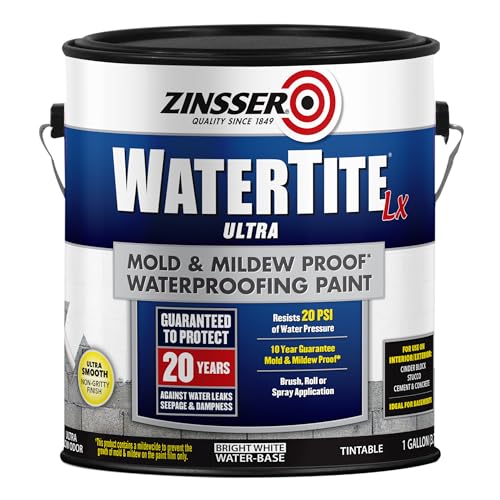
Zinsser WaterTite Mold & Mildew White Waterproofing Paint
What We Like
- Resists up to 20 lbs. water pressure
- Ultra low odor for indoor use
- Easy soap and water cleanup
- Backed by 15-year waterproof guarantee
Trade-offs
- Requires dry walls before application
- Only for interior masonry surfaces
This paint resists up to 20 lbs. of water pressure, which means it can handle the kind of hydrostatic pressure that pushes moisture through basement walls. The ultra low odor formula makes it comfortable to apply in enclosed spaces. The bright white non-gritty finish goes on smoothly with a brush or roller, leaving a clean look that doesn’t hide your wall’s texture. For anyone tackling a damp basement wall that needs reliable long-term protection, this is the one to reach for. The 15-year waterproof and 10-year mold and mildew guarantees speak to the manufacturer’s confidence, and the simple soap-and-water cleanup saves you from harsh solvents.
The biggest trade-off is that it only works on dry walls, so if you’re dealing with an actively leaking crack or a consistently wet surface, you’ll need to address the moisture source first before painting. The Zinsser is guaranteed to stop water and resists up to 20 lbs. of water pressure, and it comes with a 15-year waterproof guarantee plus a 10-year mold and mildew-proof paint film guarantee. That level of warranty and pressure resistance sets it apart from many other options in the same category.
Product photos
KILZ Basement and Masonry Waterproofing Paint

What We Like
- Blocks up to 12 PSI water pressure
- Works indoors and outdoors
- Low odor formula
- Resists alkali buildup
Trade-offs
- Full cure takes 7-14 days
- Requires hydraulic cement for below-grade cracks
A 12 PSI water-pressure rating means this paint can handle serious hydrostatic pressure on basement walls, enough to stop water infiltration through concrete and masonry. That makes it a strong candidate for both interior and exterior projects, from basement walls to stucco and retaining walls. The low-odor formula dries to the touch in an hour and accepts a recoat in four hours, so you can finish a wall in a day without living with strong fumes.
KILZ waterproofing paint blocks up to 12 PSI of water pressure using nanotechnology, which means it can stop water from pushing through concrete and masonry walls even in heavy rain or high groundwater conditions. The trade-off is that full cure takes one to two weeks before the finish is washable and fully durable. During that window the coating is more vulnerable to abrasion or moisture. Compared to Zinsser WaterTite Mold & Mildew, which focuses on mold resistance, KILZ emphasizes raw waterproofing power with its nanotechnology barrier.
Ames Block & Wall Liquid Rubber Waterproofer

What We Like
- Fills cracks up to ⅛ inch
- 1800% elongation resists re-cracking
- Low odor and non-toxic
- Sprayer, roller, or brush application
Trade-offs
- Two coats recommended for best results
- At 47 pounds, heavy to carry and pour
- Coverage rate requires careful calculation for larger walls
A ⅛-inch crack-filling ability means this liquid rubber can seal the hairline fractures and settling gaps common in aging basement walls without needing a separate patching compound. The 1800% elongation lets the dried membrane stretch as the concrete shifts, so those filled cracks stay sealed rather than reopening. The product is designed for waterproofing concrete walls, cinder block, and more, making it a practical choice for walls with visible cracks.
Two coats are recommended, so plan on spending extra time applying this thick, rubbery coating compared to a standard waterproofing paint. At 47 pounds per pail, lugging the bucket around a cramped basement is a real workout. A 1-gallon container of Zinsser WaterTite Mold & Mildew weighs 12.2 pounds, making it far easier to handle for smaller jobs.
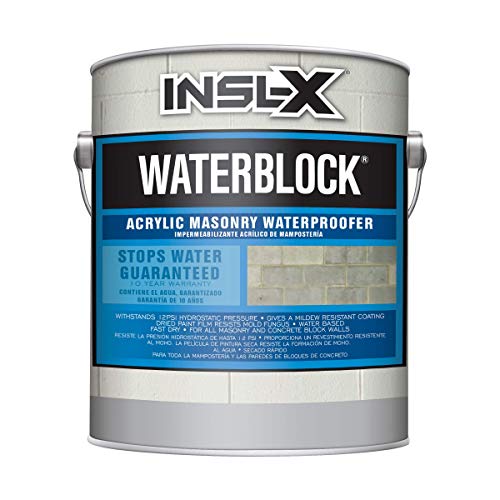
INSL-X WaterBlock Acrylic Masonry Waterproofer Paint
What We Like
- Fast-drying formula saves time
- Withstands up to 12 psi hydrostatic pressure
- High alkali resistance up to pH-13
- Works on interior and exterior masonry
Trade-offs
- Only for vertical walls, not floors
- Requires 50-90 °F application temperature
Fast drying is the headline here. INSL-X WaterBlock dries quickly enough to let you move on to a second coat or finish the job in a single day. That matters when you’re working in a damp basement and want to seal it up without a long wait. It handles up to 12 psi of hydrostatic pressure, so it can stand up to moderate groundwater pushing against foundation walls. Its high alkali resistance (up to pH-13) means fresh concrete or mortar won’t eat through the coating. This product works well for anyone who needs a reliable waterproofing paint and wants to finish the job without a long drying delay.
The catch is that this paint is formulated for vertical surfaces only, so it won’t work on basement floors or other horizontal areas where water might pool. If you need a product that can handle both walls and floors, you might look at the Ames Block & Wall Liquid Rubber, which is designed for below-grade use on multiple surfaces. But for a straightforward, fast-drying wall sealer that keeps moisture out without fuss, the INSL-X WaterBlock gets the job done efficiently.
Product photos
Zinsser WaterTite General Purpose White Waterproofing Paint
What We Like
- Applies to wet or dry masonry
- Resists up to 10 lbs. water pressure
- Bright white non-gritty finish
- Covers 250 sq. ft. per gallon
Trade-offs
- Only for masonry surfaces, not wood or drywall
- No mold or mildew resistance built in
The Zinsser WaterTite General Purpose White Waterproofing Paint resists up to 10 lbs. of water pressure, which means it can handle moisture on basement walls that are damp or wet. Because it applies directly to wet or dry masonry, you can start painting without waiting for the surface to dry completely, a real time-saver in a basement that never fully dries out. The bright white, non-gritty finish leaves a clean look that seals the wall against moisture.
The 10 lbs. water pressure resistance is rated for dampness and occasional moisture, not for active leaks or standing water. If your basement has visible water seepage under pressure, a product like the Ames Block & Wall Liquid Rubber Waterproofer, designed for below-grade waterproofing, may be more appropriate. For walls that feel damp after rain or stay humid, this Zinsser paint provides a straightforward, easy-to-apply solution with a smooth, bright finish.
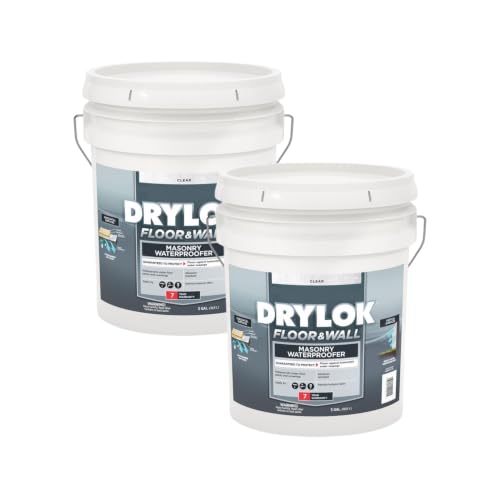
GROVE GRVCOEVC1806025B Waterproofing Paint
What We Like
- Clear finish preserves natural masonry look
- Low-odor water-based formula
- Works on interior and exterior surfaces
- Includes two 5-gallon containers
Trade-offs
- Clear coating won't cover stains or imperfections
- Requires thorough surface preparation before application
A two-pack of 5-gallon containers means you can cover a large basement wall or floor area without running back to the store mid-project. This clear water-based latex sealer is designed to protect masonry while letting the natural concrete texture show through, which makes it a smart choice if you want waterproofing without changing the look of your walls. The low-odor formula keeps the work more pleasant in an enclosed basement, and it’s rated for both interior and exterior use, so it works on foundation walls, garage floors, and patios alike.
A clear waterproof sealer won’t cover stains or discoloration the way a pigmented paint would, so if your walls need a cosmetic refresh, look at a white option like Zinsser WaterTite Mold & Mildew White Waterproofing Paint. For clean masonry where you want invisible protection, this water-based latex formula provides a clear coating that maintains the natural appearance of the surface. Just follow the label directions for surface preparation, drying time, and recoating to get good adhesion.
Product photos
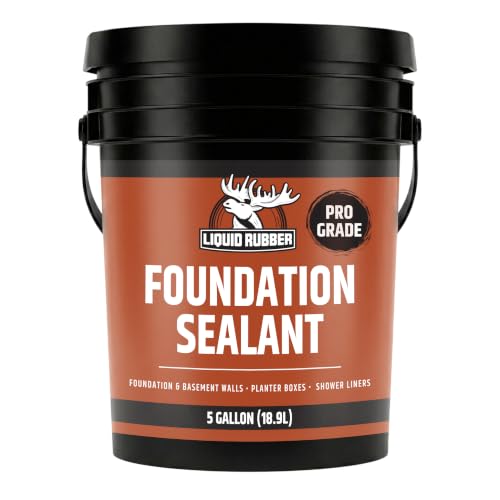
Liquid Rubber Foundation Sealant Basement Waterproof Sealer
What We Like
- 900% elongation for crack bridging
- Zero VOCs for safe indoor use
- Adheres to concrete, masonry, wood, metal
- No mixing required, brush/roller/sprayer
Trade-offs
- Not suitable for walking surfaces (tacky when cured)
- Exterior coverage only 20 sq ft/gal (3-4 coats)
With 900% elongation, this coating moves with the foundation rather than cracking when the ground shifts. That flexibility makes it a serious option for basement walls with active hairline cracks or joints that expand and contract. The water-based formula carries zero VOCs, so you can apply it indoors without worrying about fumes. It sticks to concrete, masonry, wood, and metal, which simplifies sealing around pipes or sill plates. For interior walls, a gallon covers 50 square feet over two to three coats, giving you a thick, rubbery membrane that stops seepage at the source.
One limitation is that the cured coating stays tacky, so it cannot serve as a floor paint or a surface you will walk on. That limits it to vertical walls and non-traffic areas. Compare that to Zinsser WaterTite, which applies like a standard paint and dries to a walkable finish. If you need a flexible membrane for leaky foundation walls and do not mind the black color, this is the stronger seal. If you want a single-coat paint for a dry basement wall, a traditional waterproofing paint will be simpler.
AMES Blue Max White Liquid Rubber Waterproofer

What We Like
- Non-toxic and eco-friendly formula
- 900% elongation resists cracking
- Works on vertical or horizontal surfaces
- Made in the USA
Trade-offs
- Requires 24 hours between coats
- Heavier than Zinsser WaterTite Mold & Mildew White at 11.3 pounds
With 900% elongation, this liquid rubber membrane flexes and moves with surfaces instead of cracking or peeling when the ground shifts or moisture pushes in. The formula is non-toxic and VOC compliant in all 50 states, so you can apply it indoors without worrying about harsh fumes. It bonds to concrete, wood, and metal, and you can brush, roll, or spray it on both vertical and horizontal surfaces.
Each coat needs a full 24 hours to cure before you can apply the next, so covering a large basement wall can stretch your project over several days. That patience buys you a flexible, non-toxic liquid rubber membrane that expands and contracts up to 900% with the surface, resisting cracking and peeling on concrete, wood, metal, and more. By comparison, the Zinsser WaterTite Mold & Mildew White is also a 1-gallon waterproofing product for interior masonry, but it does not offer the same elastomeric stretch or eco-friendly, VOC-compliant formula.
Product photos
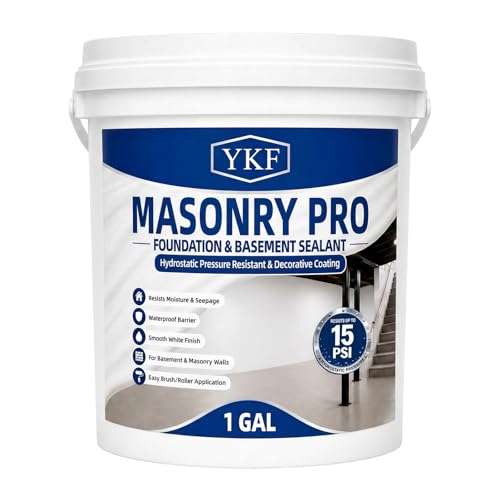
YKF Masonry Pro Foundation & Basement Waterproofing Sealer
What We Like
- 15 PSI hydrostatic pressure resistance
- Smooth white finish hides imperfections
- Works on dry or slightly damp surfaces
Trade-offs
- Covers only 100 sq ft per gallon
- Requires surface prep and leak repair first
- Needs two coats for full coverage
A 15 PSI hydrostatic pressure rating means this sealer can stand up to serious below-grade water pressure, making it a legitimate option for foundation walls that see real moisture. It also dries to a clean white finish that hides minor surface flaws, which is a nice bonus when you’re trying to freshen up a tired basement wall.
Coverage is the main drawback: at roughly 100 square feet per gallon, you’ll need more material than some other products if you’re tackling a large area. Surface preparation is also non-negotiable, active leaks and cracks must be repaired before application, and a second coat is recommended for full protection. That said, if your project is a moderate-sized basement wall and you’re willing to do the prep work, this sealer offers a strong balance of performance and value.
Product photos
Drylok Clear Latex Masonry Waterproof Sealer

What We Like
- Clear finish preserves surface appearance
- Versatile application methods (brush, roller, spray, squeegee)
- Latex formula for easy cleanup
Trade-offs
- At 20 lb, heavier than many 1-gallon competitors
- Clear sealer does not hide stains or discolorations
At 20 pounds shipping weight, this gallon of sealer is heavier than many alternatives, the Zinsser WaterTite Mold & Mildew White weighs 12.2 pounds, and the KILZ Basement and Masonry Waterproofing Paint is 12.5 pounds. The product is a clear latex masonry waterproof sealer, so it can be applied with a brush, roller, sprayer, or squeegee, letting you pick the tool that works best for your surface. It requires a minimum application temperature of 50 degrees Fahrenheit, which means you’ll need to plan around weather if working outdoors.
Because it’s clear, this sealer won’t cover up stains or discoloration the way a pigmented product like Zinsser WaterTite Mold & Mildew White Waterproofing Paint would. If your wall has existing marks or uneven coloring, a white waterproofing paint might give you a more uniform look. But if the surface is already in good shape and you just want to keep its natural appearance, this clear sealer provides waterproofing without adding a color layer.
How We Evaluated Waterproofing Paints For Basement Walls
This guide is based on manufacturer data sheets, building science publications, and aggregated owner experiences. We compared published hydrostatic pressure ratings, coverage rates, drying times, and VOC levels to identify which paints are effective.
The three criteria that mattered most were hydrostatic pressure resistance (measured in PSI or lbs of water pressure), surface compatibility (dry vs. Damp vs. Wet application), and the paint’s ability to bridge existing cracks. A paint that blocks 12 PSI but requires bone-dry walls is useless for a chronically damp basement, while a flexible membrane paint may be overkill for a pristine poured wall.
A research-led evaluation has limits: owner experiences vary widely based on wall preparation, application technique, and the severity of the moisture problem. We prioritized paints with consistent positive feedback and clear, verifiable specifications so you can match the right product to your wall’s condition.
What To Look For In Waterproofing Paints For Basement Walls
Choosing a basement waterproofing paint starts with understanding your wall’s moisture level and surface material. The right paint must bond, seal, and flex where needed.
Look for a paint rated for at least 10 PSI hydrostatic pressure for standard below-grade walls. Confirm it works on your surface (concrete, cinder block, or masonry) and under your wall’s moisture condition (dry, damp, or wet).
Hydrostatic Pressure Rating
This number tells you how much water pressure the dried coating can withstand from behind the wall. A rating of 10 PSI is the minimum for most below-grade basement walls, while 12 to 20 PSI offers stronger protection for deeper foundations or areas with heavy groundwater.
The Zinsser WaterTite Mold & Mildew resists up to 20 lbs of water pressure, while the KILZ Basement and Masonry paint blocks up to 12 PSI. If you have active water seepage, look for a paint with a higher rating and consider addressing drainage issues first.
Surface Condition Compatibility
Not all waterproofing paints can be applied to damp or wet walls. The Zinsser WaterTite General Purpose is one of the few that goes on wet or dry masonry, making it ideal for persistently damp basements. Most others, including the top-rated Zinsser WaterTite Mold & Mildew, require the wall to be completely dry before application. Check the manufacturer’s surface moisture requirement carefully, applying a dry-wall-only paint to a damp surface will cause adhesion failure.
Crack Bridging and Flexibility
If your basement walls have hairline cracks or settling gaps, a rigid paint will eventually crack too. Flexible membrane paints like the Ames Block & Wall Liquid Rubber and the Liquid Rubber Foundation Sealant offer high elongation, meaning they stretch as the wall moves without tearing. The Ames Block & Wall even fills cracks directly. For walls with no visible cracks, a standard acrylic waterproofing paint like the INSL-X WaterBlock is sufficient and dries faster.
- Measure your wall’s square footage and compare it to the paint’s coverage per gallon to avoid buying too little.
- Check the number of recommended coats, some paints need two coats for full warranty coverage.
- Look at cure time: KILZ Basement and Masonry takes 7-14 days to fully cure, while INSL-X WaterBlock dries much faster.
- Verify the paint is suitable for your application method (brush, roller, or sprayer) and that you have the right tools.
A good rule: buy one extra gallon than your coverage calculation suggests to account for porous masonry absorption and a second coat.
Waterproofing Paints For Basement Walls Compared
The table below compares the 10 best waterproofing paints for basement walls side by side, highlighting their key strengths and best-use scenarios.
| Product | Finish Type | Water Pressure Resistance | Application Method |
|---|---|---|---|
| Zinsser WaterTite Mold & Mildew White Waterproofing Paint | Smooth, bright white, non-gritty | Up to 20 lbs. | Brush or roller |
| KILZ Basement and Masonry Waterproofing Paint | N/A | N/A | N/A |
| Ames Block & Wall Liquid Rubber Waterproofer | N/A | N/A | Sprayer, roller, or brush |
| INSL-X WaterBlock Acrylic Masonry Waterproofer Paint | N/A | Up to 12 psi | N/A |
| Zinsser WaterTite General Purpose White Waterproofing Paint | Bright white, non-gritty | Up to 10 lbs. | Brush or roller |
| GROVE GRVCOEVC1806025B Waterproofing Paint | Clear | N/A | Brush, roller, or sprayer |
| Liquid Rubber Foundation Sealant Basement Waterproof Sealer | N/A | N/A | N/A |
| AMES Blue Max White Liquid Rubber Waterproofer | N/A | N/A | Brush, roll, or spray |
| YKF Masonry Pro Foundation & Basement Waterproofing Sealer | Smooth White Finish | 15 PSI | Brush or roller |
| Drylok Clear Latex Masonry Waterproof Sealer | Clear | N/A | Brush, roller, spray, squeegee |
Frequently Asked Questions
Can waterproofing paint stop an active leak?
No. Waterproofing paint is a sealant, not a structural repair. It prevents water vapor and minor dampness from penetrating the coating, but active leaks or high hydrostatic pressure require fixing the source, like grading, gutters, or a foundation drain, before painting.
How long does waterproofing paint last on basement walls?
With proper surface preparation and application, a quality waterproofing paint like the Zinsser WaterTite Mold & Mildew can last 10 to 15 years. The 15-year warranty on that product reflects its expected lifespan under normal conditions. Paints applied to damp walls or over existing coatings may fail sooner.
Can I apply waterproofing paint over old paint?
Only if the old paint is sound, well-adhered, and compatible. Most waterproofing paints require a bare masonry surface or a previously painted surface that has been cleaned and lightly etched. Peeling or chalking old paint must be removed entirely, or the new coating will delaminate.
What’s the difference between waterproofing paint and vapor barrier paint?
Waterproofing paint is designed to block liquid water under pressure (hydrostatic pressure), while vapor barrier paint only resists water vapor diffusion. A true waterproofing paint like the KILZ Basement and Masonry or Zinsser WaterTite can handle both liquid and vapor. Standard masonry paint or primer usually only blocks vapor.
Should I use a clear sealer or a white waterproofing paint?
Choose a clear sealer like the GROVE or Drylok Clear if you want to preserve the natural look of clean or new masonry. Choose a white waterproofing paint like the YKF Masonry Pro or Zinsser WaterTite if you need to hide stains, discolorations, or uneven surfaces. White paints also brighten a basement, but they won’t look natural.
The Bottom Line
For homeowners with dry basement walls who want maximum waterproofing protection and a long warranty, the Zinsser WaterTite Mold & Mildew White Waterproofing Paint is the clear best overall pick. Its 20 lb water pressure resistance and 15-year guarantee are unmatched in this category, and the low-odor, soap-and-water cleanup makes it DIY-friendly.
If your walls are persistently damp, skip the standard Zinsser and grab the Zinsser WaterTite General Purpose, it’s one of the few paints that bonds to wet masonry. For cracked walls, the Ames Block & Wall Liquid Rubber fills gaps and stretches as the foundation settles. Budget-conscious shoppers with smaller walls will find the YKF Masonry Pro offers solid protection for less.
The single most important factor is matching the paint to your wall’s moisture condition. A great paint applied to the wrong surface will fail. Measure your square footage, check your wall’s dryness, and choose a paint rated for the pressure your basement actually sees.
