
10 Best Tools For Scraping Paint in 2026
This post contains affiliate links. As an Amazon Associate, we earn from qualifying purchases.
For fast paint removal on large flat surfaces, the Bahco BAH665 Carbide Scraper wins as the best overall. Its blade stays sharp up to 50x longer than steel, and the two-hand grip reduces fatigue during long jobs. DIY renovators and pros who need a durable scraper will appreciate the interchangeable blades, while detailers tackling intricate moldings should look to the ALLWAY Contour Scraper Set. Budget-focused shoppers will find solid value in the Amazon Basics Bent Scraper.
The real challenge with paint scraping isn’t just removing old layers, it’s doing so without gouging the surface, exhausting your hands, or spending more time sharpening blades than actually working. The right tool balances blade durability, handle comfort, and head shape for the specific surface you’re prepping.
This guide is built from manufacturer specifications, expert round-ups, and patterns in owner feedback across the most popular paint scrapers on the market. We’ve organized the top ten picks by what they do best so you can match the tool to your project.
Top 10 Paint Scrapers in the Market
Certain content that appears on this site comes from Amazon. This content is provided "as is" and is subject to change or removal at any time.
The Best Paint Scrapers, Reviewed
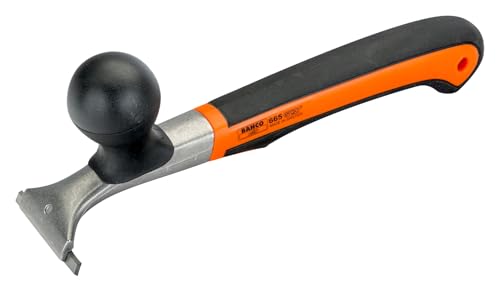
Bahco BAH665 Carbide Scraper
What We Like
- Blade stays sharp up to 50x longer than steel
- Two-hand grip reduces fatigue during long jobs
- Slim head reaches corners and tight spaces
- Interchangeable blades for different materials
Trade-offs
- Extra-wide blade limits precision on small details
- Fixed head shape limits use on curved or detailed surfaces
A carbide blade that holds its edge up to 50 times longer than steel means you spend less time swapping blades and more time stripping paint, rust, or adhesive. The 2-1/2-inch wide head covers large areas fast, while the two-hand ergonomic grip distributes pressure evenly so your hands don’t cramp during long sessions. This scraper is built for heavy-duty renovation work on wood, metal, or concrete, making it the go-to for anyone tackling thick coatings or stubborn buildup on floors, furniture, or walls.
The wide 2-1/2-inch blade covers large areas fast. But if you need to scrape intricate profiles or curved surfaces, a set like the ALLWAY Contour Scraper Set with its six included blades offers more shape options. The Bahco uses interchangeable carbide inserts, but its head shape is fixed, so it’s best suited for flat or gently curved surfaces rather than detailed contour work.
Product photos
Holdly Premium Carbide Paint Scraper

What We Like
- Carbide blade stays sharp and corrosion-resistant
- Anti-slip handle maintains consistent pressure
- Works on wood, tile, glass, metal, and more
Trade-offs
- Flat blade less effective on curved surfaces
- Two-handed grip limits one-handed use
Using two hands on this scraper lets you apply more force, so reviewers say it helps you do twice as much work as other scrapers in less time and with less effort. The 2.5-inch tungsten carbide blade stays sharp and resists corrosion, cutting into paint, glue, varnish, rust, and other coatings on surfaces like wood siding, boat hulls, cabinets, glass, tile, walls, floors, mirrors, metal, stonework, and concrete. Strong knobs and screws keep the blade steady, and the anti-slip handle helps maintain consistent pressure, reducing the risk of damaging the material underneath. This scraper suits anyone who spends hours stripping flat surfaces and wants a tool that minimizes dust and chemical odors compared to paint strippers.
The blade is 0.1 inches thick, which is typical for a scraper blade but not intended for prying. Compared to the Bahco BAH665, which has a 2.0-inch carbide blade and a more traditional ergonomic handle, the Holdly offers a ball for the second hand to provide extra control on stubborn coatings. If most of your scraping is on flat, wide areas and you want to save your shoulders, this design makes a real difference.
Product photos
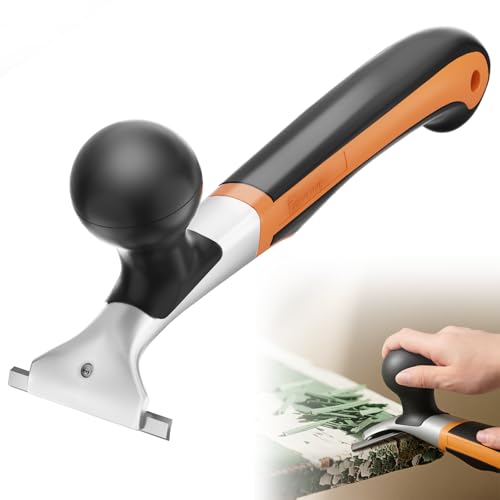
Cosycove Tungsten Carbide Scraper
What We Like
- Double-sided blade gives 2x more usable life
- Ergonomic anti-fatigue handle reduces hand strain
- Reinforced handle withstands hammer strikes
Trade-offs
- Permanent blade fusion means no blade replacement option
- Wide 2.5-inch blade less precise on tight corners
A double-sided, reversible carbide blade that measures 2.5 inches wide gives you two full edges before you need to flip it, effectively doubling the tool’s life compared to single-sided scrapers. The fiberglass-reinforced nylon handle can take hammer strikes for extra leverage, and the textured grip is designed to reduce hand fatigue during long sessions.
The blade is permanently fused to the handle, so when both edges wear out, you replace the whole scraper rather than just the blade. At half a pound, the tool has a solid feel that helps drive the edge into tough buildup. Best for heavy-duty stripping jobs where speed and durability matter more than swapping blades.
Product photos
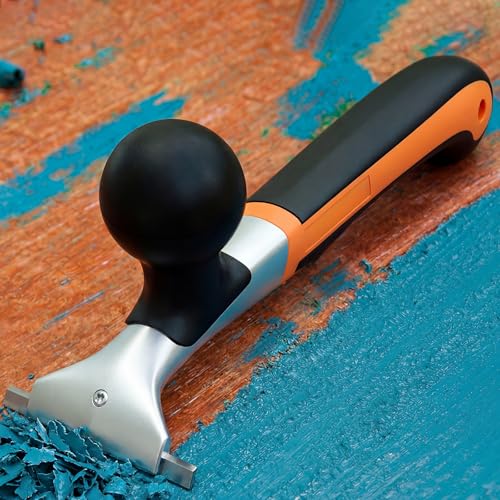
Onemake Heavy-Duty Carbide Scraper
What We Like
- Swivel ball allows two-handed leverage
- Reinforced handle withstands hammer strikes
- Carbide blade holds edge up to 10x longer than carbon steel
Trade-offs
- Blade swap requires a separate screwdriver
- Narrow blade covers large areas slowly
The angled blade edge and reinforced screw locks keep the blade steady and reduce slipping for controlled, zero-scratch precision on delicate surfaces such as antique wood, marble, finished wood, and cabinets. This scraper is built for precision work on valuable surfaces where keeping dust down matters more than raw speed. The two-handed leverage from the swivel ball grip lets you apply force with both hands for added leverage and better pressure control than a single-hand grip. The shock-absorbing design helps reduce hand strain and fatigue during extended use on large surfaces and in tight spaces such as stair spindles.
The 2.5-inch blade width is great for detail work and spindles, but it means you won’t cover large flat areas as quickly as a wider scraper. The Bahco BAH665, for comparison, has a 2.0-inch wide blade in a longer handle format for different leverage. You’ll also need a standard screwdriver to swap the blade, no tool-free change here. But for anyone refinishing antique furniture, cabinets, or trim indoors, the low-dust performance and precision control make this a smart pick over sanding or a wider, less controlled scraper.
Product photos
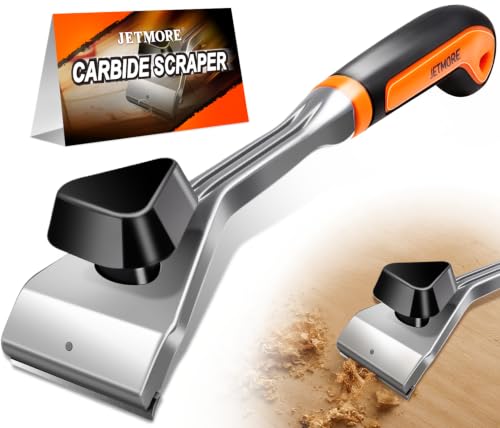
Jetmore Carbide Scraper
What We Like
- Solid aluminum alloy body is strong yet lightweight
- Ergonomic PP+TPR handle reduces hand fatigue
- Triangular front grip enables two-handed control
- 24° blade angle minimizes scraping effort
Trade-offs
- No blade storage or replacement blades included
- Blade is single-sided, limiting flip-and-continue use
A solid aluminum alloy body makes this scraper both tough and light, so you can lean into stubborn paint without your arm tiring out. The 24° blade angle slices through dried glue and varnish with noticeably less effort than a steeper blade, and the PP+TPR handle gives a secure grip even when your hands get sweaty. For anyone stripping furniture or prepping walls for a fresh coat, this tool balances durability with comfort better than most in its class.
The trade-off is that this scraper comes with no spare blades or onboard storage, so you’ll need to buy replacements separately. Compared to the Bahco BAH665, which also uses a 2-1/2″ carbide blade but weighs 0.5 pounds, the Jetmore’s aluminum body keeps it lightweight for extended use. It’s a focused design for heavy scraping sessions, not a do-everything kit.
Product photos
Purdy Premium Carbide Scraper

What We Like
- Rubberized ergonomic grip for comfort
- Nail-set hammerhead end for extra use
- Lightweight at 0.4 pounds
Trade-offs
- At 11 inches, less leverage for tough jobs
- Blade width fixed at 2.5 inches, no options
- No pole socket for high-reach scraping
A carbide blade that is 2.5 inches wide, paired with a rubberized ergonomic grip, makes this scraper easy to hold for long prep sessions without hand fatigue. At just 0.4 pounds, it handles like a precision instrument rather than a heavy pry bar.
The blade width of 2.5 inches covers less area per pass than the Amazon Basics Bent Scraper’s 3-inch blade. If you are stripping large flat surfaces or reaching ceilings, the Purdy’s lack of a pole socket means you will need a stool or ladder. But for detailed trim, window frames, or furniture refinishing where control matters more than speed, the lightweight rubberized grip and durable carbide edge give you precise, comfortable scraping.
Amazon Basics Bent Scraper

What We Like
- 3-inch chisel-edge cutlery steel blade
- Bent profile protects walls and knuckles
- Pole socket for high-reach scraping
- Soft molded rubber grip for secure hold
Trade-offs
- Steel blade dulls faster than carbide alternatives
- No extension pole included for overhead reach
A 3-inch heat-treated cutlery steel blade with a chisel edge makes this scraper ready for heavy-duty jobs like removing paint, silicone, or even tiles. The bent profile keeps your knuckles clear of the surface and helps avoid gouging walls or floors, which is a real comfort during long sessions. It suits anyone who needs an affordable, versatile scraper for occasional or moderate paint removal and doesn’t mind swapping blades more often than with carbide options.
Product photos
ALLWAY Contour Scraper Set

What We Like
- Six blade profiles for detailed contours
- Soft-grip offset handle for control
- Included file keeps blades sharp
- Blade storage case keeps set organized
Trade-offs
- Narrow blades limit heavy flat scraping
- Steel blades dull faster than carbide
- Offset handle reduces two-hand pushing force
Six stainless-steel blades shaped for concave, round, and sharp indented moldings mean this set tackles the decorative trim and window casings that flat scrapers can’t reach. The soft-grip offset handle keeps your hand clear of the work surface, giving you control on intricate profiles without fighting fatigue. It suits anyone restoring detailed woodwork or removing paint from ornate baseboards and door frames where precision matters more than raw speed.
For anyone tackling detailed trim and molding, the six stainless-steel blades in this kit cover concave, flat, round, and sharp indented profiles, so you can match the right edge to the job. The included file stores in the handle for quick touch-ups, and the blade case keeps everything organized. This is not a heavy-duty flat scraper, but for contour scraping, it is the right tool.
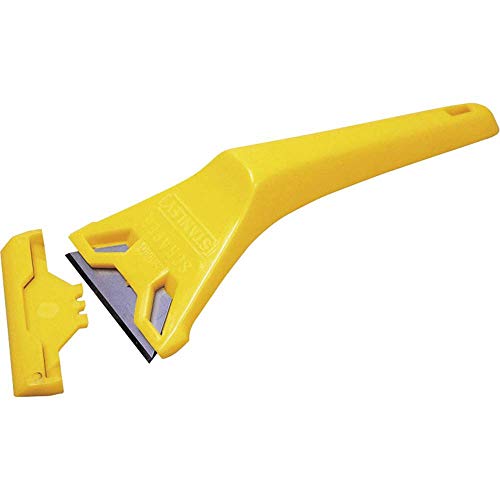
Stanley Window Scraper
What We Like
- Lightweight at 0.1 pounds
- Designed for window paint removal
- Includes one heavy duty blade
- Compact 8.5-inch length
Trade-offs
- Single blade limits backup options on site
- Narrow focus on glass means less versatile on wood
Weighing just 0.1 pounds, this scraper is barely noticeable in your hand, which matters when you’re working against a vertical glass surface for any length of time. It’s purpose-built for windows: the compact 8.5-inch body keeps you close to the work, and it comes with one heavy duty blade. This is a focused tool for glass work, not a general-purpose scraper.
This focus comes at the cost of versatility. With only one blade and no ergonomic grip, it’s not the tool for stripping paint from trim or furniture, that’s where the Bahco BAH665 Carbide Scraper’s wider blade and two-hand control shine. But if your job is strictly windows, the Stanley’s light weight and simple design keep it easy to handle on a smooth surface. It does one thing, and that’s exactly what you need here.
Hyde Contour Paint Removal Scraper

What We Like
- Six blade profiles match detailed contours
- 10-inch shaft keeps hands from heat
- Tool-free quick-release blade changes
- Precision for trim, molding, and profiles
Trade-offs
- Niche use: limited to contoured surfaces
- Blade profiles require matching shape to surface
The 10-inch metal shaft is the key feature here, keeping your hands safely farther from the heat gun while you work on detailed moldings and trim. That distance matters when you’re softening layers of old paint with direct heat. The six specialized blade profiles let you match the exact contour of decorative profiles, corners, and curved surfaces that a standard flat scraper would miss. This tool is built for precision restoration and refinishing work where access and control matter more than raw speed.
If your project is mostly flat surfaces, the Bahco BAH665 Carbide Scraper with its extra-wide blade and two-hand control will cover more area faster. But for anyone restoring detailed window trim, cabinet moldings, or ornate woodwork with a heat gun, the Hyde’s contour-matched blades and heat-safe reach make it the right specialist for the job.
How We Evaluated Paint Scrapers
We analyzed each scraper’s published specs, blade material, head width, handle design, and weight, alongside manufacturer claims about blade longevity and ergonomics. Owner feedback patterns from long-term users helped us understand real-world durability and comfort after hours of use.
Three criteria mattered most. First, blade material determines how long the edge stays sharp: carbide blades hold an edge up to 50x longer than steel, while steel blades dull faster but are easier to sharpen. Second, handle ergonomics directly affect fatigue during extended scraping sessions; two-hand grips and rubberized coatings reduce strain. Third, head shape and width dictate whether a scraper works on large flat surfaces or tight corners and curved profiles.
A research-led evaluation can’t replicate the feel of a scraper in your hand on a specific job site. We rely on consistent patterns in owner feedback and manufacturer data to recommend tools that perform reliably across common paint-removal tasks.
What To Look For In Paint Scrapers
Choosing the right paint scraper starts with matching the tool to the surface you’ll be stripping. Here’s a quick overview of the key buying criteria.
Blade material, handle design, head shape, and blade versatility determine how fast, comfortable, and effective your scraper will be on flat walls, detailed trim, or delicate glass.
Blade Material
Carbide blades dominate the premium end of the market because they stay sharp up to 50x longer than standard steel blades. This means less downtime for sharpening and more consistent cutting pressure. Steel blades, found on budget picks like the Amazon Basics Bent Scraper, are cheaper and easier to sharpen but require more frequent maintenance. For heavy-duty stripping of multiple layers, carbide is worth paying more for. For occasional use on a single project, a steel blade can get the job done.
Handle Ergonomics
Comfort during long scraping sessions comes down to handle grip and leverage. Two-hand grips, like the Bahco’s or the Holdly’s, distribute pressure and reduce fatigue on large flat surfaces. Rubberized or TPR-coated handles, found on the Purdy and Jetmore scrapers, prevent slipping when hands get tired or sweaty. For overhead or high-reach work, look for a pole socket, the Amazon Basics Bent Scraper includes one, while the Purdy does not.
Head Shape and Blade Width
- Wide blades (2.5 inches and up) cover large areas fast but struggle on tight corners and curved profiles.
- Narrow blades (1.5 inches or less) offer precision for window frames, trim, and detailed moldings.
- Fixed-head scrapers work best on flat surfaces; contour scrapers with multiple blade profiles handle intricate shapes.
- Bent-head scrapers protect walls and knuckles by keeping your hand away from the work surface.
- Swivel heads (like the Onemake) allow two-handed leverage for tough coatings on delicate surfaces.
Rule of thumb: Buy the widest blade that fits your most common surface, and buy a separate detail scraper for trim and profiles.
Paint Scrapers Compared
The table below compares the top ten paint scrapers across the criteria that matter most: blade material, handle design, head width, and best-use surface.
| Product | Blade Width | Blade Material | Handle Type |
|---|---|---|---|
| Bahco BAH665 Carbide Scraper | 2-1/2 inches | Carbide | Two-hand ergonomic grip |
| Holdly Premium Carbide Paint Scraper | 2.5 inches | Tungsten Carbide | Two-handed grip, non-slip texture |
| Cosycove Tungsten Carbide Scraper | 2.5 inches | Tungsten carbide | Ergonomic anti-fatigue handle |
| Onemake Heavy-Duty Carbide Scraper | 2.5 inches | Tungsten carbide | Dual-textured, non-slip, swivel ball |
| Jetmore Carbide Scraper | 2-1/2" | Premium carbide | PP + TPR |
| Purdy Premium Carbide Scraper | 2.5 inches | Tungsten Carbide | Rubberized grip |
| Amazon Basics Bent Scraper | 3 inches | Cutlery steel, heat-treated | Plastic with rubber grip |
| ALLWAY Contour Scraper Set | N/A | Stainless-steel | Soft-grip, offset |
| Stanley Window Scraper | N/A | N/A | N/A |
| Hyde Contour Paint Removal Scraper | N/A | N/A | N/A |
Frequently Asked Questions
What is the best paint scraper for large flat walls?
The Bahco BAH665 Carbide Scraper is the best overall choice for large flat walls. Its carbide blade stays sharp up to 50x longer than steel, and the two-hand grip reduces fatigue during long sessions on broad surfaces.
Can I use a paint scraper on glass windows without scratching?
Yes, but only with a scraper designed for glass, like the Stanley Window Scraper. Its compact 8.5-inch length and narrow blade are made specifically for removing paint and stickers from glass without scratching the surface.
What is the difference between carbide and steel scraper blades?
Carbide blades hold their edge up to 50x longer than steel, making them ideal for heavy-duty stripping on multiple projects. Steel blades are cheaper and easier to sharpen but dull faster, requiring more frequent maintenance during a single job.
Which paint scraper is best for removing paint from detailed moldings?
The ALLWAY Contour Scraper Set is best for detailed moldings. It includes six blade profiles for intricate shapes, a soft-grip offset handle, and a storage case to keep the set organized.
How do I remove paint without creating a lot of dust?
Use a scraper designed for low-dust scraping, like the Onemake Heavy-Duty Carbide Scraper. Its swivel ball allows two-handed leverage for controlled scraping on delicate surfaces like antique wood or cabinets, minimizing airborne dust compared to sanding.
The Bottom Line
For most DIY renovators and pros, the Bahco BAH665 Carbide Scraper is the best overall tool for scraping paint from large flat surfaces. Its carbide blade stays sharp far longer than steel alternatives, and the two-hand grip makes long stripping sessions less exhausting.
If your project involves detailed trim or curved profiles, the ALLWAY Contour Scraper Set gives you six blade shapes in one organized kit. Budget-focused shoppers will find the Amazon Basics Bent Scraper a capable option for heavy paint removal on walls or floors, especially with its knuckle-protecting bent profile and pole socket for high reach.
The single most important factor in choosing a paint scraper is matching the blade width and head shape to your surface. A wide blade on a flat wall strips paint fast; a narrow profile scraper on intricate trim preserves the wood underneath.
