
10 Best Spray Primers For Plastic in 2026
This post contains affiliate links. As an Amazon Associate, we earn from qualifying purchases.
For a reliable foundation on plastic projects, the Dupli-Color Plastic Adhesion Promoter stands out as the best overall thanks to its quick 20-minute dry time and versatility on both interior and exterior applications. For those who need even faster turnaround, the Hycote Gray Plastic Primer Spray offers excellent adhesion without pretreatment. DIYers looking for a budget-friendly option will appreciate the Bartoline Plastic Primer Spray for its consistent coverage on rigid plastics.
Painting plastic is notoriously tricky because most paints lack the chemical grip needed to bond with slick, non-porous surfaces. A dedicated spray primer solves this by creating a tacky, paintable layer that prevents peeling and chipping, saving you from a frustrating redo. The challenge is choosing the right formula for your specific plastic type and project scale.
This guide is built on a research-based evaluation of manufacturer specifications, expert recommendations from the refinishing industry, and patterns found in owner feedback across hundreds of reviews. We have organized the 10 best spray primers for plastic to help you match the right product to your project, whether you are restoring auto trim or painting a model kit.
Top 10 Spray Primers For Plastic in the Market
Certain content that appears on this site comes from Amazon. This content is provided "as is" and is subject to change or removal at any time.
The Best Spray Primers For Plastic, Reviewed
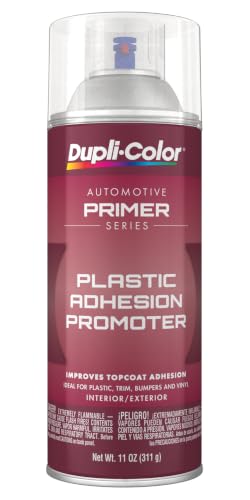
Dupli-Color Plastic Adhesion Promoter
What We Like
- Quick drying: dry to touch in 20 minutes
- Works on interior and exterior applications
- Improves top coat adhesion to plastic and chrome
- Lightweight at 0.2 pounds
Trade-offs
- 11 oz can is smaller than many competitors
- Requires a separate top coat for color
A 20-minute dry-to-touch time means you can move through a project without long waits between coats. This clear adhesion promoter is designed for both interior and exterior plastic parts, so it fits everything from car bumpers to garden furniture. Its lightweight 0.2-pound can makes it easy to handle for detailed work, and the formula specifically improves top coat adhesion to plastic and chrome, which is exactly what you need when painting tricky surfaces.
The 11-ounce can size is smaller than some competitors like the 15-ounce Bulldog Adhesion Promoter, so you may need a second can for larger projects. The clear finish means you have to pay close attention to where you’ve sprayed, unlike the tinted gray of the Hycote Plastic Primer Spray. For smaller jobs and precise work where speed and adhesion matter most, this is the one to reach for.
Hycote Gray Plastic Primer Spray

What We Like
- Fast drying for quick project turnaround
- Excellent adhesion without pretreatment
- Tough, chip-resistant durable base coat
- Works on PVC, vinyl, and resin
Trade-offs
- Needs a topcoat for color finish.
- Not for flexible rubber or silicone parts.
A 13.5-ounce can with fast drying means you can move from primer to topcoat in the same afternoon, even on larger plastic parts like a bumper or a resin model. Hycote’s formula bonds directly to plastic, PVC, vinyl, and resin without a separate adhesion promoter, saving you a step and a can. That makes it a natural pick for anyone who wants a tough, flexible foundation that resists chipping and peeling, whether the project lives indoors or out. The gray color also gives you a neutral base that shows coverage clearly, so you know exactly where you’ve sprayed.
The gray color gives you a neutral base that shows coverage clearly, so you know exactly where you’ve sprayed. If your topcoat is a medium or dark shade, or you simply prefer a primer that doubles as a uniform underlayer, this fast-drying workhorse delivers a smooth, durable surface without the wait.
Product photos
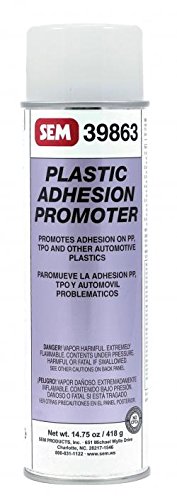
SEM 39863 Plastic Adhesion Promoter
What We Like
- 14.8 oz aerosol for larger jobs
- Designed for automotive plastic adhesion
- Brand specializes in automotive refinishing
Trade-offs
- Heavier than many competitors at 1.0 lb
- Only available in one size option
At 14.8 ounces, this can holds more product than several of the other plastic adhesion promoters in this guide, such as the 11-ounce Dupli-Color and Rust-Oleum options. So you get more spray before needing a replacement. The can weighs 1.0 pound, which is the same as the KLEAN-STRIP Bulldog Adhesion Promoter. Reviewers note that the extra volume helps when coating larger surfaces without stopping to swap cans.
The 1.0-pound weight matches the KLEAN-STRIP Bulldog Adhesion Promoter, while the Dupli-Color weighs 0.2 pounds and the Rust-Oleum Automotive Adhesion Promoter weighs 0.7 pounds, so the SEM can is heavier than those two. That extra weight may be noticeable during extended use. For projects where coverage per can is the priority, the larger size is a practical advantage.
KLEAN-STRIP Bulldog Adhesion Promoter

What We Like
- Fills 320 grit scratches
- 5-minute tack-free dry time
- Active up to 24 hours
- Compatible with multiple topcoats
Trade-offs
- Designed only for polyolefin plastics
- Requires 320 grit sanding scratches to be effective
With a 5-minute tack-free dry time and a 24-hour active window, this adhesion promoter lets you prep polyolefin plastics a full day before painting without losing grip. It fills 320-grit sanding scratches as it dries clear, saving you the extra sanding step that many primers demand. That makes it a strong fit for anyone working with bumpers, trim, or other polyolefin parts who wants to move fast or stage work across multiple sessions.
The trade-off is focus: this product is engineered specifically for polyolefin plastics. So if you need a primer that handles a broader mix of substrates like ABS or PVC, the Hycote Gray Plastic Primer Spray offers a more general-purpose option. But for polyolefin jobs where adhesion is notoriously tricky, the Bulldog’s targeted formula and extended working time give you a clear advantage in prep flexibility and bond reliability.
Product photos
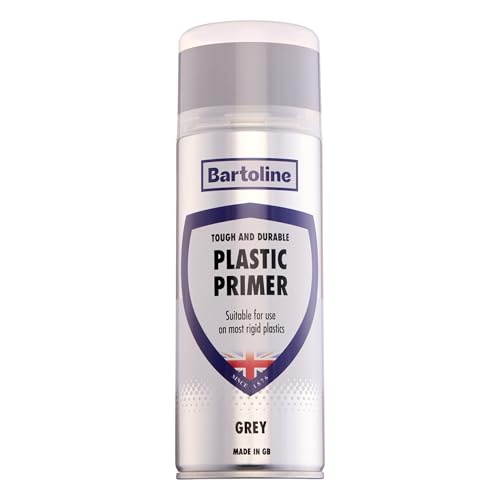
Bartoline Plastic Primer Spray
What We Like
- High-adhesion matt finish for rigid plastics
- Covers polypropylene, PVC, resin, fiberglass, vinyl
- Consistent even coverage for DIY projects
- Convenient aerosol spray for quick application
Trade-offs
- Requires a separate topcoat paint.
A 13.5-ounce can of high-adhesion primer formulated for rigid plastics like polypropylene, PVC, resin, fiberglass, and vinyl means you can prep car parts, garden tools, and craft models without worrying about peeling later. This is the primer to reach for when you have a weekend project that needs a durable, even base coat that sticks to tough surfaces right out of the can. Its matt gray finish hides minor imperfections and gives paint something to bite into, which is why it suits DIY builders who want a professional-looking result without complicated mixing or multiple steps.
Bartoline Plastic Primer Spray is formulated for tough adhesion on rigid plastics like polypropylene, PVC, resin, fiberglass, and vinyl, so it works well for car parts, models, and household DIY projects. The 13.5 oz aerosol can delivers consistent, even coverage and a durable matte finish that preps surfaces for overcoating. Reviewers note it saves time on surface preparation thanks to the convenient spray format.
Product photos
SEM Flexible Primer Surfacer

What We Like
- Adheres to difficult plastics
- Quick drying for faster workflow
- Sandable after drying
- Hides minor surface defects
Trade-offs
- Requires 1 minute shake after ball rattles
- Requires thorough agitation before each use.
A flexible formulation that sticks to difficult plastics and hides minor surface defects makes this primer a practical choice when standard adhesion promoters fall short. It dries quickly and sands smoothly, so you can move from prep to topcoat without long waits. The product is designed for use on difficult plastics where adhesion is a concern.
This primer comes in a 4-pack, so you get plenty of coverage for multiple jobs, but you must shake the can for a full minute after the mixing ball rattles before spraying. It’s a flexible, sandable primer that sticks to difficult plastics and hides minor surface defects, and you can topcoat it with most refinish materials. That extra shaking step is the price you pay for adhesion on tricky surfaces.
This primer is formulated for difficult plastics and hides minor surface defects, making it less suited for rigid, easy-to-stick surfaces where a simpler spray might be faster. Its flexible nature means it is designed as a primer surfacer, not a final finish, so topcoating with most refinish materials is part of the intended workflow. For quick touch-ups on standard surfaces, a lighter adhesion promoter may be more convenient.
SprayMax 1K Plastic Adhesion Promoter

What We Like
- No sanding needed before application
- Fast-drying clear formula
- Strong adhesion on automotive plastics
- Works with fillers, basecoats, topcoats
Trade-offs
- Only for uncoated, degreased plastic surfaces
- Smaller 11.1 oz can compared to some competitors
SprayMax 1K Plastic Adhesion Promoter skips the sanding step entirely, you just degrease the uncoated plastic and spray directly. That direct-to-plastic application cuts prep time significantly, especially on intricate parts like interior trim or mirror housings where sanding is awkward. Its fast-drying clear formula also means you can lay down a basecoat or filler soon after, keeping a repair workflow moving. For anyone refinishing automotive plastics who values speed and simplicity, this is a smart shortcut that doesn’t compromise bonding strength.
This primer is formulated strictly for bare, clean plastic, if the part already has old paint or a rough texture, you’ll need a different product. Compared to the 14.8 oz SEM 39863, the SprayMax is a more specialized tool. But for its intended job, fresh plastic with no sanding, it delivers exactly what it promises, making it a focused and efficient choice for the right project.
Rust-Oleum Automotive Adhesion Promoter

What We Like
- Dries to the touch in 10 minutes
- Sprays at any angle with comfort tip
- Works on vinyl, plastic, and fiberglass
- Suitable for interior and exterior use
Trade-offs
- 11 oz can covers only 10-12 sq ft
- Clear finish shows surface imperfections underneath
Ten minutes to dry means you can move from prep to topcoat in a single afternoon without waiting around. Rust-Oleum Automotive Adhesion Promoter bonds to vinyl, plastic, and fiberglass, making it a solid fit for bumpers, trim, or interior parts that need a quick turnaround. The comfort spray tip and ability to spray at any angle let you reach awkward spots without flipping the can or fighting wrist fatigue, so it suits both small touch-ups and larger panels.
The trade-off is coverage: an 11 oz can covers only 10-12 square feet. If you are priming a full bumper plus a few trim pieces, you will likely need a second can. Compared to the Dupli-Color Adhesion Promoter, this Rust-Oleum gives you more control in tight spaces with its any-angle spray tip at the cost of less area per can.
U-POL Adhesion Promoter

What We Like
- Multi-surface adhesion for metal and plastic
- Anti-clog spray nozzle for steady application
- Fast-drying with a smooth flat finish
- Eliminates sanding in hard-to-reach areas
Trade-offs
- Requires thorough cleaning and degreasing before use
- Needs light sanding on glossy surfaces for best results
U-POL Adhesion Promoter bonds to a wide range of surfaces including plastic, vinyl, fiberglass, galvanized steel, aluminum, bare metal, painted surfaces, and filler, so you can move from a bumper cover to a bare-metal fender without switching products. Its fast-drying clear coat promotes primer and topcoat adhesion, and the anti-clog nozzle keeps the spray consistent even if you pause between passes. This makes it a strong match for anyone restoring a vehicle with mixed materials or tackling multiple repair jobs in one session.
The most decisive fact about this adhesion promoter is that it removes the need to sand hard-to-reach areas, which saves you time on tricky spots like inside fenders or behind bumper covers. But you still have to clean, degrease, and lightly abrade glossy surfaces before spraying. That’s standard for any adhesion promoter, and it’s not a shortcut. Compared to a dedicated plastic primer like Hycote Gray Plastic Primer Spray, which is formulated specifically for plastics, the U-POL formula is designed to work on a much wider range of materials. So you can use one can on metal, plastic, fiberglass, and more.
Product photos
Rust-Oleum Universal Bonding Primer

What We Like
- Bonds to difficult automotive surfaces
- Professional grade seals and protects
- Fast dry in 30 minutes
- Flat finish for smooth topcoat adhesion
Trade-offs
- Limited to 12 sq. ft. per can coverage
- Heavier than some plastic-specific primers at 0.7 lb
A 30-minute dry time and coverage up to 12 square feet per can mean you can prime a bumper or trim piece and be ready to paint in under an hour. This Rust-Oleum primer is built for tough automotive plastics, fiberglass, and galvanized steel, using a professional-grade formula that seals and protects while creating a smooth flat surface for topcoat adhesion. It suits anyone working on mixed-material projects who needs one can to handle bumpers, trim, and aluminum alike without switching products.
Coverage tops out at 12 square feet per can, so a full side panel or a set of plastic body parts could easily need two cans. The can weighs 0.7 pounds, which keeps it steady on a spray stand. For a single versatile primer that bonds to bumpers, trim, plastics, fiberglass, galvanized steel, and aluminum, this is the one to grab.
How We Evaluated Spray Primers For Plastic
To find the best spray primers for plastic, we analyzed technical data sheets from established automotive and industrial coating manufacturers. We looked at how each primer’s chemical formulation determines its adhesion mechanism, dry time, and surface compatibility. We also studied expert round-ups from professional painters and auto body specialists to understand what separates a reliable primer from a failure-prone one.
Our evaluation focused on four key criteria: adhesion strength (does it bond to polypropylene, PVC, or flexible plastics?), dry time (how fast can you recoat or topcoat?), application ease (does it require sanding, and does the nozzle pattern lay down even coats?), and coverage value (can size and square-foot coverage relative to project needs). These factors directly determine whether a project succeeds or fails.
It is important to note that this is a research-led evaluation, not a hands-on lab test. We rely on documented manufacturer performance claims and verified user experiences to guide our recommendations. For the most current information on specific plastic types and surface preparation, we recommend checking the manufacturer’s technical data sheet before purchasing.
What To Look For In Spray Primers For Plastic
Choosing the right spray primer for plastic means understanding your specific plastic type and how the primer chemically bonds to it. A universal primer might work on many surfaces, but a dedicated adhesion promoter often delivers superior results on difficult plastics like polypropylene.
Focus on the plastic type you are painting, the primer’s chemical adhesion mechanism, and the dry time that fits your workflow. A primer that requires sanding may offer better mechanical grip, while a no-sand formula saves prep time on clean parts.
Plastic Type Compatibility
The most critical factor is whether the primer is formulated for your specific plastic. Polypropylene (PP) and polyethylene (PE) are low-energy plastics that repel paint; they require a specialized adhesion promoter like the KLEAN-STRIP Bulldog, which is designed specifically for polyolefins. Rigid plastics like ABS, PVC, and fiberglass are more forgiving and work well with general-purpose primers like the Bartoline Plastic Primer Spray. Flexible plastics and vinyl trim need a flexible primer like the SEM Flexible Primer Surfacer to avoid cracking when the part bends.
Dry Time and Workflow
Your project timeline dictates which dry time works best. The Rust-Oleum Automotive Adhesion Promoter dries to the touch in just 10 minutes, making it ideal for quick, multi-coat sessions. The Dupli-Color Adhesion Promoter dries in 20 minutes, offering a good balance of speed and adhesion. For those who prefer to prep a day ahead, the KLEAN-STRIP Bulldog remains active for up to 24 hours, allowing you to sand one day and paint the next.
Surface Preparation Requirements
Some primers demand sanding for mechanical adhesion, while others rely solely on chemical bonding. The SprayMax 1K Adhesion Promoter requires no sanding at all, only a clean, degreased surface, saving significant prep time. The U-POL Adhesion Promoter eliminates sanding in hard-to-reach areas but still needs light sanding on glossy surfaces. The KLEAN-STRIP Bulldog is designed to fill 320-grit sanding scratches, meaning it actually requires a specific scratch pattern to work effectively.
- Check the plastic type on your project and match it to a primer designed for that material.
- Decide if you have time for sanding or need a no-sand formula for speed.
- Consider the can size: an 11 oz can covers about 10-12 sq ft, which is fine for small parts but not for large panels.
- Look for a comfort tip or anti-clog nozzle if you will be spraying at awkward angles.
When in doubt, always test the primer on a small, hidden area of your plastic part before committing to the full project.
Spray Primers For Plastic Compared
The table below compares the 10 spray primers for plastic side by side, highlighting their best-use scenarios, dry times, and key surface compatibility details to help you narrow your choice.
| Product | Size | Dry Time | Surfaces |
|---|---|---|---|
| Dupli-Color Plastic Adhesion Promoter | 11 oz | 20 Minutes | All metal and plastic |
| Hycote Gray Plastic Primer Spray | 13.5 oz | Fast drying | Plastic, PVC, vinyl, resin |
| SEM 39863 Plastic Adhesion Promoter | 14.8 oz | N/A | N/A |
| KLEAN-STRIP Bulldog Adhesion Promoter | 15 oz aerosol | 5 minutes tack-free | Polyolefin plastics |
| Bartoline Plastic Primer Spray | 13.5 oz (400 ml) | N/A | Polypropylene, PVC, resin, fiberglass, vinyl |
| SEM Flexible Primer Surfacer | N/A | Quick drying | Difficult plastics |
| SprayMax 1K Plastic Adhesion Promoter | 11.1 oz | Fast-drying | Automotive plastics |
| Rust-Oleum Automotive Adhesion Promoter | 11 oz | 10 minutes | Vinyl, plastic, fiberglass |
| U-POL Adhesion Promoter | N/A | Fast-drying | Plastic, metal, vinyl, fiberglass, galvanized steel, aluminum, painted surfaces, filler |
| Rust-Oleum Universal Bonding Primer | N/A | 30 minutes | Plastic, fiberglass, aluminum, more |
Frequently Asked Questions
Do I need to sand plastic before using a spray primer?
Not always. Some primers, like the SprayMax 1K Plastic Adhesion Promoter, are designed for no-sand application on clean, uncoated plastic. Others, like the KLEAN-STRIP Bulldog, actually require 320-grit sanding scratches to bond effectively. Always check the manufacturer’s instructions for the specific primer you choose.
Can I use a spray primer for plastic on metal surfaces?
Only if the primer is labeled for multi-surface adhesion. The U-POL Adhesion Promoter and Rust-Oleum Universal Bonding Primer are formulated to bond to both plastic and metal. Most plastic-specific adhesion promoters are not designed for bare metal and may fail to provide corrosion protection.
What is the difference between a plastic primer and an adhesion promoter?
A plastic primer often contains a filler to create a uniform surface, while an adhesion promoter is a clear, thin chemical layer that creates a tacky bond between the plastic and the topcoat. Adhesion promoters are typically used when you want to keep the final color true, as they do not add a colored base layer.
How long should I wait before applying topcoat after priming plastic?
Dry times vary by product. The Rust-Oleum Automotive Adhesion Promoter dries to the touch in 10 minutes, while the Dupli-Color Adhesion Promoter takes 20 minutes. The KLEAN-STRIP Bulldog remains active for up to 24 hours, giving you a wide window. Always follow the recoat window specified on the can for best results.
Will a spray primer for plastic work on flexible rubber or silicone?
No. Most plastic primers are not formulated for flexible rubber or silicone. The Hycote Gray Plastic Primer Spray specifically warns against use on these materials. For flexible parts, look for a flexible primer surfacer like the SEM Flexible Primer Surfacer, which is designed to move with the substrate.
The Bottom Line
For most DIYers and hobbyists, the Dupli-Color Plastic Adhesion Promoter is the best overall choice because it balances fast drying, strong adhesion, and versatility across interior and exterior plastic applications. Its compact 11 oz can is perfect for small to medium projects like automotive trim, interior panels, and model parts.
If you need a primer for automotive body repair and want a larger 14.8 oz can, the SEM 39863 Plastic Adhesion Promoter is a solid professional-grade option. For those working with notoriously difficult polyolefin plastics, the KLEAN-STRIP Bulldog Adhesion Promoter is your specialist solution, provided you are willing to sand to 320 grit first.
The single most important factor in a successful plastic painting project is matching the primer’s chemical formulation to your specific plastic type. Take five minutes to identify your plastic before you buy, and you will save hours of frustration later.
