
9 Best Spray Paint Primers For Metal in 2026
This post contains affiliate links. As an Amazon Associate, we earn from qualifying purchases.
For bare metal, rusty surfaces, or high-heat parts, the right primer makes the difference between paint that lasts and paint that peels. The Rust-Oleum Automotive Self Etching Primer is our best overall pick because it etches and primes in one step, dries to the touch in just ten minutes, and works on aluminum and fiberglass too. For heavily rusted metal, the Rust-Oleum Stops Rust Rusty Metal Primer blocks further corrosion, while the Dupli-Color Engine Primer with CERAMIC handles engine-bay heat up to 500°F.
Getting a smooth, durable finish on metal starts with prep, and the primer you choose has to match the metal’s condition. Bare metal needs a chemical etch for adhesion; rusted surfaces need a rust-blocking formula; high-heat parts need a primer that won’t blister. Pick the wrong one and you’ll be sanding and starting over.
This guide is based on manufacturer specifications, expert round-ups, and patterns in owner feedback. We’ve organized nine primers by their specific strengths so you can match the right one to your project without guesswork.
Top 9 Spray Paint Primers For Metal in the Market
Certain content that appears on this site comes from Amazon. This content is provided "as is" and is subject to change or removal at any time.
The Best Spray Paint Primers For Metal, Reviewed
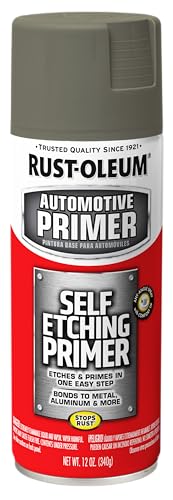
Rust-Oleum Automotive Self Etching Primer
What We Like
- Self-etching and priming in one step
- Any-angle spray works upside down
- Dries to touch in 10 minutes
- Rust prevention with Stops Rust formula
Trade-offs
- Flat finish requires careful topcoat selection for gloss
- Oil-based formula needs solvent cleanup
A coverage of 12 square feet per can means you can handle a car panel or a metal workbench in one coat, and the 10-minute dry time lets you move fast. This self-etching primer etches and primes bare metal, aluminum, and fiberglass in a single step, so you skip the separate etching stage that other primers demand. The any-angle spray technology lets you hit tight underside spots without tilting the can, which matters when you’re coating brackets or frame rails. For someone restoring a vehicle or prepping raw metal for paint, this combines adhesion and rust prevention in a straightforward package.
The trade-off is the flat finish. That flat surface is great for mechanical adhesion of your final paint, but if you want a high-gloss result, you will need to sand and apply a gloss primer or base. For most metal projects, though, this Rust-Oleum delivers the core job: etch, prime, prevent rust, with minimal fuss.
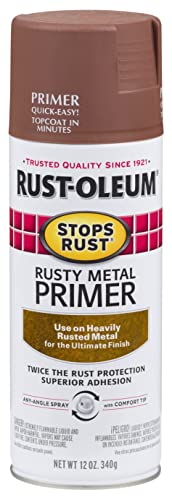
Rust-Oleum Stops Rust Rusty Metal Primer
What We Like
- Oil-based formula blocks rust effectively
- Dries to touch in 15-30 minutes
- Creates a surface topcoats adhere to
- Withstands heavy-use environments
Trade-offs
- Only for heavily rusted metal, not clean metal
- Coverage limited to 10-12 sq. ft. per can
An oil-based formula designed specifically for heavily rusted metal means this primer stops existing rust in its tracks while preventing new corrosion from forming. Drying to the touch in 15-30 minutes and covering 10-12 square feet per can, it preps a durable surface that topcoats can grip firmly, even in demanding outdoor or high-traffic spots. For anyone restoring a rusty gate, railing, or tool, this is the straightforward fix that gets the job done without fuss.
Rust-Oleum Stops Rust Rusty Metal Primer is purpose-built for rusty metal only. If you are working with bare, clean metal, you will need a different product like the Rust-Oleum Automotive Self Etching Primer, which etches and primes in one step. But for its intended job, stopping rust on already corroded surfaces, it delivers exactly what it promises.
Dupli-Color Multi-Purpose Self-Etching Primer

What We Like
- Etches bare surfaces for strong adhesion
- Resists corrosion on metal
- Ideal for spot repairs
- Works on aluminum and fiberglass too
Trade-offs
- 12 oz can covers less area than larger sizes
A self-etching primer that chemically bonds to bare metal means you get maximum adhesion and corrosion resistance right from the first coat. That etching ability makes it perfect for spot repairs where you need the new paint to grab tight and stay put, especially on raw metal, aluminum, or fiberglass. If you’re working on exposed surfaces that have never been painted, this primer gives you a reliable foundation that fights rust from the start. It’s the kind of product you reach for when you want the job done right the first time, not a quick cover-up. The flat green finish also helps you see exactly where you’ve sprayed, which keeps your work even and avoids missed spots.
At one pound, this can feels noticeably denser than Rust-Oleum’s self-etching primer at 0.8 pounds, so your hand gets a bit more heft during long painting sessions. For anyone prepping bare metal, aluminum, or fiberglass on a car or trailer, the etching and corrosion resistance are exactly what the job demands. It’s a focused tool for a specific task, and it handles that task well.
Product photos
U-POL Raptor Acid Etch Primer

What We Like
- Etches and primes bare metal in one step
- Phosphoric acid ester for strong adhesion
- Anti-corrosive barrier prevents rust
- Flat fan nozzle for even coverage
Trade-offs
- Single can covers only a modest area
- Not suitable for already painted or rusty surfaces
The phosphoric acid ester formula in this primer is what sets it apart, it chemically etches bare metal while forming a protective barrier, so you get adhesion and corrosion resistance in one pass. That makes it a smart pick for anyone working with galvanized steel, aluminum, or fresh bare metal panels, especially if you want to skip sanding and go straight to topcoat. Professionals and serious DIYers will appreciate how the flat fan nozzle lays down an even coat without extra prep work.
The phosphoric acid ester formula chemically bites into bare metal, so it creates a tenacious bond that ordinary primers can’t match on galvanized steel or aluminum. That chemical grip means you can skip sanding and go straight to topcoating with most paint systems, which saves time on small repairs or rub-throughs. At 13.2 ounces per can, coverage is limited, so a full car panel will need multiple cans, but for spot fixes the one-step etch-and-prime workflow is genuinely efficient.
Product photos
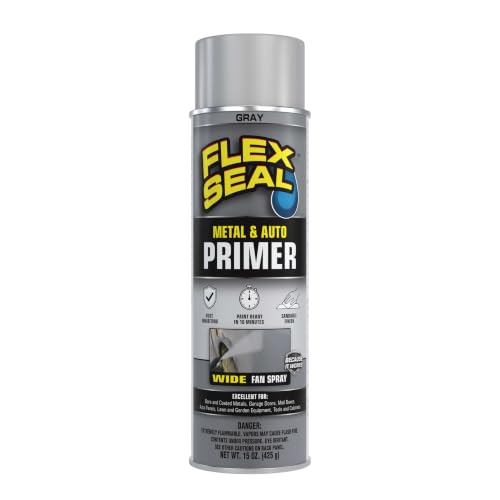
Flex Seal Metal & Auto Primer Spray
What We Like
- Sandable in just 5 minutes
- Paint-ready in 10 minutes
- Rust-inhibiting formula
- Wide fan spray for even coverage
Trade-offs
- Heat resistant only to 250°F, not for high-heat parts
- Does not chemically etch metal like self-etching primers
A 5-minute sandable time means you can move from priming to painting in a single afternoon, even on a tight schedule. This Flex Seal primer is built for speed, with a wide fan spray that lays down smooth, even coverage on bare or coated metal. The rust-inhibiting formula adds a layer of protection against corrosion, making it a strong fit for auto body repairs, outdoor fixtures, or any metal project where you want to keep things moving without sacrificing adhesion.
Flex Seal Metal & Auto Primer Spray has a heat resistance capped at 250°F, so it won’t hold up on engine blocks or exhaust components. Compared to other primers in the guide that are designed for high-heat applications, this Flex Seal primer is better suited for body panels, trim, and general metalwork where fast turnaround matters more than extreme heat tolerance. If you need a primer that dries fast and lets you paint the same day, this is a practical choice.
Product photos
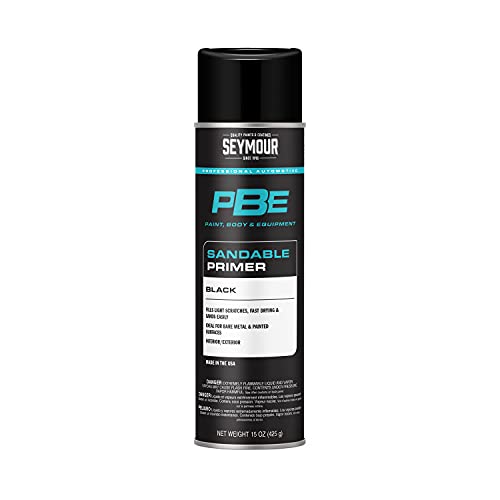
Seymour PBE Professional Primer
What We Like
- Sands easily in 5 minutes
- Adheres extremely well to bare metal
- Large spray head for professional application
- Heat resistant up to 250°F
Trade-offs
- Heavier than Rust-Oleum Automotive Self Etching Primer at 1.3 lb
- Targeted at body shop needs, not casual home use
A five-minute sanding window means you can move from primer to topcoat in a single afternoon without waiting around. Seymour PBE Professional Primer is built for the pace of a body shop, where every minute on a repair counts. Its large spray head lays down an even coat that mimics a spray gun, and the formula sticks tenaciously to bare metal while filling light scratches along the way. Heat resistance to 250°F also makes it a fit for engine bays or parts that see moderate warmth.
Seymour PBE Professional Primer comes with a weight and focus trade-off. At 1.3 pounds per can, it is noticeably heavier than Rust-Oleum Automotive Self Etching Primer, which matters if you are spraying several panels in one session. This primer is engineered for professional refinishing workflows, not quick weekend touch-ups. For home users who want a lighter can and a self-etching action, the Rust-Oleum alternative is a simpler grab.
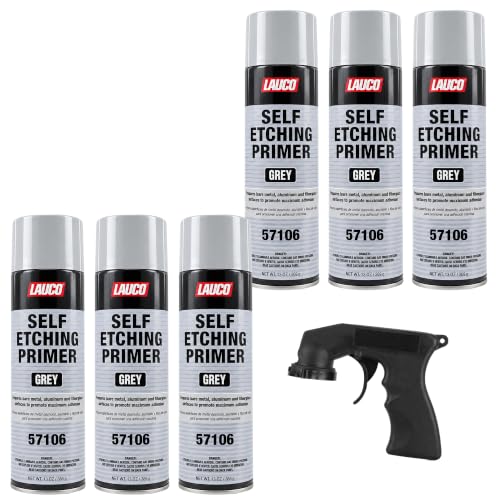
LAUCO Self Etching Primer Aerosol
What We Like
- Six cans in one pack
- Etches and primes bare metal in one step
- Phosphoric acid resists rust and corrosion
- Sandable finish ready for topcoat
Trade-offs
- Spray gun included but adds bulk to the pack
- Pack of six is overkill for a single small repair
This pack of six cans gives you enough primer to cover a sizable metal project without needing to pause for a refill. The self-etching formula uses phosphoric acid to bond with bare metal, galvanized steel, and aluminum, forming a layer that resists rust and helps paint stick. If you are working on a large area like a truck bed or trailer, having six cans on hand means you can keep going until the job is done.
Compared to Rust-Oleum’s single-can self-etching primer, the LAUCO pack gives you more product for the same kind of job, but you sacrifice the convenience of picking up just one can.
Product photos
Hycote Etch Primer Spray Paint
What We Like
- Excellent weather, chip, and peel resistance
- Specialty resin for tough adhesion
- Fast drying for quick project turnaround
- Rigorous durability and coverage testing
Trade-offs
- Not suitable for copper or brass
- Designed primarily for non-ferrous metals only
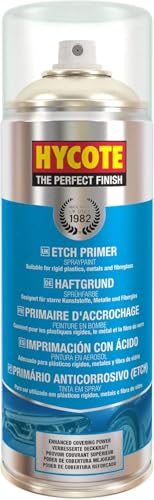
The Hycote Etch Primer’s specialty resin locks onto non-ferrous metals like aluminum and galvanized steel with exceptional adhesion, then adds a tough, weatherproof barrier that resists chipping and peeling. That makes it the go-to choice for outdoor metal projects, think patio furniture, trailer hitches, or automotive trim that bakes in the sun and gets blasted by rain. Its fast-drying formula keeps you moving, and the rigorous testing behind it means fewer surprises when the weather turns nasty.
The primer is designed specifically for non-ferrous metals like aluminum and galvanized steel, so it won’t work on copper or brass. For projects involving those materials, you’ll need a different product. Hycote provides excellent resistance to weathering, chipping, and peeling, making it a durable choice for outdoor use on the surfaces it’s made for.
Product photos
Dupli-Color Engine Primer with CERAMIC
What We Like
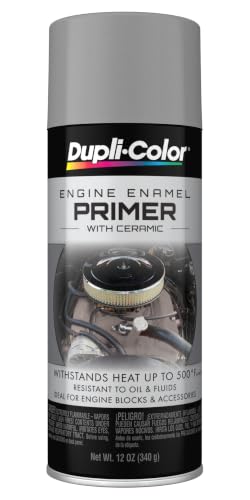
- Withstands heat up to 500°F
- Resists oil and automotive fluids
- Won't blister, flake, crack, or peel
- EZ Touch Conical Nozzle for control
Trade-offs
- Requires a separate topcoat for final finish
- Not suitable for bare metal without etching primer
A 500°F heat ceiling means this primer can handle engine blocks, exhaust manifolds, and brake calipers without blistering or peeling, a critical advantage when other primers fail under high heat. The ceramic resin formulation also shrugs off oil and automotive fluids, so it’s built for the greasy, hot environment under the hood. If you’re restoring a classic car or painting a motorcycle engine, this is the primer that stays put when temperatures climb.
Dupli-Color Engine Primer with CERAMIC is an engine primer, not a general-purpose metal primer. Compare that to the Rust-Oleum Self Etching Primer, which etches bare metal for adhesion but tops out at lower heat. For hot surfaces, Dupli-Color’s ceramic formula is the right tool; for cool body panels, a self-etching primer might be more straightforward.
Product photos
How We Evaluated Spray Paint Primers For Metal
We started by looking at each primer’s chemical formula, self-etching, acid etch, oil-based, or ceramic, to see what kind of metal surface it was designed for. Manufacturer data on dry times, heat resistance, and coverage area gave us the hard specs, while owner feedback revealed how these primers performed in real garage and body-shop conditions.
Four criteria mattered most: adhesion mechanism (etching or mechanical bonding), dry-and-sand time, rust prevention, and surface compatibility. A primer that works on bare aluminum is useless on a rusted gate, so we matched each pick to a specific job.
This is a research-led evaluation, not a hands-on test. We rely on documented performance and the collective experience of users and professionals to guide our recommendations.
What To Look For In Spray Paint Primers For Metal
Choosing a metal primer starts with knowing what you’re painting. Bare metal, rusted metal, and painted metal each need a different chemical approach.
Match the primer’s chemistry to your metal’s condition: self-etching for bare metal, rust-inhibiting for rusty surfaces, and a high-heat formula for engine parts. Check dry time, heat rating, and whether a separate topcoat is needed.
Primer Chemistry: Self-Etching vs. Acid Etch vs. Rust-Inhibiting
Self-etching primers contain phosphoric acid that bonds chemically with bare metal, creating a surface that paint can grip. Acid etch primers work similarly but often require a separate topcoat and are best for non-ferrous metals like aluminum. Rust-inhibiting primers are oil-based and designed to seal rusty surfaces, preventing further corrosion, they’re not meant for clean bare metal.
Dry Time and Sandability
Fast-drying primers like the Flex Seal Metal & Auto Primer Spray are sandable in five minutes and ready for paint in ten. Slower oil-based formulas may take fifteen to thirty minutes to dry. If you’re working on a quick turnaround project, a fast-drying primer saves hours. For body work, a primer that sands easily without gumming up sandpaper is essential.
Heat Resistance and Surface Compatibility
Standard primers fail above 250°F. For engine blocks, exhaust manifolds, or brake parts, you need a ceramic-based primer rated for 500°F or higher. Also check surface compatibility: some primers work on aluminum and fiberglass but not copper or brass, while others are formulated specifically for ferrous metals.
- Check the label for the metal type you’re painting (bare, rusty, aluminum, galvanized).
- Verify the primer’s heat rating if the part will get hot.
- Confirm whether a separate topcoat is required or if the primer can be left as a finish.
- Look for a fan-spray nozzle for even, wide coverage on large panels.
- Make sure the primer is compatible with your topcoat (oil-based primer needs oil-based paint).
A single can of aerosol primer covers roughly 10-12 square feet, so buy enough for two light coats.
Spray Paint Primers For Metal Compared
The table below compares each primer’s chemistry, dry time, heat resistance, and best use so you can see at a glance which one fits your project.
| Product | Target Surfaces | Dry Time | Size |
|---|---|---|---|
| Rust-Oleum Automotive Self Etching Primer | Bare metal, aluminum, fiberglass | 10 min to touch | 12 oz |
| Rust-Oleum Stops Rust Rusty Metal Primer | Heavily rusted metal surfaces | 15-30 minutes | 12 oz |
| Dupli-Color Multi-Purpose Self-Etching Primer | Bare metal, aluminum, fiberglass | N/A | 12 oz |
| U-POL Raptor Acid Etch Primer | Bare metals | N/A | 13.2 oz |
| Flex Seal Metal & Auto Primer Spray | Bare metal, auto body | Sandable in 5 min | 15 oz |
| Seymour PBE Professional Primer | Bare metal surfaces | Dries to Sand: 5 minutes | N/A |
| LAUCO Self Etching Primer Aerosol | Bare metal, galvanized steel, aluminum | Fast drying | N/A |
| Hycote Etch Primer Spray Paint | Non-ferrous metals, rigid plastics | Fast drying | 13.5 Oz |
| Dupli-Color Engine Primer with CERAMIC | N/A | N/A | 12 oz |
Frequently Asked Questions
What is the difference between self-etching and acid etch primer?
Self-etching primer contains phosphoric acid that etches and primes bare metal in one step, ready for a topcoat. Acid etch primer also etches for adhesion but typically requires a separate primer or topcoat. Self-etching is more convenient for DIYers; acid etch is often preferred by professionals for bare metal panels.
Can I use spray paint primer on rusted metal?
Yes, but only if you choose a rust-inhibiting primer like the Rust-Oleum Stops Rust Rusty Metal Primer. These oil-based formulas seal rust and prevent further corrosion. Standard self-etching primers are designed for clean bare metal and will not stop active rust.
How long does spray primer take to dry on metal?
Dry time varies by formula. Fast-drying options like the Flex Seal Metal & Auto Primer Spray are sandable in five minutes and paintable in ten. Oil-based rust primers take fifteen to thirty minutes to dry to the touch. Always check the label for recoat and topcoat windows.
Do I need to sand metal before applying spray primer?
Yes, even with self-etching primers. Light sanding with fine-grit sandpaper removes surface rust, old paint, and smooths bare metal. The primer’s chemical etch bonds to clean, rough metal best. For rusted surfaces, wire-brush loose rust first.
What is the best primer for high-heat metal surfaces?
A ceramic-based primer like the Dupli-Color Engine Primer with CERAMIC withstands heat up to 500°F and resists oil and automotive fluids. It won’t blister or flake under engine-bay temperatures. Standard primers fail above 250°F.
The Bottom Line
If you’re prepping bare metal, aluminum, or fiberglass for paint, the Rust-Oleum Automotive Self Etching Primer is the most versatile choice. It etches and primes in one fast-drying step, saves you a coat, and works at any angle. For rusted gates, railings, or tools, grab the Rust-Oleum Stops Rust Rusty Metal Primer instead.
On a budget and tackling a large project? The LAUCO Self Etching Primer Aerosol six-pack gives you plenty of cans for the money. For engine work, the Dupli-Color Engine Primer with CERAMIC is worth paying more for its 500°F heat resistance.
The single most important factor is matching the primer’s chemistry to your metal’s condition. Get that right, and your paint job will last.
