
9 Best Spray Paint For Stainless Steel in 2026
This post contains affiliate links. As an Amazon Associate, we earn from qualifying purchases.
For a durable, authentic stainless steel finish, the Seymour Stainless Steel Spray Paint stands as our Best Overall pick thanks to its 100% stainless steel #316L pigment and fast-drying, UV-resistant formula. If you’re refreshing an old appliance, the Rust-Oleum Appliance Epoxy delivers a scratch-resistant, washable finish. For high-heat needs like exhaust systems, the KBS Coatings Xtreme Temperature Coating withstands up to 1500°F.
Painting stainless steel is trickier than it looks. A standard metallic paint won’t bond properly to slick metal, and the wrong finish can chip, yellow, or peel off under sun or heat. You need a coating formulated specifically for the surface’s demands: corrosion resistance, adhesion, and temperature tolerance.
This guide is research-based, drawing on manufacturer specifications, expert round-ups, and patterns in owner feedback. We’ve organized nine top options by use case so you can match the right paint to your project without guesswork.
Top 9 Spray Paints For Stainless Steel in the Market
Certain content that appears on this site comes from Amazon. This content is provided "as is" and is subject to change or removal at any time.
The Best Spray Paints For Stainless Steel, Reviewed
Seymour Stainless Steel Spray Paint

What We Like
- Fast-drying formula saves time
- 100% stainless steel #316L pigment
- UV-resistant, non-yellowing finish
Trade-offs
- Only one finish option available
- No heat or corrosion resistance listed for extreme conditions
A 13-ounce net weight of 100% stainless steel #316L pigment means this spray paint delivers a genuine metallic layer that resists rust and holds up to weather, not just a colored coating. The fast-dry formula lets you move through a project without long waits between coats, making it a practical choice for stainless steel repairs on grills, outdoor furniture, or automotive trim. For anyone who wants a durable, authentic stainless finish without fussing with multiple primers or extended drying times, this can delivers exactly what the label promises.
Compared to the STANIOS Stainless-Blast Spray Paint, which explicitly targets heat and corrosion resistance for automotive use, the Seymour is better suited for general home and shop projects where appearance and UV stability matter most.
Rust-Oleum Appliance Epoxy Spray Paint

What We Like
- Ultra-hard epoxy enamel resists scratches
- Smooth factory-like washable finish
- Moisture-resistant for appliance protection
- Renews fridges, dishwashers, laundry machines
Trade-offs
- Indoor metal surfaces only, not outdoor use
This 12-ounce can of epoxy enamel creates an even, washable finish that refreshes worn or outdated appliances. The ultra-hard coating resists scratches and abrasion, while the moisture-resistant finish protects against everyday kitchen and laundry room conditions. It is designed for indoor metal surfaces such as refrigerators, dishwashers, and laundry machines, giving a factory-like look without the cost of replacement.
This paint is strictly for appliance exteriors, so don’t use it on stovetops or surfaces that sit underwater. For a high-heat job like an exhaust manifold, the KBS Coatings Xtreme Temperature Coating is made for that. But for giving a worn refrigerator or metal cabinet a hard, washable finish that holds up to daily cleaning, this epoxy delivers exactly what you need.
STANIOS Stainless-Blast Spray Paint
What We Like
- 2-pack value for extended coverage
- Contains real 316L stainless steel
- Fast-drying in 5 minutes
- Non-yellowing satin finish
Trade-offs
- At 12 oz, less paint per can than 16 oz options
- Requires metal surface prep for best adhesion
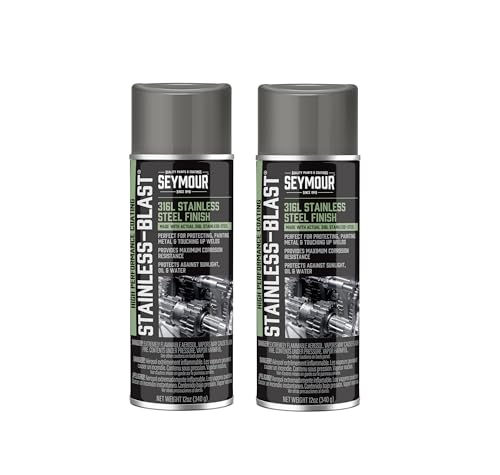
Two 12 oz cans in one pack mean you can coat a full set of outdoor furniture or a small automotive part without running out mid-project. The real 316L stainless steel in the formula gives a durable satin finish that resists rust, UV, oil, and water, making it a practical choice for outdoor or industrial use. This is the pick for someone who wants reliable corrosion protection and a professional look without spending on a single premium can.
The trade-off is that each can holds 12 ounces, less than the 16-ounce cans from Seymour or Rust-Oleum, so you may need to buy an extra pack for larger jobs. But if your priority is value and tough weather resistance, this two-pack delivers more coverage per dollar than most single cans in the guide.
Product photos
Steel-It 1012D Polyurethane Coating

What We Like
- Industrial-grade stainless steel protection
- USDA approved for incidental food contact
- Durable polyurethane finish
Trade-offs
- Only available in black color
- Single can limits large projects
At just 0.8 pounds per can, this polyurethane coating packs industrial-grade protection into a small package. The formula is engineered with stainless steel for superior protection against corrosion. It is intended for use on food processing equipment where USDA approval for incidental food contact is required. The durable polyurethane finish provides aesthetic appeal and a tough surface.
Only black is available for this aerosol, so it won’t suit projects where a metallic stainless steel look is needed. But the Steel-It 1012D is engineered with stainless steel for superior protection against corrosion, making it a fit for industrial environments where durability matters most.
Rust-Oleum Rust Preventive Enamel Spray Paint

What We Like
- Withstands heat up to 200°F
- Dries to touch in 20 minutes
- Sprays from any angle, even upside down
- Resists chipping, cracking, and peeling
Trade-offs
- Heat limit of 200°F excludes high-temp engine parts
- 6-pack forces bulk purchase for small jobs
With a 200°F heat tolerance, this Rust-Oleum enamel handles the warmth of a stovetop, radiator, or outdoor grill without softening or discoloring. The high-output tip lays down paint 50% faster than standard nozzles, and the 20-minute dry time means you can recoat or handle the piece quickly. It also meets USDA requirements for incidental food contact, so it’s safe for kitchen surfaces like a range hood or toaster shell. For projects that see steady moderate heat, this is a reliable protective finish.
The KBS Xtreme Temperature Coating handles far higher heat, which matters for exhaust manifolds or a barbecue firebox. But for stainless steel items that get warm, not scorching hot, this Rust-Oleum delivers a tough, chip-resistant enamel with the convenience of a comfort-grip nozzle that works upside down. The 6-pack is a lot of paint for a single small project, so plan for multiple uses or share with a friend.
Seymour Big Rig Professional Coatings
What We Like
- High solids formula covers 3-4x standard aerosols
- Protects against rust, weather, oil, gasoline, chemicals
- Resists abrasion and heat
- Lead and heavy metal free
Trade-offs
- Heavier can (1.2 lb) than some alternatives
- Targeted at fleet maintenance, not decorative use
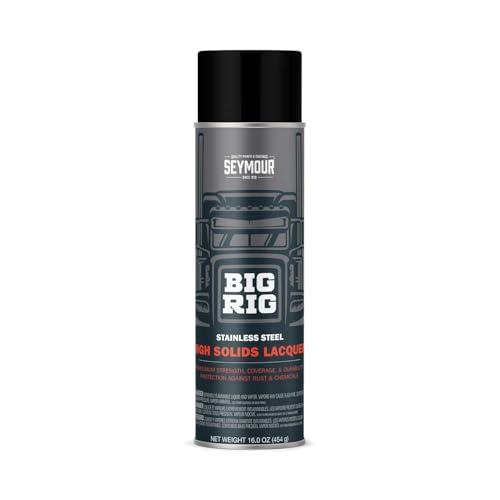
A high-solids coating that covers three to four times more area than standard aerosol paints means fewer cans to buy and less time spraying. This is the kind of efficiency that matters when you are restoring equipment or protecting metal structures from rust, weather, oil, gasoline, and corrosive chemicals. It also resists abrasion and heat, so the finish holds up under tough conditions where ordinary spray paint would peel or fade quickly. For anyone maintaining fleet vehicles, heavy machinery, or outdoor metal gear, that durability translates into fewer touch-ups over time.
A high-solids coating covers 3-4 times more area than standard aerosols, so you get more protection per can on structural metal. It resists rust, weather, oil, gasoline, and most corrosive chemicals, and it also stands up to abrasion and heat. Reviewers note that for a fine, appliance-ready finish, the Rust-Oleum Appliance Epoxy Spray Paint is a better match, but this Seymour formulation is built for maximum performance in fleet maintenance applications.
KBS Coatings Xtreme Temperature Coating
What We Like
- Withstands up to 1500°F without burning off
- Resists thermal shock, scratching, and chalking
- Brush, roll, or spray application flexibility
- Heat cure creates durable, hard finish
Trade-offs
- Requires heat curing at 350°F for full hardness
- Needs bare metal prep with sandblasting or 60-80 grit
- Thick coats blister; must apply two thin coats
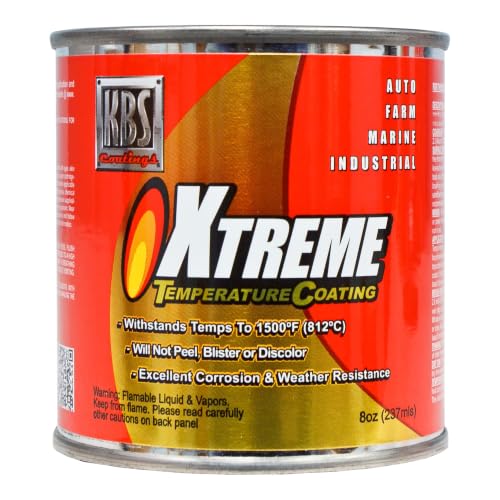
With a 1500°F rating, this silicone paint is guaranteed not to burn off on headers, exhaust manifolds, mufflers, wood stoves, or the outside of BBQ grills and smokers. After heat curing, it resists thermal shock, scratching, and chalking, so it holds up in conditions that would ruin lesser coatings. For anyone painting parts that see extreme heat, from manifolds to fireplace hoods, this formulation is designed to stay put.
You cannot skip the heat cure step, which requires an oven or running the engine until smoke clears, adding time and effort. Compared to a simpler spray that air-dries and works for lower-heat indoor jobs, this coating demands more prep and a curing process. It also needs bare metal prep with sandblasting or 60-80 grit, so it is not a quick touch-up can. But for parts that need to handle serious heat without peeling, that extra work pays off.
Product photos
Seymour Industrial MRO High Solids Spray Paint
What We Like
- Single coat hiding saves time
- Resists abrasion and heat
- Protects against corrosive chemicals
Trade-offs
- Heavier than some aerosol cans at 1.0 lb
- Same weight as many competitors at 1.0 lb
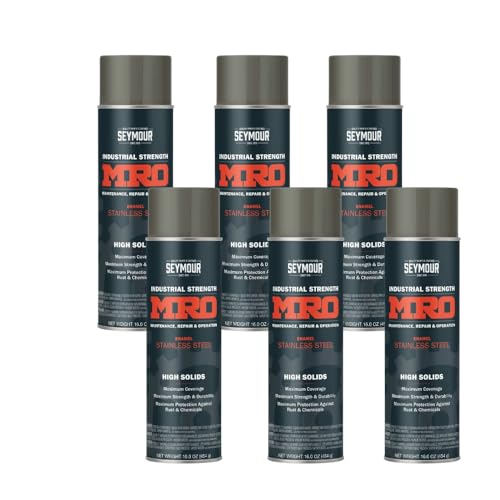
The can weighs one pound, which is the same as several other spray paints in this category, so it is not unusually heavy. For detailed or overhead work, you might prefer a lighter can, but the coverage and no-run formula make it effective for larger surfaces. It is designed for industrial maintenance and repair, not for small touch-ups.
Krylon General Purpose Metallic Spray Paint

What We Like
- Transform surfaces to stainless steel finish
- Works on appliances, furniture, accessories
- Suitable for interior and exterior use
Trade-offs
- Not rated for rust prevention or high heat
- General-purpose formula lacks specialized protective claims
An 11-ounce can means you get a stainless steel finish without committing to a heavy-duty industrial coating. This Krylon spray is built for versatility, it works indoors and out, on appliances, furniture, and accessories. If you want a quick refresh on a toaster, lamp base, or garden stool, this is the straightforward option that keeps things simple. It’s a solid middle-of-the-road pick for everyday projects where you need a metallic look, not a chemical-resistant shell.
Choosing a general-purpose metallic paint means accepting some limitations compared to specialty coatings. This formula works well for indoor decorative items like picture frames or lamps, but it lacks the rust-inhibiting additives found in dedicated metal primers. For a single DIY project or a decorative piece that stays dry and out of harsh weather, it delivers a convincing stainless steel finish without the cost or complexity of industrial-grade paints. Reviewers frequently mention it as a convenient option for refreshing furniture or accessories where long-term outdoor exposure isn’t a concern.
How We Evaluated Spray Paints For Stainless Steel
We started by analyzing each product’s stated composition, looking for real stainless steel pigments, resin types, and protective claims. Manufacturer data sheets provided the backbone for specs like dry times, heat thresholds, and chemical resistance. We then compared these against what owners commonly report in feedback, noting patterns around adhesion, coverage, and durability.
Our evaluation centered on four criteria: adhesion and surface compatibility, since stainless steel is notoriously slick. We also looked at durability, including resistance to UV, moisture, scratches, and heat. Coverage efficiency was measured by solids content and can size, and finish quality covered color accuracy plus whether the paint yellows or chalks over time. Each pick needed to excel in at least one of these areas for its intended use.
A research-led evaluation like this has limits. We don’t test cans in a lab or apply them to surfaces ourselves. Instead, we weigh what the manufacturer promises against what the broader community of users confirms through repeated experience. That approach helps you avoid common pitfalls like poor adhesion or mismatched heat ratings.
What To Look For In Spray Paints For Stainless Steel
Choosing the right spray paint means matching the formula to your project’s environment. A grill needs heat resistance; a refrigerator needs a washable, scratch-proof epoxy. Here’s what matters most.
Look for paints with real stainless steel pigments (like 316L) for an authentic metallic finish and corrosion resistance. Match the paint’s heat rating to your surface’s maximum temperature. For appliances, choose an epoxy enamel that cures hard and resists cleaning chemicals.
Pigment Type and Finish
The best stainless steel paints contain actual stainless steel powder, often 316L grade, rather than just mica or aluminum flakes. This gives a true metallic look and adds corrosion protection. Finish options range from satin to high-gloss; a satin finish hides minor surface imperfections, while gloss is easier to clean.
Heat and Chemical Resistance
If your project gets hot, check the paint’s maximum temperature rating. Standard appliance epoxies handle only ambient heat, while specialized coatings like KBS Xtreme Temperature hold up to 1500°F. For outdoor or industrial use, look for resistance to UV, moisture, gasoline, and corrosive chemicals.
Application and Prep Requirements
Most stainless steel paints require thorough surface prep: cleaning with degreaser, light sanding with 60-80 grit, and sometimes a primer. Some formulas, like the Seymour Big Rig, offer high solids content that covers in fewer coats. Others, like the KBS coating, require a heat cure to reach full hardness.
- Clean the surface with a degreaser to remove oils and fingerprints.
- Sand with 60-80 grit for bare metal adhesion; skip this only if the paint says no-sand.
- Apply thin coats to avoid runs and blistering, two thin coats beat one thick coat.
- Check the dry time between coats; fast-drying formulas can save hours on a project.
- For high-heat paints, follow the cure schedule exactly to prevent burn-off.
A common rule: the more specialized the paint, the more important the prep. Skimping on cleaning or sanding is the fastest way to a peeling finish.
Spray Paints For Stainless Steel Compared
The table below compares each spray paint’s key specs at a glance, helping you narrow down the best match for your stainless steel project.
| Product | Net Weight | Coverage | Key Feature |
|---|---|---|---|
| Seymour Stainless Steel Spray Paint | 13 oz | N/A | 100% stainless steel #316L |
| Rust-Oleum Appliance Epoxy Spray Paint | 12 oz | N/A | Epoxy enamel |
| STANIOS Stainless-Blast Spray Paint | 12 oz | Up to 15 sq ft per can | Real 316L stainless steel |
| Steel-It 1012D Polyurethane Coating | 0.8 pounds | N/A | Polyurethane |
| Rust-Oleum Rust Preventive Enamel Spray Paint | 15oz | 50% faster | Meets USDA requirements |
| Seymour Big Rig Professional Coatings | 1.2 pounds | 3-4 times more than standard aerosols | Lead-free |
| KBS Coatings Xtreme Temperature Coating | 0.7 pounds | 20-25 sq ft per coat | 1500°F |
| Seymour Industrial MRO High Solids Spray Paint | 1.0 pounds | 3-4 times standard aerosol | Single coat hiding |
| Krylon General Purpose Metallic Spray Paint | 11 oz | N/A | Interior and Exterior |
Frequently Asked Questions
What kind of spray paint sticks to stainless steel?
Epoxy enamel and polyurethane coatings bond best to stainless steel because they cure into a hard, durable film. Paints containing real stainless steel pigments, like Seymour’s 316L formula, are designed specifically for this surface. Always scuff the metal with sandpaper first to improve adhesion.
How do I prep stainless steel before painting?
Clean the surface thoroughly with a degreaser or isopropyl alcohol to remove oils and fingerprints. Lightly sand with 60-80 grit sandpaper to create a rough surface for the paint to grip. Wipe away dust with a tack cloth, then apply a primer if the paint instructions recommend one.
Can I paint a stainless steel refrigerator?
Yes, but use an appliance-specific epoxy enamel like Rust-Oleum Appliance Epoxy. These paints cure to a hard, washable finish that resists scratches from magnets and cleaning. Keep the paint indoors only, as appliance epoxies are not rated for outdoor UV exposure.
What spray paint works on a stainless steel grill?
For grills, choose a paint rated for at least 200°F, like Rust-Oleum Rust Preventive Enamel. For higher heat near the firebox, use a coating rated to 1500°F, such as KBS Xtreme Temperature Coating. Both require clean, bare metal for proper adhesion.
Is there a spray paint that looks like real stainless steel?
Yes. Paints with actual 316L stainless steel powder, such as Seymour Stainless Steel Spray Paint, produce a finish that closely matches the look of brushed stainless steel. General-purpose metallic paints can mimic the color but lack the same luster and corrosion resistance.
The Bottom Line
For most DIYers and homeowners, the Seymour Stainless Steel Spray Paint is the best overall choice. Its 316L stainless steel pigment delivers an authentic, UV-resistant finish that holds up outdoors without yellowing. It’s ideal for metal furniture, railings, and household projects where a fast-drying, true metallic look matters more than extreme heat resistance.
If your project is a kitchen appliance, go with the Rust-Oleum Appliance Epoxy. It cures into a hard, washable surface that can handle fridge magnets and cleaning sprays. For high-heat jobs like exhaust systems or grills, the KBS Coatings Xtreme Temperature Coating or Rust-Oleum Rust Preventive Enamel are better matches depending on the temperature range.
The single most important factor in a successful paint job is surface preparation. No matter which spray paint you choose, clean, scuff, and prime according to the instructions. That step separates a finish that lasts years from one that peels in weeks.
