
10 Best Sandpaper For Plastic in 2026
This post contains affiliate links. As an Amazon Associate, we earn from qualifying purchases.
For finishing plastic surfaces, the 3M Wetodry Sandpaper Sheets are the best overall choice, cutting fast with silicon carbide and resisting clogging when used wet or dry. Model makers will prefer the precision of the TAMIYA Sandpaper Set, while the Mirka Goldflex Soft Hand Sanding Pads excel on curved contours.
Sanding plastic is different from wood or metal. The wrong grit or paper can melt the surface, leave deep scratches, or clog instantly. You need an abrasive that cuts cleanly without loading up and a backing that holds up to wet use.
We evaluated top sandpapers by analyzing manufacturer specifications, expert finishing guides, and patterns in owner feedback. This guide highlights the key factors for choosing the right grit, backing material, and format for your specific plastic project.
Top 10 Sandpapers For Plastic in the Market
Certain content that appears on this site comes from Amazon. This content is provided "as is" and is subject to change or removal at any time.
The Best Sandpapers For Plastic, Reviewed
3M Wetodry Sandpaper Sheets
What We Like
- Silicon carbide cuts fast and smooth
- Waterproof paper for extended use
- Use with water or cutting oil to reduce clogging
Trade-offs
- Single grit pack limits versatility for multi-step sanding
- Sheets sized for flat work, not contour sanding by hand
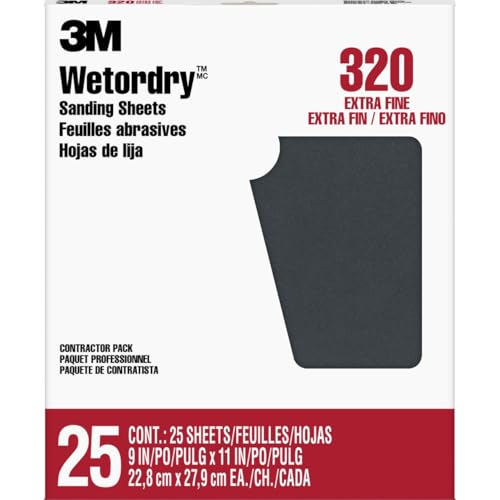
A 320-grit silicon carbide abrasive that cuts fast and smooth makes this sheet a natural fit for plastic finishing. You can use it with water or cutting oil to keep the paper from loading up, which is exactly what you want when sanding a soft material like plastic that tends to clog standard sandpaper.
The 3M Wetodry uses a silicon carbide abrasive designed for fast, smooth cutting and a waterproof paper backing that can be used with water or cutting oil. It is a focused tool for a focused task. The trade-off is that you get only one grit in the pack, so if your project needs a progression from coarse to fine, you will need to buy additional sheets separately. That makes it less convenient than an assortment like the BMOTL Wet Dry Sandpaper Assortment, which offers multiple grits in one box.
Product photos
TAMIYA Sandpaper Set

What We Like
- Three ultra-fine grits for finishing
- Sharp-edged, dense dispersion for even sanding
- Works dry or wet
- Designed for model-grade precision
Trade-offs
- Only 5 sheets in the pack
- Small sheet size limits large-surface work
- No coarse grits for heavy material removal
The set includes three grits, 1200, 1500, and 2000, all designed for finishing work on plastics, wood, metal, and paint. The sharp-edged, dense dispersion keeps the scratch pattern even at these fine grits, so you can smooth model parts without uneven marks. It works dry or wet, giving you the option to wet-sand for less dust and a finer finish.
For model makers who need controlled, even sanding on small plastic parts, the grit selection and even sanding pattern make it a focused tool for finishing work. The pack contains only five sheets, and each sheet measures 10.5 by 3.9 inches, fine for a model car body or a wing spar, but frustrating if you need to sand a large plastic panel or a full furniture piece.
Product photos
BMOTL Wet Dry Sandpaper Assortment
What We Like
- Six grits from 600 to 3000
- Silicon carbide cuts faster than aluminum oxide
- Wet sanding reduces dust and clogging
- Tear-resistant C-weight paper backing
Trade-offs
- No coarse grits below 600 for heavy shaping
- 24 sheets spread thin across six grit levels
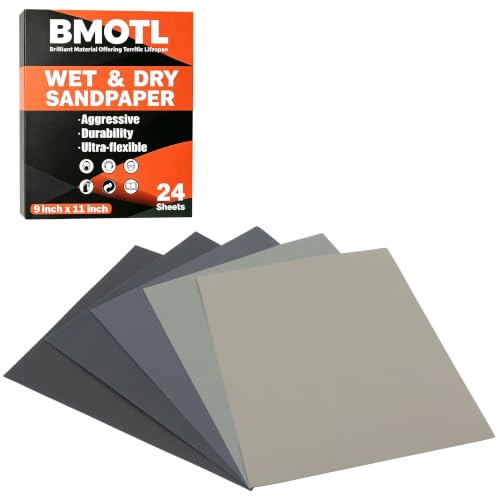
A 600-3000 grit range means this set covers the entire journey from fine sanding to mirror polishing without needing a second pack. For anyone restoring headlights, smoothing plastic trim, or finishing painted surfaces, having four sheets of each grit lets you step through the process systematically. The silicon carbide abrasive cuts faster and more uniformly than standard aluminum oxide, which matters when you are wet-sanding clear coats and want an even finish without swirls.
Twenty-four sheets sounds like a lot until you realize you get only four of each grit, so a single car panel could eat through your 600-grit before you finish. The Bates Choice set gives you 48 sheets across a 120-5000 range, but with silicon carbide you get a sharper, more consistent cut than standard aluminum oxide paper. For a weekend headlight job or a handful of plastic parts, the assortment works fine; for production work you would want bulk packs of individual grits.
Product photos
3M Wetordry Abrasive Sheets 2000+
What We Like
- Waterproof backing for wet sanding
- Silicon carbide cuts fast and smooth
- Ultra-fine 2000+ grade finish
- 50 sheets per pack
Trade-offs
- Labeled for industrial use only, not consumer
- Smaller sheet size limits large-area work
- Ultra-fine grade unsuitable for heavy material removal
At 2000+ grade, this is an ultra-fine abrasive sheet meant for the final stages of sanding where you need a smooth finish without visible scratches. The silicon-carbide mineral is designed to cut fast while still delivering that smooth result, and the waterproof backing lets you wet-sand, which helps reduce clogging and keeps the paper cutting effectively. For anyone working on paint, primer, gel coat, metal, or plastic surfaces, this sheet offers the fine control needed for finishing work.
Product photos
Bates Choice Sandpaper Assortment

What We Like
- 48 sheets across 16 grits
- Ultra-fine 5000 grit for polishing
- 9 x 3.6 inch size suits detail work
Trade-offs
- Smaller sheet size limits large flat surfaces
Sixteen grits from 120 to 5000 means you can rough-sand a plastic part and polish it to a clear shine without switching brands. For anyone who wants one pack that covers everything from heavy stock removal to final buffing, this assortment saves the hassle of buying separate coarse and fine sets.
Product photos
Mirka Goldflex Soft Hand Sanding Pads

What We Like
- Flexible foam backing adapts to curves
- Aluminum oxide cuts plastic efficiently
- Promotes even pressure for consistent finish
Trade-offs
- Small pad size slows work on large flat panels
- 180 grit only limits fine finishing options
A flexible foam backing that conforms to compound curves and tight profiles is exactly what makes this pad stand out for sanding contoured surfaces. Unlike rigid sheets that bridge over contours and leave uneven spots, the Mirka Goldflex Soft Hand Sanding Pad presses into every groove and radius. That way you maintain consistent contact and a uniform finish on bumpers, trim, or model parts. The aluminum oxide abrasive delivers efficient cutting performance across a range of materials, and the foam construction helps you keep even pressure by hand. For anyone shaping or smoothing curved pieces, this pad offers control that flat paper cannot match.
The small 5×4.5-inch pad and single 180-grit option limit its use on large flat areas or when you need a finer polish.
eQualle Silicon Carbide Sandpaper 220 Grit
What We Like
- 100 full sheets for bulk jobs
- Silicon carbide works wet or dry
- Medium-fine 220 grit preps plastic
- Trim to size for edges and curves
Trade-offs
- Single grit limits progression without other packs
- Full sheets must be cut for small parts
- No pre-cut shapes for complex contours
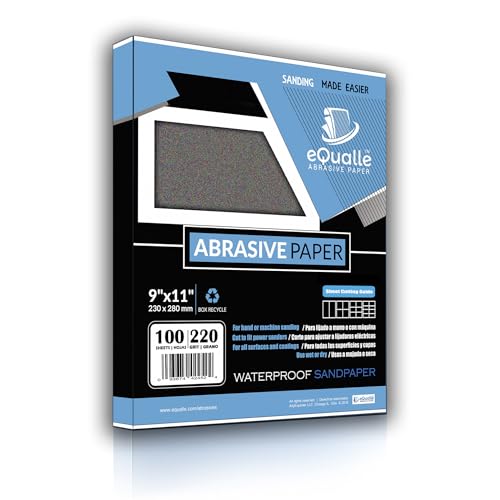
A hundred full 9×11 sheets of silicon carbide paper at 220 grit mean you can handle large sanding jobs without running out mid-project. This pack is built for bulk sanding, fine surface prep, primer smoothing, and between-stage work. The medium-fine grit is a practical starting point for smoothing wood grain, dulling painted surfaces, and refining metal prep. For anyone working on furniture refinishing, cabinets, doors, trim, or general shop repairs, having a bulk supply of consistent paper keeps the workflow moving without interruptions.
220 grit is ideal for initial prep, but you will need finer grits (like the 320 from 3M Wetodry) if you want to polish or finish sand before clear coat. And while these full sheets are great for block sanding or wrapping around a sanding block, they require cutting for tight corners or small trims. The silicon carbide abrasive supports both wet and dry use, which helps keep the paper from clogging during extended sanding. The downside is that you get one grit and one format only.
Product photos
Norton A275OP Sandpaper 180 Grit

What We Like
- 50-60% improvement in tear strength
- Non-pigmented stearate resists clogging
- Folds without cracking
- Suitable for plastics, painted surfaces, composites
Trade-offs
- Designed only for dry sanding, not wet use
- 180 grit leaves scratches that need a finer grit to remove
A fiber-reinforced, latex-saturated backing gives this sheet a 50-60% improvement in tear strength, so you can bear down on stubborn plastic edges or curved surfaces without the paper shredding. The non-pigmented, water-based stearate coating resists clogging especially well on plastics and painted surfaces. That makes it a natural fit for intermediate sanding where you need to knock down primer or smooth out rough spots without constantly swapping sheets. For someone working through a batch of plastic parts or composite repairs, the combination of durability and loading resistance means fewer interruptions and a more consistent scratch pattern.
The 180 grit cuts fast enough for shaping but leaves scratches that need a finer grit to erase, so it is not a one-sheet solution for final finishing. Compared to the 3M Wetodry 320-grit sheets, which are designed for final or between-coats sanding, the Norton is better suited for dry intermediate work where tear strength matters. For the heavy lifting between rough shaping and final smoothing, this sheet earns its place on the bench.
Product photos
Arilier Sandpaper Assortment 24-Pack

What We Like
- 24 sheets across six fine grits
- White fused alumina for clean scratch pattern
- Works wet or dry without switching paper
- Grits printed on back for easy ID
Trade-offs
- No coarse grits for heavy material removal
- Only four sheets per grit limits large projects
A 24-sheet assortment covering 400 through 1500 grit means you can move from initial smoothing to a polished finish on plastic without buying separate packs. The white fused alumina abrasive, 99% pure, generates less heat and leaves a consistent scratch pattern, which matters when sanding plastic because excess heat can melt or mar the surface. This is a smart budget-friendly choice for hobbyists, model makers, or anyone doing occasional refinishing who wants a range of fine grits in one purchase.
This set skips coarse grits entirely. If you need to remove deep scratches or shape plastic, you will need a separate 120 or 220 grit sheet elsewhere.
Product photos
Mirka Abranet 5 Inch Mesh Sanding Discs
What We Like
- Open mesh for dust-free sanding
- Anti-clogging design extends disc life
- Works on plastic, wood, paint, metal
- Compatible with any 5-inch orbital sander
Trade-offs
- Requires a vacuum for dust extraction
- 180 grit only; no finer or coarser options in pack
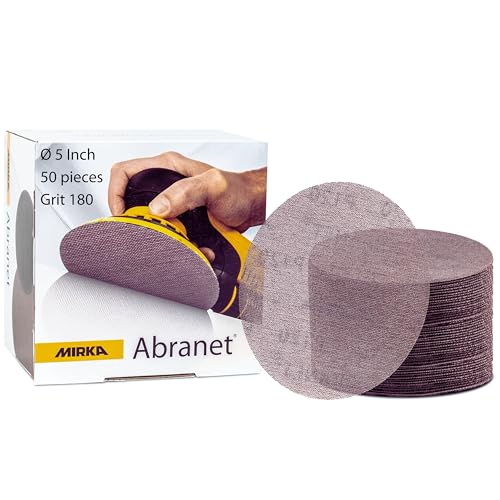
The open mesh structure of these discs is designed to work with a shop vacuum, pulling dust through the disc for efficient extraction and a cleaner workspace. That same mesh resists clogging, helping the disc cut consistently over time. For anyone using an orbital sander on wood, paint, metal, or filler, this keeps airborne dust down and reduces downtime from clogged abrasives.
This pack offers only 180 grit, which is a single grade. If you need coarser or finer grits for other stages of sanding, you would need to buy additional packs. Also, the dust-extraction design relies on a vacuum; without one, the disc still works as an abrasive but loses its dust-control advantage. It is a focused solution for clean sanding, not a full range of grits in one box.
Product photos
How We Evaluated Sandpapers For Plastic
Our evaluation is research-based, drawing on manufacturer technical data, expert finishing recommendations, and common patterns in owner reviews. We focused on the specific demands of sanding plastic: preventing heat buildup, avoiding clogging, and achieving a uniform scratch pattern.
The most critical criteria were grit range and progression, abrasive type, and backing durability. Silicon carbide is preferred for plastic because it fractures to expose fresh cutting edges, while aluminum oxide works well for general-purpose sanding. Waterproof paper backings allow wet sanding, which reduces heat and prevents the plastic from melting.
A research-led evaluation has limits. We cannot replicate the feel of each sheet or the exact performance on every plastic type. Instead, we present the specs and owner-reported characteristics that let you match the product to your project.
What To Look For In Sandpapers For Plastic
Choosing the right sandpaper for plastic means matching the grit, abrasive, and backing to your specific task, from shaping to final polish.
Look for silicon carbide abrasive for fast cutting on plastic. A waterproof backing allows wet sanding to prevent clogging. You also want a grit range that starts coarse enough for shaping and goes fine enough for polishing.
Grit Progression For Plastic
Plastic requires a careful grit progression to avoid scratches that are difficult to remove. Start with a coarse grit like 180 or 220 for shaping and heavy material removal. Move to 320 or 400 for smoothing, then 600 to 800 for fine finishing. For a polished gloss, continue to 1000, 2000, and even 3000 or 5000 grit.
Skipping grits risks leaving deep scratches that require extra work to remove. A multi-grit assortment like the BMOTL Wet Dry Sandpaper Assortment or Bates Choice Sandpaper Assortment provides the necessary progression in one purchase.
Abrasive Type: Silicon Carbide vs. Aluminum Oxide
Silicon carbide is the preferred abrasive for plastic. Its sharp, hard grains fracture during use, constantly exposing fresh cutting edges. This results in a faster, cleaner cut and a more uniform scratch pattern. Aluminum oxide is more durable and works well on wood and metal but can load up and generate more heat on plastic.
For wet sanding, silicon carbide sheets like the 3M Wetodry line are designed to be used with water or cutting oil. This lubricates the cut, flushes away debris, and keeps the plastic surface cool to prevent melting.
Backing Material and Wet Sanding
A waterproof paper backing is essential for wet sanding plastic. It prevents the paper from disintegrating when soaked. C-weight paper, found on the BMOTL assortment, offers extra tear resistance for aggressive sanding. For dry sanding only, a stearate-coated paper like the Norton A275OP resists clogging but cannot be used with water.
- Check that the paper is labeled “wet/dry” or “waterproof” if you plan to wet sand.
- For hand sanding curves, choose flexible foam-backed pads like the Mirka Goldflex.
- For orbital sanders, mesh discs like the Mirka Abranet require a vacuum for dust extraction.
- Look for grit numbers printed on the back for easy identification in multi-grit packs.
A good rule of thumb: always use the finest grit that will do the job and never skip more than one grit step in your progression.
Sandpapers For Plastic Compared
The table below compares each pick’s grit range, abrasive type, and best use so you can quickly find the right sandpaper for your plastic project.
| Product | Grit | Sheet Size | Sheets per Pack |
|---|---|---|---|
| 3M Wetodry Sandpaper Sheets | 320A | 9 x 11 in | 25 |
| TAMIYA Sandpaper Set | 1200/1500/2000 | 10.5 x 3.9 inches | 5 |
| BMOTL Wet Dry Sandpaper Assortment | 600-3000 | 9 x 11 inches | 24 |
| 3M Wetordry Abrasive Sheets 2000+ | 2000+ | 5.5 x 9 in | 50 |
| Bates Choice Sandpaper Assortment | 120-5000 | 9 x 3.6 inches | 48 |
| Mirka Goldflex Soft Hand Sanding Pads | 180 | 5.0 x 4.5 x 0.1 in | N/A |
| eQualle Silicon Carbide Sandpaper 220 Grit | 220 | 9 x 11 in | 100 |
| Norton A275OP Sandpaper 180 Grit | 180 | 9X11 | 100 |
| Arilier Sandpaper Assortment 24-Pack | 400, 600, 800, 1000, 1200, 1500 | 9 x 11 inches | 24 |
| Mirka Abranet 5 Inch Mesh Sanding Discs | 180 | 5 inches | 50 |
Frequently Asked Questions
What grit sandpaper should I use for plastic?
Start with 180 or 220 grit for shaping and removing material, then move to 320 or 400 for smoothing. For a polished finish, progress through 600, 800, 1000, and up to 2000 or 3000 grit. The exact starting grit depends on the condition of the plastic; a rough surface needs coarser paper, while a light scuff can start at 400.
Can you use regular sandpaper on plastic?
Regular sandpaper designed for wood, often with aluminum oxide abrasive, can be used on plastic but may clog quickly and generate more heat. Silicon carbide sandpaper is a better choice because it cuts faster and stays sharper. Using water with wet/dry paper also helps prevent clogging and heat buildup.
How do you sand plastic without scratching it?
Sand plastic using a progressive grit system, moving from coarse to fine without skipping more than one grit step. Use light, even pressure and keep the surface lubricated with water or cutting oil when wet sanding. This reduces heat, flushes away debris, and produces a uniform scratch pattern.
What is the best way to polish plastic after sanding?
After sanding with ultra-fine grits up to 3000 or 5000, switch to a plastic polishing compound applied with a soft cloth or buffing wheel. Some sandpapers like the Bates Choice assortment include 5000 grit for a preliminary polish. Always finish with a dedicated plastic polish for a clear, glossy result.
Can I use an orbital sander on plastic?
Yes, but use very light pressure and a fine grit to avoid melting the plastic. Mesh sanding discs like the Mirka Abranet allow dust extraction to keep the surface cool. Always start with the finest grit that will do the job and keep the sander moving to prevent heat buildup in one spot.
The Bottom Line
For most plastic sanding projects, the 3M Wetodry Sandpaper Sheets offer the best balance of cutting speed, clog resistance, and versatility with wet or dry use. It is the go-to choice for anyone finishing plastic surfaces who wants a reliable, fast-cutting sheet.
If your work is more specialized, the TAMIYA Sandpaper Set delivers the precision model makers need, while the Mirka Goldflex Soft Hand Sanding Pads make short work of curved surfaces. Budget-minded DIYers will find the Arilier Sandpaper Assortment a practical starting point for fine finishing.
The single most important factor for success is choosing the right grit progression and sticking to it. Move through the grits methodically, keep the surface cool, and you will achieve a smooth, scratch-free finish on any plastic project.
