
10 Best Sandpaper For Aluminum in 2026
This post contains affiliate links. As an Amazon Associate, we earn from qualifying purchases.
For aluminum sanding, the 3M Xtract Cubitron II Film Disc is our best overall pick because its superior dust extraction prevents loading and its open-coat design resists clogging. For belt sander users, the Taokyid 2.5X16 Sanding Belts offer an anti-static, open-coat aluminum oxide assortment. The Pihemum Wet Dry Sandpaper Sheets provide the widest grit range for hand sanders who need a full progression from rough shaping to fine polishing.
Aluminum is a soft, gummy metal that loads standard sandpaper quickly, turning a fresh sheet into a useless, clogged mess in seconds. The real challenge is finding an abrasive that cuts cleanly without sticking, whether you are using a power sander, a belt sander, or sanding by hand.
This guide is based on a close study of manufacturer specifications, expert recommendations, and patterns in owner feedback. We focused on the key factors that matter most when sanding aluminum: clog resistance, abrasive type, grit range, and the right format for your tool.
Top 10 Sandpapers For Aluminum in the Market
Certain content that appears on this site comes from Amazon. This content is provided "as is" and is subject to change or removal at any time.
The Best Sandpapers For Aluminum, Reviewed
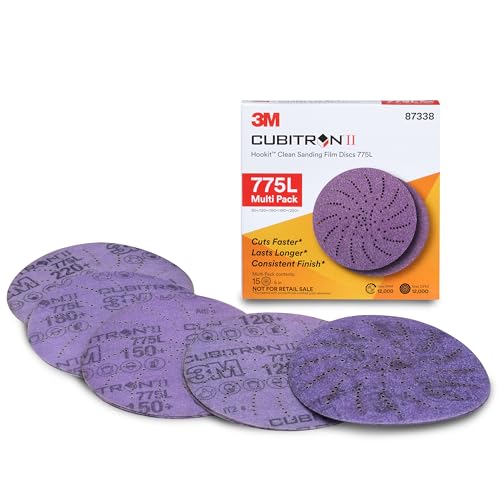
3M Xtract Cubitron II Film Disc
What We Like
- Superior dust extraction prevents loading
- Works on aluminum, steel, composites, wood
- Open coat resists clogging
- Quick hook-and-loop disc changes
Trade-offs
- For industrial/occupational use only
- Multi-pack includes only 80+ and 220+ grits
The 3M Xtract Cubitron II Film Disc uses a multi-hole dust extraction pattern to reduce loading and keep the abrasive cutting longer. On soft metals like aluminum, clogging is a common problem, and this disc’s open-coat construction and load-resistant coating help prevent that, so you can spend more time sanding and less time changing discs. The hook-and-loop backing makes swaps quick, and the grit range from 80+ to 400+ covers coarse stock removal through finishing. For anyone using a random-orbit sander on aluminum, this disc is designed to keep dust from gumming up the work.
The trade-off is that this disc is labeled for industrial use, so casual DIYers might find the multi-pack limited to 80+ and 220+ grits. If you need a wider grit range for mixed materials, the Benchmark Abrasives Gold Discs offer a broader selection of aluminum oxide discs at a more accessible price point. But for aluminum work where dust loading is a frustration, the 3M Xtract’s extraction design and open-coat construction deliver a cleaner sanding experience.
Product photos
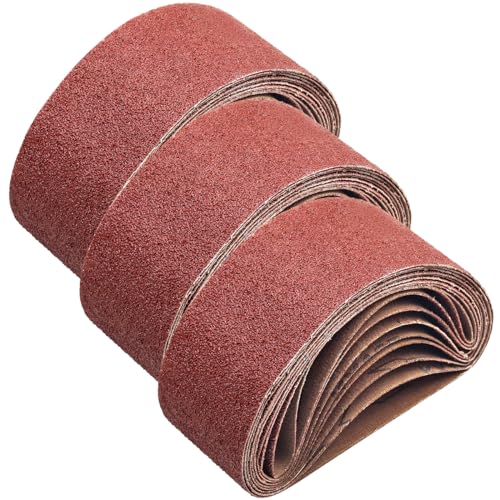
Taokyid 2.5X16 Sanding Belts
What We Like
- Anti-static design reduces dust buildup
- Open coat aluminum oxide resists heat and moisture
- 24-piece assortment covers coarse to medium grits
- Bi-directional tape joint improves belt life
Trade-offs
- Limited to 2.5 x 16 inch belt sanders only
- No fine grits above 80 for final finishing
The 24-piece grit assortment of 40, 60, and 80 means you can start rough shaping and move to medium smoothing without switching packs. That anti-static open coat aluminum oxide grain stays cool and resists clogging, which is exactly what you need when sanding aluminum, soft metal that gums up cheaper belts fast.
For finer finishing work, you will need to switch to a different abrasive system. The coarsest grit included is 40, which is ideal for rapid stock removal on wood, aluminum, and non-ferrous metals. The 60 grit handles general shaping, and the 80 grit prepares surfaces for paint or clear coat. Reviewers note that the 80 grit upper limit means this set is best suited for heavy material removal and intermediate smoothing rather than final polishing. If your projects require a finer finish, you would need to purchase additional sanding belts with higher grit ratings separately.
Product photos
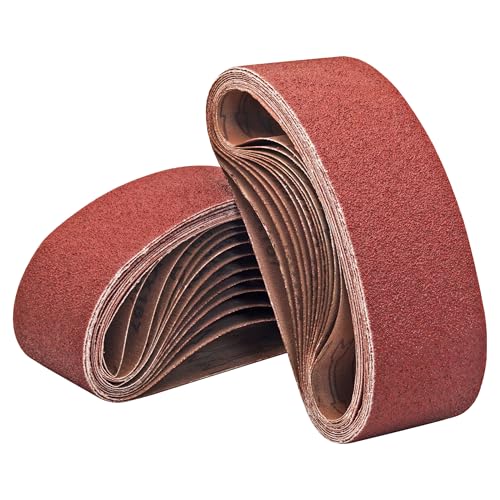
Taokyid 3×24 Sanding Belts
What We Like
- Four grits cover rough to fine sanding
- Open coat aluminum oxide resists heat and moisture
- Bi-directional tape joint reduces heat and buildup
Trade-offs
- 240 grit is fine, not ultra-fine for final polish
- No included storage case for belts
Twenty-four belts in four grits, 40, 80, 120, and 240, means you can start with heavy stock removal on aluminum and move straight to a smoother finish without switching packs.
Quantity per grit is the main consideration here: six belts each means you will burn through the coarser grits faster if you are flattening large surfaces. Compared to the 3M Xtract Cubitron II Film Disc, which is a disc format, these belts are designed for belt sanders and offer a wider grit range in one package. If your work involves sanding aluminum stock, this kit provides a ready assortment from coarse to fine.
Product photos
Pihemum Wet Dry Sandpaper Sheets

What We Like
- 45 sheets cover 15 grits from 80 to 5000
- Silicon carbide abrasive for metal and paint
- Wet or dry use reduces dust and scratches
- Grit numbers printed on the back
Trade-offs
- Sheets are 9 x 3.6 inches, smaller than standard 9×11 sheets
- No hook-and-loop backing for quick disc changes
This pack gives you 45 sheets across 15 grits from 80 to 5000, so you can move from rough shaping to fine polishing without buying separate kits. The silicon carbide abrasive works on wood, metal, and automotive finishes, and the wet-sanding option helps reduce dust and scratches. It’s a practical set for anyone who needs a single box to handle a full sanding job on a variety of materials.
The sheets measure 9 x 3.6 inches, which is narrower than the 9×11 sheets from BMOTL, so you’ll cover less area per pass on larger surfaces. There is no hook-and-loop backing, so these are best for hand sanding or cutting to fit a sanding block. If you need quick-change discs for a power sander, the 3M Xtract Cubitron II discs are a different option. But if you’re working by hand and want a wide grit range in one bundle, this set covers the full progression.
Product photos
BMOTL Wet Dry Sandpaper Sheets

What We Like
- Six grits from coarse to fine
- Works wet or dry
- Flexible latex paper backing
- Full-size 9×11 sheets
Trade-offs
- Only 2 sheets per grit limits long jobs
- No ultra-fine grit above 400
- Sheets need cutting to fit sanders
The 80 to 400 grit range in this 12-sheet pack covers the essential steps for most projects: stripping old coatings, removing imperfections from wood or metal, and prepping surfaces for priming or finishing. The silicon carbide abrasive works wet or dry, so you can use it with water to keep the paper from clogging and to cool the workpiece. The latex paper backing bends around curves without cracking, which makes it handy for contoured surfaces like trim or automotive body panels.
Quantity is the main limitation here: with only two sheets per grit, you will run out of coarse paper quickly if you are tackling a large panel or multiple pieces. For heavy stock removal on a belt sander, a dedicated pack of coarse belts like the Taokyid 2.5X16 Sanding Belts would be a better fit. But for hand-sanding odd shapes, tight corners, or small repairs where you need flexibility and grit variety, this BMOTL pack gives you a practical starting point without overbuying. Just plan to cut the full 9×11 sheets into strips or quarters to fit your block or pad.
Product photos
YXYL Wet Dry Sandpaper Sheets

What We Like
- 16 grits from 120 to 5000
- Wet and dry dual use
- Anti-clogging, tear-resistant backing
- Flexible for curved surfaces
Trade-offs
- Small 9×3.6-inch sheets limit large flat work
- No hook-and-loop backing; requires adhesive or block
- 48 sheets mean fewer per grit for heavy use
A 16-grit range from 120 to 5000 means you can start with rough shaping and move to fine polishing without switching to a different pack. That breadth makes this set ideal for detail-oriented finishers who want one kit that handles everything from material removal to finishing. The silicon carbide abrasive and waterproof backing support wet sanding, which keeps dust down and helps you achieve a smooth, even surface.
Sheet size is the main trade-off here: at 9 by 3.6 inches, these are narrow strips rather than full-sheet sandpaper, so they work best on small parts, curved panels, or when wrapped around a sanding block. For large flat surfaces, a full 9×11-inch sheet like the KQCXIK Premium Wet Dry Sandpaper would cover more area per pass. But if your work involves varied grit needs or you value a complete progression from coarse to fine in one box, this set delivers exactly that flexibility.
Product photos
KQCXIK Premium Wet Dry Sandpaper

What We Like
- Full wet/dry waterproof design
- Six grits from 400 to 3000
- Anti-clog, tear-resistant backing
- Fits hand blocks and power sanders
Trade-offs
- Only two sheets per grit grade
- No coarse grits below 400 included
The 12-sheet set covers six grits from 400 to 3000, so you can progress from smoothing to fine polishing on wood, metal, or auto paint without switching to another brand. The silicon carbide grains are bonded to a resin layer for uniform abrasion, and the fiber-reinforced backing resists tearing and clogging during use. You can work wet to keep dust down or dry for quicker material removal, which makes the sheets useful for garage workshops and auto detailing.
A pack like the Pihemum Wet Dry Sandpaper Sheets offers more total sheets and a wider grit spread, but its 3.6-inch width means you cannot cover a full 9-inch panel in one pass.
Product photos
Dazefree Sandpaper Assortment

What We Like
- Harder abrasive than aluminum oxide
- Easy to cut for different sanders
- 9.5 Mohs silicon carbide abrasive
Trade-offs
- No hook-and-loop backing for disc sanders
- Grits only up to 400
These are plain sheets, not hook-and-loop discs, so they require a sanding block or clip-on sander for power tool use. For hand sanding or cutting custom shapes, the full 9×11 sheet offers flexibility. The assortment tops out at 400 grit, so for finer polishing above that, you would need a separate set.
Product photos
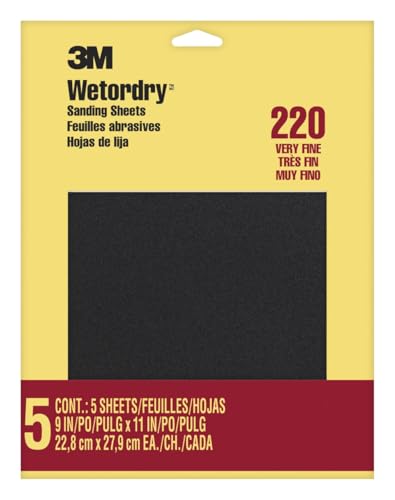
3M Wetordry Sandpaper
What We Like
- Silicon carbide cuts fast and smooth
- Works wet or dry to reduce clogging
- Two backing weights for contour or flat sanding
- Waterproof paper extends abrasive life
Trade-offs
- Only one grit (220) per pack limits versatility
- 5-sheet count is small for large projects
- Requires water or oil to prevent clogging
The 220-grit silicon carbide abrasive cuts fast and smooth, which is exactly what you want when sanding between coats of varnish or lacquer. You can choose between a flexible A-weight paper for contour sanding or a stiffer C-weight backing for leveling general surfaces, and using water or cutting oil reduces clogging and extends the abrasive life. This is a focused choice for anyone who needs a consistent scratch pattern on painted or finished surfaces.
You get only five sheets in a single grit, so if you need a range of coarseness for heavy stock removal followed by finishing, you will need multiple packs. Compared to the Pihemum Wet Dry Sandpaper assortment, which offers 45 sheets across many grits, the 3M Wetordry is a more focused buy for a specific grit rather than a variety pack. It is best for the person who needs a single grit for a specific sanding step over variety or quantity.
Product photos
Benchmark Abrasives Gold Discs
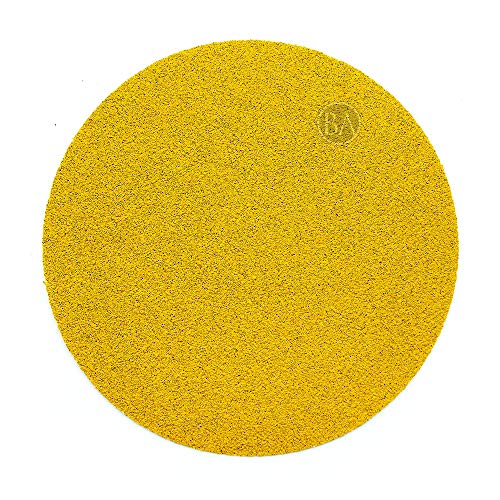
What We Like
- Non-loading stearate coating reduces clogging
- Hook-and-loop backing for quick disc changes
- Fits most 5-inch orbital sanders
- Mixed low grits for aggressive stock removal
Trade-offs
- Limited to low grits; no fine finishing options
- Aluminum oxide wears faster on hard metals
The 50-disc mixed pack of aluminum oxide with a non-loading stearate coating means you can rip through surface rust, paint, and light corrosion on aluminum without the paper gumming up mid-stroke. That stearate layer is the key difference here: it keeps the grit cutting freely, so you spend less time swapping discs and more time shaping your workpiece. This makes the Benchmark Abrasives Gold Discs a natural fit for anyone who needs quick material removal on non-ferrous metals using a random-orbit sander. They are especially useful when you are knocking down welds or prepping aluminum for paint.
The pack tops out at 150 grit, so you’ll need a finer set if you want a mirror polish afterward. For heavy stock removal on aluminum with an orbital sander, these discs deliver excellent value and long cutting life, but plan on a finishing step if your project demands a smooth final surface.
Product photos
How We Evaluated Sandpapers For Aluminum
Our evaluation combines manufacturer technical data, expert round-ups from the metalworking and automotive finishing communities, and patterns in owner feedback across hundreds of user reports. Because sanding aluminum presents unique challenges, we looked for products with specific design features rather than general-purpose abrasives.
The four criteria that mattered most were clog resistance, abrasive material, grit range, and format compatibility. Clog resistance comes from open-coat construction, stearate coatings, or wet-sanding capability. Abrasive material means silicon carbide or aluminum oxide with anti-loading treatments. Grit range covers everything from coarse stock removal through fine finishing. Format compatibility includes hook-and-loop discs, belt sizes, or standard sheets.
A research-led evaluation has limits: we cannot replicate the feel of a specific abrasive on a particular aluminum alloy, and owner experiences vary with technique, tool speed, and pressure. What we can do is identify the products with the strongest engineering for this difficult material.
What To Look For In Sandpapers For Aluminum
Choosing the right sandpaper for aluminum means understanding how the metal behaves. Here is what matters most when you shop.
Aluminum clogs standard sandpaper fast. Look for open-coat construction, stearate or anti-loading coatings, and the ability to sand wet to prevent the abrasive from filling up with swarf.
Abrasive Type
Silicon carbide is the standard recommendation for non-ferrous metals because it fractures to create fresh cutting edges and runs cooler than aluminum oxide. For power sanding, aluminum oxide with an open-coat or anti-loading treatment can work well, especially on belt sanders where the faster belt speed helps clear debris. The harder the abrasive, the longer it cuts before dulling.
Grit Range and Progression
Aluminum responds best to a stepped progression: start with 80 or 100 grit for shaping, move to 180-220 for smoothing, then 320-400 for prep finish, and up to finer grits for polishing. A good assortment covers at least four grits across this range. Single-grit packs work if you know exactly what you need, but multi-grit sets save time and money for most projects.
Clog Resistance Features
Open-coat construction (where abrasive grains cover only part of the backing) leaves space for swarf to escape. Stearate coatings add a soapy lubricant that resists loading. Wet sanding with water or oil flushes debris away and keeps the abrasive cool. Any of these features dramatically extends the useful life of sandpaper on aluminum.
- Check if the product is labeled “open coat” or “non-loading.”
- For power sanders, look for dust-extraction compatibility.
- Wet-dry paper must be waterproof; standard paper disintegrates when wet.
- For hand sanding, flexible backing helps follow curves without tearing.
- Sheet dimensions matter: 9×11 sheets cover more area than smaller formats.
A simple rule: if the sandpaper loads up in the first few passes, switch to a different abrasive type or a wet-sanding method.
Sandpapers For Aluminum Compared
The table below compares all ten sandpapers for aluminum across the features that matter most for this demanding material.
| Product | Abrasive Material | Grit Range | Sheet/Disc Size |
|---|---|---|---|
| 3M Xtract Cubitron II Film Disc | N/A | 80+ to 400+ | 5 in |
| Taokyid 2.5X16 Sanding Belts | Open coat aluminum oxide | 40/60/80 | 2.5 x 16 inches |
| Taokyid 3×24 Sanding Belts | Open coat aluminum oxide | 40/80/120/240 | 3 x 24 inches |
| Pihemum Wet Dry Sandpaper Sheets | Silicon carbide | 80-5000 | 9 x 3.6 inches |
| BMOTL Wet Dry Sandpaper Sheets | Silicon Carbide | 80-400 | 9 x 11 in |
| YXYL Wet Dry Sandpaper Sheets | Silicon carbide | 120-5000 | 9 x 3.6 inches |
| KQCXIK Premium Wet Dry Sandpaper | Silicon Carbide | 400-3000 | 9 x 11 inches |
| Dazefree Sandpaper Assortment | Silicon Carbide | 80 120 180 240 320 400 | 9 x 11 inches |
| 3M Wetordry Sandpaper | Silicon Carbide | 220 | 9 x 11 in |
| Benchmark Abrasives Gold Discs | Aluminum Oxide | 40, 60, 80, 120, 150 | 5 inches |
Frequently Asked Questions
What grit sandpaper is best for aluminum?
Start with 80 to 120 grit for heavy stock removal, then move to 180-220 for smoothing, and finish with 320-400 for prep before painting or polishing. For a mirror finish, continue up to finer grits using wet sanding.
Can you use regular sandpaper on aluminum?
Standard sandpaper designed for wood will load up almost instantly on aluminum. You need silicon carbide or a specialized aluminum oxide with an open-coat or anti-loading treatment. Wet-dry paper used with water or lubricant also works well.
Should you sand aluminum wet or dry?
Wet sanding is often better for aluminum because water flushes away debris, keeps the abrasive cool, and prevents clogging. Dry sanding works if the paper has an anti-loading coating or if you are using dust extraction with a power sander.
How do you keep sandpaper from clogging on aluminum?
Use an open-coat or non-loading abrasive, sand wet when possible, and clean the paper frequently with a rubber crepe block or stiff brush. A stearate-coated disc or belt also resists loading significantly better than standard abrasives.
What is the difference between aluminum oxide and silicon carbide for aluminum?
Silicon carbide is harder and sharper, making it the better choice for aluminum because it cuts faster and stays cool. Aluminum oxide dulls more quickly on non-ferrous metals but can work well in open-coat formats or on belt sanders where speed helps clear debris.
The Bottom Line
For anyone sanding aluminum regularly with a random-orbit sander, the 3M Xtract Cubitron II Film Disc is our best overall pick. Its dust-extraction design and open-coat construction solve the two biggest problems with this metal: loading and heat buildup. It is a professional-grade choice for frequent use.
If you work with a belt sander, the Taokyid 2.5X16 Sanding Belts give you a durable, anti-static assortment for shaping and smoothing. For hand sanders who need a full grit progression, the Pihemum Wet Dry Sandpaper Sheets cover 15 grits from 80 to 5000, letting you move from rough stock removal to fine polishing with one purchase.
The single most important factor when buying sandpaper for aluminum is clog resistance. Without it, even the sharpest abrasive becomes useless in seconds. Prioritize open-coat construction, silicon carbide abrasive, or wet-sanding capability, and your sanding will go faster, cleaner, and with far less frustration.
