
9 Best Sandpaper For 3d Prints in 2026
This post contains affiliate links. As an Amazon Associate, we earn from qualifying purchases.
For smoothing layer lines on 3D prints, the KQCXIK Premium Wet Dry Sandpaper Assortment offers the widest grit range from 120 to 3000, making it our best overall pick for finishing prints. The eQualle Sandpaper Sheets are designed specifically for PLA and resin, while the 3M Wetordry Assortment excels at fine polishing.
The challenge with 3D prints is removing visible layer lines without damaging the model’s shape or surface detail. You need sandpaper that cuts cleanly, works with water to reduce dust, and progresses through fine enough grits to leave a polished finish.
This guide is research-based, drawing on manufacturer specifications and patterns in owner feedback. We evaluated each product for grit range, abrasive material, sheet size, and suitability for common 3D printing materials like PLA and resin.
Top 9 Sandpapers For 3D Prints in the Market
Certain content that appears on this site comes from Amazon. This content is provided "as is" and is subject to change or removal at any time.
The Best Sandpapers For 3D Prints, Reviewed
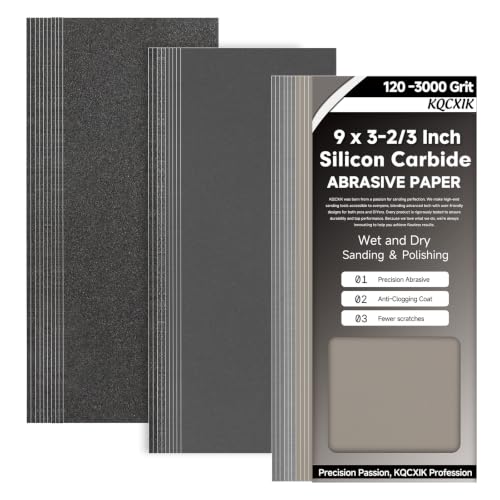
KQCXIK Premium Wet Dry Sandpaper Assortment
What We Like
- 10 grits from 120 to 3000
- Waterproof for wet or dry use
- Tear-resistant fiber-reinforced backing
- Fits hand blocks and power sanders
Trade-offs
- Only 2 sheets per grit limits heavy use
- 9-inch length is short for large flat surfaces
- No dedicated fine-only pack for polishing
Ten grits from 120 to 3000 let you move from rough material removal to fine polishing without switching brands. Each grit comes with two sheets, enough for one or two medium-sized projects. The silicon carbide grains cut cleanly on wood, metal, and auto paint, and the fiber-reinforced backing resists tearing when used on a sanding block or in tight corners.
The trade-off is quantity: two sheets per grit won’t last through a batch of large projects or aggressive sanding. If you need more sheets per grit, the Dura-Gold 50-sheet assortment offers five sheets per grit across a similar range, though it does not include the 120-grit starter. For a single set that covers coarse to fine work, this KQCXIK pack provides a full progression.
Product photos
Dura-Gold Assorted Wet Dry Sandpaper

What We Like
- 10 grits from coarse to ultra-fine
- 50 sheets cover many sanding stages
- Waterproof silicon carbide resists clogging
- Works with blocks, sanders, or by hand
Trade-offs
- No grit below 150 for heavy material removal
- Sheets are 3-2/3" wide, not full-sheet size
This pack gives you 50 sheets spread across ten grits from 150 to 3000, with five sheets per grit. That means you can move from coarse sanding to fine finishing without buying another assortment, and the five-sheet count per grit lets you work through multiple surfaces before running out. The silicon carbide abrasive resists clogging, so each sheet keeps cutting longer during wet or dry use.
One thing to keep in mind is that the pack skips grits below 150, so if you need to remove big support nubs or heavy layer stepping quickly, you will want a separate coarse sheet. And at 3-2/3 inches wide, these are narrower than standard 9×11 sheets, fine for small parts or sanding blocks, but less convenient for large flat surfaces.
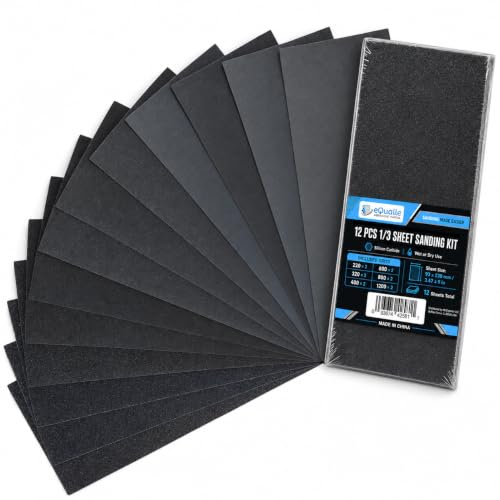
eQualle Sandpaper Sheets for 3D Prints
What We Like
- Six grits for step-by-step finishing
- Pre-cut 1/3-sheet size for small areas
- Silicon carbide abrasive for PLA and resin
- Wet-and-dry capability for flexible use
Trade-offs
- Only two sheets per grit limits long projects
- No grit above 1200 for high-gloss polishing
Two sheets each of six grits from 220 to 1200 means you can start smoothing rough layer lines and work your way to a fine finish without switching brands mid-project. That range is exactly what PLA and resin prints need: coarse enough to knock down visible steps, fine enough to prep for primer or paint. The silicon carbide abrasive handles both wet and dry sanding, so you can wet-sand resin to reduce dust and keep the paper cutting cleanly. For anyone finishing a handful of models at a time, this assortment covers every stage without forcing you to buy separate packs.
Quantity is the main consideration here. With only two sheets per grit, a big print or a batch of several parts will exhaust your 220 or 400 sheets fast. If you sand frequently or work on larger pieces, the 20-sheet KQCXIK Premium assortment gives you more grit variety and more copies per grit for a similar footprint. But if your projects are small to medium and you want a curated set that skips the ultra-fine polishing grits and focuses on the practical 3D-print range, the eQualle pack keeps your workflow simple and your workbench tidy.
Product photos
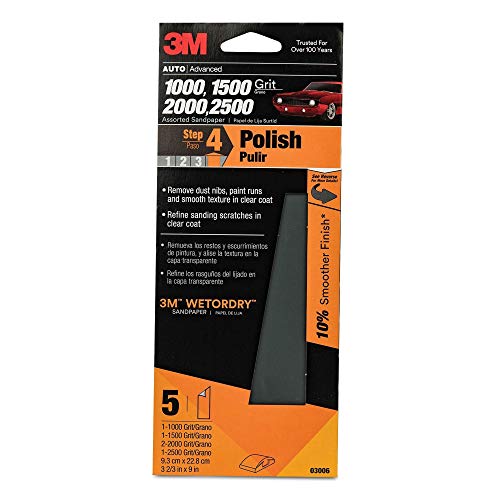
3M Wetordry Sandpaper Assorted Grits
What We Like
- Silicon carbide self-fractures for longer life
- 10% smoother finish vs. conventional 3M paper
- Wet or dry use without switching sheets
- Assorted high-grits for fine polishing
Trade-offs
- Only 5 sheets total, fewer than most packs
- No grits below 1000 for initial shaping
- Sheets are narrow at 3 2/3 inches wide
The silicon carbide abrasive in this pack self-fractures as you work, which helps each sheet cut longer than conventional sandpaper. The 10% smoother finish versus standard 3M paper is a real advantage when you are polishing clear coat or removing paint defects. With grits from 1000 to 2500, this set skips coarse grits entirely, so it is meant for the final smoothing stage after you have already shaped the surface with lower grits. You can use it wet or dry without switching paper types, which saves time during fine finishing.
The pack contains just five sheets total, so it’s a focused kit rather than a broad assortment. Owners who only need the finer grits for clear coat sanding and paint defect removal will find exactly what they need. By contrast, the KQCXIK Premium assortment offers 20 sheets spanning 120 to 3000 grit, which suits a wider variety of coarse and fine work. This 3M set is meant for someone who already knows they’re polishing or finishing a clear coat, not for general-purpose sanding across multiple materials.
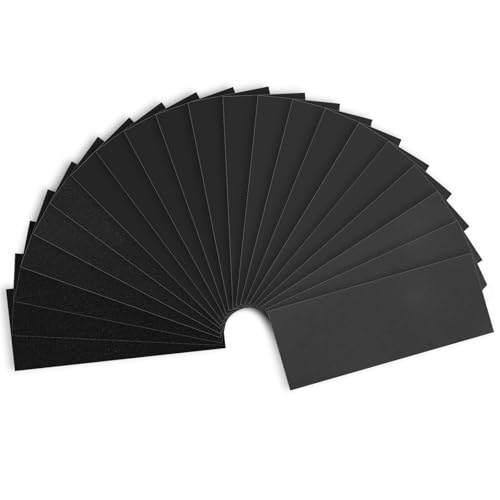
Shineboc Sandpaper Assortment
What We Like
- 21 sheets across 7 grits
- Silicon carbide for long life
- Wet and dry capable
- Tear-resistant reinforced backing
Trade-offs
- Only 3 sheets per grit limits heavy use
- No grit above 2000 for high-gloss polishing
Twenty-one sheets spanning seven grits from 120 to 2000 give you a full rough-to-finish path without buying separate packs. The silicon carbide abrasive stays sharp through both wet and dry sanding, and the tear-resistant backing holds up under high pressure or on irregular surfaces. For anyone working on wood, metal, automotive paint, plastic, or stone, this assortment covers the essential stages of smoothing and polishing at a budget-friendly cost.
If you need finer grits for a mirror-like finish, the KQCXIK pack goes up to 3000. But for everyday sanding from rough to fine, the Shineboc set gives you the range and durability without overspending.
Product photos
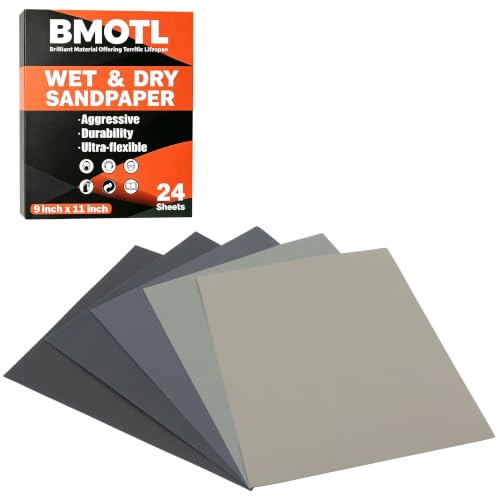
BMOTL Wet Dry Sandpaper Sheets
What We Like
- Full 9×11 inch sheets for custom cuts
- Six grits from 600 to 3000
- Electrostatic coating for consistent sharpness
- Wet and dry use reduces clogging
Trade-offs
- No coarse grits below 600 for heavy material removal
- Large sheets require cutting for small 3D prints
The 9×11 inch sheets are large enough to cut custom shapes or cover wide surfaces like automotive panels without taping smaller pieces together. With six grits from 600 to 3000, this set is designed for fine sanding and polishing rather than rough shaping, which suits finishing clear coats and smoothing painted surfaces. The silicon carbide abrasive and electrostatic coating are meant to provide a consistent cutting action, so you can work toward a uniform finish on plastics and painted parts.
A key limitation is that you won’t find any coarse grits below 600, so if your 3D print has prominent layer lines or rough edges, you’ll need a separate set for initial sanding.
Product photos
Hydro2Go Sandpaper Assortment

What We Like
- 28 sheets across 7 grits
- Cut-to-fit flexible backing resists tearing
- Silicon carbide for even, consistent sanding
- Wet and dry use reduces dust
Trade-offs
- No grit above 2000 for finer finishing
- Sheet size is 9 inches, shorter than some competitors' 9.5-inch sheets
Twenty-eight sheets across seven grits from 120 to 2000 cover surface prep, smoothing, and fine finishing without needing another pack. The thick, flexible backing resists tearing when cut or folded to fit tight corners and curved edges. That cut-to-fit freedom makes it practical for hand sanding or block sanding on wood, metal, and automotive projects.
Product photos
CooBigo Sandpaper Assortment

What We Like
- 12 grits from 120 to 3000
- 2 sheets per grit for consistency
- Silicon carbide works wet or dry
- Grit printed on back for easy ID
Trade-offs
- Only 2 sheets per grit for heavy sanding
- Sheet size smaller than some competitors
- No ultra-fine grit above 3000
Twenty-four sheets spanning 12 grits from 120 to 3000 means you can handle rough surfaces and fine finishing in one pack. Each grit comes with two sheets, so you have a spare when the first wears out on a larger project. The silicon carbide construction handles wet sanding, which reduces dust and leaves surfaces cleaner and smoother. This set covers a wide range of materials including wood, metal, and 3D printed models, making it a versatile choice for smoothing edges and preparing surfaces for painting or staining.
The main difference is quantity: with only two sheets per grit, a large project or frequent sanding sessions will burn through the coarser papers fast. For comparison, the Dura-Gold Assorted pack gives you five sheets per grit, which stretches further on bigger prints.
Product photos
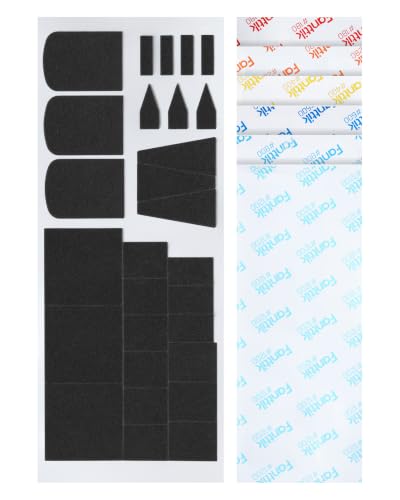
Fanttik PixMate 3 Sandpaper Kit
What We Like
- Film backing resists tearing and curling
- Six grits cover rough to fine finishing
- Conforms easily to curved surfaces
- Works wet or dry to reduce dust
Trade-offs
- Only fits Fanttik Pix 3 Master sander
- No grit above 1200 for mirror polishing
- Two sheets per grit limits heavy use
A film-backed design that resists tearing and curling means these sheets stay put on the sander pad, even when you’re working wet to keep resin dust down. With six grits from 180 to 1200, you can knock down layer lines, smooth support scars, and refine curves on a 3D print without switching to a different pack. That makes this kit a natural fit if you already own the Fanttik Pix 3 Master sander and want a dedicated set for detail work on miniatures, figurines, or small resin parts.
A notable drawback is that these sheets are made only for that specific sander, so they won’t work with a standard sanding block or a different power tool. Compared to a general-purpose assortment like the KQCXIK Premium Wet Dry Sandpaper, which gives you larger sheets and a wider grit range for hand sanding, the PixMate kit is more limited in versatility. But if you already have the Pix 3 Master and value quick changes and a secure fit for precision work, this is the most convenient option available.
Product photos
How We Evaluated Sandpapers For 3D Prints
Our evaluation focused on the specific needs of 3D print finishing. We examined manufacturer data for each product’s grit range, abrasive type (silicon carbide vs. Aluminum oxide), and whether the paper is designed for wet or dry use. We also analyzed sheet dimensions to determine how well each product fits the small, detailed surfaces common on 3D prints.
The three most important criteria were grit progression, abrasive quality, and format. A sandpaper pack must offer a logical step-up from coarse removal (120-400 grit) to fine polishing (1000-3000 grit) to avoid deep scratches. Silicon carbide abrasives are preferred for plastics because they cut cleanly without loading up. Sheet size matters: full 9×11 sheets offer flexibility for cutting custom strips, while pre-cut 1/3 sheets are ready for small models.
A research-led evaluation has limits. We cannot claim to have used each sheet across every printer and filament type. Owner feedback patterns help identify common issues like tearing or clogging, but individual results vary with sanding technique and print quality.
What To Look For In Sandpapers For 3D Prints
Choosing the right sandpaper for 3D prints means matching grit progression, abrasive material, and sheet format to your typical model size and finishing goal.
Look for silicon carbide abrasive, a grit range from at least 400 to 2000, and sheets small enough to control on detailed parts. Wet sanding reduces dust and improves finish quality.
Grit Range and Progression
A complete grit progression is essential for 3D prints. Start with a coarse grit (120-220) to knock down prominent layer lines, then move through intermediate grits (400-600) to refine the surface, and finish with fine grits (1000-3000) for a smooth, polished look. Packs that skip too many grits between steps make it harder to remove scratches from the previous stage. The best kits offer at least six grits covering the full range from rough shaping to final polish.
Abrasive Material
Silicon carbide is the standard choice for sanding plastics. Its sharp, hard grains fracture during use to expose fresh cutting edges, which helps prevent clogging when sanding soft materials like PLA and resin. Aluminum oxide works well on wood and metal but tends to load up faster on print materials. Wet-and-dry silicon carbide paper allows you to sand with water, which lubricates the surface, reduces dust, and helps achieve a finer finish.
Sheet Format and Size
Full 9×11 inch sheets give you the freedom to cut custom strips for tight corners or curve around complex shapes. Pre-cut 1/3 sheets (about 3.67 x 9 inches) are ready to use on smaller models without trimming. Some kits are designed to fit specific detail sanders, which can be convenient if you own that tool but limiting otherwise.
- Check that the grits in the pack match your typical finishing stages (coarse, medium, fine).
- Look for grit numbers printed on the back of each sheet for easy identification.
- Choose wet-and-dry paper if you plan to sand with water to reduce dust.
- Avoid packs with large grit gaps that require extra steps to remove scratches.
A good rule of thumb: buy a pack with at least six grits from 400 to 2000 for a smooth finish on most PLA and resin prints.
Sandpapers For 3D Prints Compared
The table below compares the nine sandpaper packs across key specifications, including grit range, sheet count, and abrasive type, to help you find the right match for your 3D printing projects.
| Product | Grit Range | Sheet Count | Sheet Size | Material |
|---|---|---|---|---|
| KQCXIK Premium Wet Dry Sandpaper Assortment | 120-3000 | 20 sheets | 9 × 3-2/3 inches | Silicon carbide |
| Dura-Gold Assorted Wet Dry Sandpaper | 150 to 3000 | 50 sheets | 3-2/3" x 9" | Electro-coated silicon carbide |
| eQualle Sandpaper Sheets for 3D Prints | 220, 320, 400, 600, 800, 1200 | 12 sheets | 9 x 3.67 inches | Silicon carbide |
| 3M Wetordry Sandpaper Assorted Grits | 1000-2500 | 5 sheets | 3 2/3 × 9 in | Silicon Carbide |
| Shineboc Sandpaper Assortment | 120/220/400/600/800/1000/2000 | 21 sheets | 9 x 3.6 inches | Silicon carbide |
| BMOTL Wet Dry Sandpaper Sheets | 600-3000 | 24 sheets | 9 x 11 inches | Silicon carbide |
| Hydro2Go Sandpaper Assortment | 120-2000 | 28 sheets | 9 × 3.6 in | Silicon carbide |
| CooBigo Sandpaper Assortment | 120 to 3000 | 24 sheets | 9 x 3.6 inches | Silicon carbide |
| Fanttik PixMate 3 Sandpaper Kit | 180, 280, 400, 600, 800, 1200 | 12 sheets | N/A | Film-backed |
Frequently Asked Questions
What grit sandpaper should I use for 3D prints?
Start with 220 or 320 grit to remove visible layer lines, then move to 400 grit to smooth the surface. For a polished finish, continue through 600, 800, 1000, and up to 2000 or 3000 grit. Always sand in a progression without skipping more than one grit step to avoid deep scratches.
Can I use regular sandpaper on 3D prints?
Regular aluminum oxide sandpaper works but tends to clog quickly on PLA and resin. Silicon carbide wet-and-dry paper is better because it cuts cleanly and can be used with water to reduce clogging and dust. For best results, choose sandpaper labeled for wet or dry use on plastics.
Should I wet sand 3D prints?
Wet sanding is recommended for 3D prints because water lubricates the surface, reduces heat buildup, and washes away plastic particles that would otherwise clog the paper. It also produces a finer finish with fewer visible scratches. Most silicon carbide sandpapers are designed for wet use.
How do I sand small or detailed 3D prints?
Cut the sandpaper into small strips or use pre-cut 1/3 sheets for better control. Fold the paper into a sharp edge to reach into crevices, or wrap it around a small dowel or foam block to sand curved surfaces. For very fine details, consider using a detail sander with film-backed sandpaper.
What is the best sandpaper for PLA filament?
Silicon carbide wet-and-dry sandpaper in a grit range from 220 to 2000 is best for PLA. Start with 220 grit to remove layer lines, progress through 400 and 600 grit, and finish with 1000 to 2000 grit for a smooth surface. Dedicated 3D print sanding kits like the eQualle sheets offer a complete progression for PLA.
The Bottom Line
For most hobbyists finishing PLA and resin prints, the KQCXIK Premium Wet Dry Sandpaper Assortment delivers the widest grit range in one pack, from coarse shaping to fine polishing. If you need a kit specifically designed for 3D print materials, the eQualle Sandpaper Sheets provide a complete grit progression in a compact, pre-cut format.
Budget-minded shoppers will appreciate the Shineboc Sandpaper Assortment, which offers seven grits at an affordable price point. For those focused on achieving a mirror-like polish on painted surfaces, the 3M Wetordry Assortment delivers exceptional fine-grit performance.
The single most important factor when buying sandpaper for 3D prints is choosing a kit with a logical grit progression that matches your finishing goals. A complete range from coarse to fine will save you time and deliver smoother results with less effort.
