
10 Best Sanders For Stripping Paint in 2026
This post contains affiliate links. As an Amazon Associate, we earn from qualifying purchases.
For stripping paint, the Wagner Spraytech PaintEater Disc Sander is our best overall pick. Its open-web disc resists paint loading while a Flex-Disc conforms to uneven surfaces, making short work of both stubborn chips and edge feathering. For tight corners and trim, the HYCHIKA Detail Sander excels, and those who want cordless freedom should consider the AVID POWER Cordless Random Orbital Sander.
The challenge with stripping paint is balancing material removal speed with surface gentleness. A sander that is too aggressive can gouge wood, while one that is too fine will clog instantly on thick layers of old paint. You also need to manage dust and reach awkward spots like window frames or furniture legs.
This guide is based on research into manufacturer specifications, expert round-ups, and patterns in owner feedback. We evaluated each sander for its ability to handle paint removal effectively while offering the control, dust management, and ergonomics needed for the job. The result is a clear set of recommendations for different project types and budgets.
Top 10 Sanders For Stripping Paint in the Market
Certain content that appears on this site comes from Amazon. This content is provided "as is" and is subject to change or removal at any time.
The Best Sanders For Stripping Paint, Reviewed
Wagner Spraytech PaintEater Disc Sander

What We Like
- Open-web disc resists paint loading
- Edge operation removes stubborn paint chips
- Flex-Disc conforms to uneven surfaces
- Gentle on surfaces at 2600 RPM
Trade-offs
- 3.4 pounds is heavier than palm sanders
- Rotary disc can leave swirl marks if misused
- Corded design limits mobility to outlet range
A 3.2 Amp motor spinning a 4-1/2 inch disc at 2600 RPM gives this sander the controlled aggression you want for stripping paint without gouging the wood underneath. The open-web 3M spun-fiber disc resists clogging, so you spend more time removing paint and less time cleaning the abrasive. Running the disc on its edge bites into stubborn chips, while running it flat feathers the edges smooth.
At 3.4 pounds, this tool is heavier than the HYCHIKA detail sander at 2.2 pounds, so your hand may tire sooner during extended overhead work. Because it uses a rotary disc rather than a random-orbit design, it can leave swirl marks if you pause in one spot. For dedicated paint stripping on large flat areas, the rotating disc gives you more control than a detail sander’s vibrating pad.
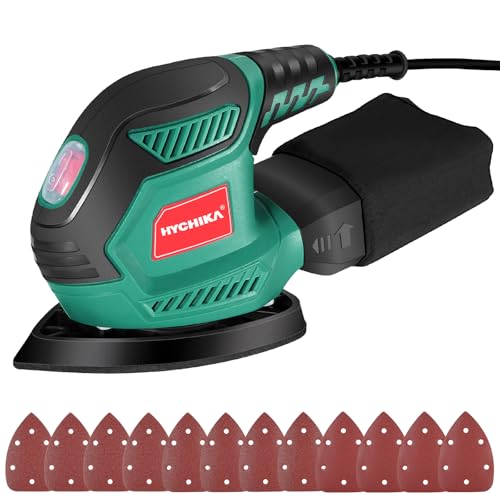
HYCHIKA Detail Sander
What We Like
- Compact size for tight spaces
- Includes 12 sandpapers in three grits
- 6-hole dust collection with dust bag
Trade-offs
- Corded design limits mobility
- Not recommended for drywall or cement
At 14,000 orbits per minute and 2.2 pounds, this sander can handle paint removal in tight corners without tiring your arm as quickly as heavier models. The 12 included sandpapers in coarse, medium, and fine grits let you start sanding right away, switching from rough to smooth as needed. Its compact size and soft rubber head reach into narrow spots that bulkier sanders can’t access, making it a good fit for detailed woodworking and trim work.
Because it’s corded, you’re limited to working within reach of an outlet, and the manufacturer advises against using it on drywall or cement plaster. If you need to work on large flat surfaces or away from power, a cordless option like the AVID POWER cordless orbital sander (which runs on a 20V battery) might offer more flexibility. For detail sanding near a power source, though, the HYCHIKA’s included sandpapers and compact design handle the job well.
Product photos
AVID POWER Cordless Random Orbital Sander

What We Like
- Cordless freedom for small paint-stripping jobs
- Six variable speeds match material and task
- Quick hook-and-loop disc changes
- Dust collection bag keeps workspace cleaner
Trade-offs
- 3.3 pounds is heavier than some corded palm sanders
- Battery and charger not included with the sander.
The six variable speeds let you dial down for delicate trim or crank up to 11,000 RPM for stripping paint on a porch without hunting for an outlet. The included 30 sandpaper discs cover rough removal through fine finishing, and the hook-and-loop pad makes swapping sheets fast when a disc clogs. A dust collection bag helps contain the mess.
At 3.3 pounds, it’s heavier than the corded HYCHIKA Detail Sander (2.2 pounds), which can feel lighter for overhead or tight-spot work. But if you value freedom from cords and need a versatile orbital for paint stripping around the house, this AVID POWER delivers that convenience straight out of the box.
Product photos
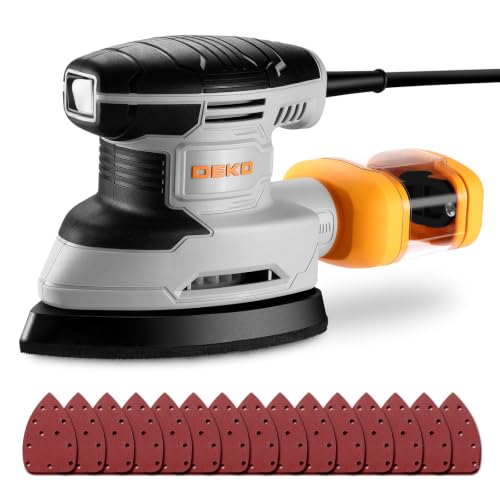
DEKOPRO Mouse Detail Sander
What We Like
- 1.5A motor with 13,000 OPM
- Built-in dust collection plus vacuum port
- Hook-and-loop pad for quick paper changes
Trade-offs
- Corded design limits mobility around furniture
- Dust collection cannot capture all debris alone
- Small pad size slows work on large flat surfaces
The 1.5-amp motor paired with 13,000 orbits per minute gives this mouse sander enough speed to chew through paint and rust on metalwork without bogging down. It suits anyone who needs a compact, affordable helper for tight corners, small furniture details, or metal prep work where a bigger sander won’t fit.
The trade-off is its small triangular pad: great for getting into crevices, but slow going on broad panels. The dust collection system works best when paired with a shop vacuum, since the built-in port alone won’t catch everything. Compared to the Wagner Spraytech PaintEater’s rotating disc design, this DEKOPRO offers more versatility for detail sanding and paint removal on irregular shapes, though the PaintEater may clear flat painted areas faster. For budget-minded DIYers focused on precision paint stripping in tight spots, this is a smart pick.
Product photos
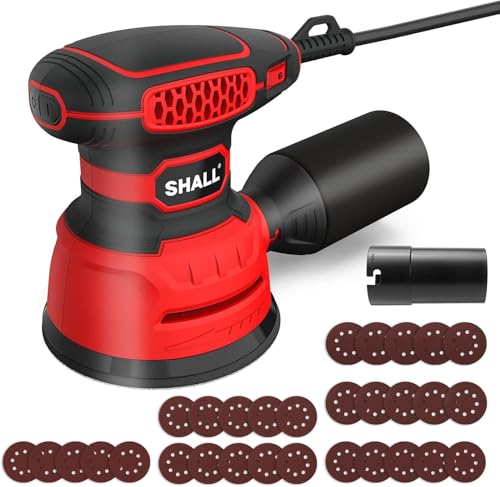
SHALL Random Orbital Sander
What We Like
- 6 variable speeds for controlled varnish removal
- 30-piece sandpaper kit covers coarse to fine grits
- Removable dust bag keeps work area cleaner
- Light 1.3 kg design reduces hand fatigue
Trade-offs
- Corded design limits mobility away from outlets
- No onboard speed lock for consistent setting during long sessions
The 3.2-amp motor delivers 6,000 to 13,000 RPM across six speed settings, giving you the fine control needed to strip varnish without gouging the wood underneath. That speed range, paired with the included 40-grit sandpaper sheets, lets you start aggressive and finish smooth in one tool. It suits anyone refinishing furniture or removing old finish from trim, where you want to work through layers gradually rather than tear through them. The lightweight body and ergonomic grip help you keep a steady hand during longer sessions, which matters when you are trying to preserve the piece’s original lines.
The SHALL random orbital sander is corded, so you are tethered to an outlet, not ideal for stripping paint on a porch railing or a shed door far from power. Compared to the cordless AVID POWER random orbital sander, the SHALL gives you consistent torque without battery fade, but you lose the freedom to move around a job site. If you are working indoors or in a workshop, this is a capable, controlled choice for varnish removal.
Product photos
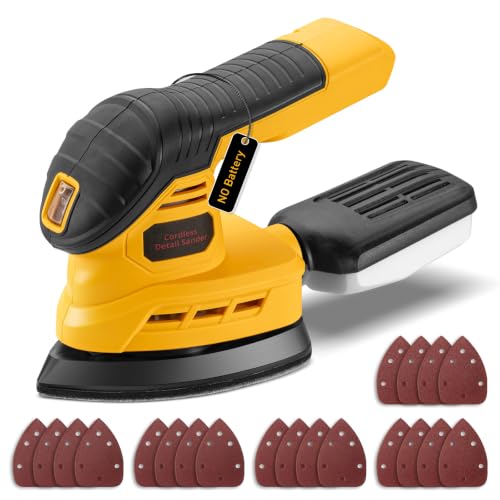
RKBUDOL Cordless Detail Sander
What We Like
- Works with DEWALT 20V batteries
- Brushless motor for efficient sanding
- Compact pad reaches tight corners
- Includes 20 sandpapers in 5 grits
Trade-offs
- Battery and charger sold separately
- No variable speed control for paint removal
The RKBUDOL Cordless Detail Sander runs on DEWALT 20V batteries, so if you already own those, you skip buying another battery system. Its brushless motor spins at 12000 RPM, giving you steady power for stripping paint or smoothing wood in tight spots. The compact 140x140x90 mm pad fits into corners and along edges where larger sanders can’t reach. With 20 pieces of sandpaper from 80 to 240 grit, you can move from coarse paint removal to fine finishing without stopping for supplies. This sander suits anyone who wants a lightweight, cordless detail tool that shares batteries with their existing DEWALT gear.
The main trade-off is that the battery and charger are not included, which adds cost if you’re starting fresh. It also lacks variable speed control, so you work at a fixed 12000 RPM, fine for most paint stripping but less adaptable for tasks that benefit from slower speeds. The built-in dust box collects debris during sanding, helping keep the work area cleaner. For DEWALT users who value battery compatibility and a nimble palm sander, this is a smart pick.
Product photos
PioneerWorks Random Orbital Sander

What We Like
- Brushless motor for long tool life
- 5-speed variable control for paint stripping
- 5 mm orbit for aggressive material removal
- Low vibration design for comfort
Trade-offs
- At 4.8 lbs, heavier than some palm sanders
- Corded design limits mobility near outlets
A 5 mm orbit diameter delivers aggressive stock removal for stripping paint, leveling wood, and shaping body filler, while the random orbital motion prevents swirl marks. The 350W brushless AC motor maintains full 10,000 RPM even under heavy load, so it keeps cutting without slowing down. Five adjustable speed settings let you dial in low speeds for fine finishing after the paint is gone, covering both rough and fine work with one tool. The low-vibration design helps reduce hand fatigue during long sessions on the shop floor.
At 4.8 pounds, this sander is heavier than a detail sander like the HYCHIKA (2.2 lbs), so it’s less suited for one-handed overhead use or reaching into tight spots. The corded 350W motor means you’re tied to an outlet, unlike the AVID POWER cordless model, but you never pause to recharge batteries. If you want a single tool that strips paint and delivers a swirl-free finish without switching, this PioneerWorks model handles both jobs.
Product photos
Dynabrade Dual-Action Sander
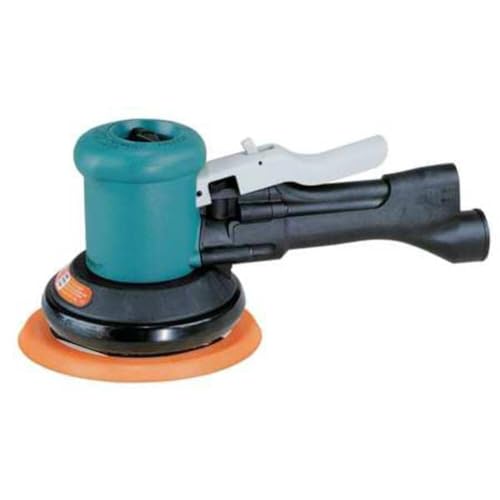
What We Like
- Flip-switch changes from rotary to random orbit
- Recessed switch prevents accidental engagement
- Rear exhaust keeps debris away from work
- Ideal for automotive paint stripping and blending
Trade-offs
- Requires compressed air source (pneumatic tool)
- Non-vacuum model needs external dust collection
A 12,000 RPM dual-action sander that flips between rotary disc and random orbital modes with a single switch means you can strip paint aggressively and then blend the surface without swapping tools. This Dynabrade is built for pros who need controlled, fast material removal on automotive bodywork or solid-surface seams. The rear exhaust directs air out the back, and the recessed switch prevents accidental startups during a delicate pass.
This pneumatic tool needs an air compressor and the right fittings, so it is not a grab-and-go electric sander like the Wagner PaintEater. At 2.9 pounds it has heft, which helps stability but can fatigue your hand over long sessions. For a shop with compressed air already on tap, this Dynabrade offers the precision and versatility that electric disc sanders cannot match for paint stripping and blending.
Vkndoynt Brushless Mini Sander
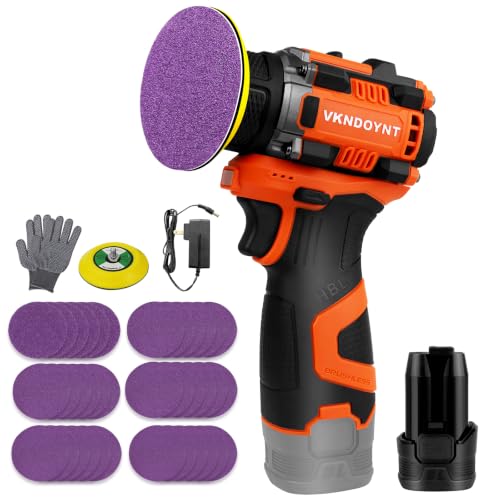
What We Like
- Brushless motor for longer tool life
- Two speed ranges for stripping and finishing
- 36-piece sandpaper kit covers all grits
Trade-offs
- 3-hour recharge time between battery uses
- 30-minute runtime limits continuous use on large surfaces
A 2600mAh battery and brushless motor give this mini sander enough power for small paint-stripping jobs, and its 2.02-pound weight (with battery) makes it easy to handle on vertical surfaces and in tight corners. The two speed ranges let you switch between aggressive 3000 RPM material removal and a gentle 500 RPM mode for delicate finishing work, so one tool handles both paint stripping and final smoothing. It suits DIYers who value portability and need a lightweight option for small to medium paint-removal projects where a corded sander would feel clumsy.
Thirty minutes of continuous use means you will likely need to pause and recharge mid-project on larger surfaces, and a full charge takes three hours. For quick touch-ups, furniture refinishing, or work in spots without an outlet, this compact design earns its place in your kit.
Product photos
SPTA Mini Random Orbital Sander
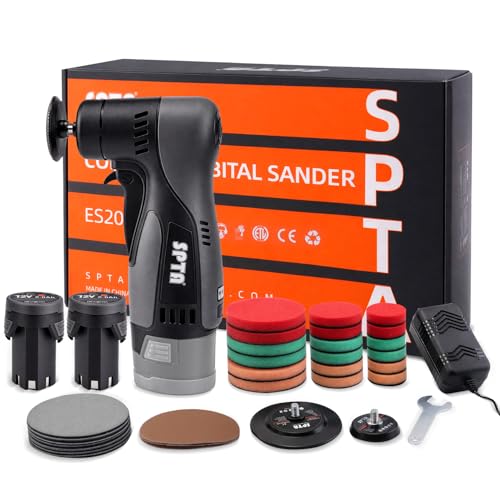
What We Like
- Brushless motor for low noise and zero maintenance
- 5mm orbit eliminates swirl marks on paint
- Complete kit with progressive grits and buffing pads
Trade-offs
- Cordless but battery not included in kit
- Small pad sizes limit large flat surface work
- 5mm orbit is fine for finishing, not heavy stripping
A brushless motor driving a 5mm random orbit means this sander delivers swirl-free results on paint, metal, and composites, making it a natural fit for prep work before a fresh coat. The kit includes three pad sizes and a full progression of waterproof sandpaper from P800 to P3000, plus foam buffing pads, so you can move from scratch removal to a mirror finish without buying extras. For anyone focused on paint prep, smoothing primer, leveling old clear coat, or polishing out sanding marks, this mini orbital keeps control in your hand and fatigue low, even during long sessions.
This is a finishing tool, not a brute-force paint stripper. Its 5mm orbit and small pad diameters (up to 3 inches) are designed for precision, not for tearing through thick layers of paint on a flat door or tabletop. The Wagner Spraytech PaintEater removes loose paint with a rotating disc for surface preparation, while the SPTA kit gives you everything you need for detailed finishing in one box.
Product photos
How We Evaluated Sanders For Stripping Paint
Our evaluation is based on manufacturer documentation, expert round-ups, and recurring themes in owner feedback across the category. We focused on specifications, design features, and reported user experiences to identify the best tools for paint stripping.
The three criteria that mattered most were material removal capability, surface control, and dust management. Paint stripping demands a sander that can handle heavy loading without clogging, yet still allow for controlled feathering at the edges. We prioritized models with variable speed control, appropriate orbit sizes, and effective dust collection systems.
A research-led approach has limits: owner feedback varies by skill level and project type, and real-world performance depends heavily on the paint condition and substrate. We focused on consistent design strengths and common praise or complaints to build a reliable picture of each sander’s suitability for paint stripping.
What To Look For In Sanders For Stripping Paint
Choosing the right sander for stripping paint means matching the tool to the job. A detail sander for trim is different from a heavy-duty disc sander for a deck.
Key buying criteria: pad size and shape, speed control, dust collection, motor type, and ergonomics. Match these to your typical project size and the surface material.
Pad Size and Shape
The pad determines both reach and efficiency. A large round pad (5 or 6 inches) covers flat surfaces quickly, while a triangular or mouse-shaped pad gets into corners and along trim. For stripping paint, a disc sander with a flexible pad conforms to uneven surfaces like curved furniture legs or old window frames.
Speed Control and Orbit
Variable speed is crucial for paint stripping. Lower speeds (around 2,600 RPM) are gentle on the surface and prevent swirl marks, while higher speeds remove material faster. The orbit size also matters: a 5mm orbit is good for finishing, while a larger orbit removes paint more aggressively. A dual-action sander that switches between rotary and random orbit offers the most versatility.
Dust Collection
Stripping paint generates fine, often lead-laden dust. Effective dust collection is a safety and convenience priority. Look for sanders with built-in dust bags, vacuum ports, or both. A dust collection system that captures debris at the source keeps your workspace cleaner and reduces airborne particles.
Motor Type and Power
Brushless motors are more efficient and last longer than brushed motors, making them a good choice for frequent use. Corded sanders offer unlimited runtime and consistent power, while cordless models provide freedom of movement. For heavy stripping, a corded model with a powerful motor (1.5 amps or more) is often the better choice.
Ergonomics and Weight
Paint stripping can be a lengthy process. A lightweight sander (under 3 pounds) reduces hand fatigue, especially for overhead or detail work. Low-vibration designs also improve comfort during extended use. Consider the grip shape and switch placement for easy control.
- Check the pad size: large for flats, small for corners.
- Look for variable speed to match paint condition.
- Ensure the dust port fits your shop vacuum.
- Choose brushless for longer tool life.
- Consider weight for overhead or long sessions.
A good rule of thumb: for stripping paint, a variable-speed sander with effective dust collection is worth paying more for.
Sanders For Stripping Paint Compared
The table below compares the key specifications of our top ten picks, making it easy to see which sander fits your project and budget.
| Product | Motor Power | Speed | Weight |
|---|---|---|---|
| Wagner Spraytech PaintEater Disc Sander | 3.2 Amp | 2600 RPM | 3.4 pounds |
| HYCHIKA Detail Sander | 1.6 amps | 14,000 OPM | 2.2 pounds |
| AVID POWER Cordless Random Orbital Sander | 20V 2.0Ah | 7000-11000 RPM | 3.3 pounds |
| DEKOPRO Mouse Detail Sander | 1.5 A | 13,000 OPM | N/A |
| SHALL Random Orbital Sander | 3.2 AMP | 6,000-13,000 RPM | N/A |
| RKBUDOL Cordless Detail Sander | Brushless | 12000 RPM | 2.0 pounds |
| PioneerWorks Random Orbital Sander | 350W brushless AC | 4,000-10,000 RPM | 4.8 lbs |
| Dynabrade Dual-Action Sander | 0.45 hp | 12,000 RPM | 2.9 lb |
| Vkndoynt Brushless Mini Sander | Brushless | 0-500/0-3000 RPM | 1.8 pounds |
| SPTA Mini Random Orbital Sander | Brushless | 4000-10000 RPM | N/A |
Frequently Asked Questions
What is the best sander for stripping paint from wood?
The Wagner Spraytech PaintEater Disc Sander is our best overall pick for stripping paint from wood. Its open-web disc resists paint loading, and the Flex-Disc conforms to uneven wood surfaces, making it effective for both chip removal and edge feathering.
Can I use a random orbital sander to strip paint?
Yes, a random orbital sander can strip paint, especially with coarse grit paper. Models like the SHALL Random Orbital Sander offer variable speeds that help control removal on wood. However, for thick or multiple layers, a dedicated disc sander may be faster.
What grit sandpaper should I use to strip paint?
Start with a coarse grit to remove the bulk of the paint, then move to a medium grit to smooth the surface. Finish with a fine grit for a clean surface ready for new paint or stain.
Is a cordless sander good for paint stripping?
A cordless sander like the AVID POWER Cordless Random Orbital Sander offers convenience for small jobs and tight spaces. However, for large surfaces or continuous use, a corded sander provides unlimited runtime and consistent power without battery concerns.
How do I prevent swirl marks when sanding paint?
Use a random orbit sander with a 5mm orbit, like the SPTA Mini Random Orbital Sander, and avoid pressing down hard. Let the sander’s weight do the work, and move it in a steady, overlapping pattern. Using progressively finer grits also helps eliminate swirl marks.
The Bottom Line
For most DIYers, the Wagner Spraytech PaintEater Disc Sander is the best choice for stripping paint. Its combination of a loading-resistant disc, flexible pad, and controlled speed makes it effective on flat surfaces and gentle on contours, handling the messy job of paint removal with less frustration.
If your project is mostly trim, furniture, or tight corners, the HYCHIKA Detail Sander is the right pick, offering a compact size that reaches where larger sanders cannot. For those who want cordless convenience for small to medium jobs, the AVID POWER Cordless Random Orbital Sander provides variable speed control without a cord.
The single most important factor in choosing a sander for paint stripping is matching the pad size and speed control to your typical project. A tool that fits the work will save you time, effort, and frustration, leaving you with a clean surface ready for its next finish.
