
10 Best Sanders For Removing Paint in 2026
This post contains affiliate links. As an Amazon Associate, we earn from qualifying purchases.
For stripping paint fast without burning through your workpiece, the SKIL 5″ Random Orbital Sander wins as best overall thanks to its cyclonic dust box and variable speed control. For a swirl-free finish, the Bosch ROS20VSC is the best swirl-free finish pick, while the SKIL Multi-Function Detail Sander handles corners and edges best.
Removing paint is a messy, physically demanding job. The right sander saves hours of elbow grease and prevents the frustration of gouged wood or lingering old finish. You need a tool that removes material efficiently, controls dust, and fits the shape of your project.
This guide is built from manufacturer specifications, expert round-ups, and patterns in owner feedback. We ranked ten sanders across key criteria like removal speed, dust management, ergonomics, and value to help you choose with confidence.
Top 10 Sanders For Removing Paint in the Market
Certain content that appears on this site comes from Amazon. This content is provided "as is" and is subject to change or removal at any time.
The Best Sanders For Removing Paint, Reviewed
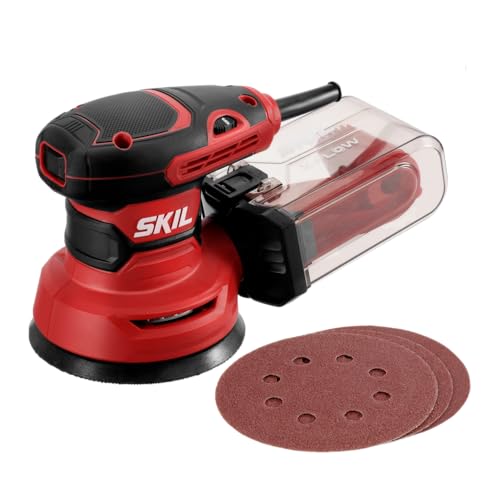
SKIL 5" Random Orbital Sander
What We Like
- Cyclonic dust box keeps workspace cleaner
- Variable speed control for different materials
- Compact size for tight spaces
Trade-offs
- Corded design limits mobility
- At 3.4 lb, heavier than some palm sanders
A 2.8 amp motor and 13,000 orbits per minute deliver smooth performance across a variety of sanding applications, so you can move from rough wood to fine finishes without swapping tools. The X-flow dust collector uses cyclone force to pull debris into an easy-to-empty transparent container, which means less dust floating around your workspace. Variable speed control lets you adjust power for different materials, giving you more precision on softer surfaces or faster material removal when needed. For anyone working on a mixed set of sanding tasks, this sander keeps the job moving efficiently.
The trade-off is weight: at 3.4 pounds, it’s similar to the Bosch ROS20VSC palm sander (3.5 pounds), so both feel comparable for overhead or one-handed work. The corded design means no battery anxiety, but you’ll be tethered to an outlet. If you need a lighter tool for tight spaces, a detail sander like the SKIL Corded Multi-Function Detail Sander (2.6 pounds) might be easier to maneuver. For larger jobs, this sander offers consistent power and dust control.
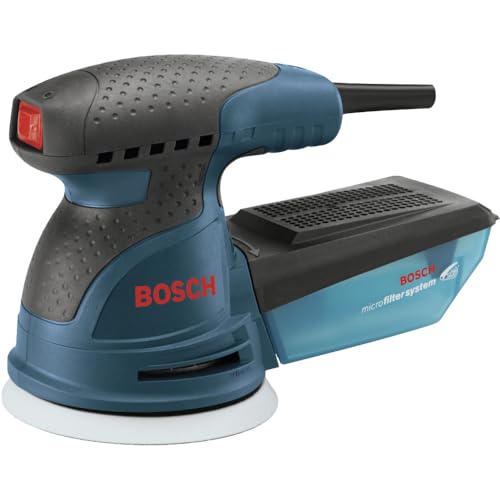
Bosch ROS20VSC Palm Sander
What We Like
- Pad dampening eliminates swirl marks
- Variable speed control matches task
- Microfilter traps 1/2-micron particles
- Includes dust canister, vacuum adapter, bag
Trade-offs
- Corded design limits mobility away from outlets
- Dust canister is small and fills quickly.
The pad dampening system is designed to eliminate swirl marks on flat and contoured surfaces, which helps you get a smooth finish without extra sanding steps. The 2.5 AMP motor delivers 7,500 to 12,000 OPM, giving you enough range to start slow on delicate veneers and speed up for stubborn layers. Its microfilter captures particles as tiny as half a micron, so fine paint dust stays inside the canister rather than floating back onto your work. That makes it a strong fit for anyone who wants a clean finish without extra sanding steps afterward.
This is a corded tool, so you stay tethered to an outlet, fine for a workshop but less convenient for a ladder or a fence line. At 3.5 pounds, it sits nicely in the palm but feels slightly heavier than the DEWALT DWE6423, which runs lighter at 3.4 pounds. If you need maximum portability, the corded DEWALT gives up some swirl control for easier handling. For a smooth, ready-to-paint surface with minimal cleanup, the Bosch delivers where it counts.
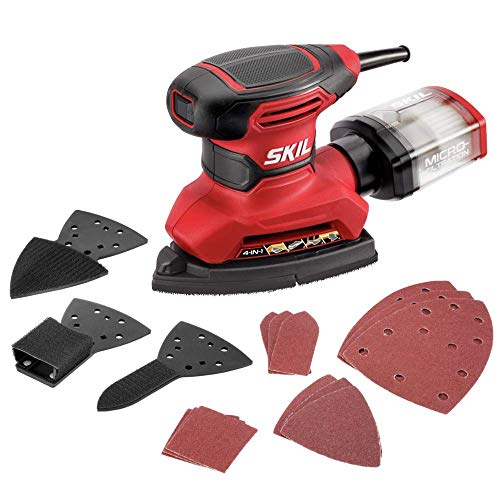
SKIL Multi-Function Detail Sander
What We Like
- Three extra attachments for corners and edges
- Tool-free attachment changes
- Low-vibration ergonomic grip
- Micro-filter dust box plus vacuum port
Trade-offs
- Small pad size slows work on broad flat surfaces
- Corded operation limits mobility away from an outlet
Spinning at 13,500 orbits per minute, this sander delivers enough speed for detail work without the bulk of a full-size orbital. The real story is the three included attachments that swap in seconds with no tool needed, letting you reach into tight corners, along edges, and around curved contours. For anyone stripping paint from window trim, furniture legs, or decorative molding, that versatility makes the difference between a clean finish and a frustrating afternoon.
Power is the trade-off here. At 2.6 pounds and with a smaller pad, this sander won’t clear a flat door or tabletop as quickly as a 5-inch orbital like the SKIL 5″ Random Orbital Sander. But when your project is all about the nooks and crannies, the SKIL Multi-Function Detail Sander is the right tool for the job.
Product photos
Festool ROTEX RO 150 FEQ-Plus

What We Like
- ROTEX rotary motion for fast removal
- Tool-less FastFix sanding pad system
- Sands up to the edge with Protector
- Ergonomic grip positions reduce fatigue
Trade-offs
- At 11.5 lb, heavy for overhead work
- 6-inch disc limits tight-corner access
The ROTEX rotary motion delivers aggressive material removal that standard orbital sanders can’t match, making this the tool to reach for when you need to strip paint fast. Its 6-inch disc and multi-mode design suit heavy-duty stripping jobs where speed matters more than finesse, and the tool-less FastFix pad system means swapping between sanding and polishing heads takes seconds. This is a sander built for the user who values raw cutting power over portability.
At 11.5 pounds, this sander is about three and a quarter times heavier than a palm sander like the Bosch ROS20VSC, so it will fatigue your arms during extended overhead or vertical work. The 6-inch disc also limits access in tighter spaces compared to smaller sanders. If your project involves stripping large flat surfaces like deck boards or tabletops, the Festool’s removal speed justifies the heft. For small furniture or detailed trim, a lighter orbital sander may serve you better.
WORKPRO 5" Random Orbit Sander

What We Like
- 6 variable speeds for paint removal control
- Hook-and-loop base for quick paper changes
- Lightweight at 2.7 pounds reduces fatigue
- Random orbit prevents swirl marks on wood
Trade-offs
- Dust bag included but no vacuum port
- 2.5 amps limits heavy stock removal
A 2.5-amp motor with six speeds from 7000 to 14000 RPM gives you real control when you are scraping away old paint without burning through the wood underneath. The random orbit action leaves a smooth surface free of those telltale swirl marks, and the hook-and-loop base lets you swap sandpaper in seconds. At just 2.7 pounds, this sander stays comfortable in your hand for longer sessions, which matters when you are tackling a full dresser or a set of kitchen cabinets. It is an affordable way to get a capable paint-stripping tool that does not skimp on the basics.
Dust collection relies on a basic bag rather than a dedicated vacuum port, so you will want to work in a well-ventilated area or wear a mask. For most weekend paint-removal jobs, though, this sander delivers the essential features at a budget-friendly price.
Product photos
DEWALT 20V MAX Orbital Sander

What We Like
- Brushless motor for runtime and efficiency
- Variable-speed control matches material needs
- Low-profile height for close sanding access
- Dust-sealed switch protects against ingestion
Trade-offs
- Battery and charger sold separately
- No cord, relies on battery runtime for heavy paint removal
At just 2.5 pounds, this sander is light enough to hold overhead or use one-handed for extended sessions, and its brushless motor squeezes more runtime out of each 20V MAX battery. The variable-speed dial lets you adjust from 8,000 to 12,000 OPM to match the speed to the application, while the low-profile body gets the pad close to the work surface for precise sanding. Since it’s cordless, you can take it anywhere without hunting for an outlet.
Battery and charger are not included, so you’ll need an existing DEWALT 20V system or budget for the extra purchase. For continuous work on large surfaces, the corded Bosch ROS20VSC offers unlimited runtime at 3.5 pounds. But if you value mobility and already own DEWALT batteries, this sander’s dust-sealed switch and one-handed locking dust bag make it a tidy, convenient tool for sanding anywhere on the property.
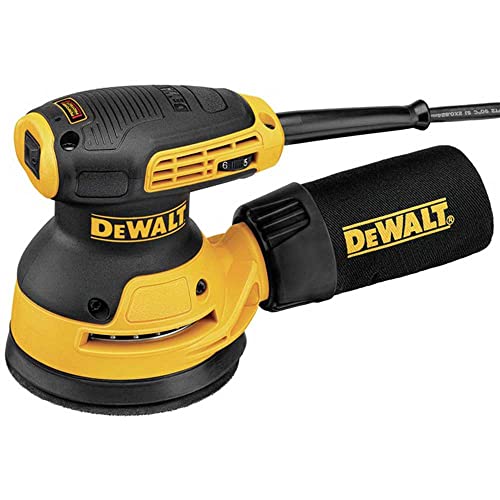
DEWALT DWE6423 Random Orbit Sander
What We Like
- Separate counterweight reduces vibration
- Dust-sealed switch resists dust ingestion
- Rubber overmold improves grip
- Shorter height for closer workpiece access
Trade-offs
- Dust port needs adapter for 1-1/4 in. hoses
- Corded design limits mobility without outlet
A 3-amp motor spinning at up to 12,000 orbits per minute gives this sander the power to handle paint removal without bogging down, while a separate counterweight design reduces vibration for improved comfort. That means less hand fatigue during long sessions, and the shorter height lets you get closer to the workpiece. The rubber overmold on critical grip areas improves control. For anyone tackling a full furniture refinish or a deck with layers of old paint, this sander helps you work longer with less fatigue.
Dust management is a key difference here: the port is built for DEWALT’s dedicated dust collectors, so if you want to use a standard shop vacuum with a 1-1/4-inch hose, you’ll need to buy the DWV9000 adapter separately. The SKIL 5-inch random orbital sander includes a cyclonic dust box out of the box, while the DEWALT requires that extra adapter. But if you already own a DEWALT dust extractor or don’t mind the connector, the low-vibration design and sealed switch make this a capable tool for paint removal.
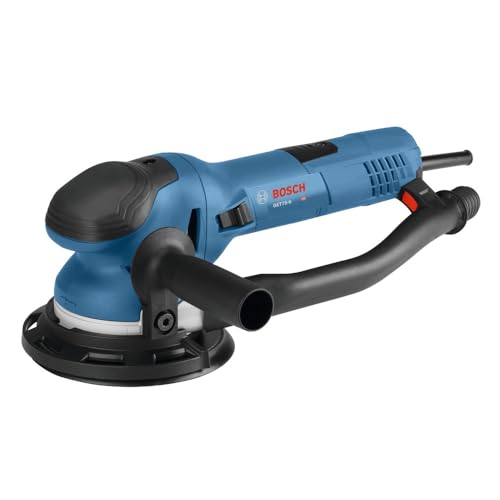
Bosch GET75-6N Orbital Sander
What We Like
- Turbo mode removes material 5x faster
- Variable speed for delicate control
- Includes removable front handle
Trade-offs
- Passive dust collection requires separate vacuum
- At 5.7 lb, heavier for overhead work
A 7.5 amp motor driving a 6-inch disc in turbo mode strips paint at roughly five times the rate of a standard random orbit sander. That direct-drive eccentric action makes this the tool you grab when a belt sander feels too aggressive but a palm sander would take all day. It suits anyone tackling multiple layers of old paint on doors, deck railings, or furniture where you want to sand fast and move on. The variable speed range is wide enough to back off for a finer finish when the paint is gone.
Weight and dust management are the main considerations here. At 5.7 pounds you feel it after an hour of overhead work, and the passive dust collection system only works with a separate vacuum and hoses. Compare that to the lighter SKIL 5-inch random orbit sander at 3.4 pounds. If your job is mostly overhead, that weight difference matters.
Not ideal for anyone who wants an all-in-one sander that includes a built-in dust box, since the passive dust collection requires a separate vacuum and hoses. The 6-inch disc is suited for larger flat surfaces rather than tight detail work. For detail sanding in corners, a smaller palm sander would be more practical.
Product photos
DEKOPRO 5" Random Orbital Sander

What We Like
- 16-piece sandpaper kit covers coarse to fine grit
- 6 variable speeds adapt to paint removal and polishing
- Hook-and-loop disc changes are fast and tool-free
- Detachable dust bag reduces cleanup time
Trade-offs
- At 3.6 lb, heavier than some palm sanders for overhead work
- Dust bag is detachable but not a HEPA or cyclone system
- Corded design limits mobility compared to cordless options
The 2.5-amp motor spins up to 14,000 RPM, so it keeps cutting through paint and varnish without slowing down. Six variable speeds let you dial in the right pace for different materials, and the hook-and-loop pad makes swapping discs quick. The 16 included sandpapers cover coarse through fine grits, so you can move from rough shaping to a polished finish without buying extras.
At 3.6 pounds, this sander is a bit heavier than the 3.4-pound SKIL model, which might tire your arm during overhead work. The detachable dust bag helps keep sawdust out of the air, though it’s not a microfilter or cyclone design. For a corded tool that runs consistently without battery swaps, reviewers say it’s a practical kit for stripping furniture or doors.
Product photos
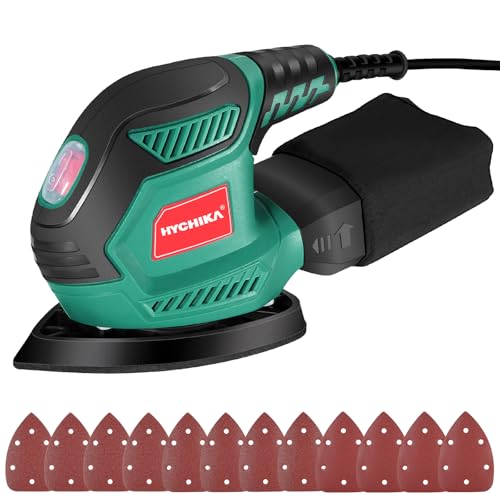
HYCHIKA Detail Sander
What We Like
- Compact size reaches tight corners
- Soft rubber head for detail work
- 6-hole dust collection keeps area clean
- Includes 3 grit types for paint removal
Trade-offs
- Fixed speed limits versatility on varied surfaces
- Corded design restricts mobility
This is a single-speed tool, so you cannot adjust the orbit rate for softer materials. Compared to the SKIL Multi-Function Detail Sander, which weighs 2.6 pounds, the HYCHIKA is lighter. A 5-inch random orbital like the Bosch ROS20VSC uses a 2.5 amp motor and a larger pad, which covers more area per pass. For detail work in cramped spaces, this sander is a practical choice.
Product photos
How We Evaluated Sanders For Removing Paint
Our evaluation began with a deep dive into each sander’s specifications and manufacturer claims. We studied motor power (amps for corded tools, voltage for cordless), orbit diameter, speed range, and pad size to understand how each tool tackles paint removal.
We then cross-referenced these specs with expert round-ups from professional refinishers and woodworking publications. The three criteria that mattered most were material removal rate, how fast the sander strips paint, mattered most. Dust collection effectiveness was critical for lead-paint safety and workshop cleanliness. Ergonomics included vibration control, weight, and grip comfort for extended use.
This is a research-led guide, not a hands-on test. We prioritize verified data and consensus expert opinion over anecdotal claims. Where owner feedback patterns were strong and consistent, we incorporated that real-world perspective.
What To Look For In Sanders For Removing Paint
Choosing a paint-stripping sander means balancing power, dust control, and maneuverability. Here are the key features that matter most.
Look for variable speed control, effective dust collection (cyclonic or HEPA), and the right pad size for your project. Random orbital sanders are best for flat surfaces; detail sanders handle corners and trim.
Power and Speed Control
Paint removal demands sustained torque. For corded sanders, look for at least 2.5 amps for light work and 5 amps or more for aggressive stripping. Variable speed is essential, lower speeds prevent burning delicate surfaces, while higher speeds tear through thick paint layers quickly. Cordless sanders like the DEWALT 20V MAX offer convenience but trade runtime for raw power, so match your tool to the job’s duration.
Dust Collection
Stripping paint generates fine, potentially hazardous dust. A cyclonic dust box (like the SKIL’s) keeps the filter clear and suction strong. HEPA-rated dust canisters trap particles as small as a fraction of a micron, a critical safety feature for lead-based paints. Vacuum ports let you connect to a shop vac for near-zero airborne dust. Avoid sanders with only a basic dust bag if you’re working indoors.
Ergonomics and Pad Size
Extended paint-stripping sessions are taxing. Low-vibration designs (separate counterweights, rubber overmolds) reduce hand fatigue and numbness. Weight matters: a 2.7-pound sander is comfortable for overhead work, while an 11.5-pound machine is best left on a benchtop. Pad size dictates speed versus access. A 5-inch or 6-inch random orbital sander covers large surfaces fast; a detail sander’s small triangular pad reaches corners and profiles.
- Check if the dust port matches your shop vac hose size (common are 1-1/4 in. And 1-1/2 in.).
- Verify the hook-and-loop pad is compatible with widely available sanding discs.
- Consider whether a corded or cordless design fits your typical work location.
- For lead paint, pair any sander with a HEPA vacuum and proper respirator.
- Test the grip in-store if possible; rubber overmolds and low-profile bodies improve control.
For heavy paint removal on large surfaces, a random orbital sander with a cyclonic dust box and variable speed is your best bet.
Sanders For Removing Paint Compared
The table below compares the key specs and trade-offs of our top ten sanders for removing paint, making it easy to see which tool fits your project.
| Product | Motor | OPM / RPM | Weight | Dust Collection |
|---|---|---|---|---|
| SKIL 5" Random Orbital Sander | 2.8 amp | 13,000 OPM | 3.4 pounds | Cyclonic dust box |
| Bosch ROS20VSC Palm Sander | 2.5 AMP | 7,500-12,000 | 3.5 pounds | Microfilter |
| SKIL Multi-Function Detail Sander | N/A | 13,500 OPM | 2.6 pounds | Micro-filter dust box |
| Festool ROTEX RO 150 FEQ-Plus | N/A | N/A | 11.5 pounds | N/A |
| WORKPRO 5" Random Orbit Sander | 2.5 Amp | 7000-14000 RPM | 2.7 pounds | Dust bag |
| DEWALT 20V MAX Orbital Sander | Brushless | 8,000-12,000 OPM | 2.5 pounds | dust collection |
| DEWALT DWE6423 Random Orbit Sander | 3-Amp | 8,000 – 12,000 OPM | 3.4 pounds | Dust port |
| Bosch GET75-6N Orbital Sander | 7.5 amp | 3300-7300 OPM | 5.7 pounds | Passive dust collection system |
| DEKOPRO 5" Random Orbital Sander | 2.5A | 14,000 RPM | 3.6 pounds | Detachable dust bag |
| HYCHIKA Detail Sander | 1.6 amps | 14,000 OPM | 2.2 pounds | dust bag |
Frequently Asked Questions
What is the best type of sander for removing paint?
A random orbital sander is the best choice for most paint removal jobs. It combines fast material removal with a swirl-free finish, and its round pad works well on flat surfaces. For corners, edges, and intricate trim, a detail sander with a triangular pad is necessary.
Can I use an orbital sander to remove paint from wood?
Yes, a random orbital sander is excellent for removing paint from wood. Use a coarse grit for stripping and progress to finer grits for a smooth surface. Always sand with the grain on final passes to avoid visible scratches.
How do I choose between a corded and cordless sander for paint removal?
Choose a corded sander for sustained, heavy-duty paint removal where runtime is critical. Cordless sanders offer mobility and convenience for quick touch-ups or work without nearby outlets, but battery runtime limits continuous stripping. For large projects, corded is more reliable.
What grit sandpaper should I use to remove paint?
Start with a coarse grit for stripping thick paint layers. Move to a medium grit to smooth the surface, and finish with a fine grit for a ready-to-paint or stain finish. Always match the grit to the paint thickness and wood hardness.
Is it safe to sand paint off wood?
Yes, but take precautions. Assume any paint older than a certain year may contain lead. Wear a NIOSH-approved respirator, use a sander with HEPA dust collection or a vacuum attachment, and seal the work area with plastic sheeting. Dispose of dust bags as hazardous waste if lead is suspected.
The Bottom Line
The SKIL 5″ Random Orbital Sander is the best overall choice for DIYers tackling large paint-stripping projects. Its cyclonic dust box keeps your workspace clean, and the variable speed control lets you adjust from aggressive removal to fine finishing. It is ideal for furniture, cabinets, and other flat surfaces.
If your budget is tighter, the WORKPRO 5″ Random Orbit Sander offers solid variable-speed performance at an affordable price. For those who prioritize a flawless, swirl-free surface, the Bosch ROS20VSC is worth paying more for, and the SKIL Multi-Function Detail Sander is the clear winner for corners and edges.
The single most important factor in choosing a paint-removal sander is dust management. A tool with poor dust control will slow you down and creates a hazardous workspace. Prioritize models with cyclonic dust collection or HEPA-rated collection to keep your projects safe and your lungs safe.
